Best String Trimmer for Heavy Brush: Top Picks and Buying Guide
Choosing the best string trimmer for heavy brush is not simply a matter of finding the highest motor rating or the widest cutting path. Thick weeds, tall grass, vines, and light woody growth demand the right combination of power, cutting equipment, control, runtime, and operator comfort.
BILT HARD Self-Propelled Walk-Behind String Trimmer is my first choice because its 170cc four-cycle engine, 22-inch cutting diameter, steel deck, and self-propelled drive create the most practical package for large, seriously overgrown areas. The 1.9-mph drive and eight height settings should reduce pushing effort while the 10-inch flat-free wheels handle uneven ground.
Husqvarna 122RJ Multi-Purpose Gas Brush Cutter is my second choice and the best alternative for buyers who prefer a handheld cutter with a grass blade and string-trimmer head. Smart Start, air purge, a J-handle, and a barrier bar make it appealing when maneuverability matters more than a walk-behind platform.
.amz-product-card:hover{transform:translateY(-3px)!important;box-shadow:0 10px 26px rgba(20,70,110,.12)!important;border-color:#bdd7ea!important;}
My top recommendation is BILT HARD 170cc Self-Propelled Walk-Behind String Trimmer because it provides the strongest overall fit among the 5 options compared below.
My third choice is BLACK+DECKER 20V MAX 12 Inch Cordless String Trimmer because it remains a relevant option when the first two are not the best fit.
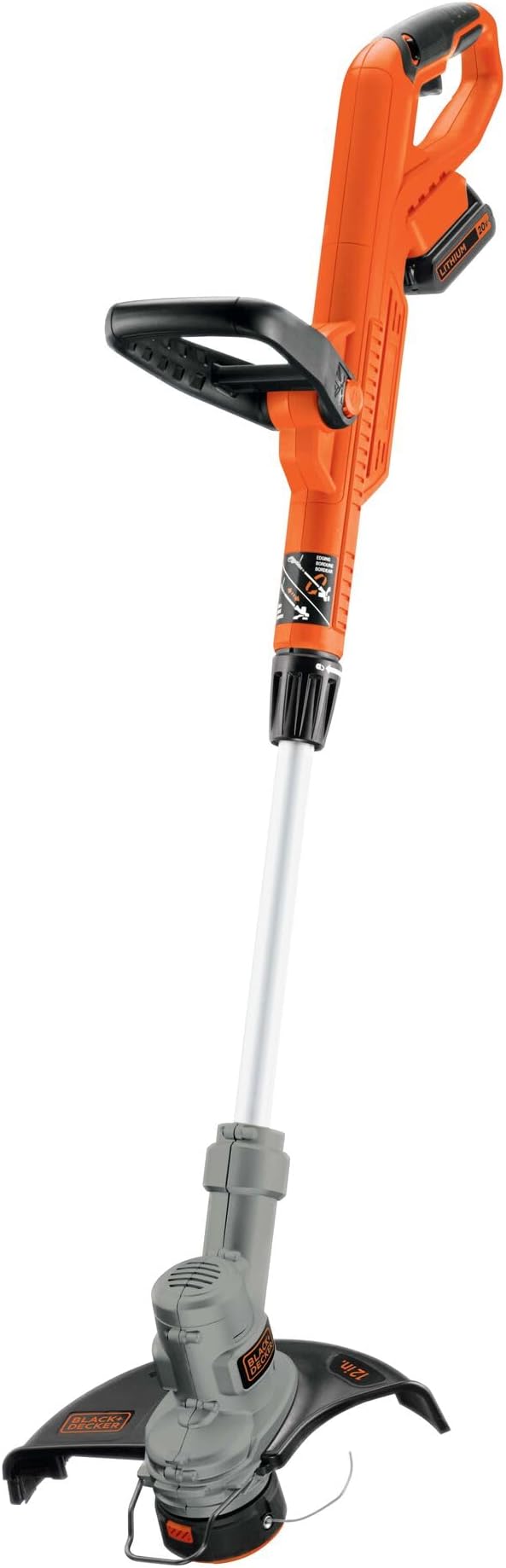
BLACK+DECKER 20V MAX 12 Inch Weed Eater Cordless String Trimmer takes third place for homeowners who value quiet, convenient cordless maintenance. Its PowerDrive transmission, two-speed control, automatic line advancement, and included battery and charger make it useful for dense lawn growth, although its 12-inch path and battery format are less suited to extensive brush clearing.
The comparison below explains where each machine fits, followed by detailed strengths and limitations for every pick. The buying guide then covers cutting systems, power sources, safety, setup, maintenance, storage, and the practical differences between a brush cutter and an ordinary lawn trimmer.
Best String Trimmer for Heavy Brush
I selected these five products by looking for direct relevance to demanding vegetation, useful cutting and control features, and available customer-feedback evidence. I also included gas, cord-free, walk-behind, handheld, and battery-compatible options so the ranking reflects different property sizes and ownership preferences rather than one narrow type of machine.
| # | Image | Product | Price on Amazon |
|---|---|---|---|
| 1 |  |
BILT HARD 170cc Self-Propelled Walk-Behind String Trimmer | Check Price |
| 2 |  |
Husqvarna 122RJ Multi-Purpose Gas Brush Cutter | Check Price |
| 3 |  |
BLACK+DECKER 20V MAX 12 Inch Cordless String Trimmer | Check Price |
| 4 |  |
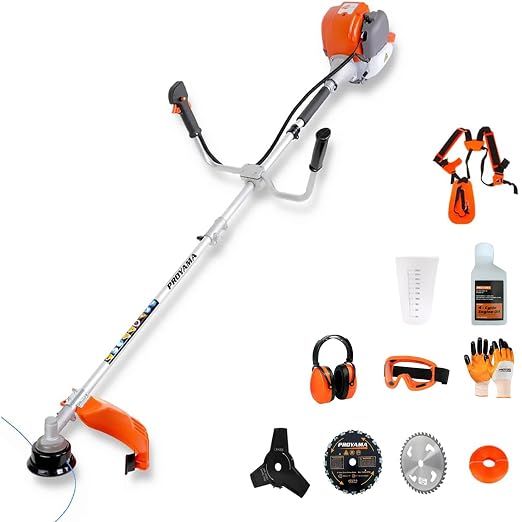
PROYAMA 42.7cc 3-in-1 Gas Brush Cutter | Check Price |
| 5 |  |
Wugeku 40V 14-Inch Brush-Capable String Trimmer | Check Price |
BILT HARD 170cc Self-Propelled Walk-Behind String Trimmer
The BILT HARD walk-behind trimmer stands out when the job involves a broad section of tall weeds or overgrown grass rather than a few isolated plants. Its 170cc OHV four-cycle engine supplies substantial power without requiring the fuel mixing associated with many two-cycle handheld machines. Manual recoil starting is still part of the process, but the four-cycle layout is a straightforward fit for buyers who want a mower-like brush-clearing tool.
A 22-inch cutting diameter covers more ground per pass than the handheld options here. That difference matters on fields, long fence lines, and neglected side yards, where repeatedly carrying and swinging a trimmer can become tiring. The self-propelled drive moves at 1.9 mph, so the operator mainly guides the machine instead of pushing its full weight across slopes or uneven terrain.
Eight cutting-height positions from 1.6 to 3.7 inches provide useful flexibility. The steel deck adds stability, while side discharge moves cut material away from the cutting path. Ten-inch flat-free wheels should also reduce worries about punctures around roots and rough ground. Still, this is a relatively large machine, and its nylon line is intended for thick grass, weeds, and light brush rather than heavy woody saplings.
Pros
- Powerful 170cc four-cycle engine for large overgrown areas
- Self-propelled drive reduces pushing effort
- Wide 22-inch cutting diameter and eight height settings
- Steel deck and flat-free wheels suit rough terrain
- Foldable handle helps with storage
Cons
- Manual recoil start requires user effort
- Bulkier to transport than a handheld cutter
- Nylon line is not a substitute for a heavy metal brush blade
My Opinion
This is the strongest overall choice for large, open, overgrown spaces where reduced fatigue and fast coverage matter most. Choose it over a handheld model when maneuverability around individual trees is less important than clearing a wide area efficiently.
Husqvarna 122RJ Multi-Purpose Gas Brush Cutter
The Husqvarna 122RJ takes a more traditional handheld approach to brush control. It combines a string-trimmer head with a grass blade, giving the owner a way to switch between routine edge work and tougher grassy growth. That dual-purpose setup is useful for properties with mixed conditions, such as a maintained lawn beside a rough fence line or a wooded boundary.
Starting features are a meaningful advantage for occasional users. Smart Start pairs a purpose-designed engine and starter with an air-purge system that removes air from the carburetor and fuel system. Those details do not eliminate normal fuel preparation or maintenance, but they are intended to make startup less frustrating after the machine has been sitting.
The J-handle and barrier bar encourage a more controlled working position, which is especially important when using a blade. A handheld brush cutter can reach around posts, trees, slopes, and narrow passages that are awkward for a walk-behind unit. On the other hand, the operator carries and controls the machine throughout the task, so it is not the best match for clearing a very large field in one session.
Pros
- Includes both a string-trimmer head and grass blade
- Smart Start and air purge support easier starting
- J-handle and barrier bar promote controlled operation
- Handheld format reaches tight and uneven areas
Cons
- Requires carrying the machine during use
- Gas ownership involves fuel handling and engine maintenance
- Supplied information does not specify the cutting diameter or fuel capacity
My Opinion
The 122RJ is a balanced choice for buyers who need one handheld gas tool for both ordinary trimming and moderate brush work. Its attachment combination and control equipment make it more versatile than a basic string trimmer, though the physical effort rises as the clearing area grows.
BLACK+DECKER 20V MAX 12 Inch Cordless String Trimmer
BLACK+DECKER’s LST522 is aimed at homeowners who want a simpler alternative to gas equipment. The package includes a 2.5Ah battery and charger, so a first-time cordless buyer can get started without separately assembling the power system. Its 20V MAX platform and 12-inch cutting path are better suited to yards, borders, and moderate overgrowth than to acres of dense brush.
PowerDrive transmission increases torque at the string, helping the tool deal with denser grass than a basic low-power trimmer. Two-speed control gives the operator a useful choice: higher power for difficult patches or lower speed for longer runtime. The supplied battery is described as offering 66% more runtime than standard models, although actual operating time will vary with vegetation, speed selection, line contact, and battery condition.
Automatic line advancement dispenses line while working, reducing the need to stop and manually bump or adjust the spool. The quick conversion to a wheeled edger is convenient for sidewalks and driveways, and adjustable height, handle settings, and a soft micro-texture grip should make routine lawn work more comfortable. The limitation is clear: a 12-inch cordless head and string-only configuration do not provide the same clearing capability as a gas brush cutter with a metal blade.
Pros
- Battery and charger are included
- Two speed settings balance power and runtime
- PowerDrive transmission adds torque at the string
- Automatic line advancement reduces interruptions
- Converts to a wheeled edger
Cons
- Less appropriate for large areas of woody brush
- 12-inch cutting path covers less ground per pass
- Runtime depends on vegetation and speed setting
My Opinion
This is the most approachable pick for a typical homeowner whose “heavy brush” mainly means tall weeds and thick lawn growth. It offers excellent convenience, but buyers clearing dense, established brush should move up to a gas machine or a blade-capable tool.
PROYAMA 42.7cc 3-in-1 Gas Brush Cutter
The PROYAMA earns its place through attachment flexibility. Its 42.7cc two-cycle engine is paired with a trimmer head, a 3T blade, a 40T blade, and a chain blade. That assortment lets the owner choose a string head for grass, a toothed blade for denser vegetation, or another cutting option for demanding clearing work instead of asking one line head to handle every situation.
For large yards, rough landscaping, and neglected edges, the cordless gas design provides continuous operation without an extension cord or battery recharge. The straight shaft also gives useful reach around fences, trees, sidewalks, and low-access areas. At the same time, 2HP of engine output and multiple metal blades make this a more serious machine than a casual electric trimmer, so setup, attachment selection, and safe handling deserve attention.
Its main trade-off is the added complexity that comes with a multi-attachment system. The user must install the appropriate cutting tool and maintain a two-cycle engine, while the available information does not specify a harness or other particular support system. It can be a strong value for someone who genuinely needs several cutting modes, but unnecessary equipment for a small lawn with only occasional weeds.
Pros
- 42.7cc two-cycle engine with stated 2HP output
- Includes string head, 3T blade, 40T blade, and chain blade
- Metal blades provide options for dense weeds and brush
- Straight shaft offers reach around obstacles
- Gas power supports continuous work without charging
Cons
- More setup and attachment management than a basic trimmer
- Two-cycle engine requires fuel-mixing attention
- Blade-equipped operation demands careful handling
My Opinion
PROYAMA is the most adaptable choice for buyers who want one gas-powered tool to cover lawn trimming and rough brush removal. Its flexibility is valuable on varied properties, but a simpler machine may be easier to own if metal-blade work is rarely needed.
Wugeku 40V 14-Inch Brush-Capable String Trimmer
Wugeku offers a battery-powered middle ground between a lightweight lawn trimmer and a gas brush cutter. Its brushless motor receives 40V by connecting two included 20V, 4.0Ah batteries in series. That arrangement gives the tool more electrical output for demanding cutting while avoiding fuel storage, exhaust, and engine-starting chores.
The kit includes a string spool head, a 3T blade, a 40T alloy blade, and replacement line. The.095-inch dual line is notably more substantial than the light line commonly associated with small lawn trimmers, and the blade choices expand its usefulness for thick vegetation and pathway growth. Buyers should still treat the cutting attachments according to their intended use rather than assuming battery power makes every type of brush effortless.
Reported operating time is up to 60 minutes on low speed or 40 minutes on high speed per charge, with both batteries charging within two hours on the dual-port charger. Actual results will change with the cutting load. A foldable shaft simplifies vehicle transport and storage, while the adjustable auxiliary handle and padded shoulder strap help distribute weight. The important compatibility detail is that the batteries are included and the tool is described as compatible with Makita 18V LXT tools; buyers should verify their specific battery expectations before substituting packs.
Pros
- Brushless motor supplies 40V from two 20V batteries
- Includes string head, 3T blade, 40T blade, and replacement line
- Two 4.0Ah batteries and dual charger are included
- Foldable shaft aids transport and storage
- Shoulder strap and adjustable handle improve balance
Cons
- High-speed operating time is listed at up to 40 minutes
- Uses two batteries at once
- Compatibility should be confirmed before using other battery packs
My Opinion
Wugeku is compelling for buyers who want blade capability and cordless operation without moving to a gas engine. It suits medium-sized clearing tasks, provided the owner plans around charging time and understands that dense brush can reduce the stated runtime.
How I Selected These Options for Heavy Brush
The ranking balances clearing ability, control, convenience, and the type of vegetation each machine can reasonably address. A walk-behind unit receives priority for broad acreage because its wheels and self-propelled drive can reduce fatigue. Handheld gas models rank highly for maneuverability and blade flexibility, while cordless tools are included for buyers who prioritize lower routine hassle.
I also considered whether the supplied information gives a buyer enough practical detail to make a responsible decision. Engine size, cutting width, included attachments, battery contents, runtime claims, control features, and storage design all affect ownership. Customer-feedback volume and rating information were considered as supporting signals, not as a substitute for matching the machine to the property.
Important selection takeaway: “Heavy brush” is not one uniform job. Tall grass and soft weeds can be suitable for a strong string head, while woody stems may require a purpose-built blade and more deliberate handling.
Brand diversity also matters. BILT HARD supplies a walk-behind format, Husqvarna and PROYAMA cover gas handheld options, BLACK+DECKER represents a familiar cordless lawn tool, and Wugeku offers a higher-output battery system with blade attachments. That range makes the list useful for different property layouts, storage situations, and comfort preferences.
Do not choose by engine or voltage alone: The cutting head, attachment options, operator support, terrain, and expected work duration can matter just as much as the headline power figure.
How to Choose the Best String Trimmer for Heavy Brush
The right machine depends first on the vegetation and area size, then on how much maintenance and physical effort you are willing to accept. Before buying the best string trimmer for heavy brush, identify whether you need to mow a wide patch, reach around obstacles, cut small woody growth, or simply manage tall weeds that a normal lawn trimmer cannot handle.
- Choose a walk-behind model for wide, open areas and reduced carrying effort.
- Choose a blade-capable gas or battery tool for dense vegetation and varied cutting tasks.
- Check whether the package includes the battery, charger, line, and desired attachments.
- Match runtime and fuel convenience to the size of the property.
- Confirm that the handle, barrier, strap, and controls suit your comfort and control needs.
String Head or Metal Blade?
Nylon line is useful for grass, weeds, and vegetation near surfaces where a metal blade could cause unwanted damage. It is also generally simpler for routine trimming. Metal blades are more appropriate when the product specifically supports them and the work involves dense weeds, tough stalks, or brush that quickly wears down ordinary line.
A blade is not automatically better for every task. It adds setup and handling considerations, and the operator needs enough control to keep the cutting attachment away from people, pets, vehicles, fences, and fragile landscaping. If the property mostly contains tall grass, a robust string head may be the more convenient choice.
Gas Power Versus Cordless Power
Gas models offer continuous operation as long as fuel is available and are represented here by the Husqvarna and PROYAMA handheld cutters. They are useful for remote areas and long sessions, but the owner must accept fuel handling, engine starting, and ongoing maintenance.
Cordless tools start more simply and avoid exhaust and fuel mixing. BLACK+DECKER is oriented toward ordinary yard care, while Wugeku uses two batteries together and adds blade options. Battery tools are convenient, but high-load cutting reduces runtime, so a second charged set or a realistic work plan may be necessary for larger properties.
Walk-Behind or Handheld?
A walk-behind trimmer can be easier on the arms when clearing broad, open ground. The trade-off is transport weight, storage space, and less precise movement around individual obstacles. Handheld machines are more versatile around trees, fence posts, ditches, and narrow paths, but the operator carries the tool and absorbs more vibration and movement.
Think about the shape of the property rather than only its total square footage. A large but open field favors the BILT HARD format, while a smaller wooded lot with irregular edges may be easier with the Husqvarna, PROYAMA, or Wugeku approach.
Power, Cutting Width, and Runtime Explained
Engine displacement and battery voltage are useful comparison points, but they do not describe the entire cutting experience. A wide path can reduce the number of passes, yet it may be harder to guide in confined spaces. A smaller head can offer better precision but take longer across a field.
Estimate the Work Before You Start
Walk the area and identify slopes, hidden rocks, wire, roots, fencing, and thick stems. Separate the work into light grass, heavy weeds, and brush. This simple assessment helps determine whether the job needs a line head, a blade, or a walk-behind platform.
For battery equipment, treat published runtime as an upper planning figure rather than a guarantee. High speed and dense growth place more demand on the motor. For gas equipment, plan for fuel, cool-down breaks, and access to the areas being cleared.
Setup and First Use
Read the supplied instructions before installing a spool or blade. Confirm that the cutting attachment is secured, the guard is correctly positioned, and the handle or shoulder strap is adjusted before starting the motor. For a walk-behind unit, inspect the wheels, handle position, height setting, and drive controls.
Gas owners should follow the specified fuel procedure rather than guessing at a mixture. Battery owners should charge the included packs fully and confirm how the tool uses them. With Wugeku’s two-battery system, both packs need to be available and correctly installed for the stated 40V configuration.
Use a Controlled Clearing Pattern
Begin at the edge of the overgrowth and work in manageable strips. Keep the head moving rather than burying it in one dense clump, and slow down when the vegetation becomes thicker. For a walk-behind machine, let the drive move at a controlled pace; for a handheld unit, use the strap and handle position to keep the cutting attachment balanced.
Stop immediately if line, vines, or weeds wrap around the head. Shut down the machine according to its instructions before clearing the obstruction. Never pull tangled material away while the engine or motor can still engage.
Safety and Protective Equipment
Heavy vegetation can hide stones, wire, glass, sticks, and other projectiles. Wear eye protection, sturdy footwear, long pants, and hearing protection when appropriate. Keep people and pets well away from the cutting area, especially when using a metal blade.
Inspect the work zone first and avoid cutting material that could catch or throw objects. Maintain a stable stance on slopes, keep both hands in the intended positions on handheld machines, and do not defeat a guard or barrier. A brush cutter should never be treated like a casual lawn edger simply because it has a string-trimmer attachment.
Maintenance and Storage Tips
After each session, remove packed grass and debris from the cutting head, deck, wheels, guards, and air-intake areas once the machine is safely shut down and cool. Check the line for wear, inspect blades for damage, and look over fasteners and handles before the next use.
Gas equipment benefits from consistent fuel care and clean air-filter and starting-system practices according to the instructions. Battery tools should be stored with their packs handled as directed by the battery manufacturer. Keep cutting attachments dry, protect replacement line from unnecessary exposure, and use the foldable handle or shaft when available to reduce storage strain.
Common Mistakes to Avoid
Many disappointing purchases come from treating every overgrown area as the same kind of work. Avoid choosing a lightweight string trimmer for woody brush, or buying a blade-capable machine without allowing time to learn its controls and attachment procedure.
- Do not assume a larger battery voltage replaces the need for the correct blade or line.
- Do not cut hidden debris without first inspecting the area.
- Do not run a handheld cutter without using its supplied barrier, guard, or support equipment.
- Do not expect maximum battery runtime while cutting continuously at high speed in dense growth.
- Do not store gas equipment or fuel without following the manufacturer’s instructions.
When uncertain, clear a small test section first. If the machine bogs down, throws excessive debris, or requires unsafe body positioning, stop and choose a slower method or a more suitable cutting attachment.
Best String Trimmer for Heavy Brush FAQ
What type of cutter is best for thick weeds and light brush?
A powerful walk-behind string trimmer is efficient across large open areas, while a handheld brush cutter with a suitable blade is better around trees, fences, and irregular ground. The vegetation thickness and property layout should determine the format.
Can a cordless string trimmer handle heavy brush?
Some can handle thick weeds and moderate brush when equipped with suitable line or blades. BLACK+DECKER is better for dense lawn growth, while Wugeku offers a brushless 40V setup with 3T and 40T blades. Battery runtime will decline under heavy load.
Is a metal blade necessary for brush clearing?
Not always. Nylon line can handle tall grass and many weeds, but a compatible metal blade is more appropriate for tougher stalks and brush. Use only attachments supported by the specific machine and follow its safety instructions.
Is a walk-behind trimmer easier than a handheld model?
For broad, open spaces, a self-propelled walk-behind model can reduce carrying and pushing effort. A handheld model is usually more maneuverable in tight or irregular areas, though it requires the operator to support and guide the tool throughout the job.
Which option is best for a buyer who dislikes fuel maintenance?
A cordless model avoids fuel mixing, engine starting, and exhaust. BLACK+DECKER is convenient for normal yard work, while Wugeku provides more substantial cutting options. Neither eliminates the need to charge batteries and inspect the cutting equipment.
Final Thoughts
The BILT HARD 170cc Self-Propelled Walk-Behind String Trimmer is my top choice for broad, overgrown areas because it combines power, coverage, wheels, and self-propelled movement. The Husqvarna 122RJ Multi-Purpose Gas Brush Cutter is the better handheld alternative, while the BLACK+DECKER 20V MAX 12 Inch Cordless String Trimmer is the convenient pick for lighter residential overgrowth. Match the machine to the terrain, cutting material, and session length, and the best string trimmer for heavy brush becomes a much clearer decision.

I’m Maya L. Greenwood, a lifelong plant lover who believes anyone can grow something beautiful with the right guidance. After years of testing soil mixes, pruning methods, irrigation tricks, and pest-safe solutions, I started EasyGardenTips.com to turn hard-won lessons into step-by-step advice. From seed starting and container gardens to composting and seasonal checklists, my goal is to make gardening simple, sustainable, and fun.