5 Best Residential Self Propelled Gas Lawn Mower: Full Guide
Finding the best residential self propelled gas lawn mower means balancing cutting speed, traction, engine performance, maintenance, and the amount of control you want while walking. A self-propelled mower can reduce fatigue on a larger property, but the right drive system and deck design matter just as much as engine size.
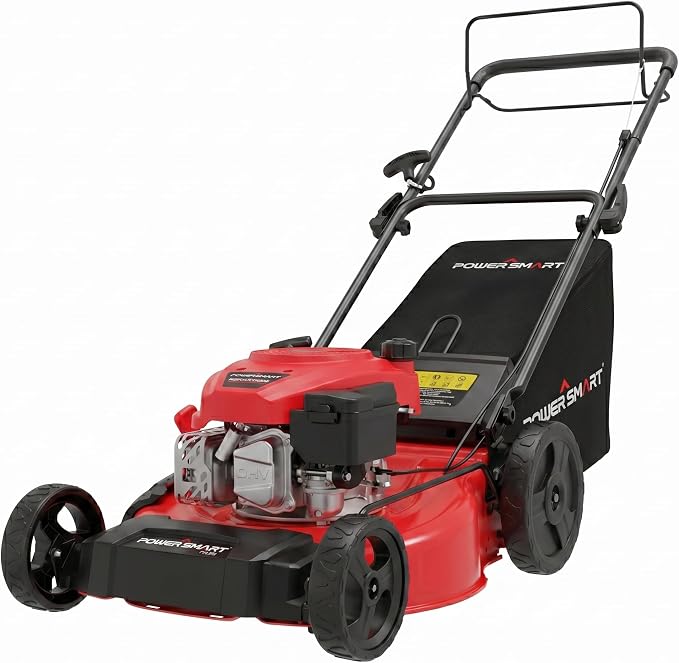
For most homeowners, the Powersmart 21″ Self-Propelled Gas Lawn Mower is the strongest overall recommendation in this group. Its rear-wheel drive, 170cc OHV engine, steel deck, and three mowing modes give it a practical mix of everyday versatility and slope-friendly traction. The SENIX 201cc 22″ 3-in-1 Variable Speed Self is the clear alternative if you want a wider deck, more engine displacement, larger rear wheels, and adjustable walking speed.
The five mowers below were compared by cutting width, engine design, drive configuration, wheel size, height adjustment, mowing modes, starting convenience, terrain suitability, and ownership details. The rankings favor useful residential features rather than simply choosing the mower with the largest engine or deck.
Best Residential Self Propelled Gas Lawn Mower Picks at a Glance
| Product | Name | Price |
|---|---|---|
 |
Powersmart 21″ Self-Propelled Gas Lawn Mower | Check Price |
 |
SENIX 201cc 22″ 3-in-1 Variable Speed Self | Check Price |
 |
YARDMAX 22 In. 201cc Select PACE 6 | Check Price |
 |
BILT HARD 21″ Self Propelled Gas Lawn | Check Price |
 |
SENIX 21” Self Propelled Gas Lawn Mower | Check Price |
1. Powersmart 21″ Self-Propelled Gas Lawn Mower
The Powersmart earns the top position because it covers the needs of a broad range of homeowners without making the design unnecessarily complicated. Its 170cc OHV engine is intended to provide consistent performance for routine residential mowing, while the 21-inch steel deck offers a useful balance between coverage and maneuverability. That width is substantial enough for medium and larger yards, yet it should remain manageable around planting beds, fences, and other obstacles.
Rear-wheel drive is one of this mower’s most practical advantages. The large 10-inch rear wheels are designed to improve traction and control on slopes or uneven ground, where a basic push mower can become tiring and difficult to guide. The self-propelled system helps move the machine forward while the operator concentrates on steering and maintaining a consistent path.
Its 3-in-1 cutting system adds flexibility. You can collect clippings in the 1.4-bushel bag, mulch them back into the lawn, or use rear discharge when collection is unnecessary. Six height settings range from 1.5 to 3.9 inches, allowing adjustments for seasonal growth, grass type, and the preferred appearance of the lawn.
The trade-off is that the provided data does not indicate variable drive speed, so it may not offer the same pace-matching control as the SENIX 22-inch model or the YARDMAX CVT mower. The bag is also more compact than the 1.7-bushel bag on the smaller SENIX. Buyers should still check assembly instructions, add or verify the correct engine oil before use, and keep the steel deck clear of wet clippings. It is an especially sensible choice for homeowners who want rear-wheel traction and straightforward three-mode mowing without stepping into a more specialized design.
2. SENIX 201cc 22″ 3-in-1 Variable Speed Self
The SENIX 201cc 22-inch mower is the strongest alternative to the Powersmart because it adds more cutting width, engine displacement, wheel size, and speed control. Its 22-inch steel deck can cover more ground per pass than a typical 20- or 21-inch residential mower. That extra inch will not transform every mowing session, but it can be useful on medium to large lawns where reducing the number of passes matters.
Power comes from a 201cc four-cycle OHV engine, giving this model a substantial engine platform for handling regular growth, thicker areas, and broader cutting work. The rear-wheel-drive layout works with 11-inch rear wheels to improve traction and maneuverability on slopes, uneven sections, and less-than-perfect turf. Larger rear wheels can also make it easier to guide the mower over changes in grade.
Variable-speed self-propulsion is the feature that most clearly separates this model from simpler single-speed alternatives. A homeowner can better match the mower’s pace to walking speed, grass conditions, and the amount of turning required. The mower also supports bagging, mulching, and side discharge, so it can adapt between a tidy collected finish and faster open-lawn mowing.
Six single-lever height positions span 1.25 to 4 inches, a broad range that accommodates different seasonal preferences. The principal trade-off is size: a 22-inch deck and large rear wheels may feel less nimble in narrow spaces than a smaller mower. Variable-speed controls also add another adjustment to learn. For setup, inspect the drive-control operation and height mechanism before the first full mow, and use the discharge, mulch, or bag configuration suited to the conditions. This is the better pick for homeowners who value pace control and maximum coverage among the conventional rear-wheel-drive options.
3. YARDMAX 22 In. 201cc Select PACE 6
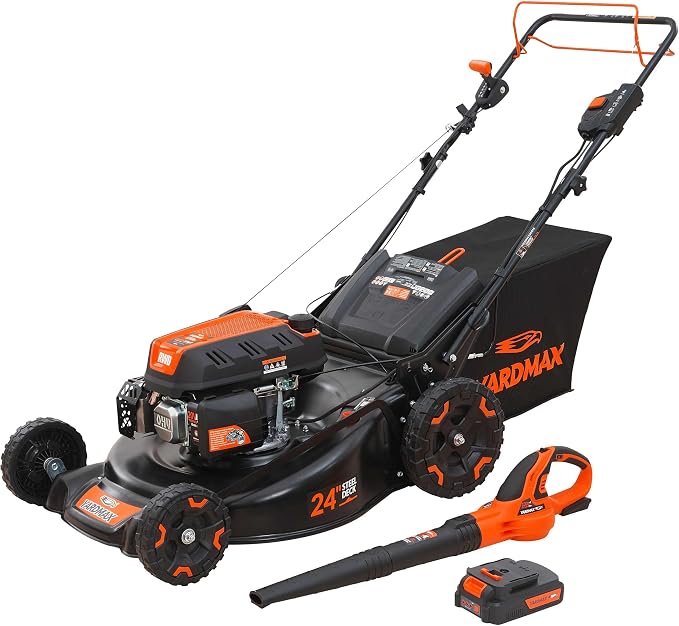
The YARDMAX holds third place because it offers the most distinctive drive system in the group. Its Select PACE design uses a continuously variable transmission, or CVT, along with a six-speed shift lever. That arrangement is intended to let the operator select a mowing pace that better matches walking speed instead of being locked into one fixed propulsion rate. For homeowners who dislike being hurried by a self-propelled mower, this is a meaningful advantage.
A 22-inch cutting deck provides the same broad coverage category as the larger SENIX model, while the 201cc engine supplies a substantial power platform for residential mowing. The aggressive spiked tread on the rubber tires is designed to improve traction and maneuverability, which can be helpful when the lawn includes mild slopes or surfaces where ordinary tread does not feel sufficiently secure.
The mower also includes an automatic choke system. According to the supplied specifications, this removes the need to manually prime or choke the engine during starting, potentially making the startup process less involved. A deck cleanout port is another ownership-friendly feature because it provides a designated way to help clear grass from beneath the cutting deck. The single-lever deck adjustment simplifies height changes between mowing sessions.
Its limitations are mainly about fit and preference. Six selectable speeds provide useful control, but they may feel like more adjustment than a homeowner wants for a small, uncomplicated yard. The available data also does not list the cutting-height range or a 3-in-1 bagging, mulching, and discharge configuration, so buyers who prioritize those details should verify the exact package before ordering. Keep the cleanout port and tire tread free of packed debris, and follow safe shutdown procedures before working near the deck. This mower is best suited to users who place pace control and traction ahead of having the simplest possible propulsion system.
4. BILT HARD 21″ Self Propelled Gas Lawn
The BILT HARD ranks fourth, but its feature set makes it a credible option for homeowners who want a comfortable, easy-starting mower with unusually fine cutting-height control. It uses a 201cc four-stroke OHV engine rated at 9.0 foot-pounds of torque, providing a strong engine specification for routine residential work. The 21-inch steel deck gives it a practical cutting path without moving into the wider, potentially less nimble 22-inch category.
Its no-choke, no-primer starting design is a notable convenience. The supplied information describes the mower as requiring no manual choke or priming adjustments, which may make starting less intimidating for users who prefer a simpler procedure. Rear-wheel-drive self-propulsion and a single-speed system keep operation straightforward. The foam-wrapped, angled handle is designed to reduce hand fatigue, an appealing detail when mowing takes a substantial amount of time.
The deck provides rear bagging, mulching, and side discharge. Eight cutting-height positions range from 1.2 to 3.75 inches, giving the operator more incremental choices than the six-position systems used by several competitors. A single lever synchronizes the height adjustment across all four wheels, so changing the mowing height should not require setting each wheel independently.
The main compromise is the single-speed drive. It is simpler than variable-speed systems, but it offers less opportunity to match the mower’s pace to a slow turn, a tight space, or a faster straightaway. The supplied information also does not identify the bag capacity or wheel sizes. Before purchase, confirm that the included collection and discharge components meet your yard’s needs. Owners should keep the underside clean, monitor engine oil as directed, and avoid treating the no-primer design as a reason to skip normal maintenance. This model fits homeowners who value easy starting, comfort, and precise height selection more than adjustable propulsion speed.
5. SENIX 21” Self Propelled Gas Lawn Mower
The smaller SENIX 21-inch mower is ranked fifth because its design is aimed at a more specific residential use case: maintaining a yard of approximately one-third acre, particularly when relatively flat terrain and easy maneuvering are more important than maximum slope traction. Its 21-inch high-strength steel deck gives it a useful balance between coverage and control, while the 170cc four-cycle OHV engine is specified at 3.8 horsepower and 6.5 foot-pounds of torque.
This mower uses a front-wheel-drive self-propelled layout. That can be convenient around trees, flower beds, and other obstacles because the front of the mower can be lifted and pivoted more easily. The trade-off is terrain suitability: the supplied information specifically positions it for relatively flat yards, so homeowners with demanding slopes may prefer a rear-wheel-drive model such as the Powersmart or the larger SENIX.
The 3-in-1 steel deck supports mulching, side discharge, and rear bagging, and the included bagger holds 1.7 bushels. Six height settings cover 1.25 to 3.75 inches through a dual-lever adjustment system. Its vortex tunnel design is intended to reduce grass buildup beneath the deck, while 8-inch front and 11-inch rear wheels support maneuverability over rough or uneven surfaces. The pre-filled oil is described as enabling a quick startup, and the stated fuel consumption is approximately 27 ounces per hour.
Buyers should note the difference between rough-surface maneuverability and slope traction: larger rear wheels may help movement, but front-wheel drive remains the more important limitation on steep ground. Check the oil level and fuel requirements before the first use, keep the blade and deck clear, and use the bag, mulch plug, or side-discharge setup correctly. It is a practical fit for a moderately sized, mostly level yard where pivoting around obstacles matters more than adjustable speed or rear-wheel drive.
How to Choose the Best Residential Self-Propelled Gas Lawn Mower
A residential gas mower should be judged as a complete system, not by engine displacement alone. The most useful choice depends on your lawn’s size, slope, grass density, storage situation, preferred mowing finish, and tolerance for routine engine care. A larger engine can be valuable, but it does not automatically make a mower easier to control or better for a compact yard.
Start with the shape and terrain of your lawn
Measure the practical mowing area rather than focusing only on the total property size. Houses, patios, driveways, garden beds, play areas, and trees can greatly reduce the grass that actually needs cutting. A 21-inch mower is often a balanced residential size because it covers ground efficiently while remaining reasonably manageable around obstacles.
A 22-inch deck can reduce passes on a broad open lawn. The difference is modest on paper, but repeated passes over a large area add up. The wider deck can be especially useful when most of the yard is open and rectangular. Conversely, a narrower path may be easier to steer through side yards, gates, landscaping, or irregular corners.
Terrain should influence the drive layout. Rear-wheel drive generally makes the most sense when traction while climbing or controlling the mower on slopes is a primary concern. The Powersmart, the larger SENIX, and the BILT HARD all use rear-wheel drive according to the supplied information. The front-wheel-drive SENIX can make lifting the front and pivoting around obstacles easier, but its specifications specifically describe it as best for relatively flat yards.
Do not assume that self-propulsion removes all slope-related risk. A mower still needs to be controlled safely, and wet grass, loose soil, steep grades, and obstacles can change handling. Walk across slopes only according to the mower’s safety instructions, keep your footing secure, and never bypass safety controls.
Choose cutting width according to efficiency and maneuverability
Cutting width affects how many passes you make, but it also affects the mower’s physical footprint. The 21-inch models here offer a middle ground for typical residential properties. The 22-inch models from SENIX and YARDMAX are oriented more toward reducing mowing time on larger or more open lawns.
Deck material also matters for long-term ownership. Each mower in this group is described with a steel deck. Steel can provide a solid, durable mowing platform, but it must still be kept clean and dry enough to limit buildup and corrosion. Grass packed beneath the deck can affect airflow and cutting performance, especially when mowing damp turf. Follow the manufacturer’s instructions for safely cleaning beneath the deck, and remove the spark plug connection or otherwise secure the engine as directed before servicing the blade area.
Deck width does not tell you everything about final results. Blade condition, mowing speed, grass height, overlap between passes, and whether the grass is wet can all matter. Even the most powerful mower can leave a less consistent finish if the operator moves too quickly through heavy growth or waits until grass becomes excessively tall.
Understand engine size without overvaluing it
The products span 170cc and 201cc OHV engines. The 201cc models offer more displacement on paper, which can be attractive for larger lawns or demanding growth. The YARDMAX, BILT HARD, and larger SENIX all use 201cc engines. The Powersmart and smaller SENIX use 170cc engines, but their other design choices may make them more appropriate for particular yards.
Engine displacement is only one part of the mowing experience. Drive configuration, transmission design, deck width, wheel size, and operator control all affect how the mower feels. A 170cc mower with suitable traction may be more useful on a homeowner’s property than a larger-engine model with a less appropriate layout.
OHV means overhead valve, a common engine design in residential outdoor power equipment. The important ownership point is that gas engines require routine care. Use the fuel and oil specified in the owner’s manual, check oil before operation as directed, keep the air-intake area reasonably clean, and store the mower according to the manufacturer’s recommendations. Do not infer a maintenance interval from another mower because engine requirements can differ.
The smaller SENIX provides a stated fuel-consumption figure of approximately 27 ounces per hour and describes its oil as pre-filled. That information can help set expectations, but actual use varies with grass height, terrain, propulsion, throttle behavior, and mowing conditions. Pre-filled oil should still be checked before starting, since shipping and storage conditions can affect the level.
Pick the propulsion system you can control comfortably
Self-propelled systems differ in more than whether the wheels turn. A single-speed system, such as the one described for the BILT HARD, is simple to operate. Engage the drive and walk at a pace that suits it. This can be a good fit for a straightforward lawn and for users who prefer fewer controls.
Variable-speed propulsion provides more flexibility. The larger SENIX uses a variable-speed system, allowing the operator to better match the mower to walking pace and conditions. That is helpful when moving from an open straightaway to a tight area or when you want a slower pace through thicker grass. The extra control may also make the mower more comfortable for multiple users with different walking speeds.
The YARDMAX uses a CVT and six-speed shift lever. This is a more specialized approach to pace adjustment. It may appeal to a homeowner who wants clear selectable speed settings and does not want a fixed self-propelled pace. In exchange, there is more to learn and another control to maintain awareness of during turns and transitions.
Front-wheel drive can be useful for turning. Lifting the front wheels slightly to pivot around an obstacle is a practical technique, and the smaller SENIX is designed with that maneuverability in mind. Rear-wheel drive generally prioritizes traction, particularly when the front of the mower becomes light on a slope. Neither layout is universally superior; the correct choice follows the yard’s shape and grade.
Compare mowing modes and bag capacity
A 3-in-1 system usually refers to bagging, mulching, and discharge. Bagging provides a collected finish and is useful when clippings must be removed. Mulching returns finely cut clippings to the lawn, which can save emptying stops when conditions are appropriate. Discharge is often the fastest choice for open areas, although the direction and type of discharge should be used responsibly around walkways, vehicles, people, and property.
All five listed mowers provide multiple mowing modes, but the discharge direction is not identical in the supplied descriptions. The Powersmart uses rear discharge, while the larger SENIX, BILT HARD, and smaller SENIX specify side discharge. The YARDMAX data does not list the complete 3-in-1 configuration, so that detail should be confirmed before purchase if bagging or mulching is essential.
Bag capacity can affect how often you stop. The Powersmart includes a 1.4-bushel bag, and the smaller SENIX includes a 1.7-bushel bagger. The other supplied specifications do not identify capacity. A larger bag is not always better if it makes the mower feel bulky when full, but smaller capacity means more frequent emptying in thick or damp grass.
Use the mulch plug, bag, and discharge components exactly as designed. Never reach into a discharge opening while the blade can move. Shut the mower down before removing a blockage, and do not use bagging equipment that is damaged or incorrectly attached.
Look at height adjustment range and control
Cutting height should be adjustable enough for your grass and seasonal routine. The listed ranges begin at 1.2 inches on the BILT HARD, 1.25 inches on the larger and smaller SENIX models, and 1.5 inches on the Powersmart. The upper limits range from 3.75 to 4 inches. A higher setting can be useful when grass is stressed or growing vigorously, while a lower setting may suit a specific lawn preference if the grass and conditions allow it.
Single-lever adjustment is convenient because one control changes all four wheels together. The Powersmart, larger SENIX, YARDMAX, and BILT HARD use a single-lever or single-lever-style adjustment according to the supplied information. The smaller SENIX uses dual-lever adjustment. Dual levers are not inherently difficult, but they require attention to keep front and rear settings matched as intended.
A mower should not be set extremely low simply to extend the time between cuts. Removing too much grass at once can stress the turf and place additional load on the machine. If the lawn has become overgrown, make gradual height changes where practical rather than expecting one pass to perform every task.
Give starting and comfort features the right weight
Starting convenience is important because a mower that is difficult to start can discourage timely maintenance. The YARDMAX uses an automatic choke system and does not require manual priming or choking according to the supplied data. The BILT HARD is described as having a no-choke, no-primer design. The smaller SENIX lists pre-filled oil and a quick startup benefit.
These features do not eliminate normal preparation. Fuel must be fresh and appropriate, oil must be at the correct level, and the mower should be operated according to the manual. If a mower becomes hard to start, inspect basic causes such as fuel condition, oil level, the air filter, and the spark plug only as permitted by the manufacturer’s service guidance. Avoid repeatedly pulling or operating controls without understanding the starting procedure.
Handle design also affects comfort. The BILT HARD has a foam-wrapped, angled handle intended to reduce hand fatigue. Other models may have ergonomic details, but they were not specified in the supplied data. Height, grip position, vibration, and the effort required to turn can matter more than a single comfort feature. If possible, compare the folded storage dimensions and handle adjustment provisions before buying, because residential garages and sheds often have limited space.
Plan for storage, cleaning, and routine maintenance
Gas mowers need a suitable storage location that protects them from unnecessary moisture and keeps fuel and equipment away from children. Before storage, follow the manual’s guidance for fuel handling, oil, and seasonal preparation. Do not store a hot mower against combustible materials, and allow the engine and deck to cool before putting the machine away.
Cleaning beneath the deck helps prevent compacted grass from interfering with blade clearance and airflow. The YARDMAX has a deck cleanout port, which provides a dedicated cleaning feature. For other models, use only the cleaning method approved by the manufacturer. Never tilt or wash a gas mower in a way that allows water or fuel to enter sensitive areas, and secure the mower before inspecting underneath.
Blade maintenance is equally important. A dull or damaged blade can reduce cutting quality and may cause the mower to work harder. Before inspecting or removing a blade, disconnect the spark plug wire or follow the specific safety procedure in the manual. Wear suitable gloves when handling the blade, and use a qualified service professional if you are not comfortable with sharpening or replacement.
Self-propelled mechanisms also deserve inspection. Keep the wheels and control areas free of packed grass, and pay attention to changes in drive engagement, unusual noise, or inconsistent movement. Do not continue using equipment that develops a serious mechanical or safety problem. A mower’s manual is the authority for belt, cable, oil, filter, and spark plug intervals.
Match the mower to your ownership priorities
Choose the Powersmart when balanced rear-wheel traction, a conventional 21-inch deck, and three useful mowing modes matter most. Choose the larger SENIX when you want a 22-inch deck, 201cc engine, 11-inch rear wheels, and variable-speed control. The YARDMAX is the more specialized choice for a CVT and six selectable pace settings. The BILT HARD is appealing when easy starting, an eight-position height range, and a comfortable handle are priorities. The smaller SENIX makes sense for a roughly one-third-acre, mostly flat yard where front-wheel maneuverability is valuable.
Before ordering, verify the exact model, included accessories, discharge configuration, assembly requirements, and warranty or service terms shown by the current seller. Product names can be shortened in listings, and equipment packages can vary. Confirm that the mower will fit through gates and into the intended storage area, and consider whether replacement blades, bags, and other wear parts are readily available for the exact model.
Finally, consider who will use the mower. A variable-speed mower may be more comfortable for a household with several operators. A simple single-speed mower may be preferable for one person who values uncomplicated controls. A rear-wheel-drive model can be the safer-feeling match for a sloped yard, while front-wheel drive can reduce effort around obstacles on flatter ground. The best residential choice is the one whose limitations match your lawn rather than the one with the longest specification list.
FAQ About Residential Self-Propelled Gas Lawn Mowers
What is the best residential self-propelled gas lawn mower for slopes?
Among these five options, the Powersmart is the primary slope-oriented recommendation because it combines rear-wheel drive with large 10-inch rear wheels. The larger SENIX also uses rear-wheel drive and 11-inch rear wheels, making it a strong alternative when a wider deck, 201cc engine, and variable speed are more important. Wheel size alone does not determine safe slope performance, however. Surface condition, grade, operator footing, and the mower’s safety instructions all matter.
Is rear-wheel drive better than front-wheel drive for a residential mower?
Neither system is automatically best for every property. Rear-wheel drive generally favors traction and control when mowing on slopes or when the front of the mower becomes lighter. Front-wheel drive can make it easier to lift the front and pivot around trees, beds, and other obstacles. The smaller SENIX uses front-wheel drive and is specifically positioned for relatively flat yards, while the Powersmart and larger SENIX use rear-wheel drive for stronger traction-oriented performance.
Is a 21-inch or 22-inch mower better for a home lawn?
A 22-inch deck can reduce the number of passes on a broad, open lawn. A 21-inch deck may be easier to guide through narrow spaces and around landscaping. The difference is relatively small, so yard layout should be more important than the single inch of width. Consider gate clearance, storage space, turning room, and the amount of open grass before choosing the wider deck.
Do self-propelled gas mowers still require pushing?
Self-propulsion drives the mower forward, but the operator still guides, turns, stops, and controls the machine. You may need to push or pull it in certain situations, especially when positioning it, maneuvering around obstacles, or working on terrain where drive engagement is not appropriate. The feature reduces forward-walking effort; it does not make the mower autonomous.
Which residential mower is easiest to start?
The YARDMAX lists an automatic choke system that avoids manual priming or choking, while the BILT HARD is described as a no-choke, no-primer design. The smaller SENIX lists pre-filled oil and a quick-start benefit. Starting performance still depends on correct fuel, oil level, storage, and adherence to the owner’s manual. Convenience features reduce steps but do not replace routine preparation.
Should I choose a variable-speed self-propelled mower?
Variable speed is worthwhile if you want to match the mower to your walking pace, slow down near obstacles, or adjust how the machine feels across different sections of the lawn. The larger SENIX provides variable speed, and the YARDMAX uses a CVT with six selectable speeds. A single-speed mower such as the BILT HARD can be preferable if you want fewer controls and your lawn is open and uncomplicated.
How often should a gas lawn mower be maintained?
Follow the maintenance schedule in the exact owner’s manual rather than using a generic interval. Regular responsibilities commonly include checking oil, keeping the deck and air-intake areas clean, inspecting the blade, and storing fuel and the mower correctly. Spark plug, filter, oil-change, and drive-system service intervals vary by engine and model. Always shut down and secure the mower before cleaning, inspecting, or servicing it.
Conclusion: The Best Overall Residential Self-Propelled Gas Mower
The Powersmart 21-inch mower is the best overall choice here because it combines rear-wheel traction, a steel deck, a 170cc OHV engine, six height settings, and practical 3-in-1 mowing flexibility. The larger SENIX is the better alternative for homeowners who want more engine capacity, a 22-inch deck, larger rear wheels, and variable-speed control. Choose among the remaining models according to your priorities: CVT pace control from YARDMAX, easy starting and eight height positions from BILT HARD, or front-wheel maneuverability for a mostly flat yard with the smaller SENIX.

I’m Maya L. Greenwood, a lifelong plant lover who believes anyone can grow something beautiful with the right guidance. After years of testing soil mixes, pruning methods, irrigation tricks, and pest-safe solutions, I started EasyGardenTips.com to turn hard-won lessons into step-by-step advice. From seed starting and container gardens to composting and seasonal checklists, my goal is to make gardening simple, sustainable, and fun.