5 Best Gas Riding Lawn Mower: Top Product Picks and Buying Guide
Finding the best gas riding lawn mower can be surprisingly difficult when listings blur the difference between a riding machine and a walk-behind mower. The products below are all gas-powered walk-behind models, so they are most appropriate for homeowners who want engine power and self-propelled assistance without moving up to a true seated tractor.
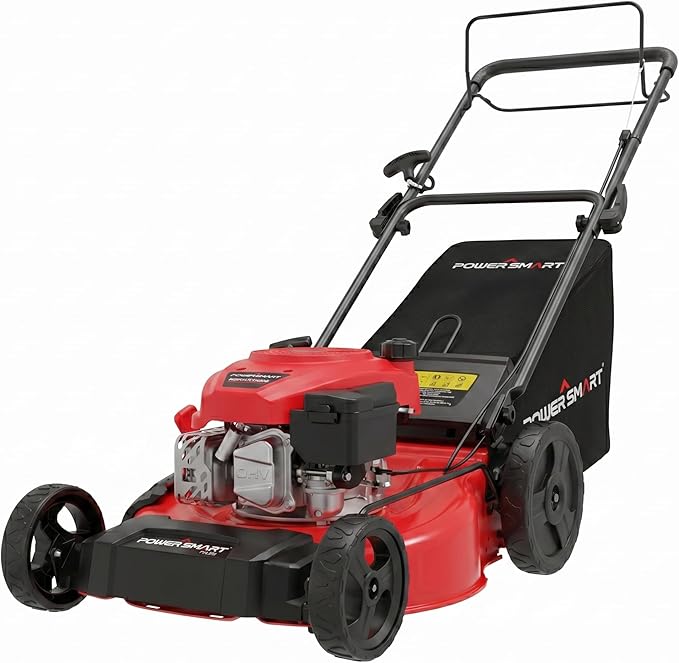
My first choice is PowerSmart 21-Inch Self-Propelled Gas Lawn Mower. It stands at the top of this 5-product list because it offers the strongest overall fit for the buying priorities covered below.
My second choice is SENIX 201cc 22-Inch Variable-Speed Self-Propelled Gas Lawn Mower. It is the option I would compare next when a buyer has slightly different priorities from my first pick.
My third choice is PowerSmart Easycut 18-Inch 144cc Gas Walk-Behind Lawn Mower. It rounds out my top three with a useful alternative for buyers whose priorities differ from the first two choices.
This guide compares the five selected machines, explains where each one fits, and covers deck size, drive systems, cutting height, starting, maintenance, storage, safety, and ownership trade-offs. It also clarifies why these walk-behind mowers should not be confused with an actual riding lawn mower.
.amz-product-card:hover{transform:translateY(-3px)!important;box-shadow:0 10px 26px rgba(20,70,110,.12)!important;border-color:#bdd7ea!important;}
Best Gas Riding Lawn Mower
I selected these products for their relevance to gas-powered residential mowing, the usefulness of their supplied specifications, the range of yard sizes they address, and available customer-feedback evidence. Because the data supplied covers walk-behind machines rather than seated riding equipment, the rankings emphasize practical mowing capability while clearly noting the mismatch for shoppers who specifically need a riding mower.
| # | Image | Product | Price on Amazon |
|---|---|---|---|
| 1 |  |
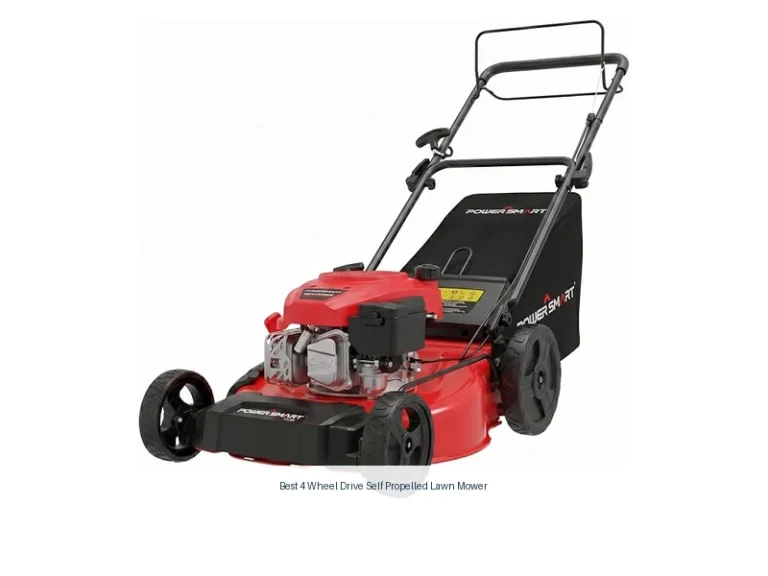
PowerSmart 21-Inch Self-Propelled Gas Lawn Mower | Check Price |
| 2 |  |
SENIX 201cc 22-Inch Variable-Speed Self-Propelled Gas Lawn Mower | Check Price |
| 3 |  |
PowerSmart Easycut 18-Inch 144cc Gas Walk-Behind Lawn Mower | Check Price |
| 4 |  |
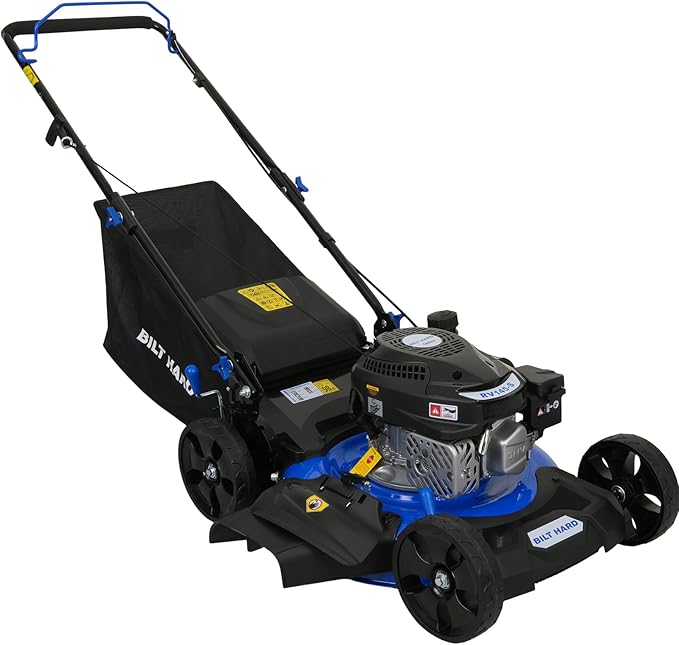
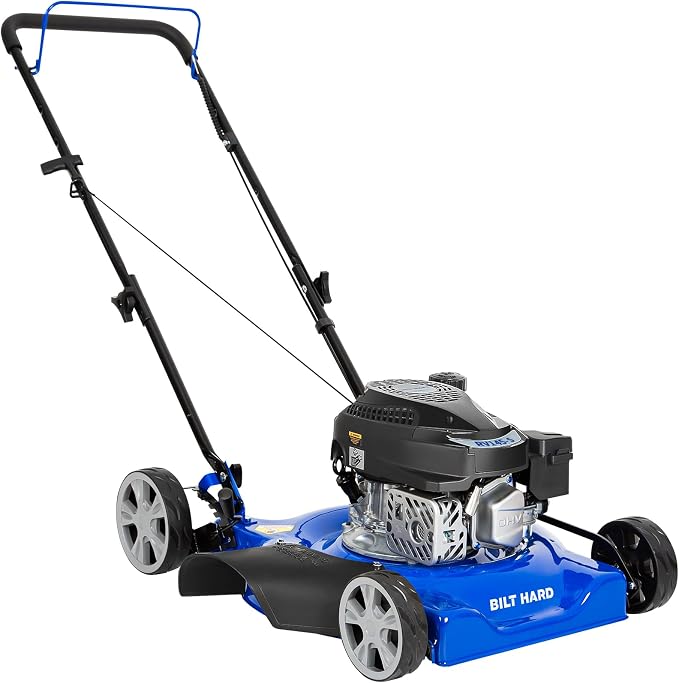
BILT HARD 20-Inch 144cc OHV Gas Push Lawn Mower | Check Price |
| 5 |  |
YARDMAX 22-Inch 201cc Select PACE Self-Propelled Gas Mower | Check Price |
PowerSmart 21-Inch Self-Propelled Gas Lawn Mower
The PowerSmart 21-inch self-propelled mower is the strongest all-around option in this group. Its 170cc OHV engine provides a useful middle ground: enough stated power for ordinary medium-yard work and difficult patches, without moving into the larger-engine category of the SENIX and YARDMAX models. Since it is self-propelled, you do not have to push the full machine across every part of the lawn.
Rear-wheel drive is the important distinction here. Combined with 10-inch rear wheels, it should give the operator better traction when climbing or crossing uneven ground than a basic push mower. That makes it a sensible match for lawns with slopes, although traction does not eliminate the need to walk carefully or control the mower at a safe pace.
The 21-inch steel deck covers a useful amount of ground on each pass, while six height positions from 1.5 to 3.9 inches let you raise the cut for taller seasonal growth or lower it for a shorter appearance. Bagging, mulching, and rear discharge add flexibility. The 1.4-bushel bag is convenient for collecting clippings, but frequent emptying may still be necessary on a large or overgrown lawn.
Pros
- Rear-wheel drive and 10-inch rear wheels help on slopes and uneven terrain.
- Three-in-one bagging, mulching, and rear-discharge capability.
- 21-inch steel deck and six cutting-height positions.
- 170cc OHV engine suits medium-yard mowing.
Cons
- It is a walk-behind mower, not a seated riding mower.
- The 1.4-bushel bag may require repeated emptying.
- Its 3.9-inch maximum height is slightly less than SENIX’s 4-inch setting.
My Opinion
This is my leading pick for a homeowner who wants one adaptable gas mower for a medium yard, especially where slopes make a push mower tiring. Confirm that the deck, bag, and replacement parts fit your local support options before purchase, and follow the starting and oil instructions supplied with the machine.
SENIX 201cc 22-Inch Variable-Speed Self-Propelled Gas Lawn Mower
The SENIX brings the largest cutting deck among the first two traditional all-around choices: its 22-inch steel deck can reduce the number of passes across a broad lawn. A 201cc four-cycle OHV engine also places it toward the stronger end of this group, which may appeal to owners who regularly deal with thick grass or a medium-to-large property.
Its rear-wheel-drive system works with 11-inch rear wheels, giving the mower a helpful combination of traction and clearance over uneven sections. The variable-speed self-propelled setup is especially valuable because walking pace is not identical for every operator or every part of a lawn. A slower setting can make tight areas easier to control, while a faster setting can make open stretches less tedious.
Bagging, mulching, and side discharge cover the common clipping preferences, and the single-lever height adjustment ranges from 1.25 to 4 inches. That broad range gives you more room to respond to grass type and weather than a narrower system. The trade-off is that a 22-inch deck and larger engine can feel less nimble in cramped yards, around closely spaced landscaping, or through narrow gates.
Pros
- 201cc OHV engine and 22-inch steel deck suit larger mowing areas.
- Variable-speed self-propulsion allows a more personalized pace.
- 11-inch rear wheels support traction on uneven ground.
- Three cutting modes and six height positions from 1.25 to 4 inches.
Cons
- Wider deck may be awkward in small or tightly planted yards.
- It remains a walk-behind product rather than a riding mower.
- The larger engine and deck may be more machine than a small lawn requires.
My Opinion
Choose the SENIX over the top-ranked PowerSmart when cutting width, engine size, and adjustable walking speed matter most. It is a particularly logical option for an open, uneven lawn, but measure gates and storage doors first because the 22-inch format can be inconvenient in confined spaces.
PowerSmart Easycut 18-Inch 144cc Gas Walk-Behind Lawn Mower
The EasyCut takes a different approach from the self-propelled models. Its 144cc four-cycle OHV engine powers a conventional push mower, so the operator supplies the forward motion. That makes it less appealing for steep lawns or anyone who wants assistance on every pass, but it can be a straightforward choice for a smaller, mostly level yard.
Starting is helped by an auto-choke system and primer structure. Those details matter to beginners who may not want to manage a manual choke routine, although a simple starting system still depends on proper fuel, oil, and seasonal storage. The 18-inch steel deck is narrower than the decks on the other four machines, making it easier to steer around trees, garden beds, and tight corners.
PowerSmart gives this mower five height settings between 1.5 and 3.9 inches. That covers common residential cutting needs, but it offers less fine adjustment than the BILT HARD’s eight positions. Side discharge is the stated clipping method, which is efficient when you want to keep moving through taller grass but less suitable if you specifically want collected clippings or finely redistributed mulch.
Pros
- Compact 18-inch deck is easy to maneuver in smaller yards.
- Auto choke and primer structure support easier starting.
- 144cc four-cycle OHV engine provides gas-powered cutting capability.
- Five height settings cover 1.5 to 3.9 inches.
Cons
- Push operation can be tiring on slopes or larger lawns.
- Side discharge does not provide the stated bagging or mulching choices.
- Narrower deck takes more passes across open ground.
My Opinion
This is the best fit here for a buyer who values low-complexity handling over self-propelled convenience. It makes the most sense for a small, level property with obstacles, and the side-discharge design should be confirmed as acceptable before purchase if clipping collection is important to you.
BILT HARD 20-Inch 144cc OHV Gas Push Lawn Mower
The BILT HARD stands out for its unusually broad cutting-height adjustment. A single lever synchronizes all four wheels and offers eight positions from 0.7 to 3.2 inches. That is useful when you want precise control over a short cut, although its maximum height is lower than the other products here, so it may provide less flexibility for very tall grass or a deliberately high seasonal cut.
Its 20-inch deck is a practical middle size: wider than the EasyCut for fewer passes, but not as broad as the 22-inch self-propelled machines. The 144cc four-cycle OHV engine uses an automatic choke and does not require a primer or manual choke starting sequence according to the supplied information. That can simplify the start-up routine for a new owner.
Seven-inch rear wheels and six-inch front wheels use double ball bearings, and the angled grip has a foam wrap intended to reduce hand fatigue. Those details improve the pushing experience, but this is still a push mower rather than a self-propelled model. The supplied ownership note is important: do not dump or turn the mower over, because oil can enter the combustion chamber. Any cleaning or blade-area work should follow the manufacturer’s approved positioning instructions.
Pros
- Eight height settings provide detailed cutting control.
- Automatic choke starting does not require a primer or manual choke.
- 20-inch deck balances coverage and maneuverability.
- Ball-bearing wheels and foam-wrapped grip support easier pushing.
Cons
- Push operation is less suitable for steep or expansive lawns.
- Maximum 3.2-inch height is lower than the other listed models.
- Improperly turning the mower over can allow oil into the combustion chamber.
My Opinion
The BILT HARD is an appealing choice for a mostly level yard where cutting-height precision matters more than self-propulsion. It deserves extra attention during setup and cleaning because the supplied handling warning is specific and consequential; store the owner’s instructions where they are easy to consult.
YARDMAX 22-Inch 201cc Select PACE Self-Propelled Gas Mower
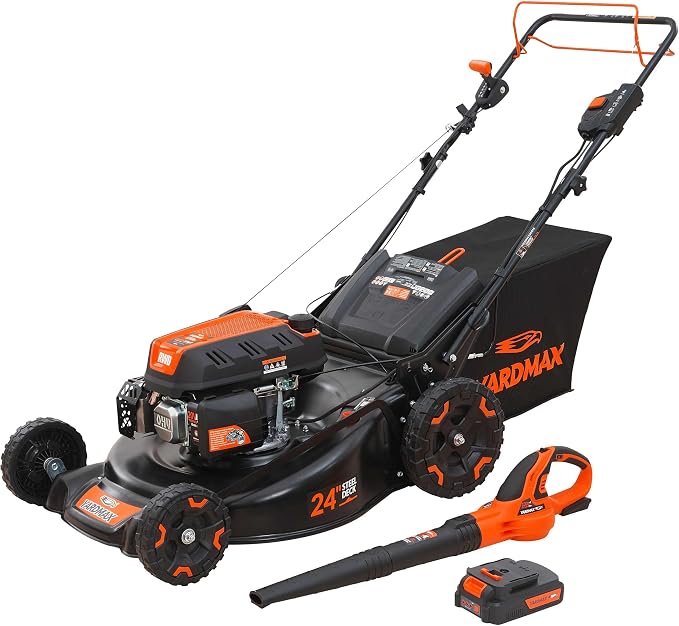
YARDMAX combines a 22-inch cutting deck with a 201cc engine, putting it in the same broad-capacity category as the SENIX. Its main point of difference is the Select PACE continuously variable transmission. Rather than forcing every operator to use one fixed travel rate, the six-speed shift lever lets you choose a pace closer to your walking speed.
That adjustable pace can make long mowing sessions more comfortable, particularly when moving between open lawn and sections that require slower steering. The high-wheel configuration and aggressive spiked rubber tread are intended to improve traction and maneuverability. Even so, the supplied data identifies this as front-wheel drive, so buyers should compare that drive layout with their terrain and preferred handling before choosing it over a rear-wheel-drive model.
The mower supports three-in-one cutting, and a deck cleanout port can make underside cleaning more convenient. A single-lever deck adjustment also reduces the effort needed to change cutting height. Since the supplied information does not state the exact height range, check the current product documentation before relying on a particular setting. The broad deck may be efficient on open ground but less convenient in narrow passages.
Pros
- Six-speed CVT pace selection accommodates different walking speeds.
- 201cc engine and 22-inch deck suit larger mowing areas.
- Spiked rubber tires aim to improve traction and maneuverability.
- Three-in-one cutting and deck cleanout port support easier ownership.
Cons
- Front-wheel drive may not be the preferred layout for every slope.
- The 22-inch deck can be cumbersome around tight landscaping.
- The supplied data does not specify the exact cutting-height range.
My Opinion
YARDMAX is a strong alternative for someone who prioritizes pace control and easy deck cleaning in a larger self-propelled mower. Verify the drive behavior, height range, and available replacement components before buying, especially if your property has steep inclines or narrow access points.
How I Selected These Gas Mowers for the Riding-Mower Search
The phrase best gas riding lawn mower normally points to a seated machine, but the supplied product set contains five gas walk-behind mowers. Rather than disguise that distinction, I ranked them according to the information available: cutting capacity, engine category, propulsion, terrain assistance, clipping management, adjustment range, maneuverability, and the practical needs of different lawn sizes.
Customer-feedback evidence was also considered through the supplied ratings and response counts, but those figures are signals rather than guarantees. A rating can indicate general satisfaction while still hiding an individual buyer’s concern about assembly, starting, bagging, storage, or parts availability. Product claims were limited to the supplied data, and no hands-on testing or unsupported durability conclusion was added.
The most important selection takeaway is that a walk-behind mower cannot provide the seating, steering position, or reduced walking effort of a true riding mower. If the central need is avoiding long periods on foot, these products are the wrong category even when their engines and decks are capable.
Why the ranking favors versatility
PowerSmart’s first-place position comes from the balance of rear-wheel drive, a steel 21-inch deck, six settings, and three clipping modes. SENIX follows closely because its 201cc engine, 22-inch deck, large rear wheels, and variable speed offer more capacity but may be excessive in a compact yard. The remaining machines serve narrower needs: a small-yard push mower, a height-focused push mower, and a larger front-wheel-drive model with pace selection.
Do not select by engine size alone. A wider deck can save passes, but the right drive layout, manageable width, cutting-height range, and clipping method often matter more in the actual yard.
How to Choose the Right Gas Mower for Your Yard
Start with the property rather than the engine badge. Measure the lawn’s approximate size, note slopes and obstacles, check gate widths, and decide whether you will bag, mulch, discharge, or leave clippings in place. If you specifically require a seated machine, search within the riding-mower category instead of treating a self-propelled walk-behind model as an equivalent.
- Match deck width to access: Choose a wider deck for open ground and a narrower one for gates, trees, and garden borders.
- Choose propulsion for terrain: Self-propelled drive reduces pushing effort, while rear-wheel drive can be attractive on sloped or uneven ground.
- Check the height range: More positions and a higher maximum give you more seasonal cutting flexibility.
- Decide how clippings will be handled: Bagging, mulching, discharge, or a combination changes the mower’s usefulness.
- Confirm ownership details: Check assembly, oil, fuel, blade, bag, and replacement-part information before committing.
Engine size and lawn conditions
The listed engines range from 144cc to 201cc. That number is only one part of the decision. A 144cc mower may be perfectly reasonable for a small, regularly maintained lawn, while a larger engine and wider deck can be more suitable for thick growth or a broad property. More capacity does not automatically mean easier ownership; a larger mower can weigh more, take more room to store, and feel awkward around obstacles.
Deck width and maneuverability
An 18-inch deck is helpful when the lawn includes narrow corridors and many objects to steer around. A 20- or 21-inch deck is a useful compromise for many residential properties. A 22-inch deck can shorten mowing time on open ground, but only if it fits through every gate and can turn comfortably near beds, fences, and trees. Measure the tightest route, not just the main lawn.
Drive type and pace control
Self-propulsion is most valuable when the mower must travel uphill, cross uneven sections, or cover enough ground that pushing becomes tiring. Rear-wheel drive can help maintain traction where the front wheels become light on an incline. YARDMAX uses front-wheel drive and adds six pace choices through its CVT system, so its main attraction is adjustable travel speed rather than the same terrain emphasis as the rear-wheel-drive models.
Cutting height and grass health
Never choose a mower solely because its lowest setting looks attractive. Cutting too much at once can stress grass and leave the lawn looking uneven. The listed ranges vary considerably: BILT HARD reaches down to 0.7 inch but stops at 3.2 inches, while SENIX reaches 4 inches. A wider range is useful only if the adjustment is easy to use and matches your grass, climate, and preferred maintenance routine.
Setup and First-Use Checklist
A gas mower should not go straight from the box to the lawn without a careful setup. Assembly details differ by product, so the owner’s manual takes priority over general advice. The goal is to confirm safe controls, correct fluids, secure hardware, and proper operating conditions before the first full mowing session.
- Inspect the deck, wheels, handle, discharge parts, bag, and controls for shipping damage.
- Install and tighten the handle and any supplied guards or discharge components exactly as instructed.
- Add the specified engine oil and fuel only as directed in the product documentation.
- Check that the blade area is clear and that no shipping material remains near moving parts.
- Test the height lever at every position while the engine is off.
- Start the mower outdoors in a clear area, away from children, pets, and ignition sources.
- Listen for unusual vibration or noise and stop immediately if anything seems loose or abnormal.
For the BILT HARD model, pay particular attention to the warning not to dump or turn the mower over. Oil entering the combustion chamber can create starting and engine problems. For every mower, use the manufacturer’s approved method for inspecting the underside, clearing grass, or accessing the blade.
How to Mow More Efficiently
Set the height before starting
Choose the height with the engine off and the mower on a stable surface. Raise the deck when grass is unusually tall or conditions are stressful, then make gradual adjustments later if a shorter appearance is preferred. Cutting a small amount regularly is generally easier on the machine and the lawn than waiting until growth is heavy.
Use the correct clipping mode
Bagging keeps clippings contained and is useful when the lawn must look especially tidy, but the bag will need emptying. Mulching can return finely cut material to the lawn when conditions are suitable. Discharge is efficient for taller grass and fast coverage, but direct the discharge away from people, windows, vehicles, and finished garden areas.
Plan passes around obstacles
Begin with the open sections where the deck width provides the greatest benefit, then slow down around trees, beds, and corners. Avoid forcing a wide 22-inch mower into a space that the 18-inch EasyCut would handle more naturally. Straight, overlapping passes usually produce a more even result than repeated random turns.
Maintenance and Storage Basics
Gas equipment lasts longer when routine care is treated as part of ownership rather than an emergency response. Follow the supplied maintenance schedule for oil, air filtration, spark plugs, blades, and fuel. The available data does not provide service intervals, so inventing a universal timetable would be misleading.
- Keep the deck clear of packed grass using the approved cleaning method.
- Inspect the blade and mounting hardware with the engine stopped and the ignition safeguards followed.
- Keep wheels, height-adjustment parts, and drive controls free of heavy grass buildup.
- Store the mower in a dry, ventilated location protected from weather and unauthorized use.
- Prepare fuel and the engine for extended storage according to the owner’s instructions.
- Never perform underside work with the engine running.
YARDMAX’s deck cleanout port may simplify underside cleaning, but it does not remove the need to follow the manual’s safety procedure. Likewise, an automatic choke makes starting easier; it does not replace proper fuel, oil, and seasonal care. Keep model-specific parts information available, especially for the bag, blade, drive components, and discharge hardware.
Common Mistakes to Avoid
Many ownership frustrations come from buying for the specification that sounds largest rather than the specification that fits the property. Others result from using the wrong cutting height, ignoring access measurements, or treating a self-propelled walk-behind mower as a substitute for a seated riding unit.
- Do not buy a 22-inch deck before measuring gates and storage space.
- Do not assume a larger engine removes the need for regular maintenance.
- Do not turn the BILT HARD mower over in a way that can move oil into the combustion chamber.
- Do not mow steep slopes beyond your ability to maintain secure footing and control.
- Do not clear a clogged deck or blade area while the engine is running.
- Do not assume every model bags or mulches; verify the stated clipping functions.
- Do not confuse self-propelled operation with a true riding mower.
If the deciding requirement is a seat, foot-operated control layout, or the ability to mow without walking behind the machine, stop comparing these five products and move to a true riding-mower category.
FAQ
Are any of these gas mowers actual riding lawn mowers?
No. All five supplied products are walk-behind gas mowers. Four offer self-propelled assistance or pace control, but none provides a seat or riding chassis.
Which listed mower is best for a sloped lawn?
The PowerSmart 21-inch model is the clearest match from the supplied information because it combines rear-wheel drive with large 10-inch rear wheels. SENIX also uses rear-wheel drive and 11-inch rear wheels, making it another option for uneven terrain. Safe footing and operator control remain essential on any slope.
Which option is best for a small yard?
The PowerSmart EasyCut 18-inch mower is the most natural small-yard choice because its narrower steel deck and smaller wheel layout are intended to maneuver around trees, beds, and tight corners. Its push design is most practical on a fairly level property.
Which model covers the most ground per pass?
SENIX and YARDMAX both use 22-inch decks, the widest in this group. That width can reduce passes on an open lawn, but it may be less convenient in narrow spaces and should be checked against gates and storage areas.
Which mower offers the most cutting-height positions?
The BILT HARD provides eight height positions from 0.7 to 3.2 inches. SENIX and PowerSmart each provide six positions, while the EasyCut provides five. YARDMAX is described as having single-lever adjustment, but the supplied data does not state its exact number of positions or range.
Which products can bag, mulch, and discharge clippings?
PowerSmart’s 21-inch model, SENIX, and YARDMAX are identified as three-in-one machines. The EasyCut is identified with side discharge, while the BILT HARD data does not specify bagging or mulching capability.
Final Thoughts
Because the supplied choices are walk-behind machines rather than a true riding unit, the best gas riding lawn mower search requires a category check first. Among these products, I would choose the PowerSmart 21-inch self-propelled mower for balanced versatility, the SENIX 201cc 22-inch mower for larger or uneven lawns, and the PowerSmart EasyCut 18-inch mower for a compact, level yard where maneuverability matters most.

I’m Maya L. Greenwood, a lifelong plant lover who believes anyone can grow something beautiful with the right guidance. After years of testing soil mixes, pruning methods, irrigation tricks, and pest-safe solutions, I started EasyGardenTips.com to turn hard-won lessons into step-by-step advice. From seed starting and container gardens to composting and seasonal checklists, my goal is to make gardening simple, sustainable, and fun.