10 Best Weed Barrier for Vegetable Garden: Durable Top Picks
Are you looking for the best weed barrier for vegetable garden use? A good barrier should suppress weeds while still allowing water, air, and nutrients to reach the soil, and it should be easy to cut around tomatoes, peppers, cucumbers, squash, strawberries, and other garden crops.
My top overall recommendation is the ECOgardener Premium 5oz Pro Garden Weed Barrier. Its thick, permeable construction provides strong weed suppression while remaining practical for raised beds, planting rows, and established vegetable gardens.
For a more affordable option, the Petgrow Heavy-Duty Weed Barrier Landscape Fabric offers excellent value. Its needle-punched polypropylene construction allows irrigation and air movement while helping block sunlight from reaching germinating weeds.
For gardeners covering a larger plot, the LAVEVE 4FT x 100FT Weed Barrier Landscape Fabric provides a wide 3.2-ounce woven ground cover with strong current Amazon sales and thousands of buyer ratings. Current marketplace tracking places this LAVEVE model among the strongest-selling landscape-fabric products.
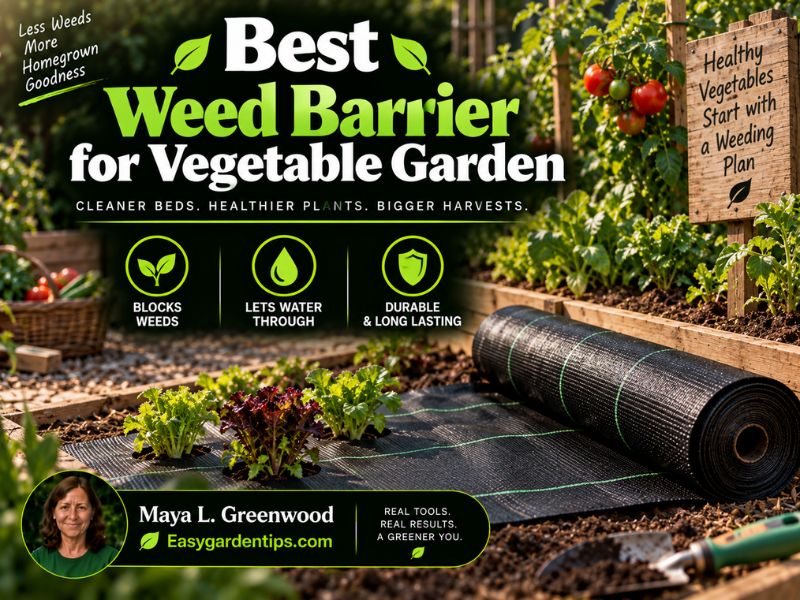
Landscape fabric can work well in vegetable gardens, but it should be used strategically. Utah State Extension notes that permeable weed-barrier fabric can prevent annual weed establishment while allowing air and water movement, while Oregon State Extension lists landscape fabric as an option for vegetable gardens because moisture can pass through it.
Best Weed Barrier for Vegetable Garden
| Image | Product Name | Check Price |
|---|---|---|
Best Choice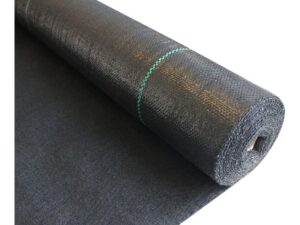 | ECOgardener Premium 5oz Pro Garden Weed Barrier 3FT x 250FT | Check Price |
Second Best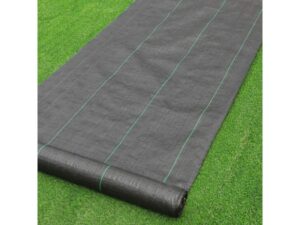 | Petgrow Heavy-Duty Weed Barrier Landscape Fabric 3FT x 100FT | Check Price |
Third Choice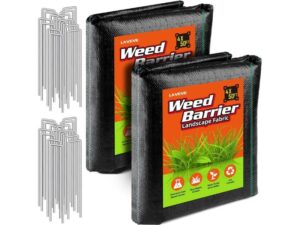 | LAVEVE 4FT x 100FT 3.2oz Weed Barrier Landscape Fabric | Check Price |
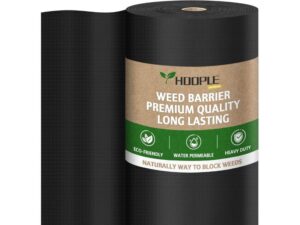 | HOOPLE 4FT x 180FT Premium Garden Weed Barrier | Check Price |
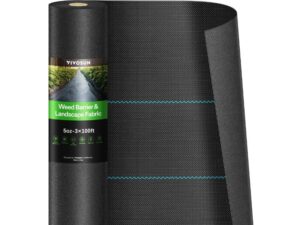 | VIVOSUN Premium 5oz Weed Barrier Landscape Fabric 3FT x 100FT | Check Price |
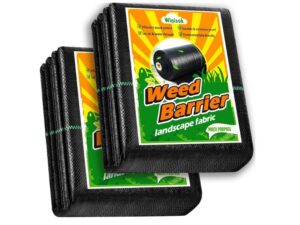 | Winisok 3FT x 100FT 3.2oz Weed Barrier Landscape Fabric | Check Price |
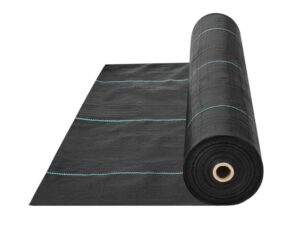 | VEVOR 5.8oz 4FT x 100FT Heavy-Duty Weed Barrier Fabric | Check Price |
 | Scotts 25-Year Professional Weed Barrier Fabric 3FT x 150FT | Check Price |
 | EXTRAEASY 4FT x 300FT 3.2oz Weed Barrier Fabric | Check Price |
 | Pattiumo 3FT x 300FT 3.2oz Weed Barrier Landscape Fabric | Check Price |
1. ECOgardener Premium 5oz Pro Garden Weed Barrier 3FT x 250FT- Best Overall
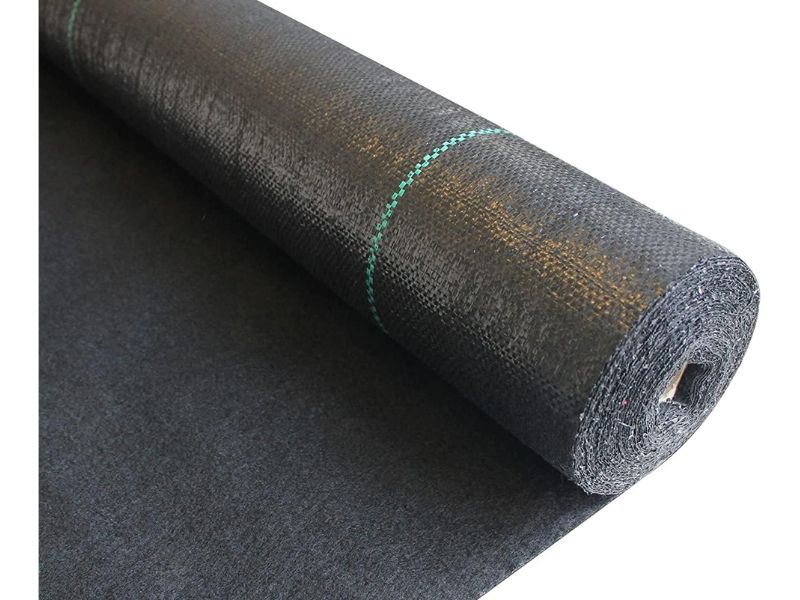
The ECOgardener Premium 5oz is my first choice because it strikes one of the better balances between weed suppression, permeability, durability, and installation flexibility.
This is a heavier dual-layer garden fabric rather than thin plastic sheeting. The material is needle-punched so water and air can pass through instead of being completely sealed away from the soil.
That matters in vegetable gardens, where irrigation, rainfall, oxygen exchange, and root-zone moisture are more important than simply creating the strongest possible physical barrier.
Bob Vila’s hands-on landscape-fabric testing found that ECOgardener’s thick dual-layer fabric prevented weeds from penetrating during the test period while still allowing air and water circulation. The main drawbacks noted were fraying after cutting and limited protection when left exposed to sunlight, making mulch or another covering beneficial.
The 3-foot width works particularly well for vegetable rows and narrow garden beds. The printed guide lines can also make straight planting layouts easier.
For tomatoes, peppers, eggplants, cucumbers, squash, and other transplants, you can cut or heat-seal appropriately sized planting openings rather than leaving large exposed soil areas around each plant.
At 5 ounces, however, this is more fabric than I would use for a garden that is completely rearranged several times every season.
It makes the most sense for fixed rows, perennial vegetable areas, raised-bed pathways, berry rows, or gardens where the basic planting layout remains consistent.
2. Petgrow Heavy-Duty Weed Barrier Landscape Fabric 3FT x 100FT- Best Value
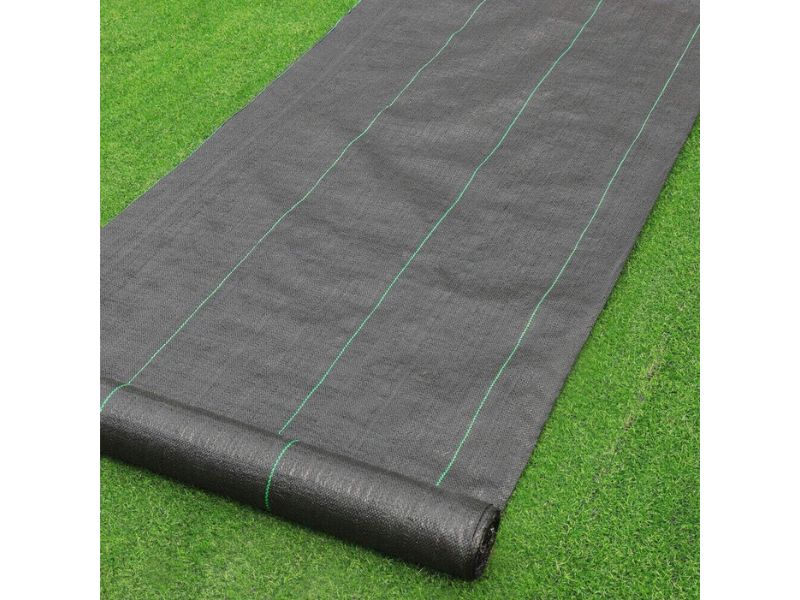
Petgrow earns second place because it combines a relatively accessible price with characteristics that work well in vegetable gardens.
The 3-foot by 100-foot configuration uses polypropylene weed-control fabric with needle punching to maintain permeability.
Bob Vila rated Petgrow as its best-value landscape fabric after testing, noting that it effectively controlled weeds, allowed irrigation through the material, included useful planting stripes, and was UV stabilized.
The product also has substantial buyer history. Current product data shows more than 2,000 customer ratings, giving it a more established track record than many generic weed-barrier rolls.
For a home vegetable garden, its 3-foot width is convenient.
You can run strips directly along rows and create individual planting holes for transplanted vegetables. It also works particularly well between raised beds, where the objective is simply preventing muddy, weed-filled walkways.
Because it is lighter and easier to manage than some commercial-grade fabrics, cutting and positioning it around existing beds is relatively straightforward.
As with most synthetic landscape fabric, I would not bury it permanently inside constantly tilled soil.
Use it where you can retrieve, inspect, and reposition it when your crop rotation changes.
3. LAVEVE 4FT x 100FT 3.2oz Weed Barrier Landscape Fabric- Best for Large Vegetable Beds
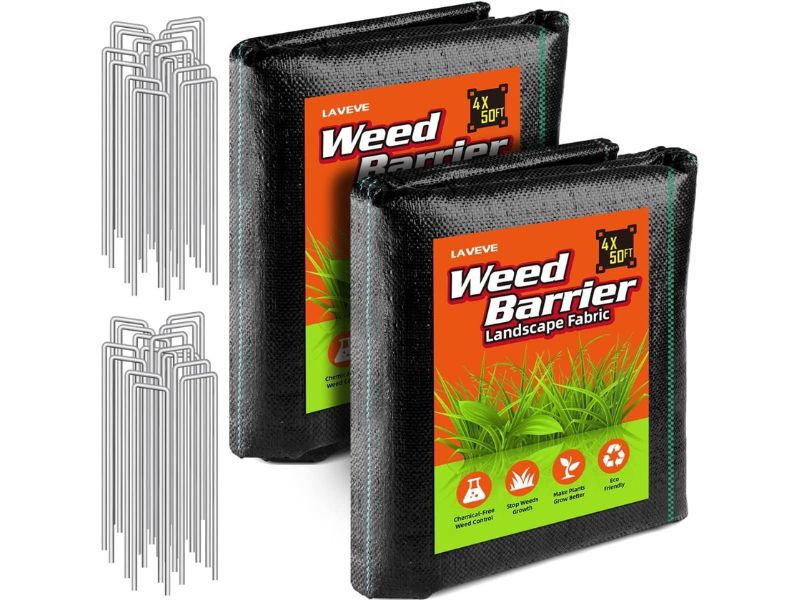
LAVEVE is an excellent choice when you need more coverage without moving into an extremely thick geotextile.
Its 4-foot width and 100-foot total coverage make it convenient for broad vegetable beds, berry patches, pumpkin rows, and larger backyard growing areas.
The fabric is rated around 3.2 ounces and uses a woven construction. That lighter weight is useful for vegetable gardens because the material remains easier to fold, cut, move, and reuse than very thick driveway-style geotextile.
Amazon market tracking currently shows this model with roughly 2,500 ratings and thousands of estimated monthly sales, placing it among the stronger-selling weed-barrier fabrics.
A 4-foot width also pairs nicely with common 4-foot-wide garden beds.
Instead of overlapping several narrow strips, you may be able to cover the entire bed width with one section and cut planting holes according to your vegetable spacing.
I particularly like it for tomatoes, peppers, cucurbits, cut flowers, berry beds, and other crops planted at defined intervals.
For direct-seeded crops such as carrots, radishes, lettuce, and densely planted greens, a permanent fabric layout is less convenient because you need considerably more exposed soil.
4. HOOPLE 4FT x 180FT Premium Garden Weed Barrier- Best for Long Garden Rows
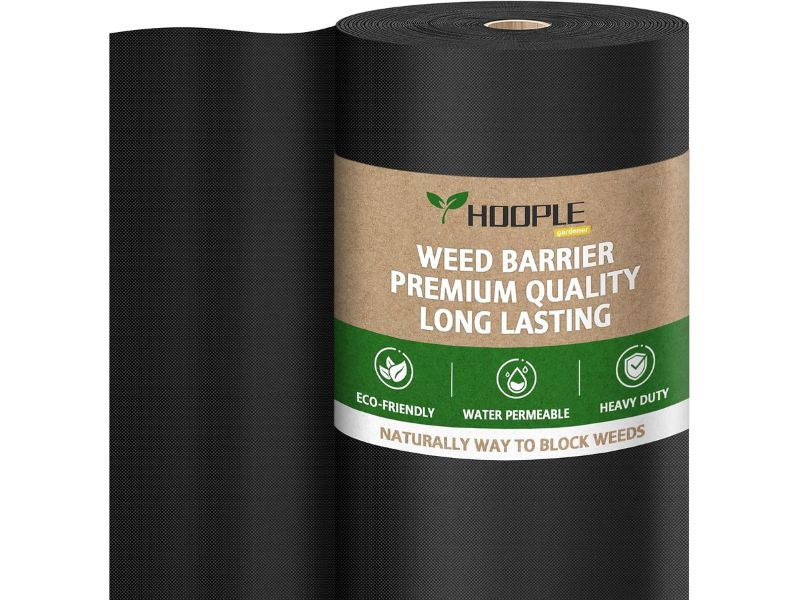
The HOOPLE 4-foot by 180-foot barrier is a good match for gardeners who need substantial continuous coverage.
Its biggest advantage is simply the 180-foot roll length.
Long rows create fewer seams, and fewer seams mean fewer locations where weed growth can find exposed soil.
HOOPLE’s fabric is designed to allow air and water movement while reducing sunlight penetration beneath the barrier. Current Amazon market data has historically placed HOOPLE among stronger performers within the weed-barrier-fabric category.
This size makes sense for a serious backyard vegetable plot, greenhouse pathways, long berry rows, or several raised beds.
Instead of purchasing multiple 50-foot rolls, one continuous roll can cover a significant portion of the garden.
The material can be trimmed to shape, but as with any thick landscape fabric, secure the cut edges carefully.
Landscape staples placed along edges, corners, seams, and planting openings help prevent wind from lifting the material.
For vegetable gardening, I prefer using this kind of long-life fabric between rows or around widely spaced transplanted crops, rather than covering every inch of frequently cultivated soil.
5. VIVOSUN Premium 5oz Weed Barrier Landscape Fabric 3FT x 100FT- Best Double-Layer Barrier
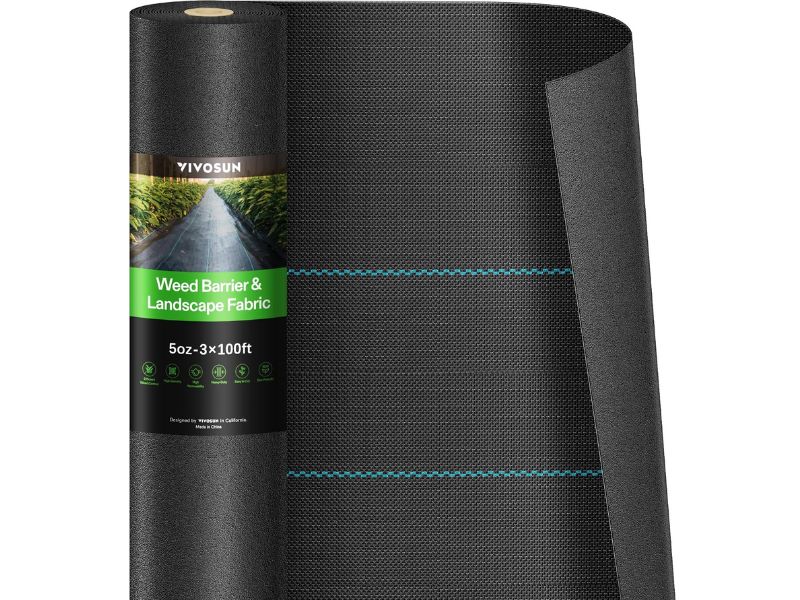
The VIVOSUN Premium Weed Barrier is another strong 5-ounce option for gardeners dealing with persistent weed pressure.
It uses a double-layered, permeable construction intended to restrict weed growth without turning the soil underneath into a completely sealed environment.
Current Amazon data shows roughly 900+ ratings with an average around 4.6 stars for this specific model.
The 3-foot width is particularly convenient for vegetable rows.
Lay it over prepared soil, anchor the edges, and make individual openings where transplants will grow.
The thicker construction is valuable when weeds are aggressive or when the fabric will experience repeated foot traffic.
It also makes sense between permanent raised beds, where you want a surface that survives more than one growing season.
The trade-off is flexibility.
For constantly changing direct-seeded beds, I prefer lighter fabric, paper mulch, straw, or another easily moved weed-control method.
Choose the VIVOSUN when durability and weed blocking matter more than having the lightest material possible.
6. Winisok 3FT x 100FT 3.2oz Weed Barrier Landscape Fabric- Best for Irrigated Garden Rows
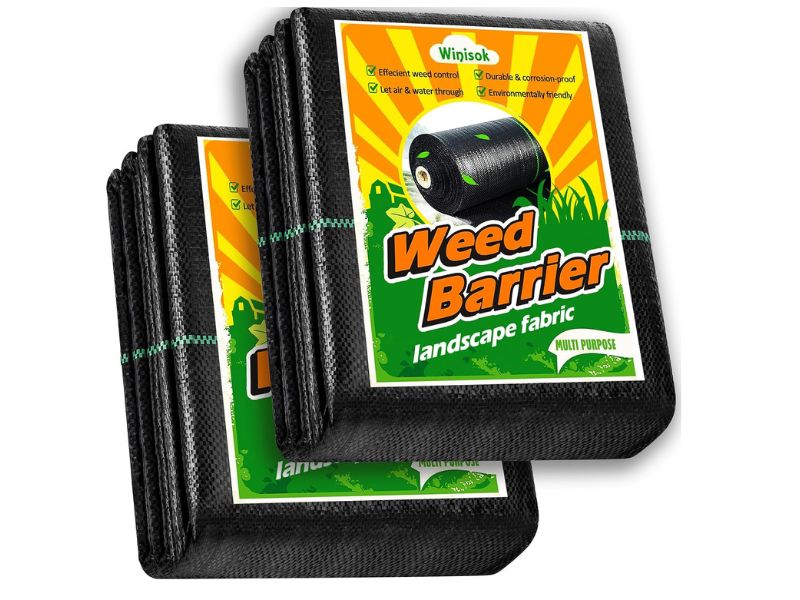
The Winisok weed barrier is a practical choice for vegetable beds where good water movement is a priority.
This configuration provides a combined 3-foot by 100-foot coverage using 3.2-ounce woven garden fabric.
Current Amazon data shows around 700+ ratings with an average near 4.5 stars for the listing, giving it a respectable buyer history.
The woven material is permeable rather than waterproof.
That makes it easier for rainfall and overhead irrigation to reach the underlying soil compared with impermeable black plastic.
For gardeners using drip irrigation, I would normally position the drip line beneath the fabric. This puts water directly into the root zone and reduces evaporation from the soil surface.
The lighter 3.2-ounce weight is also useful during installation.
You can cut planting openings and maneuver the roll more easily than a very thick commercial landscape membrane.
Green alignment markings help when laying straight rows, which can be convenient for peppers, tomatoes, eggplants, brassicas, strawberries, and similar spaced crops.
7. VEVOR 5.8oz 4FT x 100FT Heavy-Duty Weed Barrier Fabric- Best Heavy-Duty Pick
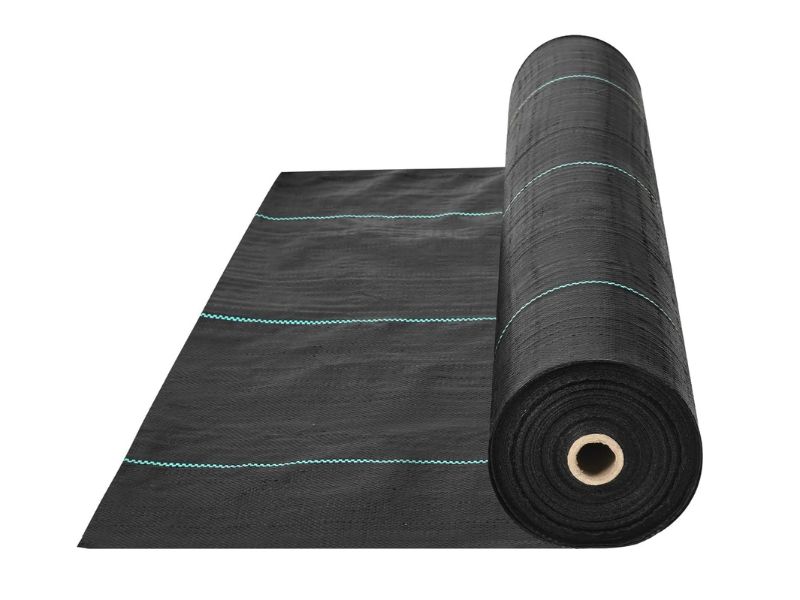
The VEVOR 5.8-ounce barrier is the heavyweight option in this roundup.
Its 4-foot by 100-foot configuration uses polypropylene fabric with a woven and needle-punched dual-layer construction. Product specifications list the material at approximately 5.8 ounces per square yard.
That additional material makes it appealing when the problem is more than a few tiny annual weeds.
It provides a durable physical layer capable of tolerating foot traffic, mulch, and repeated outdoor exposure better than lightweight garden cloth.
However, thicker does not automatically mean better for every vegetable bed.
For continuously cultivated planting soil, 5.8-ounce fabric can become cumbersome every time you need to add compost, change row spacing, direct-sow crops, or dig potatoes and root vegetables.
I therefore like the VEVOR most for permanent garden walkways, greenhouse aisles, berry rows, between raised beds, and fixed transplant layouts.
If you want an especially rugged barrier and do not expect to move it every few months, this is one of the better choices.
8. Scotts 25-Year Professional Weed Barrier Fabric 3FT x 150FT- Best Long-Term Barrier
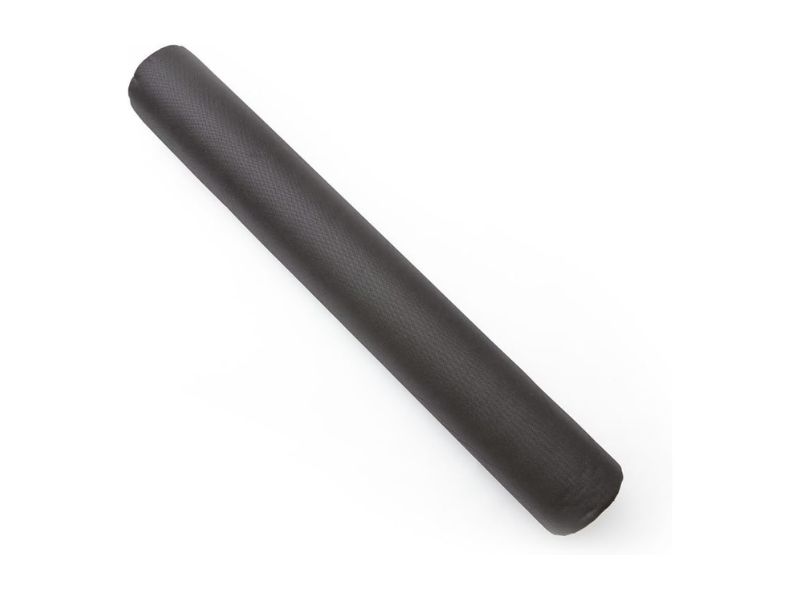
Scotts offers a different proposition: a landscape fabric aimed at long-term installations.
This 3-foot by 150-foot polypropylene barrier uses a point-bond construction that permits air and water movement while helping control weeds without requiring a solid plastic sheet.
Current product information positions it for gardens, landscape beds, walkways, and raised-bed applications, with a manufacturer-stated long-life design.
For a vegetable gardener, I would use this primarily where the garden structure remains stable.
Examples include the aisles between raised beds, a permanent asparagus bed, raspberry or blackberry rows, greenhouse paths, or the ground beneath a new raised-bed structure.
Permanent synthetic fabric deserves some consideration before installation.
Penn State Extension notes that landscape fabric can eventually become difficult to remove when roots and decomposed organic matter become integrated with it.
So although the long lifespan is a selling point, it is also a reason to think carefully about placement.
Use the Scotts barrier where you genuinely want a long-lasting installation rather than underneath soil you plan to till or redesign frequently.
9. EXTRAEASY 4FT x 300FT 3.2oz Weed Barrier Fabric- Best for Large Vegetable Plots
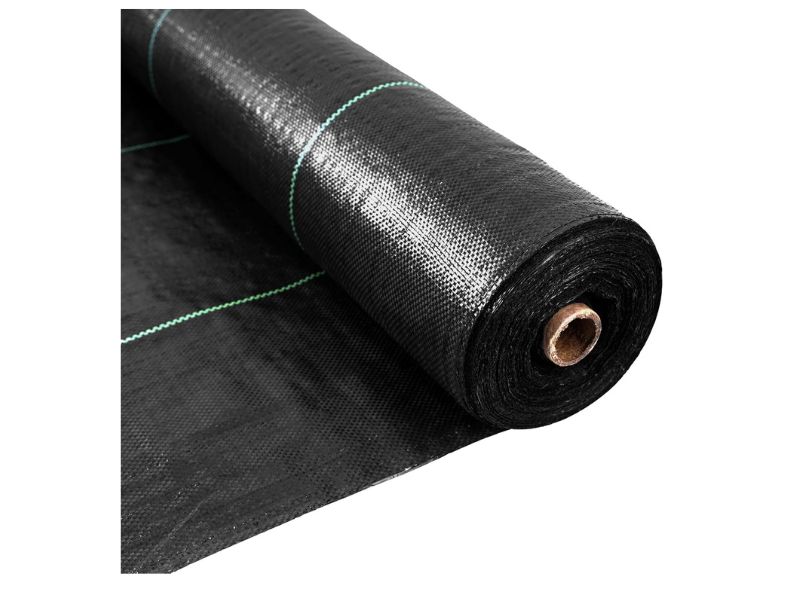
The EXTRAEASY 4-foot by 300-foot roll is designed for gardeners who need to cover serious square footage.
At 1,200 square feet of nominal coverage, it can handle multiple vegetable rows, extensive pathways, a greenhouse floor, or a large market-style garden layout without forcing you to piece together many smaller rolls.
The fabric uses a 3.2-ounce weed-control construction and is marketed as tear resistant.
Current Amazon data shows approximately 1,700+ customer ratings with an average around 4.4 stars.
That buyer volume is one of the reasons it earns a place in the top ten.
The 4-foot width works especially well when you maintain standardized beds.
For example, many intensive vegetable gardens use roughly 30- to 48-inch planting beds with dedicated walkways. A 4-foot fabric can be adapted to either zone with relatively little cutting.
Its main disadvantage is the sheer amount of material.
A 300-foot roll is unnecessary for a small raised-bed garden.
But if your goal is to reduce weeding across a large backyard vegetable plot, the cost per square foot and reduced number of seams can be attractive.
10. Pattiumo 3FT x 300FT 3.2oz Weed Barrier Landscape Fabric- Best Bulk Value
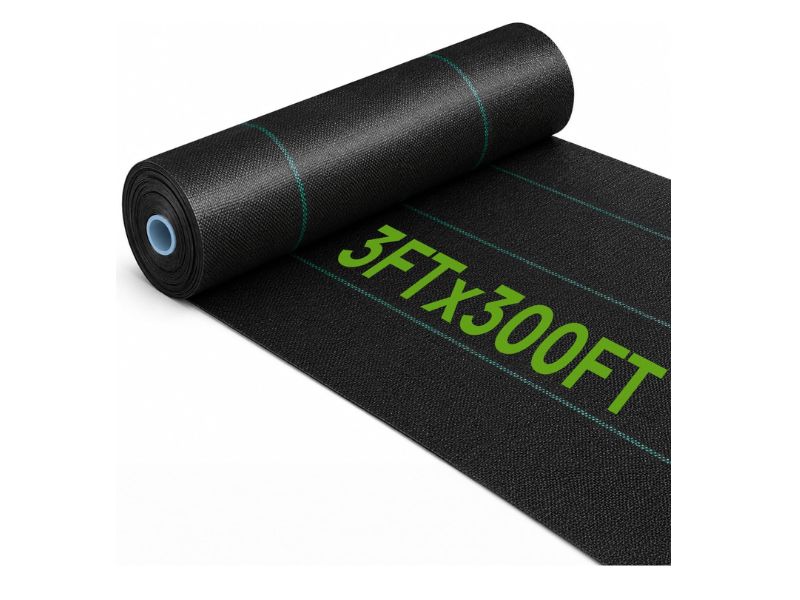
Pattiumo rounds out the list with another large-roll option, but its narrower 3-foot width makes it particularly practical for individual vegetable rows and garden pathways.
The fabric covers approximately 900 square feet at 3 feet by 300 feet and uses 3.2-ounce material.
Current Amazon data lists approximately 500+ ratings with an average around 4.4 stars for this model.
For long rows, the 3-foot width reduces cutting waste.
It can fit directly beneath tomatoes, peppers, beans grown on trellises, squash rows, or paths between beds.
The woven construction is intended to combine weed suppression with water permeability.
As with the other long-roll products, buying this much fabric only makes sense if you have enough area to use it.
For a few raised beds, choose a smaller roll.
For a large vegetable garden, small farm plot, greenhouse, or extensive row system, the bulk length provides much better installation efficiency.
Comparison Table
| Product | Size | Fabric Type/Weight | Best For |
| ECOgardener Premium | 3 x 250 ft | 5 oz, dual-layer | Best overall |
| Petgrow Heavy-Duty | 3 x 100 ft | Needle-punched polypropylene | Best value |
| LAVEVE | 4 x 100 ft | 3.2 oz woven | Large vegetable beds |
| HOOPLE | 4 x 180 ft | Heavy-duty permeable fabric | Long garden rows |
| VIVOSUN Premium | 3 x 100 ft | 5 oz double-layer | Strong weed pressure |
| Winisok | 3 x 100 ft | 3.2 oz woven | Irrigated rows |
| VEVOR | 4 x 100 ft | 5.8 oz dual-layer | Heavy-duty applications |
| Scotts 25-Year Pro | 3 x 150 ft | Point-bond polypropylene | Permanent pathways |
| EXTRAEASY | 4 x 300 ft | 3.2 oz | Large plots |
| Pattiumo | 3 x 300 ft | 3.2 oz woven | Bulk row coverage |
Is Weed Barrier Fabric Good for a Vegetable Garden?
Yes, but vegetable gardens require a more thoughtful installation than ornamental landscaping.
Landscape fabric is permeable to air and water and can provide effective suppression of annual weeds. Utah State Extension notes that fabric mulch can be useful in specialized vegetable-garden situations, while Oregon State Extension lists landscape fabric as a vegetable-garden mulch option because water can pass through the material.
The biggest issue is crop rotation.
Vegetable gardeners frequently change:
plant spacing, row orientation, crop type, irrigation layout, compost applications, and cultivation practices.
A planting hole positioned perfectly for a tomato this season may be useless when you want a dense row of carrots there next spring.
For that reason, landscape fabric performs particularly well in:
- Permanent pathways
- Between raised beds
- Tomato and pepper rows
- Strawberry beds
- Asparagus beds
- Berry rows
- Trellised cucumber rows
- Greenhouse aisles
- Fixed transplant systems
It is less convenient for frequently tilled or heavily direct-seeded beds.
Woven vs Nonwoven Weed Barrier
Woven landscape fabric is made from interlaced polypropylene strands.
It generally provides excellent tensile strength and works well for garden rows, pathways, and locations where people walk regularly.
Its small openings permit some air and moisture movement while limiting light.
Nonwoven landscape fabric resembles a dense felt or bonded sheet.
Depending on thickness and construction, it can provide excellent weed suppression and drainage.
Some products combine both designs.
ECOgardener, for example, uses a heavier dual-layer construction, while LAVEVE relies on lighter woven fabric.
For a vegetable garden, permeability is more important than simply choosing whichever fabric feels thickest.
3.2oz vs 5oz vs 5.8oz Weed Barrier
Fabric weight influences durability and handling.
A 3.2-ounce fabric is usually easier to cut, move, roll up, and reuse. It is a practical choice for seasonal vegetable rows.
A 5-ounce fabric provides stronger weed blocking and durability. It makes sense where weed pressure is higher or where the barrier will stay down for multiple seasons.
A 5.8-ounce fabric is approaching heavy-duty landscaping territory.
It is excellent for permanent paths and tough applications but can be unnecessarily cumbersome in constantly changing vegetable beds.
For most backyard vegetable growers, I consider 3.2 to 5 ounces the useful range.
Why Water Permeability Matters
Vegetable crops need consistent root-zone moisture.
A completely impermeable sheet changes the way rainfall and irrigation reach the soil.
Landscape fabric avoids part of that problem because its structure permits water movement.
OSU Extension specifically distinguishes landscape fabric from black plastic by noting that moisture passes through fabric, while plastic systems usually require drip irrigation underneath.
That does not mean every fabric drains at the same speed.
Very dense products may initially shed some water until fully wet, while soil particles and organic debris can reduce permeability over time.
Test your irrigation after installation rather than assuming water distribution remains unchanged.
Weed Barrier for Raised Vegetable Beds
There are two different ways people use weed barrier with raised beds.
The first is underneath the entire raised-bed structure before adding soil.
Penn State Master Gardeners note that either black landscape fabric or plain brown cardboard can be used as a permeable weed and grass underlayment beneath a new raised bed.
The second is placing fabric on top of the soil around vegetables.
That can work for widely spaced transplants, but it makes adding compost and changing crop layouts more complicated.
For most raised-bed gardeners, I prefer synthetic weed barrier underneath the bed or in the walkways and organic mulch directly around annual vegetables.
Weed Barrier Between Vegetable Rows
This is one of the best uses for landscape fabric.
Penn State Extension notes that growers can place landscape fabric between vegetable rows to suppress weeds and then roll it up after the season for reuse.
That approach avoids many of the disadvantages of permanently covering the crop root zone.
You can still:
add compost, cultivate the planting bed, rotate crops, dig root vegetables, and direct-sow seeds.
Meanwhile, your pathways remain relatively weed free and less muddy.
For this purpose, a long 3- or 4-foot woven roll is usually ideal.
Weed Barrier vs Black Plastic
Black plastic blocks light very effectively, but it is largely impermeable.
Landscape fabric allows considerably more air and water movement.
Black plastic can also warm the soil, which can be desirable for crops such as tomatoes, peppers, melons, and cucumbers early in the season.
Landscape fabric tends to have less of a soil-warming effect. Oregon State notes that fabric can actually cool soil relative to black plastic.
If you use black plastic, install drip irrigation beneath it.
For a general-purpose vegetable garden where natural rainfall penetration matters, breathable landscape fabric is often more convenient.
Weed Barrier vs Cardboard
Cardboard offers a completely different strategy.
Plain brown cardboard suppresses weeds temporarily and eventually decomposes into the soil.
It is particularly attractive when establishing new raised beds or converting grass into garden space.
Synthetic weed fabric lasts much longer and is easier to reuse.
The trade-off is that polypropylene does not simply disappear into the soil.
For gardeners focused heavily on soil building and no-dig gardening, cardboard plus compost or organic mulch can be a better choice.
For permanent walkways and reusable row covers, woven landscape fabric usually lasts longer.
Weed Barrier vs Straw Mulch
Straw is one of the most traditional vegetable-garden mulches.
It suppresses weeds, reduces moisture evaporation, and eventually adds organic matter.
Landscape fabric generally offers stronger immediate suppression and does not need to be replenished as frequently.
However, straw is much easier to integrate into soil-management systems.
University extension guidance commonly recommends organic mulches for vegetable gardens because they can suppress weeds while contributing organic matter as they break down.
There is no requirement to use only one method.
A highly practical garden can use landscape fabric on pathways and straw around crops.
How to Install Weed Barrier in a Vegetable Garden
Remove established weeds before laying the fabric.
Do not simply cover tall perennial weeds and assume they will disappear permanently.
Rake the surface reasonably smooth and install any drip irrigation that you want below the material.
Unroll the fabric and overlap adjacent sections.
Secure the perimeter and seams with appropriate landscape staples.
Then mark the vegetable spacing.
Cut the smallest practical opening for each transplant.
Oversized planting holes expose more soil to sunlight and give weeds another place to establish.
Once installed, verify that irrigation reaches the soil beneath the barrier.
Should Landscape Fabric Go Above or Below Drip Irrigation?
For most vegetable gardens, I prefer putting drip tubing below the weed barrier.
The water then goes directly to the soil instead of needing to pass through the fabric first.
This can improve irrigation efficiency and keep the tubing neatly positioned.
You will still need to plan access to connectors and repair points.
If your irrigation system changes constantly, putting all tubing underneath permanent fabric can make maintenance more difficult.
Does Weed Barrier Stop All Weeds?
No weed-control material provides permanent zero-maintenance gardening.
Landscape fabric blocks light and creates a physical barrier against weeds emerging from below.
But new seeds can eventually blow onto mulch, compost, or soil accumulated on top of the fabric.
Those weeds can germinate above the barrier.
Penn State Extension notes that weeds can eventually establish in decomposed mulch over landscape fabric and root through the material, making neglected fabric difficult to remove later.
The key is removing these new weeds while they are tiny.
Can Landscape Fabric Harm Soil?
This is where placement matters.
Penn State Extension cautions that synthetic barriers can interfere with normal soil biological activity and become difficult to manage as roots and organic matter accumulate around them over long periods.
That does not mean landscape fabric should never be used.
It means a vegetable gardener should avoid treating it as a permanent solution everywhere.
Use it where its strengths matter:
walkways, fixed rows, greenhouse aisles, perennial crops, and reusable seasonal applications.
Keep frequently amended annual beds accessible whenever possible.
Frequently Asked Questions
What is the best weed barrier for vegetable garden use?
ECOgardener Premium 5oz is my best overall choice.
Its permeable dual-layer construction provides strong weed suppression while allowing air and moisture movement. It works especially well in fixed vegetable rows, raised-bed areas, and established transplant layouts.
Is landscape fabric safe for vegetable gardens?
Yes, permeable landscape fabric can be used in vegetable gardens when installed appropriately.
Extension guidance recognizes landscape fabric as a weed-control option because water and air can move through the material. It is especially useful between rows and around spaced transplants.
What is the best weed barrier for between vegetable rows?
A 3- to 4-foot woven polypropylene fabric is usually ideal.
Woven fabric is durable enough for foot traffic while remaining easy to roll up and reuse. Long rolls are particularly convenient when the garden contains straight rows.
Is woven weed barrier good for vegetables?
Yes, woven fabric offers a useful balance of strength and permeability.
It blocks much of the light weeds need while permitting irrigation and air movement through small openings in the material.
What thickness weed barrier should I use?
Around 3.2 to 5 ounces works well for most vegetable-garden applications.
Choose lighter material for seasonal rows and thicker material for permanent pathways or aggressive weed problems.
Should I use weed barrier inside raised beds?
Usually only when the planting layout is relatively permanent.
For frequently rotated annual vegetables, permanent fabric on the soil surface can interfere with digging, compost application, and direct seeding. Landscape fabric works particularly well underneath new beds or in the pathways surrounding them.
Can I put landscape fabric under a raised vegetable bed?
Yes.
Penn State Master Gardeners list permeable landscape cloth or plain brown cardboard as options for suppressing existing grass and weeds beneath a new raised bed.
Can water pass through weed barrier fabric?
Quality permeable landscape fabric is specifically designed to allow water through.
Flow rate varies by product, thickness, soil buildup, and installation, so always verify irrigation after installation.
Does landscape fabric stop grass?
It can strongly suppress grass, but aggressive perennial grasses may exploit seams and planting openings.
Remove established grass before installation whenever possible and overlap fabric sections adequately.
What should I put on top of weed barrier?
Mulch can protect some fabrics from UV exposure and improve appearance.
In vegetable-garden walkways, gardeners may also leave UV-rated woven ground cover exposed if the manufacturer permits it.
Can I use weed barrier around tomatoes?
Yes, tomatoes are particularly well suited to weed-barrier fabric.
Their wide plant spacing makes it easy to cut individual openings, and reducing weeds around the plants decreases competition for water and nutrients.
Can I use weed barrier around cucumbers?
Yes, especially around transplanted or widely spaced cucumber plants.
Make sure vines have a suitable surface to grow over and that water continues reaching the root zone.
Is weed barrier good for strawberries?
Yes, weed barrier is often practical around established strawberry rows.
Keeping berries away from bare soil can also help reduce mud splashing onto fruit, though planting openings and runners require management.
Is black plastic better than weed fabric?
Black plastic blocks weeds strongly and warms soil, while landscape fabric offers better natural water permeability.
The better option depends on the crop, climate, irrigation system, and whether soil warming is desirable.
Should I remove weed barrier every winter?
Seasonal vegetable growers often benefit from removing and storing reusable fabric after harvest.
Utah State specifically notes that fabric mulch used in vegetable gardens can be removed after the growing season.
Final Verdict
The best weed barrier for vegetable garden use needs to do more than block sunlight. It should fit your planting system, let moisture reach vegetable roots, remain manageable when crop rotations change, and survive the amount of foot traffic your garden receives.
The ECOgardener Premium 5oz Pro Garden Weed Barrier is my best overall choice because its heavier permeable construction offers excellent weed suppression without relying on an impermeable plastic sheet.
The Petgrow Heavy-Duty Weed Barrier provides the best balance for budget-conscious gardeners, while the LAVEVE 4FT x 100FT Weed Barrier is an excellent choice for larger beds and long vegetable rows.
HOOPLE is better for extensive continuous coverage, while VIVOSUN provides a thick double-layer option for persistent weed problems. Winisok offers a manageable woven design for irrigated rows, and VEVOR is the heavy-duty choice for permanent pathways and tougher applications.
The Scotts 25-Year Professional Weed Barrier is best reserved for long-term areas such as raised-bed walkways and perennial rows. EXTRAEASY and Pattiumo make the most sense when you need hundreds of feet of fabric for a large vegetable plot.
For most home gardeners, the most effective setup is not to cover every inch of productive soil permanently. Use breathable weed barrier in pathways, fixed rows, and around widely spaced transplants, while keeping frequently cultivated beds accessible for compost, crop rotation, direct seeding, and long-term soil improvement.

I’m Maya L. Greenwood, a lifelong plant lover who believes anyone can grow something beautiful with the right guidance. After years of testing soil mixes, pruning methods, irrigation tricks, and pest-safe solutions, I started EasyGardenTips.com to turn hard-won lessons into step-by-step advice. From seed starting and container gardens to composting and seasonal checklists, my goal is to make gardening simple, sustainable, and fun.