3 Best Crack Weeder Tools for Patios, Pavers, and Driveway Gaps
The best crack weeder should slide into narrow paver joints, sidewalk cracks, driveway gaps, and patio seams while cutting grass, moss, and weed roots without damaging the surrounding hardscape.
My top three choices are the GARDENA combisystem Patio Weeder for overall durability, the GREBSTK Crack Weeder for value and strong buyer history, and the Garden Guru Patio Crack Weeder for its comfortable soft-grip handle.
These are all manual crack weeders, so they let you remove weeds mechanically instead of relying on herbicide around patios, walkways, concrete, or paving stones.
3 Best Crack Weeder Tools
| Image | Product Name | Check Price |
|---|---|---|
Best Choice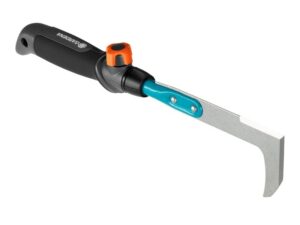 | GARDENA combisystem Patio Weeder – Best Overall | Check Price |
Second Best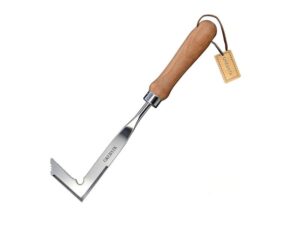 | GREBSTK Crack Weeder Crevice Weeding Tool – Best Value | Check Price |
Third Choice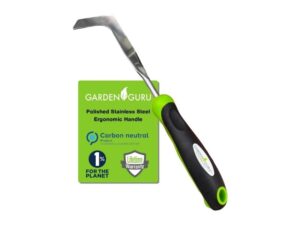 | Garden Guru Patio Crack Weeder Tool – Best Ergonomic Handle | Check Price |
How I Chose the Best Crack Weeders
A crack weeder is a simple garden tool, but blade shape makes a major difference.
Ordinary hand weeders work well in garden soil because they can dig around a root. They are less useful when a weed is growing from a gap only a few millimeters wide between two paving stones.
For this guide, I focused on products designed specifically for crevice weeding and hardscape maintenance.
The main criteria were:
Review history, blade durability, ability to enter narrow cracks, rust resistance, handle comfort, leverage, suitability for pavers and concrete, and the ability to scrape out moss or compacted debris as well as weeds.
Current marketplace data gives the GARDENA product a very large review pool on its indexed Amazon listing, while GREBSTK has roughly 7,000+ ratings and remains one of the strongest-selling dedicated crevice weeders. Garden Guru has a smaller but established review base of roughly 800+ ratings.
Because review counts can change or be shared across listing variations, treat those numbers as a buyer-history signal, not a permanent specification.
The 3 Best Crack Weeder Tools
GARDENA combisystem Patio Weeder – Best Overall
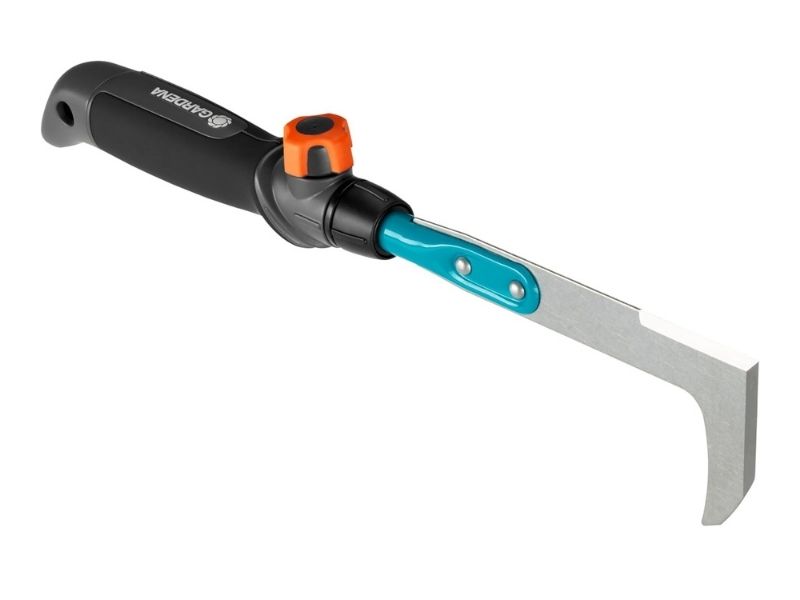
The GARDENA combisystem Patio Weeder is my best overall pick because it combines a specialized crack-cleaning blade with one of the most flexible handle systems in gardening.
The blade is made from double-sided, hardened high-grade stainless steel and is specifically designed to remove grass, moss, and weeds between paving stones, slab joints, and wall edges. GARDENA also describes the blade as rust-proof and sharpened on both sides.
That makes it much better suited to hardscape work than a general-purpose garden fork or dandelion puller.
Excellent Blade for Paver Joints
The most important feature is the blade profile.
A crack weeder must be thin enough to enter a joint but strong enough to scrape against:
Concrete, brick, stone, polymeric sand, soil, and compacted organic debris.
The GARDENA blade is narrow and sharpened on both sides, which lets you work in either direction.
Instead of repeatedly trying to pull weeds upward with your fingers, you can run the blade through the joint and cut or loosen the root structure beneath the surface.
That is particularly effective on:
Patio pavers, sidewalk joints, brick pathways, retaining-wall edges, driveway borders, and cracks beside curbing.
Can Be Used With a Long Handle
One of the best reasons to choose GARDENA is its combisystem compatibility.
The hand tool can connect to compatible GARDENA combisystem handles. GARDENA specifically notes that an extension handle can be used when you want to work without bending over.
That gives you two possible ways to use one tool.
For detailed work around small pavers, use it as a hand weeder.
For long stretches of sidewalk or patio joints, connect a longer handle and work from a more upright position.
This can make a major difference if you have hundreds of feet of paving joints to maintain.
Good for Moss as Well as Weeds
A patio crack weeder is not only useful for broadleaf weeds.
Moist joints frequently develop moss.
Grass can also creep into cracks from adjacent lawn edges.
Organic debris accumulates and eventually creates enough growing medium for new weeds to germinate.
The GARDENA scraper design can remove this buildup rather than simply cutting off the visible leaf growth.
That makes it useful as both a weed-removal tool and joint-cleaning tool.
Strong Warranty
GARDENA currently advertises a 25-year warranty after registration for this tool.
For such a simple hand tool, that is substantial coverage.
The blade also comes with protection for safer storage, which matters because a good crack weeder needs a relatively sharp working edge.
Where It Could Be Better
The biggest issue is cost.
A basic crack weeder can cost little more than a hand trowel, while the GARDENA system becomes more expensive if you also purchase a long combisystem handle.
It is also slightly more complicated than a basic one-piece weeder if you just want to clean ten feet of sidewalk.
But if you maintain a large patio, extensive pavers, or multiple hardscape areas, its durability and handle flexibility justify the premium.
Best For
Choose the GARDENA if you want a high-quality patio weeder that can handle weeds, moss, and debris and can later be paired with a long handle.
It is especially good for homeowners with large paver patios, brick walkways, stone paths, and driveway joints.
Why It Ranks First
The GARDENA is not merely a sharpened piece of metal.
Its hardened stainless steel blade, double-sided cutting surface, modular handle compatibility, strong warranty, and large ownership history make it the most complete crack-weeding system of these three.
For repeated hardscape maintenance, it is the one I would buy first.
GREBSTK Crack Weeder Crevice Weeding Tool – Best Value
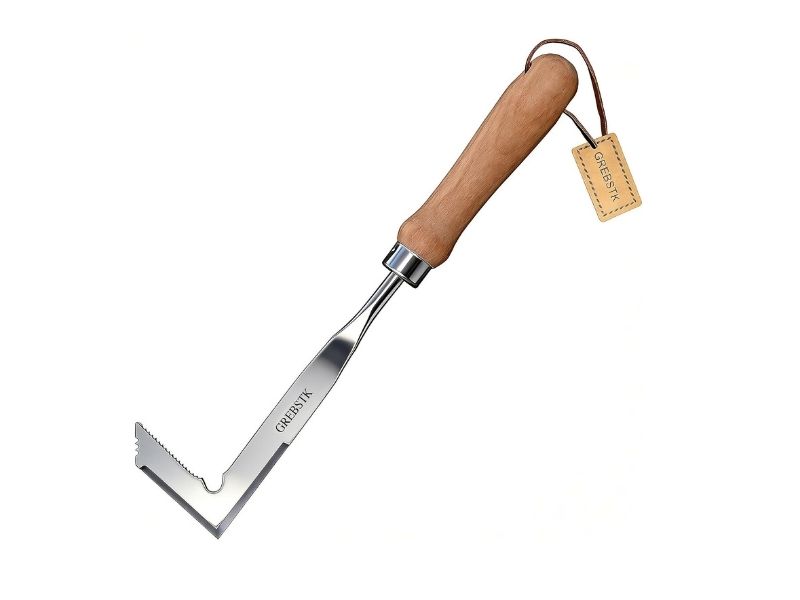
The GREBSTK Crack Weeder is the straightforward value pick.
It has become one of the most recognizable manual crack weeders on Amazon, with current market tracking showing around 7,000 ratings, a rating around 4.4 stars, and several thousand estimated monthly sales.
For such an inexpensive hand tool, that is unusually strong buyer history.
L-Shaped Stainless Steel Blade
GREBSTK uses a narrow L-shaped stainless steel blade.
That L profile is extremely useful in cracks.
The straight portion slides down beside the weed while the hooked section can cut underneath vegetation, scrape the edge of the joint, or pull debris toward you.
The manufacturer positions it specifically for:
Patio cracks, driveway gaps, sidewalk seams, paving joints, and lawn edging. Current specifications describe the blade as hardened, rust-resistant stainless steel.
Very Effective in Narrow Crevices
This is where the GREBSTK earns its place.
If you have weeds growing between closely fitted pavers, a normal trowel is far too wide.
A fork-style hand weeder may also be difficult to insert.
The GREBSTK blade is narrow enough to run along the crack.
You can use a back-and-forth scraping motion to loosen roots, remove compacted soil, and pull out moss.
This is particularly useful for long driveway expansion joints where grass has established itself between concrete sections.
Solid Beech Handle
The handle is made from beech wood, giving the tool a traditional garden-tool feel.
It is lightweight and simple.
There is no plastic mechanism, telescoping lock, or replaceable attachment to maintain.
That simplicity is one reason it offers such strong value.
You grab it, scrape the crack, clean it, and store it.
Strong Amazon Popularity
GREBSTK is one of the strongest-selling products in the current crevice weeding tool category.
Recent Amazon-market analysis shows the B087C7X4Z1 listing at roughly 7,000 reviews and about 6,000 estimated units sold per month in some crack-weeder search categories.
That makes it a safer recommendation than many nearly identical no-name crack tools with only a few dozen ratings.
It Works Best After Rain
Manual crack weeding is usually easier when the soil inside the joint is slightly damp.
Dry compacted soil can hold weed roots firmly.
After rain or light watering, the root zone softens.
Then you can work the narrow blade below the crown of the weed and remove more of the root instead of simply snapping off the leaves.
This technique is particularly useful with grass clumps growing from deep driveway cracks.
Limitations
The short handle means you must kneel, squat, or bend.
For a small patio, that is not a serious problem.
For hundreds of feet of driveway joints, it can become tiring.
Some buyer-analysis sources also note occasional complaints about blade or handle durability when users apply heavy prying force.
That points to an important usage rule:
A crack weeder is a scraper and cutter, not a pry bar.
Do not wedge the blade under heavy stones or use it to lever large woody roots out of concrete.
Best For
Choose GREBSTK if you want an inexpensive dedicated sidewalk crack weeder that is easy to store and highly effective on narrow paver joints.
It is my favorite option for someone who wants to spend little but still buy a product with a strong record of Amazon ownership.
Why It Ranks Second
For pure value, it could easily rank first.
GARDENA beats it because of the long-handle compatibility, premium blade system, and warranty.
GREBSTK is much simpler—but for many homeowners, simple is exactly what makes it attractive.
Garden Guru Patio Crack Weeder Tool – Best Ergonomic Handle
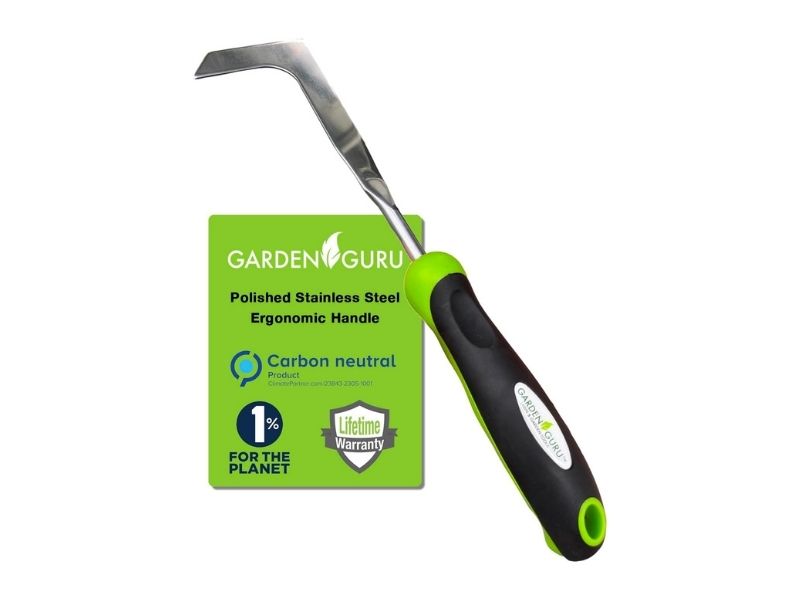
The Garden Guru Patio Crack Weeder uses the same general L-shaped concept as the GREBSTK but improves the hand interface with a soft ergonomic grip.
That makes it especially attractive if you spend a long time cleaning pavers and find narrow wooden tool handles uncomfortable.
Current Amazon-market tracking shows roughly 800+ ratings, with ratings around 4.3 stars depending on the marketplace snapshot.
Comfortable Soft-Grip Handle
The Garden Guru’s main advantage is its handle.
It uses a contoured soft-grip design with finger grooves, intended to improve control while reducing hand and wrist fatigue.
This can matter more than it sounds.
Crack weeding involves repetitive motions:
Push.
Pull.
Scrape.
Twist.
Repeat.
A thin hard handle can create hot spots in your palm after an hour.
A wider rubberized grip distributes pressure across more of your hand.
Stainless Steel L-Shaped Head
The head is constructed from stainless steel and has the familiar narrow L profile designed to enter patio and sidewalk joints.
Northern Tool describes the tool as suitable for fitting into tight cracks and grabbing weeds around the root while using a rust-resistant finish.
The shape works well for both cutting and scraping.
You can insert the blade vertically beside a weed, then draw it through the crack to loosen the surrounding root zone.
It can also scrape moss from edges where patio slabs meet walls or steps.
Good for People With Hand Fatigue
If you have difficulty gripping a narrow hand tool, Garden Guru may actually be a better choice than the first two products.
The larger grip provides more surface area.
It also helps when your hands are damp or you are wearing thin gardening gloves.
That makes it useful for gardeners who value ergonomics and hand comfort over a minimalist traditional design.
Lightweight Construction
The tool weighs only around 0.42 pounds and is roughly 12.9 inches long according to current retailer specifications.
That gives you enough length for leverage without making the tool cumbersome.
It also has a hanging hole, which makes it easy to keep on a wall hook rather than losing it at the bottom of a gardening-tool box.
Lifetime Warranty
Garden Guru advertises a lifetime warranty plus a 90-day satisfaction guarantee for the Patio Crack Weeder.
That is reassuring in a category where many products are inexpensive and effectively disposable.
Limitations
Like the GREBSTK, it is still a hand tool.
You need to work close to the ground.
If bending or kneeling is your primary concern, I would rather use the GARDENA with an extension handle or another purpose-built long-handle crack weeder.
The Garden Guru is also somewhat more expensive than very basic wooden-handle crack weeders.
What you are paying for is mainly grip comfort, warranty, and finished construction.
Best For
Choose the Garden Guru if you regularly clean a patio or driveway but find traditional garden-tool handles uncomfortable.
Its ergonomic grip makes repetitive crack scraping easier, especially when weeds are spread across a large paved area.
Why It Ranks Third
Garden Guru is well designed, but its Amazon review base is considerably smaller than the GREBSTK listing, while GARDENA offers more versatility.
Still, for buyers prioritizing hand comfort, it may be the best option of all three.
Best Crack Weeder Comparison
| Product | Approx. Review Signal | Blade | Handle Style | Best Use |
| GARDENA combisystem Patio Weeder | ~9K+ indexed | Double-sided hardened stainless steel | Hand grip / optional combisystem handle | Best overall |
| GREBSTK Crack Weeder | ~7K+ | L-shaped stainless steel | Beech wood | Best value |
| Garden Guru Patio Crack Weeder | ~800+ | L-shaped stainless steel | Soft ergonomic grip | Best for hand comfort |
Amazon ratings and review totals can change as listings accumulate reviews or Amazon combines product variations.
What Is a Crack Weeder?
A crack weeder, sometimes called a crevice weeder, patio weeder, sidewalk weeder, joint scraper, or paver weeding tool, is a narrow manual gardening tool designed to remove vegetation from hard-to-reach gaps.
The blade is significantly thinner than a garden trowel.
That allows it to enter spaces between:
Concrete slabs
Brick pavers
Patio stones
Driveway expansion joints
Sidewalk sections
Retaining-wall blocks
Curb edges
The goal is to reach below the visible weed and loosen as much of the root system as practical.
Why Do Weeds Grow Between Pavers?
A patio may look completely solid, but its joints gradually accumulate material.
Wind deposits dust.
Rain carries soil particles.
Leaves and grass clippings decompose.
Eventually, enough organic matter collects for weed seeds to germinate.
Some weeds also spread from nearby lawn areas through roots or rhizomes.
Removing only the leaves does not solve the problem for long.
The remaining root can produce new shoots.
A crack weeder gives you better access below the surface.
Crack Weeder vs. Weed Killer
A manual crack weeder offers several advantages over herbicide.
You can remove weeds immediately.
There is no spray drift.
You avoid applying vegetation-control chemicals close to desirable plants.
You can also scrape moss and compacted organic debris from the joint at the same time.
The disadvantage is labor.
A large driveway covered in hundreds of weeds can take considerably more physical effort to clean manually than spraying.
Many homeowners therefore use a crack weeder for routine maintenance before the infestation becomes severe.
What Blade Shape Works Best?
For narrow hardscape joints, I prefer an L-shaped or hooked blade.
The vertical portion enters the gap.
The lower portion can scrape beneath the plant.
This allows several motions:
Cutting, pulling, scraping, and loosening.
Double-sided straight blades such as the GARDENA are also extremely effective, particularly when the goal is cleaning the entire length of a narrow joint rather than hooking individual weeds.
Stainless Steel vs. Carbon Steel
All three recommendations emphasize stainless or rust-resistant steel.
That is useful because crack weeders regularly contact damp soil.
Stainless steel generally requires less concern about corrosion.
Carbon steel can be exceptionally strong and sharp, but it needs more attention to drying and rust prevention.
For a homeowner’s patio tool, stainless steel is a practical choice.
Should You Weed Paver Cracks Before or After Rain?
After light rain is usually easier.
Moist soil releases roots more readily than dry compacted material.
If rain is not expected, lightly wet the joints and allow the water to penetrate before starting.
Avoid turning the cracks into mud.
You want the soil moist enough to loosen, not saturated.
This simple step can dramatically reduce how much force you need.
How to Use a Crack Weeder
Insert the narrow blade beside the weed rather than directly through the center of the plant.
Push it as deep into the joint as practical.
Then use a short back-and-forth scraping motion to loosen the surrounding root zone.
Pull the weed away.
Run the blade through the joint again to remove loose soil, moss, and remaining roots.
For weeds with deep taproots, you may not remove every part of the root from a concrete crack. Repeated maintenance prevents them from becoming large enough to establish a stronger root system.
Can a Crack Weeder Remove Grass Between Pavers?
Yes.
Grass is one of the most common uses for these tools.
The narrow blade can cut the roots and runners growing along the paver joint.
However, established grass can create a dense network below the surface.
Work from both directions and remove as much root material as possible.
Afterward, clean loose organic debris from the joint so new seeds have less material in which to germinate.
Can You Use a Crack Weeder for Moss?
Yes, and it is particularly effective for this job.
Moss generally grows near the surface rather than producing a deep taproot.
A narrow stainless steel scraper can remove the moss and the organic layer supporting it.
GARDENA specifically rates its Patio Weeder for removing moss and weeds between paving stones and joints.
Can a Crack Weeder Damage Pavers?
Used normally, it should not damage quality paving stones.
However, these tools are made from steel.
Avoid aggressively gouging decorative surfaces.
Keep the blade inside the joint rather than scraping across the visible face of soft stone.
Also be careful around polymeric sand.
If your paver joints are filled with hardened jointing sand, aggressive scraping can remove it.
You may need to refill or re-sand joints after a thorough cleaning.
Short Handle vs. Long Handle Crack Weeder
A short hand tool provides the best precision.
You can see exactly where the blade enters the joint and apply controlled pressure.
It is ideal for detailed work.
The disadvantage is posture.
A long-handle tool reduces bending and kneeling but provides slightly less tactile control.
For a small patio, I prefer a hand crack weeder.
For a long driveway or extensive walkway network, a long-handle design is much more comfortable.
GARDENA is particularly versatile because its combisystem allows you to switch between these approaches.
Frequently Asked Questions
What is the best crack weeder?
The GARDENA combisystem Patio Weeder is the best overall option for most hardscape maintenance.
Its double-sided hardened stainless steel blade, rust-resistant construction, optional long-handle compatibility, and strong warranty make it suitable for weeds, grass, and moss between paving stones.
What is the best crack weeder for driveway weeds?
GREBSTK is an excellent choice for narrow driveway expansion joints.
Its thin L-shaped blade slides into tight cracks and can be worked back and forth to cut roots and remove packed debris.
What is the best crack weeder for pavers?
GARDENA works particularly well between pavers because its narrow blade is designed specifically for paving joints.
It can remove grass, weeds, and moss while also cleaning debris from between slabs.
Do crack weeders remove roots?
They can remove or cut many roots, but results depend on root depth and crack width.
Shallow grass and small weeds are relatively easy. Deep-rooted plants growing beneath thick concrete may leave root material behind.
What is a crevice weeding tool?
A crevice weeding tool is another name for a crack weeder designed for narrow hardscape gaps.
These tools typically have a thin straight, hooked, or L-shaped steel blade.
Can I use a crack weeder between bricks?
Yes, brick paths and patios are ideal places to use one.
Work inside the joint and avoid scratching the visible brick surface.
Can a crack weeder remove dandelions?
Small dandelions can be loosened, but deep taproots may be difficult inside narrow concrete cracks.
A conventional dandelion weeder works better in open soil where the blade can reach alongside the full taproot.
Is an L-shaped weeder better for patio cracks?
An L-shaped blade is one of the most useful designs for narrow patio joints.
It can cut downward, scrape sideways, and hook underneath small weeds.
Should I use weed killer after using a crack weeder?
Often you do not need to if you remove weeds early and keep the joints clean.
Regular mechanical removal reduces mature weeds and seed production without adding another treatment step.
How do I stop weeds coming back between pavers?
Remove roots and organic debris, then maintain the joints before weeds mature.
Proper joint filling, drainage, sweeping, and periodic crack weeding can significantly reduce regrowth.
Final Verdict
The GARDENA combisystem Patio Weeder is my overall winner for the best crack weeder because its hardened stainless steel blade, double-sided cutting edge, rust resistance, optional long-handle compatibility, and strong warranty make it suitable for repeated patio and walkway maintenance.
The GREBSTK Crack Weeder is the best value. Its L-shaped stainless steel blade is simple, effective, inexpensive, and backed by one of the strongest Amazon review histories in the dedicated crack-weeder category.
The Garden Guru Patio Crack Weeder is my recommendation for buyers who prioritize comfort. Its wider ergonomic soft-grip handle is easier on the hand during repetitive scraping while still providing the narrow stainless steel head needed for paver and driveway joints.
For most homeowners, a crack weeder does not need to be complicated. What matters is a thin durable blade, good leverage, rust resistance, and a handle you can comfortably control. Keep the joints clean before weeds become deeply established, and a simple manual tool can maintain patios, sidewalks, and driveway cracks without requiring a chemical weed killer.

I’m Maya L. Greenwood, a lifelong plant lover who believes anyone can grow something beautiful with the right guidance. After years of testing soil mixes, pruning methods, irrigation tricks, and pest-safe solutions, I started EasyGardenTips.com to turn hard-won lessons into step-by-step advice. From seed starting and container gardens to composting and seasonal checklists, my goal is to make gardening simple, sustainable, and fun.