3 Best 2000 Watt LED Grow Light Options for Indoor Growing
Shopping for the best 2000 watt LED grow light can be confusing because the number “2000” often appears in a model name without describing actual electrical consumption. Modern fixtures in this category may draw only a few hundred watts from the wall while still being marketed within a 2000-series product family.
That distinction matters for electricity, heat, tent sizing, and realistic plant coverage. I would compare actual input watts, PPFD distribution, system efficiency, dimming, spectrum, and coverage instead of assuming a “2000W” model consumes 2,000 watts.
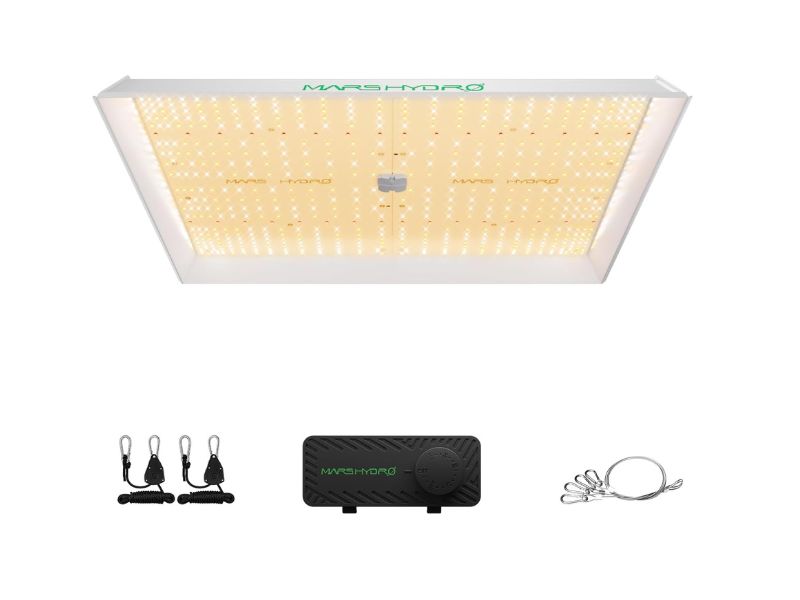
My primary recommendation is the MARS HYDRO TSW2000 300W LED Grow Light. I would choose it for growers who want a proven 300W-class fixture for a roughly 3×3-focused setup, with full-spectrum output, dimming, daisy-chain capability, and a reflector-style design. Its current Amazon listing specifically identifies the TSW2000 as a 300W fixture rather than a true 2,000W electrical load.
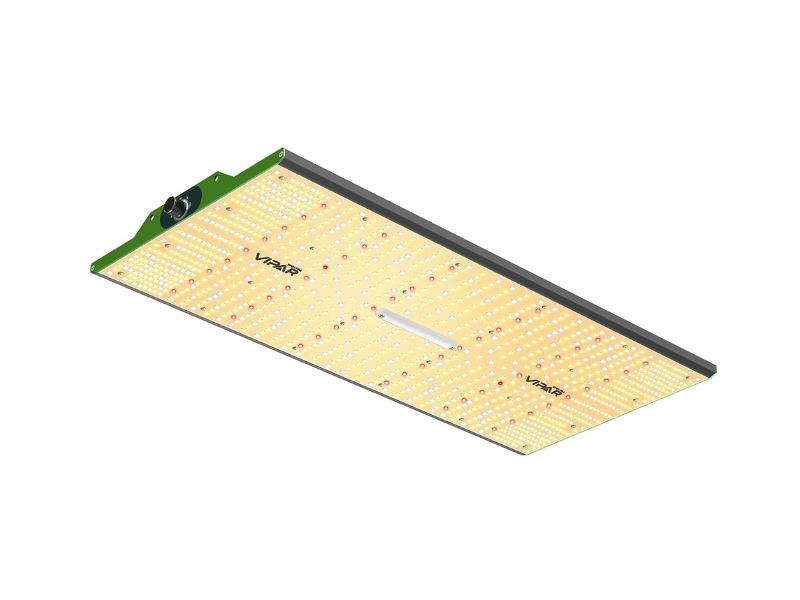
I would choose the VIPARSPECTRA P2000 250W LED Grow Light when a 2×4-style footprint and lower electrical demand make more sense. The current listing specifies 250W actual power, a revised diode layout, full spectrum including 3000K, 5000K, and 660nm components, dimming, and daisy chaining.
For growers who specifically want the traditional “2000W-class” double-chip style, I would choose the WZDRAGON BW2000 LED Grow Light. It uses a full-spectrum double-chip design with Veg/Bloom switching and is intended for a relatively compact growing footprint rather than the huge electrical and thermal load a genuine 2,000W fixture would create.
3 Best 2000 Watt LED Grow Lights Reviewed
| Image | Product Name | Check Price |
|---|---|---|
Best Choice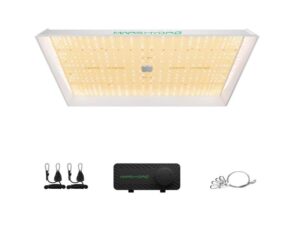 | MARS HYDRO TSW2000 300W LED Grow Light | Check Price |
Second Best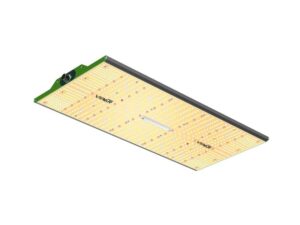 | VIPARSPECTRA P2000 250W LED Grow Light | Check Price |
Third Choice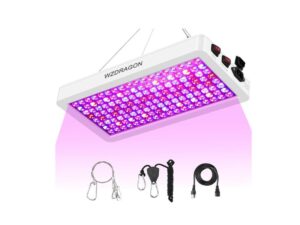 | WZDRAGON BW2000 LED Grow Light | Check Price |
1. MARS HYDRO TSW2000 300W LED Grow Light
Key Features
- 300W actual input
- Full-spectrum LED output
- Dimmable
- Daisy-chain capability
- Reflector-style design
- Updated diode distribution
- Designed around 3×3 / stage-dependent larger coverage
- Fanless architecture
The MARS HYDRO TSW2000 is my primary recommendation because its real specifications are much easier to understand than the model number might suggest.
Despite “2000” appearing in its name, the current fixture is a 300W LED grow light.
That is a much more useful number when planning a grow.
Actual watts tell you about:
- Electrical consumption
- Heat entering the room
- Circuit load
- Rough fixture scale
A genuine 2,000W fixture would create an entirely different electrical and cooling problem.
At 300W, the TSW2000 is much more practical for a conventional indoor tent.
The current design also uses an updated diode layout that places emitters more densely toward the center and more sparsely toward the sides.
The objective is to improve the light map across the intended growing footprint.
That matters because a grow light should not be judged by one extreme center PPFD measurement.
I care about what happens across:
- Center plants
- Side plants
- Corners
- Canopy edges
If the center receives far more light than everything else, the usable growing area becomes smaller than the advertised footprint suggests.
The TSW2000 is particularly well suited to:
- Tomatoes
- Peppers
- Herbs
- Seedlings that will mature in the same tent
- Hydroponic vegetables
- Mixed indoor gardens
Dimming is one of its most important features.
Three hundred watts is much more output than a few young seedlings need.
Rather than running maximum power from germination onward, I would increase intensity gradually as the canopy expands.
This gives you a practical progression:
Seedlings → young vegetative plants → mature canopy
without changing fixtures.
Dimming can also reduce both power consumption and heat.
At full 300W output for 12 hours:
0.3 kW × 12 = 3.6 kWh/day
Over 30 days:
108 kWh/month
At 16 hours:
0.3 × 16 = 4.8 kWh/day
Over 30 days:
144 kWh/month
Those numbers are dramatically different from a genuine 2,000W fixture.
A true 2kW lamp operating 12 hours would consume 24 kWh per day—more than six times the TSW2000’s full-power draw.
That illustrates why actual wattage should always be checked.
The full-spectrum design is also useful because the same fixture can remain in place through multiple plant stages.
You do not need separate “veg” and “flower” lamps simply because plant development changes.
Broad white-spectrum horticultural output can support the full cycle when intensity and photoperiod are adjusted correctly.
The fanless construction is another practical advantage.
There is no fixture cooling fan creating noise or adding another moving part.
However, fanless does not mean heatless.
Three hundred watts still adds noticeable heat to an enclosed tent.
You may need:
- Exhaust ventilation
- Air intake
- Canopy circulation
- Temperature monitoring
depending on room conditions.
The reflector-style form is also worth considering.
Unlike a large multi-bar light, TSW2000 keeps its emitters on a more compact fixture.
That makes installation simpler, but the grower should pay close attention to the manufacturer’s PPFD map and hanging recommendations to avoid excessive center intensity.
What I Like
- Realistic 300W electrical class
- Dimmable
- Updated diode arrangement
- Full-spectrum design
- Daisy-chain capability
- Compact compared with large bar fixtures
- Good fit for a 3×3-style grow
What I Do Not Like
- “2000” model naming can mislead new buyers
- Board-style design is less physically distributed than large bars
- Still requires ventilation in an enclosed tent
- Too powerful for a small plant shelf at full output
The TSW2000 is the model I would choose for most buyers searching this keyword because it delivers a practical 300W grow-light platform rather than pretending that bigger model numbers automatically mean better performance. It offers enough capacity for a serious compact tent while remaining much easier to power and cool than an actual 2,000W system.
2. VIPARSPECTRA P2000 250W LED Grow Light
Key Features
- 250W actual input
- Updated diode layout
- Full-spectrum output
- 3000K white
- 5000K white
- 660nm red
- Dimmable
- Daisy-chain compatible
- Designed around 4×2 / 3×3-style coverage
The VIPARSPECTRA P2000 is the option I would choose when lower actual wattage and a rectangular growing area matter more than maximizing total power.
Amazon currently identifies the P2000 as a 250W plant light, despite the “2000” model name.
Again, this distinction is essential.
The P2000 is not drawing 2,000 watts from the wall.
It is a 250W-class modern LED fixture.
That makes it much more logical for:
- 2×4 tents
- Compact 3×3 spaces
- Seedling-to-mature plant setups
- Indoor peppers
- Herbs
- Leafy vegetables
- Small hydroponic systems
The current listing highlights an updated diode arrangement designed to produce a more uniform PAR map and deeper canopy coverage.
Uniformity is important because plants do not grow at one measurement point.
A rectangular 2×4 canopy needs adequate intensity across eight square feet.
If most output lands in the center two square feet, the grower is wasting both fixture capacity and tent space.
The current spectrum includes 3000K, 5000K, and 660nm red components.
That gives the fixture broad white output with additional deep red.
For practical growing, I would still rank the major buying factors in this order:
coverage → PPFD → efficiency → dimming → photoperiod → spectrum details.
A sophisticated spectrum does not compensate for poor intensity or inadequate coverage.
Dimming adds significant flexibility.
A 250W fixture can be too intense over newly emerged plants if positioned too close and run at full output.
Starting lower helps reduce:
- Light stress
- Unnecessary electricity
- Excess tent heat
As plants fill the canopy, output can be increased.
The P2000’s 250W input also means lower electrical demand than TSW2000.
At 12 hours daily:
0.25 × 12 = 3 kWh/day
Over 30 days:
90 kWh/month
At 16 hours:
0.25 × 16 = 4 kWh/day
Over 30 days:
120 kWh/month
That difference may appear modest for one fixture, but it becomes more meaningful across several lights or year-round growing.
The rectangular format is another reason to consider P2000.
A 2×4 tent has a different shape from a 3×3.
The ideal light should follow the canopy geometry reasonably well instead of forcing a square light distribution into a long rectangle.
VIPARSPECTRA’s positioning of P2000 around 4×2 and 3×3 applications makes it particularly versatile in smaller home grow rooms.
Daisy chaining is useful if the grow expands.
Multiple compatible fixtures can be managed more cleanly than several completely independent control setups.
This is especially relevant if a grower later creates:
- Two tents
- Multiple plant shelves
- Separate vegetative and mature zones
The main limitation is that 250W is still only 250W.
The “P2000” name should not create unrealistic expectations about coverage.
It is not intended to replace a modern 700–1000W commercial fixture across a large 5×5 canopy.
What I Like
- 250W actual draw
- Updated diode distribution
- Full-spectrum white plus 660nm
- Dimming
- Daisy-chain capability
- Strong fit for rectangular tents
- Lower power burden than TSW2000
What I Do Not Like
- “2000” naming can be misunderstood
- Less total power than TSW2000
- Not appropriate for large commercial footprints
- Requires careful height and dimming adjustment for seedlings
The P2000 is the model I would choose when a 250W fixture better matches the canopy and electrical budget. Its strength is efficiency of scale—not pretending to be a literal 2,000W lamp.
3. WZDRAGON BW2000 LED Grow Light
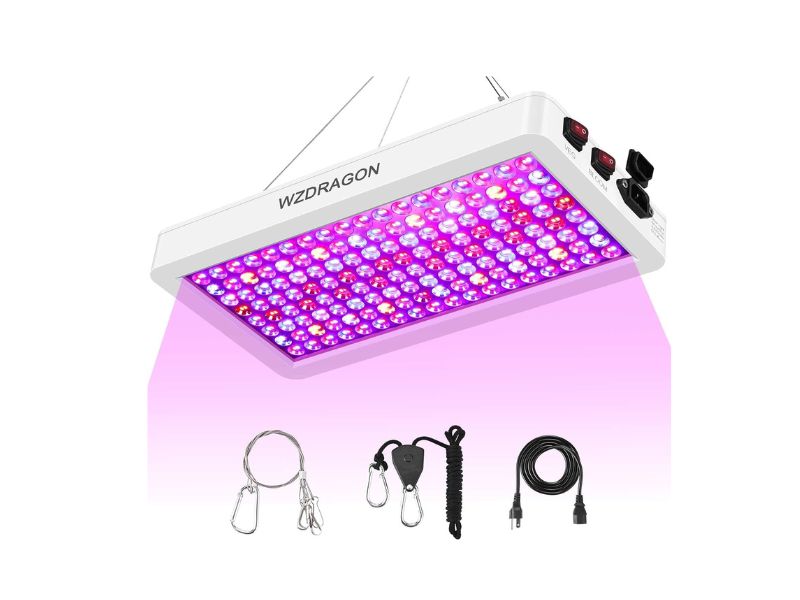
Key Features
- BW2000 full-spectrum design
- Double-chip LED architecture
- Veg/Bloom switching
- White-light configuration
- Compact coverage focus
- Long power cable
- Intended for indoor plants and greenhouse use
The WZDRAGON BW2000 represents the older-style approach to the “2000W” category.
Its current Amazon listing describes a BW2000 double-chip full-spectrum grow light with Veg/Bloom switching and a 10-foot cable.
This is important because the design philosophy differs from the more modern TSW2000 and P2000.
Instead of concentrating on dimmable white-board efficiency, BW2000 uses separate Veg/Bloom operating modes.
That approach was common in earlier full-spectrum LED panels.
A Veg mode typically emphasizes light intended for vegetative development, while Bloom adds more of the fixture’s available channels for mature growth.
The practical advantage is simplicity.
You can change output mode without needing to think about a continuous dimmer percentage.
The disadvantage is less precise control.
A smooth dimmer gives you more flexibility to select:
- 25%
- 40%
- 60%
- 80%
- Full output
according to plant stage.
A mode switch gives you fewer intermediate choices.
The current BW2000 listing also emphasizes full-spectrum lighting for plants from vegetative development through flowering.
A separate current retail description of this exact ASIN places its core coverage around roughly 23.6 × 23.6 inches at a specified height and compares its output with a traditional 400W HPS rather than describing it as a literal 2,000W wall-draw fixture.
That provides useful context.
Despite the “BW2000” name, this should be thought of as a compact grow-light panel, not a 2kW commercial fixture.
I would consider it for:
- Small grow tents
- Individual mature plants
- Compact vegetable setups
- Supplemental greenhouse lighting
- Growers who prefer simple switches
The compact footprint is both a strength and weakness.
It is easier to hang than a large bar fixture.
But smaller physical light-emitting areas can produce greater center concentration.
This means hanging height becomes particularly important.
Too close may create a hotspot.
Too far may sacrifice useful PPFD.
The Veg/Bloom switches also affect total output.
If only part of the fixture is active, electricity use and spectral output change.
For mature plants, the complete intended light mode will normally make more sense than relying on a partial channel indefinitely.
Cooling and ventilation still matter.
Even smaller “2000-class” fixtures add heat.
Provide good circulation around the fixture and canopy rather than enclosing it in stagnant air.
I would also avoid placing the fixture or its electrical connections where irrigation water can splash them.
This is especially important in hydroponic setups.
What I Like
- Simple Veg/Bloom controls
- Full-spectrum design
- Compact fixture
- Easy hanging compared with very large bar lights
- Useful for relatively small grow areas
What I Do Not Like
- “2000W” naming does not reflect literal wall draw
- Switch-based control is less precise than continuous dimming
- Compact design can create greater center concentration
- Less technically transparent than modern PPF/PPE-focused fixtures
The BW2000 is the option I would choose when simple controls and a compact traditional panel design are more important than having the newest dimming architecture. It works best when treated according to its actual coverage rather than the “2000” number in its name.
2000 Watt LED Grow Light Comparison
| Product | Actual/Listed Power Class | Control | Spectrum | Coverage Focus | Best Use |
| MARS HYDRO TSW2000 | 300W | Dimming + daisy chain | Full spectrum | 3×3-focused | Strong all-around tent setup |
| VIPARSPECTRA P2000 | 250W | Dimming + daisy chain | 3000K/5000K/660nm | 2×4 / compact 3×3 | Rectangular tents |
| WZDRAGON BW2000 | Not a literal 2000W draw | Veg/Bloom switches | Full spectrum | Compact | Simple small-tent setup |
The key takeaway is that none of these should be treated as a literal 2,000W electrical fixture. TSW2000 and P2000 explicitly list far lower actual input power, while BW2000’s coverage and replacement positioning likewise place it in a much smaller practical class.
How to Choose the Best 2000 Watt LED Grow Light
Understand What “2000W” Really Means
This is the most important buying lesson.
Historically, grow-light manufacturers often used large numbers to suggest:
- Product tier
- HID equivalence
- Marketing class
- Model family
rather than actual wall draw.
That is why a product called “P2000” can draw 250W, while TSW2000 draws 300W.
Always find the actual input specification.
Actual Watts Matter for Electricity
Actual wall draw affects your utility consumption.
A 300W TSW2000 running for 12 hours consumes:
3.6 kWh/day
A true 2,000W light running 12 hours would consume:
24 kWh/day
That is a massive difference.
Do not calculate operating cost from the model number.
Wattage Does Not Measure Plant Light Directly
Watts tell you electrical input.
Plants respond to photons.
More useful horticultural measurements include:
- PPF
- PPFD
- PPE
- DLI
A newer efficient 250W fixture can outperform an inefficient older fixture drawing substantially more electricity.
What Is PPF?
Photosynthetic Photon Flux measures the total quantity of photosynthetically active photons produced by a fixture each second.
It is usually measured in:
µmol/s
Higher PPF means more total available photons, but coverage and distribution determine how effectively plants receive them.
What Is PPFD?
Photosynthetic Photon Flux Density measures how many photosynthetic photons reach a square meter of canopy each second.
PPFD changes with:
- Hanging height
- Fixture shape
- Diode layout
- Dimmer setting
- Measurement position
That makes a PPFD map far more useful than one center number.
What Is PPE?
Photosynthetic Photon Efficacy measures photon output per joule of electrical energy.
It is usually expressed in:
µmol/J
When comparing two fixtures, complete-system PPE is a more meaningful efficiency metric than an “equivalent wattage” claim.
Do Not Compare Model Numbers
TSW2000, P2000, and BW2000 all contain “2000.”
That does not mean they have:
- The same wattage
- The same PPF
- The same coverage
- The same efficiency
Treat model names as labels.
Treat technical specifications as data.
Best 2000 Watt LED Grow Light for 3×3
I would choose MARS HYDRO TSW2000.
Its 300W actual input provides more output headroom than P2000 while remaining a manageable compact-tent fixture.
Dimming also makes it easier to adapt across multiple plant stages.
Best 2000 Watt LED Grow Light for 2×4
I would favor VIPARSPECTRA P2000.
Its rectangular coverage positioning makes it a natural fit for a 2×4-style space.
Matching fixture geometry to canopy geometry helps reduce wasted light.
Best 2000 Watt LED Grow Light for Seedlings
Both TSW2000 and P2000 can work when heavily dimmed.
However, I would not purchase either specifically for a tiny seedling tray unless those plants will later mature under the same fixture.
For seedling-only use, a smaller light is usually more efficient.
Best 2000 Watt LED Grow Light for Tomatoes
For a mature compact tomato canopy, I would choose TSW2000 over P2000 because its 300W actual input gives it more total power headroom.
The final suitability depends on:
- Plant count
- Canopy size
- Hanging height
- Environmental conditions
rather than tomato species alone.
Best 2000 Watt LED Grow Light for Peppers
Either TSW2000 or P2000 can work for mature peppers within their practical coverage areas.
I would use the dimmer to increase intensity as the canopy expands.
Best 2000 Watt LED Grow Light for Hydroponics
The same lighting principles apply to hydroponic plants.
Hydroponics does not require a special LED spectrum.
I would prioritize:
- PPFD uniformity
- Dimming
- Coverage
- Heat management
and keep drivers, plugs, and power connections away from nutrient solution.
250W vs 300W
The difference between P2000 and TSW2000 is:
50W
At 12 hours daily:
0.05 × 12 = 0.6 kWh/day
Over 30 days:
18 kWh/month
The higher-wattage fixture gives more potential output but also increases heat and energy consumption.
Choose based on canopy requirements.
Dimming Is Better Than Oversizing
A dimmable light gives you useful headroom.
But that does not mean you should buy a dramatically oversized fixture and leave it at low power permanently.
A fixture that closely matches the canopy is generally easier to:
- Hang
- Cool
- Power
- Control
Full Spectrum Is the Practical Choice
Modern broad white-spectrum fixtures provide useful light across multiple plant stages.
P2000 specifically combines 3000K, 5000K, and 660nm components.
You do not need a separate blue lamp for vegetative growth and red lamp for mature growth in most home setups.
Veg/Bloom Switches vs Dimmers
WZDRAGON uses a more traditional Veg/Bloom switching approach.
TSW2000 and P2000 provide more flexible dimming.
I generally prefer dimming because it allows gradual adjustment.
Switches remain simple and easy to understand, but they provide fewer intermediate choices.
Hanging Height Matters
There is no universal best distance for a “2000W” model because the fixtures differ dramatically.
Do not use the model name to determine height.
Follow the exact fixture’s guidance and monitor plant response.
Possible insufficient-light symptoms include:
- Stretching
- Long internodes
- Leaning
- Pale growth
Possible excessive-light symptoms include:
- Bleaching
- Curling
- Pale upper leaves
- Localized stress
Adjust gradually.
Can You Run Grow Lights 24 Hours?
I would not use continuous lighting as the default.
Plants generally benefit from a regular light/dark schedule.
If plants appear weak under a normal photoperiod, first examine:
- Intensity
- Distance
- Coverage
- Environmental conditions
rather than immediately switching to 24-hour lighting.
Heat Management
A 250–300W LED fixture is much easier to manage than a literal 2kW light, but it still produces heat.
Inside a tent, consider:
- Exhaust
- Air intake
- Circulation fans
- Room temperature
- Humidity
especially during warm weather.
Electrical Safety
Use actual wattage when planning circuits.
Also account for:
- Exhaust fans
- Oscillating fans
- Pumps
- Humidifiers
- Dehumidifiers
- Heaters
Do not calculate electrical load from the word “2000” printed in a model name.
Common 2000W Grow-Light Buying Mistakes
Assuming “2000W” Means 2,000W Draw
Always verify actual electrical input.
Comparing Only Model Numbers
P2000 and TSW2000 are not equivalent products.
Buying for Marketing Coverage
Look at PPFD maps and realistic canopy size.
Running Full Power Over Seedlings
Use dimming when available.
Ignoring Fixture Shape
Rectangular and square tents benefit from different light distributions.
Ignoring Heat
Even efficient LEDs warm an enclosed space.
Focusing Only on Spectrum
Intensity and uniformity matter first.
Using “Equivalent Watts” for Electricity Calculations
Use actual input watts only.
Frequently Asked Questions
What is the best 2000 watt LED grow light?
MARS HYDRO TSW2000 is my primary recommendation in the common 2000-series category.
It currently uses 300W actual input with dimming, full-spectrum output, and grow-tent-oriented coverage.
Is the MARS HYDRO TSW2000 really 2000 watts?
No, the current TSW2000 is listed as a 300W actual-input grow light.
The “2000” portion is part of the product/model naming rather than literal wall draw.
Is VIPARSPECTRA P2000 really 2000 watts?
No, the current Amazon P2000 is a 250W grow light.
Amazon explicitly lists it as a 250-watt fixture.
Why do grow lights use names like 2000?
The number often identifies a product tier or historical equivalent-light class, not actual wattage.
Always check the listed input power before comparing fixtures.
Which 2000-series grow light is best for 3×3?
I would choose MARS HYDRO TSW2000 for a serious compact 3×3-style setup.
Its 300W input gives it useful output headroom while retaining dimming.
Which 2000-series light is best for 2×4?
VIPARSPECTRA P2000 is my preferred choice for a rectangular 2×4-style canopy.
Its current listing specifically positions it around 4×2 and compact 3×3 growing.
Is 250W enough for indoor growing?
Yes, when the fixture and canopy area are appropriately matched.
A modern 250W light can be substantial for a compact tent but is not intended for a large commercial room.
Is 300W enough for a 3×3?
A modern 300W fixture can provide substantial lighting capacity in a 3×3-style area.
Exact suitability still depends on efficiency, PPFD distribution, crop requirements, and hanging height.
Can I use these lights for seedlings?
Yes when dimmed or appropriately positioned, although full output is usually unnecessary.
A smaller propagation fixture may be more economical if seedlings are the only intended use.
Can I use a 2000-series grow light for tomatoes?
Yes, provided mature canopy size remains within the fixture’s useful coverage area.
Tomatoes can become large, so plan around mature canopy rather than seedling size.
Can I use one for peppers?
Yes, both TSW2000 and P2000 can suit compact mature pepper gardens.
Adjust intensity as the plants develop.
Do these lights work for hydroponics?
Yes, LED lighting requirements depend on plants and canopy rather than whether roots grow in soil.
Keep electrical components protected from irrigation and nutrient solution.
What is better, 250W or 300W?
Neither is universally better; 300W provides more capacity while 250W reduces electrical and heat load.
Choose based on canopy size and target intensity.
What is PPFD?
PPFD measures photosynthetic photon density reaching a specific point on the plant canopy.
It is much more informative than model-name wattage.
What is PPF?
PPF measures total photosynthetically active photons emitted by the fixture every second.
It helps compare overall light output.
What is PPE?
PPE measures the fixture’s photon output relative to electrical energy consumed.
It is useful for comparing efficiency between modern LED systems.
Should I buy a light based on equivalent wattage?
No, actual input watts and horticultural photon metrics are much more useful.
Equivalent-watt claims can make products appear dramatically more powerful than their electrical consumption suggests.
Are dimmable grow lights better?
Dimming is highly useful because plant light requirements change as the canopy develops.
It also reduces unnecessary electricity and heat when maximum output is not needed.
Are Veg/Bloom switches useful?
They are simple, but continuous dimming generally provides more precise intensity control.
BW2000 uses the traditional switch-based approach.
How much electricity does a 300W grow light use?
At full output for 12 hours, a 300W fixture uses about 3.6 kWh daily.
That equals approximately 108 kWh over 30 days.
How much electricity does a 250W grow light use?
At full output for 12 hours, a 250W fixture uses about 3 kWh daily.
That equals approximately 90 kWh over 30 days.
Conclusion
The best 2000 watt LED grow light is usually not a literal 2,000W fixture. In this category, “2000” commonly belongs to the model name, while actual electrical draw is dramatically lower. That is why I would always prioritize actual input power, PPFD distribution, dimming, coverage, system efficiency, and canopy size over the headline model number.
The MARS HYDRO TSW2000 remains my primary recommendation. Its real 300W input, full-spectrum output, updated diode distribution, dimming, and compact grow-tent design give it a strong balance for serious indoor gardens without the extreme electrical load implied by its name.
The VIPARSPECTRA P2000 is my choice for growers who want lower consumption or a more rectangular footprint. Its 250W input, updated diode layout, 3000K/5000K/660nm spectrum, dimming, and daisy-chain capability make it particularly practical for 2×4-style setups.
The WZDRAGON BW2000 is the simpler traditional alternative, using full-spectrum double-chip construction and Veg/Bloom switching for compact indoor growing.
For a 3×3-style setup, I would choose MARS HYDRO TSW2000. For a 2×4-style canopy, I would choose VIPARSPECTRA P2000. For growers who prefer simple Veg/Bloom controls, I would choose WZDRAGON BW2000.

I’m Maya L. Greenwood, a lifelong plant lover who believes anyone can grow something beautiful with the right guidance. After years of testing soil mixes, pruning methods, irrigation tricks, and pest-safe solutions, I started EasyGardenTips.com to turn hard-won lessons into step-by-step advice. From seed starting and container gardens to composting and seasonal checklists, my goal is to make gardening simple, sustainable, and fun.