Best Grow Tent Equipment: 3 Essentials for a Smarter Indoor Grow
Choosing the best grow tent equipment is easier when you stop thinking about how many gadgets can fit inside a tent and focus instead on the three systems plants depend on most: light, air circulation, and ventilation.
A grow tent by itself is only an enclosure. It can contain light and help isolate the growing environment, but the equipment inside determines whether plants receive enough usable light, whether air moves through the canopy, and whether excess heat and humidity can leave the tent. Controlled-environment horticulture similarly treats light, temperature, humidity, carbon dioxide, water, and nutrients as interconnected parts of the growing environment.
For that reason, I selected three products that solve completely different problems instead of recommending three versions of the same device.
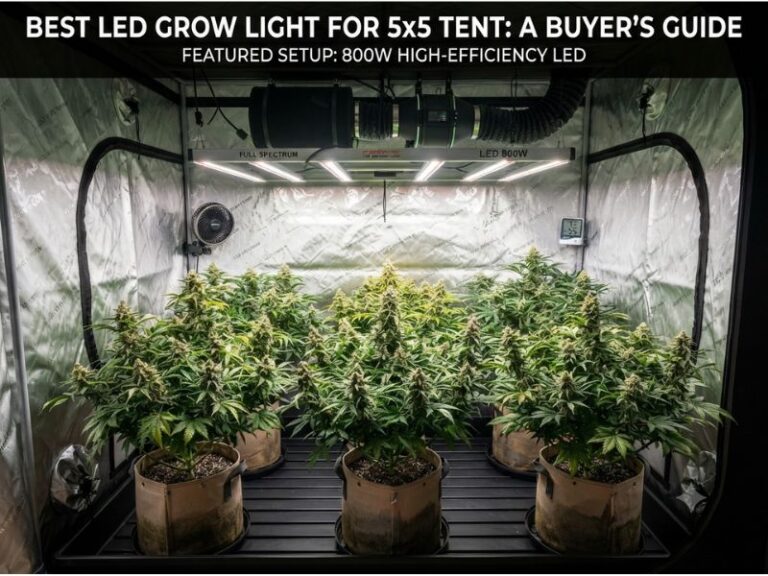
My first recommendation is the Spider Farmer SF4000 450W LED Grow Light. Its Amazon listing currently has by far the deepest customer-feedback history among the three products here, while the current 2026 version uses a 450-watt full-spectrum LED platform designed around a 4×4 flowering footprint. Spider Farmer specifies approximately 2.7 µmol/J system PPE, dimming, a fanless design, and controller compatibility.
The AC Infinity CLOUDRAY S6 Grow Tent Clip Fan is my second recommendation. Its current Amazon feedback base is also substantial, and its redesigned platform combines a brushless EC motor, 10 airflow levels, 10 oscillation settings, dynamic wind modes, and IP54 environmental protection.
Finally, the AC Infinity 6-Inch Air Filtration Kit covers the exhaust side of the system with a 352-CFM inline fan, 10-speed control, 1200+ IAV activated-carbon filter, and 25 feet of ducting. It has a smaller review base than the first two products, but its current average customer rating is especially strong.
Together, these three pieces of equipment create a much more useful foundation than filling a tent with secondary accessories before the basics are right.
3 Best Grow Tent Equipment Picks
| Image | Product Name | Check Price |
|---|---|---|
Best Choice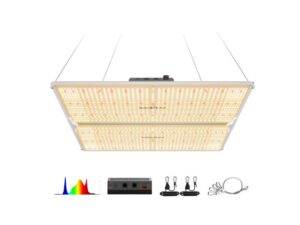 | Spider Farmer SF4000 450W LED Grow Light | Check Price |
Second Best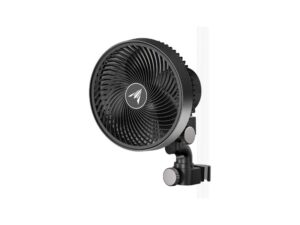 | AC Infinity CLOUDRAY S6 Grow Tent Clip Fan | Check Price |
Third Choice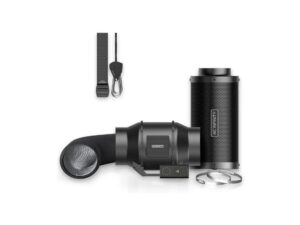 | AC Infinity 6-Inch Air Filtration Kit | Check Price |
I ranked these products using current Amazon rating and review confidence together with how important each piece of equipment is to an indoor grow.
The three categories are:
- Grow lighting
- Internal air circulation
- Exhaust ventilation and filtration
That means these products complement each other instead of competing for the same job.
1. Spider Farmer SF4000 450W LED Grow Light
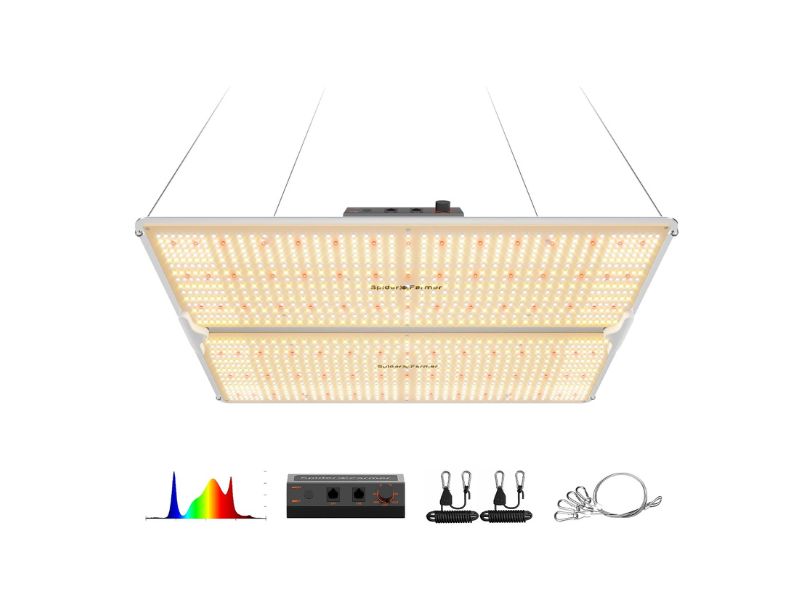
Key Features
- 450W power draw
- Full-spectrum LED output
- Approximately 2.7 µmol/J system PPE
- Designed around 4×4 flowering coverage
- Dimmable output
- Fanless passive cooling
- Controller-compatible operation
The Spider Farmer SF4000 takes first place because lighting is the equipment category I would prioritize before almost anything else in a fully indoor grow tent.
Plants require light for photosynthesis, and inadequate light can lead to weak, elongated growth and poor development. Indoor growers therefore need to match artificial lighting to the crop and canopy rather than assuming ordinary room illumination is sufficient.
The current SF4000 is a 450-watt full-spectrum fixture designed around a 4×4 flowering footprint. Spider Farmer’s 2026 version uses an updated high-efficiency diode platform with approximately 2.7 µmol/J system PPE and supports dimming and controller-based operation.
A 4×4 footprint is especially useful because the SF4000 is physically sized for a substantial square canopy rather than concentrating all its output into a tiny center area. Uniformity matters: an indoor crop can suffer when center plants receive substantially more light than plants around the perimeter. Controlled-environment lighting guidance recommends evaluating plant-useful light and distribution rather than relying on human-vision measurements such as lumens alone.
The fanless construction is another practical advantage in a tent. It removes one mechanical fan from the lighting fixture itself and relies on the aluminum structure for heat dissipation. The light still contributes heat to the growing environment, so proper exhaust ventilation remains necessary.
Dimming is equally useful. Seedlings and small plants do not always occupy a full 4×4 canopy, so being able to reduce light output gives you more flexibility than running maximum power continuously.
What I Like
- Excellent customer-feedback depth
- Strong match for a 4×4 canopy
- Dimmable full-spectrum output
- Fanless operation
- Controller compatibility adds room for automation
What I Do Not Like
- Too large for a small 2×2 setup
- A 450W fixture still adds meaningful heat that ventilation must manage
If I were building a 4×4 tent around one core piece of equipment, the SF4000 would be the first product on this list I would size the rest of the system around.
2. AC Infinity CLOUDRAY S6 Grow Tent Clip Fan
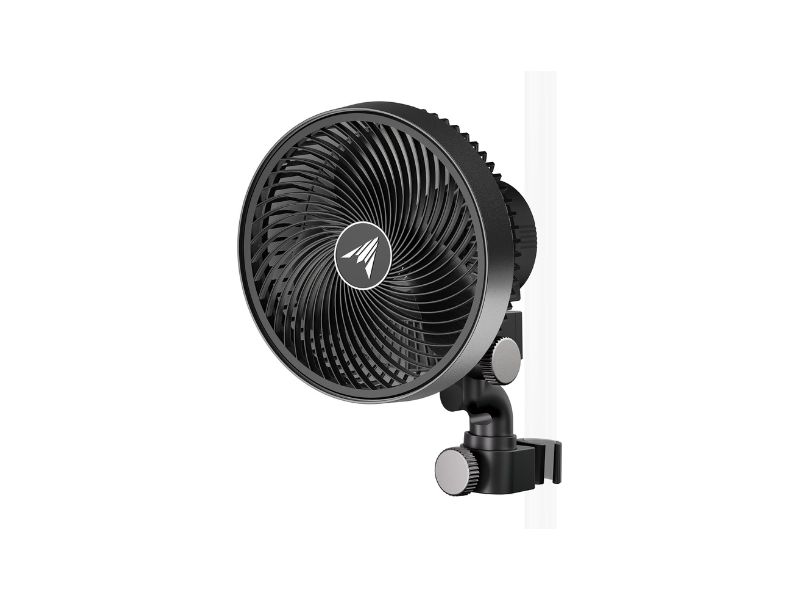
Key Features
- 6-inch clip-on circulation fan
- Brushless EC motor
- 10 airflow levels
- 10 adjustable oscillation ranges
- Dynamic wind modes
- IP54 protection
- UIS controller compatibility
The CLOUDRAY S6 earns second place because exhaust airflow alone does not guarantee good air movement around every leaf.
An inline fan can pull old air from the tent, but dense foliage can still create relatively stagnant pockets within the canopy. Indoor horticulture guidance notes that excessive humidity combined with insufficient circulation can contribute to plant-health problems, while fans can improve air movement in enclosed growing spaces.
AC Infinity designed the CLOUDRAY specifically around grow-tent conditions. The current S6 uses a redesigned brushless EC motor with 10 fan speeds, 10 oscillation settings, and 10 dynamic wind modes. Its clamp mounts directly to common tent poles, so the fan does not consume valuable floor space.
The adjustable oscillation range is more useful than it initially sounds.
In a small tent, a normal oscillating fan may spend part of every sweep blowing directly into the tent wall. The CLOUDRAY allows the sweep to be narrowed so airflow can remain focused on the usable canopy area while avoiding lights, poles, ducting, and other obstacles.
Its IP54 rating also makes the design better suited to humid grow environments than a generic household desk fan. AC Infinity describes the updated motor platform as specifically engineered to resist the heat and humidity encountered in grow spaces.
The key is still using it correctly. More airflow is not always better. Young or delicate plants may need only gentle movement, while a dense mature canopy may need stronger circulation and possibly airflow at more than one height.
What I Like
- Excellent Amazon feedback depth
- Ten speed levels make airflow easy to tune
- Adjustable oscillation helps in confined tents
- Pole mounting preserves floor space
- IP54 construction fits humid growing environments
What I Do Not Like
- More expensive than a simple fixed clip fan
- Strong settings can be excessive when aimed too closely at young plants
The CLOUDRAY S6 is the equipment I would add after the grow light when the goal is to build a tent with more consistent air movement around the plants.
3. AC Infinity 6-Inch Air Filtration Kit
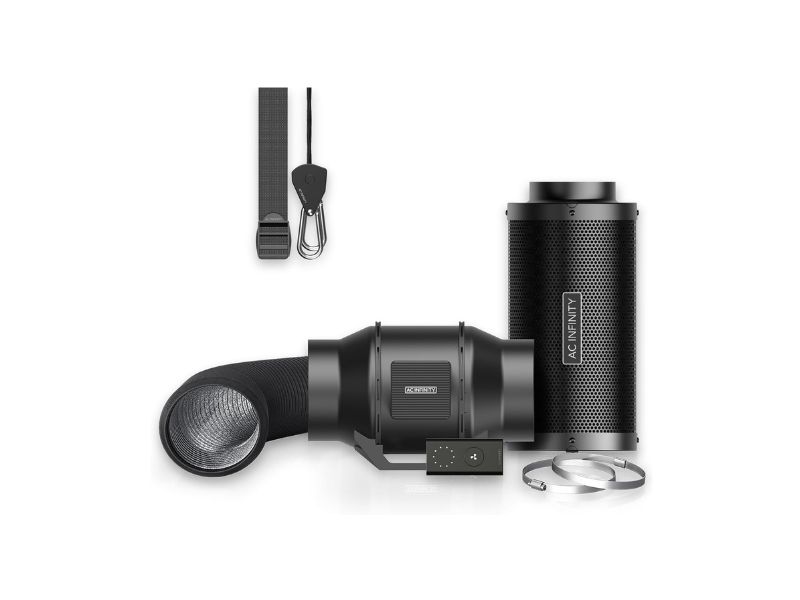
Key Features
- 6-inch inline exhaust system
- 352-CFM maximum fan airflow
- 10-speed controller
- Mixed-flow fan design
- 1200+ IAV activated-carbon filter
- 38 mm carbon bed
- 25 feet of four-layer ducting
- Installation hardware included
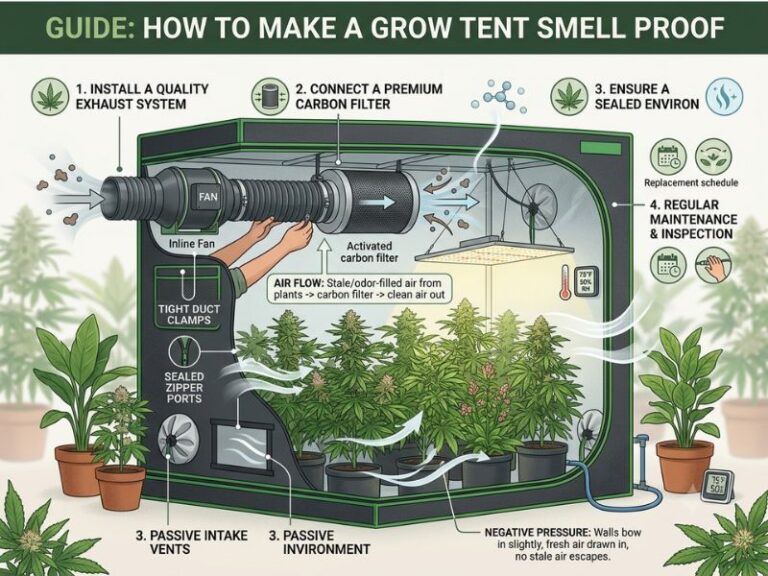
The AC Infinity Air Filtration Kit takes third place because it combines several pieces of core ventilation equipment into one matched package.
The system includes a 6-inch CLOUDLINE inline fan, speed controller, carbon filter, pre-filter, flexible ducting, clamps, and hanging hardware. AC Infinity rates the included fan at 352 CFM and approximately 34 dBA, while the carbon filter uses a 38 mm bed of premium 1200+ IAV activated charcoal.
This is much more convenient than buying a 6-inch fan and accidentally pairing it with a 4-inch filter or undersized ducting.
The 10-speed controller is also important because maximum airflow is rarely required every minute of the day. A variable-speed inline fan lets you balance temperature, humidity, negative pressure, filtration, and noise rather than simply switching full power on or off.
AC Infinity’s mixed-flow design is intended to maintain useful airflow in duct systems where carbon filters and bends create resistance. The included 25-foot duct section gives substantial routing flexibility, although using all 25 feet unnecessarily would add more airflow resistance than a shorter exhaust path.
The carbon filter is primarily an odor-control component. If odor filtration is not required, the inline fan can still perform the fundamental ventilation job without a carbon filter, and removing filter resistance can improve available airflow.
What I Like
- Fan, filter, and ducting are already matched
- Ten fan speeds
- Strong carbon-filter specification
- Generous duct length
- Complete installation package
What I Do Not Like
- More equipment than a tiny tent may require
- Carbon filter adds weight and airflow resistance when odor control is unnecessary
For a medium grow tent where heat, humidity, air exchange, and odor filtration all need attention, this is an excellent complete exhaust platform.
Grow Tent Equipment Comparison
| Product | Equipment Type | Best Fit | Main Function | Main Advantage |
| Spider Farmer SF4000 | LED grow light | 4×4-class canopy | Provides plant-usable light | Strong full-spectrum lighting platform |
| AC Infinity CLOUDRAY S6 | Circulation fan | Small to large tents | Moves air within canopy | Adjustable oscillating airflow |
| AC Infinity 6-Inch Filtration Kit | Exhaust system | Medium tents | Air exchange and odor control | Complete matched ventilation package |
These products should not be viewed as alternatives to one another.
A properly equipped tent may use all three: the SF4000 supplies light, CLOUDRAY circulates internal air, and the filtration kit exhausts air from the enclosure.
What Equipment Does a Grow Tent Actually Need?
The exact equipment list depends on the plant species, tent size, room climate, and growing method.
However, most serious indoor tent setups are built around several functional categories:
- Grow light
- Exhaust fan
- Passive or active intake
- Internal circulation fan
- Temperature/humidity monitor
- Containers or hydroponic system
- Growing medium
- Irrigation equipment
- Optional carbon filter
- Optional environmental controller
Not every item needs to be sophisticated.
What matters is that each necessary function is covered.
Start With the Grow Light
Light is one of the foundational inputs for plant growth.
Plants use light energy for photosynthesis, and indoor plants that do not receive enough usable light may become stretched, pale, or weak.
Inside a completely enclosed tent, natural daylight generally contributes little or nothing once the doors are closed.
That makes the grow light the primary energy source for the canopy.
Do Not Shop by Wattage Alone
Electrical wattage tells you how much power the fixture consumes.
It does not tell you how evenly plant-useful photons are distributed across the canopy.
When evaluating grow lights, useful terms include:
- PAR
- PPFD
- PPF
- PPE
- Coverage
- Dimming
- Hanging height
Controlled-environment lighting guidance recommends focusing on photosynthetically active radiation and crop-relevant light measurements rather than human-lighting units such as lumens.
Why PPFD Matters
PPFD, or photosynthetic photon flux density, describes the number of photosynthetically useful photons arriving at a square meter each second.
The exact target depends on the crop and stage of growth.
What matters when comparing equipment is that a good fixture should provide appropriate intensity without creating an extreme center hotspot and weak perimeter.
Why PPE Matters
PPE, or photosynthetic photon efficacy, describes how efficiently a grow light converts electrical energy into photosynthetically useful photons.
Spider Farmer specifies around 2.7 µmol/J system PPE for the current SF4000.
A higher-efficiency fixture can produce more useful light from a given amount of electrical power, although coverage and spectrum still matter.
Match the Light to the Tent Size
Buying an enormous fixture for a 2×2 makes little sense.
Likewise, trying to illuminate an entire 4×4 canopy with a tiny seedling light generally leads to uneven coverage.
2×2 Tent
Choose a compact fixture designed around approximately four square feet.
Prioritize:
- Dimming
- Compact dimensions
- Low heat load
2×4 Tent
A rectangular fixture normally makes the most sense.
Its physical shape can spread light along the full four-foot length.
3×3 Tent
Look for a square or bar-style fixture designed to distribute light evenly across nine square feet.
4×4 Tent
This is where the SF4000 fits naturally.
Spider Farmer specifies 4×4 flowering coverage and a larger 5×5 vegetative footprint for the current model.
Grow Light Height Matters
The same fixture produces different canopy intensity at different hanging heights.
Too close can produce excessive intensity or heat stress.
Too far away reduces intensity and may create weaker growth.
Manufacturer PPFD maps and hanging recommendations are therefore more useful than copying one universal distance from another grower’s setup.
Controlled-environment lighting guidance similarly recommends using manufacturer PPFD information or a quantum sensor to understand useful light at different heights.
Dimming Is Worth Having
A dimmable grow light gives you control without constantly moving the entire fixture.
You can reduce intensity when:
- Plants are young
- Only part of the tent is occupied
- The canopy has moved closer to the light
- Heat load needs to be reduced
As the canopy expands, output can be increased gradually according to plant requirements.
The SF4000 includes dimming and is compatible with Spider Farmer’s current GGS control platform.
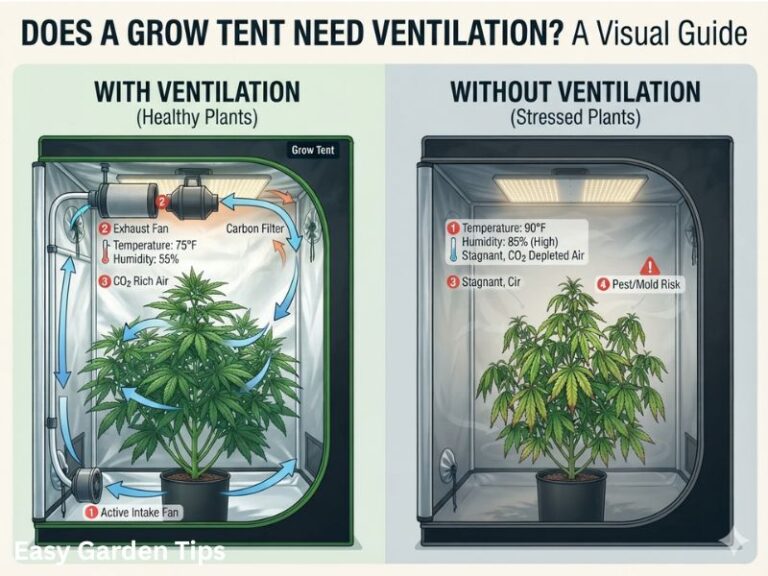
Why a Grow Tent Needs Exhaust Ventilation
Grow lights and electrical devices release heat, while plants and wet growing media add moisture to the air.
A closed tent therefore tends to drift away from the surrounding room’s environmental conditions unless air is exchanged.
The inline exhaust fan pulls air out of the enclosure and allows replacement air to enter.
This influences:
- Temperature
- Humidity
- Fresh-air exchange
- Tent pressure
- Carbon-filter airflow
Plant humidity needs vary by species, so the goal is not to chase one universal humidity number. Measuring the actual environment and adjusting ventilation accordingly is more useful.
Inline Fan vs Clip Fan
These are completely different pieces of equipment.
Inline Fan
An inline fan connects to ducting.
It exchanges air between the tent and the surrounding room.
Clip Fan
A clip fan remains inside the tent.
It circulates air around the canopy.
A strong inline fan does not necessarily eliminate stagnant areas inside dense foliage, which is why many tents use both types.
What Size Inline Fan Does a Grow Tent Need?
There is no single answer based only on floor dimensions.
Start by calculating the enclosure volume:
Length × width × height = cubic feet
Then consider restrictions including:
- Carbon filter
- Ducting
- Duct bends
- Passive intake size
- Heat load
For example, a 4×4×6.67-foot tent contains roughly 107 cubic feet of air.
That does not mean a 107-CFM fan is automatically ideal.
The carbon filter and duct system reduce real airflow, so having additional capacity plus speed control is useful.
AC Infinity rates the included 6-inch fan in its filtration kit at 352 CFM with ten speed levels.
What Is Negative Pressure?
When the exhaust fan removes air faster than it enters, the tent walls may pull slightly inward.
That is negative pressure.
A modest amount is normal in an exhaust-based system.
Excessive wall collapse indicates that exhaust airflow may be too strong relative to available intake area.
In that situation, reduce fan speed or increase passive intake rather than assuming maximum exhaust is always better.
Do You Need a Carbon Filter?
Not every grow tent requires one.
A carbon filter is useful when odor control is necessary.
The AC Infinity kit includes a 38 mm carbon bed made from premium 1200+ IAV activated charcoal.
The filter adds resistance to the system, so there is little reason to install it solely because it came in a kit if the crop produces no odor you need to control.
What Does the Carbon Filter Pre-Filter Do?
The fabric pre-filter catches larger material before it reaches the activated carbon.
This can include:
- Dust
- Fibers
- Hair
- Larger airborne debris
Keeping the pre-filter clean helps avoid unnecessary airflow restriction.
The AC Infinity kit includes a pre-filter cloth as part of the filtration assembly.
Why Ducting Layout Matters
Every piece of ducting creates some resistance.
Long flexible ducts and tight turns add more.
For better performance:
- Keep the duct path reasonably short
- Avoid crushed sections
- Minimize unnecessary 90-degree bends
- Secure joints properly
- Use matching duct diameter
The AC Infinity kit includes 25 feet of four-layer flexible ducting, which is convenient when the exhaust outlet is some distance away.
You do not need to use the entire length if five or six feet will reach the exhaust point.
Why Canopy Circulation Matters
The internal fan should help move air through the foliage rather than simply blowing toward the exhaust.
Indoor plant guidance notes that air circulation can be useful where excess humidity or stagnant air becomes an issue.
Gentle leaf movement is usually more useful than one high-speed fan blasting the same plant continuously.
The CLOUDRAY’s ten speed levels make it easier to adjust circulation according to plant stage and canopy density.
Where Should a Clip Fan Go?
A useful starting position is near or slightly above canopy height.
Aim across the plants rather than directly downward onto one container.
Pole-mounted fans make vertical adjustment easy because the clamp can be moved upward as the canopy grows.
In a larger tent, you may eventually want:
- One fan across the upper canopy
- Another providing gentle movement below dense foliage
Do not add a second fan automatically. Add it when the canopy develops an actual circulation problem.
Do You Need an Environmental Controller?
Not necessarily.
The three ranked products can function without building a fully automated smart tent.
However, controllers become useful when you want equipment to respond automatically to:
- Temperature
- Humidity
- Time schedules
- VPD
- Lighting cycles
The SF4000 supports compatible controller functionality, while CLOUDRAY belongs to AC Infinity’s UIS control ecosystem.
Automation is most valuable once you understand what conditions you are trying to maintain.
A smart controller cannot compensate for an undersized light or a poorly routed exhaust system.
Temperature and Humidity Monitoring
Even if your core equipment is excellent, you need a way to confirm whether it is doing its job.
A simple digital thermometer/hygrometer can reveal:
- Lights-on temperature rise
- Nighttime temperature drop
- Humidity after watering
- Whether exhaust speed is adequate
- How the surrounding room affects the tent
Humidity requirements differ between plant species, so actual measurements matter more than blindly targeting a number copied from another grow setup.
Where Should the Environment Sensor Go?
Place the primary sensor near canopy height.
Avoid placing it:
- Directly in front of the CLOUDRAY
- Beside the exhaust port
- Immediately next to a humidifier
- Against the reflective wall
- Directly under the LED driver
Those locations can produce measurements that reflect a small local pocket rather than the broader canopy environment.
As the plants become taller, move the sensor upward.
The Room Outside the Tent Matters
A grow tent is not an air conditioner.
Its ventilation system normally pulls replacement air from the surrounding bedroom, basement, garage, or grow room.
If the surrounding room is extremely warm, exhausting more tent air merely replaces it with more warm room air.
Likewise, if the room is already humid, increased ventilation may have limited ability to lower tent humidity.
The tent and the room therefore operate as one environmental system.
Equipment for a 2×2 Grow Tent
A 2×2 needs compact equipment.
A practical setup might include:
- Small dimmable LED grow light
- 4-inch exhaust fan
- Compact circulation fan
- Temperature/humidity monitor
The SF4000 and 6-inch filtration kit are both unnecessarily large for most 2×2 applications.
The CLOUDRAY S6 can work, but even its physical size should be considered in such a small enclosure.
Equipment for a 2×4 Grow Tent
A 2×4 benefits from equipment designed around a rectangular canopy.
Look for:
- 2×4 LED coverage
- 4-inch or controlled 6-inch exhaust
- Clip fan mounted toward one end
- Environmental sensor near canopy center
A long shallow tent is relatively easy to access and ventilate when plants are arranged in a row.
Equipment for a 3×3 Grow Tent
A 3×3 sits between compact and medium systems.
Useful equipment includes:
- Proper 3×3 light
- Variable-speed exhaust
- One adjustable clip fan
- Environmental monitoring
A 6-inch filtration system can work when the speed is reduced appropriately, particularly if you expect to upgrade to a 4×4 later.
Equipment for a 4×4 Grow Tent
A 4×4 is where all three reviewed products become especially complementary.
The SF4000 is specifically designed around a 4×4 flowering footprint.
The CLOUDRAY S6 can provide adjustable circulation across the canopy.
The 6-inch filtration kit can handle exhaust, ducting, and optional odor filtration with a controllable 352-CFM fan.
This creates a coherent equipment platform without forcing every component to come from the same manufacturer.
Equipment for a 5×5 Grow Tent
A 5×5 requires more careful lighting selection because its floor area increases from 16 square feet in a 4×4 to 25 square feet.
Spider Farmer lists the SF4000 for a larger vegetative footprint but a 4×4 flowering footprint, so growers intending to use every inch of a heavily light-demanding 5×5 canopy should evaluate whether a larger fixture is appropriate.
A 6-inch ventilation platform can still work in many 5×5 tents, but actual needs depend on:
- Heat
- Duct resistance
- Room climate
- Plant density
- Filter use
Electrical Safety in a Grow Tent
Indoor grow equipment combines electrical power with water, humidity, metal framing, and sometimes pumps.
Basic electrical organization matters.
Keep:
- Power strips
- Plug connections
- Controllers
- Extension-cord joints
away from wet floor areas.
Route cords so they cannot drop into runoff trays or reservoirs.
Grow-light guidance from extension sources also emphasizes appropriate grounded electrical equipment where water is present around indoor plants.
Follow the electrical ratings and installation requirements of each device rather than loading every piece of tent equipment onto one small timer or extension cord.
Equipment Placement Matters as Much as Equipment Quality
A premium light mounted poorly can create an uneven canopy.
A powerful exhaust fan routed through crushed ducting can underperform.
An excellent circulation fan pointed directly at one plant can create unnecessary stress.
Think of the tent as a system.
Light
Center over the usable canopy.
Exhaust
Normally place the exhaust pickup high, where warm air tends to accumulate.
Intake
Allow replacement air to enter lower in the enclosure.
Circulation Fan
Aim through or across the canopy.
Sensor
Place around canopy height away from direct equipment output.
Good placement helps the equipment work together instead of fighting itself.
Common Mistakes When Buying Grow Tent Equipment
Buying Equipment Before Choosing the Tent Size
Start with the intended canopy footprint.
Then size the light, fan, filter, and accessories.
Choosing a Grow Light by Wattage Only
Coverage and usable photon distribution matter too.
Buying an Oversized Light Because Bigger Sounds Better
Too much intensity can be as problematic as too little.
Running the Inline Fan at Maximum Speed Continuously
Variable-speed control exists so airflow can be matched to actual conditions.
Confusing Exhaust With Circulation
The inline fan and clip fan have separate jobs.
Ignoring Duct Resistance
Filters, long duct runs, and sharp bends reduce effective airflow.
Buying a Carbon Filter When You Do Not Need Odor Control
The filter adds weight and resistance.
Pointing the Clip Fan Directly at One Plant
Use circulation to move air around the canopy.
Blocking Passive Intakes
Containers and equipment placed against intake vents can reduce replacement airflow.
Ignoring the Room Climate
The tent receives air from the room around it.
Buying Smart Controls Before Basic Equipment
Automation is useful only after lighting and ventilation are properly sized.
Forgetting Electrical Safety
Keep connections away from irrigation and runoff.
Frequently Asked Questions
1. What is the best grow tent equipment to buy first?
A properly sized grow light should be one of the first major equipment purchases for a fully indoor grow tent.
Plants depend on light for photosynthesis, and artificial lighting becomes the primary light source when the enclosed tent receives little natural sun. The Spider Farmer SF4000 is my first product recommendation for a 4×4-class setup.
2. Is the Spider Farmer SF4000 good for a 4×4 grow tent?
Yes. Spider Farmer specifically lists the current SF4000 around a 4×4 flowering footprint.
The 2026 version uses a 450W full-spectrum platform, approximately 2.7 µmol/J system PPE, dimming, and controller compatibility.
3. Can the SF4000 be used in a 5×5 tent?
It can illuminate a larger vegetative area, but Spider Farmer specifically positions its full flowering footprint around 4×4.
If you intend to fill an entire 5×5 with a highly light-demanding mature canopy, evaluate a fixture designed specifically for that larger area.
4. Do I need a clip fan in a grow tent?
A circulation fan is useful when you need air movement through and around the plant canopy.
It serves a different purpose from the exhaust fan, which moves air between the tent and surrounding room.
5. Is AC Infinity CLOUDRAY S6 good for a grow tent?
Yes. It is specifically designed for grow-tent circulation and offers ten speeds, adjustable oscillation, dynamic wind modes, and IP54 environmental resistance.
Its pole-mounted design also preserves valuable floor space.
6. How strong should the circulation fan be?
Use enough airflow to create gentle movement around the canopy without continuously blasting one plant.
The CLOUDRAY’s multiple speed settings make it easier to reduce airflow around young plants and increase it as foliage becomes denser.
7. Do I need both an inline fan and a clip fan?
Usually, they solve different problems and can be useful together.
The inline fan exchanges tent air, while the clip fan circulates air inside the canopy.
8. What size inline fan is good for a 4×4 grow tent?
A variable-speed 6-inch system is a practical starting point for many 4×4 setups.
The AC Infinity kit reviewed here uses a 6-inch 352-CFM fan with ten-speed adjustment, giving substantial airflow headroom once filter and duct resistance are considered.
9. Is 352 CFM enough for a grow tent?
It can be plenty for many medium tents, but actual requirements depend on tent volume, heat, humidity, filtration, and duct resistance.
Maximum fan CFM is not the same as completed-system airflow after a carbon filter and ducting are installed.
10. Does a grow tent need a carbon filter?
Only when odor control is needed.
The exhaust fan can ventilate a tent without a carbon filter, while removing the filter also removes one major source of airflow resistance.
11. What does an activated-carbon filter do?
It adsorbs many odor-producing compounds from air passing through the filter bed.
The AC Infinity kit uses premium activated charcoal in a 38 mm filter bed.
12. Is 25 feet of ducting too much?
Use only as much ducting as the installation requires.
The AC Infinity kit includes 25 feet for flexibility, but a shorter, straighter exhaust path generally creates less resistance than unnecessarily using the entire roll.
13. Where should the exhaust fan go?
The exhaust pickup is commonly placed high in the tent so warm upper air can be removed.
The fan itself can be mounted inside or outside depending on space, duct routing, and manufacturer guidance.
14. Where should the circulation fan go?
Near canopy level is a useful starting position.
Aim it across the plants rather than directly into one small area, and reposition it as plant height changes.
15. Do I need a temperature and humidity monitor?
Yes, some form of environmental measurement is highly useful because plant requirements and room conditions vary.
Humidity needs are not identical across all plant species, so measuring actual conditions is more useful than relying on one universal target.
16. Do I need a smart controller?
No. A grow tent can work well with manually adjustable equipment.
Smart controllers become valuable when you want automatic responses to temperature, humidity, schedules, or other environmental triggers.
17. Can grow tent equipment be automated?
Yes. Many modern lights and fans can connect to compatible control ecosystems.
The SF4000 supports Spider Farmer controller integration, while CLOUDRAY products can connect to AC Infinity UIS controllers.
18. What equipment is most important for a 4×4 grow tent?
Prioritize a properly sized grow light, adjustable exhaust ventilation, canopy circulation, and temperature/humidity monitoring.
For the products reviewed here, the SF4000, CLOUDRAY S6, and AC Infinity 6-inch filtration kit cover the first three of those core functions.
Conclusion
The best grow tent equipment should create a balanced growing environment rather than simply make the tent look more advanced.
My first recommendation is the Spider Farmer SF4000 because lighting is fundamental to a fully indoor canopy. Its current 450W full-spectrum platform, approximately 2.7 µmol/J system PPE, dimming, fanless design, and 4×4 flowering coverage make it a strong foundation for a medium indoor tent.
The AC Infinity CLOUDRAY S6 is the equipment I would add next for internal circulation. Its 10 speed levels, adjustable oscillation, dynamic airflow modes, EC motor, and IP54 construction make it much easier to tune canopy airflow than relying on a generic fixed-speed fan.
The AC Infinity 6-Inch Air Filtration Kit completes the core system by handling exhaust and optional odor filtration. Its 352-CFM inline fan, 10-speed controller, 1200+ IAV carbon filter, 38 mm carbon bed, and 25-foot duct section provide a matched ventilation platform rather than forcing you to piece incompatible components together.
After those basics are covered, you can add environmental controllers, hygrometers, runoff trays, trellis nets, humidifiers, dehumidifiers, cameras, irrigation equipment, and other accessories according to actual needs.
For a 4×4-class grow tent, I would build the equipment plan in a simple order: size the light first, establish exhaust airflow second, add canopy circulation, measure temperature and humidity, and only then start adding automation.
That approach creates a tent that is easier to understand, easier to troubleshoot, and much less likely to become an expensive collection of equipment that does not work together.

I’m Maya L. Greenwood, a lifelong plant lover who believes anyone can grow something beautiful with the right guidance. After years of testing soil mixes, pruning methods, irrigation tricks, and pest-safe solutions, I started EasyGardenTips.com to turn hard-won lessons into step-by-step advice. From seed starting and container gardens to composting and seasonal checklists, my goal is to make gardening simple, sustainable, and fun.