Best Soil for Grow Tent: 5 Mixes That Build Strong Roots Indoors
Choosing the best soil for grow tent plants is less about finding the richest bag on the shelf and more about creating a root zone that remains predictable inside a container. The mix needs to hold enough water between irrigations, drain excess moisture, maintain air around the roots, and provide nutrients without becoming so dense or heavily fertilized that plants are difficult to manage.
That balance matters even more indoors. In a garden bed, roots can explore a large volume of soil. Inside a grow tent, they are restricted to a pot, so container size, drainage, potting-medium structure, temperature, humidity, and watering frequency all interact. Extension guidance consistently recommends purpose-made potting media for containers because ingredients such as peat, bark, perlite, and compost can provide the combination of water retention and aeration that dense garden soil often cannot.
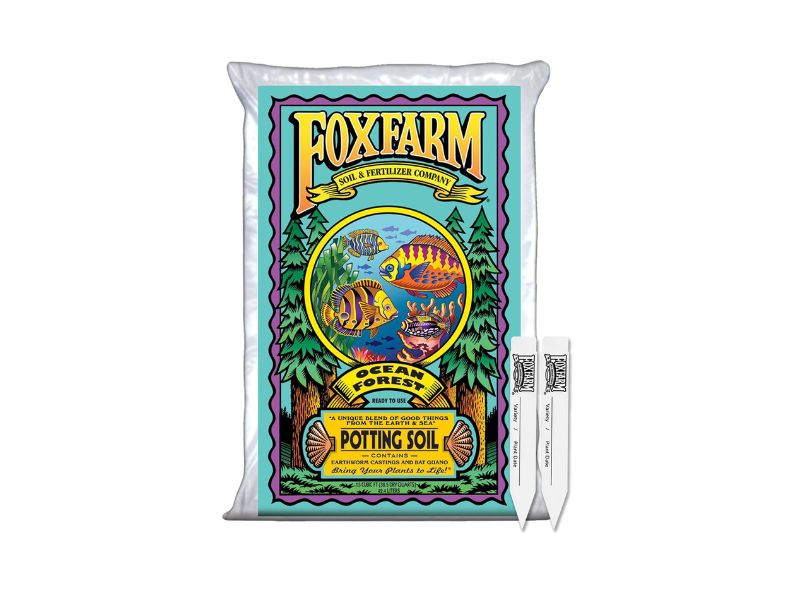
My first recommendation is FoxFarm Ocean Forest Potting Soil. Among the Amazon products I evaluated, it combines one of the largest customer-feedback bases with a strong average rating. More importantly for indoor containers, FoxFarm formulates it with aged forest products, sphagnum peat moss, perlite, sandy loam, earthworm castings, and organic fertilizer ingredients, creating a ready-to-use medium with both moisture retention and an aerated texture.
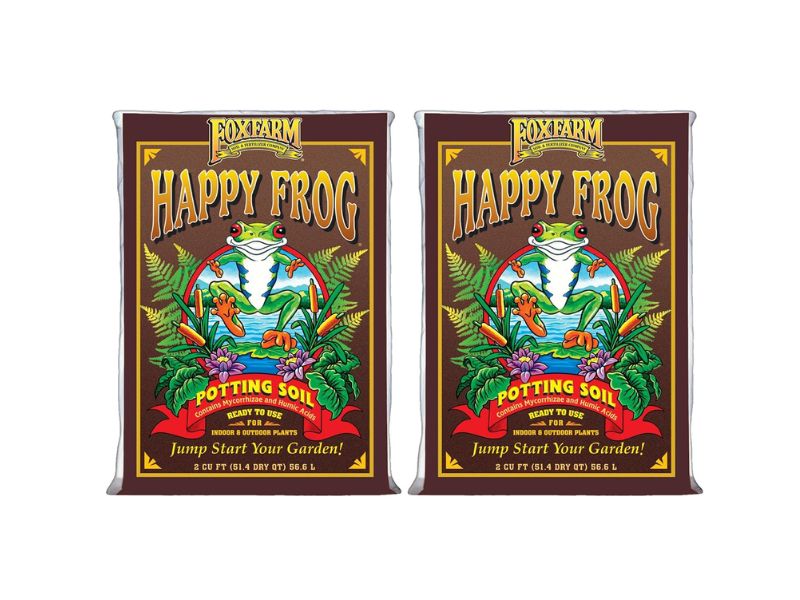
I also recommend FoxFarm Happy Frog Potting Soil if you prefer a biologically focused mix. It also has a large Amazon feedback history and incorporates soil microbes, earthworm castings, aged forest products, and other amendments intended for container plants.
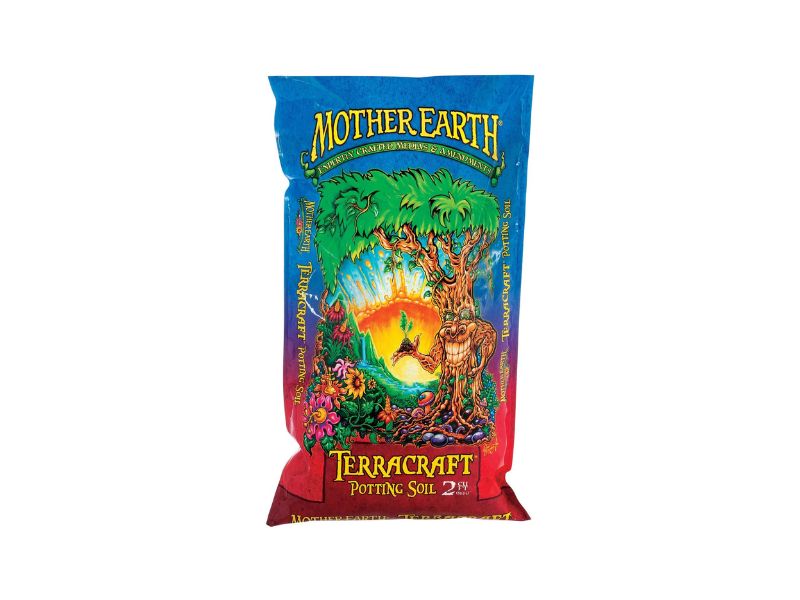
For growers who want a somewhat simpler nutrient-charged option, Mother Earth Terracraft Potting Soil is another strong choice. Its formulation combines peat moss, perlite, forest products, and earthworm castings with an initial nutrient charge designed to reduce the need for immediate supplemental feeding.
5 Best Soil Mixes for Grow Tent Plants
| Image | Product Name | Check Price |
|---|---|---|
Best Choice | FoxFarm Ocean Forest Potting Soil | Check Price |
Second Best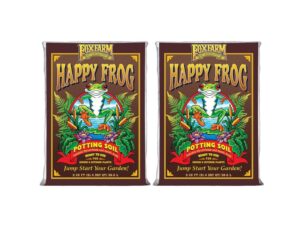 | FoxFarm Happy Frog Potting Soil | Check Price |
Third Choice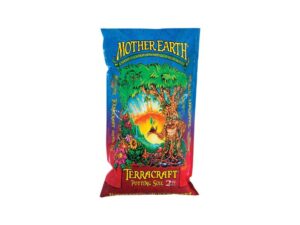 | Mother Earth Terracraft Potting Soil | Check Price |
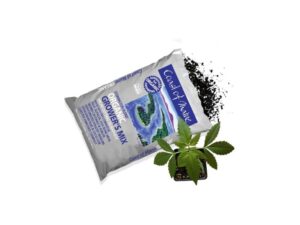 | Coast of Maine Stonington Blend Grower’s Mix | Check Price |
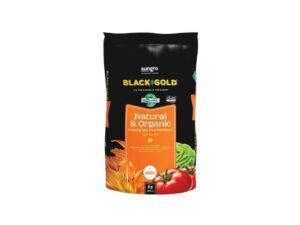 | Black Gold Natural & Organic Potting Mix | Check Price |
I ranked these five products using a combination of Amazon customer confidence and characteristics that matter in an indoor container environment.
Those factors include:
- Aeration
- Drainage
- Moisture retention
- Initial nutrient level
- Container suitability
- Ease of watering
- Root-zone structure
- Compatibility with later feeding
- Overall flexibility inside a grow tent
The ranking does not simply reward the soil with the longest ingredient list. A medium is useful only if its physical and nutritional characteristics fit the way you intend to grow.
1. FoxFarm Ocean Forest Potting Soil
Key Features
- Aged forest products
- Sphagnum peat moss
- Perlite
- Sandy loam
- Earthworm castings
- Organic fertilizer ingredients
- Ready-to-use container formulation
Ocean Forest takes the first position because it combines an established customer-feedback history with a well-rounded physical structure for container growing.
FoxFarm formulates Ocean Forest using aged forest products, peat moss, perlite, sandy loam, earthworm castings, bat guano, fish-derived ingredients, crab meal, and other amendments. The manufacturer specifically describes the aged forest products, sandy loam, and peat as contributing to its light, aerated texture and states that it can be used directly in containers.
That ready-to-use nature is the biggest advantage for a grow tent. You do not have to buy separate bags of peat, compost, aeration material, and fertilizer just to get started.
Its richer nutrient charge does require some restraint. FoxFarm says additional nitrogen fertilizer is not necessary immediately after planting in fresh Ocean Forest. That is important because automatically applying a full-strength feeding program to an already amended medium can make nutrient management more complicated than it needs to be.
What I Like
- Strong balance of moisture retention and aeration
- Ready to use without extensive amendments
- Substantial initial nutrient charge
- Works well in ordinary indoor containers and fabric pots
What I Do Not Like
- May be richer than delicate seedlings or nutrient-sensitive plants require
- Less appealing if you want to control every nutrient input from the beginning
For a general grow-tent soil setup, Ocean Forest is the strongest all-around choice when convenience, root-zone structure, and initial fertility are equally important.
2. FoxFarm Happy Frog Potting Soil
Key Features
- Designed for container planting
- Aged forest products
- Earthworm castings
- Soil microbes
- Humic components
- Mycorrhizal organisms
- Ready-to-use formulation
Happy Frog takes second place because it provides a different approach from Ocean Forest rather than simply duplicating it.
FoxFarm describes Happy Frog Potting Soil as a container medium amended with soil microbes that can support root efficiency and nutrient uptake. Its formulation also includes earthworm castings, aged forest products, and other organic amendments.
The broader Happy Frog biological formulation includes humic acids and multiple mycorrhizal organisms. Mycorrhizae form associations with plant roots and are included to support root-zone efficiency rather than to act like a conventional high-dose fertilizer.
That makes Happy Frog appealing when you want to develop a biologically active container medium and gradually manage supplemental feeding rather than beginning with the richest possible nutrient profile.
Its Amazon feedback history is also substantial, giving it stronger customer-confidence depth than many smaller specialty soil brands.
What I Like
- Strong focus on root-zone biology
- Container-specific formulation
- Good foundation for gradual feeding
- Ready to use directly from the bag
What I Do Not Like
- Biological features may be less relevant to a tightly controlled mineral-fertilizer program
- Still contains nutrition, so it should not be treated like an inert medium
Happy Frog is the option I prefer when the grower wants a forgiving container soil with microbial amendments and room to build a feeding program over time.
3. Mother Earth Terracraft Potting Soil
Key Features
- Peat moss
- Perlite
- Forest products
- Earthworm castings
- Initial nutrient charge
- All-purpose container formulation
- Balanced moisture and aeration approach
Terracraft takes third place because its formula is straightforward and well suited to growers who want a pre-charged medium without an overly complicated ingredient profile.
Mother Earth lists peat moss, perlite, forest products, and earthworm castings among its main ingredients. The company also emphasizes a calibrated initial nutrient charge so growers can wait before introducing additional fertilizer.
The peat helps retain moisture, while perlite contributes air space and drainage. That combination is useful in a grow tent where pots may experience warmer temperatures and steady ventilation that can accelerate drying.
Terracraft also has a meaningful Amazon feedback base, giving it more purchasing history than many lesser-known performance soils.
Its main advantage is predictability. It is not positioned as an ultra-light inert substrate or an aggressively amended specialty mix. Instead, it gives growers a practical middle ground.
What I Like
- Balanced ingredient profile
- Useful initial fertilizer charge
- Perlite supports aeration
- Good for growers who want a simple ready-to-use soil
What I Do Not Like
- Less biologically focused than Happy Frog
- Growers wanting a very lightly fertilized base may prefer something else
Terracraft is a good choice when you want soil that works directly from the bag while still giving you a clear transition into supplemental feeding later.
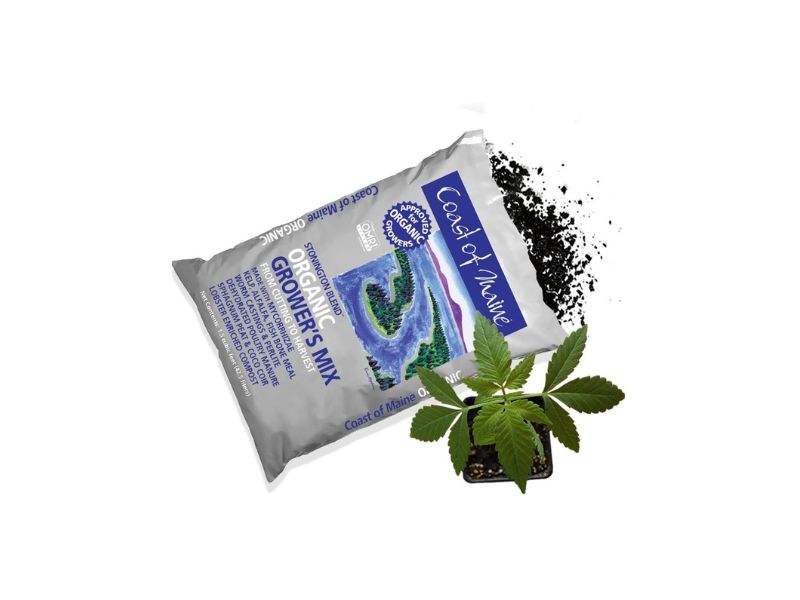
4. Coast of Maine Stonington Blend Grower’s Mix
Key Features
- Sphagnum peat moss
- Coconut coir
- Perlite
- Compost
- Earthworm castings
- Mycorrhizae
- Organic nutrient amendments
Stonington Blend is the most heavily organic-performance-oriented soil in this group.
Coast of Maine formulates it specifically for high-performance container crops and describes the mix as balancing water retention, drainage, and aeration. Its ingredient list includes sphagnum peat moss, composted material, coconut coir, perlite, fertilizer, and mycorrhizae. The nutrient amendment blend includes ingredients such as lobster and crab shell meal, kelp meal, alfalfa meal, fish bone meal, and earthworm castings.
This gives Stonington Blend a richer organic character than a basic peat-and-perlite potting mix.
Coast of Maine recommends it particularly for larger containers, which is worth considering inside a grow tent because larger soil volumes generally buffer moisture changes better than very small pots.
Its Amazon customer-feedback base is also substantial, although its average rating trails the two FoxFarm mixes and Terracraft slightly in the current listings I reviewed.
What I Like
- Excellent blend of organic amendments
- Includes coir and perlite for physical structure
- Designed with large-container growing in mind
- Strong choice for growers who prefer an organically amended medium
What I Do Not Like
- Rich formulation can complicate aggressive supplemental feeding
- Best suited to growers comfortable managing a biologically active soil
Choose Stonington Blend when you want a more heavily amended organic container soil rather than a neutral base for frequent bottled feeding.
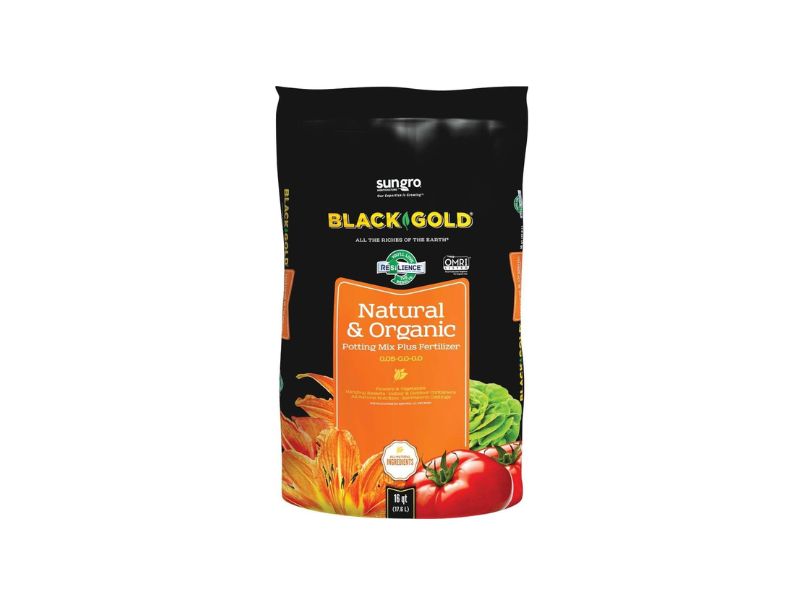
5. Black Gold Natural & Organic Potting Mix
Key Features
- Canadian sphagnum peat moss
- Bark
- Compost
- Perlite or similar aeration materials
- Earthworm castings
- Organic fertilizer
- Container-friendly formulation
Black Gold Natural & Organic earns the fifth position because its current Amazon listing has an excellent average star score but a much smaller customer-feedback base than the products above. I therefore rank it lower for confidence even though the people rating it have generally scored it very well.
Technically, the mix is still a strong fit for indoor containers.
Black Gold’s current formulation uses Canadian sphagnum peat moss, bark, compost, perlite or similar aeration material, earthworm castings, and organic fertilizer. The manufacturer describes it as providing good aeration and being suitable for container planting.
The combination is familiar for a reason: peat provides moisture-holding capacity, while coarse materials such as perlite help prevent the medium from becoming excessively dense.
What I Like
- Organic-oriented formulation
- Good combination of moisture retention and aeration
- Earthworm castings included
- Suitable for indoor containers
What I Do Not Like
- Much smaller Amazon feedback base than the leaders
- Product formulations and package configurations can vary, so check the exact bag before buying
Black Gold is a useful alternative if you want an organic potting mix with familiar ingredients but do not specifically need the richer profiles of Ocean Forest or Stonington Blend.
Grow Tent Soil Comparison
| Product | Overall Style | Aeration | Initial Nutrition | Biological Focus | Main Advantage |
| FoxFarm Ocean Forest | Rich ready-to-use soil | High | High | Moderate | Excellent all-around balance |
| FoxFarm Happy Frog | Biologically active container soil | Good | Moderate | High | Root-zone biology and flexibility |
| Mother Earth Terracraft | Balanced all-purpose mix | Good | Moderate | Moderate | Predictable everyday use |
| Coast of Maine Stonington Blend | Rich organic grower’s mix | Good | High | High | Heavily amended organic approach |
| Black Gold Natural & Organic | Organic general-purpose mix | Good | Moderate | Moderate | Straightforward organic formulation |
The differences become more useful when you choose according to your watering and feeding style rather than assuming the first-ranked soil is automatically perfect for every plant.
What Makes Soil Good for a Grow Tent?
A productive container medium needs three physical properties working together:
drainage, aeration, and water retention.
University of Georgia Extension specifically identifies those as central characteristics for container media, while Penn State notes that common potting mixes use materials such as peat moss, perlite, compost, bark, or coir to provide water retention without sacrificing drainage and root-zone air.
Drainage
After watering, excess liquid needs to leave the container.
If the root zone stays saturated for too long, many of the spaces that normally hold air fill with water instead.
Penn State notes that waterlogged media make it difficult for roots to breathe, which is why containers need effective drainage holes as well as a suitable growing medium.
Aeration
Roots require oxygen.
Materials such as perlite, coarse bark, pumice, and other structural particles help preserve pore spaces inside the medium.
UGA specifically notes that perlite and bark are commonly used in commercial container mixes to improve drainage and aeration.
Water Retention
A mix that drains instantly and retains almost nothing can be difficult to manage indoors.
Peat moss, coco coir, compost, and fine organic matter hold moisture between waterings.
The objective is not maximum drainage. It is enough drainage to remove excess water while preserving enough moisture for the roots to use before the next irrigation.
Potting Soil vs Garden Soil in a Grow Tent
Use a quality potting medium rather than digging soil from the yard.
Penn State advises against straight garden soil in containers because it can limit drainage and aeration. Commercial soilless or container mixes are specifically engineered to maintain a more useful balance of pore space, water, and nutrients.
Garden soil behaves differently because it normally functions as part of a much larger soil profile.
Inside a pot, heavy mineral soil can:
- Compact
- Drain slowly
- Reduce root-zone oxygen
- Become extremely heavy when wet
A grow tent is already a controlled environment. There is little advantage in making root-zone management harder by starting with an unsuitable medium.
Understanding Peat Moss
Sphagnum peat moss is common in container soils because it provides substantial water-holding capacity without the weight of mineral garden soil.
Ocean Forest, Terracraft, Stonington Blend, and Black Gold all use peat as a major structural component of their formulations.
Peat should not be viewed as a complete potting medium by itself.
It is usually combined with materials such as:
- Perlite
- Bark
- Compost
- Coir
- Sandy loam
to create a better balance between moisture retention and aeration.
What Does Perlite Do?
Perlite is the lightweight white material commonly visible throughout potting mixes.
Its main value is physical rather than nutritional.
Perlite helps create air space and improve drainage. UGA Extension describes it as a material that can improve drainage and help retain air within the rooting zone.
Ocean Forest, Terracraft, Stonington Blend, and Black Gold all include perlite or similar aeration material.
Should You Add Extra Perlite?
Not automatically.
Extra perlite can make sense if your pots remain wet too long, but changing the mix also changes how frequently you need to water.
Before modifying a commercial soil, use it for a few irrigation cycles and observe:
- How fast the pot drains
- How long it stays heavy
- How quickly the top and center dry
- Whether roots appear healthy
Adding amendments because they are popular is not the same as correcting a real problem.
Coco Coir in Soil Mixes
Coconut coir can provide both moisture retention and useful physical structure.
Stonington Blend includes coir alongside peat, compost, and perlite.
Coir is also used as a standalone or mostly standalone growing medium, but a coco-based feeding system behaves differently from a conventional pre-fertilized soil grow.
Do not assume that adding large amounts of coco to an existing potting soil will leave its watering and nutrient behavior unchanged.
Earthworm Castings
All five recommended mixes incorporate earthworm castings in some form.
Castings contribute organic matter and plant nutrients, and they are commonly used as one component of organic container soils.
They are useful, but adding an enormous percentage of additional castings to an already balanced commercial soil can make the mix denser.
A grow-tent medium still needs physical structure.
More organic matter is not always better if it comes at the expense of root-zone aeration.
Mycorrhizae and Soil Microbes
Happy Frog and Stonington Blend both emphasize biological components.
Mycorrhizal fungi form associations with plant roots that can expand the effective area involved in water and nutrient acquisition. FoxFarm and Coast of Maine include mycorrhizal organisms in these products as root-zone amendments.
These organisms do not eliminate the need for:
- Proper watering
- Adequate nutrients
- Correct container size
- Suitable temperature
- Good drainage
Think of soil biology as one component of the system, not a substitute for basic root-zone management.
Rich Soil vs Lightly Fertilized Soil
A heavily amended soil is not automatically superior.
Rich Soil Works Well When
- Plants are established
- Nutrient demand is significant
- You want fewer early fertilizer applications
- You prefer soil-based nutrient buffering
Ocean Forest and Stonington Blend fit this approach particularly well.
A Gentler Mix Makes Sense When
- Plants are nutrient-sensitive
- You prefer controlling fertilizer yourself
- Seedlings or young transplants are involved
- You want to make gradual changes
The correct decision depends on the plant and your feeding style.
Should You Fertilize Fresh Potting Soil Immediately?
Usually, first determine what is already in the bag.
Ocean Forest comes with enough initial fertility that FoxFarm specifically says additional nitrogen fertilizer is not needed immediately. Terracraft also has an initial nutrient charge designed to delay supplemental feeding.
That does not mean these soils feed plants indefinitely.
Container watering gradually removes nutrients, and plants consume the nutrients available in the root zone. University of Minnesota Extension notes that repeated watering can leach nutrients even when a potting mix originally contained fertilizer.
The practical approach is:
- Understand the initial soil charge.
- Watch plant growth.
- Introduce fertilizer when appropriate.
- Avoid jumping immediately to maximum label strength.
Fabric Pots vs Plastic Pots
Container material changes how the same soil behaves.
Fabric Pots
Fabric allows moisture and air to exchange through the container walls.
The medium may dry faster, particularly in a warm tent with strong circulation.
That can make a somewhat moisture-retentive soil easier to manage.
Plastic Pots
Plastic does not allow the same evaporation through the sides.
The medium may remain moist longer, especially in larger containers.
Neither pot type is inherently better.
What matters is matching your watering habits to the combination of soil + container + tent environment.
How to Tell When Grow Tent Soil Needs Water
Do not water solely because a certain number of days have passed.
Drying rate changes with:
- Plant size
- Container volume
- Air temperature
- Relative humidity
- Circulation
- Soil composition
One useful method is learning the pot’s weight.
A freshly watered container feels dramatically heavier than the same pot after the plant has used much of the available water.
You can also inspect moisture below the immediate surface rather than judging only by a dry top layer.
Why Overwatering Causes Problems
The problem commonly called overwatering is usually not that you gave the soil a thorough irrigation once.
The bigger problem is watering again before the root zone has regained enough air space.
Penn State explains that waterlogged container media reduce the air available to roots. Proper drainage holes and a well-structured potting mix help excess water leave the pot.
A better watering pattern is generally:
- Water thoroughly when irrigation is actually needed.
- Allow excess water to drain.
- Wait until the medium has dried appropriately before repeating.
How much drying is appropriate depends on the plant species.
Do Not Put Gravel in the Bottom of Pots for Drainage
A common container myth says that adding rocks or gravel beneath the soil improves drainage.
Penn State specifically notes that putting coarse material at the bottom of a container can actually worsen drainage rather than improve it. The better approach is to use a suitable potting mix and unobstructed drainage holes.
That also preserves more usable root-zone volume inside the pot.
How Grow Tent Climate Changes Soil Drying
The same soil can behave very differently in two tents.
A warm enclosure with strong airflow may dry containers rapidly.
A cool basement tent with high humidity may keep the same pots wet much longer.
Important environmental variables include:
- Temperature
- Relative humidity
- Air circulation
- Exhaust airflow
- Plant size
This is why a soil review cannot give you a universal watering schedule.
You need to learn the behavior of the medium inside your specific environment.
How Much Soil Do You Need?
Start with container capacity.
For example, multiple 5-gallon pots require substantially more medium than the same number of 2-gallon containers.
Do not assume that every nominal 5-gallon fabric pot holds exactly five gallons of loose soil to the rim. Pot shapes and dimensions vary, and you normally leave some watering space at the top.
FoxFarm recommends filling containers to roughly an inch below the top edge when using its potting soils.
Buying a little extra soil is useful for:
- Settling
- Transplanting
- Top dressing
- Replacing spilled medium
Seed Starting vs Full-Cycle Potting Soil
Seed-starting media and full-cycle potting soil are not necessarily the same thing.
University of Minnesota recommends purpose-made seed-starting mixes, which are typically fine, lightweight media designed for germination.
A rich full-cycle mix can be unnecessarily nutrient-dense for certain delicate seedlings.
If you start seeds separately, you can germinate them in a suitable seed-starting medium and transplant established seedlings into the final grow-tent soil later.
Can You Reuse Grow Tent Soil?
Sometimes, but used soil should be evaluated rather than blindly reused.
After a crop, the medium may contain:
- Old roots
- Compacted areas
- Depleted nutrients
- Accumulated fertilizer salts
- Pest organisms
- Disease organisms
For seedlings in particular, University of Minnesota advises using fresh appropriate potting media rather than reusing old mix because of disease risk.
If you reuse soil for established plants, remove old roots, inspect carefully, restore physical structure where necessary, and account for the unknown nutrient status.
Common Mistakes When Choosing Grow Tent Soil
Using Soil From the Yard
Container media need more drainage and aeration than dense garden soil typically provides.
Buying Only by Nutrient Strength
More fertilizer is not automatically better.
Feeding Rich Soil Immediately
Check the manufacturer’s initial nutrient charge first.
Adding Too Many Amendments
Commercial soils are already formulated. Adding castings, compost, coco, and perlite simultaneously can completely change the mix.
Packing the Pot Too Tightly
Compaction removes valuable pore space. FoxFarm specifically cautions against packing Ocean Forest tightly in containers.
Watering on a Calendar
Monitor the actual pot instead.
Ignoring Container Drainage
A great potting mix cannot compensate for blocked drainage holes.
Choosing a Huge Pot for a Tiny Plant
A small root system inside a very large volume of wet soil can make moisture management harder.
Assuming Fabric and Plastic Pots Dry Equally
They can behave very differently.
Reusing Old Soil Without Inspection
Old roots, pests, nutrient buildup, and compaction can all affect the next crop.
Frequently Asked Questions
1. What is the best soil for grow tent plants?
FoxFarm Ocean Forest is my first choice for a general grow-tent container setup because it combines strong aeration, moisture retention, and substantial initial fertility.
Its formulation includes aged forest products, peat moss, perlite, sandy loam, earthworm castings, and organic fertilizer ingredients, and FoxFarm describes it as ready for container use.
2. Is Ocean Forest good for indoor grow tents?
Yes. Ocean Forest is specifically formulated for container growing and has a light, aerated structure.
It is particularly useful when you want a nutrient-charged soil that can be used without building a custom mix first.
3. Is Happy Frog good for grow tents?
Yes. Happy Frog works well for indoor containers and is especially attractive when you want microbial and mycorrhizal amendments.
FoxFarm formulates it specifically for container plants and includes soil microbes intended to support root efficiency.
4. Which is better, Ocean Forest or Happy Frog?
Ocean Forest is better when you want richer initial fertility, while Happy Frog is appealing when biological root-zone amendments and feeding flexibility matter more.
Both are complete container soils, so the decision depends on how you intend to manage nutrients.
5. Is Mother Earth Terracraft good for indoor growing?
Yes. Terracraft is a practical ready-to-use mix with peat, perlite, forest products, earthworm castings, and an initial nutrient charge.
Its straightforward formulation makes it a good choice for growers who want a balanced medium without extensive customization.
6. Is Coast of Maine Stonington Blend good for grow tents?
Yes, especially for growers who want a richly amended organic soil in larger containers.
The blend includes peat, coir, perlite, compost, mycorrhizae, and multiple organic nutrient ingredients.
7. Is Black Gold potting mix good for indoor containers?
Yes. Black Gold Natural & Organic uses peat, bark, compost, aeration material, earthworm castings, and organic fertilizer.
It provides a conventional organic potting-mix structure appropriate for container plants.
8. Can I use regular garden soil in a grow tent?
Straight garden soil is generally a poor choice for grow-tent containers because it can become too dense and restrict drainage and aeration.
Use a commercial potting medium designed for containers instead.
9. Should grow-tent soil contain perlite?
Perlite is useful but not mandatory if another ingredient provides adequate aeration.
Its main purpose is to improve physical drainage and preserve air space around the root zone.
10. Should I add more perlite to commercial soil?
Only if the medium remains wetter or denser than you want under your specific growing conditions.
Adding perlite changes water retention, so test the original soil before automatically modifying it.
11. Are earthworm castings good for grow-tent soil?
Yes, as one part of a balanced medium.
All five recommended products contain earthworm castings, but adding excessive additional fine organic matter can reduce the aeration of an already balanced mix.
12. Should I fertilize fresh Ocean Forest immediately?
Usually not with an aggressive nitrogen fertilizer.
FoxFarm specifically states that Ocean Forest has enough initial nutrition that additional nitrogen fertilizer is not needed right away.
13. How often should I water grow-tent soil?
Water according to actual root-zone moisture rather than a fixed calendar.
Temperature, humidity, airflow, plant size, container type, and pot volume all change how quickly the medium dries.
14. Are fabric pots good for grow-tent soil?
Yes. Fabric pots can work very well with quality potting mixes, but they may dry more quickly than nonporous containers.
Monitor pot weight and root-zone moisture until you understand how your soil behaves in that specific container.
15. Can I mix Ocean Forest and Happy Frog?
Yes, but both are already complete potting soils, so mixing them is optional rather than necessary.
Combining them changes the nutrient and physical profile, which can be useful if you have a specific reason but adds another variable for beginners.
16. Can I reuse soil from my grow tent?
Sometimes, but inspect and refresh used soil before planting into it again.
Old medium may contain roots, compacted material, depleted nutrients, accumulated salts, pests, or pathogens. Fresh media are the safer choice for sensitive seedlings.
17. Should I put rocks under the soil for drainage?
No. A gravel layer does not improve container drainage and can actually make drainage behavior worse.
Use a quality potting medium and make sure the container has clear drainage holes instead.
18. What is the most important feature in grow-tent soil?
The most important feature is balance: enough water retention to support the plant without sacrificing drainage and root-zone oxygen.
Drainage, aeration, and moisture retention work together, so no single ingredient determines whether a soil is good.
Conclusion
The best soil for grow tent plants is not necessarily the most heavily fertilized mix. It is the medium that provides enough moisture retention for manageable watering while preserving drainage, aeration, and a nutrient profile that fits the way you intend to feed.
FoxFarm Ocean Forest is my primary recommendation because it combines an established Amazon customer-feedback history with a ready-to-use blend of aged forest products, peat moss, perlite, sandy loam, earthworm castings, and nutrient amendments. It is especially convenient for growers who want a rich soil without building a custom mix from scratch.
Happy Frog is the strongest alternative when microbial activity and mycorrhizal amendments are priorities. Terracraft provides a simpler nutrient-charged middle ground, while Coast of Maine Stonington Blend is particularly attractive for a rich organic approach in larger containers. Black Gold Natural & Organic completes the list with a familiar peat-, compost-, aeration-, and casting-based formula.
Whatever soil you choose, avoid judging it separately from the rest of the grow tent. Pot size, drainage holes, container material, airflow, humidity, temperature, irrigation, and fertilizer strength all change how the root zone performs.
Start with a high-quality container medium, learn how its pots feel when wet and when ready for irrigation, and resist the urge to add several amendments immediately. A balanced soil that you understand how to water and feed will usually be easier to manage than a complicated mix that changes every time you open another bag.

I’m Maya L. Greenwood, a lifelong plant lover who believes anyone can grow something beautiful with the right guidance. After years of testing soil mixes, pruning methods, irrigation tricks, and pest-safe solutions, I started EasyGardenTips.com to turn hard-won lessons into step-by-step advice. From seed starting and container gardens to composting and seasonal checklists, my goal is to make gardening simple, sustainable, and fun.