Best Mushroom Grow Tent: 3 Indoor Fruiting Chamber Options
Growing mushrooms indoors requires a different environment from growing leafy plants. Most fruiting mushrooms need high relative humidity, frequent fresh-air exchange, moderate temperatures, clean surfaces, and only limited indirect lighting. A conventional plant tent can work, but a shelving enclosure with a clear cover is often easier to convert into a compact mushroom fruiting chamber.
The best mushroom grow tent should provide enough room for fruiting blocks or trays while allowing humid air to circulate around every shelf. It should also make condensation, cleaning, drainage, and electrical safety manageable. A tightly sealed enclosure without controlled air exchange may maintain humidity, but it can also allow carbon dioxide to accumulate around the mushrooms.
My primary recommendation is the Gardman R687 4-Tier Mini Greenhouse. Its narrow shelving layout resembles the classic Martha-style fruiting chamber, making it easier to organize mushroom blocks vertically without taking over an entire room. The clear cover also allows ambient light to enter while helping contain humid air.
Growers who need more shelf capacity can consider the larger Home-Complete walk-in enclosure. The AC Infinity CLOUDLAB 642 is more appropriate for a customized system that uses separate shelves, controlled exhaust, filtered intake, and dedicated environmental equipment.
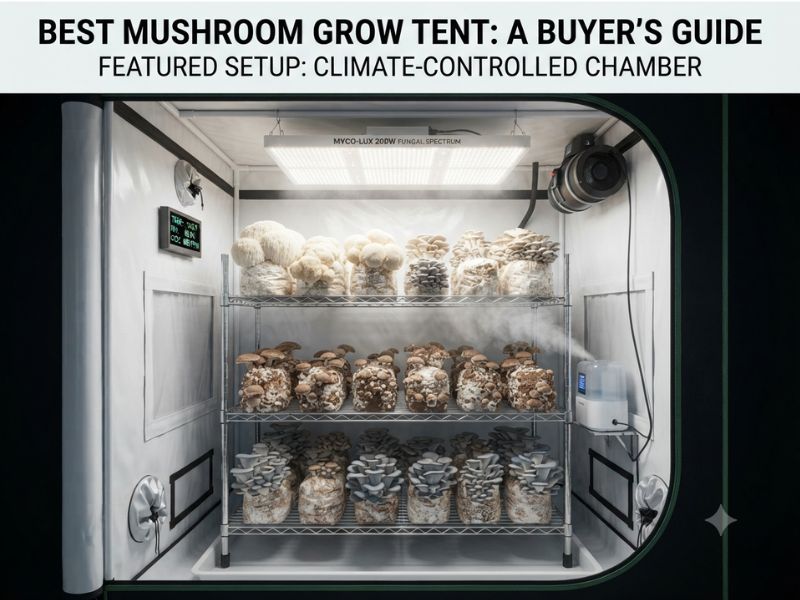
None of these products is a complete mushroom-growing system by itself. Depending on the enclosure, you may still need shelving, a humidifier, humidity controller, circulation or exhaust fan, waterproof tray, temperature monitor, and safe cable routing.
3 Best Mushroom Grow Tents
| Image | Product Name | Check Price |
|---|---|---|
Best Choice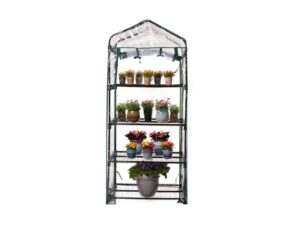 | Gardman R687 4-Tier Mini Greenhouse | Check Price |
Second Best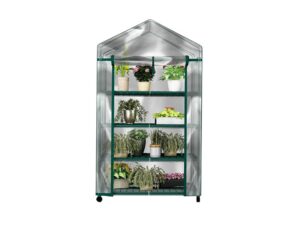 | Home-Complete Walk-In Greenhouse with 8 Shelves | Check Price |
Third Choice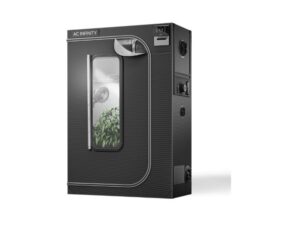 | AC Infinity CLOUDLAB 642 2×4 Grow Tent | Check Price |
1. Gardman R687 4-Tier Mini Greenhouse
Key Features
- Approximately 27 × 18 × 63-inch footprint
- Four vertical wire shelves
- Clear zippered cover
- Compact indoor footprint
- Tool-free tubular frame
- Removable cover
- Open-grid shelving
- Suitable for a Martha-style conversion
- Space for multiple fruiting blocks
- Easy access through the front panel
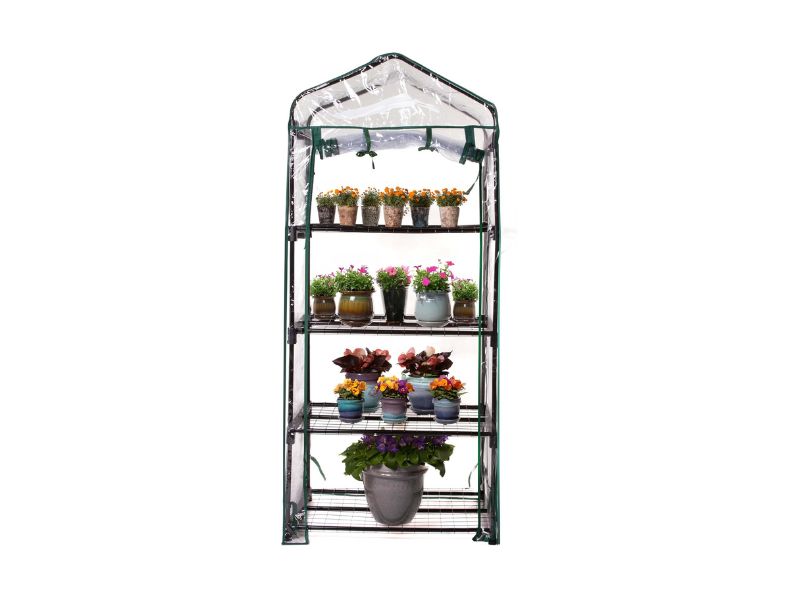
The Gardman R687 is the most naturally suited product in this group for a small mushroom fruiting chamber. Its narrow footprint and four shelves allow several fruiting blocks to be organized vertically, which is more space-efficient than placing everything on the floor of a conventional grow tent.
This shelving arrangement is commonly associated with a Martha tent setup. A compact humidifier can be placed outside the enclosure and connected through a hose, or a small unit can be positioned safely near the bottom when sufficient clearance and electrical protection are available.
The open wire shelves allow humid air to move vertically around the blocks. They also allow water droplets to pass through rather than collecting on a solid shelf. A waterproof tray should be placed beneath the enclosure because condensation and humidifier mist can eventually reach the floor.
Its clear cover is useful for mushroom cultivation because fruiting mushrooms generally do not require the intense artificial lighting used for plants. Indirect room light or a small low-power lamp on a timer is usually enough to provide a directional cue.
The front zipper provides direct access to every shelf. This makes it easier to inspect fruiting blocks, remove mature mushrooms, wipe condensation, and check for contamination without dismantling the chamber.
The small internal volume is both an advantage and a limitation. A modest humidifier can raise humidity quickly, but humidity and carbon-dioxide levels can also change quickly when the door opens or the exhaust fan runs.
Fresh-air exchange must therefore be controlled rather than continuous at maximum speed. A small fan can be connected to a timer or environmental controller, with an intake opening placed away from direct household dust.
The cover is not designed as an airtight laboratory enclosure. Small gaps can allow humidity to escape and unfiltered room air to enter. These gaps may be acceptable for ordinary gourmet mushroom fruiting, but the enclosure should not be expected to provide sterile conditions.
The frame is lightweight and easy to assemble, but it should not be overloaded with heavy reservoirs or large mechanical equipment. Mushroom fruiting blocks can become heavy when hydrated, so their weight should be distributed evenly across the shelves.
Tall mushroom clusters may also need more vertical spacing than the default shelf arrangement provides. Removing one shelf can create additional room for species that produce large caps or long stems.
What I Like
- Shelf layout is highly relevant to mushroom fruiting
- Uses vertical space efficiently
- Compact footprint
- Clear cover admits indirect light
- Open shelves improve air movement
- Easy access to individual fruiting blocks
- Simple to convert into a humidity chamber
- Removable shelves allow layout changes
- Suitable for apartments and small rooms
What I Do Not Like
- Lightweight frame has limited load capacity
- Cover is not fully airtight
- Condensation can reach the floor
- Small volume changes temperature and humidity quickly
- No built-in fan or humidifier ports
- May require cutting or adapting the cover
- Shelf spacing can be restrictive for large clusters
The Gardman R687 is the most practical option for a compact mushroom fruiting setup. It is especially suitable for oyster mushrooms, lion’s mane, and other gourmet species grown from ready-to-fruit blocks, provided humidity and fresh-air exchange are managed separately.
2. Home-Complete Walk-In Greenhouse with 8 Shelves
Key Features
- Approximately 56 × 56 × 77-inch dimensions
- Walk-in design
- Eight side shelves
- Clear protective cover
- Zippered front entrance
- Central standing and working area
- Tubular frame
- Multiple vertical growing levels
- Removable shelving
- Suitable for a larger Martha-style chamber
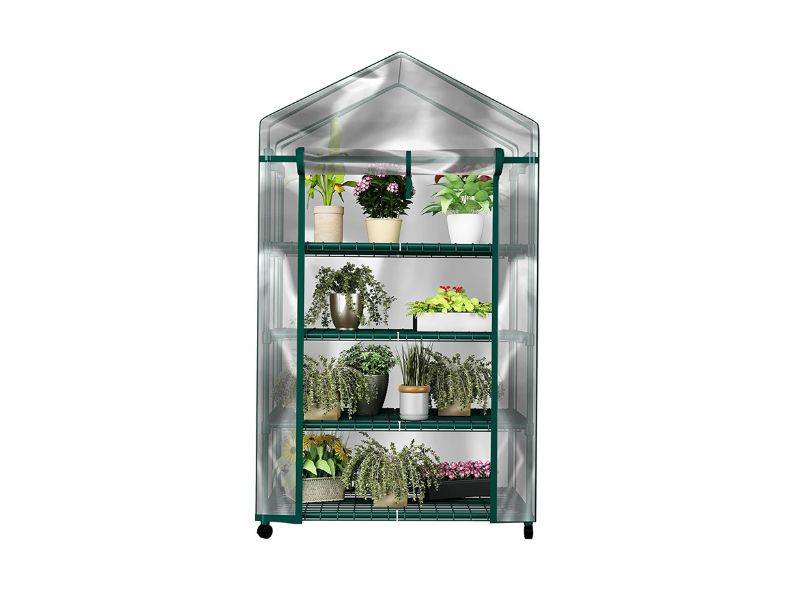
The Home-Complete walk-in enclosure provides considerably more capacity than a narrow four-tier greenhouse. Its eight shelves are arranged around a central access area, allowing fruiting blocks to be placed on both sides while leaving space for inspection and harvesting.
This design is useful for growers managing multiple mushroom species or fruiting cycles. Separate shelves can hold blocks at different stages, provided contaminated or questionable material is removed promptly rather than allowed to remain near healthy cultures.
The walk-in layout simplifies maintenance. Instead of reaching through a narrow front opening, the grower can enter the chamber to inspect bags, clean shelves, adjust hoses, and harvest mushrooms.
That additional room also makes it easier to install environmental equipment. A humidifier hose can enter near the bottom, while a small exhaust fan can be positioned higher to remove warm, carbon-dioxide-rich air. Sensors can be mounted near the center rather than directly beside the humidifier outlet.
Sensor position is important. A humidity probe placed in the path of visible mist may report extremely high humidity even when the shelves farther away remain drier. Position the probe where it reflects the general fruiting environment.
The larger volume is more stable than a compact four-tier enclosure. Opening the door still changes the conditions, but humidity and temperature may not fluctuate as rapidly.
The larger enclosure also requires a more capable humidification system. A very small desktop humidifier may struggle to maintain conditions across all eight shelves, especially when the room is dry or the exhaust cycle is frequent.
The clear cover allows ambient light to reach the mushrooms. It also makes it possible to observe the shelves without opening the entrance, though condensation may reduce visibility.
Because the enclosure is not specifically manufactured as a mushroom chamber, modifications may be required for humidifier hoses, fan ducts, filters, and electrical cables. Any cut edges should be reinforced to prevent the opening from spreading.
The lightweight frame should be treated carefully. Eight shelves can hold many fruiting blocks, and their combined hydrated weight can become substantial. Avoid concentrating all heavy blocks on one side or placing large water reservoirs on elevated shelves.
A waterproof floor liner is particularly important. A large humid chamber can create substantial condensation, especially when the room temperature is lower than the humid air inside the enclosure.
What I Like
- Large capacity for multiple fruiting blocks
- Eight shelves support organized production
- Walk-in access simplifies maintenance
- Clear cover provides ambient lighting
- Central aisle improves harvesting access
- More stable internal volume
- Space for fans, sensors, and humidifier tubing
- Shelves can be rearranged or removed
- Suitable for several mushroom varieties
What I Do Not Like
- Requires substantial room space
- Frame can be overloaded if weight is not balanced
- More difficult to sanitize than a small chamber
- Requires a stronger humidification system
- Cover needs modification for controlled ventilation
- Condensation can become significant
- Central aisle reduces the usable shelf footprint
- Assembly may be easier with two people
The Home-Complete walk-in enclosure is appropriate for growers who have outgrown a compact Martha tent. It provides useful shelf capacity and maintenance access, but it requires more deliberate humidity distribution, drainage, and ventilation planning.
3. AC Infinity CLOUDLAB 642 2×4 Grow Tent
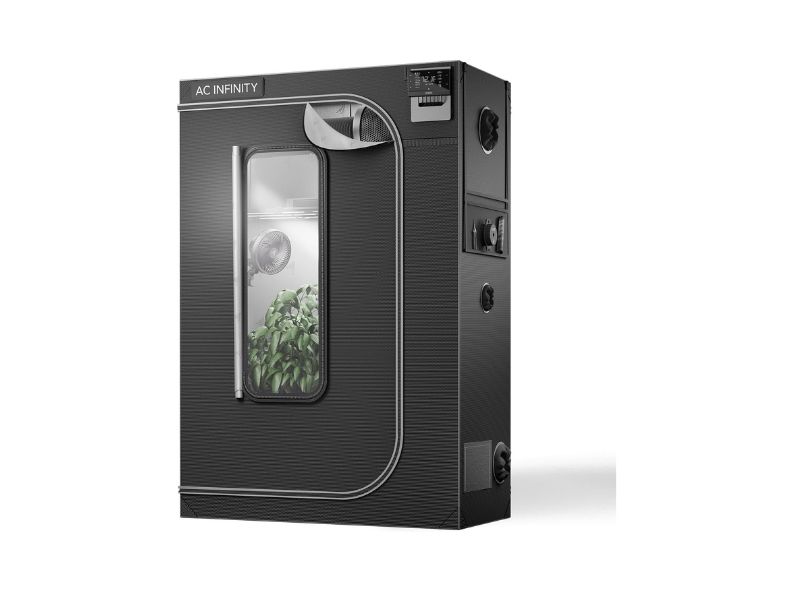
Key Features
- 48 × 24 × 72-inch dimensions
- Heavy-duty 2000D canvas
- Reflective interior lining
- Reinforced steel frame
- Multiple duct openings
- Cable passthrough
- Controller mounting plate
- Large front access
- Removable waterproof floor tray
- Strong support bars
- Suitable for custom shelving
- Better environmental containment than clear greenhouse covers
The AC Infinity CLOUDLAB 642 is a conventional grow tent rather than a shelf greenhouse. It ranks third because it requires more customization for mushrooms, but its construction and ventilation layout provide greater control over the fruiting environment.
The 2×4 footprint can hold a freestanding shelving unit, mushroom fruiting blocks arranged on racks, or trays placed at several levels. The 72-inch height provides enough vertical room for shelves, humidifier plumbing, exhaust equipment, and sensor placement.
Its thick canvas contains humidity and external light more effectively than the clear covers used on mini greenhouses. This can make environmental control more predictable, though the opaque walls mean that a small internal light may be needed.
Mushrooms generally do not need powerful grow lights. A low-output waterproof or moisture-resistant LED operated on a simple schedule can provide enough light for fruit-body orientation and normal development.
The multiple duct openings are useful for creating a controlled fresh-air system. An exhaust fan can remove carbon-dioxide-rich air, while a filtered intake allows replacement air to enter.
The fan should not blow directly onto fruiting blocks. Strong direct airflow can dry the exposed mushroom tissue and cause cracked caps, yellowing, or stalled pin development.
A humidity controller can operate the humidifier, while a separate cycle timer or environmental controller manages the exhaust fan. Running both continuously may waste water and make conditions unstable.
The controller mounting plate allows sensitive electronics to remain outside the humid chamber. Only moisture-resistant sensors and properly protected cables should enter the tent.
The reflective lining is not necessary for mushrooms in the same way it is for plants, but it creates a bright interior when a small lamp is used. Its smooth surface may also be easier to wipe than a loose transparent cover.
The reinforced frame can support lightweight fans, filters, sensors, and lighting. Shelves should normally stand on the floor rather than hang from the roof bars, particularly when holding multiple hydrated blocks.
The removable tray provides spill protection and simplifies sanitation. It should be checked frequently because pooled water can become a contamination source.
What I Like
- Strong environmental containment
- Thick, durable canvas
- Multiple ready-made ventilation openings
- Controller-friendly cable management
- Waterproof removable tray
- Stronger frame than lightweight greenhouses
- Easy to combine with custom shelving
- Suitable for automated humidity and exhaust control
- Opaque walls block distracting room light
- Good access through the large front door
What I Do Not Like
- Shelving must be purchased separately
- Higher setup cost
- Requires an internal light
- Reflective lining is not essential for mushrooms
- Heavy canvas takes more effort to clean and dry
- Larger fans can remove humidity too quickly
- Not a ready-made Martha chamber
- More complex than a clear shelf enclosure
The CLOUDLAB 642 is suitable for growers who want a durable and highly controllable mushroom fruiting room rather than a simple greenhouse conversion. It requires additional shelving and environmental equipment, but the duct ports, frame, tray, and controller access provide a strong foundation for a customized system.
Mushroom Grow Tent Comparison Table
| Product | Type | Approximate Size | Shelves | Light Transmission | Environmental Control | Main Strength | Main Limitation |
| Gardman R687 | Four-tier mini greenhouse | 27 × 18 × 63 in. | 4 | Clear cover | Requires modification | Compact Martha-style layout | Lightweight frame |
| Home-Complete Walk-In Greenhouse | Walk-in shelf enclosure | 56 × 56 × 77 in. | 8 | Clear cover | Requires modification | High fruiting capacity | Large footprint |
| AC Infinity CLOUDLAB 642 | Heavy-duty grow tent | 48 × 24 × 72 in. | None included | Opaque | Multiple built-in ports | Strong environmental control | Requires separate shelves |
The Gardman is the most direct option for a small fruiting chamber. The Home-Complete enclosure provides more capacity, while the AC Infinity tent offers the strongest foundation for a controlled and automated setup.
What Makes a Good Mushroom Grow Tent?
A mushroom enclosure has different priorities from a plant grow tent.
Plants usually require powerful lighting and controlled carbon dioxide retention. Fruiting mushrooms generally need weaker light and more frequent fresh-air exchange.
The most important mushroom-tent features include:
- Humidity containment
- Controlled air exchange
- Washable surfaces
- Shelving capacity
- Drainage or spill protection
- Easy block access
- Safe electrical routing
- Suitable sensor placement
- Enough room around fruiting bodies
- Resistance to repeated moisture exposure
An enclosure should contain humidity without becoming stagnant. Completely sealing the tent may increase humidity, but it can also cause carbon dioxide to accumulate.
Clear Greenhouse or Opaque Grow Tent?
Clear greenhouse enclosure
A clear greenhouse is easier to convert into a traditional Martha-style mushroom chamber.
Advantages include:
- Built-in shelving
- Ambient light transmission
- Lower initial cost
- Easy visual inspection
- Compact vertical organization
- Simple construction
Limitations include:
- Less durable cover
- Limited factory-made ventilation ports
- Greater need for modification
- Lower frame strength
- Less precise environmental containment
Opaque grow tent
A heavy-duty grow tent offers stronger environmental control.
Advantages include:
- Multiple duct ports
- Better humidity containment
- Stronger frame
- Better cable management
- Waterproof floor tray
- Easier controller integration
Limitations include:
- Separate shelves required
- Internal light required
- Higher cost
- More components to install
- Larger ventilation system may be excessive
The better design depends on the scale of the mushroom setup. A clear four-tier chamber is often sufficient for a few fruiting blocks, while an opaque tent is more appropriate for a permanent automated installation.
Choosing the Correct Tent Size
The enclosure must hold more than the mushroom blocks.
You may also need room for:
- Wire shelving
- Humidifier hose
- Exhaust fan
- Intake filter
- Humidity sensor
- Temperature sensor
- Condensation tray
- Lighting
- Power cables
- Cleaning access
- Space for mushroom clusters to expand
Compact four-tier tent
A narrow four-tier chamber works well for several small or medium fruiting blocks.
It uses vertical space efficiently but provides little room for large equipment.
Walk-in shelf enclosure
A walk-in greenhouse is useful when many blocks are fruiting at once.
The central aisle makes harvesting easier but increases the total footprint.
Two-by-four grow tent
A 2×4 enclosure allows custom shelving and better duct placement.
It is suitable for growers who want automated humidity and fresh-air control without building a full room.
Shelving and Block Spacing
Mushroom blocks should not be packed tightly against one another.
Leave space for:
- Air circulation
- Mushroom clusters
- Cleaning access
- Harvesting
- Inspection for contamination
- Humidity distribution
Open wire shelves are generally more useful than solid shelves because air and moisture can move between levels.
Solid trays may still be placed beneath blocks to catch excess water. These trays should be removed and cleaned regularly.
Large mushroom clusters can expand far beyond the original cut in the bag. Oyster mushroom clusters, in particular, may need substantial horizontal space.
Lion’s mane blocks can also produce large fruiting bodies that should not press against the cover or neighboring bags.
Humidity Management
Many gourmet mushrooms fruit best under consistently humid conditions, though the ideal range depends on species and development stage.
A humidifier should produce fine mist without continuously soaking the mushroom blocks.
Common options include:
- Ultrasonic humidifier
- Cool-mist humidifier
- External fogger reservoir
- Disc fogger system
- Humidifier connected through flexible tubing
Placing the humidifier outside the tent can simplify refilling and reduce the amount of electrical equipment exposed to condensation.
The mist inlet should not point directly at one block. Direct moisture can create saturated surfaces while other shelves remain dry.
A small circulation fan can help distribute humidity, but it should operate gently. Strong airflow can dry the fruiting bodies.
Fresh-Air Exchange
Fruiting mushrooms consume oxygen and release carbon dioxide.
Inadequate fresh air may cause:
- Long stems
- Small caps
- Antler-like growth
- Weak cluster development
- Fuzzy tissue near the base
- Slow fruit-body formation
- Stale odors
The exact ventilation requirement depends on species, chamber size, block count, and fruiting stage.
A small exhaust fan can operate intermittently through a timer. Fresh air enters through a filtered or screened opening as the exhaust removes chamber air.
The intake should not draw directly from a dusty floor, pet area, kitchen exhaust zone, or mold-prone basement corner.
Mushroom Grow Tent Lighting
Fruiting mushrooms need light, but they do not require a powerful horticultural fixture.
A small LED light can provide:
- Directional growth cues
- Normal cap and fruit-body development
- A consistent day-and-night schedule
- Easier inspection
- Better visibility during maintenance
Avoid placing a high-output plant light inside a small mushroom chamber. It can raise the temperature, dry the chamber, and waste electricity.
A cool-running LED strip or low-wattage lamp is usually more appropriate.
The light should be protected from direct condensation and installed according to its moisture rating.
Temperature Control
Humidity alone does not create a suitable mushroom environment.
Temperature affects:
- Pin formation
- Growth speed
- Fruit-body shape
- Contamination risk
- Water evaporation
- Species selection
Different mushrooms prefer different fruiting temperatures. The room surrounding the tent should ideally remain near the target range because a small exhaust fan continuously introduces room air.
Heating or cooling the complete room is often more stable than placing a heater or air conditioner directly inside a humid chamber.
Condensation and Drainage
High humidity naturally creates condensation on cooler walls, shelves, tubing, and metal frames.
Condensation should be managed rather than ignored.
Use:
- Waterproof floor tray
- Secondary floor liner
- Slightly raised shelving feet
- Absorbent pads outside the tent
- Leak or water alarm
- Regular wiping
- Adequate air exchange
- Insulation from cold floors when necessary
Do not allow standing water to remain beneath the shelves. It can support bacteria, mold, and unpleasant odors.
Electrical Safety in a Humid Chamber
High humidity and electrical equipment require careful separation.
Keep power strips and controllers outside the tent whenever possible.
Use:
- Drip loops
- Elevated plugs
- Protected cable connections
- Properly rated equipment
- Grounded outlets
- Secure humidifier hoses
- Covered water reservoirs
- Dry controller locations
- Regular cable inspections
Do not place an unprotected extension connection on the tent floor.
Disconnect equipment before cleaning the chamber or handling pooled water.
Cleaning and Contamination Control
The fruiting chamber does not need to be laboratory sterile, but it should remain clean.
Before loading new blocks:
- Remove old mushroom material.
- Empty standing water.
- Wash trays and shelves.
- Wipe the cover or tent walls.
- Clean the humidifier reservoir.
- Inspect the fan and filter.
- Allow surfaces to dry when possible.
- Remove visibly contaminated blocks.
Do not keep heavily contaminated blocks inside the chamber to see whether they recover. Contamination can release spores near healthy fruiting material.
Common Mushroom Grow Tent Mistakes
Sealing the enclosure completely
High humidity without fresh air can produce poor mushroom shape and excessive carbon-dioxide accumulation.
Blowing a fan directly at the mushrooms
Direct airflow may crack, dry, or deform developing fruit bodies.
Placing the humidity sensor in the mist stream
The reading may not represent conditions on the shelves.
Running a powerful plant light
Mushrooms generally need only modest illumination for fruiting.
Overloading lightweight shelves
Hydrated blocks are heavier than they appear.
Allowing water to collect on the floor
Standing water creates sanitation and electrical risks.
Packing blocks too closely
Clusters need room to expand and receive fresh air.
Ignoring the surrounding room
The tent usually receives its temperature and fresh air from the room around it.
Leaving electrical connections inside pooled condensation
Power connections should remain elevated, dry, and protected.
Using one fixed setup for every mushroom
Humidity, temperature, and fresh-air requirements vary between species.
Frequently Asked Questions
What is the best mushroom grow tent?
The Gardman R687 4-Tier Mini Greenhouse is my primary recommendation for a compact fruiting chamber. Its shelves, clear cover, and narrow footprint make it easy to convert into a Martha-style setup.
Larger growers may prefer the Home-Complete walk-in enclosure or the AC Infinity CLOUDLAB 642.
Can a normal grow tent be used for mushrooms?
Yes. A conventional grow tent can be used when it is fitted with shelves, low-power lighting, humidification, fresh-air exchange, sensors, and drainage protection.
It may provide better duct and cable access than a clear greenhouse, but it requires more separate equipment.
What is a Martha tent?
A Martha tent is a shelving unit enclosed by a clear plastic cover and converted into a mushroom fruiting chamber.
It normally includes a humidifier, controlled fresh-air exchange, lighting, sensors, and a waterproof tray.
Do mushrooms need light in a grow tent?
Yes, but they generally need much less light than plants.
A modest LED or indirect daylight can provide a directional cue and support normal fruiting development. Strong horticultural lighting is usually unnecessary.
How humid should a mushroom grow tent be?
The appropriate humidity depends on the mushroom species and growth stage.
Many fruiting mushrooms prefer high relative humidity, but the chamber should not continuously soak the blocks or develop standing water. Use a humidity controller and observe the fruit-body surfaces.
Does a mushroom tent need an exhaust fan?
Most fruiting chambers benefit from controlled exhaust because mushrooms release carbon dioxide.
A small fan operated intermittently is often more appropriate than a powerful fan running continuously.
Can I put the humidifier inside the tent?
It can be placed inside when there is adequate space and electrical protection.
An external humidifier connected through a hose is often easier to refill and keeps more electrical equipment away from condensation.
Are wire shelves better for mushrooms?
Wire shelves are generally useful because they allow air and humidity to move between levels.
They also reduce standing water, though trays may still be needed beneath fruiting blocks.
How many mushroom blocks fit in a four-tier tent?
Capacity depends on block dimensions, cluster size, shelf spacing, and required airflow.
Avoid filling every available inch. Each block needs room for inspection, air circulation, and fruit-body expansion.
Can mushrooms fruit in complete darkness?
Some mushrooms may still form fruit bodies in low light, but many benefit from a consistent light cue.
A simple low-power day-and-night schedule is generally more practical than complete darkness.
Should a mushroom grow tent be airtight?
No. The chamber should retain humidity while still allowing controlled fresh-air exchange.
An airtight chamber can accumulate carbon dioxide and produce poor fruit-body development.
How do I prevent mold inside the tent?
Remove contaminated blocks, eliminate standing water, clean shelves and surfaces, maintain fresh-air exchange, and clean the humidifier reservoir regularly.
The surrounding room should also remain reasonably clean.
Can a mushroom tent be kept in a bedroom?
A compact chamber can be used in a bedroom when noise, humidity leakage, spores, and sanitation are controlled.
Heavy-sporing varieties may be better harvested early or kept in a separate ventilated room.
Why are my oyster mushrooms growing long stems?
Long stems and small caps commonly indicate inadequate fresh-air exchange or elevated carbon dioxide around the fruiting bodies.
Increase controlled ventilation without directing strong airflow at the mushrooms.
Do I need a waterproof tray?
Yes. A waterproof tray helps contain condensation and minor leaks.
It should be cleaned regularly and should not replace proper drainage, secure humidifier plumbing, or a water alarm.
Conclusion
Choosing the best mushroom grow tent depends on production scale, available floor space, shelf capacity, humidity containment, and the amount of environmental control you want to install.
My primary recommendation is the Gardman R687 4-Tier Mini Greenhouse. Its compact vertical layout is highly suitable for a small Martha-style chamber holding several gourmet mushroom blocks.
The Home-Complete Walk-In Greenhouse with 8 Shelves provides more capacity and easier maintenance access for growers managing multiple blocks or fruiting cycles.
The AC Infinity CLOUDLAB 642 Grow Tent is the strongest option for a permanent custom chamber with separate shelves, controlled exhaust, filtered intake, external controllers, and more durable environmental containment.
Regardless of the enclosure, humidity should not be managed in isolation. Mushrooms also need fresh air, suitable temperature, clean surfaces, gentle lighting, and safe drainage. A well-balanced compact chamber usually performs better than a larger enclosure with stagnant air and uncontrolled condensation.

I’m Maya L. Greenwood, a lifelong plant lover who believes anyone can grow something beautiful with the right guidance. After years of testing soil mixes, pruning methods, irrigation tricks, and pest-safe solutions, I started EasyGardenTips.com to turn hard-won lessons into step-by-step advice. From seed starting and container gardens to composting and seasonal checklists, my goal is to make gardening simple, sustainable, and fun.