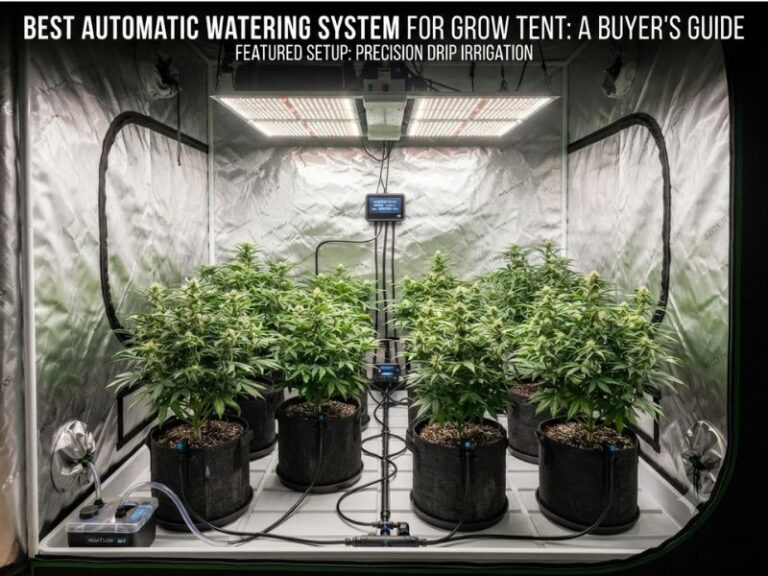
Best Carbon Filter for Grow Tent: 2×2, 3×3, 2×4, 4×4, 5×5, 8×8
Finding the best carbon filter for grow tent can be difficult because filters with the same duct diameter may have very different airflow ratings, carbon quality, bed thickness, and odor-control capacity.
Choosing the wrong filter can reduce exhaust airflow, allow unwanted odors to escape, and make temperature or humidity harder to control. An undersized filter may also force the inline fan to run at a higher speed, increasing noise and shortening the filter’s useful life.
For most standard 4×4 setups, the AC Infinity 6-Inch Air Carbon Filter is my top overall recommendation. It uses Australian RC412 activated carbon, a 38 mm carbon bed, and a manufacturer-rated airflow capacity of up to 410 CFM. The reversible design, two pre-filters, and included hanging hardware also make it easier to install and maintain.
However, one filter size is not suitable for every grow tent. A compact 2×2 tent may only need a 4-inch filter, while a 5×5 setup may benefit from an 8-inch system. Large 8×8 and 10×10 tents may require a high-airflow filter or multiple ventilation systems, depending on heat, duct length, bends, and carbon-filter resistance.
To help you choose correctly, I researched and compared seven popular grow tent carbon filters for USA-based indoor growers. This guide explains which options work best for 2×2, 3×3, 2×4, 4×4, 5×5, 8×8, and 10×10 grow tents, while also comparing airflow, carbon quality, construction, installation, maintenance, and overall value.
7 Best Carbon Filter for Grow Tent at a Glance
| Image | Product Name | Check Price |
|---|---|---|
Best Choice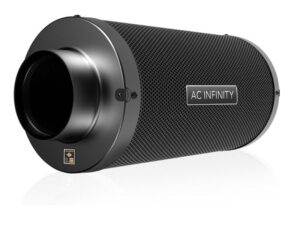 | AC Infinity 6-Inch Air Carbon Filter – Overall Best for Grow Tents | Check Price |
Second Best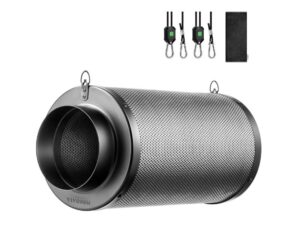 | VIVOSUN 6-Inch Pro Carbon Filter | Check Price |
Third Choice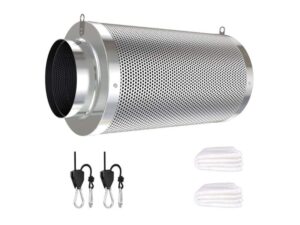 | Vanleno 4-Inch Carbon Filter | Check Price |
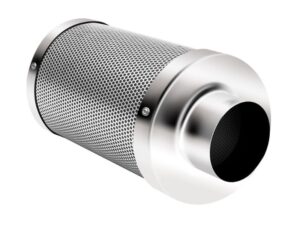 | iPower 6-Inch Carbon Filter | Check Price |
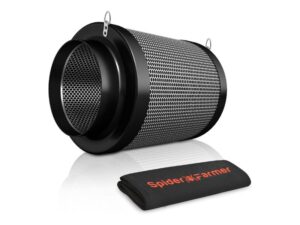 | Spider Farmer 6-Inch Carbon Filter | Check Price |
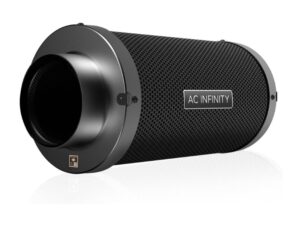 | AC Infinity 8-Inch Air Carbon Filter | Check Price |
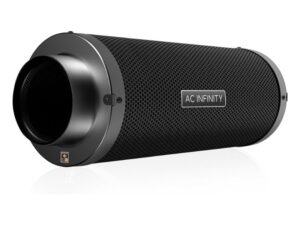 | AC Infinity 10-Inch Air Carbon Filter | Check Price |
1. AC Infinity 6-Inch Air Carbon Filter – Best Overall for 4×4 Grow Tents
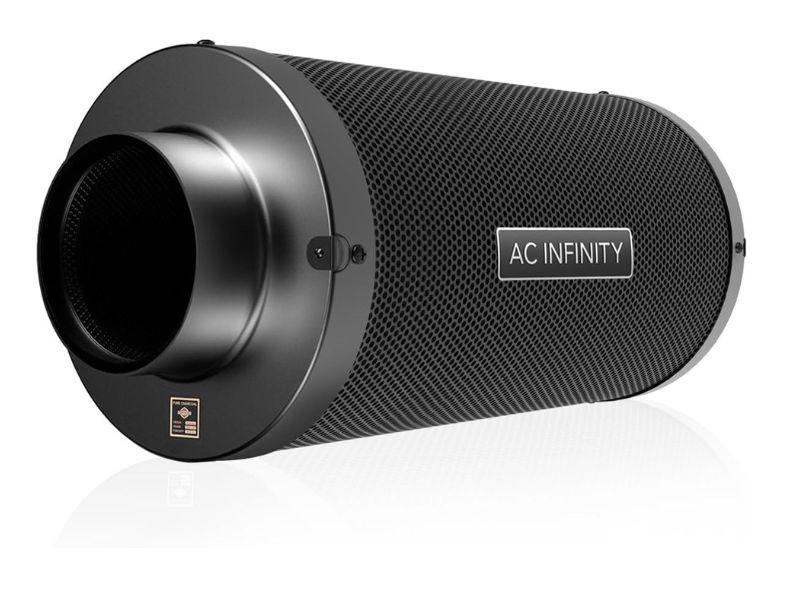
The AC Infinity 6-Inch Air Carbon Filter is my top overall recommendation for growers who need dependable odor control in a typical 4×4 tent. Its 6-inch duct opening works with standard 6-inch inline fans, while its 16-inch body remains compact enough to hang near the top of most full-height enclosures.
AC Infinity fills the filter with Australian Virgin RC412 charcoal rated at 1200+ IAV. The 38 mm carbon bed is designed to provide a large adsorption surface without unnecessarily restricting airflow. The manufacturer rates the filter for up to 410 CFM, making it a practical match for many 4×4 exhaust systems after accounting for ducting, bends, lighting heat, and filter resistance.
Its construction is another reason it ranks first. The powder-coated body uses aluminum flanges and galvanized steel mesh to resist corrosion in humid environments. AC Infinity includes two hanging straps, two rope clips, and two machine-washable pre-filters, reducing the number of installation accessories you need to purchase separately.
The filter can be used in intake or exhaust configurations, and its reversible flange lets you rotate the carbon canister to promote more even use. Amazon currently offers this product family in 4-, 6-, 8-, 10-, and 12-inch sizes, so you can stay within the same design range when building a smaller or larger ventilation system.
The main drawback is that it may be unnecessary for a basic 2×2 tent. It can also be too small for certain hot 5×5 setups once filters, long ducting, and high-output lights are considered.
Pros: Premium RC412 charcoal, 410 CFM rating, 38 mm carbon bed, durable construction, reversible design, two pre-filters, and multiple available sizes.
Cons: More capacity than many small tents need and potentially insufficient for demanding large-tent systems.
My Verdict: The combination of carbon quality, airflow, accessories, size options, and strong customer feedback makes this the best carbon filter for grow tent owners using a typical 4×4 enclosure.
2. VIVOSUN 6-Inch Pro Carbon Filter – Best Value for 4×4 Tents
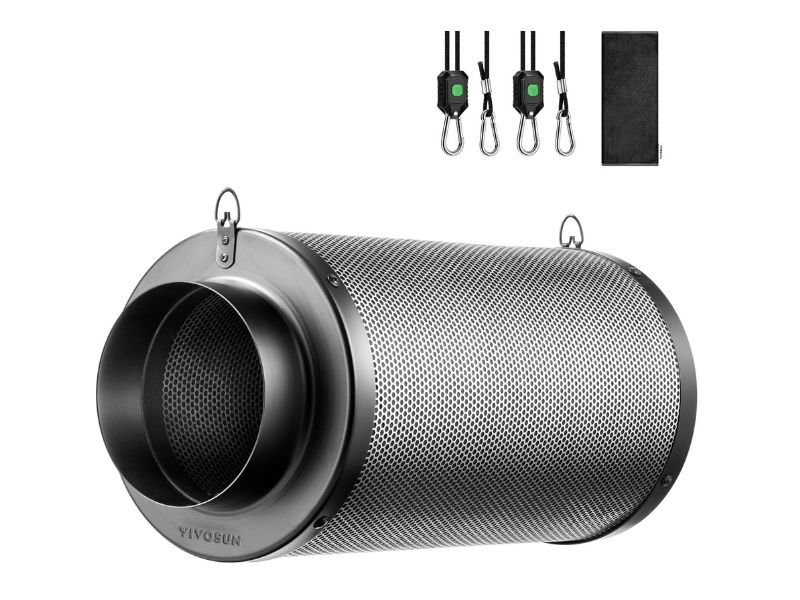
The VIVOSUN 6-Inch Pro Carbon Filter is a strong value-focused alternative for growers who need a high-airflow filter for a 4×4 tent. It measures approximately 6 x 9 x 16 inches and is designed to connect directly to a compatible 6-inch inline duct fan.
VIVOSUN uses RC412 Australian Virgin charcoal rated at 1200+ IAV, along with a 38 mm carbon bed. Its dual-sided galvanized steel mesh has a hexagonal opening pattern intended to increase open surface area, and the manufacturer gives the filter a maximum airflow rating of 455 CFM.
That rating provides slightly more stated airflow headroom than the AC Infinity 6-inch model. However, maximum CFM does not represent the airflow you will receive after adding ducting, bends, and a fan running below full speed. The filter should be matched with a 6-inch inline fan whose practical airflow does not exceed the filter’s usable capacity.
The detachable pre-filter is intended to capture dust and larger particles before they reach the charcoal. VIVOSUN also includes a pair of rope hangers, which makes overhead installation easier. Its flange and base can be exchanged, allowing the filter body to be reversed as different areas of the carbon become more heavily used.
Amazon currently shows 4 x 7 x 12-inch, 6 x 9 x 16-inch, and 8 x 11 x 20-inch variations. The reviewed ASIN is the black 6-inch Pro model, which currently shows a 4.6-star rating from more than 1,600 customers.
Pros: 455 CFM manufacturer rating, 1200+ IAV RC412 charcoal, thick carbon bed, reversible construction, included pre-filter, rope hangers, and three useful sizes.
Cons: The black Pro listing has fewer reviews than VIVOSUN’s older silver filter family, and its real airflow will decline once connected to a complete exhaust system.
My Verdict: This is an appealing 6-inch value option for many 4×4 tents, especially when you want a slightly higher stated airflow rating without moving to an 8-inch system.
3. Vanleno 4-Inch Carbon Filter – Best for 2×2, 3×3 and 2×4 Tents
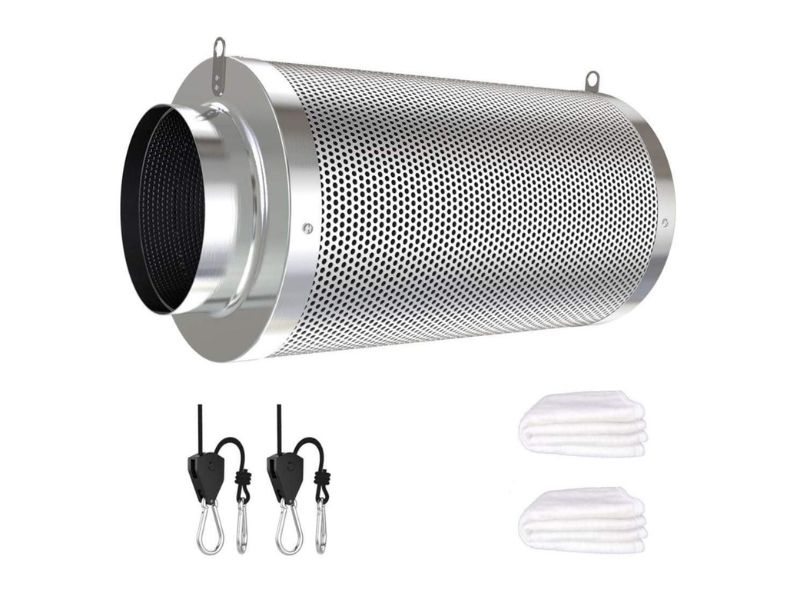
The vanleno 4-Inch Carbon Filter is the most practical compact choice in this roundup. Its smaller body makes it easier to install in short or crowded grow tents where a heavy 6-inch filter would consume too much overhead space.
The filter uses a 4-inch flange and a 12-inch-long body. Vanleno rates it for up to 210 CFM and fills it with Australian activated carbon rated at 1200+ IAV. This combination makes it a sensible starting point for a 2×2 tent and potentially suitable for many 3×3 or 2×4 setups, provided the actual airflow calculation remains within the filter’s capacity.
Two pre-filters are included instead of only one. These outer cloth layers help prevent dust and debris from entering and blocking the carbon bed. The package also includes one pair of rope hangers and uses stainless-steel flanges, giving beginners the basic equipment needed to suspend it from a tent crossbar.
Its compact design can also reduce the total weight hanging above the plants. Amazon lists the filter at approximately 5.4 pounds, which is considerably lighter than many full-size 6-, 8-, or 10-inch models. The listing currently shows a 4.6-star rating from more than 2,900 customers and identifies it as an Amazon’s Choice product.
The limitation is airflow headroom. A warm 3×3 or 2×4 tent with a high-output light, long ducting, several bends, or a restrictive silencer may require a stronger fan-and-filter system. Amazon also shows only the 4-inch size on this listing.
Pros: Compact body, 210 CFM rating, 1200+ IAV carbon, two pre-filters, rope hangers, low weight, and substantial review history.
Cons: Only one size is available, and demanding 3×3 or 2×4 installations may exceed its practical capacity.
My Verdict: This is my preferred compact filter for a 2×2 tent and a credible option for moderately equipped 3×3 and 2×4 grow tents after calculating required CFM.
4. iPower 6-Inch Carbon Filter – Best Budget 6-Inch Option
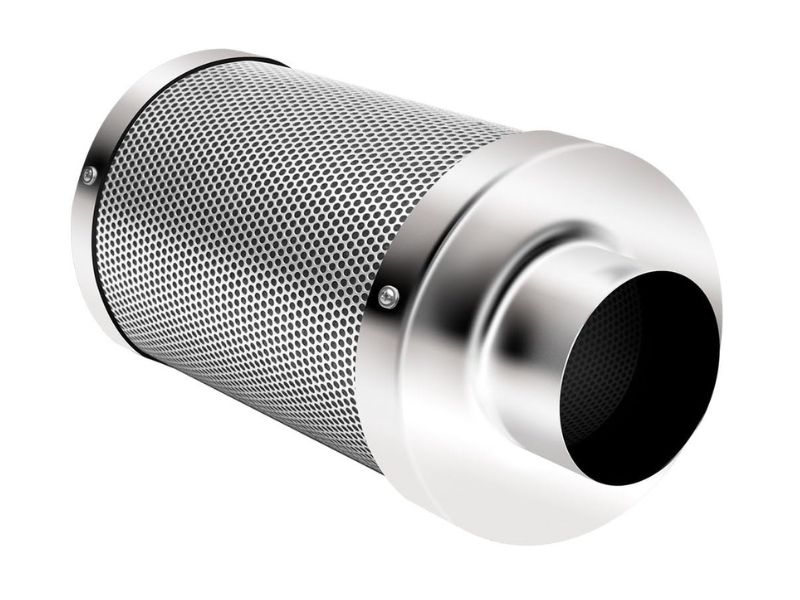
The iPower 6-Inch Carbon Filter is an established budget option for growers who want a conventional 6-inch odor-control system. It can be used with inline fans, duct fans, intake systems, or exhaust systems, making it flexible enough for several grow-room layouts.
The filter is rated for up to 400 CFM and uses Australian RC412 activated carbon rated at 1050+ IAV. Its 16-inch body is comparable in length to the AC Infinity and VIVOSUN 6-inch products, although its stated carbon grade is lower than the 1200+ IAV material used by those two competitors.
Its flange and base are removable, allowing the charcoal canister to be reversed. This can help distribute air through a different section of the carbon bed instead of continually loading the same area. A replaceable pre-filter is included to reduce dust buildup, and iPower recommends replacing that outer layer approximately every six months. Actual maintenance frequency will depend on the cleanliness and humidity of the room.
At approximately 11 pounds, it is noticeably heavier than the compact vanleno filter. Before hanging it inside a tent, confirm that the crossbars can support the combined weight of the filter, inline fan, light, and ducting. Amazon currently shows a 4.5-star rating from nearly 1,400 customers on the linked 6-inch listing.
This filter is best viewed as a budget 4×4 option rather than a premium high-capacity model. Its 400 CFM rating may also be restrictive for some hot 5×5 systems after resistance is added.
Pros: Competitive 400 CFM rating, Australian RC412 carbon, reversible canister, included pre-filter, flexible intake or exhaust installation, and established customer history.
Cons: Lower 1050+ IAV rating than leading alternatives, relatively heavy body, and limited airflow headroom for larger tents.
My Verdict: The iPower filter is a reasonable budget choice for a standard 6-inch 4×4 ventilation system when premium carbon specifications are not essential.
5. Spider Farmer 6-Inch Carbon Filter – Best for Spider Farmer Ventilation Systems
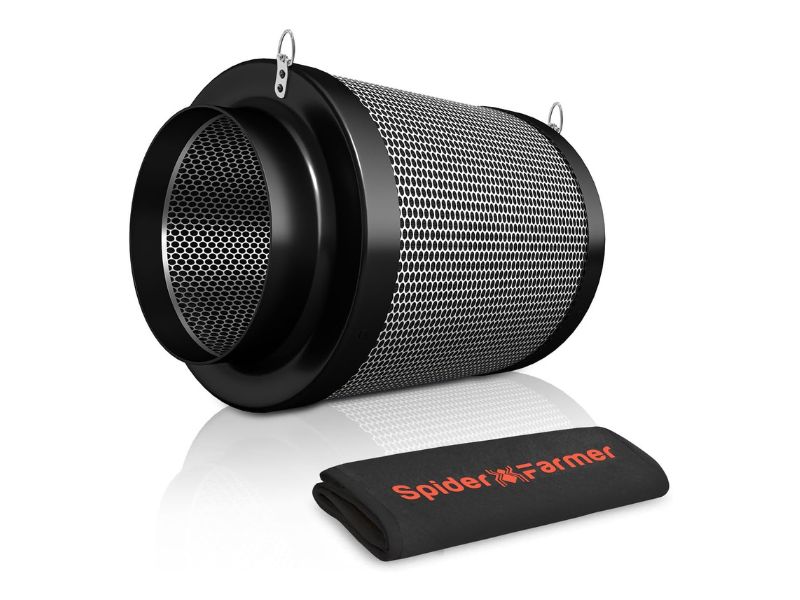
The Spider Farmer 6-Inch Carbon Filter is a logical choice for growers already using a Spider Farmer inline fan, grow tent kit, or ventilation system. Keeping the fan and filter within the same product ecosystem can simplify duct sizing and accessory selection.
Spider Farmer fills the filter with Australian Virgin RC412 charcoal. The body uses galvanized steel with heavy-duty aluminum flanges, while the included outer pre-filter can be removed and cleaned. Two hanging straps are also supplied, so the filter can be mounted without purchasing a separate basic strap set.
The pre-filter is designed to capture dust and particles before they enter the activated carbon. This is important because a clogged outer layer can reduce airflow and make the inline fan work harder. The filter may be connected to intake or exhaust ventilation, although the exact orientation should follow the fan layout and manufacturer instructions.
Amazon currently offers 4-inch and 6-inch versions. The linked 6-inch model shows a 4.4-star rating from more than 400 customers, which is a smaller review base than AC Infinity, VIVOSUN, vanleno, or iPower.
The listing does not clearly provide an independent maximum CFM specification for the filter itself. Amazon pairs it with a Spider Farmer 6-inch inline fan rated at up to 402 CFM, but buyers should not automatically treat the fan’s rating as the filter rating. Confirm compatibility when using a different high-output fan.
Pros: Australian RC412 charcoal, galvanized steel body, aluminum flanges, washable pre-filter, hanging straps, and 4- or 6-inch options.
Cons: Lower review count, slightly lower average rating than the leading products, and no clearly stated filter CFM on the accessible listing.
My Verdict: This is a suitable brand-compatible choice for Spider Farmer owners, but the AC Infinity and VIVOSUN filters provide clearer airflow specifications for comparison.
6. AC Infinity 8-Inch Air Carbon Filter – Best for 5×5 and Larger Tents
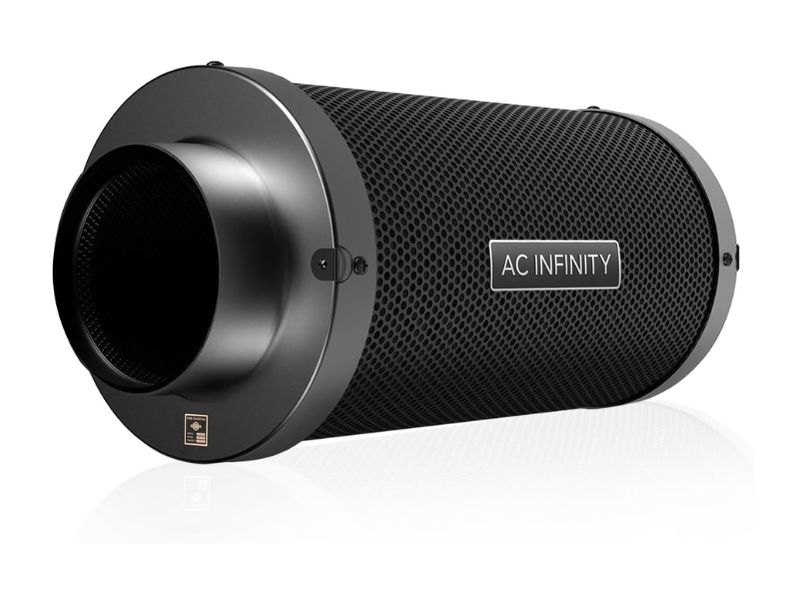
The AC Infinity 8-Inch Air Carbon Filter is intended for growers who need more airflow headroom than a standard 6-inch unit can provide. It is my preferred individual filter for many 5×5 setups and can also be used as one component in a multi-filter 8×8 ventilation system.
The filter has an 8-inch duct opening, a 20-inch length, and a manufacturer airflow rating of 770 CFM. It uses Australian Virgin RC412 charcoal rated at 1200+ IAV and a 38 mm carbon bed. These specifications provide considerably more capacity than AC Infinity’s 410 CFM 6-inch model.
Construction includes aluminum flanges, dual-sided galvanized steel mesh, and a powder-coated gunmetal finish designed to resist rust and corrosion. The reversible flanges allow the filter to be rotated, while two washable pre-filters, two straps, and two rope clips are included for installation.
The higher rating does not mean every 5×5 tent automatically needs an 8-inch filter. A well-designed 6-inch system may be sufficient in some conditions. However, a larger filter can provide more headroom when the tent contains a high-output light, long ducting, several bends, or equipment that increases static resistance.
For an 8×8 tent, one filter should not be assumed to be sufficient simply because it has an 8-inch opening. Multiple lights and 64 square feet of floor space can create substantial heat and humidity. Two separate 8-inch ventilation zones may be more practical than forcing one system to manage the entire enclosure.
Pros: High 770 CFM rating, premium 1200+ IAV carbon, 38 mm bed, corrosion-resistant construction, reversible flanges, two pre-filters, and included mounting hardware.
Cons: Larger, heavier, and more expensive than 6-inch filters; requires matching 8-inch fan and ducting.
My Verdict: This is the strongest single-filter choice in the roundup for many 5×5 grow tents and a useful building block for larger multi-filter systems.
7. AC Infinity 10-Inch Air Carbon Filter – Best High-Airflow Option for 10×10 Tents
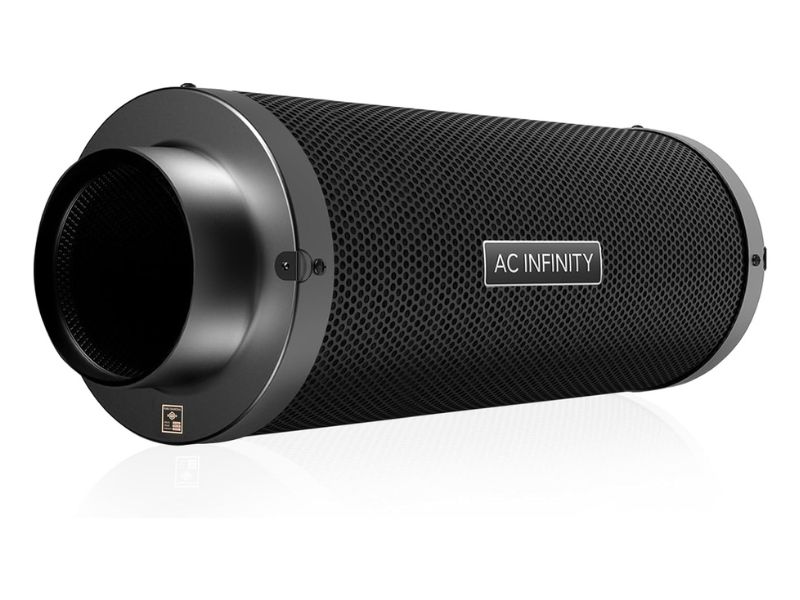
The AC Infinity 10-Inch Air Carbon Filter is the highest-capacity product in this comparison. It is designed for large grow rooms and tents where a 4-, 6-, or 8-inch filter cannot provide sufficient airflow headroom.
Its 10-inch duct opening must be paired with compatible 10-inch fan equipment. The filter measures approximately 24 inches long and is rated for up to 1,249 CFM. AC Infinity uses the same Australian Virgin RC412 charcoal found in its smaller premium filters, with a 1200+ IAV rating and a 38 mm bed thickness.
The large galvanized-steel body has aluminum flanges and includes two pre-filters, two straps, and two rope clips. Its powder-coated finish is intended to resist corrosion in high-humidity growing environments, while the reversible flange design allows the canister orientation to be changed.
This is the most appropriate single-filter starting point in the list for a 10×10 enclosure, but it should not be presented as a guaranteed one-filter solution. A 10×10 tent contains 100 square feet of floor area. Multiple lights, long ducting, several bends, silencers, and high room temperatures can push required airflow beyond the practical performance of one system.
The filter is also physically large and heavy. Confirm that the tent frame can support it safely or consider installing it outside the enclosure. Amazon offers the same filter family in 4-, 6-, 8-, 10-, and 12-inch variations, and the 10-inch listing currently carries a 4.8-star rating from more than 10,000 ratings across the product family.
Pros: 1,249 CFM rating, premium RC412 carbon, 38 mm bed, heavy-duty construction, two pre-filters, reversible flanges, and broad size availability.
Cons: Bulky, heavy, expensive, and may still require multiple ventilation zones in demanding 10×10 installations.
My Verdict: This is the best high-airflow single-filter option here for a 10×10 grow tent, provided your calculated airflow requirement stays within its practical capacity.
Best Carbon Filter Size for Different Grow Tents
Choosing a carbon filter based only on duct diameter can lead to poor airflow or unnecessary cost. Tent size, height, light heat, duct length, fan capacity, and carbon resistance should all be considered together.
The recommendations below are practical starting points rather than fixed rules. A cool setup with short ducting may need less airflow, while a warm room with several bends may require a larger filter and fan.
Best Carbon Filter for a 2×2 Grow Tent
A 4-inch carbon filter is usually the most practical choice for a 2×2 grow tent. It is compact, lighter than a 6-inch model, and easier to hang without taking up too much ceiling space.
The vanleno 4-Inch Carbon Filter is my preferred option for this tent size. Its manufacturer-rated 210 CFM capacity provides more airflow than most basic 2×2 systems require, allowing the fan to operate below maximum speed in many situations.
Running a properly sized fan at a lower speed may reduce noise and avoid excessive negative pressure. However, actual performance will depend on the inline fan, ducting, bends, and surrounding room temperature.
A 6-inch filter is normally unnecessary for a simple 2×2 setup. It costs more, weighs more, and occupies additional overhead space. It may still make sense when you already own a 6-inch fan or plan to upgrade to a larger tent later.
Match the filter with a controllable 4-inch inline fan and keep the ducting short. Make sure unused intake openings remain closed enough to control airflow while still allowing fresh air to enter.
Best Carbon Filter for a 3×3 Grow Tent
A strong 4-inch system can work well for many 3×3 grow tents. The vanleno 4-Inch Carbon Filter is a reasonable choice when the room stays cool and the exhaust route is short.
However, a 3×3 tent with a powerful light, long ducting, several bends, or high room temperature may benefit from a 6-inch filter. A larger system provides additional airflow headroom and can often run more quietly at reduced speed.
The AC Infinity 6-Inch Air Carbon Filter is the stronger option when you want more capacity or expect to upgrade later. Its 410 CFM manufacturer rating is higher than most 3×3 systems need, but a speed-controlled fan lets you reduce airflow.
Do not assume that larger always means better. An oversized fan running too fast can pull the tent walls inward excessively and increase noise. The goal is stable air exchange, not maximum airflow at all times.
For a standard 3×3 setup, start with a 4-inch filter when space and budget are priorities. Choose a 6-inch system when heat, airflow resistance, or future expansion are more important.
Best Carbon Filter for a 2×4 Grow Tent
A 2×4 grow tent has eight square feet of floor area, but its long rectangular shape can create uneven airflow if the exhaust and intake openings are poorly positioned.
A high-quality 4-inch filter may be sufficient for a moderate setup. The vanleno model is a suitable starting point when the light produces limited heat and the ducting route is short.
A 6-inch filter may be the better option for warmer rooms, higher-output lighting, or long duct runs. The VIVOSUN 6-Inch Pro Carbon Filter provides additional airflow capacity and can be paired with a controllable 6-inch inline fan.
Place the filter and exhaust near one upper end of the tent. Fresh air can enter from a lower opening on the opposite side, helping air move across the full rectangular area.
A larger filter also gives you more flexibility if the tent contains a carbon filter, silencer, several duct bends, or other airflow restrictions. However, it will occupy more overhead space than a compact 4-inch unit.
For a low-heat 2×4 setup, a strong 4-inch system may provide the best value. For demanding conditions, choose a 6-inch filter and run the fan at an appropriate speed.
Best Carbon Filter for a 4×4 Grow Tent
A 6-inch carbon filter is the most practical starting category for a standard 4×4 grow tent. This size provides a useful balance of airflow, physical dimensions, noise control, and product availability.
The AC Infinity 6-Inch Air Carbon Filter is my top overall recommendation. Its 410 CFM manufacturer rating, 1200+ IAV RC412 charcoal, 38 mm carbon bed, reversible design, and included pre-filters make it a balanced choice.
The VIVOSUN 6-Inch Pro Carbon Filter is a strong value alternative. Its stated maximum airflow is slightly higher, and it includes a removable pre-filter and hanging hardware.
A 4×4 tent normally contains 16 square feet of floor area and is often paired with a moderately powerful LED. This can create substantially more heat and humidity than a 2×2 or 3×3 setup.
Use a fan-speed controller rather than operating the exhaust at full power continuously. Adjust airflow until the temperature and humidity remain stable and the tent walls pull inward slightly.
A 4-inch filter may be too restrictive for many full-size 4×4 systems. An 8-inch unit may be unnecessary unless the room is unusually hot or the exhaust route creates significant resistance.
Best Carbon Filter for a 5×5 Grow Tent
A 5×5 tent may use either a high-output 6-inch system or an 8-inch filter, depending on the equipment and surrounding room conditions.
A premium 6-inch filter can work when the ducting is short, the room is cool, and the light produces manageable heat. However, a 5×5 enclosure has 25 square feet of floor space, so airflow requirements can rise quickly.
The AC Infinity 8-Inch Air Carbon Filter is my preferred option for users who want more airflow headroom. Its 770 CFM manufacturer rating gives a compatible fan more room to overcome carbon resistance and ducting losses.
A larger system can also run below maximum speed, potentially reducing noise while still maintaining adequate air exchange.
The disadvantages are size, weight, and cost. An 8-inch filter occupies more overhead space and requires matching 8-inch ducting and an inline fan.
Before hanging it inside the tent, confirm that the crossbars can support the combined weight of the filter, fan, light, and hardware. External mounting may be safer when ceiling space is limited.
For a simple 5×5 setup, calculate whether a 6-inch system is sufficient. Choose an 8-inch filter when heat, resistance, or future expansion requires more capacity.
Best Carbon Filter for an 8×8 Grow Tent
An 8×8 grow tent contains 64 square feet of floor space. It may use multiple lights, several circulation fans, and a more complex ventilation layout than a standard home tent.
One carbon filter should not automatically be expected to manage the entire enclosure. Two separate 8-inch systems may provide more effective airflow distribution than one fan and filter positioned in a single corner.
The AC Infinity 8-Inch Air Carbon Filter is a suitable individual unit for this type of multi-filter setup. Each system can serve a separate section of the tent, reducing long duct runs and helping remove heat from different areas.
A single 10-inch system may also be considered when the calculated airflow remains within its practical capacity and the duct layout is efficient. However, one large exhaust point can still leave stagnant areas inside a wide enclosure.
Multiple systems offer redundancy. If one fan stops working, the second system may continue providing partial ventilation.
The tradeoffs include higher equipment cost, additional electrical use, more noise sources, and more maintenance. You must also find enough safe hanging space for the filters and fans.
For most 8×8 tents, calculate the airflow requirement carefully and consider dividing the enclosure into ventilation zones rather than relying on one filter.
Best Carbon Filter for a 10×10 Grow Tent
A 10×10 grow tent creates a 100-square-foot enclosed area and may require commercial-scale airflow compared with smaller home setups.
The AC Infinity 10-Inch Air Carbon Filter is the strongest single-filter option in this roundup. Its manufacturer-rated capacity of up to 1,249 CFM makes it a logical starting point for a large tent.
However, one 10-inch filter is not guaranteed to be sufficient. Multiple lights, long duct runs, cooling equipment, silencers, and high room temperatures can increase the required airflow beyond one system’s practical output.
Two ventilation zones may provide better air distribution and easier equipment placement. This can involve two filters and fans positioned in different sections of the tent.
A 10-inch filter is large and heavy. It should only be suspended from a frame that can support the full load safely. External floor or wall-mounted installation may be more practical.
Before buying, calculate the tent volume and add reasonable airflow allowances for filters, duct bends, and heat. A large carbon filter is expensive, so accurate planning is more important than choosing by tent size alone.
How a Grow Tent Carbon Filter Works
A grow tent carbon filter removes odor molecules from moving air through a process called adsorption. The molecules attach to the internal surface of activated carbon as air passes through the filter bed.
Activated carbon contains a large network of microscopic pores. These pores create a substantial internal surface area for trapping odor compounds.
The filter does not move air by itself. It must be connected to an inline fan that pulls or pushes air through the carbon bed.
A cloth pre-filter is normally fitted around the outside of the metal housing. It catches dust, hair, and larger particles before they enter the carbon.
This helps protect the internal charcoal and prevents the filter from becoming blocked prematurely.
Carbon filters are designed primarily for odor control. They are not substitutes for temperature control, dehumidification, or fine air purification.
A properly selected filter should remove odors without restricting the ventilation system more than the inline fan can handle.
How to Calculate Required Grow-Tent CFM
Start by calculating the internal volume of the tent:
Length × width × height = cubic feet
For example, a 4 x 4 x 6.67-foot tent has an internal volume of approximately 107 cubic feet.
The basic volume tells you how much air is inside the enclosure, but it does not account for resistance or heat.
Increase the required airflow when the system includes:
- A carbon filter
- Long ducting
- Several bends
- A silencer
- High-output lighting
- A warm surrounding room
- Restricted intake openings
A carbon filter creates resistance because the fan must pull air through a dense bed of activated charcoal. Long ducting and sharp bends create additional pressure losses.
It is usually better to select a controllable inline fan with extra capacity than a fan that barely meets the theoretical minimum.
The filter must also be rated to handle the practical airflow of the fan. If the fan moves air faster than the filter supports, odor molecules may not remain in contact with the carbon long enough.
Use the calculation as a starting point, then monitor temperature, humidity, odor, and negative pressure after installation.
Matching Carbon Filter CFM to Inline-Fan CFM
The carbon filter and inline fan should be selected as one system.
The fan’s maximum airflow should not significantly exceed the filter’s rated capacity during normal operation. Pulling air through an undersized filter too quickly can reduce odor-removal performance.
The filter rating should also be high enough to avoid creating excessive resistance. A restrictive filter can reduce airflow, increase noise, and make the fan work harder.
Both products should use the same duct diameter whenever possible. A 6-inch fan and 6-inch filter connect directly with standard 6-inch ducting.
Adapters can connect different sizes, but they create additional resistance and make the installation more complicated.
A variable-speed fan provides more flexibility than a single-speed model. You can begin at a moderate setting and increase airflow only when temperature, humidity, or odor requires it.
When possible, choose a fan with some capacity above the calculated minimum and control its operating speed.
4-Inch vs. 6-Inch vs. 8-Inch vs. 10-Inch Filters
| Filter Diameter | Common Starting Application |
| 4-inch | 2×2, many 3×3 and moderate 2×4 tents |
| 6-inch | Most 4×4 tents and some 5×5 setups |
| 8-inch | Many 5×5 tents and multi-filter large systems |
| 10-inch | 10×10 tents and high-airflow grow rooms |
A 4-inch filter is compact, affordable, and easier to hang. Its lower airflow capacity can become restrictive in warm or heavily equipped tents.
A 6-inch filter is the most versatile category for home growers. It offers more capacity without the physical size and weight of an 8-inch model.
An 8-inch filter is useful when a 6-inch system lacks sufficient airflow or when a larger fan can operate more quietly at reduced speed.
A 10-inch filter is intended for large enclosures. It requires compatible ducting, a high-capacity fan, strong mounting support, and a substantial budget.
These categories are starting points rather than universal rules. Always calculate the system requirements.
Understanding Carbon Quality and IAV Ratings
Many grow-tent filters use Australian activated charcoal, including material identified as RC412.
Manufacturers may advertise ratings such as 1050+ or 1200+ IAV. These figures are used to describe the adsorption characteristics of the carbon.
A higher claimed rating may indicate more effective charcoal, but it should not be evaluated alone.
Filter performance also depends on:
- Carbon-bed depth
- Total carbon volume
- Airflow speed
- Mesh construction
- Humidity
- Dust protection
- Installation quality
Premium charcoal cannot perform well when air bypasses the filter through a loose duct connection.
Treat IAV figures as manufacturer specifications rather than independent proof that one product will always last longer than another.
Why Carbon-Bed Thickness Matters
Carbon-bed thickness determines how far air travels through the activated charcoal.
A deeper bed can create more contact time between odor molecules and carbon. Several premium filters use a 38 mm bed as part of their design.
However, a thicker carbon layer may also create more airflow resistance. The fan must have enough pressure capability to pull air through the filter.
Bed thickness should therefore be considered together with filter diameter, length, mesh openness, and fan capacity.
An extremely thick filter connected to a weak fan may provide poor ventilation even when the carbon quality is high.
Filter Length and Carbon Capacity
A longer carbon filter generally contains more activated charcoal than a shorter model with the same diameter.
More carbon may provide additional adsorption capacity and potentially extend service life.
The tradeoff is increased size and weight. A long filter takes up more ceiling room and places more load on the tent frame.
Compact filters are easier to install in 2×2 or short tents, but they may saturate sooner when exposed to heavy odor continuously.
Choose a filter length that balances carbon capacity with available mounting space and structural support.
Reversible Flanges and Filter Rotation
Some carbon filters allow the flange and base to be removed and reversed.
Rotating the filter changes which section of the carbon bed receives the strongest airflow. This may help promote more even use of the charcoal.
Reversing the canister does not restore exhausted carbon. It only changes the airflow direction through the existing material.
Follow the manufacturer’s instructions and reseal every connection carefully after rotation.
Loose flanges or duct joints can allow unfiltered air to bypass the carbon.
Prefilter Care and Maintenance
The pre-filter protects the activated charcoal from dust and larger airborne particles.
A dirty pre-filter can reduce airflow and make the inline fan operate harder. It should be inspected regularly, especially in dusty rooms or homes with pets.
Some pre-filters are washable, while others are designed for replacement. Follow the manufacturer’s cleaning instructions.
When washing a reusable pre-filter, let it dry completely before reinstalling it. A damp cover can increase humidity around the carbon and reduce performance.
It is useful to keep a spare pre-filter available. You can install the clean one while the other is being washed and dried.
Installing the Filter Inside or Outside the Tent
The most common arrangement places the carbon filter inside the upper section of the tent.
The fan pulls warm, odor-carrying air through the carbon and exhausts it through ducting. This configuration filters the air before it reaches the fan.
Internal installation saves external floor space but uses valuable overhead room.
An outside installation may be useful when the tent is short or the filter is too heavy for the frame. In this arrangement, air may be pushed through the filter after leaving the tent.
Not every filter performs equally well in every orientation. Check whether the manufacturer supports both intake and exhaust use.
Outside installation also requires careful sealing. Any leak before the filter can release unfiltered air into the room.
Choose the layout that provides safe support, short ducting, and effective odor control.
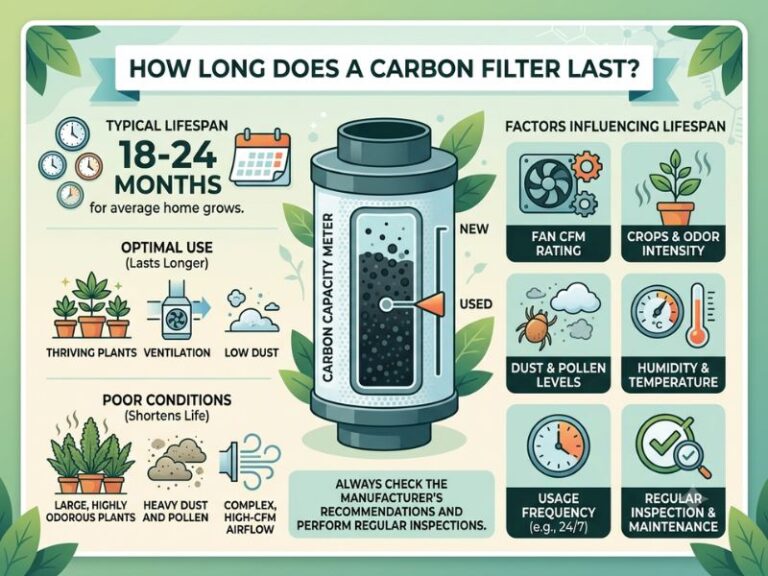
How Long Does a Carbon Filter Last?
There is no universal carbon-filter lifespan.
Service life depends on:
- Odor concentration
- Operating hours
- Humidity
- Airflow speed
- Dust exposure
- Carbon quality
- Carbon volume
- Prefilter maintenance
A filter operating continuously in a humid, high-odor environment may saturate faster than one used intermittently in a clean, dry room.
High humidity can reduce the carbon’s ability to adsorb odor molecules effectively.
Do not replace the filter only because a certain number of months has passed. Monitor performance and look for odor breakthrough while confirming that the fan and ducting are working correctly.
Signs a Carbon Filter Needs Replacement
The clearest sign of an exhausted filter is odor escaping even though the fan is running and the ducting is sealed.
Other warning signs include:
- Noticeably reduced airflow
- Persistent odor near the exhaust
- Damaged or heavily clogged pre-filter
- Moisture exposure
- Loose carbon dust
- Physical damage to the housing
- No improvement after correcting duct leaks
Before replacing the filter, inspect the fan speed, intake openings, duct joints, clamps, and pre-filter.
A disconnected duct or air leak can create the same symptoms as exhausted carbon.
Common Carbon Filter Buying Mistakes
Choosing by Tent Width Alone
Tent height, heat, ducting, and equipment resistance also affect airflow needs.
Matching Diameter but Ignoring CFM
Two 6-inch filters may have different maximum airflow ratings.
Using a Fan That Is Too Powerful
Moving air through carbon too quickly may reduce odor adsorption.
Ignoring Filter Resistance
The fan’s unrestricted rating will decrease after the filter and ducting are connected.
Adding Too Many Duct Bends
Sharp bends create resistance and reduce practical airflow.
Buying One Filter for Every Large Tent
An 8×8 or 10×10 enclosure may require multiple ventilation zones.
Forgetting the Weight
Large filters can overload tent crossbars when combined with lights and fans.
Ignoring Amazon Variations
Confirm the duct diameter before ordering. Product families often include several sizes under one listing.
Neglecting Prefilter Maintenance
Dust buildup restricts airflow and may shorten the useful life of the carbon.
Expecting the Filter to Control Heat
A carbon filter removes odor. Temperature control depends on airflow, lighting, and the surrounding room.
How to Install a Carbon Filter in a Grow Tent
Start by confirming that the tent frame and upper bars can support the combined weight of the filter, fan, ducting, and hanging hardware.
Fit the pre-filter around the outside of the carbon canister. Make sure it covers the metal mesh evenly without blocking the flange.
Attach the hanging straps around the filter body. Position it near the top of the tent because warm, odor-carrying air rises.
Hang the filter horizontally when recommended by the manufacturer. Keep enough space around the metal mesh so air can enter freely.
Connect the filter flange to the inline fan or a short section of ducting. Match the fan’s airflow direction to the intended exhaust route.
Tighten the connection using a metal clamp. Seal small gaps with suitable ducting tape.
Keep the duct path short and avoid unnecessary 90-degree bends. Route the exhaust outside the tent and, when practical, away from the surrounding room.
Open one or more lower intake vents to allow fresh air to replace the exhausted air.
Turn on the fan at a moderate speed. The tent walls should pull inward slightly, showing that the enclosure has negative pressure.
Check every connection for escaping air. Unfiltered leaks can reduce odor control even when the filter itself is working.
Monitor temperature, humidity, noise, airflow, and odor during the first operating period. Increase or reduce fan speed as needed.
Frequently Asked Questions
What size carbon filter do I need for a grow tent?
A 4-inch filter is a common starting choice for 2×2, many 3×3, and moderate 2×4 tents. Most 4×4 systems use a 6-inch filter, while many 5×5 tents benefit from an 8-inch model. Large 8×8 and 10×10 enclosures may require high-capacity or multiple systems.
Is a 4-inch carbon filter enough for a 3×3 tent?
It can be sufficient when the room stays cool, the ducting is short, and the light produces moderate heat. A 6-inch system may provide better airflow headroom in warm rooms or installations with long ducting, several bends, or restrictive accessories.
Should I use a 4-inch or 6-inch filter for a 2×4 tent?
A strong 4-inch filter can work for a moderate 2×4 setup. Choose a 6-inch system when the room is warm, the light is powerful, the exhaust route is long, or you want to operate the fan more quietly at a lower speed.
What size carbon filter is best for a 4×4 tent?
A 6-inch carbon filter is the most practical starting category for most 4×4 grow tents. The AC Infinity 6-inch model is the strongest overall option in this comparison, while the VIVOSUN 6-inch filter provides a competitive value alternative.
Is a 6-inch filter enough for a 5×5 grow tent?
It may be enough when the system has short ducting, manageable heat, and an efficient high-output fan. An 8-inch filter provides more airflow headroom and may operate more quietly at reduced speed in demanding 5×5 setups.
How many carbon filters does an 8×8 tent need?
The answer depends on lighting heat, tent height, ducting, and the surrounding room. Many 8×8 systems benefit from two separate 8-inch ventilation zones rather than one filter attempting to manage the entire enclosure.
Is one 10-inch filter enough for a 10×10 tent?
A high-capacity 10-inch filter may be sufficient when the calculated airflow stays within its practical rating. Multiple lights, long ducts, hot room temperatures, and resistance can require two systems. Calculate the full setup before relying on one filter.
Does the carbon-filter CFM need to match the fan?
The filter must support the airflow produced by the fan during normal operation. A fan that moves substantially more air than the filter rating may reduce odor contact time. A variable-speed fan makes matching easier.
Can I use a larger carbon filter with a smaller fan?
Yes, provided the duct diameters are compatible and the fan can move air effectively through the larger filter. A larger filter may create less restriction and offer more carbon capacity, but it also costs more and occupies additional space.
Can I place the carbon filter outside the grow tent?
Yes, when the filter supports push-through or external installation. This can save ceiling space and reduce frame load. Seal the ducting carefully because leaks before an external filter can release unfiltered air into the room.
How often should I wash the pre-filter?
Inspect it regularly and clean it when visible dust begins to accumulate. The schedule depends on room cleanliness, pets, and operating hours. Follow the manufacturer’s directions and allow a washable pre-filter to dry completely before reinstalling it.
How do I know when activated carbon is exhausted?
Persistent odor at the exhaust is the main warning sign. First inspect the fan, pre-filter, clamps, ducting, and intake vents. When the system is sealed and airflow is normal but odors continue escaping, the carbon may need replacement.
Does a carbon filter reduce grow-tent airflow?
Yes. Pulling air through activated carbon creates resistance, reducing the fan’s practical airflow. Duct length, bends, and silencers reduce it further. Select a fan with sufficient capacity and use a speed controller to balance airflow and noise.
Can a grow tent operate without a carbon filter?
Yes, when odor control is unnecessary. The tent still requires suitable ventilation to manage heat and humidity. Removing the carbon filter reduces airflow resistance, but exhausted odors will enter the surrounding room or outdoor area.
Conclusion
The best carbon filter for grow tent use depends on more than the enclosure’s floor size. You must also consider tent height, light heat, inline-fan capacity, duct length, bends, carbon resistance, and the surrounding room.
For compact 2×2 tents and many moderate 3×3 or 2×4 setups, the vanleno 4-Inch Carbon Filter provides a practical combination of size and airflow.
The AC Infinity 6-Inch Air Carbon Filter is the strongest overall choice for most 4×4 tents. It combines premium carbon, a 410 CFM rating, durable construction, two pre-filters, and several available size variations.
Many 5×5 setups benefit from the AC Infinity 8-inch filter, while large 8×8 tents may require two ventilation systems. The 10-inch model provides the highest single-filter capacity for a 10×10 enclosure, but airflow should still be calculated before purchase.
Choose the filter and inline fan together, maintain the pre-filter, and keep ducting short. A properly matched system will provide more reliable odor control and ventilation than choosing by duct diameter alone.

I’m Maya L. Greenwood, a lifelong plant lover who believes anyone can grow something beautiful with the right guidance. After years of testing soil mixes, pruning methods, irrigation tricks, and pest-safe solutions, I started EasyGardenTips.com to turn hard-won lessons into step-by-step advice. From seed starting and container gardens to composting and seasonal checklists, my goal is to make gardening simple, sustainable, and fun.