Stihl Vs Husqvarna Backpack Leaf Blower: Which One Should You Buy?
If your priority is a clearly specified clearing force and easier starting steps, the Husqvarna 150BT is the more straightforward choice. If you want a professional STIHL blower known for strong output, a 4-MIX motor, and comfort features for longer sessions, the BR 700 may suit you better.
The biggest measurable difference is that Husqvarna gives airflow figures: 765 CFM, 270 MPH, and 22 N. STIHL’s BR 700 is described as powerful and weighs 10.8 kg, but there’s no matching airflow figure here, so a numbers-only comparison wouldn’t be fair.
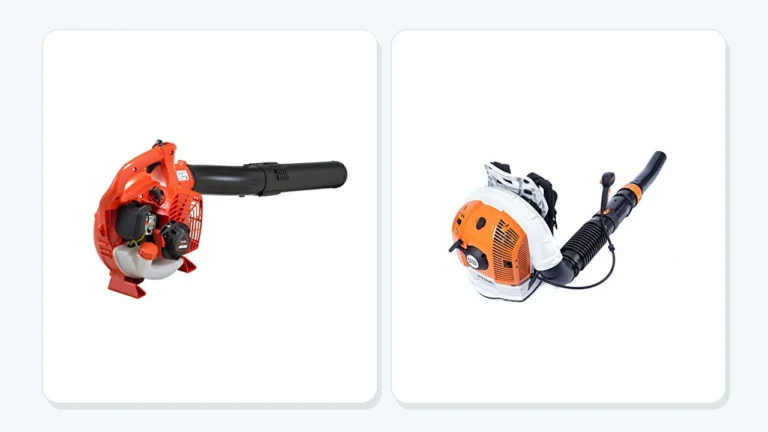
These are both backpack leaf blowers for demanding yard work, not small cleanup jobs around a patio. The Husqvarna’s padded harness, hip belt, and cruise control are notable for extended use; the STIHL pairs wide shoulder straps with a soft grip and anti-vibration system.
Below, I’ll compare their power information, fit, controls, and likely day-to-day trade-offs. The short version: choose based on the size and kind of cleanup you face, and how the blower feels on your back—not just one big number.
| with Length-Adjustable Blow Pipe and a Maximum Blowing | Husqvarna 150BT Gas Backpack Leaf Blower, 51-cc 2.16-HP 2-Cycle | |
 |
 |
Stihl Vs Husqvarna Backpack Leaf Blower Detailed Comparison
The STIHL BR 700 and Husqvarna 150BT are built for moving more than a light scatter of dry leaves. Both are backpack leaf blowers, and both have features aimed at making substantial cleanup manageable. Their specifications tell different stories, though: Husqvarna provides three performance figures, while STIHL emphasizes high blowing force, a 10.8 kg weight, and comfort details.
For the Husqvarna 150BT, the listed figures are 765 CFM, 270 MPH, and 22 N. CFM describes air volume, MPH describes air speed, and newtons express force. Together, they give a more useful picture than any one figure alone. Still, they don’t guarantee a particular result in every yard; leaf moisture, debris, surface, and how you direct the air all matter.
STIHL describes the BR 700 as an extremely powerful professional blower for large areas and identifies a 10.8 kg weight—about 23.8 pounds. That gives you a concrete number to consider before buying, but it isn’t a direct weight comparison because a corresponding Husqvarna weight isn’t available here. If the load matters to you, check each complete blower’s weight and try on the harness if possible.
What the power numbers can—and can’t—tell you
The Husqvarna’s figures give buyers a way to compare its advertised airflow with other blowers. They’re especially helpful if you’re shopping with a specific performance target in mind. But don’t treat 270 MPH as a guaranteed “moves any leaf” rating: moving wet leaves or compacted debris depends on more than air speed alone.
The BR 700’s description points to high blowing force and use on large areas, but gives no matching CFM, MPH, or newton figures. That means you can’t responsibly conclude that one model is stronger just by lining up available numbers. If your decision hinges on a measurable power threshold, the Husqvarna is easier to evaluate on paper; if you’re considering the STIHL, look for a complete technical specification and compare like with like.
How each model addresses carrying comfort
STIHL’s listed comfort features include wide shoulder straps, a soft grip, and its anti-vibration system. Those details matter when a cleanup takes a while: wider straps spread contact across more of your shoulders, while a soft grip and vibration reduction are intended to make handling more comfortable. The 10.8 kg weight is still worth keeping in mind, particularly if you’ll carry the blower across a large property.
Husqvarna equips the 150BT with a padded harness, hip belt, and a weight-leveling load management system. The belt gives the harness another point of contact, while the load-management design is meant to help distribute what you’re carrying. These are useful features to look for, but comfort is personal. Torso length, clothing, and strap adjustment can change how a backpack feels from one person to another.
Controls and starting aids
The Husqvarna has a variable-speed throttle and cruise control. Variable speed lets you adjust the airflow to the job, while cruise control can hold a chosen operating speed without requiring you to keep regulating it with your hand. That can be handy when you’re clearing a long stretch at a steady pace, though close work around gravel, mulch, or garden beds may call for a lighter touch.
The Husqvarna also has an air purge system that removes air from the carburetor and fuel system to support starting. That’s a clearly specified convenience, not a promise that every start will be effortless. The STIHL BR 700 uses a 4-MIX motor, but the details here don’t establish a directly comparable starting aid or control setup. If those features are important to you, confirm the exact configuration before you decide.
Key Differences That Matter
1. The STIHL is identified by weight; the Husqvarna is identified by airflow figures
With the BR 700, you have a published weight of 10.8 kg and a description focused on high blowing force and large-area work. With the 150BT, you have a 51-cc, 2-cycle, 2.16-HP engine plus its 765 CFM, 270 MPH, and 22 N figures. These are different kinds of evidence, not a clean win for either product.
That distinction matters if you’re comparing technical numbers before making a purchase. The Husqvarna’s figures make it easier to assess its stated airflow performance. The STIHL’s weight gives you a concrete carrying consideration, but its performance description isn’t expressed in the same units. Avoid assuming that a missing figure means weaker performance—or that a strong-sounding description can substitute for a measurement you need.
2. Harness design is a real point of comparison
Both models include features intended to make backpack use more comfortable, but the specified designs differ. STIHL lists wide shoulder straps, a soft grip, and an anti-vibration system. Husqvarna lists a padded harness, hip belt, and weight-leveling load management system. Neither set of details proves which one will feel better on your body.
If you expect long sessions, pay attention to the complete fit, not just the word “padded.” The blower should sit securely without creating uncomfortable pressure, and the straps should be adjustable enough for your build and work clothes. Where possible, try it on before buying. If you can’t, check the manufacturer’s fit guidance and return terms before committing.
3. Husqvarna spells out its operating controls and starting aid
The 150BT’s variable-speed throttle and cruise control give you two ways to manage airflow during a job. The air purge system is another clearly stated convenience for the starting process. These features may be appealing if you want defined controls and a specific starting aid, but they don’t remove the need to follow the engine’s operating and maintenance instructions.
The BR 700 is identified with a 4-MIX motor, but the confirmed details don’t give a matching list of controls or a starting aid for a side-by-side feature comparison. Don’t assume that an unspecified feature is missing; confirm what matters to you. A little checking now can prevent a frustrating mismatch when you’re trying to start up or manage airflow in a tight area.
4. The engine descriptions are not interchangeable
The Husqvarna 150BT is a 51-cc, 2-cycle, 2.16-HP gas blower with X-TORQUE engine technology. STIHL identifies the BR 700’s motor as a 4-MIX motor. Those labels describe different engine designs, so don’t treat them as a simple ranking of power or quality. Follow each model’s own fuel, operating, and maintenance requirements.
If you already know what engine setup you prefer, that may help narrow the choice. If you don’t, read the operating instructions before buying and consider what ongoing care you’re comfortable with. Don’t choose based on engine terminology alone; the blower’s fit, controls, and suitability for your cleanup matter just as much.
Performance, Features, and Everyday Use
For broad, heavy cleanup
The STIHL BR 700 is positioned for large areas and for clearing lawn or hedge cuttings, leaves, and debris. That makes it a plausible fit for a big yard where cleanup covers a lot of ground rather than a few small piles. Its high blowing force is a meaningful selling point, but there’s no numerical airflow comparison here to predict how quickly it will clear your particular property.
Husqvarna specifically describes the 150BT for regular yard maintenance and more demanding work, including heavy, wet leaves and debris. Its airflow figures give you more performance detail to weigh, and its throttle control can help tailor airflow to different parts of a job. Wet leaves can be stubborn, though. Neither a powerful blower nor a high air-speed figure makes every damp pile easy to move, especially if it’s pressed against grass or tucked into a corner.
For longer sessions
A backpack blower can spare you from holding the motor in your hands, but the load still sits on your body. STIHL lists the BR 700 at 10.8 kg, so think about the distance you’ll cover and how long you’ll carry it. Wide shoulder straps, the anti-vibration system, and soft grip are designed with comfort in mind, but they don’t erase the importance of the blower’s total weight or a good fit.
Husqvarna’s padded harness, hip belt, and load-management system are worth considering if a session involves repeated passes across a property. The belt and harness can help distribute the load, but the model’s weight isn’t specified here for direct comparison with STIHL. Don’t assume the Husqvarna is lighter or heavier. Check the current full product specifications, then judge the harness on your own frame if you can.
For changing conditions and careful control
The Husqvarna’s variable-speed throttle offers a practical advantage when you’re switching between open lawn and more delicate areas. You may want stronger airflow to move a substantial pile, then less when working near loose mulch or gravel. Cruise control can be useful during long, steady passes, but it’s still on you to choose a setting that won’t scatter debris where you don’t want it.
For the BR 700, the confirmed features include its soft grip and anti-vibration system, but not a comparable control description. If fine airflow adjustment is high on your list, verify the controls on the specific BR 700 you’re considering rather than assuming how it operates. Either way, plan the direction of the airflow before you start. Blowing debris toward a neighbor’s yard or into a garden bed can turn a quick cleanup into another chore.
Setup and upkeep deserve a little thought
The Husqvarna is a gas-powered 2-cycle blower, and its air purge system is part of the starting setup. The BR 700 has a 4-MIX motor. Since their engine descriptions differ, don’t guess about fuel handling, starting steps, or service intervals. Use the correct instructions for the model, and make sure you’re comfortable with the upkeep before choosing a gas backpack blower.
Before buying either model, consider storage and transport as well as yard performance. A backpack blower takes more room than a handheld model, and you’ll need to be comfortable carrying it between the storage spot and the work area. Those practical details matter if you’re only clearing a small driveway a few times each fall. A professional model can be more tool than that job calls for, even if its power sounds appealing.
Where the available details leave questions
The comparison here doesn’t establish a direct noise, fuel-capacity, runtime, or total-weight matchup. Don’t fill those gaps with guesses. If one of those factors will decide the purchase, check the complete specifications for both exact models and confirm that you’re comparing the same kind of measurement.
That’s especially sensible if you have a long commute from storage to the yard, limited space, or a regular cleanup schedule. The right model isn’t simply the one with the bigger headline number. It’s the one whose power, carrying comfort, and operating demands fit the work you actually do.
Pros and Cons
with Length-Adjustable Blow Pipe and a Maximum Blowing
Pros
- ✓Large-area focus: Designed for substantial cleanup across broad properties.
- ✓Comfort details: Wide straps, a soft grip, and anti-vibration system support longer work.
- ✓Known weight: 10.8 kg gives buyers a concrete carrying figure to consider.
Cons
- –No matching airflow figures: Buyers needing CFM, MPH, or force data should verify specifications.
- –Carrying load: About 23.8 pounds may be a lot for users sensitive to backpack weight.
Husqvarna 150BT Gas Backpack Leaf Blower, 51-cc 2.16-HP 2-Cycle |
Pros
- ✓Detailed output figures: 765 CFM, 270 MPH, and 22 N aid performance comparisons.
- ✓Adjustable operation: Variable speed and cruise control help manage longer clearing passes.
- ✓Harness support: A padded harness, hip belt, and load management address carrying comfort.
- ✓Starting aid: The air purge system is designed to remove air from the fuel system.
Cons
- –Gas-engine upkeep: Buyers should be comfortable following 2-cycle operating and maintenance requirements.
- –Weight not established here: Confirm the total weight if carrying comfort is a deciding factor.
Which One Should You Buy?
Choose the STIHL BR 700 if you’re looking for a professional blower for large areas and value its wide shoulder straps, soft grip, anti-vibration system, and 4-MIX motor. Its 10.8 kg weight is useful to know before buying, especially if you’ll wear it for a long session. The trade-off is that the available performance details don’t give you airflow figures to compare directly with Husqvarna’s.
Who Should Skip This: Skip the STIHL if your decision depends on matching published CFM, MPH, or force figures, or if you’re unsure you can comfortably carry a 10.8 kg blower. That doesn’t mean it won’t perform well; it means you need more information or a better sense of fit before committing.
Choose the Husqvarna 150BT if you want stated airflow numbers, variable-speed control, cruise control, and a harness with a hip belt and load management. It’s the clearer choice on paper for a buyer comparing measurable performance. Its 2-cycle, 51-cc gas engine also means you should be ready to follow the proper operating and maintenance routine.
Who Should Skip This: Skip the Husqvarna if you don’t want a gas-powered 2-cycle blower, or if you can’t confirm that its complete weight and harness fit your needs. The published airflow figures are helpful, but they can’t compensate for a blower that feels uncomfortable or is more tool than your yard requires.
If you’re choosing between them for wet-leaf cleanup, Husqvarna has the more detailed performance figures and specifically addresses heavy, wet debris. If the STIHL’s professional large-area focus and comfort features are a better match, compare its full specifications before deciding that its less-detailed numbers rule it out.
FAQS About Stihl Vs Husqvarna Backpack Leaf Blower
Which blower has higher airflow: the STIHL BR 700 or Husqvarna 150BT?
The Husqvarna’s airflow is specified as 765 CFM, with 270 MPH and 22 N also given. A directly comparable set of figures isn’t available here for the BR 700, so there’s no fair numbers-only winner.
Which is better for carrying comfort, the STIHL BR 700 or Husqvarna 150BT?
Both include comfort-oriented features. STIHL specifies wide shoulder straps, a soft grip, and an anti-vibration system; Husqvarna specifies a padded harness, hip belt, and load management. Fit is personal, and the Husqvarna’s weight isn’t established here for a direct comparison.
Is the Husqvarna 150BT suitable for wet leaves?
It’s described for demanding yard work, including heavy, wet leaves and debris. Its airflow figures help describe its output, but wet or packed leaves can still take more effort to move than dry, loose ones.
What engine does each backpack leaf blower use?
The Husqvarna 150BT has a 51-cc, 2-cycle, 2.16-HP engine with X-TORQUE technology. The STIHL BR 700 is identified with a 4-MIX motor. Follow each model’s own instructions for operation and upkeep.
Final Verdict: Which One Wins?
Husqvarna wins for buyers who want measurable airflow specifications, variable-speed operation, cruise control, and a stated air purge starting aid. Its 765 CFM, 270 MPH, and 22 N figures make it easier to assess on paper, especially for someone comparing performance before purchase.
STIHL wins for buyers drawn to the BR 700’s professional large-area purpose and its specified comfort features. Its 10.8 kg weight deserves a careful look, and you’ll want to confirm any performance figures that matter to you before buying.
Neither blower is the automatic choice for every yard. Match the engine, carrying fit, controls, and verified performance details to your actual cleanup routine; if either model feels like more blower than you need, keep looking rather than paying for capability you won’t use.

I’m Maya L. Greenwood, a lifelong plant lover who believes anyone can grow something beautiful with the right guidance. After years of testing soil mixes, pruning methods, irrigation tricks, and pest-safe solutions, I started EasyGardenTips.com to turn hard-won lessons into step-by-step advice. From seed starting and container gardens to composting and seasonal checklists, my goal is to make gardening simple, sustainable, and fun.