Ryobi Vs Husqvarna Leaf Blower: Detailed Comparison and Verdict
If you’re choosing between these two leaf blowers, the short answer is simple: choose the RYOBI for cordless, battery-powered yard cleanup; choose the Husqvarna 150BT when stronger clearing output and a backpack design matter more. They suit different jobs, so the bigger numbers aren’t automatically the better buy.
The RYOBI ONE+ is rated at 100 mph and 325 CFM. The Husqvarna’s 51-cc, 2-cycle engine is rated at 270 mph, 765 CFM, and 22 newtons of blowing force. Those figures point to a substantial output advantage for Husqvarna, especially for heavier debris.
That extra power comes with gas-engine chores and a backpack setup. RYOBI runs on a battery, which avoids handling fuel and makes cordless operation the main appeal. Its exact runtime depends on the battery and workload, so don’t assume a particular yard can be cleared on one charge.
Below, I’ll compare their output, power sources, controls, and day-to-day fit. The practical question is whether you need a convenient blower for routine cleanup or a more forceful machine for demanding leaf and debris work.
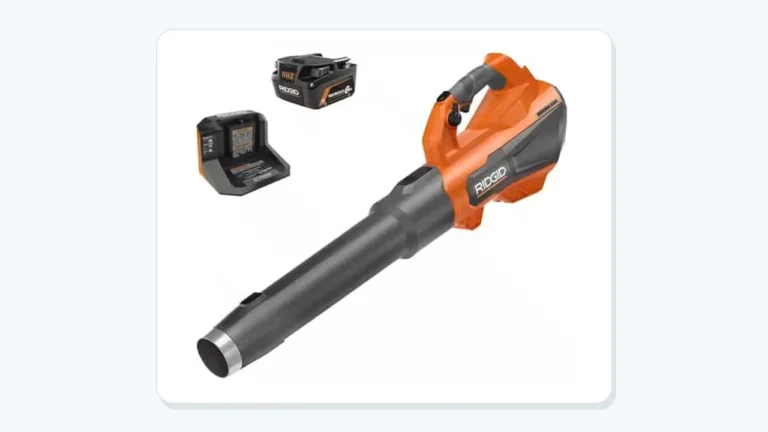
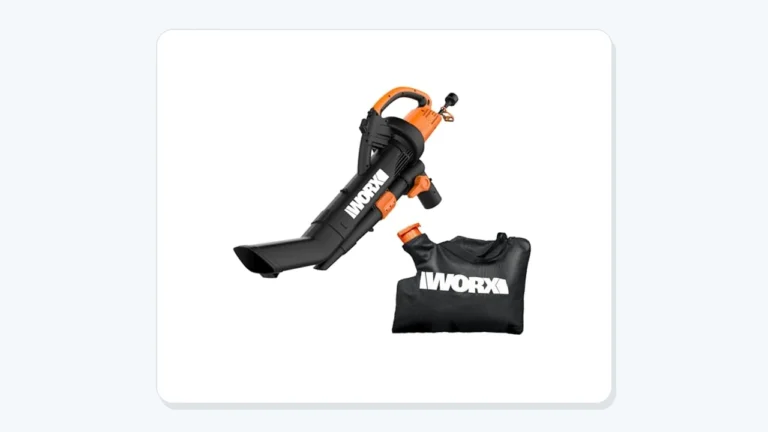
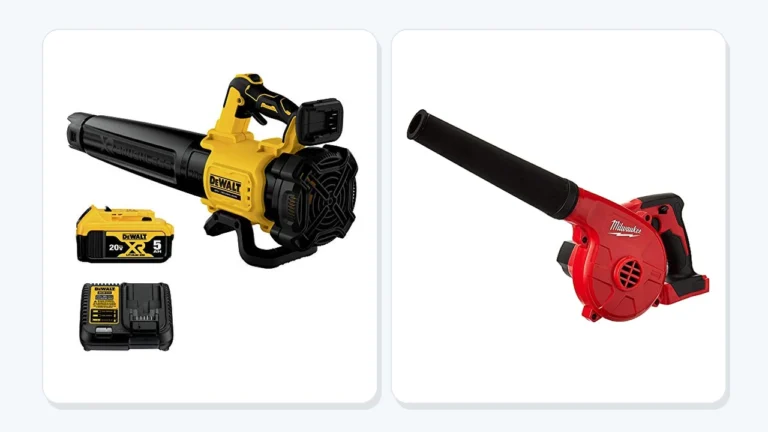
| RYOBI ONE+ 18V 100 MPH 325 CFM Cordless Battery Variable | Husqvarna 150BT Gas Backpack Leaf Blower, 51-cc 2.16-HP 2-Cycle | |
 |
 |
Ryobi Vs Husqvarna Leaf Blower Detailed Comparison
The clearest difference is the kind of work each blower is equipped to handle. RYOBI’s stated 325 CFM and 100 mph make it the more modestly rated option here. Husqvarna lists 765 CFM, 270 mph, and 22 N, along with a 51-cc, 2.16-hp engine. Its published figures are higher in each of those output measures.
CFM describes air volume, while mph describes air speed; neither number alone tells the whole story of how a blower will move a particular pile. Husqvarna also gives a force rating in newtons, which offers another reference point for its clearing output. Treat the figures as useful specifications, not a guarantee that every yard task will take a certain amount of time.
Think about a typical Saturday cleanup. If you’re moving dry leaves off a small patio or clearing clippings from a walkway, you may value cordless convenience more than maximum output. If the job involves a large volume of leaves or heavier, damp debris, Husqvarna’s higher stated airflow and backpack format are more compelling.
The power source changes the ownership routine, too. RYOBI’s battery-powered design means there’s no gas engine to start or fuel to manage, but it does make battery charge and runtime part of your planning. Husqvarna’s 2-cycle engine can work independently of a battery charge, but gas-powered equipment brings fuel preparation, engine starting, and routine upkeep.
There isn’t enough verified information here to make a fair comparison of runtime, weight, sound level, or battery bundle contents. Those details can affect the decision, especially if you have a long cleanup ahead or need to carry the blower for an extended period. Check the exact package and manual before buying, and compare the machine’s fit with your own yard and storage setup.
Key Differences That Matter
1. Rated clearing output
Husqvarna’s stated output is the standout spec difference: 765 CFM and 270 mph, compared with RYOBI’s 325 CFM and 100 mph. That’s a much higher rated airflow volume and speed for the Husqvarna. Its 22 N force rating adds another indication that it’s intended for demanding clearing work.
For you, the useful question is what’s on the ground. A few dry leaves on a deck don’t call for the same output as deep leaf cover, wet material, or debris that needs more force to shift. Husqvarna is the stronger choice on the published numbers, but that advantage may not earn its keep if your tasks are small and occasional.
2. Battery power versus a 2-cycle engine
RYOBI is an 18V cordless battery blower. That means you don’t need to manage gasoline to operate it, though you do need to plan for a charged battery. The product name identifies it as part of the ONE+ line; if you already own compatible equipment, verify that your specific battery fits this blower before counting it as a cost you can avoid.
Husqvarna uses a 51-cc, 2-cycle engine rated at 2.16 hp. A gas engine can be a practical fit when you want to work without depending on a battery’s charge, but it adds fuel and engine-care considerations. Follow the manual’s requirements for fuel, starting, storage, and maintenance rather than guessing at a mix or procedure.
3. Carrying style and ergonomics
Husqvarna is explicitly a backpack blower. Its design includes a padded harness, hip belt, and a load-management system intended to help distribute the carried load. Those features may appeal if you expect longer sessions, though comfort still depends on how the harness fits your body and clothing.
The RYOBI’s product name doesn’t establish its carrying configuration or weight, so it wouldn’t be fair to claim that it’s lighter or easier to carry. If maneuverability and fatigue are key concerns, check the complete product specifications and consider how you’ll hold or wear the blower during your usual cleanup. Don’t choose by engine size alone.
4. Speed control and starting
Both products are described as having variable-speed control, which gives you a way to adjust airflow instead of using full power for every task. That matters around garden beds, gravel, doorways, and other spots where a strong blast can scatter material you meant to leave in place. The Husqvarna also has cruise control, so you can maintain a selected speed without continuously regulating the throttle.
Husqvarna’s air-purge system is designed to clear air from the carburetor and fuel system to support starting. That’s a useful engine feature, not a promise that every start will be effortless. No comparable starting feature is established for the RYOBI here, so judge it by its battery-powered setup rather than assuming details about its controls.
Performance, Features, and Everyday Use
For routine cleanup, ease of getting started can matter as much as peak output. With RYOBI, the preparation question is battery readiness: is the compatible battery charged, and is the available runtime suitable for your cleanup? The exact run time isn’t established by the product specifications here. If you have a large property or expect extended work, confirm the battery capacity and runtime guidance before you count on finishing in one session.
That uncertainty doesn’t cancel the benefit of cordless operation. Not handling fuel or preparing a gas engine can make the RYOBI a more straightforward fit for brief, frequent jobs. It may suit someone who clears a walkway after mowing, tidies a small yard, or wants a battery-powered option for occasional leaf cleanup. Its rated output is lower than the Husqvarna’s, so don’t buy it expecting equivalent clearing force.
The Husqvarna has a different kind of convenience: it’s built around a backpack harness, and its published output figures offer more headroom for heavier cleanup. That can make it a better match for a yard where leaves accumulate in thick layers or where wet debris is a regular headache. The padded harness, hip belt, and load-management system address carrying comfort, but they don’t make fit irrelevant. Adjust the harness correctly and consider whether a backpack blower suits the way you work.
Its variable throttle and cruise control are useful when a task changes pace. You might want a lower setting near loose mulch and a steadier setting across a more open area. The air-purge system is intended to help with starting, but this is still a gas-powered machine: expect to follow engine-care instructions and plan for fuel handling and storage.
Think carefully about how often you’ll use either blower. For a few short sessions each season, a high-output gas model may be more machine than you need. For sustained, demanding yard work, the RYOBI’s battery requirements and lower published ratings may feel limiting. Neither choice is automatically wasteful; the mismatch happens when you pay for capabilities you won’t use or expect a smaller-rated blower to handle a tougher job.
Also consider where you’ll run it. Gas engines produce combustion noise and exhaust, so be mindful of nearby people, local rules, and appropriate hearing protection. A battery-powered blower avoids those engine-related concerns at the point of use, but that alone doesn’t establish its sound level. For either model, use eye and hearing protection and keep loose debris away from people, pets, and delicate plantings.
Pros and Cons
RYOBI ONE+ 18V 100 MPH 325 CFM Cordless Battery Variable
Pros
- ✓Cordless battery power: avoids gasoline handling for ordinary cleanup.
- ✓18V ONE+ identity: may suit buyers with a verified compatible battery.
- ✓Variable speed: lets you adjust airflow for different surfaces.
Cons
- –Lower rated output: less suited to buyers facing heavy, demanding debris.
- –Runtime needs checking: battery capacity and workload affect how long you can work.
- –Bundle details matter: confirm whether the battery and charger you need are included.
Husqvarna 150BT Gas Backpack Leaf Blower, 51-cc 2.16-HP 2-Cycle |
Pros
- ✓Higher stated output: 765 CFM, 270 mph, and 22 N suit tougher clearing needs.
- ✓Backpack harness: includes a padded harness, hip belt, and load management.
- ✓Cruise control: holds a selected speed without constant throttle adjustment.
- ✓Air purge: helps clear air from the fuel system for starting.
Cons
- –Gas-engine upkeep: adds fuel handling and maintenance to ownership.
- –Backpack format: may be more equipment than small, quick cleanups require.
- –Fit is personal: the harness still needs to suit your body and work clothes.
Which One Should You Buy?
Choose the RYOBI if cordless convenience is your priority and your normal jobs are modest. It makes sense for quick cleanups around a home where you’d rather manage a battery than fuel and engine maintenance. If you already have a compatible ONE+ battery, confirm the fit and package contents first; that can affect the value of the purchase. Don’t assume, though, that a familiar battery platform guarantees enough runtime for a large yard.
Who Should Skip This: Skip the RYOBI if your regular job involves large piles, wet leaves, or demanding debris that calls for more clearing output. Its stated 325 CFM and 100 mph are well below the Husqvarna’s published figures, and choosing it for that work could mean a slower or less satisfying cleanup. If the yard is big, check runtime needs as well as airflow.
Choose the Husqvarna 150BT if stronger rated output is your priority and you’re comfortable with a gas-powered backpack blower. Its 51-cc engine, 2.16-hp rating, 765 CFM, 270 mph, and 22 N make it the more capable option on paper for heavier clearing. The padded harness and controls add practical support for longer work, while the air-purge system addresses a common step in starting a gas engine.
Who Should Skip This: Skip the Husqvarna if you only need to clear a small patio now and then, or if you don’t want the fuel and maintenance routine of a 2-cycle engine. Its backpack setup and higher output could be unnecessary for light chores. You’d be paying in ownership effort for capability you may rarely use.
Before deciding, compare the job you actually have with the effort each machine asks of you. The Husqvarna’s stronger output doesn’t make it the best fit for someone who values battery operation above all else. Likewise, choosing a cordless blower for convenience won’t solve a recurring heavy-debris problem if its rated output is too modest for the work.
FAQS About Ryobi Vs Husqvarna Leaf Blower
Which blower has higher rated airflow: the RYOBI or Husqvarna 150BT?
The Husqvarna is rated at 765 CFM, compared with 325 CFM for the RYOBI. That’s a substantial difference in stated airflow volume, though actual results depend on the job and operating conditions.
Is the Husqvarna 150BT more powerful than the RYOBI ONE+ blower?
Its published specifications indicate higher output: 270 mph, 765 CFM, and 22 N, versus the RYOBI’s 100 mph and 325 CFM. The Husqvarna also has a 51-cc, 2.16-hp gas engine.
Should I choose the RYOBI or Husqvarna for wet leaves?
The Husqvarna is the more suitable starting point if wet leaves are a regular challenge because its stated airflow and force are higher. If your cleanup is usually light and dry, the RYOBI’s cordless setup may be a better match.
Is the RYOBI a better choice if I want to avoid gas?
Yes, if avoiding gas is your priority: the RYOBI is battery-powered and cordless. Check battery compatibility, package contents, and runtime needs before buying.
Final Verdict: Which One Wins?
The Husqvarna 150BT wins for demanding cleanup where stronger rated airflow, higher air speed, and a backpack format make sense. Its 765 CFM, 270 mph, and 22 N give it the clear advantage on the published output figures, but you’ll need to be comfortable with gas-engine upkeep.
The RYOBI ONE+ wins for buyers who want battery-powered convenience for routine yard work and don’t need the Husqvarna’s higher output. Match the choice to your typical debris and session length: go Husqvarna for heavier jobs, or RYOBI for cordless simplicity when its rated capacity is enough.

I’m Maya L. Greenwood, a lifelong plant lover who believes anyone can grow something beautiful with the right guidance. After years of testing soil mixes, pruning methods, irrigation tricks, and pest-safe solutions, I started EasyGardenTips.com to turn hard-won lessons into step-by-step advice. From seed starting and container gardens to composting and seasonal checklists, my goal is to make gardening simple, sustainable, and fun.