Dewalt Vs Milwaukee Leaf Blower: Detailed Comparison and Verdict
If you’re weighing the dewalt vs milwaukee leaf blower, the short answer is this: choose the DEWALT if you want published airflow and noise figures plus adjustable speed control; consider the compact Milwaukee if low weight and easy storage are your priorities.
The DEWALT DCBL722P1 is rated for up to 450 CFM and up to 125 mph with its concentrator, and it’s rated at 62 dB(A). The Milwaukee 0884-20 is described as a four-pound, compact cordless blower, but comparable airflow and noise figures aren’t established here.
That means the clearest choice depends on the job. DEWALT gives you more specific performance information for judging leaf-moving potential, while Milwaukee’s stated dimensions and weight make its appeal easier to picture for quick cleanup around a porch, garage, or patio.
Below, I’ll compare airflow, control, size, noise, and everyday usefulness without treating missing figures as proof of a weakness. I’ll also explain what to check before buying, so you don’t spend extra for a capability you won’t use—or choose a compact blower that doesn’t suit your cleanup routine.
| DEWALT 20V MAX* XR Leaf Blower, 125-MPH, 450-CFM (DCBL722P1) | 0884-20 M18 18 Volt Cordless Compact Yard Leaf Blower Sale |
 |
 |
Dewalt Vs Milwaukee Leaf Blower Detailed Comparison
These are both cordless leaf blowers, but the available specifications make them appealing for different reasons. DEWALT gives a clear airflow rating, a concentrator-related air-speed figure, a noise rating, and details about its motor and controls. Milwaukee’s strongest documented advantages are its compact handheld size and stated four-pound weight.
Air volume and air speed describe different parts of a blower’s performance. The DEWALT’s up to 450 CFM figure tells you how much air it can move, while up to 125 mph with the concentrator describes air speed under that configuration. Those figures help frame the tool’s intended capability, but they don’t predict exactly how quickly it will clear every surface or type of debris.
For the Milwaukee, there isn’t a corresponding verified CFM or mph figure to make a direct airflow comparison. That doesn’t prove it moves less air; it means a buyer can’t fairly call one the stronger blower based on a side-by-side number here. If you need to clear broad areas of leaves, check the exact blower’s airflow specifications before deciding.
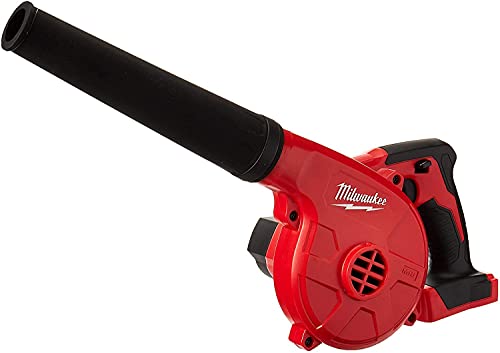
Portability is easier to compare. The Milwaukee is stated to weigh four pounds and measure 14 by 6 by 10 inches, giving you a concrete sense of its compact form. DEWALT is described as lightweight and ergonomic, but a verified weight and set of dimensions aren’t available for a direct size or weight comparison.
Noise is another useful distinction, with an important limit: DEWALT has a rated figure of 62 dB(A), while a comparable Milwaukee figure isn’t established here. That gives DEWALT buyers one concrete number to consider if they’ll be clearing a small yard near neighbors, but it doesn’t establish that DEWALT is quieter than Milwaukee.
In practical terms, picture two jobs. For directing debris off a driveway and adjusting power as the surface changes, DEWALT’s stated airflow and variable trigger give you useful details to weigh. For a brief sweep of grass clippings from a patio, the Milwaukee’s compact dimensions and stated weight may matter more than a published maximum-air-speed number.
Key Differences That Matter
Airflow information and what it can tell you
DEWALT’s airflow figures offer a more specific starting point for judging its leaf-moving capability: up to 450 CFM, and up to 125 mph when using the concentrator. The concentrator matters to the stated air-speed figure, so don’t treat that number as a guarantee that the blower will deliver the same result in every setup or on every kind of debris.
The Milwaukee is described as providing strong airflow for leaves, grass clippings, and other yard debris, but comparable CFM and mph numbers aren’t established here. If your regular cleanup involves piles of leaves or larger paved areas, those numbers are worth checking for the exact blower you’re considering. If the task is mostly scattered clippings or dust around a small hardscape area, compact handling may be a bigger part of your decision.
Size, weight, and arm comfort
Milwaukee’s four-pound stated weight and 14-by-6-by-10-inch dimensions speak directly to buyers who want a small handheld tool that’s easy to store. That size could be convenient if you plan to keep a blower near the garage or bring it out for short jobs around porches, decks, and garden areas. The stated weight alone doesn’t tell you how the tool will feel in your hand, though, and it isn’t a direct comparison with DEWALT’s weight.
DEWALT’s design is described as lightweight and ergonomic, with an emphasis on control and arm movement. That’s useful if you expect to sweep an area in several passes, but there’s no verified weight here to show whether it’s lighter or heavier than Milwaukee. If arm fatigue is your main concern, look for the weight in the configuration you’ll actually use and consider how long each cleanup usually takes.
Power adjustment and motor design
DEWALT has a variable trigger and a speed lock. The trigger lets you adjust output rather than relying only on a fixed pace, and the lock can help maintain a chosen speed without holding the trigger continuously. Those controls can be helpful near flower beds, a garage threshold, or a pile of dry leaves where full force may be unnecessary.
DEWALT also uses a high-efficiency brushless motor and an axial fan design. The stated purpose of the brushless motor is to help extend run time and motor life; the fan design is intended to support air output and run time. These design features don’t establish a specific runtime, so buyers with larger cleanup areas should still check runtime information for the battery and configuration they’ll use.
Milwaukee’s verified details don’t establish whether it has matching speed controls or the same motor design. Don’t assume those features are present or absent. Instead, decide whether adjustable output and a speed lock are important to your routine, then confirm the exact controls before you buy.
Noise and where you’ll use it
DEWALT’s rated 62 dB(A) noise figure is a useful consideration for buyers who care about sound around neighbors or in noise-sensitive areas. It gives you a number to weigh, but sound measurements depend on how and where they’re taken; the figure alone can’t tell you exactly what you’ll hear at your property.
A comparable Milwaukee noise rating isn’t established here, so there’s no sound-based winner. If you often clear a small area early in the day or near other homes, compare the noise information for the exact models you’re considering rather than assuming compact size means quieter operation. If sound is a secondary concern, focus first on the type of debris, area, and handling that matter most in your yard.
Performance, Features, and Everyday Use
For routine cleanup, think about what you’re moving and where it tends to collect. Dry leaves on an open driveway are a different job from grass clippings trapped along a step or debris gathered beside a garden bed. DEWALT’s published airflow figures and adjustable trigger make its potential output easier to assess, while Milwaukee’s compact size may be attractive when the job is small and storage space is limited.
The DEWALT’s variable trigger gives you a way to change the airflow as you work, and its speed lock can maintain a selected setting. That can make controlled sweeping more manageable than using maximum output for every pass. It doesn’t mean the blower will move delicate debris perfectly or that it offers a particular runtime; treat it as a useful control feature, not a promise about results.
Milwaukee is described for quick cleanups around porches, garages, workshops, and garden areas, as well as driveways, sidewalks, patios, and decks. Its compact measurements may also make it easier to put away in a crowded shed or toolbox area. The four-pound figure can help you estimate carrying effort, but confirm whether the quoted weight applies to the complete setup you’ll be holding.
Battery-powered operation gives both tools cordless mobility. You won’t need an extension cord to move around the yard, and neither blower relies on gas for its stated operation. Still, cordless convenience doesn’t answer every setup question: check which battery and charger are included with the exact package, whether you already have a compatible battery, and what runtime is expected for your planned workload.
Runtime is particularly important if you expect to clear a larger yard in one session. The DEWALT’s motor and fan design are described as helping with run time, but no specific runtime figure is established here. Milwaukee’s compact dimensions and weight also don’t tell you how long it operates per charge. Compare runtime using the same kind of battery configuration and work conditions where possible; otherwise, a number from a different setup may mislead you.
For storage, Milwaukee has a clear size advantage in terms of documented dimensions: 14 by 6 by 10 inches. That can matter if a blower needs to fit on a shelf, in a small shed, or near other yard tools. DEWALT is described as lightweight and ergonomic, but its dimensions aren’t established here, so compare actual measurements if storage space is tight.
Maintenance and durability deserve a practical check, too. Milwaukee has a plastic housing described as designed for regular outdoor use; that tells you the housing material, not how it will hold up to every impact, weather condition, or storage habit. DEWALT’s brushless motor is designed to help extend motor life, but no comparative lifespan or repair-cost figure is established. Keep either blower clean and stored appropriately, and check the care guidance for the model you buy.
Neither set of specifications guarantees the right fit for every yard. If you need to move wet, matted leaves, large volumes of debris, or material from a wide area, verify that the blower’s airflow and runtime suit that workload. If your usual task is a quick sweep after mowing, a compact handheld tool may be easier to reach for, but make sure its performance matches the debris you actually deal with.
Pros and Cons
DEWALT 20V MAX* XR Leaf Blower, 125-MPH, 450-CFM (DCBL722P1)
Pros
- ✓Published airflow: Up to 450 CFM and 125 mph with the concentrator give buyers useful performance figures.
- ✓Adjustable control: Variable trigger and speed lock support more deliberate sweeping.
- ✓Noise figure: The 62 dB(A) rating helps sound-conscious buyers assess the tool.
Cons
- –No direct size comparison: A verified weight and dimensions aren’t established here.
- –Runtime still needs checking: No specific operating time is established for a planned cleanup.
0884-20 M18 18 Volt Cordless Compact Yard Leaf Blower Sale
Pros
- ✓Compact dimensions: The stated 14-by-6-by-10-inch size can ease storage in tight spaces.
- ✓Stated four-pound weight: A useful portability detail for buyers concerned about carrying effort.
- ✓Versatile cleanup: Described for patios, sidewalks, porches, garages, and garden areas.
Cons
- –Airflow comparison is unclear: Comparable CFM and mph figures aren’t established here.
- –Noise comparison is unclear: A comparable dB(A) figure isn’t established here.
- –Runtime needs checking: Compact size doesn’t establish operating time per charge.
Which One Should You Buy?
Choose the DEWALT if published airflow details will help you decide whether a blower suits your cleanup. Its up-to-450-CFM rating, up-to-125-mph figure with the concentrator, variable trigger, and speed lock make it the more information-rich choice for buyers who care about output and control. The 62 dB(A) rating is another point to consider if noise is part of your decision.
Who Should Skip This: Skip the DEWALT if your main priorities are a confirmed compact size and a stated low weight, and you don’t need its documented airflow figures or speed controls. Its verified weight and dimensions aren’t established here, so don’t buy it on the assumption that it will be as easy to store or carry as the compact Milwaukee.
Choose the Milwaukee if you want a cordless handheld blower with a stated four-pound weight and compact measurements for short, everyday cleanups. Its documented use cases cover hard surfaces and small areas such as porches, decks, garden spaces, and garages. It may be a practical fit when the tool needs to stay out of the way between jobs.
Who Should Skip This: Skip the Milwaukee if you need a published CFM or mph figure to judge airflow for a demanding job, or if a stated noise rating is a deciding factor. Those details aren’t established here, so choosing it without checking the exact specifications could leave you unsure whether it suits your workload.
Before either purchase, check the package’s battery and charger contents and the runtime for the setup you’ll use. This matters most if you don’t already have a compatible battery or expect to clear a large area. A blower that fits your yard but can’t cover your usual session without a recharge may become an annoying extra step.
Choosing on voltage alone is also a poor shortcut. DEWALT’s 20V MAX* name and Milwaukee’s 18-volt description don’t establish which blower moves more air, runs longer, or suits your yard better. For a fair choice, prioritize the specific airflow, weight, noise, control, and runtime details that match your cleanup.
FAQS About Dewalt Vs Milwaukee Leaf Blower
Which leaf blower has stronger airflow, DEWALT or Milwaukee?
DEWALT has verified figures of up to 450 CFM and up to 125 mph with the concentrator. Comparable CFM and mph figures aren’t established for Milwaukee here, so those details don’t support a direct airflow winner.
Is the Milwaukee leaf blower lighter than the DEWALT?
Milwaukee has a stated weight of four pounds. DEWALT is described as lightweight, but a verified weight for a direct comparison isn’t established here.
Which blower is quieter?
DEWALT has a rated noise figure of 62 dB(A), but a comparable Milwaukee rating isn’t established here. That isn’t enough information to declare which one is quieter.
Which is better for quick patio or garage cleanup?
Milwaukee’s compact size and stated four-pound weight suit buyers who value easy storage and portability for small cleanup jobs. DEWALT may appeal more if adjustable airflow and published performance figures matter more to you.
Final Verdict: Which One Wins?
DEWALT wins for buyers who want clear airflow figures, adjustable speed control, and a stated noise rating. Its specifications give you more concrete information for judging output and tailoring a pass to the surface. Check runtime and package contents before buying, especially if you plan longer cleanup sessions.
Milwaukee wins for buyers who put compact storage and a stated four-pound weight first. It’s a sensible option to consider for short cleanups around a porch, patio, garage, or garden. If airflow strength or noise is central to your choice, confirm the exact specifications rather than assuming.
Neither is a universal winner. Pick the DEWALT when performance details and speed control are your priority; pick the Milwaukee when its documented size and weight fit your everyday routine better.

I’m Maya L. Greenwood, a lifelong plant lover who believes anyone can grow something beautiful with the right guidance. After years of testing soil mixes, pruning methods, irrigation tricks, and pest-safe solutions, I started EasyGardenTips.com to turn hard-won lessons into step-by-step advice. From seed starting and container gardens to composting and seasonal checklists, my goal is to make gardening simple, sustainable, and fun.