Stihl Vs Dewalt Leaf Blower: Detailed Comparison and Verdict
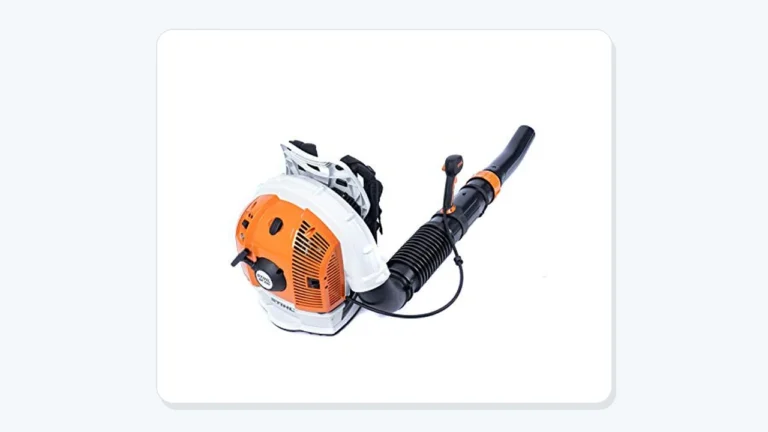
If you’re weighing stihl vs dewalt leaf blower, the short answer is that the STIHL BR 700 is the better fit for large areas and sustained cleanup, while the DEWALT DCBL722P1 makes more sense for lighter, more controlled jobs where low noise matters.
The key difference is how they’re built to work. The STIHL is a professional blower with a 10.8 kg weight, wide shoulder straps, and a 4-MIX motor; the DEWALT is a lightweight 20V MAX* model rated for up to 450 CFM and up to 125 mph with its concentrator.
Those numbers don’t make for a perfect head-to-head power comparison: the STIHL’s verified details don’t give a CFM or mph figure. But they do point to different priorities—high blowing force and carrying comfort for bigger clear-ups versus adjustable control and quieter operation for more noise-sensitive properties.
Below, I’ll compare their power claims, comfort, sound, and day-to-day fit, then give you a practical verdict. The right choice depends less on brand loyalty than on the size of your cleanup and how long you expect to hold the blower.
| with Length-Adjustable Blow Pipe and a Maximum Blowing | DEWALT 20V MAX* XR Leaf Blower, 125-MPH, 450-CFM (DCBL722P1) |
 |
 |
Stihl Vs Dewalt Leaf Blower Detailed Comparison
The STIHL BR 700 and DEWALT DCBL722P1 are aimed at different kinds of cleanup. STIHL describes the BR 700 as a professional blower for large areas, with high blowing force and a 10.8 kg weight. DEWALT’s model is a lightweight 20V MAX* XR blower with an axial fan, a brushless motor, and a variable trigger with speed lock.
That difference matters on a property with a long driveway, broad lawn, or regular hedge trimming. The BR 700’s design points toward moving a substantial amount of material across larger spaces, while its wide shoulder straps are meant to make carrying it more comfortable during longer work. For a smaller yard, the DEWALT’s light, ergonomic design and controllable trigger may be easier to live with.
There is a useful set of numbers for the DEWALT: up to 450 CFM, and up to 125 mph when using the concentrator. CFM describes air volume, while mph describes air speed. Together, those figures help frame its intended use, but they don’t tell you exactly how it will move every type of debris on every surface.
The BR 700’s stated advantage is high blowing force, but there is no matching CFM or mph figure to compare directly here. So don’t treat this as a simple “which number is higher?” contest. If published airflow numbers are your main buying filter, the DEWALT provides clearer figures; if you’re looking at a professional blower for broad-area work, the STIHL’s intended role and carry setup deserve more attention.
Sound is another notable distinction. DEWALT gives an operating noise figure of 62 dB(A) and identifies the blower as suitable for noise-sensitive properties. There isn’t a comparable sound figure for the STIHL in the verified details, so it wouldn’t be fair to call either one quieter based on this comparison. If neighbors, household schedules, or local restrictions affect when you can work, that DEWALT figure is worth weighing.
Quick read: choose the STIHL if your priority is a professional blower for large areas and long cleanup sessions. Choose the DEWALT if a lightweight feel, quiet operation, and adjustable power control are the better match for your yard.
Key Differences That Matter
Airflow claims and cleanup scale
The DEWALT’s up-to-450-CFM rating gives you a stated air-volume figure, and its up-to-125-mph rating applies with the concentrator. That combination offers a more specific reference point for buyers comparing blower specifications. The word “up to” matters, though: those are maximum claims, not a promise that every setting or task will use both figures at once.
For the STIHL BR 700, the confirmed description emphasizes high blowing force and suitability for large areas, lawn and hedge cuttings, leaves, and debris. Without a CFM or mph figure, you can’t make a precise numeric airflow comparison. The sensible takeaway is to match the STIHL to its stated larger-area role, rather than assume a number it doesn’t have here.
Think about what you actually move. Dry leaves spread across an open lawn call for a different approach than damp clippings gathered along a hedge or debris packed into a corner. Neither airflow rating alone guarantees an easy cleanup; the area, debris, and your technique all count.
Carrying comfort and weight
The STIHL weighs 10.8 kg, or about 23.8 pounds. That is a meaningful amount of equipment to carry, especially if your job includes walking from one end of a property to another. Its wide shoulder straps, soft grip, and anti-vibration system are intended to support comfort during use, but they don’t make the weight disappear.
DEWALT describes its blower as lightweight and ergonomic, with a design intended to allow easy control and arm movement. No exact weight is confirmed here, so it’s not possible to give a fair pound-for-pound comparison. Still, the broad distinction is clear: STIHL provides a stated weight and shoulder straps for longer work; DEWALT emphasizes light handling and arm movement.
That can change which model feels practical for your routine. If you’ll be covering a large area, carrying comfort and where the weight rests may matter as much as a quick lift in the garage. If you mostly clear a porch, walk, or small lawn, easy movement and control may matter more than equipment designed for longer sessions.
Noise and neighborhood fit
DEWALT’s 62 dB(A) operating figure is a useful point of comparison for a buyer who needs to keep sound in mind. It’s specifically positioned for noise-sensitive properties, which could make it a more practical candidate for a smaller yard near neighbors. Check any local rules that apply to your property; a stated sound level doesn’t settle every noise question.
No matching sound rating is confirmed for the STIHL BR 700, so don’t assume it meets the same noise profile—or declare it louder—without a comparable measurement. If you can only work early in the morning or close to other homes, ask for a sound comparison under like-for-like conditions before committing to the STIHL.
Power control and motor details
The DEWALT pairs a variable trigger with a speed lock, allowing you to adjust power and hold a chosen setting. That can help when moving from an open patch of lawn to a narrower area where you want more deliberate airflow. Its axial fan design is intended to maximize air output and run time, while its high-efficiency brushless motor is intended to extend run time and motor life.
The STIHL’s verified motor detail is its 4-MIX motor, alongside high blowing force. It also has a soft grip and an anti-vibration system. Those are relevant comfort features for repetitive work, but the details here don’t provide a control scheme that can be directly matched to the DEWALT trigger and speed lock.
In other words, the DEWALT gives you clearly described adjustments at the trigger, while the STIHL’s stated strengths center on its professional role, motor, and comfort features. If fine control is important for your routine, put that feature high on your checklist. If you need to clear bigger areas, weigh the STIHL’s stated use case against its carrying weight.
Performance, Features, and Everyday Use
Start with the job, not the brand. A large lot with long stretches of leaves and regular hedge or lawn cuttings is a stronger match for the BR 700’s stated purpose. Its wide shoulder straps and anti-vibration system address comfort during longer work, while the 10.8 kg weight is something to account for before you choose it.
For a smaller or more mixed-use property, the DEWALT’s lightweight design and variable trigger may be easier to manage. A speed lock can maintain a selected setting, which may be useful when clearing a consistent strip of driveway or lawn. The concentrator is associated with the blower’s up-to-125-mph figure, so keep that in mind when comparing the stated maximum speed with other models.
Neither set of details establishes a guaranteed runtime for your specific cleanup. DEWALT’s brushless motor is designed to help extend run time and motor life, but there is no runtime figure here to use for estimating how many minutes you can work. If you have a large property or a long uninterrupted cleanup, confirm the expected runtime and what’s included with the particular package before buying.
Likewise, the STIHL’s professional designation and high blowing force don’t tell you how long a particular job will take. The area, material, moisture, and how far you need to carry the blower all affect the experience. If you’re choosing for a large property, think about where you’ll work most often and whether the shoulder-strap setup suits that route.
On maintenance, avoid assuming these two models call for the same routine. The verified details identify a 4-MIX motor for the STIHL and a brushless motor for the DEWALT, but don’t provide maintenance schedules or operating requirements. Read the model’s instructions before use and confirm its care needs, especially if you’re buying your first blower with that type of motor.
There’s also a practical limit to comparing their performance on paper. The DEWALT has airflow figures, while the STIHL’s confirmed description gives a qualitative strength claim and a large-area use case. If you need a numeric threshold to justify a purchase, ask for comparable measurements; if the work itself is the main concern, use property size, carrying comfort, and control as your decision points.
Before choosing, picture a typical cleanup from start to finish. Are you walking across a large lawn and shifting piles of leaves, or making short passes around a house, sidewalk, and driveway? Are you working near people who are home, or somewhere sound is less of a concern? Those answers are more useful than trying to turn two different sets of specifications into a single winner.
Pros and Cons
with Length-Adjustable Blow Pipe and a Maximum Blowing
Pros
- ✓Built for large areas: Its stated professional role suits broad cleanup jobs.
- ✓High blowing force: A useful strength for moving leaves, cuttings, and debris.
- ✓Carry-comfort features: Wide shoulder straps and anti-vibration support longer sessions.
Cons
- –10.8 kg weight: A substantial load for buyers who prefer a very light blower.
- –No matching airflow figures: Numeric comparisons with the DEWALT aren’t available here.
- –Large-area focus: Its professional design may be more than a small yard needs.
DEWALT 20V MAX* XR Leaf Blower, 125-MPH, 450-CFM (DCBL722P1)
Pros
- ✓Stated airflow figures: Up to 450 CFM and 125 mph with concentrator clarify its rated output.
- ✓Quiet-operation figure: 62 dB(A) is useful for noise-sensitive properties.
- ✓Adjustable control: Variable trigger and speed lock let you manage airflow.
- ✓Lightweight design: Built for easy control and arm movement.
Cons
- –Maximum figures aren’t task guarantees: Actual usefulness depends on the cleanup and setting.
- –No stated runtime here: Buyers planning long sessions should confirm expected working time.
- –Handheld emphasis: It may be less appealing if you want shoulder straps for extended carrying.
Which One Should You Buy?
Choose the STIHL BR 700 if: you regularly clear a large area and want a professional blower with high blowing force. Its wide shoulder straps, soft grip, and anti-vibration system are relevant if you expect longer sessions. Just be realistic about the 10.8 kg weight; comfort features help with carrying, but this isn’t the lightest-feeling choice by description.
Choose the DEWALT DCBL722P1 if: your yard is smaller or you want a lighter, more controllable blower with a stated noise figure. The variable trigger and speed lock give you a way to adjust and hold power, while the up-to-450-CFM and up-to-125-mph figures provide concrete reference points. It’s the more straightforward fit when quiet operation and easy arm movement are near the top of your list.
Who Should Skip This — STIHL BR 700: Skip it if you only have a small patio or short walkway to clear and don’t need a professional blower for large areas. Its 10.8 kg weight could become a needless burden for brief, light jobs.
Who Should Skip This — DEWALT DCBL722P1: Skip it if you need verified runtime details before committing to long, continuous sessions, or if your main requirement is a blower specified for large-area professional cleanup. Confirm runtime and suitability for your workload rather than relying on maximum airflow figures alone.
Choosing the wrong fit has a practical cost even before you consider the purchase price. A large-area blower can feel like too much equipment for a quick tidy-up, while a lighter blower may not be the match you want for regular, extensive property work. Start with the cleanup you actually do most often, then decide how much carrying weight, noise information, and trigger control matter.
FAQS About Stihl Vs Dewalt Leaf Blower
Which is better for a large property, STIHL BR 700 or DEWALT DCBL722P1?
The STIHL BR 700 is described as a professional blower suited to large areas and has high blowing force. The DEWALT has stated airflow figures, but its confirmed details don’t establish that it is the better choice for large-area professional work.
Is the DEWALT DCBL722P1 quieter than the STIHL BR 700?
The DEWALT has a stated operating noise level of 62 dB(A). There is no comparable sound figure confirmed for the STIHL here, so you can’t make a fair direct noise ranking from these details alone.
How much does the STIHL BR 700 weigh?
The STIHL BR 700 weighs 10.8 kg, about 23.8 pounds. Its wide shoulder straps are intended to add comfort during longer work, but buyers should still consider that weight before choosing it.
Does the DEWALT leaf blower have enough power for leaves and cuttings?
It is rated for up to 450 CFM and up to 125 mph with the concentrator. Those figures give you a useful reference, but the right fit depends on the size of the job and the material you’re clearing.
Final Verdict: Which One Wins?
The STIHL BR 700 wins for large-area cleanup if you want a professional blower with high blowing force and comfort features aimed at longer sessions. Its 10.8 kg weight is the trade-off to take seriously, and its airflow can’t be compared numerically with the DEWALT using the confirmed details here.
The DEWALT DCBL722P1 wins for lighter handling and noise-sensitive properties. It offers stated airflow figures, a 62 dB(A) operating noise level, and a variable trigger with speed lock. If those priorities match your typical yard work, it’s the more practical choice; if you routinely clear broad areas, the STIHL is the better fit.
There isn’t one universal winner. Buy the STIHL for the work scale and carrying setup it’s designed around; buy the DEWALT for lightweight control and its clearly stated noise and airflow figures. If either model’s runtime or sound profile is a deciding factor, confirm the details for your intended use before choosing.

I’m Maya L. Greenwood, a lifelong plant lover who believes anyone can grow something beautiful with the right guidance. After years of testing soil mixes, pruning methods, irrigation tricks, and pest-safe solutions, I started EasyGardenTips.com to turn hard-won lessons into step-by-step advice. From seed starting and container gardens to composting and seasonal checklists, my goal is to make gardening simple, sustainable, and fun.