How Much Horsepower Does a Lawn Mower Have? Facts Inside
A small backyard hums with the steady rhythm of a lawn mower, its engine slicing through thick summer grass. Yet few homeowners stop to wonder how much horsepower drives that rhythmic sound—or how it affects the mower’s ability to perform efficiently.
The term horsepower often sparks curiosity. It represents strength, speed, and reliability, but in the world of lawn mowers, it defines far more than raw engine muscle.
It determines how smoothly blades spin, how well a mower handles dense grass, and how quickly a lawn can be finished.
According to LawnStarter, most riding mowers range between 10 and 40 horsepower, while walk-behind mowers usually deliver 2 to 7 horsepower.
Commercial zero-turn models can even exceed 25 horsepower, offering the kind of power professionals rely on for acres of continuous cutting.
These differences explain why some mowers glide effortlessly through heavy turf while others stall under pressure.
Choosing the right horsepower isn’t about bragging rights—it’s about efficiency and longevity. Too little power strains the engine and blades, while too much wastes fuel and increases cost. The right balance ensures consistent blade speed, clean cuts, and reduced maintenance over time.
Technological advancements have further expanded performance options. Modern electric and hybrid models now compete with gas engines, offering instant torque and optimized blade-tip speeds while remaining quiet and environmentally friendly.
Horsepower Basics for Lawn Mowers

Understanding horsepower begins with knowing what it truly represents. Horsepower is the measure of an engine’s ability to perform work over time—specifically, how efficiently it can cut through dense grass while maintaining steady blade speed. It is the invisible force behind every clean, even cut a mower delivers.
In technical terms, horsepower is calculated by multiplying torque (the twisting force of the engine) by RPM (rotations per minute) and dividing the result by 5252.
This simple formula—HP = (Torque × RPM) ÷ 5252—translates mechanical energy into usable cutting power that drives the blades and wheels of a lawn mower.
Most mower engines are rated using standards set by the Society of Automotive Engineers (SAE J1940 and J1995). These benchmarks ensure that horsepower values are measured consistently across brands, allowing consumers to compare models accurately.
Without these standards, two mowers labeled with the same horsepower might deliver very different real-world performance.
Horsepower also determines how well a mower maintains its speed under load. As the blades encounter thick or wet grass, resistance increases, and lower-powered engines may slow down or stall.
Mowers with sufficient horsepower sustain blade-tip velocity, preserving cut quality and preventing the engine from straining.
It’s equally important to distinguish gross horsepower from net horsepower. Gross horsepower represents an engine’s output without any accessories attached, while net horsepower reflects real-world performance once the air filter, muffler, and other components are in place.
Manufacturers typically advertise gross horsepower because it yields a higher number, but buyers should consider net horsepower for realistic expectations.
Engine displacement, often measured in cubic centimeters (cc), also correlates with horsepower. A larger displacement typically indicates more power, as bigger cylinders can burn more fuel and generate greater torque.
However, displacement alone doesn’t guarantee superior performance—engine design, compression ratio, and blade efficiency all play roles in how effectively that power translates into cutting capability.
For instance, two 190cc engines may produce different horsepower depending on tuning and torque characteristics. This is why torque values, expressed in foot-pounds, are just as important as raw horsepower ratings.
Torque determines how strongly a mower can maintain cutting force through thick or damp grass, while horsepower defines the overall potential to sustain motion and speed.
In practical lawn care, these numbers combine to form a balance between power, precision, and endurance. Understanding how horsepower, torque, and RPM interact allows homeowners to select a mower that performs consistently without wasting energy or fuel.
It turns a technical specification into a practical advantage—ensuring smoother operation, longer engine life, and cleaner, more efficient mowing sessions.
Typical Horsepower by Mower Type
Not all lawn mowers are built for the same purpose, and their horsepower ratings reflect that. From compact push mowers designed for small suburban yards to powerful commercial zero-turn machines cutting acres of turf, each type of mower requires a different balance of speed, torque, and endurance. Understanding these ranges helps match performance to property size and grass conditions.
Push mowers are the simplest in design and the lowest in power output. Their engines typically range between 2 and 7 horsepower, producing enough force to spin a single blade efficiently while being lightweight and easy to maneuver.
For most residential lawns under a quarter acre, this range provides a perfect balance between efficiency and control. Beyond that, low horsepower can struggle to maintain blade speed through dense or tall grass.
Self-propelled walk-behind mowers slightly increase that power range. Their engines usually produce 3 to 6 horsepower, allowing them to move forward automatically without constant pushing.
This design improves speed and comfort on medium lawns and gentle slopes. In these models, consistent torque matters as much as total horsepower, ensuring steady motion even when grass resistance increases.
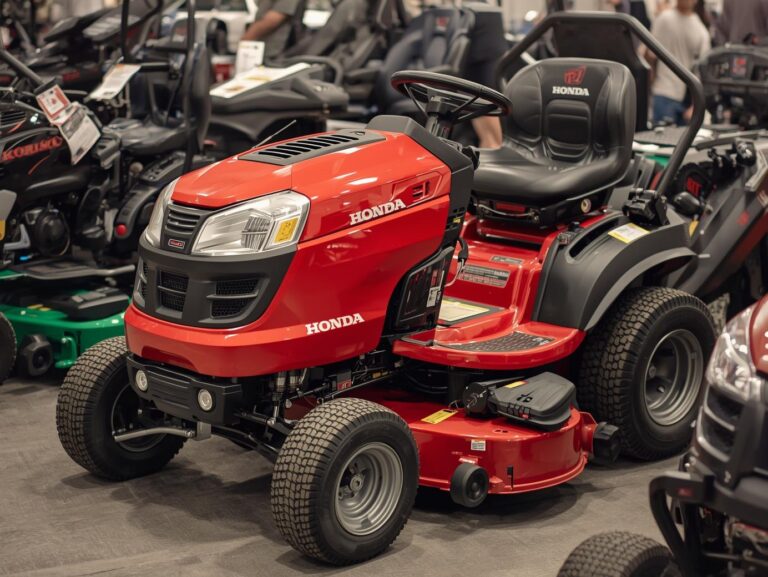
Riding lawn mowers introduce a significant leap in capability. Most consumer-grade riding mowers operate between 10 and 25 horsepower, while premium or commercial-grade versions reach up to 40 horsepower.
These machines are ideal for properties larger than half an acre. They can handle wider decks, pull attachments, and maintain consistent blade rotation at higher mowing speeds.
The added horsepower also supports additional accessories such as baggers and aerators without sacrificing performance.
Lawn tractors fall into a similar category but prioritize torque and towing power over top speed. They usually start around 15 horsepower and climb to 30 horsepower, depending on the intended workload.
Their engines are typically V-twin designs, providing smoother operation, better balance, and longer engine life than single-cylinder models.
The most powerful consumer options are zero-turn mowers, known for agility and professional-grade performance.
Residential zero-turns typically range from 16 to 25 horsepower, while commercial versions can exceed 30 horsepower, with heavy-duty diesel models pushing past 40 horsepower.
This extra power enables faster blade-tip speeds, cleaner cuts at higher travel rates, and the ability to tackle thick, wet, or uneven grass without losing momentum.
At the other end of the spectrum, robotic mowers operate on entirely different principles. Their electric motors produce the equivalent of 0.5 to 1.5 horsepower, focusing on precision rather than power. They move slowly but continuously, trimming grass regularly to maintain an even, manicured finish with minimal human input.
Each mower type serves a distinct niche. Push and self-propelled models thrive in small urban lawns, where maneuverability and efficiency matter most.
Riding and zero-turn mowers dominate large properties where speed and endurance determine productivity. Meanwhile, robotic mowers represent the modern shift toward automation and eco-friendly performance.
Choosing the right horsepower depends on more than just property size—it involves understanding terrain, grass species, and cutting habits.
A small, flat lawn may not need more than 5 horsepower, while a sprawling, uneven yard filled with thick Bermuda grass may demand over 20 horsepower for consistent results. The right match ensures efficiency, durability, and a smooth mowing experience every time.
Factors That Change How Much Horsepower You Need
Horsepower requirements depend heavily on how, where, and what you mow. Every lawn, terrain type, and grass variety introduces a new variable that directly affects engine load. Understanding these influences helps ensure your mower performs efficiently without strain or wasted energy.
Deck width is one of the biggest contributors to power demand. A wider deck houses longer blades, which cover more surface area per rotation. The larger the deck, the greater the resistance the engine must overcome to maintain blade speed.
For instance, a 60-inch deck can require nearly double the horsepower of a compact 30-inch deck because it’s cutting twice as much grass in the same amount of time.
Blade design and tip speed also matter. Higher tip speeds produce cleaner, finer cuts but demand additional horsepower to maintain consistent RPM.
This balance between sharpness, air flow, and cutting velocity determines how efficiently grass is sliced rather than torn. Precision-engineered blades paired with the right horsepower improve cut quality and reduce strain on the motor.
Grass type and condition further influence horsepower needs. Thick or fibrous grasses like Bermuda or St. Augustine create more resistance than lighter varieties such as ryegrass. Wet or overgrown grass adds even more drag, forcing lower-powered engines to slow or stall.
In these conditions, mowers with higher torque and horsepower maintain RPM stability and prevent uneven cutting.
Terrain plays a major role in performance. Flat lawns allow efficient, consistent operation, while slopes and rough ground require extra horsepower to maintain traction and momentum. On inclines, torque becomes just as important as raw horsepower to keep the blades moving under load.
Accessories and attachments—such as baggers, aerators, or snow implements—also draw additional power. A mower that runs perfectly at 15 horsepower may feel underpowered once it’s towing extra weight or collecting heavy, wet clippings.
Choosing a mower with a horsepower buffer ensures it can handle both mowing and multitasking without strain.
Even maintenance and operating habits affect how much horsepower a mower truly delivers. Dirty air filters, dull blades, or clogged decks can rob an engine of efficiency, effectively lowering its usable power.
Regular servicing keeps the machine performing close to its rated horsepower and prevents fuel waste.
Ultimately, horsepower is not a one-size-fits-all specification. It’s a relationship between mower design, environment, and usage.
Selecting the right horsepower means balancing these variables—matching the engine’s output to the job’s real demands. This harmony between power and precision leads to smoother operation, longer engine life, and consistently clean results.
Horsepower vs Torque, CC, and Ratings — Cutting Through Confusion
The lawn mower market is filled with numbers—horsepower, torque, cubic centimeters, and sometimes confusing performance labels.
To choose the right machine, it’s essential to understand what these terms truly mean and how they interact to determine real-world cutting power.
Horsepower measures how much work an engine can perform over time. It reflects speed and endurance, describing how efficiently an engine can spin blades or propel wheels under load.
Higher horsepower allows faster blade-tip speeds and stronger performance on dense grass. Yet, horsepower alone doesn’t define a mower’s cutting strength.
Torque measures twisting force. It determines how well the mower sustains blade movement through resistance, such as thick or wet grass.
A mower with moderate horsepower but high torque can outperform a higher-horsepower model when the terrain or grass density increases. In simple terms, torque gets the job done while horsepower dictates how quickly it happens.
Engine displacement, expressed in cubic centimeters (cc), represents the total volume of all the cylinders in the engine.
A larger displacement generally means the engine can burn more fuel-air mixture per cycle, generating greater torque and horsepower. For example, a 190cc mower engine usually produces around 5 to 6 horsepower, depending on design and tuning.
However, not all horsepower ratings are equal. Manufacturers follow standardized testing guidelines such as SAE J1940 or SAE J1995, which define how horsepower is measured under controlled conditions.
Some list gross horsepower, measured without accessories like air filters or mufflers, giving a slightly higher number. Others use net horsepower, which accounts for real-world operating conditions.
This difference often explains why two mowers with the same displacement can deliver different results. One might prioritize torque for tough terrain, while another maximizes blade speed for finer cuts.
Marketing terms can blur these distinctions, making it critical for buyers to read engine specification sheets rather than relying solely on horsepower figures.
Modern electric mowers add another layer of complexity. They rarely list horsepower; instead, manufacturers specify wattage or voltage.
To compare fairly, 1 horsepower equals roughly 746 watts. However, electric motors often deliver instant torque, giving them a practical advantage in responsiveness even with lower listed power outputs.
Understanding these relationships—horsepower for speed, torque for muscle, and displacement for capacity—empowers buyers to look beyond marketing numbers. The right mower balances all three, producing steady torque at the RPMs where grass cutting happens.
Recognizing this balance ensures efficient energy use, smoother performance, and fewer surprises once the blades hit the grass.
Safety and Durability Considerations at Higher Horsepower

As horsepower increases, so does responsibility. More powerful engines can deliver faster blade speeds and stronger cutting performance, but they also introduce greater risks if not handled properly.
Understanding the connection between horsepower, safety, and durability ensures that the benefits of a stronger mower are never overshadowed by potential hazards.
Safety begins with control. High-horsepower mowers accelerate faster and maintain higher rotational energy at the blades. This added power can make sudden stops, turns, or uneven ground more dangerous if the operator isn’t prepared.
On steep slopes, a mower with excessive horsepower can lose traction or stability, especially if the machine’s weight and center of gravity are not properly balanced.
Blade velocity increases proportionally with horsepower. Faster blade-tip speeds deliver cleaner cuts but also elevate the risk of debris projection.
Rocks, small branches, and other hidden obstacles can turn into dangerous projectiles when struck by high-speed blades. Operators should always inspect the area before mowing and wear protective equipment such as eye shields, gloves, and heavy footwear.
Durability is another consideration. Engines with higher horsepower generate more heat and vibration, which can wear out bearings, belts, and spindles faster if maintenance is neglected.
Manufacturers compensate by reinforcing internal components, using tougher metals, and improving cooling systems.
However, even the most durable designs rely on consistent upkeep—regular oil changes, belt inspections, and blade balancing keep powerful engines running efficiently.
Safety systems have evolved alongside rising horsepower. Modern mowers now include blade brakes, operator presence controls, and speed governors that automatically regulate output to prevent engine strain or overspeeding. These innovations make high-horsepower machines safer without compromising performance.
In addition, higher power levels often mean heavier builds, which improve traction but require stronger frames and decks.
Commercial-grade mowers use welded steel chassis and reinforced spindles to handle the stress that comes with constant, high-speed operation.
This durability ensures long-term reliability but also demands careful handling during turns or when transporting the mower.
When managed responsibly, horsepower becomes an ally rather than a hazard. The key lies in understanding the limits of both the machine and the environment.
Proper training, safety gear, and maintenance transform high performance into controlled efficiency. Power is only as effective as the precision behind it—and the safest operators are those who respect it.
Conclusion
Horsepower defines more than just strength—it determines how efficiently and reliably a lawn mower performs. From compact push mowers to commercial zero-turn machines, each design uses horsepower differently to balance cutting speed, torque, and control.
Choosing the right level of power ensures clean cuts, longer engine life, and greater fuel or battery efficiency.
Selecting a mower isn’t about chasing the highest horsepower rating; it’s about matching output to purpose. A 5-horsepower engine might be ideal for a small backyard, while larger or thicker lawns benefit from 20 horsepower or more.
Understanding related factors such as torque, engine displacement, and deck width allows homeowners and professionals to make smart, cost-effective decisions.
As technology evolves, electric and hybrid engines continue to redefine what horsepower means in the modern landscape. These advancements bring quieter operation, instant torque, and improved energy efficiency without sacrificing performance.
Ultimately, the real value of horsepower lies in precision, not power alone. A well-balanced mower, maintained properly and matched to the task, transforms mowing from a routine chore into an effortless, efficient process.
Whether it’s 5 horsepower or 35, the right choice ensures every pass across the grass delivers both power and perfection.

I’m Maya L. Greenwood, a lifelong plant lover who believes anyone can grow something beautiful with the right guidance. After years of testing soil mixes, pruning methods, irrigation tricks, and pest-safe solutions, I started EasyGardenTips.com to turn hard-won lessons into step-by-step advice. From seed starting and container gardens to composting and seasonal checklists, my goal is to make gardening simple, sustainable, and fun.