How Close Can a Flame Weeder Be to a Plant for Best Results
Picture the scene: you’re moving carefully along a row of tender seedlings, torch in hand, when the sudden hiss of flame brushes too close, leaving leaves curled and scorched. The promise of clean weed control has turned into the worry of plant damage.
This is the dilemma many gardeners and small-scale farmers face when learning how to use flame weeders effectively. The tool is powerful, but the question always lingers — how close can a flame weeder be to a plant without harming it?
Flame weeding works by delivering a brief burst of intense heat that ruptures plant cells. Weeds wilt and die without the need for chemicals, making this an attractive option for organic growers. But that same heat, when misapplied, can harm the very crops it is meant to protect.
The challenge lies in finding the right balance. Too close, and flames scorch foliage or even ignite dry matter. Too far, and weeds escape unscathed. Timing, distance, speed, and flame angle all matter. Learning how to manage these variables is what separates safe, efficient flame weeding from a risky experiment.
According to research from the University of California Cooperative Extension, most broadleaf weeds at the seedling stage can be controlled with a 0.1-second burst of flame exposure — actual combustion isn’t necessary (UCANR).
Studies also suggest that a walking speed of 1–2 miles per hour with a flame held at an angle of 22°–45° is most effective for minimizing crop injury while maximizing weed kill (UMN Extension).
Basics — What Flame Weeding Actually Does

Flame weeding is not about burning weeds to ash. The real purpose is to apply just enough heat to cause cell walls in the weed’s leaves to rupture. This thermal shock leaves the leaf surface dull or glassy, signaling that the plant’s internal structure has been damaged. The weed will wilt and die over the next few days.
This distinction matters. A roaring flame that lingers until weeds ignite wastes fuel and increases the risk of collateral damage.
What you want instead is a precise, controlled pass. Research consistently shows that seedlings are most vulnerable. Weeds taller than two or three inches often require multiple treatments, while grasses and perennials are more resistant.
By understanding the science behind the tool, it becomes clear why distance is so critical. The flame must be close enough to deliver lethal heat in a fraction of a second, but not so close that desirable crops are injured.
The Core Question — How Close Can a Flame Weeder Be to a Plant?
There is no single universal measurement, because conditions vary by crop type, equipment, and environment. Still, practical guidance from growers and researchers suggests a safe working range.
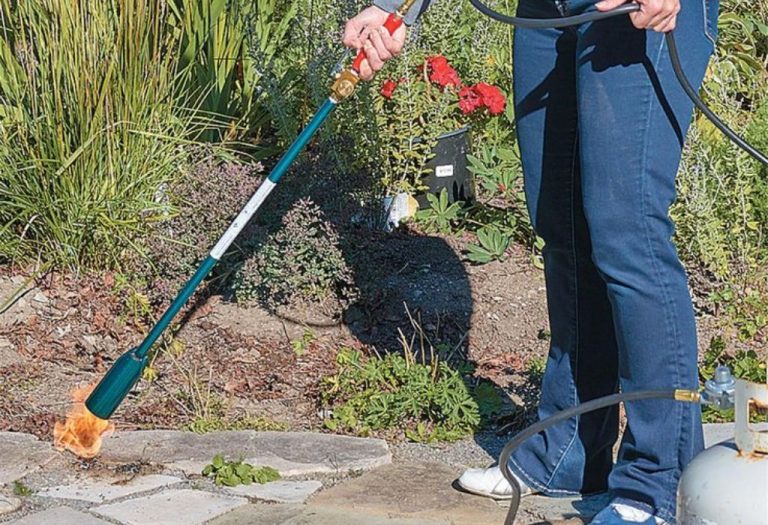
Most operators hold the flame 3–6 inches above or in front of the target weeds during a pass. This range allows heat to envelope the weeds without placing the flame directly onto crop foliage. The burner is often angled at 22°–45°, sweeping heat past weeds while deflecting energy away from the main crop canopy.
Manufacturers typically recommend maintaining a “safe distance” from desirable plants. The exact number of inches is rarely specified because different crops tolerate different amounts of heat.
For tender leafy greens, even indirect heat can cause wilting, while tougher crops like corn or onions can withstand closer passes at certain stages.
The takeaway is that growers should begin with a conservative distance, test the effect on a sacrificial leaf at the edge of the row, and adjust as needed.
A simple rule is this: if the crop leaf turns dull and leaves a fingerprint impression when pressed after cooling, the heat exposure was on the threshold of being too much.
Variables That Change the Safe Distance
Not every flame is equal, and that’s why the distance question cannot be answered in isolation. Several factors influence how near or far you can safely work:
- Flame length and pressure: Higher propane pressure produces longer, hotter flames. With a more intense flame, the weeder must be held farther from plants to avoid injury.
- Weed species and size: Small broadleaf seedlings are controlled easily with quick passes. Grasses and perennials resist heat, sometimes requiring repeated treatments. That means the flame may need to stay closer for longer, increasing crop risk.
- Wind and moisture: Wind can redirect heat into unintended areas. Moisture on soil or leaves can buffer heat but may require slightly closer passes for effectiveness.
In practice, this means the operator must constantly read conditions and adjust. The art of flame weeding is not rigidly about distance; it is about responding to the environment while keeping plants safe.
Technique — Angle, Speed, Exposure Time
How the flame is applied is as important as how close it is held. Three aspects — angle, speed, and exposure — govern results.
Angle: Holding the burner at 22°–45° allows the flame to sweep across weeds while deflecting energy away from crop foliage. This diagonal pass is safer than a vertical blast aimed straight down.
Speed: A walking speed of 1–2 miles per hour is recommended by several extension services. Moving slower increases weed kill but risks crop injury. Faster passes may spare crops but reduce weed control.
Exposure time: Most seedlings require only about one-tenth of a second of heat. Standing still or hovering over a patch can quickly kill weeds but also damage crops. It’s better to make two quick passes than one slow scorch.
When these techniques are combined with the correct distance, weed control becomes both efficient and safe.
Shielding and Directed Flaming Near Crops

One of the most effective strategies for working close to plants is using shields or hoods. These attachments confine the flame to a narrow band, preventing heat from spilling onto crop leaves.
Directed or banded flaming is commonly used in row crops such as corn, onions, or carrots. Shields allow operators to flame directly over or between rows with precision. The crop remains untouched while weeds are hit with targeted heat.
This approach is especially valuable in tight plantings or windy conditions. It expands the margin of safety, allowing the flame to operate closer to weeds without risking plant injury.
Recommended Operating Distances and Benchmarks
Though variations exist, some practical benchmarks can guide beginners. When sweeping across seedling weeds, keeping the flame tip around 3–6 inches above the soil surface is a common starting point. This ensures enough heat reaches the weeds without touching crops.
When desirable foliage is nearby, increase the gap or angle the flame outward. With shields in place, closer passes become possible. Without shields, err on the side of caution.
The ground-to-flame distance is often about 4 inches when sweeping over bare soil. Adjustments are always necessary, but these numbers provide a framework for safe operation.
Fuel Use, Efficiency, and Throughput
Effective flame weeding balances weed control with fuel efficiency. On average, propane use ranges around 10 gallons per acre depending on speed, weed size, and equipment settings (SARE).
Higher propane pressures do not always improve results. They may require more distance from crops to avoid injury, offsetting the supposed benefit. Walking at a steady speed, targeting young weeds, and using shields are better ways to conserve fuel while protecting crops.
Safety Protocols Around Desirable Plants and Structures
Safety goes beyond plant injury. Flame weeders produce intense heat and open flames. Always keep water or an extinguisher nearby. Avoid using the tool on dry, windy days or near flammable mulch.
Protect irrigation lines, plastic mulch, and nearby structures. Radiant heat can melt plastic or scorch wood even without direct contact. Operators should also wear protective clothing, gloves, and eyewear.
The safest practice is preparation: clear the area of debris, identify hazards, and plan your passes before lighting the torch.
Troubleshooting Borderline Situations
Not every field or garden offers perfect spacing. When crops are tightly planted, flame weeding requires even more care. Shields and micro-torches designed for precision can help. Alternatively, mechanical cultivation or hand removal may be safer in extremely tight areas.
For tougher weeds like grasses and perennials, multiple passes are often necessary. Instead of holding the flame closer to crops, it is safer to stage repeated treatments as weeds regrow. Adjust technique, not proximity, when crops could be harmed.
Step-by-Step Field Routine

A practical routine ties all these principles together:
- Inspect conditions — check wind, moisture, and crop stage.
- Set propane pressure according to manufacturer guidelines.
- Test flame pattern at the edge of the field or garden.
- Begin passes at about 3–6 inches above weeds, angled 22°–45°.
- Walk steadily at 1–2 mph, watching leaves for the dull/glassy look.
- Repeat light passes as needed instead of hovering too close.
- Monitor crops closely and adjust spacing if any damage appears.
This routine, repeated consistently, provides safe and predictable results.
Conclusion
The central question of how close can a flame weeder be to a plant does not have a single number as the answer. The safe distance depends on flame intensity, crop type, shielding, and environmental conditions.
Still, a range of 3–6 inches above or ahead of weeds, combined with angled passes and steady walking speed, provides a reliable guideline.
By focusing on technique — not just proximity — growers can harness the power of flame weeding without harming their crops. Shields, regular maintenance, and cautious testing all add layers of protection.
Flame weeding remains one of the most efficient and chemical-free ways to manage weeds. With the right approach, you can keep beds clean, crops safe, and fuel consumption under control. The key is precision, patience, and a respect for the fine line between control and damage.

I’m Maya L. Greenwood, a lifelong plant lover who believes anyone can grow something beautiful with the right guidance. After years of testing soil mixes, pruning methods, irrigation tricks, and pest-safe solutions, I started EasyGardenTips.com to turn hard-won lessons into step-by-step advice. From seed starting and container gardens to composting and seasonal checklists, my goal is to make gardening simple, sustainable, and fun.