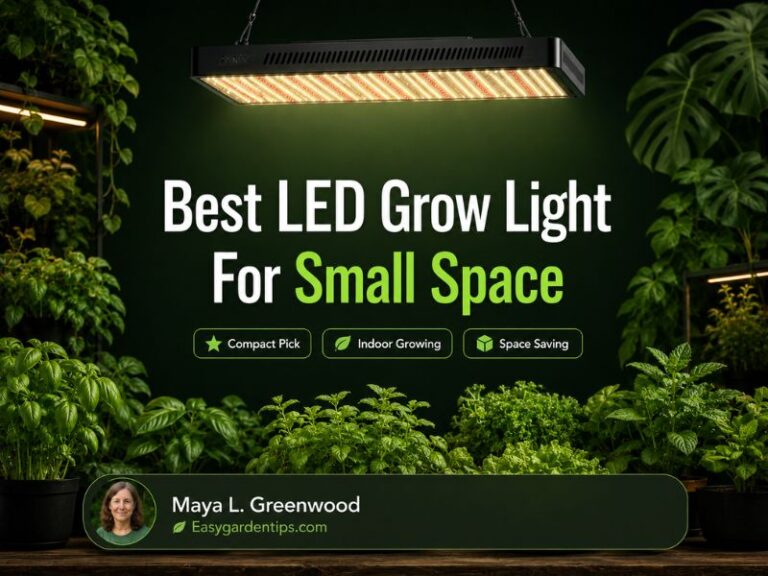
5 Best Grow Light for Fruit Trees: Compared With Buying Guide
Finding the best grow light for fruit trees is more complicated than choosing the brightest bulb. Indoor citrus, dwarf figs, and other container trees need enough usable light, suitable coverage, dependable timing, and a setup that will not overwhelm a living space.
My first choice is VIVOSUN Lumalight 200W LED Grow Light. Its white, blue, red, and far-red LEDs support growth from seedlings through fruiting, while the four-level dimmer makes it easier to adapt the light as a tree matures.
My second choice is SANSI Grow Lights. Its 4000K daylight spectrum, ceramic heat management, ETL listing, and five-year protection plan make it especially appealing for a single small tree or supplemental lighting.
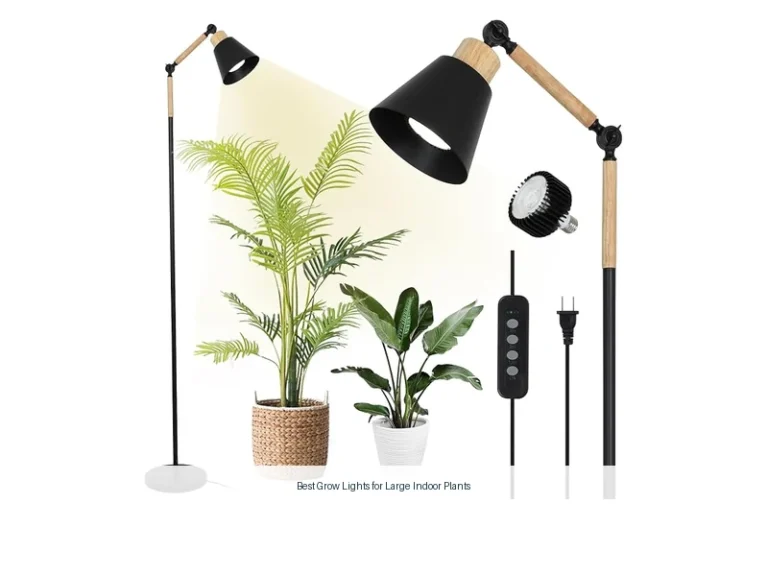
My third choice is Aumtrly Floor Grow Light Full Spectrum. Aumtrly Floor Grow Light Full Spectrum earns my third position because its tall adjustable stand and flexible gooseneck are convenient for larger indoor plants. The three lighting modes, five brightness levels, and 16-hour timing option provide useful control, although its floor-standing format is less suitable for a dedicated high-output growing area.
This guide compares all five options by light control, coverage, adjustability, heat management, and day-to-day ownership. You will also learn how to position a fixture, choose a schedule, avoid common mistakes, and match a grow light to the size and growth stage of your fruit tree.
Best Grow Light for Fruit Trees
I selected these products for their relevance to indoor fruit-tree growing, the usefulness of their published light and control details, customer-feedback evidence where available, and practical variety across panel, bulb, floor-stand, tripod, and multi-head designs. The ranking favors products that give a buyer meaningful control over intensity and coverage rather than simply promising a bright appearance.
| # | Image | Product | Price on Amazon |
|---|---|---|---|
| 1 |  |
VIVOSUN Lumalight 200W LED Grow Light | Check Price |
| 2 |  |
SANSI Grow Lights | Check Price |
| 3 |  |
Aumtrly Floor Grow Light Full Spectrum | Check Price |
| 4 |  |
LBW Grow Lights | Check Price |
| 5 |  |
Abriselux 40-Watt 900-LED Full-Spectrum Six-Head Grow Light | Check Price |
VIVOSUN Lumalight 200W LED Grow Light
The VIVOSUN LumaLight is the strongest all-around option in this group for a tree that needs substantial supplemental illumination. Its 200-watt LED system combines white, blue, red, and far-red diodes, including 3000K, 5000K, 660nm, and 730nm wavelengths. That broad mix is useful when one fixture must support leafy growth, flowering, and fruit development rather than just keep a decorative plant alive.
Light distribution is another important advantage. The diode layout is intended to provide more even PPFD across the coverage area, so the center of a canopy is less likely to receive all the useful intensity while outer leaves languish. The four-level dimming knob, ranging from 25% to 100%, lets a beginner start gently and increase output as the tree grows.
For a more advanced setup, the fixture works with the Vivosun GrowHub and mobile app, sold separately. That adds remote scheduling and monitoring, but it also means the most sophisticated controls require another purchase. Its thermal management, IP65 water- and dust-resistant construction, and stated Q90 flux maintenance of up to 36,000 hours support long-term ownership, though a powerful fixture still needs sensible distance from leaves.
Pros
- Broad full-spectrum output for growth through fruiting
- Four-level dimming from 25% to 100%
- Even diode layout and strong 200-watt output
- Optional app and GrowHub compatibility
- IP65 water- and dust-resistant construction
Cons
- Smart controls require the separately sold GrowHub
- High output may be excessive for a very small tree
- Requires thoughtful hanging and distance adjustment
My Opinion
This is my top pick for a serious indoor fruit-tree setup or a larger canopy. It offers the most useful combination of intensity, spectrum flexibility, dimming, and durability, provided the buyer is comfortable mounting a more powerful fixture.
SANSI Grow Lights
SANSI takes a simpler route with a 36-watt grow light built around a 4000K daylight spectrum. The stated range covers 400nm to 780nm, with a color rendering index close to 100, so the light should look more natural in a living room than some strongly red or purple fixtures. That matters when a fruit tree sits in a visible part of the home rather than inside a grow tent.
The secondary optical design is intended to direct more light toward the plant instead of allowing it to spread inefficiently. SANSI lists a PPF of 65.6 micromoles per second and a PPFD of 265.58 micromoles per square meter per second at one foot. Those figures give buyers more useful context than wattage alone, although the actual result will change with distance, canopy shape, and surrounding light.
Its ceramic heat-sink construction is a notable ownership feature. The patented Chip on Ceramic approach is intended to reduce thermal resistance, while the low-IR design limits heat radiation near foliage. The ceramic body is flame-retardant V0, the shell is rated WF2 for corrosion resistance, and the light is ETL listed. A five-year protection plan adds reassurance, but 36 watts is more naturally suited to a small tree or supplemental role than a large fruiting canopy.
Pros
- Natural-looking 4000K daylight output
- Published PPF and PPFD figures help with planning
- Ceramic construction supports heat management
- ETL listed with a five-year protection plan
- Low-IR design is more comfortable near foliage
Cons
- Lower output than the larger panel-style fixtures
- Better suited to small trees or supplemental lighting
- Published PPFD is tied to a one-foot measurement
My Opinion
SANSI is the sensible second choice for a compact citrus tree, a bright windowsill arrangement, or a buyer who prioritizes a natural appearance and documented safety features. It is less convincing as the only light source for a broad, mature canopy.
Aumtrly Floor Grow Light Full Spectrum
The main reason to consider the Aumtrly is its physical flexibility. Its height-adjustable stand extends from 17 to 61 inches, and the 7.8-inch gooseneck can be bent to aim light toward the upper canopy or a shaded side branch. That arrangement is particularly useful for a tall potted lemon, lime, or fig tree where a small desktop lamp would sit too low.
Rather than offering one fixed spectrum, Aumtrly provides three lighting modes and five dimming levels. The listed combination of 660nm red, 3200K warm light, and 5000K white light is intended to support germination, vegetative growth, flowering, and fruiting. In normal use, the controls make it possible to reduce brightness for a young plant and increase it as the canopy fills in.
The 16-hour timer is longer than the 4-, 8-, or 12-hour options found on some competing lamps, which can help when a room receives limited daylight. Still, a floor lamp is not automatically a high-intensity orchard substitute; its usefulness depends heavily on how close the head can sit to the leaves without creating uneven illumination. The white finish and simple shape are appealing for home or office placement, but the stand occupies more floor space than a hanging panel.
Pros
- Adjustable stand accommodates tall indoor plants
- Flexible gooseneck helps aim light at uneven canopies
- Three modes and five dimming levels offer useful control
- 16-hour timer supports extended daily lighting
- More decorative than many exposed grow-light fixtures
Cons
- Floor-standing design takes up room
- Not as powerful or broad-coverage oriented as the VIVOSUN
- One flexible head may require repositioning for wide trees
My Opinion
Aumtrly is my preferred choice when stand height and appearance matter as much as raw output. It fits a tall single tree in a living space, but buyers with a dense or mature canopy should consider a wider or more powerful fixture.
LBW Grow Lights
LBW offers a middle-ground arrangement built around a 10.9-by-4.6-inch lamp panel and 214 LEDs. The mix includes 124 cool-white, 58 warm-white, 24 red, and 8 natural-light LEDs, creating a balanced full-spectrum appearance rather than relying on only one color family. The widened panel should spread light more effectively than a narrow single bulb when several branches need illumination.
Convenience is a major part of this model. A built-in timer can run for 4, 8, or 12 hours and repeat the schedule daily, while six brightness levels allow gradual adjustment. It comes with a 1.5-meter tripod that adjusts from 27.8 to 68 inches, so it can serve a tabletop plant today and a taller tree later. The included sling also allows hanging use, giving buyers more placement options than a stand-only lamp.
The aluminum light panel is intended to assist heat dissipation, and the backplate leaves space for airflow. Those details may help during long daily sessions, but the plastic outer shell and relatively narrow rectangular panel still make placement important. A broad tree may need the lamp moved periodically or supplemented from another angle. Its strength is flexibility and coverage for a modest indoor collection, not the heavy-duty output of the top-ranked panel.
Pros
- 214 LEDs use a balanced full-spectrum arrangement
- Six brightness levels provide fine adjustment
- Automatic 4-, 8-, or 12-hour daily timing
- Tripod height reaches 68 inches
- Can be used on a tripod or hung
Cons
- Narrow panel may not cover a very wide canopy alone
- Less powerful than the 200-watt VIVOSUN
- Requires careful positioning for even branch coverage
My Opinion
LBW makes the most sense for a beginner who wants a versatile stand, repeatable scheduling, and more control than a basic bulb provides. It is a practical fit for one small-to-medium tree or several nearby plants, especially when hanging and tripod use need to remain interchangeable.
Abriselux 40-Watt 900-LED Full-Spectrum Six-Head Grow Light
Abriselux stands out through its six independently adjustable light heads. Each head can bend and rotate, allowing a buyer to aim illumination at separate branches, multiple small plants, or different sides of one tree. The six heads are up to 2.4 inches wide and 8 inches long, with 900 high-efficiency LEDs across the fixture. That generous head count is useful when coverage is more important than concentrating light in one central spot.
Three modes target different growth needs: 660nm deep red, 4000K natural white, and a combined red-and-white setting. Ten brightness levels provide more gradual control than the simpler five- or six-step systems in this group. A remote manages the modes, brightness, power, and timer from within five meters, although it must be aimed toward the rear receiver.
The automatic cycle offers 4-, 8-, or 12-hour schedules and repeats them each day. A side slot stores the remote, which is a small but helpful ownership detail because remotes are easy to misplace. At 40 watts, this is a flexible supplemental lamp rather than a replacement for a high-output fixture over a large fruiting tree. Its many adjustable heads can also require occasional repositioning as branches grow.
Pros
- Six flexible heads can target separate branches
- 900 LEDs and oversized heads promote broad coverage
- Three modes and ten brightness levels
- Remote control includes daily timing
- Useful for one plant or several small plants
Cons
- 40 watts is limited for a large mature canopy
- Remote requires line-of-sight aiming within five meters
- Multiple heads may need adjustment as the tree grows
My Opinion
Abriselux is a good value-oriented choice for flexible supplemental lighting. I would choose it for a small indoor garden or a tree with scattered branches, but not as the sole source for demanding fruit production on a large container tree.
How I Selected These Grow Lights for Fruit Trees
The ranking weighs more than LED count. I looked for useful information about spectrum, intensity, coverage, dimming, timers, mounting, heat management, and durability, then considered how each feature affects an actual indoor tree. Customer ratings and the number of customer responses supplied for each listing also helped indicate general buyer interest, but those signals do not replace careful attention to the stated specifications.
The five choices cover different ownership situations. VIVOSUN represents a higher-output mounted panel, SANSI a compact daylight-style light, Aumtrly a tall decorative floor stand, LBW a tripod and hanging hybrid, and Abriselux a multi-head adjustable design. That variety matters because the right fixture for a small citrus tree beside a window may be entirely different from the right fixture for a mature tree in a dim room.
Selection takeaway: A grow light should be judged by usable coverage, adjustability, and scheduling as well as advertised wattage. A bright center with dark outer leaves is not a successful setup for a fruit tree.
I also separated “keeping a plant alive” from supporting vigorous growth and fruiting. The lower-wattage options can be useful near a bright window or for smaller trees, while the stronger panel is more appropriate when artificial light must carry a larger share of the plant’s daily energy needs.
Practical takeaway: The best match depends on tree size, room brightness, mounting space, and how much control the owner wants. More power is useful only when the fixture can be positioned safely and evenly.
How to Choose the Best Light for Indoor Fruit Trees
Start with the tree’s current canopy, not the label on the pot. A young dwarf citrus may work with a compact light, while a broad or fruiting tree usually needs stronger output and more even coverage. The best grow light for fruit trees should also fit the room, provide a repeatable schedule, and let you adjust intensity as the plant changes.
- Choose broad coverage for wide canopies and flexible heads for scattered branches.
- Prioritize dimming when the tree is young or sits close to the fixture.
- Use a timer so the daily light cycle stays consistent.
- Check mounting height, stand footprint, and hanging compatibility before buying.
- Favor heat management and easy cleaning when the lamp will run for long periods.
Match output to tree size
A small dwarf tree needs less coverage than a mature container specimen. Compact 36- or 40-watt choices are easier to place but may work best as supplemental light. A stronger panel is more appropriate when the room is dim, the canopy is dense, or fruit production is a central goal. Avoid assuming that a high LED count automatically equals high usable intensity; the way those LEDs are distributed matters just as much.
Think about distance and coverage
Light intensity falls quickly as the fixture moves away from the leaves. A lamp that looks bright across a room may deliver little useful light at the canopy. On the other hand, placing a powerful panel too close can create excessive intensity or heat on the nearest leaves. Adjustable height, dimming, and a movable head make this balancing process easier.
Choose the right mounting style
Hanging panels are generally better for a permanent growing area and broad overhead coverage. Floor stands are convenient in living rooms and can follow a tall tree as it grows, but they take floor space and may illuminate one side more strongly. Tripods and slings offer a useful compromise when the buyer wants to change between freestanding and suspended placement.
Setting Up a Grow Light for a Fruit Tree
Place the light so the main canopy receives reasonably even illumination. Start with the fixture farther away or at a lower brightness, then observe the newest leaves and the overall posture of the plant before increasing intensity. A tree should not be forced to grow toward one bright side if the fixture can be centered or supplemented from another angle.
For a hanging panel, use a secure support and leave room to raise the fixture as the tree grows. With a tripod or floor stand, check that pets, children, and passing traffic cannot knock it over. Keep the power cord away from watering areas, and do not treat a water-resistant fixture as permission to soak electrical connections.
A useful starting habit is to run the light during the part of the day when the room is darkest, especially if the tree already receives window light. The goal is a consistent daily pattern rather than an unpredictable mixture of bright and dark periods.
Using Timers and Dimming Controls
Timers are valuable because fruit trees respond better to regularity than to occasional bursts of intense light. Set the schedule once, then make changes gradually. A 12- or 16-hour setting is not automatically better for every tree; the appropriate duration depends on the tree, its natural daylight, and the total intensity reaching the leaves.
Dimming is especially helpful during installation. Begin conservatively for a recently moved plant, a young tree, or a fixture positioned close to foliage. Increase output only when the canopy appears to need more light and the setup remains comfortably cool. Smart control on the VIVOSUN, remote control on the Abriselux, and built-in timers on the other models offer different ways to maintain consistency.
Managing Heat, Airflow, and Humidity
LED fixtures generally produce less heat than older lighting technologies, but they still warm their surroundings. Leave airflow around the lamp, avoid pressing it against curtains or shelves, and watch the leaves closest to the diodes. Ceramic construction on the SANSI, thermal management on the VIVOSUN, and the ventilated back design on the LBW are useful design considerations, but no fixture eliminates the need for sensible placement.
Indoor fruit trees also need appropriate room conditions. A light cannot compensate for chronically cold roots, stagnant air, or improper watering. If the room is humid, select a location where air can circulate and keep moisture from collecting on electrical components.
Cleaning and Maintaining the Fixture
Dust on a lens, panel, or reflector can reduce the light reaching the plant and interfere with cooling. Turn the fixture off, unplug it, and allow it to cool before cleaning. Use a soft, dry cloth unless the product’s instructions specifically allow another method. Do not spray cleaner directly onto the lamp or electrical connections.
Inspect cords, hanging hardware, tripod joints, and goosenecks periodically. A loose stand or strained cable is a safety problem even if the LEDs still work. For remote-controlled models, keep the remote dry and store it in the provided holder when available. The Abriselux includes a storage slot, while the VIVOSUN’s smart features depend on the separately sold GrowHub.
When to Adjust or Replace a Grow Light
Adjust the light when the tree grows closer to the fixture, develops a wider canopy, or begins shading its own lower branches. Repositioning may be enough; a single narrow lamp should not be expected to cover every branch forever. Multi-head designs can follow new growth, while a larger panel may be the better long-term answer for a rapidly expanding tree.
Replace a fixture when it shows damaged wiring, unstable mounting, repeated flickering, unusual heat, or physical deterioration. Rated lifespan information can help with planning, but actual service depends on operating temperature, dust, moisture, and daily use. A lamp that still turns on may nevertheless be less useful if its output has noticeably declined or its controls no longer work reliably.
Common Mistakes to Avoid
Most disappointing results come from setup errors rather than from choosing the wrong spectrum. Beginners often focus on the color of the light while overlooking distance, canopy coverage, and schedule consistency.
- Do not place a powerful lamp so close that the nearest leaves receive all the intensity.
- Do not illuminate only the top of a wide tree while leaving lower branches in deep shade.
- Do not change the timer every few days without a clear reason.
- Do not assume a decorative floor lamp can cover a large canopy from one side.
- Do not spray water or fertilizer near plugs, cords, or exposed electrical connections.
- Do not judge success by brightness to human eyes alone.
Compatibility with Different Indoor Fruit Trees
Dwarf citrus trees benefit from steady, bright supplemental lighting because their evergreen leaves remain active indoors. Figs may lose leaves seasonally, so their lighting needs can change with dormancy and new growth. Avocado seedlings often need help staying compact, while pomegranate and other sun-loving plants can become stretched if indoor light is weak.
The fixture should be matched to the plant’s size and growth habit. A flexible multi-head light works well when branches spread in several directions. A broad overhead panel is more efficient for a dense, rounded canopy. A tall floor stand is convenient when the tree is already near furniture height, while a small bulb-style fixture is easier to use around a compact young plant.
FAQS About Best Grow Light for Fruit Trees
What type of grow light is best for fruit trees?
A full-spectrum LED with adjustable intensity and reliable timing is usually the most practical choice. Larger trees benefit from broad, even coverage, while small trees can use a lower-wattage light as supplemental illumination.
Can a grow light make an indoor fruit tree produce fruit?
It can provide light needed for healthy growth and may support flowering and fruit development, but fruiting also depends on the tree variety, maturity, pollination, watering, nutrition, temperature, and overall health.
How many hours should a fruit tree use a grow light?
There is no single schedule for every species or room. Many indoor setups use a consistent extended daytime period, often around 12 to 16 hours, while accounting for natural window light and giving the plant a regular dark period.
How close should a grow light be to a fruit tree?
Follow the product guidance when available and begin conservatively. A dimmable fixture can start farther away or at lower power, then move closer or increase intensity gradually while watching the leaves for stress.
Is a 36-watt grow light enough for a fruit tree?
It may be enough for a small tree near a bright window or for supplemental lighting. A large, dense, or fruiting tree in a dim room generally needs more coverage and intensity than a 36-watt lamp can provide alone.
Are red and blue LEDs necessary for an indoor fruit tree?
They are not the only useful wavelengths. A balanced full-spectrum fixture can support normal growth while looking more natural indoors. Red wavelengths are commonly included for flowering and fruiting support, but overall intensity and coverage still matter.
Final Thoughts
The best grow light for fruit trees depends on canopy size, room brightness, and mounting preferences. VIVOSUN LumaLight is my top recommendation for stronger, more complete coverage; SANSI is the better compact alternative; and Aumtrly is the most convenient choice for a tall tree in a living space. Set the light consistently, keep coverage even, and adjust intensity as the tree grows.

I’m Maya L. Greenwood, a lifelong plant lover who believes anyone can grow something beautiful with the right guidance. After years of testing soil mixes, pruning methods, irrigation tricks, and pest-safe solutions, I started EasyGardenTips.com to turn hard-won lessons into step-by-step advice. From seed starting and container gardens to composting and seasonal checklists, my goal is to make gardening simple, sustainable, and fun.