10 Best Bug Sprayer: Top Options and Practical Buying Advice
Finding the best bug sprayer depends on more than tank size. The right choice must match the product being applied, the area you need to cover, how often you spray, and how much pumping or carrying you are willing to do. A one-gallon hand sprayer can be ideal for spot treatments, while a battery backpack model makes more sense for a large lawn or garden.
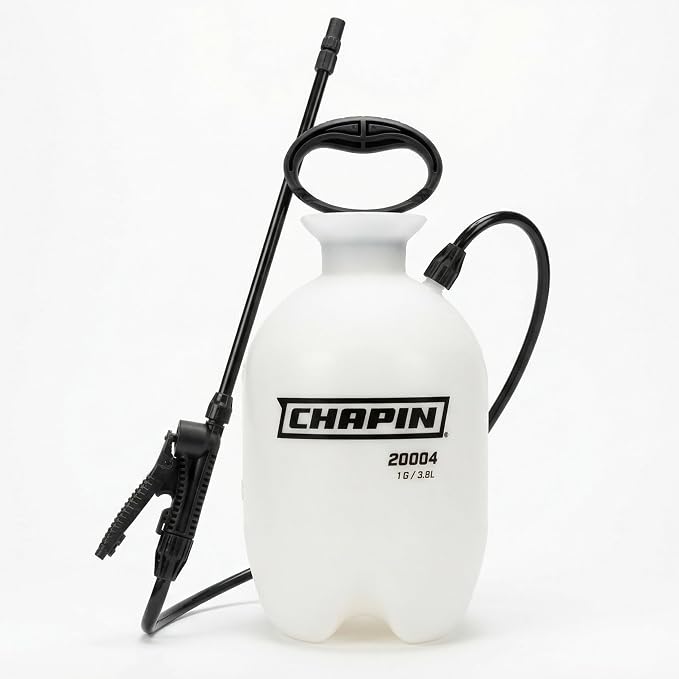
For most homeowners, the CHAPIN 20004 Surespray 1-Gallon Pump Sprayer For is the strongest overall starting point because it is compact, versatile, easy to monitor, and supported by a practical modular design. The Roundup 190260 2-Gallon Lawn and Garden Sprayer is the clear alternative when you want more capacity, multiple included nozzles, and a simple general-purpose setup for lawn care, insect control, or cleaning.
This roundup compares ten options by looking at capacity, power source, spray control, chemical resistance, comfort, maintenance, and the kinds of jobs each model can realistically handle. The list includes conventional pump sprayers, battery-powered units, a backpack model, professional stainless-steel equipment, and two insecticide concentrates that require a compatible sprayer rather than functioning as standalone tanks.
Best Bug Sprayer Picks at a Glance
| Product | Name | Price |
|---|---|---|
 |
CHAPIN 20004 Surespray 1-Gallon Pump Sprayer For | Check Price |
 |
Roundup 190260 2-Gallon Lawn and Garden Sprayer | Check Price |
 |
Scotts 2 Gallon Lithium-Ion Battery Powered Sprayer | Check Price |
 |
Petratools HD4000 Battery Powered Backpack Sprayer | Check Price |
 |
Smith Performance Sprayers R200 2-Gallon Compression Spray | Check Price |
 |
Happybuy 1 Gallon Stainless Steel Pump Sprayer | Check Price |
 |
B&G Primeline 1 | Check Price |
 |
Cutter Backyard Bug Control Spray Concentrate 32 | Check Price |
 |
Tempo SC Ultra Insecticide Concentrate 240 Ml | Check Price |
 |
CHAPIN 22541 1-Gallon Foaming Pump Sprayer For | Check Price |
1. CHAPIN 20004 Surespray 1-Gallon Pump Sprayer For
The CHAPIN 20004 earns the top position by offering the balanced combination most homeowners need from a bug sprayer: manageable size, broad utility, straightforward operation, and useful serviceability. Its one-gallon translucent funnel-top tank makes filling easier and lets you see the remaining liquid without opening the container. That is especially helpful when applying diluted pesticides, fertilizers, weed treatments, cleaning solutions, or mulch glue and you want to monitor the level during a job.
The pump handle is designed for comfortable use, and the lightweight poly tank is easier to carry around a yard than a larger or metal alternative. An adjustable cone nozzle supports both a targeted stream and a broader spray pattern, while the 34-inch hose gives you more reach than a short wand alone. This combination works well for treating individual plants, lawn edges, garden beds, patios, and other areas where precision matters more than maximum capacity.
Another reason it ranks first is the modular design. The sprayer is intended to help prevent leaks and allows users to clean components, replace seals, and maintain a tight connection. That is valuable for anyone who expects to use the tool repeatedly rather than treating it as disposable equipment. Chapin also provides a one-year limited warranty and US-based customer and technical support.
The main limitation is capacity. A gallon is convenient to carry, but large lawns may require several refills and repeated pressurizing. It is also a manually pumped model, so it cannot match the effortless operation of a battery sprayer. Before filling, confirm that the intended solution is compatible with the sprayer and follow its label directions. Rinse the tank, hose, wand, nozzle, and filter after each use, particularly when switching between pesticides and ordinary lawn-care products.
2. Roundup 190260 2-Gallon Lawn and Garden Sprayer
The Roundup 190260 is the clear alternative to the smaller CHAPIN because its two-gallon tank reduces refill frequency while preserving a simple fill, pressurize, and spray workflow. That capacity is useful for homeowners treating a larger lawn, several garden beds, a deck, siding, or multiple outdoor areas in one session. It is also positioned as a multipurpose sprayer for insects, weeds, and cleaning rather than a tool limited to one type of treatment.
Its comfort-grip handle and lockable shut-off are practical touches. The lock-on feature allows continuous spraying without requiring you to hold the trigger the entire time, which can reduce hand fatigue during longer applications. The pressure-release cap is designed to send vapors and liquids down and away when the top is opened, an important convenience when the tank still has internal pressure.
Three included nozzles expand its range. The adjustable poly nozzle can handle general applications, the high-volume flat-fan nozzle supports broader coverage, and the foaming nozzle is useful when visible foam helps with cleaning or application awareness. Having those patterns included means you do not need to rely on one generic spray setting for every task.
The trade-off is that a full two-gallon tank will be heavier to carry than a one-gallon model, especially while walking around uneven ground or reaching low plants. It also requires manual pumping, so users with large properties may prefer a battery-powered or backpack sprayer. The pressure-release feature should be used before opening the tank, and the nozzles should be rinsed after every application to prevent residue or clogs. Choose this model when extra capacity matters more than minimum weight; choose the CHAPIN 20004 when portability and frequent spot treatment are higher priorities.
3. Scotts 2 Gallon Lithium-Ion Battery Powered Sprayer
The Scotts 2 Gallon Lithium-Ion Battery Powered Sprayer takes the repetitive effort out of pressurizing a hand sprayer. Its rechargeable lithium-ion system can spray up to 12 full tanks per charge, according to the supplied product information, making it appealing for users who regularly treat lawns, gardens, or outdoor surfaces and do not want to stop and pump. The two-gallon capacity also provides a useful middle ground between a small handheld sprayer and a larger backpack unit.
Its premium shut-off includes a comfortable grip and lock-on feature, so the user can maintain a steady application without continuously squeezing the handle. A 21-inch poly wand adds reach, and the Viton seals in the shut-off are intended to provide long-term resistance to chemicals. The in-line filter is easy to clean and helps reduce clogging, an important feature when working with diluted concentrates or solutions that may contain small particles.
The included three-in-one nozzle offers fan, stream, and cone spray settings. That lets one tank handle broad coverage, directed applications, and general-purpose spraying without requiring separate accessories. The teardrop-shaped tank is designed with a lower center of gravity for stability and includes built-in nozzle storage and protection, which helps keep the spare settings close at hand.
This model ranks below the manual two-gallon Roundup because battery ownership introduces additional considerations. The battery must be charged, and the sprayer is less useful if it is stored for a long period without attention to the charging routine. It is also more mechanically complex than a basic pump unit. A pressure-release valve allows internal pressure to be removed before opening, and that step should not be skipped. The included limited three-year warranty and free replacement parts add ownership support. It is a strong choice for repeated spraying, but for occasional spot work, the simpler CHAPIN 20004 may be easier to store and maintain.
4. Petratools HD4000 Battery Powered Backpack Sprayer
The PetraTools HD4000 moves into a different class of equipment: a four-gallon battery-powered backpack sprayer intended for larger lawns, gardens, farms, and extended applications. Its 12V 8Ah battery is described as providing six to eight hours of battery life and pumping more than 200 gallons per charge. That makes it substantially better suited to continuous work than a one-gallon hand sprayer, particularly when covering a large area would otherwise require frequent refills and repeated pumping.
Carrying the tank on your back distributes the load more effectively than holding a full container in one hand. Double-padded shoulder straps and a padded back support are designed to reduce fatigue, while the squeeze handle includes a locking feature for continuous spraying. The translucent tank has gallon markings, so it is easier to estimate remaining solution and plan a refill before the sprayer runs dry.
Application control is another strength. Adjustable pressure from 40 to 90 PSI and six nozzles allow the user to move between misting, broader coverage, and more forceful streams. That flexibility can be useful for fertilizers, watering, weedkiller, and pest treatments, provided the particular solution and application method are approved for the equipment and product label. The 34.5-inch extendable wand provides reach, and a screen filter helps limit clogs.
The size is also its chief limitation. A four-gallon tank filled with liquid is considerably more demanding to carry than a one- or two-gallon unit, even with padded straps. It may be excessive for balconies, small gardens, or a few isolated insects. Battery charging and cleaning require more planning, and the operator must manage a hose and wand while wearing the pack. PetraTools lists 24/7 US support and a family-owned company background. Consider this model when coverage area and reduced pumping are the priority; choose a handheld model when mobility in tight spaces or a low filled weight matters more.
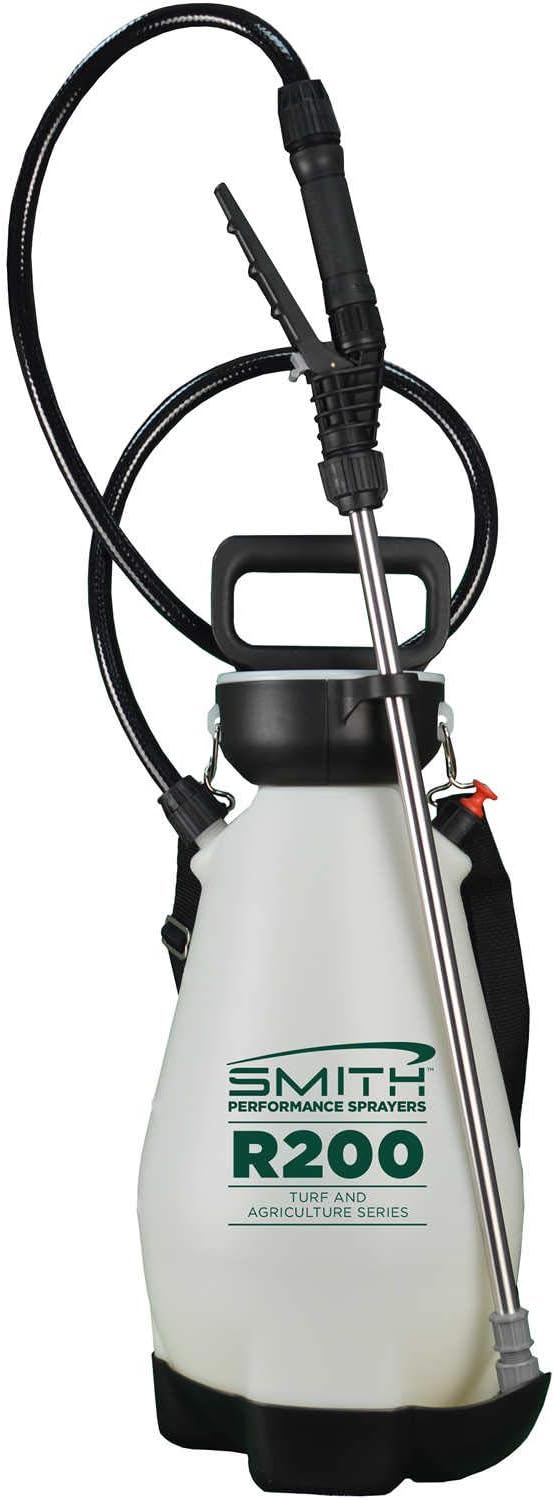
5. Smith Performance Sprayers R200 2-Gallon Compression Spray
The Smith Performance Sprayers R200 is aimed at users who want a rugged manual sprayer with more professional-grade components than a basic homeowner model. Its two-gallon capacity provides reasonable coverage without becoming as cumbersome as a larger backpack tank. The sprayer is built to withstand harsh agricultural chemicals, rugged transport, and frequent use, making it a logical option for serious lawn-care work, repeated insecticide applications, weed control, and fertilizer treatments.
The 21-inch stainless-steel wand is lined with poly material, and the unit uses Viton seals selected for chemical resistance. Those details matter when the sprayer will encounter products that are harder on seals and fittings than plain water. An in-line filter with a larger surface area is designed to reduce clogging and minimize cleaning interruptions. For users who have dealt with a wand that suddenly loses flow because of debris, this is a meaningful practical advantage.
Pumping efficiency is another reason the R200 stands out. The pump is described as requiring 25 percent fewer pumps per gallon than leading competitors. That does not eliminate manual effort, but it can make repeated applications less tiring. Maintenance is also designed to be approachable: pump seals can be changed within minutes without tools, which can reduce downtime when a seal eventually needs attention.
Its drawbacks are mostly about fit rather than capability. This is still a compression sprayer, so it requires manual pressurization and will not provide the effortless continuous operation of the Scotts or PetraTools battery models. Stainless steel and professional components may also be more equipment than a casual user needs for one or two seasonal treatments. Because chemical compatibility depends on the actual product, always verify the label and sprayer guidance before filling. Rinse the system thoroughly after use, inspect the filter, and keep the wand and seals clean. It is especially compelling for frequent users who value repairability over the lowest-effort operation.
6. Happybuy 1 Gallon Stainless Steel Pump Sprayer
The Happybuy one-gallon stainless-steel pump sprayer combines a compact tank with features that are less common on simple plastic models, including a pressure gauge, safety valve, adjustable brass nozzle, and shoulder strap. Its listed operating pressure is 1.5 to 4.0 bar. The gauge gives the user a direct view of pressure inside the tank, while the safety valve is designed to release excess pressure automatically and keep it within a safer range.
The brass nozzle can adjust from a direct stream to a fine mist, allowing the same unit to handle targeted spraying and lighter coverage. A flexible hose and spray stick are intended to provide a reach of approximately 13.1 to 16.4 feet, according to the supplied information. The bowl-shaped water inlet should make filling more convenient, and the handle is shaped to help build pressure quickly. An adjustable shoulder strap adds another carrying option for outdoor jobs.
The stainless-steel construction offers durability and rust resistance, and the sprayer is marketed for gardening, lawn work, indoor and outdoor spraying, automotive cleaning, pet bathing, general cleaning, and disinfection. That breadth makes it appealing to someone seeking a multipurpose tool rather than a pesticide-only applicator. The one-gallon capacity also keeps the filled weight more manageable during short jobs.
However, the supplied specifications include an important limitation: the rubber ring and internal design are not suitable for strong corrosive, acidic, or basic solutions. That restriction should be treated seriously. It means this model is not a universal chemical sprayer, even though it has a stainless tank. Confirm compatibility with the solution before filling, and do not assume that stainless steel alone protects every internal seal. The pressure gauge and valve add useful feedback, but they also create components that should be kept clean and checked. This is a reasonable choice for controlled, moderate-duty tasks when its chemical limitations fit your intended use.
7. B&G Primeline 1
The B&G Primeline 1 is a professional-grade one-gallon stainless-steel sprayer built around precise pest-control application. Its Extenda-Ban Valve uses a 24-inch brass extension and a non-drip tip, making it particularly suitable for indoor and outdoor treatments where controlled delivery matters. Rather than simply broadcasting liquid over a broad area, the included four-way crack-and-crevice tip offers two fan settings, a pin stream, and a straw port for more targeted work.
The straw-port setting is especially useful for reaching into wall voids, cracks, and hidden gaps that a conventional fan pattern cannot access. That feature can help reduce waste when a treatment needs to be directed into a narrow location instead of applied across an entire surface. The brass valve stores in an integrated holster, helping keep the applicator organized between uses.
Construction is a major reason this model appears on the list despite its small review count. The tank is stainless steel, the pump and valve are brass, and the hose is chemical-resistant and designed to remain flexible. A metal spring strain relief helps limit kinking and may extend hose life. The pump is rebuildable, and the sprayer is described as field repairable with Viton components, which is a meaningful advantage for pest-control professionals or property managers who depend on long service life.
The trade-offs are equally clear. A one-gallon professional sprayer may be more specialized and expensive to maintain than a basic homeowner pump model, although no price claim is being made here. Its precision-oriented tip is not necessarily the fastest choice for covering a large lawn. The 4.9 rating is based on only 20 reviews, so it represents limited review volume compared with the higher-ranked products. Before use, match the tip and application method to the pesticide label, and clean the valve, hose, and tip after treatment. This is best considered when targeted pest control, repairability, and durable metal components matter more than maximum area coverage.
8. Cutter Backyard Bug Control Spray Concentrate 32
The Cutter Backyard Bug Control Spray Concentrate is different from the tank sprayers above because it is a two-pack of 32-ounce insect-control concentrate with a built-in hose-end sprayer. It is designed to be attached to a garden hose, so the user does not need to measure concentrate into a separate pump tank or manually pressurize a reservoir. The quick-flip sprayer activates at the switch, creating a simple “grip, flip, and go” process for treating lawns, landscapes, and outdoor surfaces where listed insects hide.
According to the supplied information, the product kills mosquitoes, listed ants, fleas, and other listed insects. Each bottle treats up to 5,000 square feet of lawn, and the formula is described as providing control for up to 12 weeks against certain listed pests, including house crickets, carpenter ants, harvester ants, lady beetles, and earwigs. Those claims apply only to the pests, surfaces, conditions, and application directions on the product label, so the label remains the authority for mixing, coverage, and reapplication.
The principal advantage is convenience. There is no separate sprayer tank to fill, no pump handle to operate, and no need to calculate a dilution in a handheld reservoir. That makes the product attractive for a homeowner who wants to treat a larger outdoor area quickly and does not expect to use a reusable sprayer for many different chemicals.
Its limitation is flexibility. A hose-end bottle depends on access to a garden hose and is less suited to careful spot treatment in cracks, indoor areas, containers, or locations where overspray must be tightly controlled. It also does not replace a reusable bug sprayer for fertilizer, weedkiller, or other products. Keep people, pets, and desirable plants away as directed by the label, avoid runoff, and store the unopened or partly used bottles securely. Choose Cutter when hose-end convenience and lawn coverage are the priority; choose a tank sprayer when application precision and reusable equipment are more important.
9. Tempo SC Ultra Insecticide Concentrate 240 Ml
Tempo SC Ultra is a liquid insecticide concentrate intended for dilution and application with compatible spraying equipment. It is not a complete bug sprayer by itself, so buyers must already have, or separately obtain, a suitable hand, battery, backpack, or professional sprayer. That distinction is important when comparing it with the other products in this roundup. Its value lies in the insecticide formulation and application range rather than in tank design or pumping comfort.
The concentrate is described as broad-spectrum control for ants, spiders, and other nuisance pests, with indoor and outdoor uses that include home perimeters, garages, basements, doorways, patios, foundations, entry points, and common harborage areas. It is also described as fast-acting with residual performance, making it suited to routine perimeter maintenance and targeted treatments between reapplications.
Its water-based liquid suspension concentrate is intended to mix easily and apply evenly when diluted according to label directions. The low-odor description may be appealing for users treating areas around a home, but low odor should not be interpreted as harmless or as permission to ignore protective measures. A small amount is described as treating large areas, which can make the concentrate practical for an ongoing pest-management program when the label’s dilution and coverage instructions match the job.
The most important ownership consideration is compatibility and compliance. Use a sprayer whose seals, hose, wand, nozzle, and filter are approved for the product or otherwise compatible with the label instructions. Measure carefully, never guess at dilution, and do not repurpose a pesticide sprayer for food, pet water, or unrelated household use. Clean the equipment as directed, prevent drift and runoff, and observe all label restrictions for indoor spaces, pets, children, and treated surfaces. Tempo SC Ultra makes sense for users seeking a dedicated insecticide concentrate; it is not the right purchase for someone who needs a ready-to-use, all-in-one sprayer.
10. CHAPIN 22541 1-Gallon Foaming Pump Sprayer For
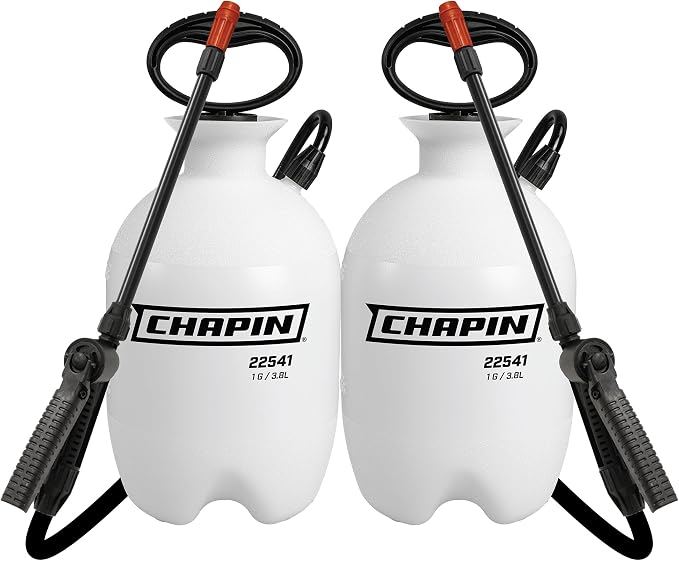
The CHAPIN 22541 is a one-gallon foaming pump sprayer sold as a two-pack, and its defining feature is the foaming nozzle. Foam makes the applied area visible, which can improve coverage awareness during weed control, lawn care, pest treatments, and other jobs where missed spots are a concern. It may also help the user avoid repeatedly treating the same area, potentially reducing unnecessary product use when the application is performed according to the product label.
The translucent poly tank lets you check the fluid level at a glance. Its rust-resistant construction is practical for garden use, while the anti-clog filter is designed to keep debris from interrupting spray performance. The 34-inch reinforced hose and 12-inch wand provide useful reach and control, especially when treating plants, lawn edges, garden beds, or low outdoor surfaces without placing the tank directly beside the target.
An ergonomic pump handle helps with manual pressurization, and the one-gallon size keeps each unit relatively manageable to carry. Having two sprayers can be useful for separating products, such as keeping one dedicated to weed control and another for insect treatments. That separation may reduce the risk of accidental cross-contamination, although each tank should still be clearly labeled and cleaned according to the product instructions.
The foaming design also creates limits. Foam is not the ideal pattern for every chemical or every surface, and some applications call for a fan, stream, or mist instead. The unit remains manually pumped, so it is not as convenient for large properties as the battery-powered options. Because this package contains two one-gallon sprayers, storage space and maintaining both units should be considered. Confirm that the solution is approved for foaming application, clean the filter and nozzle after use, and do not assume that visible foam alone proves correct coverage. This model is most useful when application visibility and product separation are more important than maximum capacity or battery operation.
How to Choose the Best Bug Sprayer
The right sprayer is a combination of application method, chemical compatibility, coverage area, and ownership habits. A model that works well for treating a few garden plants can be frustrating on a half-acre lawn, while a four-gallon backpack sprayer may be unnecessary for a small patio. Start by identifying the job, then narrow the equipment by the factors below.
Match the sprayer to the treatment
First determine whether you are applying an insecticide, herbicide, fertilizer, cleaning solution, disinfectant, or plain water. These products can have different requirements for dilution, spray pattern, pressure, and material compatibility. The fact that a tank is made from stainless steel or plastic does not automatically mean every chemical is suitable for it. Seals, gaskets, filters, hoses, valves, and wand components may react differently from the tank itself.
Read the pesticide or treatment label before selecting equipment. Look for directions concerning dilution, application method, pressure, nozzle type, indoor or outdoor use, and cleanup. If the label does not support a particular application method, do not improvise simply because the sprayer can produce that pattern. In this roundup, the Happybuy model specifically warns against strong corrosive, acidic, and basic solutions because of its rubber ring and internal design. Similar compatibility checks are wise for every sprayer.
Also consider whether you need a reusable tank or a ready-to-use hose-end product. The Cutter concentrate is convenient because its hose-end sprayer avoids separate mixing and pumping, but it offers less control than a reusable tank. Tempo SC Ultra provides a concentrate for users who already have compatible equipment, but it requires careful dilution and label-based handling.
Choose capacity according to area and filled weight
Tank capacity affects both productivity and comfort. A one-gallon model is easier to carry and maneuver around individual plants, steps, fences, and small beds. It also reduces the amount of mixed solution left over at the end of a job. The downside is more frequent refilling, particularly when the spray pattern is broad or the treatment area is large.
Two-gallon sprayers such as the Roundup, Scotts, and Smith models reduce interruptions without becoming as large as a backpack unit. They are often a sensible compromise for a typical suburban yard. Remember that the listed capacity refers to liquid volume, not the total weight of the filled sprayer. Water-based solutions add substantial weight, and chemical concentrates may have different handling requirements. A tank that seems comfortable when empty can feel very different after filling.
The PetraTools HD4000 has a four-gallon capacity and is intended for larger-scale work. Its backpack design distributes the load, but it still asks the operator to carry a substantial amount of liquid. Select a large unit because it genuinely reduces work, not merely because fewer refills sound convenient. If the job involves many short stops or narrow spaces, a smaller tank may be easier overall.
Decide between manual pumping and battery power
Manual compression sprayers are mechanically simple. The CHAPIN 20004, Roundup 190260, Smith R200, Happybuy, B&G Primeline, and CHAPIN 22541 all require the user to create pressure by pumping. That adds physical effort, but it also avoids battery charging and can make the equipment straightforward to store. Manual models are usually well suited to occasional treatments, spot work, and users who value basic controls.
Battery sprayers reduce repetitive pumping. The Scotts model uses a rechargeable lithium-ion system and can spray up to 12 full tanks per charge based on the supplied information. The PetraTools model is designed for much longer continuous operation and larger coverage. Battery units are attractive when the same type of work is repeated frequently or when manual pumping would cause hand or shoulder fatigue.
Battery power is not entirely maintenance-free. You need to charge the battery, follow the manufacturer’s storage guidance, keep electrical components protected from liquid, and understand what happens if the battery is empty mid-job. A motorized pump can also be more complex to troubleshoot than a basic hand pump. For a few seasonal applications, manual simplicity may outweigh the convenience of powered operation.
Consider spray pattern and application control
Nozzle choice determines how much liquid reaches a given area and how precisely you can direct it. A stream is useful for a narrow target, while a fan can cover a wider surface. A cone pattern may be useful for general coverage, and a mist can apply very small droplets. The correct pattern depends on the product label and the target, not just personal preference.
The Roundup includes adjustable poly, high-volume flat-fan, and foaming nozzles. The Scotts includes a three-in-one nozzle with fan, stream, and cone settings. The Happybuy uses an adjustable brass nozzle ranging from direct injection to fine mist. The B&G Primeline takes a more specialized approach with a four-way crack-and-crevice tip, including a straw port for deep voids. These options provide different kinds of control, so compare them to the actual surfaces you will treat.
Foam can make an application visible, as with the CHAPIN 22541, but visibility is not the same as correct dosage. Foam may not be appropriate for every product or surface. Likewise, a high-pressure stream is not automatically better; it can increase splash, drift, or damage if used carelessly. Use the narrowest effective pattern and pressure that the product instructions permit.
Evaluate reach and ergonomics
Hose and wand length affect whether you can reach under leaves, along foundations, behind furniture, or across a bed without repeatedly moving the tank. The CHAPIN 20004 has a 34-inch hose, the CHAPIN 22541 combines a 34-inch reinforced hose with a 12-inch wand, and the Scotts includes a 21-inch wand. The PetraTools HD4000 provides a 34.5-inch extendable wand. These differences are useful when comparing how much bending or repositioning a job will require.
Grip design matters during extended use. Lockable shut-offs on the Roundup, Scotts, and PetraTools units allow continuous spraying without constant finger pressure. The CHAPIN models emphasize ergonomic pump handles, while the Happybuy includes a shoulder strap. Professional models such as the B&G Primeline and Smith R200 focus more on durable valves, wands, and serviceable parts.
Think about your working posture as well as raw reach. A longer wand can help keep the operator away from the spray, but it can also be less convenient in a tight garden. A backpack can free both hands for wand control, yet it requires putting on and removing the tank. Comfort features are most valuable when they match the duration and layout of your typical work.
Look for chemical-resistant and serviceable components
A sprayer’s useful life often depends on seals, valves, filters, and hoses rather than the tank alone. Viton seals appear in the Scotts shut-off and Smith R200, while the B&G Primeline uses Viton components and is described as field repairable. These features may be particularly valuable for repeated professional or agricultural use.
Filters help prevent debris from reaching the nozzle. The Scotts has an easy-to-clean in-line filter, the Smith R200 has an accessible in-line filter with increased surface area, and the PetraTools model includes a screen filter. The CHAPIN 22541 uses an anti-clog filter. Even the best filter needs regular cleaning; a dirty filter can reduce flow and create the impression that the pump or nozzle has failed.
Repairability can be more important than a long feature list. The Smith pump seals can be changed without tools, and the B&G Primeline pump is rebuildable. The CHAPIN 20004 has a modular design intended to support cleaning, seal replacement, and leak prevention. By contrast, a more basic sprayer may be preferable if you would rather replace a simple unit than service it. Consider how often you spray and whether replacement parts are available before paying more for professional construction.
Use pressure safely and consistently
Pressure influences spray distance, droplet size, coverage, and the speed at which a tank empties. Higher pressure is not automatically the best setting. Excessive pressure can increase drift or cause an application to land outside the target area. Battery models with adjustable pressure, such as the PetraTools HD4000, offer more control, but that control should be used according to the product label and the surface being treated.
Never open a pressurized tank casually. The Roundup uses a pressure-release cap, the Scotts includes a pressure release valve, and the Happybuy includes a safety valve that automatically releases pressure when it becomes too high. These features help, but the user still needs to follow the operating instructions. Release internal pressure before opening, refilling, inspecting, or cleaning a tank.
Maintain a steady walking pace and consistent wand height when applying a product. Moving too quickly can leave untreated areas, while lingering in one spot can overapply. If you are using a visible foam pattern, treat it as a coverage aid rather than a substitute for measuring the correct amount of product.
Plan cleanup before the first application
Cleaning is one of the most important parts of sprayer ownership. Residue left in a nozzle, hose, filter, or seal can harden, crystallize, clog the system, or contaminate the next product. As soon as the application is complete, follow the chemical label and the sprayer manufacturer’s cleaning instructions. Do not leave mixed pesticide sitting in the tank simply because the next treatment is scheduled soon.
At a minimum, pay attention to the tank, pump, hose, wand, shut-off, nozzle, cap, and filter. The removable or adjustable nozzles on the Roundup and Scotts need particular attention because residue can affect pattern quality. The crack-and-crevice tip on the B&G Primeline also needs to remain clear so that the fan, pin stream, and straw-port settings work as intended.
Keep equipment used for pesticides separate from equipment used for cleaning, pet bathing, or other household tasks. The CHAPIN 22541 two-pack can make product separation easier, but the tanks should still be labeled clearly. Never use a pesticide sprayer for food, drinking water, or any purpose not approved by the manufacturer and product label.
Follow basic application safety practices
Read the entire product label before mixing or spraying. Wear the protective clothing and equipment specified there, and keep children, pets, and unprotected people away from the treated area as directed. Avoid spraying in wind or conditions that could carry droplets toward people, neighboring properties, waterways, edible plants, or other unintended locations.
Measure concentrates accurately. A product that is described as low odor or fast acting still requires careful handling. Do not assume that a hose-end sprayer, pump tank, or battery unit makes an application inherently safe. The equipment controls delivery; it does not change the chemical’s label requirements.
Store sprayers and concentrates in a secure, dry location away from heat and unauthorized access. Before storage, release pressure, clean the equipment, inspect for leaks, and protect the wand and nozzle from damage. Battery models need additional attention to charging and moisture protection. Proper storage prevents many of the problems that otherwise appear when the sprayer is needed again.
Diagnose common spraying problems
If a sprayer will not build pressure, first check that the cap, pump assembly, hose connection, and seals are seated correctly. A worn seal or loose fitting can allow air to escape. On a manual unit, confirm that the pump is moving through its normal range. On a battery model, verify the battery charge and power connection before assuming the pump has failed.
Weak or uneven spray often points to a clogged nozzle or filter. Clean the filter and nozzle using the method permitted by the product and manufacturer instructions. Do not poke delicate openings with a sharp object that could change the spray pattern. If the problem continues, inspect the hose for kinks and the shut-off for residue.
Leaks deserve immediate attention. Stop using the sprayer, release pressure safely, and identify whether the leak comes from the tank, cap, hose, wand, valve, or seal. A modular or rebuildable design can make repair easier, but damaged chemical-contact parts should not be improvised with unsuitable materials. When in doubt, consult the manufacturer’s support or replace the affected component.
Best Bug Sprayer FAQ
What is the best bug sprayer for most homeowners?
The CHAPIN 20004 Surespray 1-Gallon Pump Sprayer For is the strongest general-purpose choice in this roundup. Its one-gallon size is manageable, the translucent tank is easy to monitor, and the adjustable nozzle supports targeted and broader spraying. It also has a 34-inch hose and a modular design intended to make cleaning and seal replacement easier. The Roundup 190260 is a better alternative when two-gallon capacity and multiple included nozzles are more important.
Is a pump sprayer or battery sprayer better for insecticide?
Either can be appropriate if the sprayer is compatible with the insecticide and the application follows the product label. A pump sprayer is simpler and does not depend on a charged battery. A battery sprayer reduces repetitive pumping and can be more comfortable for larger or repeated jobs. The Scotts model suits moderate areas, while the PetraTools backpack sprayer is designed for larger-scale coverage.
What size bug sprayer should I buy?
Choose one gallon for spot treatments, small gardens, and jobs where low carrying weight matters. Two gallons are a practical middle ground for many residential lawns and multiple garden beds. A four-gallon backpack model is more appropriate when reducing refills and covering a large area are major priorities. Remember that a larger filled tank also creates more carrying weight.
Can I use any chemical in a stainless-steel sprayer?
No. Tank material alone does not determine compatibility. Seals, valves, hoses, and other internal parts may not tolerate every solution. The Happybuy product information specifically warns against strong corrosive, acidic, and basic solutions because of its rubber ring and internal design. Always check the sprayer guidance and chemical label before filling.
Are the Cutter and Tempo products complete bug sprayers?
Cutter Backyard Bug Control Spray Concentrate includes a hose-end sprayer attached to the bottle, so it can be used with a garden hose without a separate tank. Tempo SC Ultra is an insecticide concentrate, not a complete tank sprayer. It must be diluted and applied with compatible equipment according to its label directions.
How do I prevent a bug sprayer from clogging?
Use clean water when appropriate, filter or strain solutions only when the product instructions allow it, and clean the nozzle, filter, wand, hose, and tank after each application. The Scotts, Smith, PetraTools, and CHAPIN 22541 models include filter features intended to reduce clogging, but filters still require inspection and cleaning. Avoid leaving solution in the sprayer between uses.
Final Verdict
The CHAPIN 20004 Surespray 1-Gallon Pump Sprayer For is the best overall fit for most homeowners because it combines useful reach, manageable capacity, adjustable spraying, and maintainable construction. Choose the Roundup 190260 when you want a larger two-gallon tank and three nozzle options. For less pumping, consider the Scotts or PetraTools battery models; for professional precision and repairability, the Smith or B&G units are stronger alternatives. Whatever you choose, chemical compatibility, label compliance, careful pressure release, and thorough cleanup matter as much as the sprayer itself.

I’m Maya L. Greenwood, a lifelong plant lover who believes anyone can grow something beautiful with the right guidance. After years of testing soil mixes, pruning methods, irrigation tricks, and pest-safe solutions, I started EasyGardenTips.com to turn hard-won lessons into step-by-step advice. From seed starting and container gardens to composting and seasonal checklists, my goal is to make gardening simple, sustainable, and fun.