
5 Best Potting Soil for Alocasia: Airy Mixes for Dramatic Leaves
Buy the wrong potting soil and water can sit around Alocasia roots, leaving the plant struggling in a heavy, wet pot. Go too far in the other direction and a loose mix may dry before you notice, turning routine care into a guessing game. Soil that arrives in a small bag can also leave you short halfway through repotting.
For this plant, the useful balance is open texture plus some moisture-holding material. Bark and porous stone can leave more space around roots than dense, fine soil, while ingredients such as coir or peat help the mix avoid drying too quickly.
Before you pick a bag, think about the pot, your watering habits, and how many plants need fresh soil. This guide will help you:
- Match mix texture to your Alocasia and its container.
- Estimate how much soil a repotting job may take.
- Pot up without burying roots or blocking drainage.
- Keep the mix from staying soggy or drying too fast.
Quick Picks
-
Best For Chunky, ready-to-use mix

Grow Queen Craft Aroid Potting Mix, Chunky
Bark, pumice, and lava rock create an airy blend that drains freely, while coco coir helps suit Alocasia that need some moisture.
-
Best For Larger elephant-ear pots

Soil Sunrise Elephant Ear Potting Soil Mix
An elephant-ear blend with peat moss, sand, perlite, and worm castings comes in an 8-quart size for larger repotting jobs.
Top 5 Potting Soils for Alocasia at a Glance
The Grow Queen mix is a sensible first look if you want a chunky blend in a small bag, while Soil Sunrise offers more volume in a mix made for elephant ears. The other options differ mainly in ingredients, stated bag size, and whether they emphasize a premixed recipe or additions such as biochar and worm castings.
| Product image | Product name | Check product |
|---|---|---|
| 1 |
Grow Queen Craft Aroid Potting Mix, Chunky | Check Price |
| 2 |
Soil Sunrise Elephant Ear Potting Soil Mix | Check Price |
3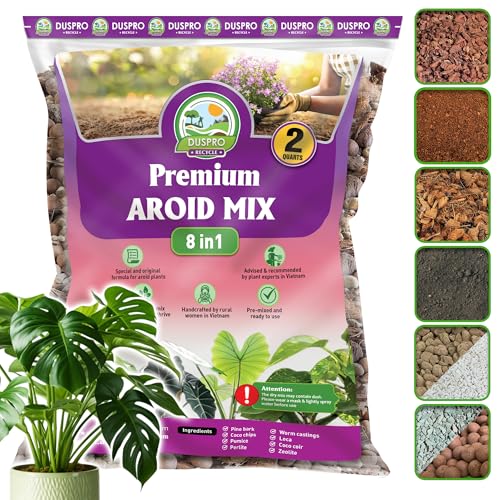 |
DUSPRO 8-in-1 Aroid Potting Mix, Pre-Mixed Chunky | Check Price |
4 |
Rosy Soil Aroid Soil Mix, Chunky Biochar | Check Price |
5 |
AROID Potting Mix/Premium Soil for Monstera, Philodendron, | Check Price |
5 Best Potting Soils for Alocasia: Detailed Reviews
When I chose the best potting soil for alocasia, I paid attention to how open the mix is, what ingredients can hold moisture, and whether the bag size suits a real repotting job. Those details matter because waterlogged roots, a mix that dries too fast, and a half-finished pot are the kinds of avoidable problems that frustrate new plant owners.
The choices here range from a small, ready-to-use aroid blend to larger bags made for tropical plants and elephant ears. Comparing texture and volume side by side helps you decide if you need a specialized blend, a bigger supply, or a mix with ingredients you already know how to manage.
1. Grow Queen Craft Aroid Potting Mix, Chunky
Bark, pumice, and lava rock create an airy blend that drains freely, while coco coir helps suit Alocasia that need some moisture.
- Size2 Quart
- WeightNot listed; check details
- DimensionsNot listed; check details
- MaterialNot listed; check details
Grow Queen Chunky Aroid Mix is a ready-to-use option for an Alocasia owner who wants a visibly open blend rather than fine, dense potting soil. Its 2-quart bag is a modest amount, so it makes more sense for one small repotting job than a shelf full of large pots.
The mix includes Douglas fir bark, pumice, lava rock, tree fern fiber, and biochar. Chunky mix means the pieces are larger and leave gaps between them, giving water a route through the pot and leaving more open space around roots. That structure can be useful if your usual trouble is soil staying wet for too long, though it does not remove the need to check moisture before watering.
Coco coir and charged biochar are included to help retain some moisture, while the listing also names worm castings, alfalfa, and gypsum as ingredients. In practical terms, the recipe aims to balance drainage with moisture rather than behave like plain bark chips. The product arrives pre-moistened and is described as ready to use, a small convenience when you would rather not measure separate ingredients.
One limit is the amount: 2 quarts may not stretch far if you are moving a mature plant into a much larger container. Check the pot’s dimensions and plan for the soil that will fill the space around the root ball before opening the bag.
Pros:
- Bark and porous stone leave an open texture around roots.
- Coco coir helps retain some moisture between waterings.
- Pre-moistened mix is ready to use after opening.
- Peat-free recipe uses coco coir instead of peat moss.
- Named for Alocasia and other aroid plants.
Cons:
- 2-quart bag may be too small for several large pots.
- Fast drainage still calls for regular moisture checks.
- The mix includes several ingredients you may not recognize.
Buy it if: you want a small ready-to-use bag with chunky ingredients, because the bark and porous stone make an airy texture without separate mixing.
Skip it if: you are repotting several large plants, because 2 quarts may run short, and a larger-volume soil blend would suit you better. For another fit, consider Soil or Duspro.
I’d choose Grow Queen when a compact, already mixed bag is more useful than a large supply. The airy ingredients and moisture-holding coir make the recipe’s goal clear for a beginner. Check that the bag size will cover the pot before buying, and pick it if you only need a modest amount for an Alocasia or another aroid.
2. Soil Sunrise Elephant Ear Potting Soil Mix
An elephant-ear blend with peat moss, sand, perlite, and worm castings comes in an 8-quart size for larger repotting jobs.
- ColorBrown
- Size8 Quarts
- Number Of Items1
- WeightNot listed; check details
Soil Sunrise Elephant Ear Mix suits someone who wants a larger bag labeled for Alocasia and Colocasia, the plants commonly called elephant ears. At 8 quarts, it offers more volume than the smaller mixes here, which can help when a single plant needs a larger pot or several containers need fresh soil.
The ingredient list includes peat moss, sand, worm castings, horticultural perlite, and lime. Perlite is a lightweight, porous material mixed into soil to create air spaces and support drainage; sand adds a different, heavier mineral component. For a beginner, that combination signals a blend intended to balance water movement and moisture retention rather than a pure bark mix.
The mix is described as having organic humus, drainage, and water retention, but no exact ratio or particle size is stated. That means you should check the texture when the bag arrives and consider how quickly your own pot dries, rather than assuming every Alocasia needs the same watering schedule. The listing identifies it for indoor and outdoor containers, but the pot still needs drainage holes so extra water can leave.
A bigger bag can be handy, but it takes up more storage space and may be more than a small plant needs. Keep the unused soil sealed according to its package directions and avoid buying a volume you cannot store cleanly.
Pros:
- 8-quart bag supplies more soil for larger repotting jobs.
- Listed for Alocasia and Colocasia elephant-ear plants.
- Peat moss helps the blend retain moisture.
- Perlite is included to support air space and drainage.
- Worm castings are part of the ingredient blend.
Cons:**
- The exact proportions and particle sizes are not stated.
- Larger volume needs more storage space after opening.
- A moisture-retaining mix still needs careful watering.
Buy it if: you need more than a small bag for elephant-ear containers, because the 8-quart size gives you a larger supply in one purchase.
Skip it if: you want a coarse bark-heavy texture, because the ingredient details do not specify large chunks, and a visibly chunky aroid mix would suit you better. Grow and Duspro are worth a closer look instead.
What I like about Soil Sunrise is the straightforward plant fit and useful bag size. The listed ingredients offer a familiar mix of moisture retention and drainage materials, although the recipe proportions are not given. Check the bag amount and your container size first, then choose it if a larger supply matters more than knowing the exact texture in advance.
3. DUSPRO 8-in-1 Aroid Potting Mix, Pre-Mixed Chunky
The catalog lists Pre-Mixed 8-Ingredient Aroid Blend: DUSPRO Recycle Aroid Mix is a ready-to-use blend designed for aroid plants. Compare fit and care needs before choosing.
- Size2 Quarts
- ColorAroid Potting Mix
- WeightNot listed; check details
- DimensionsNot listed; check details
DUSPRO 8-in-1 Aroid Mix is for an Alocasia grower who wants several ingredients combined in one small, ready-to-use bag. It comes in a stated 2-quart size here, so it fits a modest repotting job better than a collection-wide soil refresh.
The blend combines pine bark, pumice, coir, coco chips, LECA, perlite, zeolite, and worm castings. LECA means lightweight expanded clay pebbles, which add coarse pieces to a potting mix; here, they sit alongside bark and porous materials to make a chunkier texture. That can help keep a dense, solid mass of soil from forming around roots, while the coir and coco chips are included for moisture management.
The mix is described as premixed, so you do not need to buy and combine separate ingredients before repotting. The listing also describes the texture as airy and fast-draining, and it recommends using a nursery pot or planter with drainage holes for best drainage. Those holes matter: airy ingredients cannot make standing water disappear from a pot with nowhere for it to go.
The bag size is limited, and the recipe has quite a few named components. If your plant is large, check the volume carefully; if you prefer a simple ingredient list, the eight-part blend may be more complexity than you need.
Pros:
- Eight listed ingredients arrive in a premixed blend.
- Bark, pumice, and clay pebbles create a chunky texture.
- Coir and coco chips contribute moisture-holding ingredients.
- Worm castings are included in the recipe.
- 2-quart size suits a small repotting task.
Cons:
- The 2-quart bag may not fill a large container.
- Multiple ingredients can make the recipe harder to assess by eye.
- A drainage-hole pot is recommended for best drainage.
Buy it if: you want a premixed blend with several coarse ingredients, because the recipe is ready to use without sourcing components separately.
Skip it if: you need soil for multiple large containers, because this 2-quart bag is limited, and a larger-volume mix would suit you better. If those trade-offs rule it out, Grow or Soil may suit you better.
I’d put DUSPRO on the list for someone who values a detailed ingredient recipe in a ready-to-use bag. The mix includes both coarse pieces and moisture-related ingredients, so it aims at balance rather than a single-purpose texture. Make sure the stated volume fits your container, and choose it if convenience beats making a custom blend yourself.
4. Rosy Soil Aroid Soil Mix, Chunky Biochar
The catalog lists BUILT FOR AROIDS, LOVED BY TROPICAL PLANTS: This chunky aroid potting mix was crafted for the way aroids actua. Compare fit and care needs before choosing.
- Size4 Quarts
- ColorAroid
- Number Of Items1
- WeightNot listed; check details
Rosy Soil Aroid Mix is a 4-quart option for someone looking for a chunky tropical-plant blend and a little more soil than the smallest bags provide. Its named plants include Alocasia, along with other aroids and tropical houseplants, so the stated use covers more than one pot in some cases.
Pine bark fines, pumice, and biochar form the mix’s stated structure. Biochar is a porous, carbon-rich material used here as part of the soil blend; the recipe also lists worm castings, mycorrhizae, and compost. The mix is described as airy and fast-draining, while its ingredients give you a good reason to watch the plant’s moisture instead of watering on a rigid calendar.
The listing says a 4-quart bag fills two to three medium 6-inch pots. Treat that as an estimate for medium pots, not a promise for every container, because pot shape and root-ball size change how much soil you need. A resealable bag is also described, which can make storing leftovers tidier between repotting jobs.
This mix is promoted as microbially active, but that phrase does not tell you how often to water or whether a particular plant needs added fertilizer. Follow the package directions and your plant’s care needs rather than treating a soil description as a complete care plan.
Pros:
- 4-quart volume offers more soil than a 2-quart bag.
- Pine bark and pumice make a chunky, airy base.
- Biochar, worm castings, mycorrhizae, and compost are named.
- The bag is described as resealable for leftover storage.
- Alocasia is listed among the intended tropical plants.
Cons:
- The advertised pot count is only an estimate.
- The recipe’s component proportions are not stated.
- Fast drainage may require closer moisture checks in a warm room.
Buy it if: you want a 4-quart chunky mix for Alocasia and other tropical plants, because the listed ingredients provide an open base with soil amendments.
Skip it if: you prefer a simple blend without added compost or microbial ingredients, because this recipe includes several amendments, and a more basic potting mix would suit you better.
To me, the useful point about Rosy Soil is that the 4-quart size and resealable packaging may make leftovers easier to manage. The ingredient list is more involved than a basic bark-and-stone mix, which some buyers will appreciate and others will not need. Check the bag’s estimated pot coverage and choose it if you want that extra volume for a small group of plants.
5. AROID Potting Mix/Premium Soil for Monstera, Philodendron,
The catalog lists ✔ Specifically formulated for aroids including Monstera, Philodendron, Alocasia, Anthurium, Rhaphidophora and . Compare fit and care needs before choosing.
- Size4 QTS
- ColorOrganic
- Number Of Items1
- WeightNot listed; check details
AROId Potting Mix is a ready-to-use blend for Alocasia and other aroids, sold here in a 4-quart size. It suits a beginner who would rather open a bag and pot up than measure several separate ingredients.
The listed mix includes orchid bark, coco husk, and pumice for drainage and airflow. Orchid bark is a coarse bark ingredient that leaves larger spaces than fine potting soil, so roots have a less compacted area around them. Coco coir is also named for moisture balance, while biochar is included as part of the recipe for nutrient retention.
Worm castings and mycorrhizae are listed as well, and the mix is described as high-nutrient. Those are ingredient and product claims, not a substitute for checking what your plant needs after repotting. The practical benefit for a new grower is a prepared blend with both coarse components and moisture-related ingredients, without the extra step of DIY mixing.
The product title says organic, but that wording alone should not be treated as proof of an independent certification. Also, the recipe does not provide exact ingredient proportions, so check the actual mix texture and package directions if you have a specific preference.
Pros:
- 4-quart bag provides more volume than a small 2-quart option.
- Orchid bark and pumice support a coarse, airy texture.
- Coco husk and coir contribute moisture-related ingredients.
- Worm castings and mycorrhizae are listed in the blend.
- Ready-to-use format avoids measuring individual components.
Cons:
- Ingredient proportions are not stated.
- The 4-quart size may be more than one small plant needs.
- The organic wording does not establish independent certification.
Buy it if: you want a ready-to-use 4-quart aroid blend, because bark and pumice create a coarser base without requiring you to mix separate materials.
Skip it if: you need a precisely measured recipe or certification details, because those are not specified here, and a product with clearer documentation would suit you better.
I’d consider AROID Potting Mix for someone who wants a straightforward bag size and a prepared blend with familiar coarse ingredients. Its bark and pumice make the intended texture easier to understand, while the exact ratios remain unknown. Look closely at the product details before purchase if certification wording or a specific ingredient balance is important to you.
How to Choose the Best Potting Soil for Alocasia
The best potting soil for alocasia is usually an airy blend that drains excess water but still has ingredients that hold some moisture. Start with the plant’s pot and your watering habits, then look at texture and bag volume instead of choosing by a broad label alone.
Check the texture, not just the name
Texture tells you more than a phrase like tropical soil or aroid mix. A blend with bark, pumice, lava rock, or perlite has larger or more open pieces than a fine, dense mix, which can help water travel through the pot and leave air around the roots.
A practical beginner check is to look for visible coarse particles in the product description or images. If you cannot tell whether the mix is fine or chunky, do not assume from the title; check the ingredient details and package information before ordering. A mix that is too dense for your watering routine can stay wet longer than you expect, while a very coarse blend may need more frequent checks.
There is no single bag texture that suits every indoor Alocasia. Room temperature, light, pot material, and plant size all change how quickly soil dries, so treat texture as one part of the decision rather than a watering guarantee.
Balance drainage with moisture retention
Drainage is the movement of extra water through the soil and out of the pot. Ingredients such as bark, pumice, and perlite can create space for that movement, while coir, peat, and coco chips are included in some blends to retain moisture.
For most beginners, a useful target is a mix that does not turn into a dense, wet mass but also does not behave like a bag of dry bark. Read the ingredients for both open-texture materials and moisture-holding components. If a recipe focuses only on fast drainage, check whether your home is warm and dry enough that the plant may need more frequent watering.
A drainage hole is just as important as the ingredients. Choose a pot that lets excess water escape, and empty any saucer or cachepot after watering rather than leaving the pot sitting in collected water.
Match the mix to the container
The container affects how long the soil stays damp. A large pot holds more soil around the root ball, and that extra volume can remain wet longer than a smaller pot, especially when the plant’s roots occupy only a little of the container.
Use a pot only modestly larger than the root ball rather than jumping to a much bigger size. There is no useful universal number for every Alocasia, so compare the old pot and root mass in person and leave enough room for fresh soil around the roots. A pot with drainage holes is the basic requirement; decorative outer pots can be used, but remove the nursery pot to drain after watering.
Pot material also matters. Plastic tends to hold moisture longer than unglazed clay, which can dry more quickly through its walls. If you are still learning how often to water, a pot with a clear drainage path and a size close to the root ball makes the moisture pattern easier to read.
Estimate how much soil you need
Bag size is measured in quarts, but a quart count does not tell you exactly how many pots the soil will fill. Container shape, the size of the root ball, and how deep you plant all affect the final amount.
For one small pot, a 2-quart bag may be enough, but check the dimensions and the seller’s stated coverage rather than relying on the number alone. Larger containers or several pots usually call for more volume. If you expect leftovers, think about where you can keep the bag closed and dry between uses.
A useful low-stress approach is to estimate the number of containers before buying and allow some extra soil for settling. Avoid packing the mix tightly to make a small bag stretch; compacted soil defeats the purpose of an airy blend.
Read ingredients and claims carefully
A plant-specific label can make shopping easier, but ingredients show what the blend is actually made from. Bark, pumice, lava rock, perlite, coir, peat, worm castings, and compost each tell you something about the texture or purpose of a recipe.
Product language about organic, living, or microbially active soil is not the same as independent certification or a guarantee for every plant. If a certification, ingredient source, or exact ratio matters to you, look for that information in the product details. A label that says Alocasia is a useful clue, not a reason to ignore your own pot, room, and watering routine.
For a broader comparison of ingredients and growing needs, the guide to soil for tropical plants can help you think beyond one plant name. The right choice still depends on whether your own mix drains at a manageable pace and fits the container you have.
Compare tropical blends with standard potting soil
Standard potting soil often contains finer materials and may hold water differently from an airy aroid blend. A tropical or aroid mix typically emphasizes larger pieces and drainage, though recipes vary, so the category name alone does not guarantee a particular texture.
The practical difference is not that one label is always correct and the other always wrong. A standard mix may suit a plant and setup if it drains well in the chosen pot, while a chunky blend can help if dense soil stays wet too long. The comparison of tropical soil and regular potting soil explains why ingredient texture matters more than a label on its own.
How to Use Potting Soil for Alocasia for the Best Results
Use the mix in a pot with drainage holes, keep the roots near their previous planting depth, and water in a way that lets extra moisture escape. A fresh soil blend helps only if the container and watering routine also work.
- Choose a suitable pot. Pick a clean container with drainage holes and room for the root ball, not a dramatically oversized pot. A decorative cover pot is fine, but water should not collect around the nursery pot afterward.
- Prepare the work area. Set out the soil, pot, and a tray or washable surface before removing the plant. If the soil is dusty or dry, follow the package directions and handle it gently rather than dumping it from a height.
- Check the roots and old soil. Ease the plant out carefully and look for roots that are firm and intact. Remove loose old soil without pulling hard on roots, and do not cut healthy roots just to make the plant fit.
- Add a base layer. Put enough mix in the bottom of the pot to raise the root ball to its old planting depth. Do not bury the stem or petioles deeper just because the new container is taller.
- Set the plant in place. Center the root ball and add soil around the sides a little at a time. Tap the pot lightly to settle the mix; pressing it hard with your fingers can compact the texture.
- Water and let excess drain. Water gently until the mix is evenly moistened and extra water runs through the drainage holes. Empty the saucer or cachepot after the pot has drained.
- Watch the soil before watering again. Check the mix rather than following a fixed number of days. The surface can dry while soil lower in the pot remains damp, so use a finger or a clean wooden stick to judge moisture farther down.
The main beginner stumble is filling a new pot too high or pressing the soil down too firmly. Leave room near the rim for watering, and aim for a settled plant that stays upright without turning the mix into a hard block.
How to Make Your Alocasia Potting Soil Last Longer
Potting soil stays useful when it is stored dry and clean, and when you avoid compacting it in the pot. Soil does not last forever, but careful storage and regular checks can help you get better use from a bag and spot problems before they spread.
Close leftover soil in its original resealable bag when available, or use a clean container with a lid. Store it in a dry place away from rain, standing water, and pests. Do not leave an open bag on a damp garage floor or outdoors where water can soak in.
Keep tools and old plant debris out of the remaining mix. Scoop with a clean trowel rather than returning used soil or fallen leaves to the bag. If soil becomes unusually wet in storage, smells sour, or shows visible mold, do not use it without first checking the package directions and deciding whether it is still suitable.
In the pot, avoid frequent poking and pressing that breaks down the airy structure. When the top layer settles, add a little fresh mix if needed rather than pushing the whole root zone down. A gentle check every time you water is enough to notice whether the surface is crusting, the pot drains slowly, or the mix is shrinking away from the sides.
There is no universal calendar for replacing potting soil. Consider refreshing it when a plant is due for repotting, the mix has broken down into a dense texture, or water no longer moves through as expected. If the plant is growing well and the mix still drains in a predictable way, replacing soil just because a certain number of months passed may create needless disturbance.
Common Mistakes to Avoid When Buying and Using Alocasia Soil
Most soil problems start with a mismatch between texture, pot, and watering habits. These simple checks help you avoid buying a blend that looks right on the bag but does not fit how you care for the plant.
- Choosing only by the word aroid. Recipes vary, so check ingredients and particle size before buying.
- Using a pot without drainage holes. Extra water has nowhere to go; use a draining inner pot.
- Moving a small root ball into a huge pot. Excess soil can stay wet longer; choose a closer-fitting container.
- Watering on a strict weekly schedule. Rooms and pots dry at different rates; check soil moisture first.
- Compressing the mix to make the plant stable. Firm pressure reduces air spaces; settle the soil gently and stake the plant if needed.
- Assuming fast-draining means impossible to overwater. Drainage does not replace checking moisture; let excess water leave and empty the saucer.
- Buying too little soil for the job. A half-filled pot disrupts repotting; estimate volume and leave room for fresh mix around the root ball.
If you grow several tropical plants, compare each plant’s pot and watering needs instead of treating all of them as identical. The soil needs of crotons are one useful comparison point, since a shared tropical label does not mean every species should be kept equally wet.
Elephant ears are another close comparison because both Alocasia and Colocasia are commonly grouped under that name. The details in a guide to mix for elephant ears can help you compare plant-specific blends, but still check the ingredients and the growing setup for the plant you own.
For a larger tropical plant with different growing demands, the discussion of soil for banana plants offers another reminder that pot size and moisture needs can shift from one plant type to the next. Do not choose a bag just because its label lists several tropical species; make sure the texture suits your container and routine.
How to Set Up Potting Soil for Alocasia
Setting up the soil itself is simple, but preparing the plant and container first makes repotting much less messy. Work slowly and keep the root ball close to its existing depth.
- Read the bag directions. Check whether the mix arrives pre-moistened and whether the maker gives specific handling or watering instructions. Avoid adding water automatically if the soil already feels damp.
- Clean the pot and tools. Remove old soil from the container and wash off visible debris. A clean surface helps keep the new mix separate from leftovers and spilled soil.
- Confirm the drainage path. Check that the pot has open holes and that a saucer can be emptied. Do not cover the holes with a solid layer that blocks water flow.
- Set out enough mix. Estimate the amount before removing the Alocasia from its pot. If the bag is small, have a backup plan to pause safely rather than leaving roots exposed while you shop.
- Loosen the root ball gently. Support the plant near the base and ease away only loose soil. Pulling hard on stems or roots is a common way to turn a routine repot into a stressful one.
- Place the plant at its former depth. Add mix underneath if the root ball sits too low, then fill around its edges. Keep the crown and stem bases at the same general level as before.
- Settle, water, and drain. Tap the pot lightly, water as appropriate for the moisture already in the mix, and let extra water run out. Return the pot to its usual growing area and check moisture before watering again.
If setup is your first repotting, a second pair of hands can steady the plant while you add soil. Keep the process calm and avoid rushing to finish by pressing the mix down hard.
Common Questions About Potting Soil for Alocasia
What kind of potting soil is best for Alocasia?
An airy mix that drains extra water while holding some moisture is a practical starting point for many Alocasia. Look for ingredients such as bark, pumice, perlite, or coir, then check whether the mix texture suits your pot and watering habits. A drainage hole matters as much as the soil recipe.
Can I use regular potting soil for Alocasia?
Yes, regular potting soil can work if it does not stay soggy in your pot and growing conditions. Some standard mixes are finer or hold more water than a chunky aroid blend, so check how quickly the soil dries. If it stays wet too long, consider a more open mix at the next repotting.
Should Alocasia soil be chunky or fine?
A moderately chunky, open texture is a useful choice when fine soil stays wet and compacted in your setup. Chunky ingredients leave more space for water movement and air around roots, while very coarse material may dry faster. Look at the whole blend, including moisture-holding ingredients, rather than choosing by chunk size alone.
How much potting soil does an Alocasia need?
The amount depends on the container and root ball, not only the plant’s leaf size. A small Alocasia in a modest pot may need only a little mix, while a larger root system needs more. Check the bag’s quart size and any stated pot coverage, then leave room for soil around the roots without moving to an oversized pot.
How often should I water Alocasia in fresh soil?
There is no fixed watering interval that works for every Alocasia, because light, temperature, pot size, and soil texture change drying time. Check moisture below the surface before watering, then let excess water drain away. Fresh soil is not a reason to keep a regular schedule if the mix is still damp.
Does Alocasia potting soil need fertilizer?
A soil blend may contain ingredients such as worm castings or compost, but that does not tell you exactly how much nutrition your plant will receive or for how long. Check the package directions and your plant’s condition before adding fertilizer. Avoid stacking several feeding products without a clear need, since more is not automatically better.
Make Your Soil Choice Fit the Pot
Before ordering, compare the bag’s quart size with the container you plan to use, then check that the ingredient list matches the texture you want. Choose a pot with drainage holes and keep the old pot nearby while estimating how much fresh mix the root ball will need; that quick check can prevent both a short bag and an unnecessarily oversized container.

I’m Maya L. Greenwood, a lifelong plant lover who believes anyone can grow something beautiful with the right guidance. After years of testing soil mixes, pruning methods, irrigation tricks, and pest-safe solutions, I started EasyGardenTips.com to turn hard-won lessons into step-by-step advice. From seed starting and container gardens to composting and seasonal checklists, my goal is to make gardening simple, sustainable, and fun.

One Comment