Toro Vs Worx Leaf Blower: Detailed Comparison and Verdict
If you’re weighing the toro vs worx leaf blower, the short answer is simple: choose the Toro Flex if you want cordless freedom and cruise control; choose the Worx WG520 if you want a lighter, corded blower with a little more stated airflow.
Both are rated at 110 mph, so the headline air speed doesn’t separate them. Their airflow ratings do: the Worx is rated at 600 CFM, while the Toro is rated at 565 CFM.
The bigger day-to-day difference is how each gets power. The Flex runs on a 60-volt battery and includes a 2.0-Ah battery and charger; the WG520 plugs in, so it doesn’t depend on battery charging but does tie your work to an electrical connection.
Below, I’ll compare their airflow, controls, setup, and practical limits. That should make it easier to pick the blower that fits your yard instead of paying for a power setup you’ll find frustrating.
| Flex | WG520 600 CFM 110 MPH Airflow 2-Speed Control |
 |
 |
Toro Vs Worx Leaf Blower Detailed Comparison
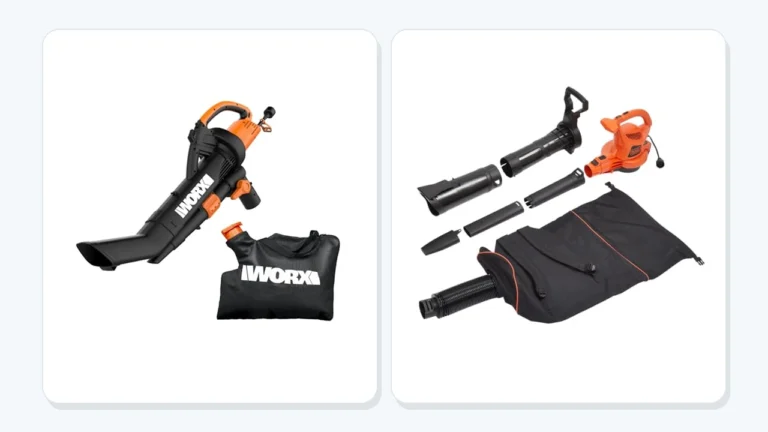
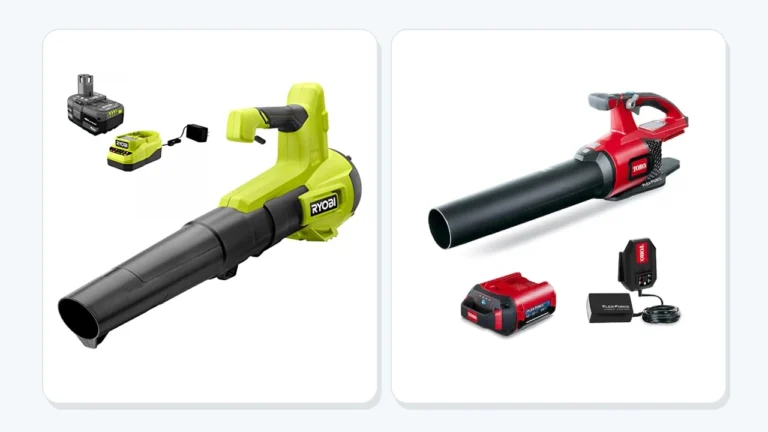
The Toro Flex and Worx WG520 are both electric leaf blowers, but they solve different cleanup problems. The Toro is a cordless model with a brushless motor, variable-speed trigger, cruise control, and turbo boost. The Worx is a corded 12-amp model with turbine fan technology and two-speed control.
Their shared 110-mph air-speed rating makes the difference in CFM worth a closer look. The WG520 is rated for 600 CFM, 35 CFM more than the Flex’s 565 CFM. That’s a modest numerical edge, not proof that one will always clear a particular pile faster: conditions such as leaf dampness, debris, surface, and how you aim the airflow matter too.
Picture clearing a patio, driveway, and front walk. If the cleanup route runs away from an outlet or around several obstacles, a cordless blower may be more convenient to move around. If you can work near power and prefer not to plan around a battery, the Worx’s corded power may suit the job better.
What the numbers mean: air speed describes how fast air exits; CFM describes how much air the blower moves. Neither figure alone tells you exactly how it will handle every pile. Both models have the same stated air speed, while the Worx has the higher stated airflow volume.
The Flex includes a 2.0-Ah battery and charger and is rated for up to 70 minutes of runtime on a charge. Treat that as a stated maximum, not a promise that every setting or cleanup will last that long. The WG520 avoids battery charging during use, but its operating area depends on access to power and a workable cord route.
Key Differences That Matter
Power source and working range
The Flex’s 60-volt battery lets you move around without a power cord following behind. That can be helpful when clearing scattered leaves from a lawn edge, walkway, or other areas where an outlet isn’t conveniently placed. The battery and charger are included, so the basic cordless setup is part of the package.
The WG520 uses a 12-amp corded electric design. It doesn’t require a charged battery or gas refills, and it can keep running while it has power. In exchange, you have to manage the cord as you move. Before choosing it, think through where the outlet is, the route you’ll take, and whether a suitable extension cord is needed.
That trade-off is more important than it may sound. If you dislike stopping to manage a cord, the Worx could turn an otherwise quick cleanup into a fussy one. If you dislike keeping a battery charged or want to avoid battery-based work sessions, the Toro’s cordless setup may not be your favorite.
Airflow and what it can tell you
The WG520’s 600 CFM rating is higher than the Flex’s 565 CFM. Both list 110 mph, so the comparison is not a difference in their stated maximum air speed. The Worx’s higher CFM indicates more stated air volume, which may be useful when moving a broader spread of loose leaves across an open area.
That doesn’t make it a guaranteed winner for every task. A compact pile, a narrow planting edge, and leaves caught in corners call for control as well as airflow. Consider what you clear most often, and don’t treat a 35-CFM difference as a measure of how much faster the blower will finish your yard.
The Flex adds a turbo boost to its variable-speed trigger. That gives you a way to call on extra airflow for a tougher spot, while the trigger supports more measured control. The WG520 offers lower and higher airflow selection through its two-speed control; that gives you a choice between gentler and stronger operation, though the control approach is not identical to the Toro’s.
Controls during cleanup
The Toro’s variable-speed trigger lets you adjust airflow as you work, and its cruise control can hold a chosen operating speed without keeping your finger on the trigger. That can make a longer pass feel more manageable, especially if you want to maintain a steady setting rather than constantly squeeze and release.
The WG520’s two-speed control keeps the choice straightforward: use lower airflow for more controlled cleanup or higher airflow for larger piles and open areas. If you value simple settings, that may be all you need. If you prefer a trigger-based adjustment and a cruise-control option, the Flex provides more control features.
More controls aren’t automatically better. A person clearing a short driveway may not care about cruise control, while someone working through a larger area may appreciate being able to maintain a setting. Match the features to the length and variety of the work, not just the number of controls.
Weight and carrying comfort
The WG520 weighs 6.4 pounds, giving you a concrete figure to consider if you’ll carry the blower between several spots. The Flex is described as lightweight, but a specific weight isn’t available here, so there’s no sound basis for saying which complete setup is lighter. The Toro’s battery is part of how it operates, and the weight you carry includes the battery.
If carrying comfort is a priority, try to compare each blower in the configuration you’d actually use. Also consider whether you’ll mostly hold it for short bursts or carry it through a longer cleanup. A published tool weight alone may not capture how comfortable either option feels in your hand.
Performance, Features, and Everyday Use
Setup is one of the clearest practical differences. With the Flex, charge the included battery, fit it to the blower, and work without managing a power cord. The stated runtime is up to 70 minutes per charge, which may be enough for many residential cleanup sessions, but the area you cover and the speed you use affect how well that maximum fits your routine.
With the WG520, there’s no battery to charge before use. Plug it into a suitable power source and it can operate continuously while power is available. That’s appealing for extended work near an outlet, but the cord affects how freely you can move and how you plan the route. Don’t assume a cord will reach every corner; check your layout and follow the blower and extension-cord instructions.
Think about your usual route before your usual pile. A small yard with an outlet in a convenient spot may be a natural fit for the corded Worx. A yard with separated cleanup areas, awkward corners, or no convenient outlet may favor the cordless Toro because the blower can travel with you.
Motor design is another difference. The Flex has a brushless motor and a cast-aluminum direct-drive head. Those are meaningful construction details, but they don’t establish a precise service life or guarantee a specific performance advantage over the Worx. The WG520 instead highlights turbine fan technology designed to move a wide stream of air.
Neither design detail should distract from the basics: the stated air speed is the same, and the Worx has the higher CFM rating. For a buyer, the best evidence to focus on is how the power source, controls, and airflow fit the actual cleanup. Don’t pay extra attention to a technical term unless it addresses a real need in your yard.
Maintenance expectations are also different from those of gas-powered equipment. The Worx is electric, so it avoids gas fumes, fuel refills, and pull starts. The Toro is battery-powered, so it also avoids gas refills and pull-starting, but it does require a charged battery for cordless use. Neither product’s facts here establish a specific maintenance schedule or repair cost.
Package contents matter if you’re trying to use the blower right away. The Flex comes with its 2.0-Ah battery and charger. The WG520 package includes the leaf blower; don’t assume a battery or charger is needed for that corded model, and don’t assume a cord is included beyond what is specified. Check what you already own and what your setup requires before buying.
For routine work on hard surfaces, either blower can move leaves and debris from areas such as walkways, decks, patios, and driveways. The WG520’s higher CFM rating may appeal for open areas and broader spreads. The Flex’s cordless operation and adjustable trigger may be more convenient when the cleanup route changes or you want to vary the airflow as you go.
There are limits to what these specs settle. They don’t say how either blower handles every wet leaf, packed debris, or yard layout. If you regularly face stubborn, damp piles, be realistic about the job and consider whether the blower is the right tool for that particular cleanup rather than assuming the higher CFM resolves it.
Pros and Cons
Flex
Pros
- ✓Cordless operation: Easier to move where outlet access is inconvenient.
- ✓Battery and charger included: Provides the basic power setup with the blower.
- ✓Flexible controls: Variable trigger, cruise control, and turbo boost support different cleanup needs.
Cons
- –Finite battery runtime: Work sessions depend on charge and the stated runtime is up to 70 minutes.
- –Lower rated airflow: 565 CFM trails the WG520’s 600 CFM rating.
WG520 600 CFM 110 MPH Airflow 2-Speed Control
Pros
- ✓Higher rated airflow: 600 CFM is 35 CFM above the Toro’s rating.
- ✓No battery charging: Corded power suits extended work near an electrical source.
- ✓Known tool weight: At 6.4 pounds, it offers a clear carrying-weight reference.
Cons
- –Cord limits movement: Route planning matters when cleaning away from an outlet.
- –Power access required: It won’t suit areas beyond a workable electrical setup.
- –Blower only included: Plan for any suitable cord needs separately.
Which One Should You Buy?
Choose the Toro Flex if you want to move around without a cord and expect that freedom to make cleanup easier. It makes particular sense when your work area is spread out or outlet access is inconvenient. Its 110-mph rating matches the Worx, and it gives you variable trigger control, cruise control, and turbo boost.
Who Should Skip This: Skip the Flex if you want to work for extended stretches without thinking about battery charge, or if the Worx’s higher 600-CFM rating is the priority for your open-area cleanup. The Toro’s stated runtime is up to 70 minutes per charge, not unlimited operation.
Choose the Worx WG520 if you have convenient power access and value continuous corded operation over freedom to roam. Its 600-CFM rating is the higher of the two, and its 6.4-pound weight gives you a specific figure to weigh against how long you expect to carry it. The lower and higher airflow settings are useful for choosing between more controlled work and broader clearing.
Who Should Skip This: Skip the WG520 if you’ll regularly clear areas far from an outlet or strongly dislike keeping a cord out of your way. Its extra rated airflow won’t help much if reaching the cleanup area becomes the main hassle.
For a small, accessible area, either may be a sensible choice. Think about what’s more likely to annoy you after a few uses: checking battery charge or managing a cord. That practical friction can matter more than the difference between 565 and 600 CFM.
If carrying weight is a deciding factor, don’t assume the Flex is lighter just because it’s called lightweight. The WG520’s stated weight is 6.4 pounds, while a comparable Flex weight isn’t established here. Compare the complete setup if you can, including the Toro’s battery, and choose based on how it feels for the kind of work you actually do.
FAQS About Toro Vs Worx Leaf Blower
Which has more airflow, the Toro Flex or Worx WG520?
The Worx WG520 is rated at 600 CFM, compared with 565 CFM for the Toro Flex. Both are rated at 110 mph.
Is the Toro Flex cordless and does it include a battery?
Yes. The Flex is a cordless 60-volt blower, and it includes a 2.0-Ah battery and charger. Its stated runtime is up to 70 minutes per charge.
Does the Worx WG520 need a battery?
No. It is a corded 12-amp electric blower, so it uses an electrical connection rather than a battery. Plan for a workable cord route and power access.
Which blower is better for a yard without a convenient outlet?
The cordless Toro Flex is the more practical fit when you can’t work near an outlet. The WG520’s corded design makes power access part of the setup.
Final Verdict: Which One Wins?
The Toro Flex wins for cordless convenience. Its included battery and charger, up-to-70-minute stated runtime, variable-speed trigger, cruise control, and turbo boost make it the better fit when freedom to move matters more than having the higher CFM rating.
The Worx WG520 wins for corded, continuous operation near power. It offers 600 CFM at the same stated 110 mph, avoids battery charging, and weighs 6.4 pounds. Pick it if your work area and cord setup make sense together.
There isn’t one best blower for every yard. Choose the Toro if a cord would frustrate you; choose the Worx if battery charging would. That’s the difference most likely to matter once the cleanup starts.

I’m Maya L. Greenwood, a lifelong plant lover who believes anyone can grow something beautiful with the right guidance. After years of testing soil mixes, pruning methods, irrigation tricks, and pest-safe solutions, I started EasyGardenTips.com to turn hard-won lessons into step-by-step advice. From seed starting and container gardens to composting and seasonal checklists, my goal is to make gardening simple, sustainable, and fun.