Worx Vs Black and Decker Leaf Blower: Which One Should You Buy?
If your yard cleanup covers long sessions and open areas, the corded Worx WG520 is the stronger fit; if you want to move around without managing a power cord, the cordless BLACK+DECKER 20V MAX is easier to carry and maneuver. Neither is the automatic winner: the right choice depends on whether you value sustained power or cordless convenience more.
The WG520 is rated for up to 600 CFM and 110 MPH, while the BLACK+DECKER reaches up to 130 MPH. Those numbers describe different things: CFM is airflow volume, and MPH is air speed, so neither figure alone tells the whole story.
Weight may also tip the decision. The Worx weighs 6.4 pounds, while the BLACK+DECKER weighs 3.7 pounds; the first runs on corded power, and the second includes a 20V MAX battery and charger.
Below, I’ll compare their airflow, power setup, handling, and everyday trade-offs. The short version: choose the Worx for extended cleanup near an outlet, or the BLACK+DECKER for lighter, cordless work on hard surfaces.
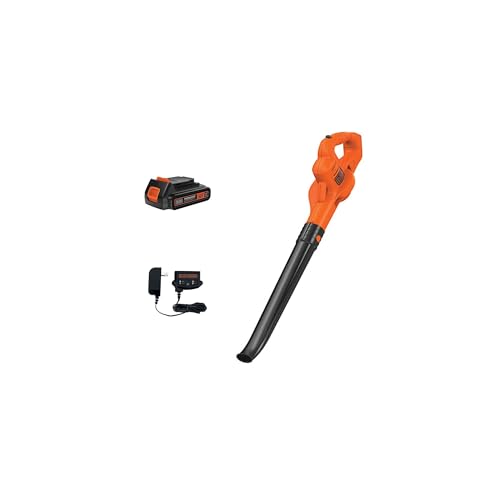
| WG520 600 CFM 110 MPH Airflow 2-Speed Control | BLACK+DECKER Cordless Leaf Blower with Battery and Charger 20V MAX |
 |
 |
Worx Vs Black and Decker Leaf Blower Detailed Comparison
The main difference is how each leaf blower delivers power. The Worx WG520 is a 12-amp corded electric model designed to keep running without battery charging or gas refills. The BLACK+DECKER is a battery-powered model that comes with a 20V MAX 1.5Ah lithium-ion battery and charger.
That changes the shape of a cleanup session. With the Worx, you need access to an outlet and have to manage the cord as you move. In return, you don’t need to pause for a battery charge during ordinary use. With the BLACK+DECKER, there’s no power cord to trail across a driveway or patio, but the battery’s available charge will influence how much you can clear before recharging.
The airflow figures need a little context, too. Worx specifies both 600 CFM and 110 MPH; BLACK+DECKER specifies up to 130 MPH. CFM measures the amount of air moved, while MPH measures air speed. Because the two products don’t provide the same pair of figures, it isn’t fair to declare one the outright airflow winner based on the numbers alone.
Consider a leaf-covered driveway with a walkway and patio nearby. The Worx’s 600 CFM rating and wide-stream turbine design are relevant when you want to move debris across an open surface. The BLACK+DECKER’s higher stated air speed and cordless design may be more appealing when you need to carry the blower between separate areas without dealing with a cord.
Handling is another clear contrast. At 3.7 pounds, the BLACK+DECKER is 2.7 pounds lighter than the 6.4-pound Worx. That difference can matter if you’re making several trips around the yard or would rather not hold a heavier tool for an extended stretch. The Worx remains described as lightweight, but its measured weight is higher.
Here’s the practical split: Worx emphasizes airflow volume and continuous corded power; BLACK+DECKER emphasizes higher stated air speed, lower weight, and freedom from a power cord. Your yard layout and cleanup habits matter more than a single headline number.
Key Differences That Matter
Airflow volume versus air speed
The WG520 has the more complete airflow specification: up to 600 CFM and 110 MPH. Its high CFM describes a substantial volume of moving air, which is useful context for clearing leaves and debris across lawns, driveways, patios, decks, and walkways. Its turbine fan is designed to send a wide stream across open areas and hard surfaces.
The BLACK+DECKER reaches up to 130 MPH, which is higher than the Worx’s stated 110 MPH. That tells you its maximum listed air speed is higher; it doesn’t tell you that it moves more air overall. Since no CFM figure is provided for the BLACK+DECKER here, avoid treating the MPH comparison as a complete performance ranking.
For a buyer, the useful question is what you’ll clear. If your regular task is pushing a broad layer of leaves across a driveway, the Worx’s airflow-volume figure is especially relevant. If you’re focused on sweeping debris from hard surfaces such as a deck, garage, or driveway, the BLACK+DECKER’s stated air speed is worth noting—but it still doesn’t settle which will feel more effective in your specific yard.
Corded power versus a rechargeable battery
The Worx runs on a 12-amp electric connection and can keep working without a battery charge or gas refill. That suits a long cleanup near a usable outlet, where stopping to recharge would be inconvenient. The trade-off is the cord: you’ll need to keep it under control as you move around the work area.
The BLACK+DECKER includes a 20V MAX 1.5Ah battery and charger. Its cordless setup makes it easier to move between the driveway, patio, and other spots without a power cord following you. Battery operation also means you should plan around charging, rather than assuming it can run continuously for as long as you need.
The battery is specified to hold a charge for up to 18 months. That’s a useful storage detail if you don’t use the blower every week, but it doesn’t tell you how long the blower runs on one charge. Runtime isn’t specified here, so base your decision on your cleanup size and charging habits—not an assumed number of minutes.
Weight and maneuvering
At 3.7 pounds, the BLACK+DECKER is notably lighter than the 6.4-pound Worx. If you have several small cleanup spots or prefer a less weighty tool in your hand, that lower figure may make the cordless model easier to handle. Its low-noise design may also appeal if you’d rather keep operating noise down, though no decibel comparison is available.
The WG520’s 6.4-pound weight is still described as lightweight, and the blower has variable-speed control. You can choose lower airflow for more controlled cleanup or higher airflow for larger piles and open spaces. That gives you a way to adjust how forcefully you’re moving debris, rather than using maximum airflow for every task.
Weight isn’t the only factor in comfort. The Worx’s corded setup asks you to watch where the cord runs, while the lighter BLACK+DECKER still requires you to keep track of its battery charge. Think about which kind of interruption is more frustrating for you: managing a cord as you move, or charging and planning around a battery.
Control and cleanup style
The Worx has two-speed control, with lower airflow for more controlled work and higher airflow for bigger piles or open areas. This can help when leaves are scattered near a spot where you don’t want to send everything flying. It also gives you a practical way to match the airflow to the job rather than defaulting to the strongest setting.
The BLACK+DECKER’s verified specifications focus on its maximum air speed, low-noise design, weight, and battery setup. A comparable speed-control feature isn’t confirmed here, so it’s better not to assume that the two models offer identical airflow adjustment. If precise control is a priority, check the controls on the exact model before buying.
Bottom line on the differences: the Worx makes more sense when airflow volume and uninterrupted corded use are your priorities. The BLACK+DECKER makes more sense when a lighter tool and cordless movement matter more than a stated CFM figure.
Performance, Features, and Everyday Use
Think first about the route you’ll take while clearing leaves. If the job stays close to an outlet, the Worx can be a practical choice for a longer session because it doesn’t rely on a charged battery. You still need to keep the cord positioned safely and out of your way, which can become a nuisance when you move around obstacles or between distant parts of the yard.
The BLACK+DECKER removes that cord-management task. It’s easier to carry from one hard surface to another without bringing a power lead along, and its 3.7-pound weight is the lower of the two. That convenience comes with a battery to charge, and the stated 1.5Ah capacity doesn’t provide enough information to promise a particular runtime. For a large or leaf-heavy yard, consider whether you can comfortably work within one battery charge.
For a broad cleanup: Worx’s 600 CFM rating and turbine fan are designed to move a wide stream of air across open areas. Its two-speed control also lets you use lower airflow for more controlled work and higher airflow for larger piles. That combination is a sensible match for someone who expects to clear a lawn edge, driveway, and patio in one session near a power source.
For routine sweeping of hard surfaces, the BLACK+DECKER’s listed maximum of 130 MPH is relevant, and the cordless setup can simplify moving between a deck, driveway, or garage. Its low-noise design may be a point in its favor if you’re mindful of sound around the home. Since no measured noise level is specified, don’t treat “low noise” as a guarantee of silent operation or a precise comparison with the Worx.
Both models are electric, so neither asks you to refill gas or deal with gas-engine pull starts. The Worx is specifically described as avoiding gas, fumes, and pull starts, and its corded design removes battery charging from its power routine. The BLACK+DECKER avoids a power cord during use, but it does add battery charging to your upkeep.
Storage habits differ, too. The BLACK+DECKER battery is specified to hold a charge for up to 18 months, which is useful if the blower sits between occasional jobs. That does not mean it will run for 18 months on one charge; it refers to charge retention during storage. The Worx has no battery to store or recharge, though you’ll need an appropriate outlet when you want to use it.
One practical limit is that neither set of verified specifications gives you the same complete performance picture. Worx provides both CFM and MPH, while BLACK+DECKER provides MPH but no CFM figure here. Battery runtime, cord length, and noise level aren’t specified, either, so don’t base a purchase on assumptions about those details.
Before choosing, map out the actual job. A compact patio near an outlet may make corded power feel simple; a yard with separated cleanup areas may make the cordless design feel worth planning around a battery. If you’re clearing a large area, consider both the amount of debris and how long you expect to work, not just the maximum air-speed number.
Pros and Cons
WG520 600 CFM 110 MPH Airflow 2-Speed Control
Pros
- ✓600 CFM airflow: Moves a broad stream across open areas.
- ✓Continuous corded power: No battery charging or gas refills during cleanup.
- ✓Two-speed control: Lower airflow suits controlled work; higher airflow suits larger piles.
Cons
- –Needs corded power: Less convenient far from an outlet.
- –Heavier of the pair: Weighs 6.4 pounds versus BLACK+DECKER’s 3.7.
BLACK+DECKER Cordless Leaf Blower with Battery and Charger 20V MAX
Pros
- ✓Light 3.7-pound design: Easier to carry between cleanup areas.
- ✓Cordless operation: No power cord to manage while moving.
- ✓130 MPH maximum: Higher stated air speed than the Worx.
- ✓Battery and charger included: Ready for battery-powered use.
Cons
- –Battery-powered: Charging must be part of your cleanup routine.
- –No CFM figure here: Airflow volume can’t be directly compared with the Worx.
Which One Should You Buy?
Choose the Worx WG520 if your cleanup often takes a while, you have convenient access to an outlet, and you want to avoid stopping for a battery charge. Its 600 CFM rating, turbine fan, and two-speed control suit clearing broad areas and adjusting airflow for different tasks. It’s also the better match if you’d rather manage a cord than plan around battery charging.
Who Should Skip This: Skip the Worx if a trailing cord would make your yard work frustrating, or if you regularly need to move far from an outlet. Its 6.4-pound weight is also worth considering if keeping the tool as light as possible is your top priority.
Choose the BLACK+DECKER 20V MAX if you want a lighter blower that moves freely between hard surfaces without a power cord. It weighs 3.7 pounds, reaches up to 130 MPH, and includes a 20V MAX 1.5Ah battery and charger. Its specified charge retention may suit occasional use, but it doesn’t establish how long the blower runs per charge.
Who Should Skip This: Skip the BLACK+DECKER if your priority is a stated CFM rating for comparing airflow volume, or if you don’t want to plan around charging. For a long cleanup, the unknown runtime may be a concern; consider your yard size and charging options before committing.
Choosing the wrong setup can turn a simple job into an annoyance. The Worx may feel cumbersome if its cord gets in the way, while a cordless blower may require a pause if its charge doesn’t cover the work you have planned. If neither trade-off sounds acceptable, verify the cord and battery details that matter for your yard before deciding.
FAQS About Worx Vs Black and Decker Leaf Blower
Which leaf blower has higher air speed, Worx WG520 or BLACK+DECKER 20V MAX?
The BLACK+DECKER is rated for up to 130 MPH, compared with up to 110 MPH for the Worx WG520. That compares air speed, not total airflow volume.
Does the Worx WG520 move more air than the BLACK+DECKER?
The Worx has a stated 600 CFM rating, but a matching CFM figure isn’t available for the BLACK+DECKER here. You can’t make a direct airflow-volume comparison from these figures alone.
Which is lighter, the Worx or BLACK+DECKER leaf blower?
The BLACK+DECKER weighs 3.7 pounds, while the Worx weighs 6.4 pounds. If low weight is your main concern, the BLACK+DECKER has the advantage on the stated figures.
Which model is better for a long cleanup session?
The Worx may suit a long session near an outlet because it runs on corded power without battery charging. The BLACK+DECKER is cordless, but its runtime isn’t specified, so plan around your work area and charging needs.
Final Verdict: Which One Wins?
The Worx WG520 wins for extended cleanup near an outlet. Its 600 CFM airflow rating, two-speed control, and continuous corded power suit broad yard and hard-surface clearing when cord management won’t get in your way.
The BLACK+DECKER 20V MAX wins for lighter, cordless convenience. At 3.7 pounds, with up to 130 MPH and a battery and charger included, it’s a more natural fit for moving between separate cleanup spots without a power cord.
Pick based on the interruption you’d rather avoid: the Worx asks you to manage a cord, while the BLACK+DECKER asks you to manage battery charge. For a large job, lean Worx if an outlet is handy; for lighter, mobile cleanup, lean BLACK+DECKER.

I’m Maya L. Greenwood, a lifelong plant lover who believes anyone can grow something beautiful with the right guidance. After years of testing soil mixes, pruning methods, irrigation tricks, and pest-safe solutions, I started EasyGardenTips.com to turn hard-won lessons into step-by-step advice. From seed starting and container gardens to composting and seasonal checklists, my goal is to make gardening simple, sustainable, and fun.