Do Raised Garden Beds Have Bottoms? When to Use a Solid Base
Most traditional raised garden beds do not have solid bottoms. They are usually open underneath, allowing plant roots to grow into the native soil while excess water drains naturally. However, elevated raised beds, raised planters, and certain beds installed on patios or decks may need a supported bottom with proper drainage openings.
Whether a raised bed needs a bottom depends on its location, construction, and intended use. A wooden or metal frame placed directly on healthy garden soil generally works best without a solid base. An elevated planter standing on legs needs a bottom strong enough to support its growing medium.
Adding the wrong material underneath a raised bed can create drainage problems, limit root growth, or trap excess moisture. Plastic sheets, landscape fabric, cardboard, and hardware cloth also serve different purposes, so they shouldn’t be treated as interchangeable.
In this article, I explain which raised garden beds have bottoms, when a solid base is necessary, what materials work underneath different designs, and how to manage drainage, weeds, and burrowing pests. You’ll also learn how to prepare raised beds on grass, soil, concrete, and decks without restricting healthy plant growth.
Do Raised Garden Beds Have Bottoms? Understanding the Designs
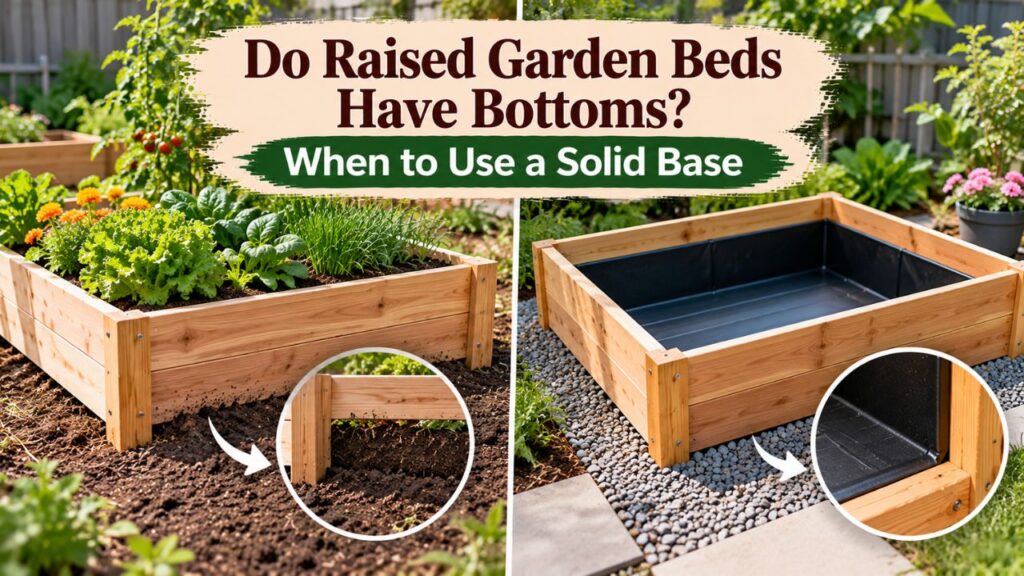
Raised garden beds can have open, partially covered, or fully supported bottoms. The correct design depends mainly on whether the bed sits directly on the ground or is raised above it.
The term “raised bed” describes an elevated growing area, not a specific type of bottom.
Open-Bottom Raised Garden Beds
An open-bottom raised bed consists of a frame that holds soil above the surrounding ground without a solid floor.
Common examples include:
- Wooden raised beds constructed directly on a lawn or garden.
- Galvanized metal raised bed kits placed on soil.
- Brick or stone garden beds built over natural ground.
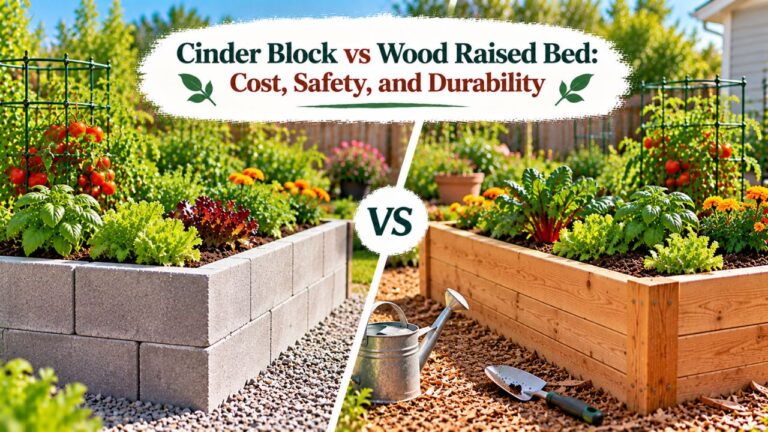
- Concrete block raised beds with open centers.
- Unframed garden beds made from mounded soil.
These beds usually don’t require a separate bottom.
Plant roots can extend through the growing medium into the soil underneath, provided the native ground is suitable.
This is particularly useful for crops such as tomatoes, peppers, squash, and other vegetables that benefit from substantial rooting space.
According to the University of Maryland Extension’s raised-bed gardening guidance, raised beds placed on natural ground allow roots to grow into the underlying soil, making them function similarly to traditional in-ground gardens.
Raised Garden Beds With Solid Bottoms
Some raised beds have an enclosed bottom that physically supports the growing medium.
These are commonly called elevated garden beds, raised planter boxes, or standing garden planters.
They usually include:
- A wooden or metal planting container.
- Legs or another supporting frame.
- A reinforced bottom or support panel.
- Drainage openings.
- A growing medium suitable for container gardening.
Because the soil doesn’t connect with the ground below, roots remain within the planter.
The bottom must support the weight of wet soil, plants, and irrigation water without bending or collapsing.
Raised Beds With Mesh or Permeable Bottoms
Some gardeners install wire mesh or permeable fabric underneath a raised bed.
These materials serve different purposes.
Hardware cloth helps prevent certain burrowing animals from entering the growing area.
Permeable landscape fabric can help retain growing media in certain installations while allowing water to pass through.
Neither material functions like a rigid structural floor.
A raised bed may therefore have a protective layer underneath while still being considered an open-bottom bed.
Open-Bottom vs. Closed-Bottom Raised Garden Beds
Understanding the differences between these designs helps determine which is suitable for your garden.
| Feature | Open-Bottom Raised Bed | Closed-Bottom Raised Bed |
| Typical location | Natural ground or garden soil | Patios, decks, and elevated stands |
| Root growth | Can extend into native soil | Limited to container depth |
| Drainage | Depends on soil underneath | Requires reliable drainage outlets |
| Growing medium | Suitable topsoil and compost blend | Usually a container-appropriate mix |
| Soil moisture | May access deeper ground moisture | Depends on water stored in the container |
| Weed control | Ground weeds may enter if not removed | Separated from underlying weeds |
| Structural support | Ground supports the soil | Bottom and frame support the soil |
| Best application | Permanent vegetable gardens | Elevated planters and contained growing areas |
Why Open-Bottom Beds Work Well on Natural Ground
Open-bottom beds connect the raised growing medium with the existing soil.
This provides several practical advantages.
First, roots may grow deeper than the frame itself.
For example, a raised bed with a 10-inch-tall frame can provide more than 10 inches of rooting space if the soil below is healthy and penetrable.
Second, water can move between the raised soil and the underlying ground, depending on soil conditions.
Third, the design doesn’t require an additional structural bottom, reducing material costs and construction work.
However, an open bottom doesn’t guarantee perfect drainage.
If the native soil is severely compacted or constantly saturated, drainage problems may still occur.
Why Closed-Bottom Beds Need More Careful Planning
Closed-bottom raised beds function more like large planting containers.
Because roots cannot extend into the ground, the planter must provide enough soil depth and volume for the intended crops.
Excess water also needs a reliable exit.
Without drainage openings, water can collect near the bottom and reduce oxygen availability around roots.
Closed-bottom beds may require more frequent watering because plants cannot access moisture in the soil below.
The design must also withstand the weight of the growing medium when fully saturated.
Should a Raised Garden Bed Have a Bottom on Grass or Soil?
No, a traditional raised garden bed installed on grass or natural soil generally does not need a solid bottom.
Leaving the base open is usually the simplest and most practical approach.
However, prepare the ground properly before adding the frame and growing medium.
How to Prepare an Open-Bottom Raised Bed on Grass
Building directly over untreated grass may allow established vegetation to grow through the new soil.
Prepare the location before filling the bed.
Follow these steps:
- Mark the intended raised bed location.
- Remove persistent weeds and unwanted vegetation.
- Strip away the grass or suppress it before installation.
- Remove large stones and construction debris.
- Check whether the underlying soil drains properly.
- Loosen severely compacted soil where necessary.
- Place the raised bed frame directly on the prepared ground.
- Fill it with suitable raised bed soil.
You don’t need to excavate the entire area unless there is a specific problem with the existing ground.
If the native soil is healthy, keeping disturbance limited can preserve its structure.
Should You Put Cardboard Under a Raised Garden Bed?
Cardboard is sometimes used as a temporary barrier to suppress existing grass and weeds.
Plain cardboard eventually decomposes, allowing roots and water to move through the underlying soil.
However, it is not always necessary or beneficial.
The University of Minnesota Extension’s raised-bed recommendations explain that barriers between raised bed soil and the ground are generally unnecessary. Cardboard can temporarily interfere with water infiltration until it breaks down.
For reliable root access and drainage, removing or suppressing vegetation before installing the bed is preferable.
If cardboard is used as part of an advance weed-control process, remove it before filling the bed once the vegetation has been suppressed.
Avoid using wax-coated cardboard, plastic-coated packaging, or materials containing unknown chemical residues.
Should You Put Landscape Fabric Under a Raised Bed?
Landscape fabric is generally unnecessary beneath raised beds placed directly on suitable garden soil.
Although some fabrics allow water through, they can restrict root movement and may become difficult to remove after roots grow into them.
Fabric also doesn’t guarantee permanent weed prevention.
Persistent weeds may grow through openings or establish themselves in the soil above the material.
For an ordinary ground-level raised bed, preparing the site and maintaining the growing area is usually better than adding a permanent fabric barrier.
Do Raised Garden Beds Need Bottoms on Concrete or Patios?
Raised beds installed on concrete, pavers, or other hard surfaces need a different approach.
A separate rigid bottom isn’t always required if the frame sits directly on a stable surface. However, the hard surface already prevents roots from growing downward.
The bed must therefore provide adequate soil depth and drainage.
Can an Open-Bottom Raised Bed Sit on Concrete?
Yes. A wooden or metal raised bed frame can sit directly on concrete without a built-in bottom.
The concrete acts as the physical boundary beneath the growing medium.
However, there are important differences from an open-bottom bed on natural ground:
- Roots cannot extend below the concrete.
- Water cannot drain directly into native soil.
- Moisture must escape through an appropriate drainage route.
- The bed may experience additional heat from the surrounding pavement.
- Soil can wash out if the frame has large gaps at its base.
Before installing the bed, check the slope and drainage of the paved surface.
Water should not remain trapped beneath the growing medium or collect against nearby structures.
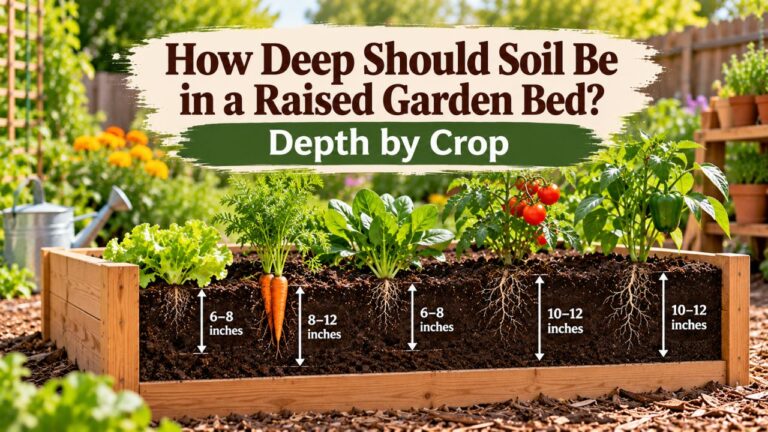
How Deep Should Soil Be in a Raised Bed on Concrete?
Soil depth becomes especially important when the bed sits on an impermeable surface.
University of Maryland Extension recommends the following minimum growing depths for raised beds on hard surfaces:
| Crop type | Recommended growing depth |
| Leafy greens | At least 8 inches |
| Beans | At least 8 inches |
| Cucumbers | At least 8 inches |
| Peppers | 12–24 inches |
| Tomatoes | 12–24 inches |
| Squash | 12–24 inches |
These recommendations assume a suitable growing medium and adequate growing space.
Large plants may need additional soil volume, even when the minimum depth is provided.
For a hard-surface raised bed, a lightweight, well-draining growing mixture is often more suitable than dense native garden soil.
Should You Put Plastic Under a Raised Bed on Concrete?
Avoid placing an unbroken, impermeable plastic sheet beneath the soil unless the installation includes a properly designed drainage system.
Solid plastic can trap water inside the raised bed.
However, a protective liner may sometimes be appropriate to prevent staining, retain soil, or direct drainage away from vulnerable surfaces.
In those cases, the installation needs drainage outlets that allow excess water to escape safely.
A permeable material may be useful for retaining loose growing media without completely blocking drainage.
Do Elevated Raised Garden Beds Need a Bottom?
Yes. Elevated raised garden beds supported by legs need a strong bottom that holds the growing medium.
Unlike ground-supported beds, the soil cannot rest directly on the earth.
The base becomes part of the planter’s structure.
What Materials Can Be Used for Elevated Garden Bed Bottoms?
Common options include:
- Closely spaced, structurally supported wooden boards.
- Manufacturer-designed metal support panels.
- Reinforced planter bases.
- Properly supported rigid plastic planter bottoms.
- Structural supports combined with a suitable permeable liner.
The material must be compatible with outdoor moisture exposure and capable of carrying the expected load.
A thin sheet of landscape fabric alone is not a suitable structural bottom for a large, heavy planter.
The supporting frame should carry the weight instead of relying on unsupported fabric.
How to Drain an Elevated Garden Bed
A closed-bottom planter needs openings that allow excess water to leave the growing medium.
Follow these general principles:
- Use a bottom designed to support the wet growing medium.
- Provide suitable drainage openings or gaps.
- Keep growing media from escaping through oversized openings.
- Use permeable support fabric where necessary.
- Avoid blocking drainage outlets with soil or debris.
- Check that discharged water drains away from the structure.
The number and size of drainage openings depend on the planter’s dimensions and construction.
Follow manufacturer instructions when using a purchased raised planter.
Can You Build an Elevated Bed Without a Solid Bottom?
An elevated planter can have a supported, permeable base instead of a continuous rigid panel.
For example, a wooden frame may support a suitable heavy-duty planter liner or manufactured planting insert.
However, the liner must be designed for the load and properly supported.
Ordinary landscape fabric stretched between unsupported legs is not suitable for holding a large volume of wet soil.
What Should You Put at the Bottom of a Raised Garden Bed?
The correct material depends on the problem you’re trying to solve.
Some gardeners want to block weeds, others need to prevent burrowing animals, and some want to protect a patio surface.
These situations require different solutions.
| Bottom material | Main purpose | Recommendation |
| No barrier | Root access and natural drainage | Best for most beds on healthy soil |
| Hardware cloth | Reduce entry by burrowing rodents | Useful when pests are present |
| Plain cardboard | Temporary weed suppression | Optional, with drainage limitations |
| Permeable landscape fabric | Retain soil in certain installations | Better suited to specific planter or patio designs |
| Solid plastic sheet | Moisture isolation | Avoid across open-ground beds |
| Wooden support base | Hold soil in an elevated planter | Required for appropriate raised planter designs |
| Gravel layer | Commonly claimed to improve drainage | Not a substitute for proper drainage |
Hardware Cloth for Burrowing Pest Protection
Hardware cloth is a rigid wire mesh with relatively small openings.
It can help prevent gophers, voles, and certain other burrowing animals from entering the bed from underneath.
For many installations, ¼-inch galvanized hardware cloth is a practical choice.
To install it:
- Measure the bottom opening of the frame.
- Cut the mesh to fit, allowing enough material to secure the edges.
- Wear gloves when handling sharp cut wire.
- Position the mesh beneath the frame.
- Secure it with suitable fasteners or by trapping its edges under the frame.
- Check that no large gaps remain around the perimeter.
The mesh allows water and many roots to pass through while creating a barrier against larger burrowing pests.
Use corrosion-resistant materials suitable for prolonged soil contact.
Ordinary chicken wire has larger openings and may not provide adequate protection against smaller burrowing animals.
Should You Put Gravel or Rocks at the Bottom?
Generally, no.
A layer of rocks or gravel is not necessary for drainage in a traditional raised bed.
In an enclosed planter, placing coarse gravel beneath fine-textured growing media can create a change in pore size that delays water movement into the lower layer.
This may leave more water in the planting mix than expected.
Gravel also takes up valuable space that could otherwise support plant roots.
Instead, focus on suitable growing media, sufficient soil depth, and functioning drainage outlets.
Should You Put Logs and Branches at the Bottom?
Some gardeners place wood, branches, or other organic materials in deep raised beds.
This approach is related to hugelkultur, a growing method that incorporates woody materials into a planting mound or bed.
It can reduce the amount of purchased soil needed in a tall bed, but it introduces tradeoffs.
Wood decomposes gradually, so the soil surface may settle.
Fresh woody material can temporarily affect nitrogen availability near the decomposing material.
Large air gaps may also form around poorly arranged branches.
If using woody fill, keep a substantial layer of suitable growing medium above it and expect additional settling.
For shallow raised beds, filling the growing area with appropriate soil is generally more practical.
How to Prepare the Bottom of a New Raised Garden Bed
A few preparation steps help avoid drainage, root-growth, and pest problems before the bed is filled.
Step 1: Identify the Surface Beneath the Bed
Determine whether the raised bed will sit on:
- Healthy natural soil.
- Grass or weedy ground.
- Compacted clay.
- Concrete or pavers.
- A deck or balcony.
- A supported elevated frame.
The surface determines whether the bed can remain open or needs a contained design.
Step 2: Check the Drainage Conditions
For beds on natural soil, examine whether water drains away after heavy rainfall.
If the soil remains saturated for long periods, correct the drainage problem before building.
A raised frame alone cannot guarantee proper drainage when the underlying site is persistently waterlogged.
For paved areas, determine where irrigation water will flow.
Avoid placing beds where drainage could damage buildings, foundations, or surrounding surfaces.
Step 3: Remove Unwanted Vegetation
Clear grass, weeds, and persistent roots from the intended footprint.
Do not assume that adding several inches of soil will permanently eliminate established perennial weeds.
Some aggressive weeds can regrow through the growing medium.
Step 4: Install a Barrier Only When Needed
Choose the barrier according to its actual purpose.
For most beds on suitable ground, no barrier is necessary.
For burrowing rodents, install appropriate hardware cloth.
For elevated planters, use a supported bottom and functioning drainage system.
For paving, consider soil retention and the movement of drainage water.
Step 5: Fill the Bed With Suitable Growing Soil
Once the frame and base are ready, add appropriate growing medium.
For open-bottom beds, a mixture containing suitable mineral topsoil and finished compost can provide a stable root environment.
For elevated planters, choose a medium suitable for container-like growing conditions.
Water gently after filling and check for uneven settling.
What Happens if You Put the Wrong Bottom Under a Raised Bed?
An unsuitable base can affect how plants grow and how long the raised bed remains functional.
Poor Drainage and Waterlogged Roots
A solid barrier without an effective drainage outlet can trap excess water.
Waterlogged soil contains less oxygen in the spaces around roots.
Plants may develop yellowing leaves, slow growth, and damaged roots.
Correct the drainage pathway rather than simply reducing watering indefinitely.
Restricted Root Growth
Permanent barriers can prevent roots from extending into the native ground.
This reduces the total rooting volume available to larger plants.
The effect is particularly important in shallow raised beds.
If the bottom must remain enclosed, increase the growing depth and volume according to the crops being planted.
Persistent Weed Problems
A poorly installed weed barrier may allow persistent weeds to grow through gaps or openings.
Weeds can also establish from seeds that land on the soil surface.
Removing existing vegetation and maintaining the bed are more dependable than expecting a bottom layer to eliminate every weed.
Damage to Decks or Supporting Structures
A poorly designed raised bed on a wooden deck can trap moisture against the surface.
Standing water may contribute to deterioration of susceptible materials.
Heavy soil can also overload structures that were not designed to support large planters.
Before installing a raised bed on an elevated deck or balcony, verify that the structure can safely support its fully loaded weight.
For uncertain structural conditions, obtain guidance from a qualified building professional.
Do Raised Beds Need a Bottom to Keep Soil From Washing Away?
Not necessarily.
Ground-supported raised beds use their surrounding frames to contain the soil.
When the frame rests securely on reasonably level ground, most of the growing medium remains inside without a solid bottom.
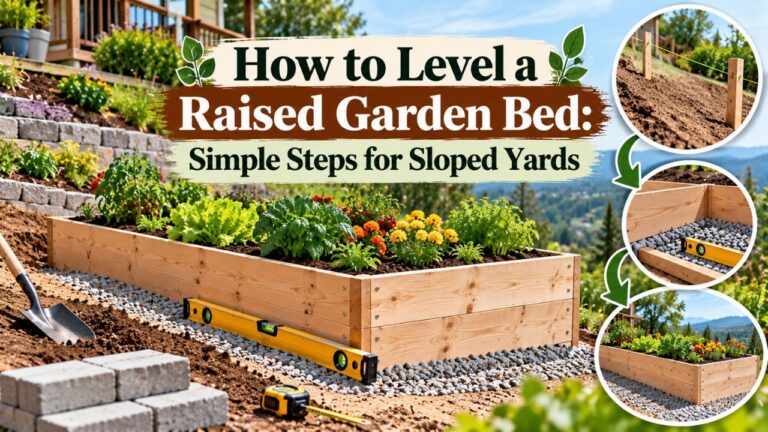
However, soil can escape through gaps beneath uneven frames or along poorly fitted corners.
How to Prevent Soil Loss From Open-Bottom Beds
If soil washes out during watering or rainfall:
- Check whether the frame sits evenly on the ground.
- Correct large gaps beneath the sidewalls.
- Reduce concentrated water runoff.
- Use gentle irrigation.
- Protect exposed soil with suitable mulch.
- Avoid directing downspouts or surface runoff into the bed.
A level, well-supported frame is usually enough for ordinary open-ground installations.
When a Soil-Retaining Liner Makes Sense
A permeable liner may be useful when a raised bed is installed over pavers or another surface where soil could escape through gaps.
Select a material that retains growing media without completely blocking drainage.
A liner intended only to contain soil should not be treated as a waterproof bottom.
If the design requires waterproofing, it also needs a deliberate drainage system.
Should You Use a Bottom if the Ground Is Contaminated?
A separate growing system may be necessary when the underlying soil contains harmful contaminants.
This is especially important for vegetable gardens on properties with a history of industrial use, dumping, or potentially lead-contaminated soil.
An ordinary open-bottom frame does not isolate plant roots from contaminated ground.
Why a Simple Fabric Barrier May Not Be Enough
Landscape fabric and hardware cloth are permeable.
They do not reliably prevent roots, water, or dissolved contaminants from crossing between growing layers.
Therefore, they should not be considered contamination-control barriers.
Safer Raised Bed Options for Contaminated Sites
Depending on the contaminant and site conditions, a more appropriate design may include:
- A fully contained planter with clean growing media.
- An engineered barrier separating the growing medium from contaminated soil.
- Drainage designed to avoid contact with contaminated material.
- Appropriate site testing and remediation before planting edible crops.
The correct design depends on the nature and extent of contamination.
Use local university extension guidance or qualified environmental advice rather than relying on an ordinary plastic sheet as a universal solution.
Conclusion
So, do raised garden beds have bottoms? Most traditional raised beds placed directly on natural soil do not, and they generally work best with open bottoms.
An open base allows roots to extend into suitable native soil and lets water move between the growing medium and the ground beneath it.
However, elevated planters need structurally supported bottoms with drainage openings. Beds on concrete or patios require careful planning for soil depth, water movement, and growing-medium selection.
For most backyard vegetable gardens, an open-bottom frame placed on prepared ground is the simplest and most practical choice.
Add hardware cloth when burrowing pests are a concern, but avoid unnecessary plastic sheets, gravel layers, or permanent barriers that interfere with drainage and root growth.
The right bottom design should match the location, soil conditions, and crops you intend to grow.
FAQs About Do Raised Garden Beds Have Bottoms
Do Wooden Raised Garden Beds Need a Bottom?
No. Wooden raised garden beds placed directly on suitable soil generally do not need a bottom. Elevated wooden planters supported by legs require a strong base with proper drainage.
Do Metal Raised Garden Beds Have Bottoms?
Many galvanized metal raised bed kits are sold without bottoms because they are designed to sit directly on natural ground. Some elevated metal planters have built-in bases. Check the manufacturer’s specifications before purchasing.
Can I Put a Raised Garden Bed Directly on Dirt?
Yes. Placing a raised garden bed directly on clean, suitable dirt is generally recommended for traditional open-bottom designs. Remove unwanted vegetation and check drainage before filling the frame.
Will Grass Grow Through an Open-Bottom Raised Bed?
It can. Persistent grass and perennial weeds may grow through newly added soil, especially if the underlying vegetation wasn’t removed or suppressed. Preparing the site before filling the bed reduces this problem.
Can I Put a Raised Garden Bed Directly on Concrete?
Yes, but the concrete prevents roots from reaching native soil. Provide enough growing depth, a suitable growing medium, and a drainage route that allows excess water to escape.
What Is the Best Bottom for a Raised Garden Bed With Gophers?
¼-inch galvanized hardware cloth is a practical option for excluding many burrowing rodents. Secure the mesh beneath the frame and close gaps around the edges. It provides protection while allowing water and roots to pass through.
Should I Line the Bottom of My Raised Garden Bed With Plastic?
Generally, no. A solid plastic sheet across the bottom of a bed on natural soil can restrict drainage and root growth. For enclosed planters requiring waterproofing, use a properly designed liner with drainage outlets rather than an unbroken sheet that traps water.

I’m Maya L. Greenwood, a lifelong plant lover who believes anyone can grow something beautiful with the right guidance. After years of testing soil mixes, pruning methods, irrigation tricks, and pest-safe solutions, I started EasyGardenTips.com to turn hard-won lessons into step-by-step advice. From seed starting and container gardens to composting and seasonal checklists, my goal is to make gardening simple, sustainable, and fun.