Raised Beds vs Rows: Which Is Better for Your Vegetable Garden?
Raised beds are generally better for small vegetable gardens, intensive planting, improved drainage, and easier soil management, while traditional garden rows are often better for large growing areas, lower setup costs, and crops that need more space. Both methods can grow healthy vegetables, but their efficiency depends on soil conditions, garden size, watering, and planting layout.
Raised beds organize vegetables into defined growing areas, often surrounded by permanent pathways. Traditional row gardening places crops in long, usually single-file lines with open spaces between them for walking, cultivating, and harvesting.
The biggest difference isn’t simply whether the soil is raised. It’s how much of the garden is used for growing plants instead of pathways, how the soil is managed, and how easily each planting area can be maintained.
Raised beds can make better use of limited space, but they require more preparation and may dry out faster. Traditional rows provide flexibility and room for larger plantings, although wide pathways can reduce the percentage of land used for crops.
Understanding these differences helps determine which method suits your vegetables, available space, soil conditions, and gardening budget.
Raised Beds vs Rows: Key Differences
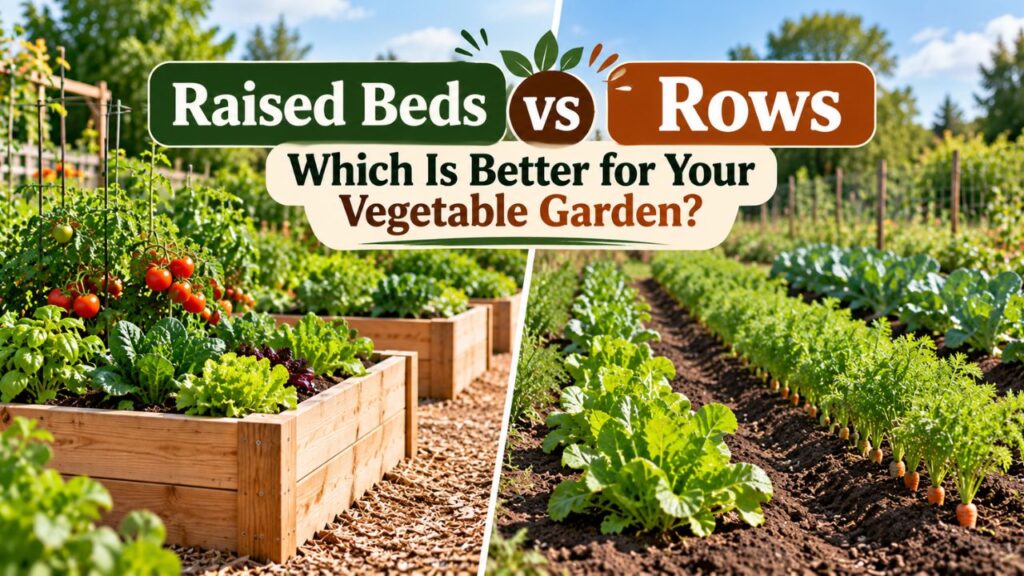
Raised beds and traditional garden rows differ mainly in planting arrangement, soil preparation, space efficiency, and maintenance.
| Feature | Raised beds | Traditional garden rows |
| Garden layout | Wide, defined planting areas | Long, individual planting rows |
| Soil elevation | Above surrounding ground | Usually level with the ground |
| Plant spacing | Often intensive, with plants in blocks | Usually wider spacing between rows |
| Growing space efficiency | Often higher in small gardens | Depends on row and pathway widths |
| Drainage | Usually improved with suitable soil | Depends mainly on native soil |
| Soil compaction | Reduced by permanent pathways | Can occur when walking near plants |
| Watering | May require more frequent attention | Often benefits from larger soil volume |
| Initial cost | Higher for framed beds and purchased soil | Usually lower with suitable native soil |
| Weed management | Less exposed soil with suitable spacing | More pathway area may require maintenance |
| Garden equipment | Mostly hand tools | Can accommodate tillers and cultivators |
| Accessibility | Taller beds reduce bending | Plants remain near ground level |
| Best application | Small gardens and difficult soil | Large gardens and long crop rows |
Neither method is universally better. The most effective system uses the available growing area without sacrificing healthy roots, adequate sunlight, or proper spacing.
What Is the Difference Between Raised Beds and Garden Rows?
The main structural difference is how vegetables are arranged within the growing area.
Raised beds concentrate plants in a wider section of prepared soil, while traditional rows separate crop lines with working spaces.
How Raised Bed Gardening Works
A raised garden bed is a defined area of growing soil elevated above the surrounding ground.
Raised beds may be enclosed with wood, metal, stone, or other materials. They can also be made without frames by shaping soil into wide, elevated mounds.
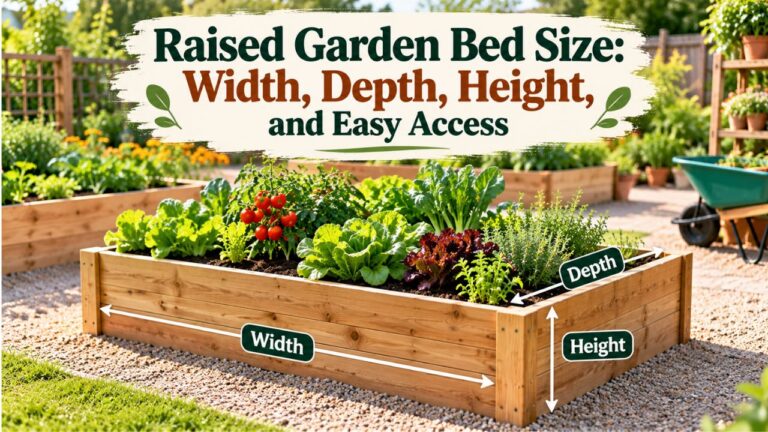
Most home vegetable raised beds are designed so gardeners can reach the center without stepping into the planting area.
Common features include:
- Growing areas approximately 3–4 feet wide
- Permanent pathways between beds
- Soil prepared specifically for plant growth
- Vegetables arranged in blocks, staggered patterns, or multiple short rows
- Limited foot traffic on the growing soil
Raised beds can remain in place for many growing seasons.
Their defined planting areas make crop planning, mulching, watering, and soil maintenance relatively straightforward.
How Traditional Row Gardening Works
Traditional row gardening involves planting vegetables in long, narrow lines with spaces between the rows.
The spaces provide access for watering, weeding, cultivating, and harvesting.
Row spacing varies considerably depending on the crop and equipment being used.
For example, sweet corn, potatoes, and bush beans may be arranged in long rows, while vegetables with wider growth habits require additional spacing.
Traditional rows are particularly convenient for gardeners managing larger areas with hoes, wheel cultivators, or mechanical equipment.
However, maintaining separate walking spaces between individual rows can reduce the proportion of the garden occupied by crops.
Can You Plant Rows Inside Raised Beds?
Yes. Raised beds can contain multiple planting rows.
A 4-foot-wide raised bed, for example, may hold several closely spaced rows of carrots, onions, radishes, or lettuce.
The difference is that gardeners work from the pathways outside the bed instead of walking between every individual planting row.
Raised beds can also use block planting, where plants are arranged in a grid rather than separate rows.
The best arrangement depends on mature plant size and the spacing recommended for the crop.
Which Uses Garden Space Better: Raised Beds or Rows?
Raised beds often use limited garden space more efficiently because they eliminate the need for walkways between every planting row.
Traditional rows can still be effective, particularly when the growing area is large enough that pathway space is less restrictive.
Raised Beds Support Intensive Planting
In a raised bed, vegetables can be arranged throughout the growing area while access remains outside the bed.
For example, carrots can be planted in several closely spaced lines rather than one long row with walking space on either side.
This approach concentrates growing space and reduces the amount of bare ground dedicated to movement.
According to Oklahoma State University Extension’s raised-bed gardening guidance, raised beds allow more plants to occupy a given garden area by reducing unnecessary walking paths between individual rows.
However, intensive planting still requires appropriate spacing.
Crowding vegetables too closely can increase competition for water, nutrients, and sunlight while limiting airflow.
Traditional Rows Need More Working Space
Single-row gardening typically leaves enough room between crop lines for people or equipment to move.
This is useful for maintaining large vegetable plots.
However, some traditional row arrangements leave more space than necessary for small crops.
For example, growing lettuce in single rows separated by wide walking paths may use more total garden area than planting lettuce in a broad bed.
The difference is less important when growing crops that naturally require substantial space.
Does Intensive Planting Always Produce More Vegetables?
No. Intensive planting can increase the number of plants within a defined area, but it does not guarantee higher production from every individual plant.
When plants compete heavily for resources, their growth and yields may decline.
Successful intensive gardening requires:
- Appropriate spacing for mature plants
- Sufficient sunlight throughout the planting area
- Consistent moisture
- Adequate soil nutrients
- Good airflow between plant canopies
Raised beds are often advantageous for maximizing production per square foot of a small garden.
Traditional rows can be equally productive when crops receive suitable spacing and growing conditions.
Raised Beds vs Rows for Soil Quality and Drainage
Soil conditions can strongly influence which garden layout performs better.
Raised beds provide more flexibility for improving difficult soil, while traditional rows depend more directly on the existing ground.
Raised Beds Improve Growing Conditions in Poor Soil
Raised beds allow gardeners to create an improved upper growing layer using suitable topsoil and finished compost.
This can be helpful where the native ground contains heavy clay, rocks, or compacted soil.
Because the growing area is elevated, water can move through the added soil and into suitable ground beneath it.
The University of Maryland Extension’s guidance on growing vegetables in raised beds identifies improved drainage, reduced soil compaction, and faster spring warming among the advantages of raised-bed gardening.
However, raising the soil does not automatically eliminate severe drainage problems.
Waterlogged underlying ground, impermeable barriers, and poor site grading can still cause excess moisture to collect.
Traditional Rows Depend on Native Soil Conditions
Traditional garden rows use the existing ground as the primary growing medium.
When the soil is naturally deep, loose, and well-draining, this can provide excellent growing conditions.
Roots can extend into the surrounding soil without being restricted by an enclosed planter bottom.
However, compacted or poorly drained soil may require improvement.
Finished compost, reduced foot traffic, and appropriate soil management can help maintain better structure.
A permanent row system with designated pathways can also reduce compaction without requiring wooden or metal frames.
Which Is Better for Clay Soil?
Raised beds generally offer an advantage when clay soil remains compacted or waterlogged.
An improved upper growing layer provides a more favorable environment for developing roots.
Traditional rows can also work in clay soil, especially when the soil has good structure and drainage.
For low-cost gardening on difficult ground, unframed raised rows or mounded beds can provide a useful compromise.
Raised Beds vs Rows for Watering and Moisture Retention
Water requirements vary with soil texture, plant density, weather, and irrigation method.
Raised beds often need closer moisture monitoring because their elevated soil can dry faster.
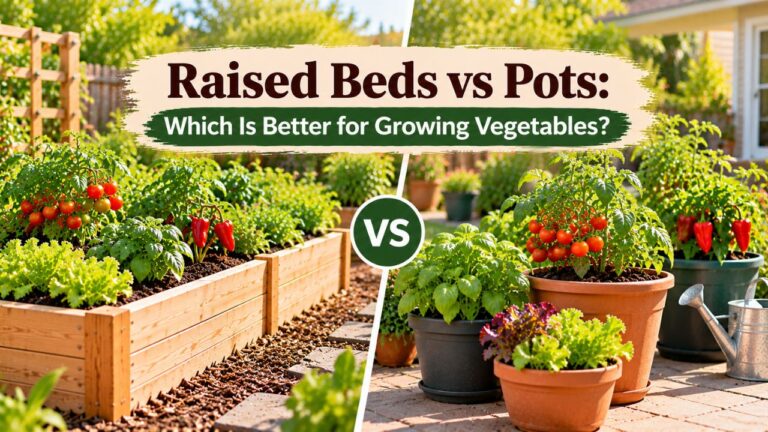
Watering Raised Garden Beds
Raised beds have exposed sides and often contain loose growing media that drain readily.
During hot, dry weather, these conditions can increase moisture loss.
Intensively spaced plants may also remove considerable amounts of water from the growing medium.
Drip irrigation and soaker hoses are useful for delivering water directly to the planted area.
Mulch helps reduce surface evaporation and keeps moisture conditions more consistent.
For shallow or elevated planters, regular moisture checks are particularly important because roots have access to less surrounding soil.
Watering Traditional Garden Rows
Traditional rows may benefit from a larger continuous volume of native soil.
When the soil is healthy, roots can explore deeper or wider areas in search of moisture.
This may reduce the frequency of watering compared with smaller raised beds.
Long rows also work well with drip irrigation lines placed alongside the plants.
Overhead sprinklers can irrigate rows, but they may also water pathways and encourage unwanted vegetation.
Which Is Better in Dry Climates?
Traditional ground-level rows may have an advantage in hot, dry climates when native soil retains moisture well.
However, raised beds can still perform successfully with appropriate soil mixtures, mulch, and irrigation.
The better choice depends on local conditions rather than the garden layout alone.
Which Is Cheaper: Raised Beds or Traditional Rows?
Traditional row gardening is usually less expensive to establish when suitable native soil is already available.
Raised beds can require additional materials and purchased growing media.
Cost of Building Raised Beds
Framed raised beds may require:
- Lumber, metal panels, stone, or another framing material
- Screws, brackets, or structural supports
- Purchased topsoil or raised bed growing mix
- Finished compost
- Mulch for planting areas and pathways
- Irrigation supplies
Soil can represent a substantial part of the initial expense.
For example, a raised bed measuring 4 feet wide, 8 feet long, and 12 inches deep holds approximately 32 cubic feet of soil when filled to that depth.
That equals about 1.19 cubic yards.
The actual amount required depends on the bed’s internal dimensions and intended fill level.
Cost of Starting Traditional Rows
A traditional row garden generally requires fewer construction materials.
Typical expenses include:
- Soil testing
- Basic digging and cultivating tools
- Compost or other recommended amendments
- Seeds or transplants
- Irrigation supplies
- Mulch or other weed-control materials
A row garden with healthy existing soil may need little more than site preparation and planting supplies.
However, correcting serious drainage or fertility problems can increase costs.
Long-Term Maintenance Costs
Framed raised beds may eventually need repairs or replacement as materials deteriorate.
The soil may also settle, requiring occasional additions.
Traditional rows avoid frame maintenance but may require more work maintaining pathways or cultivating larger growing areas.
A permanent, no-till row system can reduce repeated soil disturbance.
For gardeners with a limited budget and suitable native soil, traditional rows are generally the more economical option.
Raised Beds vs Rows for Weed Control and Maintenance
Weed pressure depends on soil conditions, planting density, mulch, and how the garden is maintained.
Neither system eliminates weeds, but their layouts can influence the amount of work required.
Weed Control in Raised Beds
Raised beds can make weed management easier by concentrating vegetables in a defined area.
Closer plant spacing may shade exposed soil, reducing opportunities for some weeds to establish.
Permanent pathways also separate walking areas from planting areas.
However, weeds can still arrive through windblown seeds, contaminated compost, and existing ground.
Regular inspection and removal of young weeds remain necessary.
Weed Control in Garden Rows
Traditional rows often contain more open soil between planted lines.
These spaces may require cultivation, mulching, or other weed management.
The advantage is that wider pathways make it easier to use hoes and mechanical cultivators.
For large plots, this access can reduce the difficulty of maintaining extensive planting areas.
A traditional row garden with mulched pathways and well-managed soil can have relatively low weed pressure.
Soil Compaction and Routine Maintenance
Raised beds help prevent compaction when gardeners remain on permanent paths.
This protects the spaces between soil particles that allow water, oxygen, and roots to move through the growing medium.
Traditional rows may experience more compaction if gardeners repeatedly walk close to the plants.
However, this is not unavoidable.
Permanent growing rows with dedicated pathways can provide similar soil protection.
The main advantage comes from keeping foot traffic away from growing soil, not simply from installing raised bed frames.
Which Vegetables Grow Better in Raised Beds or Rows?
Most common garden vegetables can grow successfully in either system.
The better layout depends on plant size, root requirements, and the space needed for maintenance.
| Vegetable | Practical layout preference | Main reason |
| Lettuce | Raised beds | Efficient use of small planting areas |
| Spinach | Raised beds | Suitable for closely spaced planting |
| Radishes | Raised beds | Compact plants grow well in blocks |
| Carrots | Raised beds | Loose soil supports root development |
| Onions | Either | Adaptable to blocks or multiple rows |
| Bush beans | Either | Suitable for wide beds or long rows |
| Tomatoes | Either | Need adequate spacing and support |
| Peppers | Either | Grow well in improved soil |
| Potatoes | Traditional rows | Convenient for hilling and harvesting |
| Sweet corn | Rows or blocks | Needs suitable spacing and pollination |
| Pumpkins | Traditional rows | Vines require extensive growing space |
| Watermelons | Traditional rows | Sprawling plants need room |
| Cucumbers | Either | Can be trellised in compact beds |
These are practical layout preferences, not strict crop requirements.
Best Vegetables for Raised Beds
Raised beds are particularly convenient for smaller vegetables that can be planted in compact arrangements.
Lettuce, spinach, carrots, radishes, and onions can use the growing area efficiently without requiring separate walking paths between every line.
Tomatoes, peppers, and cucumbers also perform well in raised beds when sufficient rooting space and plant support are available.
Trellising cucumbers and other suitable climbing crops can reduce their ground-level footprint.
However, raised beds should not be packed so tightly that mature plants block airflow or compete excessively.
Best Vegetables for Traditional Rows
Traditional rows are often practical for crops grown in larger quantities.
Potatoes, for example, can be planted in long rows with enough soil nearby for hilling around developing plants.
Pumpkins and watermelons need room for their spreading vines.
Sweet corn is commonly planted in multiple adjacent rows or blocks to support wind pollination, rather than in one isolated row.
These crops can also grow in raised beds, but large traditional plots may provide more flexibility.
Which Is Better for Root Vegetables?
Raised beds can be especially useful for carrots and other root vegetables when the existing ground is compacted or rocky.
A deep, loose growing layer allows roots to develop with fewer physical obstructions.
However, well-prepared traditional rows can provide the same benefit.
Soil texture and depth matter more than the presence of a raised frame.
Raised Beds vs Rows for Garden Tools and Accessibility
The amount of physical work required depends partly on how the planting areas are arranged.
Raised beds are often designed for hand maintenance, while traditional rows can accommodate larger equipment.
Raised Beds Are Convenient for Hand Gardening
Defined raised beds allow gardeners to work from nearby paths.
This is useful for planting, weeding, thinning seedlings, and harvesting smaller crops.
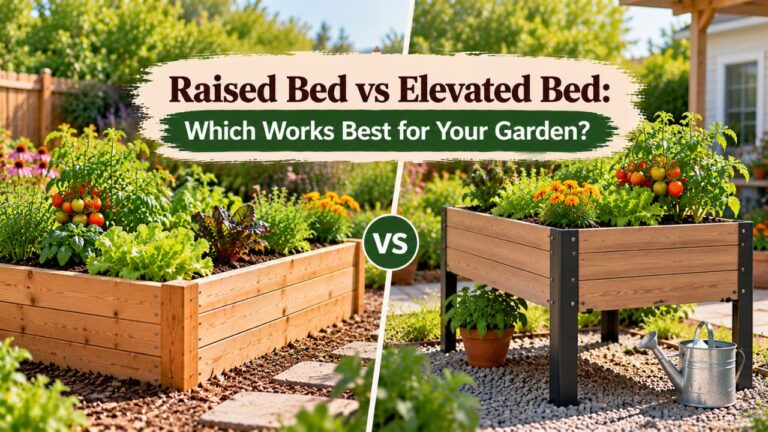
Taller raised beds can also reduce the need for bending or kneeling.
However, bed height must match the gardener’s reach and mobility needs.
A bed that is too wide may be difficult to maintain without stepping inside it.
For many home gardens, a bed width of approximately 3–4 feet works well when both long sides are accessible.
Traditional Rows Accommodate Larger Equipment
Long planting rows can be convenient for:
- Wheel hoes
- Garden cultivators
- Small tillers
- Irrigation equipment
- Harvesting carts
- Other tools requiring straight access
This flexibility is useful for large vegetable gardens.
However, row spacing should be planned around the actual crop and equipment.
Leaving excessively wide gaps simply because the garden uses rows can waste growing space.
How to Choose the Right Layout for Your Garden
The decision becomes easier when the size of the plot, soil condition, and intended vegetables are considered together.
Choose Raised Beds for Small Gardens
Raised beds are often a practical choice for compact backyards.
They allow gardeners to organize planting areas, keep pathways separate, and concentrate soil improvements where vegetables grow.
For example, a 4×8-foot raised bed provides 32 square feet of planting area.
Multiple beds can be arranged with paths between them, depending on available space.
This setup works well for gardeners growing vegetables for household use without managing a large plot.
Choose Traditional Rows for Larger Gardens
Traditional rows are often more convenient when a gardener has a substantial area of suitable soil.
Long rows simplify planting and maintaining larger quantities of the same crop.
For example, a garden dedicated to potatoes, corn, beans, and squash may be easier to organize into rows or large planting blocks.
Wide equipment access can also be important when working with a tiller or cultivator.
Consider Raised Beds When Drainage Is Poor
Raised beds are often worthwhile when native soil stays wet for extended periods.
Elevating the growing medium provides a better-drained upper root zone when the bed and underlying site are properly prepared.
However, sites affected by persistent standing water may need additional drainage correction.
Consider Rows When Water Conservation Is a Priority
Traditional rows can be practical in dry climates where suitable native soil provides substantial moisture storage.
Plants growing directly in the ground may have access to deeper moisture than crops in shallow, enclosed raised beds.
Mulch and drip irrigation can help conserve water in both systems.
Can You Combine Raised Beds and Traditional Rows?
Yes. Combining both methods can be an efficient solution for gardens containing different crops.
For example, raised beds can hold compact vegetables such as lettuce, carrots, and herbs.
Traditional rows can occupy the remaining garden area for potatoes, corn, beans, and spreading crops.
This approach allows each crop to grow in a suitable arrangement without requiring the entire yard to use one system.
Unframed Raised Rows as a Middle Option
An unframed raised row is a strip of soil shaped into a low mound with a relatively level planting surface.
It provides some of the drainage and soil management advantages of a raised bed without requiring permanent walls.
These rows can be made using existing soil and appropriate amendments.
They are useful when:
- The budget does not allow framed beds.
- Native soil needs modest drainage improvement.
- The garden contains long planting areas.
- Gardeners want to maintain permanent pathways.
- The layout may need to change in future seasons.
Unframed beds may require occasional reshaping because rain and irrigation can gradually erode their edges.
Planting in Wide Rows
Wide-row gardening offers another compromise.
Instead of planting vegetables in one narrow line, arrange them across a wider strip of prepared soil.
Permanent paths separate these growing strips.
This method can provide much of the space efficiency associated with raised beds while keeping the planting surface close to natural ground level.
It works particularly well for smaller vegetables such as lettuce, spinach, radishes, and beets.
Key Takeaway: A framed raised bed is not the only way to grow vegetables intensively. Wide planting rows and permanent ground-level beds can also improve space efficiency and reduce soil compaction.
Conclusion
The raised beds vs rows comparison comes down to garden size, soil conditions, available budget, and the types of vegetables being grown.
Raised beds are often the better choice for small gardens, poorly drained ground, compact vegetables, and gardeners who want clearly defined planting areas. They can reduce soil compaction and make intensive planting easier, although framed beds cost more to establish and may require more frequent watering.
Traditional rows are often better for larger gardens, extensive vegetable plantings, and situations where existing soil is already suitable. They provide flexible spacing and convenient access for larger gardening tools.
For a small backyard vegetable garden, raised beds are generally a practical starting point. For a large plot with healthy soil, traditional rows may offer greater flexibility at a lower cost.
If neither approach fully meets the garden’s needs, wide-row planting or unframed raised beds can combine several advantages of both systems.
FAQs About Raised Beds vs Rows
Do Raised Beds Produce More Vegetables Than Rows?
Raised beds can produce more vegetables per square foot of total garden area when intensive planting reduces the amount of space used for pathways.
However, the actual harvest depends on crop selection, spacing, soil quality, water, and sunlight. Traditional rows can produce excellent yields under suitable conditions.
Are Raised Beds Easier to Maintain Than Garden Rows?
Raised beds are often easier to weed and manage in small gardens because their planting areas are compact and accessible from permanent paths.
Traditional rows can be easier to maintain over larger areas when gardeners use wheel hoes, cultivators, or other equipment.
Can You Grow Corn in Raised Beds Instead of Rows?
Yes. Sweet corn can grow in raised beds when the growing area provides sufficient space, soil depth, nutrients, and moisture.
Planting corn in multiple adjacent rows or blocks supports wind pollination better than relying on a single isolated row. A larger garden plot may be more convenient for substantial corn plantings.
How Wide Should Raised Beds Be Compared With Garden Rows?
Raised beds are commonly about 3–4 feet wide when gardeners can access both long sides.
Traditional row spacing varies according to crop size, equipment, and required access. Narrow vegetable rows may need little separation beyond plant spacing, while larger crops and equipment can require wider gaps.
Do Raised Beds Need More Water Than Traditional Rows?
Raised beds often need more frequent watering because their soil can dry faster, particularly during hot weather.
However, closely planted crops can shade the soil and reduce evaporation. Total water use depends on plant density, soil volume, mulch, irrigation method, and weather.
Can You Convert Traditional Garden Rows Into Raised Beds?
Yes. Existing garden rows can be reorganized into wider permanent planting areas.
The process usually involves defining beds and pathways, improving soil where necessary, and adding soil to raise the growing surface if desired.
Frames are optional. Unframed mounded beds can provide a lower-cost alternative while maintaining permanent paths.
Are Raised Beds Worth the Extra Cost?
Raised beds can justify their additional cost when they solve problems such as poor soil, limited planting space, difficult drainage, or uncomfortable gardening access.
If the garden already contains healthy soil and plenty of growing space, traditional rows may provide similar growing results with less initial expense.

I’m Maya L. Greenwood, a lifelong plant lover who believes anyone can grow something beautiful with the right guidance. After years of testing soil mixes, pruning methods, irrigation tricks, and pest-safe solutions, I started EasyGardenTips.com to turn hard-won lessons into step-by-step advice. From seed starting and container gardens to composting and seasonal checklists, my goal is to make gardening simple, sustainable, and fun.