Greenhouse vs Raised Bed: Costs, Growing Seasons, and Best Uses
The main difference between a greenhouse and a raised bed is that a greenhouse protects plants by managing their growing environment, while a raised bed improves soil conditions, drainage, and access to plants. A greenhouse is generally better for extending the growing season, while a raised bed is often the more practical and affordable choice for everyday outdoor vegetable gardening.
Both methods can support healthy vegetables, herbs, and flowers, but they solve different gardening problems. A greenhouse surrounds plants with a transparent structure that helps retain heat and provides some protection from wind, rain, and frost. A raised bed lifts the planting soil above ground level, giving gardeners more control over the root zone.
The right choice depends on your climate, available space, budget, and the crops you want to grow. A greenhouse requires more attention to temperature and ventilation, while a raised bed needs suitable soil, drainage, and regular watering.
You also don’t have to choose only one. Raised beds can be installed inside greenhouses, combining improved soil conditions with environmental protection.
Understanding their differences will help you decide which gardening system makes the most sense for your growing goals.
Greenhouse vs Raised Bed: Key Differences
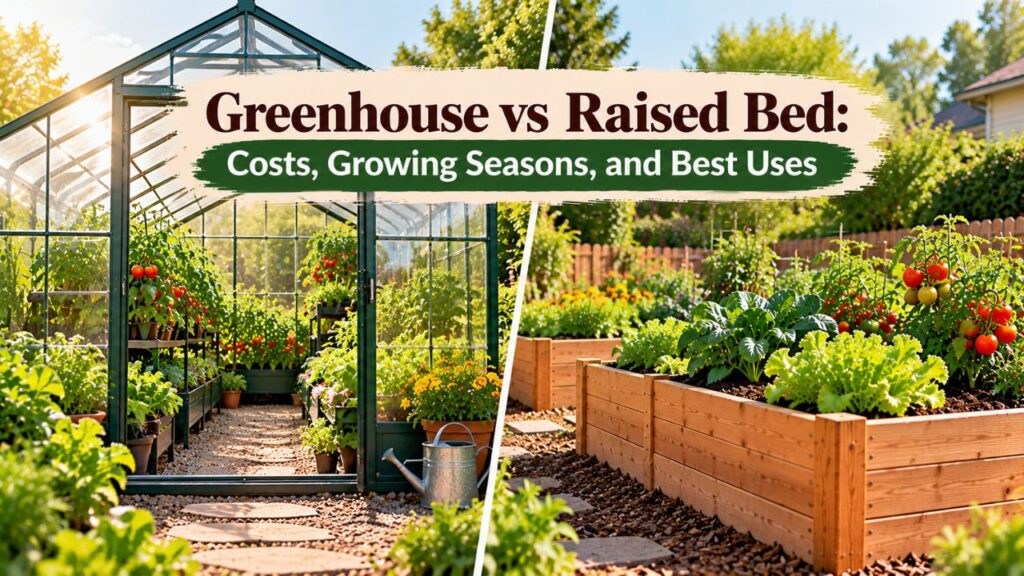
Greenhouses and raised beds are both useful for growing plants, but they have different structures, functions, and maintenance requirements.
A greenhouse primarily manages the conditions surrounding plants. A raised bed primarily manages the soil where plants develop their roots.
| Feature | Greenhouse | Raised Bed |
| Main purpose | Protect and manage growing conditions | Improve soil and planting space |
| Structure | Enclosed frame with transparent covering | Elevated soil area, often with a frame |
| Weather protection | Protects from rain, wind, and some cold | Limited without additional covers |
| Growing season | Can extend significantly | May allow earlier spring planting |
| Soil control | Depends on beds or containers used inside | Direct control over growing soil |
| Starting cost | Generally higher | Generally lower |
| Maintenance | Ventilation, temperature, cleaning, watering | Soil, watering, mulch, frame care |
| Temperature control | Possible with heating and ventilation | Mostly affected by outdoor conditions |
| Space requirements | Needs room for structure and access | Flexible for smaller gardens |
| Best application | Season extension and protected cultivation | Outdoor vegetables, herbs, and flowers |
The most important distinction is that a greenhouse changes the environment around plants, while a raised bed changes their growing area.
These systems are not direct substitutes for every gardening purpose.
For example, a greenhouse doesn’t automatically provide better soil. Plants still need suitable growing media, whether they grow in containers, ground-level soil, or raised beds.
Likewise, a raised bed doesn’t protect vegetables from freezing temperatures unless you add a suitable cover or another protective system.
What Is a Greenhouse and How Does It Work?
A greenhouse is a structure covered with transparent or translucent materials such as glass, polycarbonate panels, or greenhouse-grade plastic.
Sunlight passes through the covering and warms surfaces inside. The structure limits the exchange of indoor and outdoor air, allowing heat to accumulate during sunny periods.
This makes it possible to create a growing environment that differs from the surrounding outdoor conditions.
However, a greenhouse doesn’t automatically maintain the correct temperature.
Greenhouse Temperature and Weather Protection
One of the main advantages of a greenhouse is its ability to protect plants from unfavorable weather.
A properly designed structure can reduce exposure to:
- Cold winds.
- Heavy rainfall.
- Some frost conditions.
- Sudden weather changes.
- Certain outdoor pests and animals.
Greenhouses can also support seed starting and earlier transplant production.
However, an unheated greenhouse may approach outdoor temperatures during a cold night.
Growing frost-sensitive vegetables through freezing winter conditions may require supplemental heating.
The Utah State University Extension guide to extending the garden season explains that greenhouses with active temperature control can support extended production, but heating, cooling, and lighting requirements can make year-round gardening expensive.
A greenhouse is therefore useful for managing the growing environment, but the protection it provides depends on its design and operation.
Greenhouse Ventilation and Humidity
Ventilation is an important part of greenhouse management.
On sunny days, the temperature inside a greenhouse can rise quickly, even when outdoor air feels comfortable.
Excessive heat may damage plants, interfere with flowering, or cause moisture stress.
A greenhouse may use:
- Roof vents.
- Side vents.
- Opening doors.
- Circulation fans.
- Exhaust fans.
- Shade cloth.
Ventilation also helps manage humidity.
High humidity combined with poor airflow can create conditions favorable to certain fungal diseases.
For this reason, a greenhouse requires attention to both heating and cooling, rather than simply keeping plants warm.
What Is a Raised Bed and How Does It Work?
A raised garden bed is a growing area with soil elevated above the surrounding ground.
It may be surrounded by wood, galvanized metal, stone, or another suitable material. Some raised beds are simply mounds of improved soil without permanent walls.
Unlike a greenhouse, a raised bed doesn’t enclose the plants or control the air temperature around them.
Its primary advantage is greater control over the soil and root environment.
Raised Bed Soil and Root Development
Raised beds allow gardeners to use a suitable mixture of topsoil, compost, and other amendments.
This is particularly useful when the existing ground contains compacted soil, poor drainage, or difficult planting conditions.
A well-prepared raised bed can provide:
- Improved soil structure.
- Better root aeration.
- More predictable drainage.
- Reduced compaction from foot traffic.
- Easier soil amendment and maintenance.
According to the University of Maryland Extension’s raised bed gardening guidance, raised beds typically warm faster in spring, drain well when properly constructed, and reduce compaction because gardeners don’t walk on the growing area.
These benefits can help vegetables establish healthy root systems.
However, raised bed soil can dry out more quickly than surrounding ground, especially during hot weather.
Raised Bed Height and Accessibility
Raised beds can also make garden maintenance more comfortable.
Their elevated planting surface may reduce the amount of bending required for tasks such as weeding, planting, and harvesting.
The benefit depends on the bed’s height and design.
A 6-inch raised bed provides only modest elevation, while a taller bed may be more comfortable for gardeners who have difficulty bending.
For a bed accessible from both sides, a width of approximately 3–4 feet is often practical.
The goal is to reach the planting area without stepping on and compacting the soil.
Greenhouse vs Raised Bed for Growing Season Extension
The length of the growing season is one of the biggest differences between these gardening methods.
Can a Greenhouse Extend the Growing Season?
Yes. A greenhouse can help gardeners start certain crops earlier in spring and continue growing later into fall.
The amount of additional growing time depends on:
- Local climate.
- Greenhouse construction.
- Insulation and heat retention.
- Ventilation.
- Supplemental heating.
- Available daylight.
- Crop temperature requirements.
In regions with mild winters, an unheated greenhouse may support certain cool-season vegetables during periods when exposed crops would struggle.
In colder climates, winter production may require heating and sufficient light.
A greenhouse doesn’t guarantee year-round harvests. Plants still need suitable temperatures, adequate light, moisture, and nutrients.
Can Raised Beds Extend the Growing Season?
Raised beds can also provide a modest seasonal advantage.
Because the soil is elevated and often drains well, it may warm earlier in spring than surrounding garden soil.
This can help with early planting when outdoor temperatures are appropriate for the crop.
However, the plants remain exposed to outdoor air.
A raised bed doesn’t prevent frost damage to leaves and stems.
Adding a removable row cover, low tunnel, or cold frame can increase protection.
For significant environmental protection, a greenhouse generally offers more options. For a smaller improvement in spring soil conditions, a raised bed may be sufficient.
Greenhouse vs Raised Bed: Which Costs More?
A greenhouse generally requires a larger initial investment than a basic raised bed, although the actual difference depends on size, materials, and construction.
Cost of Building a Greenhouse
Greenhouse expenses can include:
- Frame materials.
- Transparent coverings.
- Doors and ventilation openings.
- Anchoring or foundation components.
- Shelving and planting benches.
- Irrigation equipment.
- Heating or cooling systems.
- Covering repairs or replacement.
A small, simple greenhouse may be relatively inexpensive compared with a permanent structure.
A larger greenhouse with polycarbonate panels, automatic ventilation, and heating requires substantially more investment.
Ongoing expenses can also include electricity, fuel, water, cleaning supplies, and replacement parts.
Climate control is often the greatest difference between basic greenhouse gardening and more advanced year-round production.
Cost of Building a Raised Bed
Raised bed costs typically involve:
- Wood, metal, or another framing material.
- Topsoil or prepared raised bed mix.
- Finished compost.
- Mulch.
- Irrigation supplies.
- Basic construction materials.
A simple raised bed may require fewer materials than a greenhouse.
However, filling a tall raised bed with purchased soil can become expensive.
For example, a raised bed measuring 4 feet by 8 feet and filled 12 inches deep requires:
4 × 8 × 1 = 32 cubic feet of soil
That equals approximately 1.19 cubic yards.
Several large raised beds can therefore require a considerable amount of growing medium.
Which Is More Budget-Friendly?
For a beginner who wants to grow outdoor vegetables during the normal growing season, a raised bed is generally the more economical starting option.
A greenhouse may justify its higher cost when extended growing seasons, protected seed starting, or specialized plants are important goals.
Compare the complete installation and maintenance costs rather than the price of the structure alone.
Greenhouse vs Raised Bed for Vegetable Growing
Both systems can grow vegetables successfully, but the most suitable crops and growing schedules may differ.
Growing Tomatoes and Peppers
Tomatoes and peppers need appropriate warmth, sunlight, moisture, and nutrients.
A greenhouse can be particularly useful in cooler regions where the outdoor growing season is short.
Protected cultivation may allow earlier establishment and reduce exposure to certain unfavorable weather conditions.
However, greenhouse tomatoes and peppers still need adequate ventilation.
Excessive temperatures can interfere with fruit set, and some growing systems may require assistance with pollination.
A raised bed is often an excellent choice for these vegetables during a suitable outdoor growing season.
Its improved soil conditions can support root development without the need for an enclosed structure.
Growing Lettuce, Spinach, and Leafy Greens
Cool-season vegetables such as lettuce, spinach, and certain Asian greens can grow well in both systems.
In a greenhouse, they may be grown during cooler parts of the year when temperatures and light levels remain suitable.
However, enclosed structures can become too hot for leafy greens during sunny weather.
In raised beds, these crops can benefit from well-prepared soil and convenient harvesting.
A temporary row cover may be enough to protect them during some cool-weather conditions.
Growing Carrots, Beets, and Other Root Vegetables
Raised beds are particularly useful for root vegetables when the growing soil is deep, loose, and free from excessive compaction.
Carrots, parsnips, and similar crops need a suitable rooting environment to develop properly.
A greenhouse can also support root vegetables, but using valuable protected space for crops that already grow well outdoors may not always be the best use of the structure.
For many home gardeners, an outdoor raised bed is a practical option.
Growing Herbs
Herbs can grow in both greenhouses and raised beds.
The better choice depends on their preferred temperatures and moisture conditions.
Mediterranean herbs such as rosemary and thyme generally require excellent drainage and shouldn’t remain in constantly wet soil.
A raised bed containing a suitable growing mixture can provide these conditions.
A greenhouse may be useful for protecting tender herbs during colder periods, but adequate ventilation and careful watering remain important.
Watering and Drainage Differences Between Greenhouses and Raised Beds
Water management differs because a greenhouse changes rainfall exposure, while a raised bed changes the growing soil’s position and drainage characteristics.
Watering Plants Inside a Greenhouse
Plants inside a greenhouse usually don’t receive direct rainfall.
Water must be supplied through watering cans, hoses, drip irrigation, or another irrigation system.
The amount needed depends on:
- Greenhouse temperature.
- Ventilation.
- Plant size.
- Container or bed depth.
- Growing medium.
- Season and available sunlight.
Warm greenhouse conditions can increase water demand.
At the same time, excess watering in poorly drained containers or beds can reduce oxygen around roots.
Regular moisture checks are more useful than following a fixed watering schedule.
Watering Outdoor Raised Beds
Outdoor raised beds receive rainfall, but they may dry out faster than surrounding ground.
Their elevated position and exposed sides can increase moisture loss.
Mulch helps reduce evaporation, and drip irrigation can provide consistent moisture near plant roots.
Check the soil beneath the surface before watering.
A dry-looking upper layer doesn’t always mean the root zone needs additional water.
Which Has Better Drainage?
A greenhouse doesn’t automatically improve drainage.
Drainage depends on the soil, growing medium, container design, and underlying surface.
Raised beds often provide a drainage advantage because the growing area is elevated and can be filled with a loose, well-structured soil mixture.
However, raised beds on concrete or other impermeable surfaces need a proper drainage route.
A well-designed raised bed inside a greenhouse can combine soil management with environmental protection.
Greenhouse vs Raised Bed in Different Climates
Climate has a major influence on which gardening method is more useful.
Cold Climates With Short Growing Seasons
In regions with long winters and short frost-free periods, a greenhouse may provide substantial benefits.
It can help protect seedlings and support earlier or later production.
However, unheated structures have limitations during severe freezing weather.
Gardeners who only want to extend the season by a short period may prefer raised beds with removable protective covers.
This is often simpler than constructing and maintaining a permanent greenhouse.
Hot Climates With Strong Summer Sun
In hot regions, a greenhouse can create additional challenges.
A transparent enclosure may accumulate excessive heat unless it has sufficient ventilation and shading.
Growing certain vegetables outdoors in raised beds may be easier during hot weather.
Raised bed soil can also overheat or dry out, so mulch, appropriate irrigation, and crop-specific shade may be useful.
A greenhouse in a hot climate should be selected for its cooling and ventilation capabilities, not simply its ability to retain warmth.
Rainy and Humid Climates
Greenhouses can prevent direct rainfall from reaching plant leaves and the growing soil.
This can be helpful for crops sensitive to prolonged wet conditions.
However, poor ventilation may allow humidity to accumulate inside the structure.
Raised beds can improve drainage in areas with heavy rainfall, provided excess water has somewhere to go.
Neither system automatically eliminates fungal diseases.
Windy Locations
Greenhouse coverings and frames can reduce direct wind exposure to plants.
However, the structure itself must be securely anchored and designed for local wind conditions.
A poorly anchored lightweight greenhouse may be damaged or displaced during severe weather.
Raised beds don’t provide much wind protection unless barriers, supports, or covers are added.
In exposed locations, structure strength and proper installation are important considerations.
Can You Put Raised Beds Inside a Greenhouse?
Yes. Raised beds can be installed inside a greenhouse, and combining the two systems can provide better control over both growing soil and the surrounding environment.
A greenhouse doesn’t require plants to grow only in pots or containers.
Many greenhouse layouts use ground-level planting areas, raised beds, containers, benches, or combinations of these systems.
Benefits of Raised Beds Inside a Greenhouse
Combining the two methods can provide several practical advantages:
- Improved control over the soil mixture.
- Convenient planting and harvesting.
- Reduced soil compaction.
- Protection from direct rainfall.
- Greater flexibility for seasonal crops.
- Easier organization of irrigation lines.
For example, tomatoes could grow in raised beds containing a suitable soil mixture while the greenhouse provides protection from unfavorable outdoor weather.
However, both systems still require appropriate watering, fertilization, pest monitoring, and temperature management.
How to Arrange Raised Beds Inside a Greenhouse
Plan the layout before constructing the beds.
- Measure the greenhouse’s usable floor area.
- Leave paths wide enough for comfortable movement and tools.
- Choose raised bed widths that allow access without stepping onto the soil.
- Make sure tall plants won’t block vents or interfere with the greenhouse covering.
- Use a suitable growing medium with adequate drainage.
- Install irrigation that reaches each growing area.
- Maintain airflow around the plants.
If the greenhouse has a natural soil floor, open-bottom raised beds may allow roots to extend into the ground beneath them.
If the structure sits on concrete, the beds must provide adequate root depth and drainage within their own construction.
Are There Disadvantages to Combining Them?
Yes. Raised beds occupy floor space and can limit layout flexibility.
Tall bed walls may reduce usable growing volume inside a small greenhouse and increase construction costs.
The soil can also remain too wet if irrigation and drainage are poorly managed.
In some greenhouse designs, ground-level beds or movable containers may use the available space more effectively.
Choose the arrangement based on the crops and greenhouse dimensions rather than assuming raised beds are necessary.
Greenhouse vs Raised Bed for Pest and Disease Management
A greenhouse can reduce exposure to some outdoor pests, but it doesn’t create a pest-free environment.
Insects may enter through doors, vents, plant material, or contaminated growing supplies.
Pests such as aphids, whiteflies, and spider mites can become troublesome in protected growing environments.
Poor airflow and excessive humidity may also favor certain plant diseases.
Raised beds don’t prevent flying insects from reaching crops, but they make it easier to manage soil conditions and install protective covers.
For example, an insect mesh cover supported by hoops can protect suitable vegetables from certain pests without enclosing the entire garden in a greenhouse.
Both systems benefit from:
- Regular plant inspections.
- Appropriate spacing.
- Good airflow.
- Removal of diseased plant material.
- Clean gardening tools.
- Suitable watering practices.
Neither a greenhouse nor a raised bed guarantees higher yields or fewer pest problems. Results depend on crop selection, environmental conditions, and maintenance.
Which Is Easier to Maintain: A Greenhouse or a Raised Bed?
For most beginners, a basic outdoor raised bed is easier to maintain than a greenhouse with environmental controls.
However, raised beds aren’t maintenance-free.
Greenhouse Maintenance
Greenhouse maintenance may involve checking:
- Indoor temperatures.
- Ventilation openings.
- Humidity and condensation.
- Irrigation systems.
- Covering condition.
- Structural stability.
- Pest activity.
- Heating or cooling equipment.
Some systems can be automated, but automation adds equipment costs and still requires monitoring.
A greenhouse may also need seasonal cleaning to keep light transmission and growing conditions suitable.
Raised Bed Maintenance
Routine raised bed maintenance usually includes:
- Watering.
- Weeding.
- Mulching.
- Adding suitable soil amendments.
- Monitoring soil fertility.
- Checking frame condition.
- Removing spent crops.
Wooden frames may eventually require repair or replacement.
Metal and masonry beds have different maintenance needs.
For everyday seasonal vegetable gardening, the simpler structure and lack of climate-control equipment often make raised beds more manageable.
Greenhouse vs Raised Bed: Which Should You Choose?
The better choice depends on what you want to accomplish rather than which gardening method has more features.
Choose a Greenhouse If You Want:
- To extend the growing season substantially.
- To start many seedlings in a protected environment.
- To grow certain crops that need protection from unfavorable weather.
- Greater control over temperature and airflow.
- A dedicated space for protected cultivation.
- The ability and budget to manage heating or cooling when necessary.
A greenhouse is particularly useful when outdoor weather is the main obstacle to your gardening goals.
Choose a Raised Bed If You Want:
- An affordable way to establish a vegetable garden.
- Better control over soil quality.
- Improved drainage in difficult ground conditions.
- Easier access to plants.
- A compact growing area for vegetables and herbs.
- Simpler maintenance without climate-control equipment.
Raised beds are often a practical starting point for backyard gardeners growing seasonal crops.
Choose Both If You Want:
- A protected growing space with managed soil.
- A dedicated greenhouse vegetable garden.
- Better control over growing media and environmental conditions.
- Convenient permanent planting areas inside a greenhouse.
Using both systems makes sense when the added control justifies the space, construction, and maintenance requirements.
Can You Protect Raised Beds Without Building a Greenhouse?
Yes. You can improve weather protection around raised beds without constructing a full greenhouse.
Several smaller systems may offer sufficient protection for particular crops and seasons.
Install a Low Tunnel Over the Raised Bed
A low tunnel uses hoops covered with suitable garden fabric or plastic.
It can help protect young plants from wind and some cold conditions.
Low tunnels are often removable, making them useful for seasonal changes.
However, plastic-covered tunnels require ventilation during warm, sunny weather to prevent overheating.
Use Floating Row Covers
Floating row covers are lightweight fabrics placed over plants or supported by hoops.
They can provide some protection from cold conditions and certain insect pests.
Their effectiveness depends on the fabric’s properties, installation, and weather.
Secure the edges appropriately and remove or adjust covers when crop or temperature conditions require it.
Add a Cold Frame
A cold frame is a low enclosure with a transparent lid.
It can support seedlings and certain cool-season crops during cooler weather.
Cold frames can also overheat on sunny days, so their lids may need to be opened for ventilation.
For a gardener who only needs modest season extension, one of these approaches may be more practical than a permanent greenhouse.
Conclusion
The greenhouse vs raised bed decision comes down to whether your biggest gardening challenge is the outdoor environment or the quality and accessibility of your planting soil.
A greenhouse is generally better when you need weather protection, seed-starting space, or a longer growing season. However, it requires more investment and careful temperature management.
A raised bed is often better for affordable, straightforward outdoor gardening. It provides greater control over soil conditions and makes planting, watering, and harvesting more convenient.
For most beginners who want to grow seasonal vegetables, starting with a raised bed is a practical choice. If extending the growing season becomes a priority, protective row covers or a greenhouse can be added later.
When space and budget allow, combining raised beds with a greenhouse can provide the benefits of both systems.
FAQs About Greenhouse vs Raised Bed
Is a Greenhouse Better Than a Raised Bed for Vegetables?
A greenhouse isn’t automatically better. It offers more weather protection, while a raised bed provides improved control over soil conditions.
For ordinary seasonal vegetable gardening, raised beds may be simpler and more affordable. A greenhouse becomes more useful when extended production or environmental protection is necessary.
Can You Grow Vegetables Year-Round in a Raised Bed?
Year-round growing may be possible in some mild climates using suitable crops and protective covers.
In colder regions, outdoor raised beds may not provide enough protection for continuous winter production.
The growing season depends on local temperature, daylight, crop selection, and protection methods.
Do Greenhouses Need Raised Beds?
No. Plants can grow in containers, ground-level soil, or raised beds inside a greenhouse.
Raised beds are optional and may be useful when improved soil conditions or easier access are priorities.
Do Plants Grow Faster in a Greenhouse or Raised Bed?
Plant growth depends on temperature, light, water, nutrients, and root conditions.
A greenhouse may encourage faster growth when it maintains more favorable conditions than the outdoor environment.
However, an overheated or poorly ventilated greenhouse can slow growth or damage plants. A well-managed raised bed may perform better under those conditions.
Can a Raised Bed Work Like a Small Greenhouse?
A raised bed can provide some greenhouse-like protection when fitted with a transparent cover, low tunnel, or cold frame.
These additions can retain warmth and shelter plants, but they generally offer less environmental control than a fully equipped greenhouse.
Is a Greenhouse Worth It for a Small Backyard?
A greenhouse may be worthwhile if you need protected seed-starting space, grow specialized crops, or want to extend the growing season.
However, limited space, ventilation needs, and ongoing maintenance should be considered.
For a small backyard focused on seasonal vegetables, one or two raised beds may offer a more practical starting point.
Can I Put a Greenhouse Over an Existing Raised Bed?
Yes. A greenhouse or appropriately designed protective structure can sometimes be installed around an existing raised bed.
Check that the structure provides enough height, ventilation, access, and anchoring.
Also confirm that the raised bed doesn’t block doors, vents, drainage, or necessary pathways.

I’m Maya L. Greenwood, a lifelong plant lover who believes anyone can grow something beautiful with the right guidance. After years of testing soil mixes, pruning methods, irrigation tricks, and pest-safe solutions, I started EasyGardenTips.com to turn hard-won lessons into step-by-step advice. From seed starting and container gardens to composting and seasonal checklists, my goal is to make gardening simple, sustainable, and fun.