Raised Bed vs Elevated Bed: Which Works Best for Your Garden?
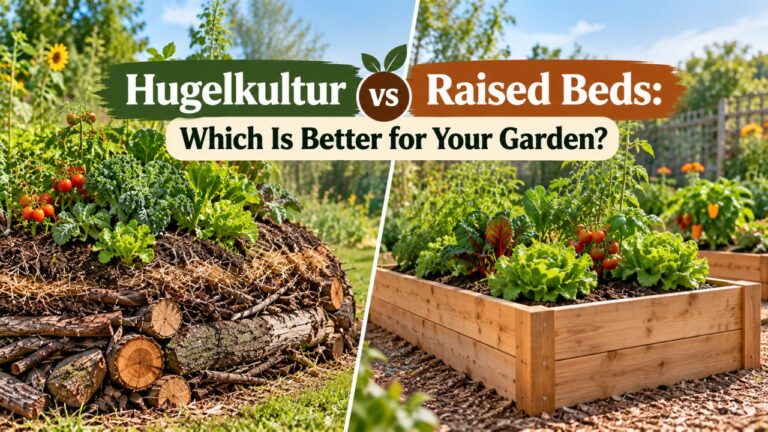
The main difference between a raised bed and an elevated bed is their construction. A traditional raised garden bed usually sits directly on the ground, while an elevated garden bed is supported by legs or a stand, lifting the planting container above ground level. Both create defined growing spaces, but they offer different advantages for planting, watering, accessibility, and maintenance.
Traditional raised beds allow roots to grow into the native soil when the bottom remains open. Elevated beds usually have a solid or supported base with drainage openings, so plants depend on the limited soil volume inside the container.
This difference affects which vegetables grow well, how often watering is needed, and how much soil each design requires.
Elevated beds are particularly useful for gardeners who want to avoid bending or have limited outdoor space. Ground-level raised beds generally provide more rooting room and flexibility for growing larger vegetables.
However, neither design is automatically better for every garden.
Understanding how the two systems differ can help you choose a bed that suits your available space, physical comfort, planting goals, and budget.
Raised Bed vs Elevated Bed: Key Differences at a Glance
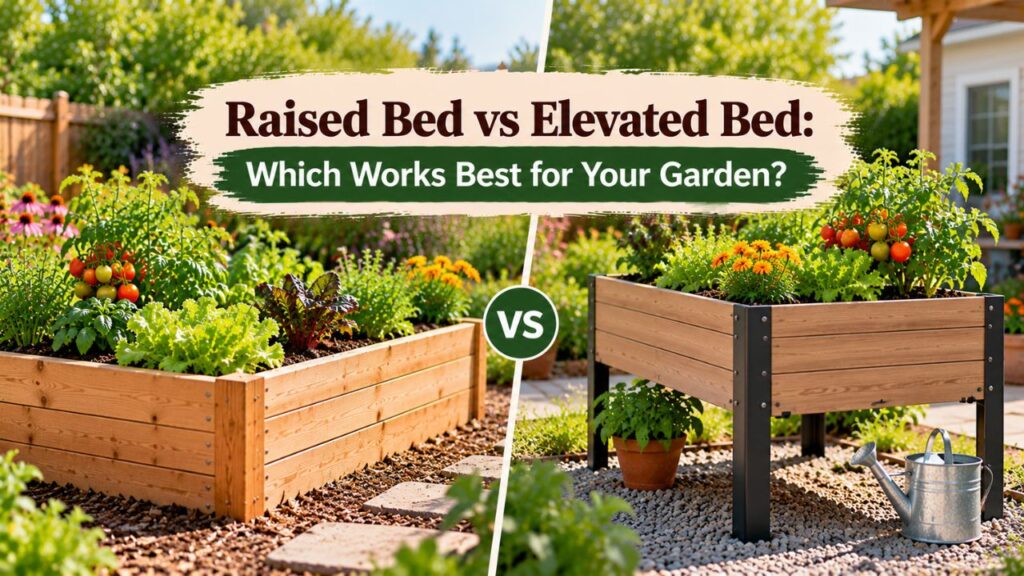
Both garden bed designs lift the growing surface above the surrounding area, but their physical structures determine how they function.
| Feature | Raised Garden Bed | Elevated Garden Bed |
| Structure | Frame usually rests on the ground | Planter supported by legs or a stand |
| Bottom | Usually open to native soil | Usually enclosed or supported with drainage |
| Planting height | Commonly 6–24 inches | Often 24–36 inches or more |
| Root growth | Can extend into native ground | Limited to container depth |
| Soil requirements | Garden soil and compost blend | Lightweight, well-draining container mix |
| Watering | May access deeper soil moisture | Often needs more frequent checking |
| Accessibility | Some bending may be necessary | Easier to reach while standing or sitting |
| Suitable plants | Most vegetables, flowers, and herbs | Herbs, greens, flowers, and compact vegetables |
| Installation | Usually a permanent garden feature | Some models can be relocated |
| Cost | Often less expensive for large growing areas | Support structure may increase cost |
These are typical differences rather than strict definitions.
Some manufacturers call tall, ground-supported garden beds “elevated beds.” For this comparison, an elevated bed means a planter with its growing container raised on legs or another support structure.
What Is a Raised Garden Bed?
A raised garden bed is an area of soil built above the surrounding ground level.
Most traditional raised beds consist of rectangular wooden, metal, stone, or composite frames that hold soil in a designated planting area.
They generally sit directly on the ground, although raised beds can also be constructed over paved surfaces.
How a Traditional Raised Bed Works
An open-bottom raised bed allows the growing medium to connect with the native soil underneath.
When the underlying ground is suitable, roots can extend below the raised bed frame.
This provides additional rooting space, especially for vegetables with extensive root systems.
Water can also move between the raised soil and the ground beneath it, depending on soil texture, drainage, and moisture conditions.
According to the University of Maryland Extension’s raised-bed gardening guidance, raised beds placed on the ground can function as in-ground gardens because plant roots can grow into the soil below.
However, a raised bed placed on concrete cannot provide this connection.
Common Raised Garden Bed Dimensions
Traditional raised beds vary considerably in size.
Common designs include:
- 4 × 4-foot square beds.
- 4 × 8-foot rectangular beds.
- 3 × 6-foot beds for narrower garden spaces.
- 12- to 24-inch-tall frames for deeper growing areas.
Shorter frames can also work when roots have access to healthy soil beneath the bed.
A width of approximately 4 feet allows many adults to reach the center when both long sides remain accessible.
The appropriate dimensions depend on the gardener’s reach, available space, and intended crops.
Where Traditional Raised Beds Work Best
Ground-supported raised beds are well suited to:
- Backyard vegetable gardens.
- Larger growing areas.
- Gardens with compacted or poorly structured native soil.
- Permanent herb and flower beds.
- Tomatoes, squash, peppers, and other larger vegetables.
- Root crops requiring substantial growing depth.
They are particularly useful when the objective is creating a productive garden with plenty of root space.
What Is an Elevated Garden Bed?
An elevated garden bed is a planting container raised above the ground on legs, blocks, a stand, or a similar supporting structure.
Unlike most traditional raised beds, the soil is held within a container with a supported bottom.
This design makes the growing surface easier to reach without kneeling or bending as much.
Elevated garden beds are also called raised planter boxes, standing garden beds, or waist-high planters.
How an Elevated Garden Bed Works
An elevated planter functions similarly to a large gardening container.
The soil rests on a supporting base, and excess water leaves through drainage openings.
Because the bottom separates the growing medium from the ground, roots cannot extend into native soil.
The planter must therefore provide enough growing depth for the selected plants.
It also needs a suitable soil mixture that retains moisture without becoming waterlogged.
The frame, legs, and bottom must support the full weight of the wet growing medium, plants, and irrigation water.
Common Elevated Garden Bed Dimensions
Elevated garden beds are available in different sizes and working heights.
Typical designs may have:
- Working heights around 24–36 inches.
- Soil depths around 8–12 inches.
- Widths of approximately 2–3 feet.
- Lengths of approximately 3–6 feet.
Larger and deeper models are also available.
The working height should match the gardener’s needs. Someone gardening while standing may prefer a different height from someone using a wheelchair or seated garden stool.
Where Elevated Garden Beds Work Best
Elevated beds are particularly useful for:
- Patios and paved courtyards.
- Small outdoor spaces.
- Gardeners who have difficulty kneeling.
- Seated gardening.
- Herb gardens near kitchens.
- Lettuce, spinach, and other leafy vegetables.
- Flowers and compact vegetable varieties.
They are also useful when a permanent garden bed cannot be installed directly into the ground.
However, their smaller soil capacity may limit the growth of large or deep-rooted crops.
Raised Bed vs Elevated Bed: Soil Depth and Root Growth
Soil depth is one of the most important differences between these two garden designs.
A bed may be physically tall without providing a correspondingly deep growing area.
Raised Beds Can Provide More Rooting Space
In an open-bottom raised bed, roots may grow through the added soil and continue into the native ground.
For example, a raised bed with a 12-inch frame may provide more than 12 inches of usable rooting depth when the soil underneath is healthy and penetrable.
This makes traditional raised beds useful for crops such as:
- Tomatoes.
- Peppers.
- Carrots.
- Potatoes.
- Cucumbers.
- Squash.
The actual rooting depth still depends on the underlying soil.
Compacted ground, hardpan, contaminated soil, or other barriers can restrict roots even when the bed has an open bottom.
Elevated Beds Have a Fixed Rooting Depth
Elevated planters usually have a physical bottom that prevents roots from growing deeper.
A planter that stands 36 inches above the ground might contain only 10 inches of soil.
The remaining height comes from its legs or supporting frame.
This distinction matters when selecting crops.
Leafy vegetables and many herbs can grow in relatively shallow containers.
Larger fruiting vegetables may need deeper soil, additional nutrients, and more consistent watering.
How Much Soil Depth Do Different Plants Need?
The required growing depth varies by crop, variety, and available soil volume.
The following ranges provide general guidance for beds where roots cannot enter the ground below.
| Plant type | Practical soil depth |
| Lettuce and many leafy greens | 8–10 inches |
| Spinach and smaller herbs | 8–12 inches |
| Radishes and compact root crops | 8–12 inches |
| Bush beans | 10–12 inches or more |
| Compact peppers | 12–18 inches |
| Tomatoes | 12–24 inches, depending on variety |
| Squash and larger vegetables | 12–24 inches or more |
These depths should be considered alongside container width and total soil volume.
A large tomato plant may struggle in a narrow planter even when the soil depth appears sufficient.
For elevated beds, check both the manufacturer’s growing depth and the mature size of the intended plants.
Raised Bed vs Elevated Bed: Soil Mix and Drainage
The two designs require different approaches to soil preparation.
The main reason is that one usually connects with the ground while the other functions as a container.
Best Soil for a Traditional Raised Bed
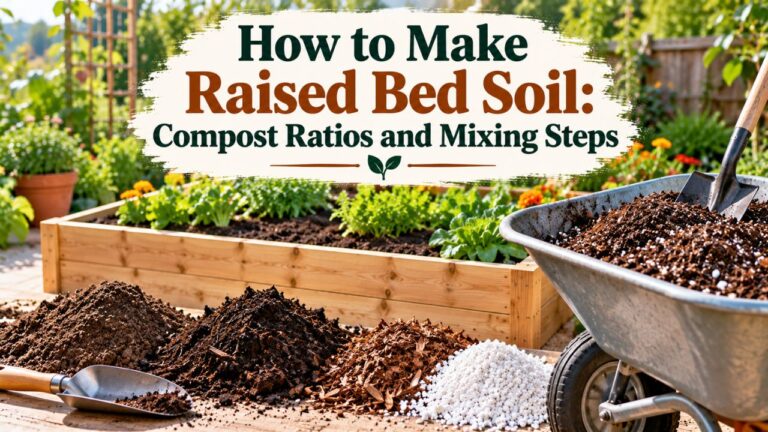
For an open-bottom raised garden bed, a mixture of suitable mineral topsoil and finished compost is often a practical choice.
A starting mixture might contain:
- Two parts good-quality topsoil.
- One part finished compost.
The proportions should be adjusted according to the existing soil condition.
Suitable mineral soil provides structure and helps maintain growing volume.
Finished compost contributes organic matter and can improve moisture management.
Avoid using contaminated soil or large amounts of unfinished compost.
When the bed sits on healthy native ground, its growing layer can interact with the soil below.
Best Soil for an Elevated Garden Bed
Elevated planters need a growing medium suitable for container-like conditions.
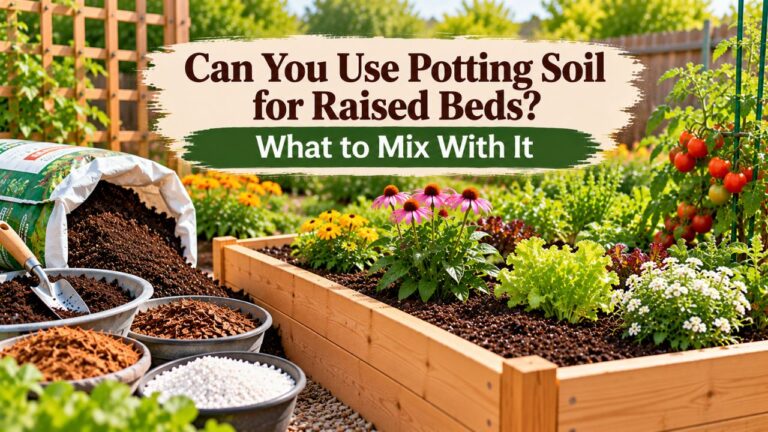
A lightweight, well-draining potting mix or raised planter mix is usually more appropriate than dense native garden soil.
Depending on the product, suitable ingredients may include:
- Composted bark.
- Coconut coir.
- Sphagnum peat moss.
- Finished compost.
- Perlite or other aeration materials.
A quality commercial potting mix may already contain these ingredients in suitable proportions.
Avoid filling a shallow elevated planter with heavy, unamended clay soil.
Dense material may restrict drainage and place unnecessary weight on the supporting structure.
How Drainage Differs Between the Two Beds
Traditional open-bottom raised beds allow water to move into the underlying ground when drainage conditions are suitable.
Elevated beds depend on drainage openings in their bases.
An elevated garden bed must have a reliable way for excess irrigation water to escape.
Without drainage, water may collect in the lower growing layer and reduce oxygen availability around roots.
Check that the planter’s bottom is properly designed and that soil or debris cannot block its drainage outlets.
A layer of gravel is not a substitute for appropriate drainage openings.
Raised Bed vs Elevated Bed: Watering and Moisture Retention
Watering requirements differ because of soil volume, exposure, and root access.
Traditional Raised Beds May Retain Moisture Longer
An open-bottom raised bed can benefit from the moisture stored in the native soil beneath it.
Its larger growing volume may also provide greater water reserves than a shallow elevated planter.
However, raised beds can still dry faster than ordinary ground-level gardens.
Hot weather, wind, and exposed bed walls may increase moisture loss.
Mulching and consistent irrigation can help maintain suitable conditions.
Elevated Beds Often Need More Frequent Watering
Elevated planters typically contain less soil and have more exposed surfaces.
Their roots cannot access deeper ground moisture.
As a result, the growing medium may dry quickly, especially during hot or windy weather.
Check moisture below the surface rather than watering according to a rigid daily schedule.
Drip irrigation or a watering can with a gentle attachment can make moisture management easier.
For gardeners who cannot check plants frequently, an elevated bed with greater soil volume or a suitable self-watering reservoir may be more manageable.
Which Bed Is Easier to Use for Seniors and Wheelchair Users?
Accessibility is a major reason gardeners choose elevated beds.
However, the correct design depends on more than height.
Elevated Beds Reduce Bending
A waist-high elevated planter can allow someone to tend plants while standing.
This may reduce the need for kneeling, squatting, or bending toward the ground.
A raised planter with accessible edges can make activities such as planting seeds, pulling weeds, and harvesting herbs easier.
However, a planter that is too high or too wide may create uncomfortable reaching distances.
Elevated Beds Can Support Seated Gardening
Elevated beds with open space beneath the planting container can provide room for a gardener’s knees and legs.
This is especially helpful for wheelchair users.
The University of Georgia Extension’s raised garden bed dimensions guide discusses elevated planters supported by legs or blocks and emphasizes both accessibility and adequate structural support.
Its planning examples include approximately 24-inch-high beds for wheelchair access and 36-inch-high beds to reduce bending while standing.
These are general examples rather than dimensions suitable for every individual.
The most comfortable height depends on the person’s seated position, reach, wheelchair dimensions, and ability to approach the planter.
Raised Beds Can Also Be Accessible
Traditional raised beds aren’t necessarily unsuitable for gardeners with limited mobility.
A taller, ground-supported bed can reduce bending.
Some designs also include wide edges that function as seating.
However, a solid-sided bed may prevent a wheelchair user from moving close enough to reach the center comfortably.
When designing an accessible garden, consider:
- Working surface height.
- Reach distance to the center.
- Knee and leg clearance.
- Pathway width and surface stability.
- Access to watering equipment.
- Availability of seating or resting areas.
The best design is one that fits the actual gardener rather than relying on a standard height alone.
Raised Bed vs Elevated Bed: Which Is Better for Vegetables?
Both designs can support productive vegetable gardens.
The better option depends on the vegetables being grown and the space available for their roots.
Vegetables That Grow Well in Traditional Raised Beds
Traditional raised beds are particularly suitable for larger plants and crops that benefit from substantial rooting space.
Examples include:
- Full-size tomatoes.
- Peppers.
- Cucumbers.
- Zucchini.
- Summer squash.
- Potatoes.
- Carrots.
- Eggplants.
For sprawling vegetables, provide sufficient horizontal space or appropriate trellising.
An open-bottom raised bed may allow roots to access soil beneath the frame, which is useful for larger crops.
However, plant spacing, soil fertility, sunlight, and water availability still determine performance.
Vegetables That Grow Well in Elevated Beds
Elevated beds are well suited to compact plants with moderate rooting requirements.
Good options include:
- Lettuce.
- Spinach.
- Arugula.
- Radishes.
- Green onions.
- Parsley.
- Chives.
- Basil.
- Compact bush beans.
Deeper elevated planters can also support certain compact tomato and pepper varieties.
Choose plants based on their mature size and the available soil capacity.
Avoid assuming that every plant labeled “patio” will thrive in a shallow planter.
Can You Grow Tomatoes in an Elevated Bed?
Yes, tomatoes can grow in elevated beds when the container provides adequate soil depth, volume, nutrients, and support.
Compact determinate or dwarf tomato varieties are generally easier to manage in smaller planters.
Large indeterminate varieties may require considerably more rooting space and substantial trellising.
Their weight and wind exposure can also place stress on lightweight elevated structures.
Choose a planter designed to handle the mature plant and its support system.
Raised Bed vs Elevated Bed: Cost and Soil Requirements
Cost is another meaningful difference between the two designs.
Traditional raised beds often require more soil, while elevated beds may need stronger supporting components.
Traditional Raised Bed Costs
A basic raised bed typically requires:
- Frame materials.
- Soil or soil amendments.
- Fasteners or connectors.
- Irrigation equipment.
- Optional mulch and protective covers.
A large bed may require a substantial quantity of soil.
For example, a 4 × 8-foot raised bed filled to a depth of 12 inches requires:
4 × 8 × 1 = 32 cubic feet of soil
That is approximately 1.19 cubic yards.
If the underlying soil is healthy and suitable, the bed may not need to be filled entirely with purchased material.
Elevated Garden Bed Costs
An elevated planter may require:
- A raised planting container.
- Strong legs or supporting brackets.
- A bottom capable of holding wet soil.
- Drainage openings.
- Potting mix.
- Optional wheels or mobility features.
Although the supporting structure may cost more than a simple ground-level frame, a smaller elevated planter often requires less soil.
For example, a planter measuring 2 × 4 feet with 10 inches of growing depth requires:
2 × 4 × (10 ÷ 12) = 6.67 cubic feet of growing mix
This is much less soil than the larger traditional raised bed example.
However, the two examples also provide very different planting areas and growing volumes.
Compare costs based on the usable planting space you need, not just the initial price of the frame.
Which Bed Lasts Longer?
Durability depends on materials, construction quality, exposure, and maintenance.
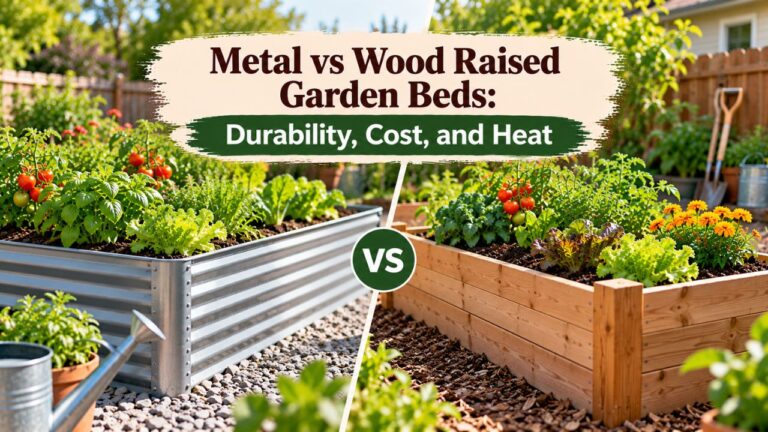
Ground-supported raised beds may use cedar, galvanized metal, masonry, or composite materials.
Elevated beds commonly use wood, metal, or plastic components supported by legs.
Elevated structures require particular attention to the bottom and supporting joints because they carry the full load of the growing medium.
Inspect wooden components for decay and metal fasteners for corrosion.
Even a relatively small planter can become heavy when its soil is saturated.
Which Garden Bed Is Better for Small Spaces?
An elevated bed is often convenient for a patio or compact growing area, but it isn’t always the most space-efficient option.
Elevated Beds for Patios and Courtyards
Elevated planters provide a defined growing area without requiring access to natural ground soil.
They can work well on paved surfaces when the location receives adequate sunlight.
Some models also provide storage space beneath the planting container.
Before installing one on a deck or balcony, consider its full weight when wet and confirm that the structure can support the load.
Also plan where drainage water will go.
Excess water should not create slipping hazards, damage surrounding surfaces, or affect neighboring properties.
Raised Beds for Small Backyards
A traditional raised bed can make efficient use of a modest backyard.
A 3 × 6-foot or 4 × 4-foot frame may provide substantial vegetable-growing space without requiring a large garden.
The open-bottom design can support deeper roots when the underlying soil is suitable.
Permanent placement also allows gardeners to establish irrigation and seasonal planting arrangements.
How to Choose Between a Raised Bed and an Elevated Bed
The simplest way to choose is to match the garden bed to the space, plants, and person using it.
Choose a Traditional Raised Bed If You Want
- A permanent backyard vegetable garden.
- More growing space for larger crops.
- Roots to access suitable native soil.
- Flexibility in bed width, length, and depth.
- A lower-cost structure for a substantial planting area.
- A garden that can support different crops across multiple seasons.
Traditional raised beds are often the better all-around option for gardeners with access to suitable outdoor ground.
Choose an Elevated Bed If You Want
- Less bending or kneeling.
- Gardening while standing or sitting.
- A planter for a patio or paved area.
- A small kitchen herb garden.
- A container for leafy vegetables and compact plants.
- A defined planting area that doesn’t require disturbing native ground.
Elevated beds are particularly useful when gardening comfort and accessibility are higher priorities than maximum soil volume.
Check These Details Before Buying or Building
Regardless of the design, examine the following features:
- Growing depth: Is there enough soil for the intended crops?
- Working height: Can the gardener comfortably reach and maintain the plants?
- Drainage: Can excess water leave without collecting around roots?
- Soil capacity: Will the planter hold enough moisture and nutrients?
- Structural strength: Can the frame support wet soil and mature plants?
- Available space: Is there enough room to walk or move around the bed?
- Sun exposure: Will the selected location provide the light the plants require?
These practical details matter more than the marketing name used for the garden bed.
Mistakes to Avoid With Raised and Elevated Garden Beds
Choosing the wrong design or overlooking its requirements can lead to unnecessary maintenance and disappointing plant growth.
Confusing Overall Height With Soil Depth
A 36-inch-tall elevated planter may contain only 10 inches of soil.
Always check the actual growing depth rather than using the overall product height to determine which crops it can support.
Filling Elevated Beds With Heavy Native Soil
Dense garden soil can create drainage problems and increase the load on an elevated planter.
Use a suitable container growing medium unless the manufacturer specifically recommends another mixture.
Ignoring Drainage Beneath Elevated Planters
An elevated garden bed needs drainage outlets.
Without them, excess water may collect and damage plant roots.
Check the design before filling the planter.
Choosing a Bed That Is Too Wide
A bed that is too wide can make planting and harvesting difficult.
For many ground-supported raised beds, keeping the width around 4 feet or less is practical when both sides are accessible.
For elevated planters, narrower widths may be necessary to allow comfortable reach.
Underestimating the Weight of Wet Soil
Wet soil and mature plants can place substantial loads on a planter.
Elevated beds need secure connections, sturdy legs, and a base designed to carry the full weight.
Do not use makeshift supports that may tip, bend, or collapse.
Conclusion
In the raised bed vs elevated bed comparison, the best choice depends on how and where you plan to garden.
A traditional raised bed is generally better for larger vegetable gardens, extensive root systems, and permanent backyard planting areas. Its open-bottom design can allow roots to extend into suitable native soil.
An elevated bed is often better for accessible gardening, patio use, and smaller crops that grow well within a limited soil volume.
For gardeners with ample ground space who want to grow a wide variety of vegetables, a traditional raised bed is usually the more flexible option.
For gardeners who prioritize comfortable access or need a planting container above a paved surface, an elevated garden bed may be the better investment.
Whichever design you choose, suitable soil depth, drainage, structural stability, and watering will have a greater influence on plant success than the bed’s name.
FAQs About Raised Bed vs Elevated Bed
Is an Elevated Garden Bed the Same as a Raised Bed?
Not exactly. An elevated bed is a type of raised planting system, but it usually has legs or supports that lift the growing container above ground level. A traditional raised bed generally rests directly on the ground.
Can Elevated Garden Beds Be Used on Concrete?
Yes. Elevated garden beds can be used on concrete or other paved surfaces when they are stable and have adequate drainage. Check that the surface can support the fully loaded planter and that drainage water has somewhere appropriate to go.
Do Elevated Garden Beds Need a Bottom?
Yes, a planter raised on legs needs a supported bottom to hold the growing medium. The base must also allow excess water to drain. Traditional open-bottom raised beds usually do not need a separate bottom.
Are Elevated Garden Beds Better for Older Adults?
They can be, particularly for people who find kneeling or bending uncomfortable. However, the working height, reach distance, and available space beneath the planter should match the gardener’s needs.
Can You Move an Elevated Garden Bed?
Some elevated planters are designed to be portable, especially smaller models with suitable wheels. However, many become too heavy to move safely after filling. Check the manufacturer’s instructions before attempting to relocate a loaded planter.
Do Elevated Garden Beds Need More Fertilizer?
Not necessarily. Their smaller soil volume may require closer nutrient monitoring, but fertilizer requirements depend on the growing medium and crops. Follow soil or growing-media recommendations rather than adding fertilizer automatically.
Can You Turn a Raised Bed Into an Elevated Bed?
Yes, but it usually requires rebuilding or adapting the structure to include a strong, supported bottom and suitable legs. Simply lifting an ordinary open-bottom raised bed onto blocks may be unsafe because the original frame may not be designed to support the weight of suspended soil.

I’m Maya L. Greenwood, a lifelong plant lover who believes anyone can grow something beautiful with the right guidance. After years of testing soil mixes, pruning methods, irrigation tricks, and pest-safe solutions, I started EasyGardenTips.com to turn hard-won lessons into step-by-step advice. From seed starting and container gardens to composting and seasonal checklists, my goal is to make gardening simple, sustainable, and fun.