Can You Start Seeds in Raised Bed Soil? How to Sow Them Right
Yes, you can start seeds directly in raised bed soil, provided the soil is loose, well-draining, and suitable for germination. Most vegetable seeds can sprout successfully in a prepared raised garden bed without requiring a separate seed-starting mix. However, raised bed soil is not always the best choice for starting seeds indoors in small trays or containers.
The difference comes down to soil texture, moisture control, and growing conditions. Seeds need consistent moisture, oxygen, and suitable temperatures to germinate. A coarse or compacted raised bed mix can make it difficult for small seeds to establish healthy roots.
Direct sowing works particularly well for vegetables such as carrots, radishes, peas, beans, and leafy greens. Other crops, including tomatoes and peppers, may benefit from being started indoors before transplanting into a raised bed.
The key is preparing the upper soil layer so seeds have good contact with the growing medium without becoming buried too deeply.
Choosing the right planting method and maintaining suitable soil conditions can improve germination and help seedlings develop strong roots.
Can You Start Seeds in Raised Bed Soil Without Special Seed Mix?
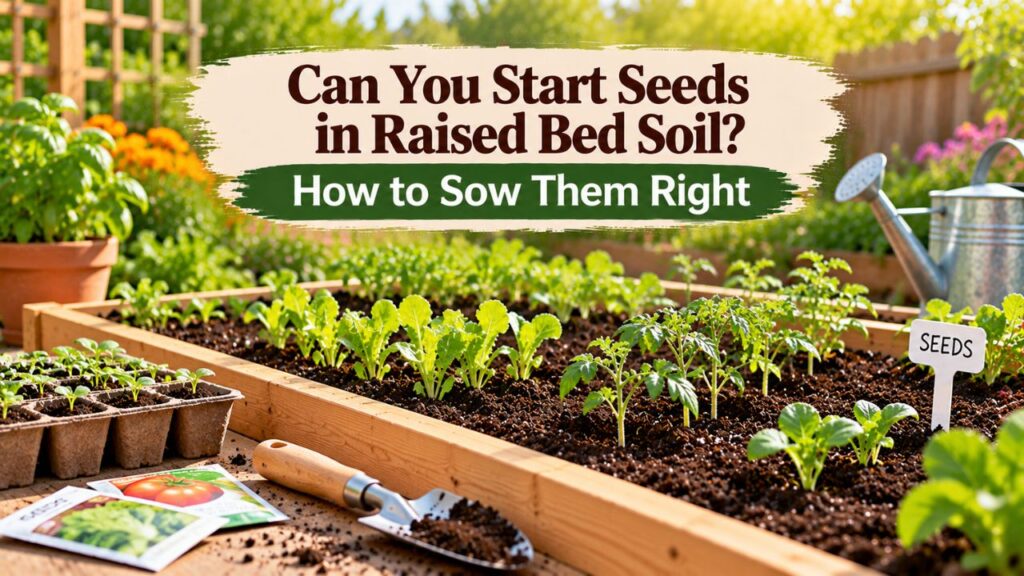
Yes. A properly prepared raised bed can serve as both a seed germination area and the permanent growing location for vegetable plants.
This method is called direct sowing, meaning seeds are planted exactly where they will continue growing.
Unlike indoor seed trays, an outdoor raised bed contains enough growing medium for seedlings to establish roots without requiring immediate transplanting.
However, the quality of the raised bed soil matters.
A suitable seedbed should have:
- Loose texture: Small roots can penetrate the growing medium without encountering hard clumps.
- Good drainage: Excess water can move through the soil instead of collecting around seeds.
- Consistent moisture: The upper soil layer remains moist during germination.
- Fine surface particles: Seeds make contact with soil instead of falling into large air pockets.
- Suitable soil temperature: The growing medium is warm or cool enough for the specific crop.
- Low weed competition: Newly emerged seedlings have space to develop.
A raised bed filled with good-quality topsoil and finished compost can provide these conditions.
However, mixes containing large wood pieces, coarse organic matter, or excessive uncomposted material may need surface preparation before small seeds are planted.
Raised Bed Soil vs. Seed-Starting Mix
Although both growing media support plants, they are designed for somewhat different purposes.
| Feature | Raised bed soil | Seed-starting mix |
| Main purpose | Growing vegetables in garden beds | Germinating seeds in small containers |
| Composition | Often contains topsoil and compost | Usually lightweight soilless materials |
| Texture | Varies from fine to moderately coarse | Generally fine and uniform |
| Drainage | Depends on soil structure and bed construction | Formulated for aeration in containers |
| Nutrient content | May contain substantial available nutrients | Often contains little initial fertilizer |
| Weed seeds | May be present | Typically low in commercial mixes |
| Best application | Direct outdoor sowing | Indoor seed trays and small pots |
The University of Minnesota Extension’s indoor seed-starting guidance recommends lightweight, soilless seed-starting mixes because their texture and porosity support germinating seeds and young roots.
That does not mean regular raised bed soil is unsuitable for direct outdoor planting.
It simply means that the requirements of a garden bed differ from those of a small seed tray.
Which Seeds Grow Best Directly in Raised Bed Soil?
Many vegetables grow well when planted directly into prepared raised bed soil.
Some crops are particularly suitable because they develop quickly or do not tolerate root disturbance during transplanting.
Vegetables That Are Well Suited to Direct Sowing
The following vegetables are commonly planted directly into garden beds.
| Vegetable | Direct sowing suitability | Planting consideration |
| Carrots | Excellent | Need loose soil for straight root development |
| Radishes | Excellent | Germinate relatively quickly in suitable conditions |
| Peas | Excellent | Prefer cooler growing conditions |
| Bush beans | Excellent | Need sufficiently warm soil |
| Beets | Excellent | May require thinning after emergence |
| Spinach | Excellent | Germinates better under cooler conditions |
| Lettuce | Very good | Tiny seeds need shallow planting |
| Cucumbers | Very good | Plant after the soil has warmed |
| Zucchini | Very good | Large seeds are relatively easy to space |
| Sweet corn | Very good | Needs warm soil and adequate planting space |
These vegetables can develop roots directly in the raised bed without being moved from a separate container.
Carrots and other long-rooted crops particularly benefit from direct sowing because transplanting can damage or disturb developing roots.
Beans, peas, radishes, and leafy greens are also practical choices for gardeners who want to avoid maintaining indoor seed trays.
Seeds That May Benefit From Indoor Starting
Some vegetables are commonly started indoors to extend the growing season.
Examples include:
- Tomatoes
- Peppers
- Eggplants
- Broccoli
- Cauliflower
- Cabbage
Tomatoes, peppers, and eggplants require a sufficiently long warm growing period to reach maturity and produce a harvest.
Starting them indoors can provide an advantage in regions with short growing seasons.
Broccoli, cabbage, and cauliflower can also benefit from indoor starting when gardeners need established transplants for a particular planting window.
These crops are not automatically unsuitable for direct sowing. Their success depends on the local climate, variety, and length of the growing season.
How to Prepare Raised Bed Soil for Starting Seeds
Preparing the soil surface is one of the most important parts of successful direct sowing.
The upper layer needs to be fine enough for good seed contact while remaining loose enough for roots to grow.
1. Remove Weeds and Old Plant Debris
Begin by inspecting the planting area.
Remove visible weeds, unwanted seedlings, and large pieces of undecomposed organic material.
Weeds compete with vegetable seedlings for sunlight, moisture, nutrients, and growing space.
Existing plant debris may also make it difficult to create shallow planting rows.
Small amounts of well-decomposed organic matter can remain in the soil, but the planting surface should be reasonably clear.
2. Loosen the Upper Soil Layer
Use a hand cultivator, garden fork, or small rake to gently loosen the upper few inches of soil.
Break apart large clumps without aggressively turning over the entire raised bed.
This creates a more uniform surface for planting.
Avoid working soil when it is extremely wet. Handling saturated soil can damage its structure and contribute to compaction.
If the soil sticks heavily to tools or forms dense, muddy clumps, allow it to dry slightly before preparing the seedbed.
3. Improve Coarse Soil With Fine Compost
Some commercial raised bed mixes contain noticeable pieces of bark, wood, or coarse organic material.
These materials may be acceptable in the overall growing medium but can interfere with the germination of tiny seeds.
A practical solution is to create a finer planting surface.
Spread a thin layer of screened, finished compost or suitable fine growing medium across the intended planting rows.
Gently blend it into the surface where necessary.
The goal is not to replace the entire raised bed mixture. It is to give seeds a fine, stable environment for germination.
Avoid using fresh manure or unfinished compost directly around newly planted seeds.
4. Check Soil Moisture Before Planting
Seeds need water to begin germinating, but saturated soil can reduce oxygen availability.
Before sowing, take a small handful of soil from the planting area.
The soil should feel moist and hold together loosely when squeezed.
If it is dusty and completely dry, water it gently before planting.
If it is sticky, muddy, or releasing excess water, allow it to drain before disturbing the surface.
A moist seedbed makes it easier to maintain consistent conditions after sowing.
5. Make Sure the Soil Temperature Is Suitable
Even perfectly prepared raised bed soil may produce poor germination when planted at the wrong time.
Cool-season vegetables such as peas, spinach, and radishes can be planted earlier in the growing season than heat-loving crops.
Beans, cucumbers, and squash generally need warmer soil.
Use a soil thermometer when necessary and follow the crop-specific temperature guidance on the seed packet.
Raised beds can warm faster than some surrounding garden soil, but their temperature still depends on weather, soil moisture, sunlight, and bed construction.
How to Start Seeds Directly in Raised Bed Soil
Once the growing medium is prepared, seeds can be planted using a straightforward process.
Step 1: Choose the Right Planting Time
Check the seed packet for recommended outdoor planting conditions.
Consider:
- Local average last and first frost dates
- Current soil temperature
- Whether the crop grows best in cool or warm conditions
- Days required for the plant to reach maturity
- Expected weather after planting
Avoid relying only on the calendar.
A raised bed may be ready for spinach while remaining too cold for beans.
Step 2: Create Shallow Planting Rows
Use a finger, narrow trowel, or the handle of a garden tool to create planting furrows.
The depth should match the seed being planted.
Small seeds generally require shallow planting, while larger seeds can tolerate greater depth.
The University of Maryland Extension’s outdoor vegetable seed sowing recommendations explain that planting depth should follow the seed packet, with approximately twice the seed’s width serving as a useful general guideline.
Some seeds require exposure to light or only a very thin covering, so packet instructions take priority.
Step 3: Place the Seeds at the Correct Spacing
Carefully distribute seeds along the prepared planting rows.
Larger seeds, such as beans and squash, are relatively easy to position individually.
Very small seeds, including lettuce and carrots, can be more difficult to space evenly.
If the seeds are planted too close together, thin the seedlings after germination.
Proper spacing reduces competition as the plants mature.
Step 4: Cover Seeds With Fine Soil
Cover the seeds with the recommended amount of growing medium.
Use fine raised bed soil, screened compost, or another suitable material that does not form a hard surface crust.
Avoid placing large wood particles or heavy soil clumps directly over small seeds.
After covering, gently firm the surface with your hand.
This improves seed-to-soil contact, helping the seeds absorb moisture from the surrounding growing medium.
Do not press down so firmly that the soil becomes compacted.
Step 5: Water With a Gentle Spray
Water the planted area using a watering can with a fine rose or a hose nozzle set to a gentle spray.
A strong stream can wash seeds out of their planting rows or bury them unevenly.
Moisten the upper soil layer thoroughly without creating puddles.
Check the surface regularly afterward.
The soil should remain consistently moist during germination, but it should not stay waterlogged.
Step 6: Protect the Seeds and Emerging Seedlings
Outdoor seeds may face several challenges before becoming established plants.
Heavy rainfall can displace seeds, while birds and other animals may disturb newly planted areas.
A lightweight row cover can provide some protection when installed and managed appropriately.
Check beneath covers regularly and provide ventilation when needed to prevent excessive heat.
Avoid placing thick mulch directly over tiny seeds before they emerge.
Step 7: Thin Seedlings After Germination
Once seedlings develop, check their spacing.
Overcrowded plants compete for water, light, and nutrients.
Follow the recommended final spacing for each vegetable.
For delicate seedlings growing very close together, cutting unwanted plants near the soil surface can reduce disturbance to neighboring roots.
Leave the healthiest seedlings with enough room to reach their mature size.
Can You Use Raised Bed Soil to Start Seeds Indoors?
Yes, seeds may germinate in raised bed soil inside containers, but it is generally not the preferred growing medium for indoor seed starting.
Many raised bed mixes contain mineral soil, compost, and coarse organic materials.
These ingredients can behave differently in small seed-starting cells than they do in a large outdoor bed.
Why Raised Bed Soil Can Cause Problems in Seed Trays
Indoor seed trays have limited soil volume and restricted drainage compared with garden beds.
Potential problems include:
- Excess moisture retention: Dense soil may stay wet for too long.
- Poor aeration: Compacted material can restrict oxygen around developing roots.
- Large particles: Coarse compost or wood pieces may interfere with tiny seedlings.
- Weed competition: Soil containing viable weed seeds can produce unwanted growth.
- Plant pathogens: Garden soil may contain organisms associated with seedling diseases.
- Uneven watering: Some mixtures dry inconsistently inside small cells.
These issues are not guaranteed to occur, but they make regular raised bed soil less predictable for indoor propagation.
What Should You Use Instead?
For indoor seed trays, choose a commercial seed-starting mix or another suitable lightweight growing medium.
A good seed-starting mix provides:
- Fine, consistent texture
- Good air circulation around roots
- Suitable moisture retention
- Reliable drainage
- Low levels of weed seeds
Seedlings generally do not need a heavily fertilized medium immediately after germination because the seed contains stored energy for early growth.
Once seedlings develop true leaves and begin active growth, their nutrient needs increase.
Follow appropriate feeding instructions for the growing medium and crop.
How to Keep Raised Bed Soil Moist During Seed Germination
Moisture management is especially important when seeds are planted directly outdoors.
Raised beds can lose surface moisture quickly during warm, sunny, or windy weather.
Seeds planted near the soil surface are particularly vulnerable to drying.
Water According to Surface Moisture
Check the upper soil layer regularly while waiting for seeds to sprout.
If the surface begins drying, apply water gently.
The frequency depends on rainfall, temperature, wind exposure, and the soil mixture.
During hot weather, shallow-planted seeds may need more frequent moisture checks than established vegetables with deeper roots.
Do not assume that every raised bed needs watering on the same schedule.
Avoid Waterlogged Conditions
Seeds require oxygen as well as moisture.
When excess water fills the spaces between soil particles, oxygen becomes less available.
Prolonged saturation may delay germination, encourage seed decay, or contribute to seedling disease.
If water collects on the surface or the soil remains muddy, investigate drainage before adding more water.
Reduce Soil Surface Crusting
Some raised bed soils form a hard surface crust after heavy rain or overhead watering.
This can make it difficult for delicate seedlings to emerge.
A thin covering of screened compost or fine vermiculite over the planting row can help reduce crusting.
Avoid breaking the crust aggressively after seeds have begun germinating, since this may damage emerging shoots.
Why Are Seeds Not Germinating in Raised Bed Soil?
Poor germination does not automatically mean the raised bed soil is unsuitable.
Several conditions may prevent seeds from sprouting, even in otherwise healthy growing media.
Seeds Were Planted Too Deeply
Small seeds may not have enough stored energy to reach the surface when buried too deeply.
Check the recommended planting depth for the crop.
If repeated attempts fail, inspect whether watering or surface settling has covered the seeds more deeply than intended.
Soil Is Too Cold or Too Hot
Every crop has a suitable temperature range for germination.
Heat-loving vegetables may germinate poorly in cold spring soil, while some cool-season crops struggle when soil temperatures become too high.
Check actual soil conditions rather than assuming the raised bed is ready because the air feels warm.
Soil Dries Out During Germination
A seed that begins absorbing water needs continued moisture for successful germination.
If the upper soil layer dries repeatedly, germination may stop or seedlings may fail to emerge.
Fine-textured surface preparation and gentle watering help maintain more consistent moisture.
Soil Remains Too Wet
Excessively wet soil can prevent adequate oxygen from reaching seeds.
Persistent saturation also creates conditions favorable to certain seed and seedling diseases.
Reduce unnecessary irrigation and correct drainage problems before reseeding.
Seeds Are Old or No Longer Viable
Seed quality affects germination.
Seeds stored under hot or humid conditions may lose viability more quickly than those kept cool and dry.
If soil conditions appear suitable but germination remains poor, test a few seeds on a moist paper towel according to the crop’s germination requirements.
This can help determine whether the seed itself is responsible.
When Is Direct Sowing Better Than Starting Seeds Indoors?
Direct sowing is often preferable when vegetables establish readily outdoors and benefit from developing roots without transplanting.
Carrots, radishes, peas, and beans are common examples.
Indoor starting becomes more useful when a crop needs a longer growing season or requires controlled temperatures during its early development.
The following considerations can help guide the decision.
Choose direct sowing when:
- The crop tolerates or prefers planting directly in garden soil.
- Outdoor soil temperatures are suitable.
- The growing season provides enough time for maturity.
- The raised bed has a fine, well-prepared planting surface.
- Seedlings can be protected from extreme weather and pests.
Choose indoor starting when:
- Outdoor conditions are too cold for germination.
- The crop needs a longer period to mature.
- The growing season is short.
- The seeds are especially small or require careful propagation.
- Controlled moisture, temperature, and lighting offer a practical advantage.
Both methods can produce healthy plants.
The better choice depends on the vegetable, local growing conditions, and the gardener’s ability to maintain suitable conditions during the seedling stage.
Conclusion
Can you start seeds in raised bed soil? Yes. A properly prepared raised bed is suitable for direct sowing many common vegetables, including carrots, radishes, beans, peas, and leafy greens.
The main requirements are a loose planting surface, good drainage, appropriate soil temperature, correct planting depth, and consistent moisture.
A separate seed-starting mix is generally unnecessary when sowing directly into an outdoor raised bed. However, lightweight seed-starting media are usually preferable for indoor trays and small propagation containers.
Prepare the upper soil layer carefully, follow the seed packet instructions, and avoid overwatering. These steps provide seeds with suitable conditions for germination and help young plants establish healthy roots.
FAQs About Can You Start Seeds in Raised Bed Soil
Do You Need Seed-Starting Mix on Top of Raised Bed Soil?
No. A separate seed-starting mix is not required if the raised bed already has a fine, loose planting surface.
If the soil is coarse or contains large particles, adding a thin layer of screened finished compost or suitable fine growing medium can improve seed contact and emergence.
Can You Plant Seeds Directly in Bagged Raised Bed Soil?
Yes. Many commercially available raised bed soils are suitable for direct sowing when used as intended.
Check the mixture’s texture, drainage, and moisture retention before planting. If the surface contains large wood pieces, create a finer planting area for small seeds.
Can You Start Tomato Seeds Directly in Raised Bed Soil?
Yes, tomato seeds can germinate directly in raised bed soil when temperatures are suitable.
However, starting tomatoes indoors is often more practical in areas with short growing seasons because the seedlings can establish before outdoor planting conditions become favorable.
How Deep Should You Plant Seeds in Raised Bed Soil?
Planting depth depends on the crop and seed size.
A general guideline is approximately twice the seed’s width, but some seeds require very shallow planting or light exposure for germination. Follow the instructions on the seed packet.
Should You Water Raised Bed Soil Before Planting Seeds?
Yes, if the soil is dry.
Moistening the growing medium before sowing helps provide consistent moisture around the seeds. After planting, water gently to avoid washing seeds away.
Can You Start Seeds in Raised Bed Soil With Compost?
Yes. A raised bed soil mixture containing finished compost can support successful seed germination.
The compost should be mature and properly incorporated into a suitable growing medium. Avoid burying seeds directly in large amounts of unfinished compost or fresh manure.
How Long Does It Take Seeds to Germinate in Raised Bed Soil?
Germination time varies by vegetable, seed quality, soil temperature, and moisture conditions.
Some vegetables, such as radishes, may emerge within several days under favorable conditions. Others, including carrots and peppers, can take considerably longer.
Use the expected germination range on the seed packet as the primary guide and maintain suitable soil conditions while waiting.

I’m Maya L. Greenwood, a lifelong plant lover who believes anyone can grow something beautiful with the right guidance. After years of testing soil mixes, pruning methods, irrigation tricks, and pest-safe solutions, I started EasyGardenTips.com to turn hard-won lessons into step-by-step advice. From seed starting and container gardens to composting and seasonal checklists, my goal is to make gardening simple, sustainable, and fun.