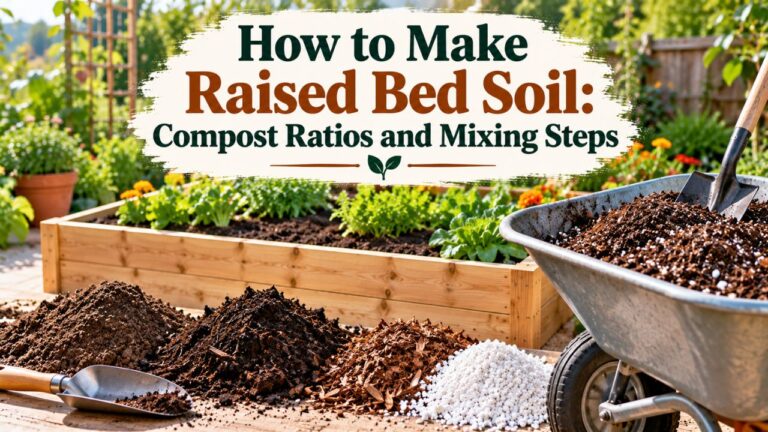
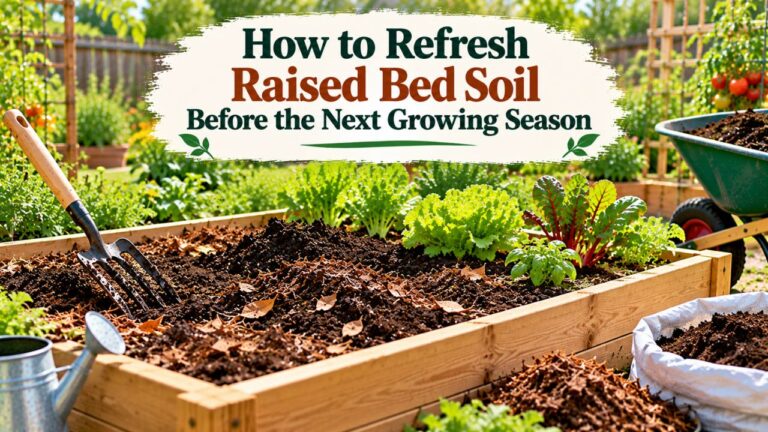
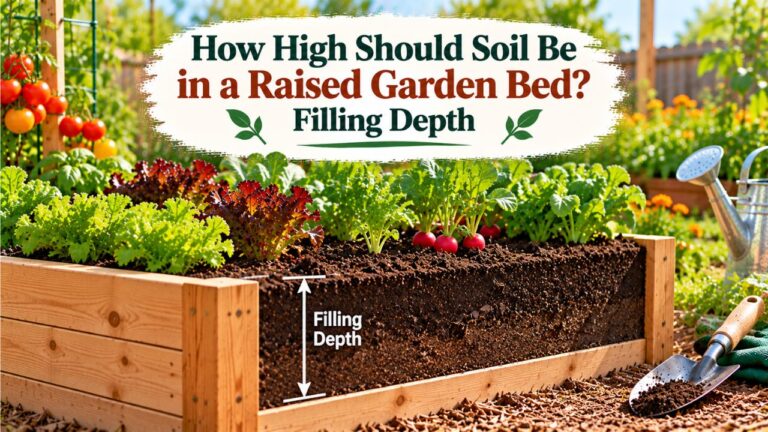
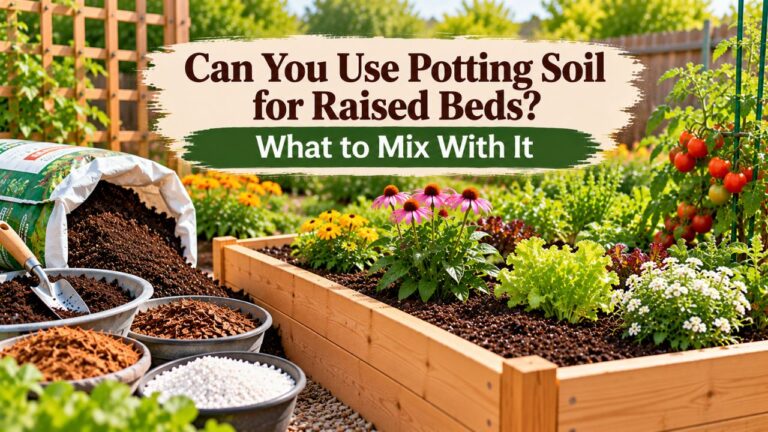
Can You Use Raised Bed Soil in the Ground? How and When to Mix
Yes, you can use raised bed soil in the ground for growing vegetables, flowers, and other garden plants. Most raised bed soil mixes contain organic matter and other ingredients that can improve existing garden soil. However, the best way to use them depends on their composition and the condition of your native soil.
Bagged raised bed soil isn’t necessarily the same as ordinary garden soil. Some products contain mineral topsoil and compost, while others are mostly peat moss, processed wood materials, and other organic ingredients.
These differences matter when you’re adding soil directly to the ground. A mix that performs well inside a raised bed might dry out quickly or settle excessively if used as the main growing medium in an existing garden.
The good news is that you usually don’t need to replace your native soil. Adding an appropriate amount of raised bed mix and incorporating it into the existing soil can be a practical solution.
This guide explains when raised bed soil works in the ground, how to mix it correctly, how much to use, and which situations require a different approach.
Can You Use Raised Bed Soil in the Ground for Vegetables and Flowers?
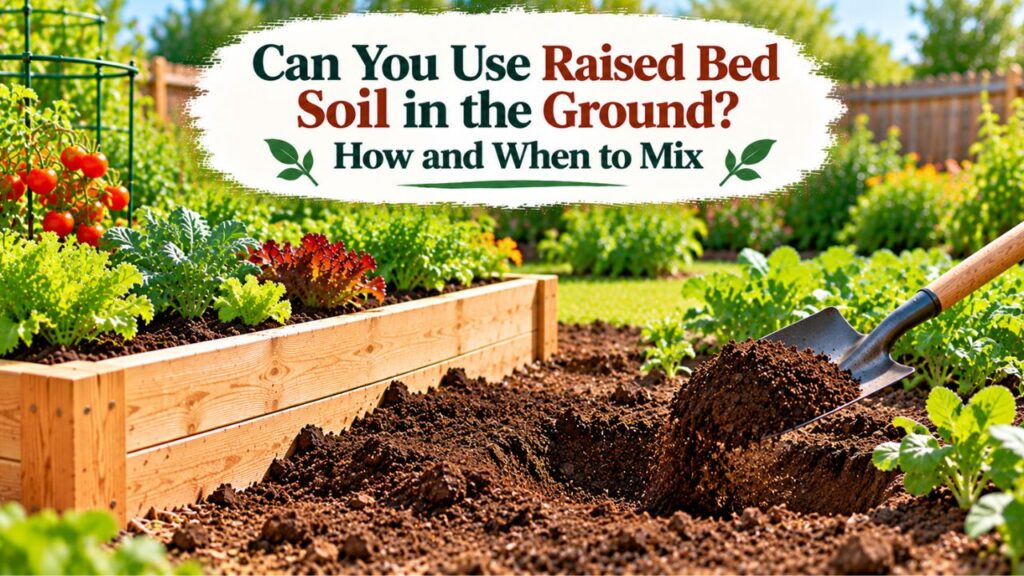
Raised bed soil can be used in ordinary in-ground garden beds, provided its ingredients are suitable for the intended plants and growing conditions.
It can be useful when establishing a new vegetable garden, improving poor-quality soil, or adding organic material to an existing flower bed.
According to the University of Maryland Extension’s raised bed gardening guidance, raised beds placed directly on the ground allow roots to grow through the added soil and into the native soil underneath.
This means raised bed soil and in-ground garden soil can function together as part of the same rooting environment.
However, adding raised bed mix doesn’t automatically improve every soil problem.
When Raised Bed Soil Works Well in the Ground
Using raised bed soil in the ground makes sense when:
- You’re preparing a new vegetable or flower garden.
- Existing soil has low organic matter.
- You need additional soil to build up a planting area.
- You have leftover raised bed soil from another project.
- You want to improve the texture of suitable native soil.
- You’re creating a shallow, unframed garden mound.
The best results depend on selecting the right product and using an appropriate amount.
When Raised Bed Soil May Not Be Necessary
Healthy garden soil doesn’t always need additional amendments.
If your existing soil has good structure, drains properly, and supports healthy plants, adding more purchased material may provide little benefit.
A soil test can help determine whether nutrient adjustments are needed.
Avoid adding amendments simply because they are marketed for vegetable gardening.
What Is Raised Bed Soil Made Of?
Raised bed soil is a growing medium designed for use in elevated garden beds.
However, there is no single ingredient formula used by every manufacturer.
Understanding the contents of a bag is important before mixing it with native soil.
Topsoil-Based Raised Bed Mix
Some raised bed products contain mineral topsoil blended with compost or other organic materials.
Mineral soil contains varying proportions of sand, silt, and clay.
These particles influence water movement, nutrient retention, and soil structure.
A suitable topsoil-based raised bed mix can work well in the ground because its components are similar to those used in ordinary garden beds.
It may be useful for increasing soil volume or improving an existing planting area.
Compost-Based Raised Bed Mix
Other products contain substantial amounts of composted plant material.
Compost contributes organic matter and can improve soil structure when used appropriately.
However, an excessively compost-rich growing medium may create problems with moisture management or nutrient accumulation.
The University of Minnesota Extension’s raised bed gardening recommendations describe a mixture containing approximately one-half to two-thirds topsoil and one-third to one-half plant-based compost as a useful raised bed growing medium.
The same guidance notes that excessive compost can cause moisture-management problems and that manure-based compost can contribute substantial phosphorus.
Those proportions are recommendations for preparing a raised bed mix, not universal application rates for amending existing ground soil.
Soilless Raised Bed Mix
Some bagged products labeled as raised bed soil contain little or no actual mineral soil.
Their ingredients may include:
- Peat moss
- Coconut coir
- Composted bark
- Wood fiber
- Finished compost
- Perlite
- Other organic growing-medium components
These materials can support plant growth, but they behave differently from mineral garden soil.
For example, peat-heavy growing media can become difficult to rewet after drying excessively.
If the product is mostly lightweight organic material, blending a suitable amount into native soil is generally more practical than replacing a large section of an established garden with it.
How to Use Raised Bed Soil in the Ground
The easiest approach is to prepare the existing garden area, evaluate the bagged mix, and incorporate an appropriate quantity without damaging the soil structure.
Step 1: Check Your Existing Garden Soil
Start by examining the soil where you plan to plant.
Remove a small sample from several inches below the surface.
Check whether it feels:
- Loose and crumbly
- Extremely sandy
- Hard and compacted
- Sticky and clay-heavy
- Excessively wet
- Dry and difficult to rewet
These observations help identify physical problems.
For nutrient availability and soil pH, use a laboratory soil test rather than relying only on appearance.
If the soil already has high organic matter or nutrient levels, adding more compost-rich material may be unnecessary.
Step 2: Read the Raised Bed Soil Ingredients
Check the product label before spreading the mix.
Look for the main growing-medium ingredients and any added fertilizers.
A topsoil-and-compost mixture may behave differently from a peat-based or bark-heavy product.
If fertilizer is already included, avoid automatically applying additional fertilizer during preparation.
For edible gardens, choose materials intended for growing plants and avoid products with an unknown source or suspected contamination.
Step 3: Clear the Garden Area
Remove weeds, unwanted grass, and large debris from the planting area.
If you’re preparing a new garden bed, clear enough space for the mature plants.
Check whether the native soil is compacted.
If necessary, use a garden fork to gently loosen compacted sections.
Avoid working very wet soil because digging can damage its structure and create dense clumps.
Step 4: Spread Raised Bed Soil Across the Surface
Distribute the raised bed mix evenly over the prepared area.
The amount depends on the existing soil, the bagged product’s ingredients, and your purpose.
For a small trial area, a light layer is easier to evaluate than a thick application.
If the product is already rich in compost, don’t assume that more material will produce better results.
You can add additional soil later if the original application proves insufficient.
Step 5: Blend the Mix With Native Soil When Appropriate
For a new garden area that needs soil improvement, gently incorporate the purchased mix into the upper layer of native soil.
A garden fork or similar tool can help combine the materials without excessive tilling.
Avoid creating a sharply separated layer of lightweight organic material over dense, compacted soil.
The goal is a usable growing area with suitable moisture movement and root access.
For established garden beds that already have healthy soil structure, surface application may be preferable to deep mixing.
Important: Don’t dig aggressively around existing plants. Their feeder roots may extend far beyond the visible stems.
Step 6: Water and Check the Soil
After incorporating the mix, water the area gently.
Observe how quickly the water enters the soil and whether puddles remain.
Check moisture several inches below the surface after watering.
The soil should retain useful moisture without staying saturated.
If a newly added organic mix dries quickly, adjust watering and consider applying a suitable mulch.
Step 7: Plant and Monitor Growth
Once the soil is prepared, plant vegetables or flowers according to their spacing and depth requirements.
During the first growing season, monitor:
- Soil moisture
- Drainage
- Plant growth
- Nutrient deficiency symptoms
- Settling of the added material
Don’t add extra fertilizer solely because plants are growing slowly. Sunlight, water, temperature, root health, and pests can also affect their development.
How Much Raised Bed Soil Should You Add to the Ground?
There is no universal quantity that works for every in-ground garden.
The correct amount depends on whether you’re improving existing soil or increasing the height of the planting area.
For Amending Existing Garden Soil
If the existing soil is reasonably healthy, begin with a modest application instead of adding a thick layer.
A trial application of approximately 1 inch of suitable raised bed mix can be a manageable starting point for a garden area that needs additional organic material or topsoil.
However, this is not a universal recommendation. Products containing large amounts of compost or fertilizer may require smaller quantities, or no application at all.
Check soil test results and product instructions before deciding on the final amount.
For Building Up a New Garden Bed
If you’re creating a slightly elevated planting area without installing a raised bed frame, more soil may be needed.
In that situation, the purchased material serves as additional growing medium rather than simply a soil amendment.
Choose a suitable topsoil-based mix and ensure roots can reach the ground underneath.
You may need several inches of added soil depending on the planned bed height and existing ground conditions.
Calculate Raised Bed Soil Volume
For a rectangular area:
Soil volume (cubic feet) = Length (feet) × Width (feet) × Added depth (inches) ÷ 12
For example, a 4 × 8-foot garden area requires the following amounts:
| Added Soil Depth | Soil Volume |
| ½ inch | 1.33 cubic feet |
| 1 inch | 2.67 cubic feet |
| 2 inches | 5.33 cubic feet |
| 3 inches | 8 cubic feet |
| 4 inches | 10.67 cubic feet |
These figures calculate volume only. They don’t mean every soil type should receive that amount.
If you’re using purchased bags, divide the required cubic feet by the bag’s labeled volume.
Raised Bed Soil vs. Garden Soil: Which Is Better for In-Ground Planting?
Both products can be suitable for in-ground gardening, but they are marketed for somewhat different purposes.
The important differences come from their actual ingredients rather than their names.
| Feature | Raised Bed Soil | Garden Soil |
| Intended use | Raised beds and elevated growing areas | In-ground garden beds |
| Typical composition | Topsoil, compost, or organic growing media | Mineral soil with added organic matter |
| Texture | Varies from loose and lightweight to mineral-based | Varies with soil type and ingredients |
| Water retention | Depends on organic content and particle structure | Depends on mineral texture and organic matter |
| In-ground suitability | Often suitable when appropriately selected | Usually designed for this purpose |
| Best application | Raised beds, mounded beds, or selected amendments | Existing garden soil improvement and planting |
When Garden Soil Is the Better Choice
A product labeled garden soil may be a practical choice when you’re improving a conventional flower or vegetable bed.
These products are often designed to be mixed with existing ground soil.
However, some bagged garden soils are also highly organic, so the label alone doesn’t guarantee the right composition.
Check the ingredients and instructions before purchasing.
When Raised Bed Soil Is the Better Choice
Raised bed soil makes sense when you’re building up an elevated growing area, creating an unframed mound, or using a product that contains ingredients suited to your existing soil.
If you already have leftover raised bed soil, using it appropriately in a garden bed can prevent unnecessary waste.
There’s usually no reason to discard suitable material just because it was originally purchased for a raised bed.
Can Raised Bed Soil Improve Clay or Sandy Ground?
Raised bed soil may help improve some physical soil conditions, but it won’t correct every drainage or texture problem.
Using Raised Bed Soil in Clay Soil
Clay soil contains very small mineral particles and can become dense when compacted.
Suitable organic matter can help improve soil aggregation and workability over time.
However, the results depend on the existing clay structure, drainage, and the ingredients of the amendment.
For clay-heavy ground:
- Check whether water can drain from the planting area.
- Avoid digging or mixing when the soil is wet.
- Loosen compacted areas when appropriate.
- Add a suitable organic amendment if needed.
- Maintain soil structure with mulch and limited disturbance.
A lightweight raised bed mix can’t automatically fix a deeply compacted layer or a drainage problem caused by site grading.
If water regularly collects in the area, address the underlying drainage problem before planting.
Using Raised Bed Soil in Sandy Soil
Sandy soil contains relatively large mineral particles and often drains quickly.
A suitable compost-containing amendment can increase organic matter and help improve moisture retention.
However, not every raised bed soil product is useful for this purpose.
A mix dominated by coarse bark or other rapidly draining ingredients may not provide the improvement you expect.
Consider the existing soil’s ability to retain moisture before selecting an amendment.
Organic mulch and appropriate irrigation can also help manage moisture loss.
Can You Use Raised Bed Soil Without Mixing It Into the Ground?
Yes, raised bed soil can sometimes be used on top of native ground without being completely incorporated.
This is especially relevant when creating a new raised or mounded planting area.
However, the underlying surface and type of soil mix matter.
Creating an Unframed Raised Garden Bed
An unframed raised bed is a mound of suitable growing soil elevated above the surrounding ground.
It doesn’t require wooden boards, metal panels, or another border.
To create one:
- Select a suitable planting location.
- Remove existing vegetation.
- Check and loosen compacted native soil if necessary.
- Add an appropriate growing-medium mixture.
- Shape the soil into a stable, gently sloped mound.
- Water the bed and allow the material to settle.
The added soil can support vegetables and flowers, while roots may extend into the underlying ground.
A mineral soil-based mixture is generally more stable for this purpose than a mound made entirely from lightweight, rapidly decomposing organic material.
Using Raised Bed Soil as a Surface Amendment
If the garden already has healthy soil, a light application of appropriate organic material may be left on the surface.
Soil organisms and natural processes gradually incorporate some organic matter.
However, spreading a thick layer of peat-heavy or coarse bark-based mix across an established garden may not be useful.
Choose the material according to whether you need soil volume, organic matter, or surface mulch.
These are different purposes.
When Should You Avoid Using Raised Bed Soil in the Ground?
Although many raised bed mixes can be used in the ground, certain situations require extra care.
Avoid Filling Individual Tree Planting Holes With Pure Raised Bed Mix
When planting a tree or large shrub, don’t automatically replace the soil inside the planting hole with a rich raised bed mix.
A planting hole filled with material that differs greatly from the surrounding native soil can create uneven moisture conditions.
Roots also need to establish themselves beyond the original planting hole.
For many landscape trees and shrubs, suitable native soil is preferred for backfilling unless site-specific guidance indicates otherwise.
Avoid Using Compost-Rich Mix When Nutrients Are Already Excessive
Some raised bed mixes contain substantial compost or added fertilizer.
Applying them repeatedly can increase nutrient levels beyond what plants require.
Excessive phosphorus or soluble salts can become a concern, particularly with manure-based products.
A soil test helps identify whether additional amendments are appropriate.
Avoid Using Raised Bed Soil to Fix Standing Water
Adding loose soil to a poorly drained location doesn’t necessarily solve the underlying problem.
If water has nowhere to escape, the garden can remain saturated.
Check for compacted layers, unsuitable grading, and drainage restrictions.
For locations with serious drainage problems, a properly designed raised bed with an effective drainage path may be more suitable than simply mixing in additional material.
Avoid Unknown or Contaminated Soil
Don’t use soil of uncertain origin if it may contain harmful chemicals, construction debris, or other contaminants.
This is particularly important when growing edible crops.
If the site or purchased material has a credible contamination risk, obtain appropriate testing or use a verified clean growing medium in a properly designed garden system.
Is Raised Bed Soil Good for Growing Vegetables Directly in the Ground?
Yes. Suitable raised bed soil can support common vegetables when used appropriately in an in-ground planting area.
The vegetables themselves don’t require soil specifically labeled as garden soil or raised bed soil.
They need a growing environment that provides:
- Adequate root space
- Water and oxygen
- Suitable nutrient availability
- Appropriate soil pH
- Good structure and drainage
Tomatoes and Peppers
Tomatoes and peppers benefit from a loose, well-drained growing medium with sufficient rooting space.
A suitable topsoil-and-compost-based raised bed mix can be used when establishing or improving their planting area.
Avoid adding excessive fertilizer if the product already contains nutrients.
Lettuce and Spinach
Leafy vegetables can grow well in amended in-ground soil.
A suitable raised bed mix may help improve the upper growing layer when native soil is poor.
Consistent moisture is particularly important during establishment.
Carrots and Other Root Vegetables
Carrots, beets, and radishes need soil that allows their edible roots to develop without unnecessary resistance.
If the native ground is compacted, adding a thin surface layer alone may not be enough.
Check the soil below the amendment and remove stones or restrictive clumps where possible.
Flowers and Herbs
Many annual flowers and culinary herbs can grow in garden soil improved with an appropriate raised bed mix.
However, not every plant benefits from highly organic or moisture-retentive soil.
Some drought-adapted herbs prefer relatively lean, well-drained conditions.
Match the growing medium to the plant rather than applying the same amendment to every flower or herb bed.
How to Maintain In-Ground Soil After Adding Raised Bed Mix
Once the soil has been amended, regular maintenance helps preserve its structure and fertility.
Add Organic Matter Only When Needed
You don’t need to add bags of raised bed soil every growing season.
Organic matter gradually decomposes, but the correct replacement rate depends on soil conditions and previous applications.
Use finished compost or another suitable amendment when there’s a clear need.
Protect the Soil With Mulch
Organic mulch can reduce surface moisture loss and help protect soil from erosion.
Suitable materials include clean straw, shredded leaves, and appropriate wood-based mulches.
Keep mulch away from direct contact with plant stems and tree trunks.
Avoid Repeated Heavy Digging
Excessive disturbance can damage soil structure and bring buried weed seeds to the surface.
Once the planting area has good structure, avoid unnecessary deep tilling.
Surface applications and limited loosening may be sufficient for routine maintenance.
Monitor Moisture and Nutrients
Check soil moisture below the surface rather than judging only by its appearance.
If plants show persistent signs of poor growth, examine watering, sunlight, roots, pests, and fertility before adding more amendments.
Periodic soil testing can help prevent unnecessary fertilizer applications.
Conclusion
Can you use raised bed soil in the ground? Yes. Most suitable raised bed soil mixes can be used in ordinary garden beds, vegetable plots, and flower-growing areas.
The best approach is to check the product’s ingredients and evaluate the condition of the native soil before applying it.
Topsoil-based raised bed mixes can work well for building up garden areas, while appropriate compost-rich mixes may help improve existing soil when applied in reasonable amounts.
However, highly organic or soilless mixes aren’t always appropriate as complete replacements for native soil.
For an established garden, retain healthy native soil whenever possible and use raised bed soil only where it offers a practical improvement.
FAQs About Can You Use Raised Bed Soil in the Ground
Can I Mix Raised Bed Soil With Regular Dirt?
Yes. You can mix suitable raised bed soil with native garden soil.
The amount depends on the existing soil’s condition and the ingredients of the purchased mix. Avoid excessive compost or fertilizer additions, particularly when the soil already has adequate nutrient levels.
Can I Use Raised Bed Soil Instead of Garden Soil?
Yes, in some situations. A suitable topsoil-based raised bed mix can be used when building a new planting area or adding soil volume.
However, lightweight soilless mixes may behave differently from mineral garden soil and aren’t always appropriate as complete replacements.
Can I Use Raised Bed Soil for Flowers?
Yes. Many annual flowers and other garden plants can grow in soil improved with suitable raised bed mix.
Choose the product according to the plants’ drainage, nutrient, and moisture requirements.
Can I Use Raised Bed Soil for Trees and Shrubs?
Raised bed soil can sometimes be used as part of a broader landscape soil-improvement plan, but it generally shouldn’t be used to replace all the native soil inside an individual tree or shrub planting hole.
For most landscape planting, suitable native soil provides a better transition into the surrounding root zone.
Can I Put Raised Bed Soil on Top of Grass?
You can use raised bed soil to establish a new growing area over former grass, but the existing vegetation should be removed or properly suppressed first.
Simply spreading a thin layer of soil over living turf may allow the grass to grow through it.
If you’re establishing a raised mound, prepare the surface and provide an adequate depth of suitable growing medium.
Can I Use Raised Bed Soil in the Ground Without Adding Fertilizer?
Yes. Additional fertilizer isn’t automatically necessary.
Some raised bed products already contain nutrients or fertilizer, and existing garden soil may have sufficient fertility.
Use soil test results and crop requirements to decide whether additional nutrients are needed.
Is Raised Bed Soil Better Than Topsoil for an In-Ground Garden?
Not necessarily. A quality raised bed mix may contain useful organic matter, but suitable topsoil can also provide an excellent growing base.
The better option depends on your native soil, the product ingredients, drainage conditions, and what you’re planting.

I’m Maya L. Greenwood, a lifelong plant lover who believes anyone can grow something beautiful with the right guidance. After years of testing soil mixes, pruning methods, irrigation tricks, and pest-safe solutions, I started EasyGardenTips.com to turn hard-won lessons into step-by-step advice. From seed starting and container gardens to composting and seasonal checklists, my goal is to make gardening simple, sustainable, and fun.