5 Best Grow Light for Tomato Seedlings: Practical Buying Guide
Finding the best grow light for tomato seedlings can be harder than it looks. Young tomatoes need dependable, close-range light, but the right choice also depends on available space, height adjustment, timer controls, coverage, and how much setup you want to manage.
My first choice is FOXGARDEN Advanced Grow Light Stand. Its 108 LEDs include cool white, warm white, and red diodes, giving a beginner useful control from germination through early growth.
My second choice is GooingTop 6000K Full Spectrum Indoor Plant Growing Lamp. The flexible gooseneck, strong clamp, 6000K white light, low 10-watt draw, and 365-day warranty make it especially appealing when floor space is limited.
My third choice is LEOTER Upgraded 80-LED Full Spectrum Grow Light. Its full-spectrum and red-blue settings, 10 intensity levels, circular timer, and USB or AC power options provide plenty of control for seedlings and other indoor plants.
This guide compares five different approaches, from compact clamp lamps to freestanding fixtures with broader coverage. You will learn which features matter for tomato seedlings, how to position and schedule a light, what limitations to expect, and which product best matches your growing space.
Best Grow Light for Tomato Seedlings
I selected these products for their direct usefulness to indoor seedlings, practical control features, adjustability, energy considerations, and available customer-feedback evidence. The ranking also favors variety, so the list includes compact tabletop lamps, flexible multi-head lights, a stand-mounted option, and a higher-output panel for buyers with different spaces and growing goals.
| # | Image | Product | Price on Amazon |
|---|---|---|---|
| 1 |  |
FOXGARDEN Advanced Grow Light Stand | Check Price |
| 2 |  |
GooingTop 6000K Full Spectrum Indoor Plant Growing Lamp | Check Price |
| 3 |  |
LEOTER Upgraded 80-LED Full Spectrum Grow Light | Check Price |
| 4 |  |
VIPARSPECTRA 70-Watt Dimmable Full-Spectrum LED Grow Light | Check Price |
| 5 |  |
LBW Full Spectrum Grow Light | Check Price |
FOXGARDEN Advanced Grow Light Stand
The FOXGARDEN stands out because it feels like a complete small growing station rather than just a light head. Its 108 LEDs combine 60 cool white, 32 warm white, and 16 red diodes. That mix is useful for a tomato seedling shelf because it provides a broad spectrum without forcing a new fixture as plants move from sprouting into vegetative growth.
Height adjustment from 11.02 to 21.65 inches gives you room to keep the lamp near short seedlings and raise it as the plants grow. The reflector is intended to direct more brightness toward the plants, while the metal base and sponge pad help keep the setup steady and protect a desktop. Those details matter when a tray is positioned in a busy kitchen, office, or apartment.
The controls are beginner-friendly: six dimming levels from 10% to 100% and timer choices of four, eight, or twelve hours. A timer reduces the chance of forgetting the daily schedule, although seedlings may need a longer overall light period than the longest built-in setting, depending on available window light and your growing routine. In that situation, you may need to reset the cycle or supplement it with natural light.
Pros
- Stable stand with adjustable height and a protective desktop pad
- 108-LED mix supports seedlings, vegetables, and later growth stages
- Six brightness levels and 4/8/12-hour timer options
- Includes a reflector and comes with a 12-month warranty and 90-day return guarantee
Cons
- Its built-in maximum timer period may not cover every preferred daily schedule by itself
- The stand takes more space than a clamp-style lamp
My Opinion
This is the strongest all-around pick for a beginner growing a tray of tomato seedlings indoors. Choose it when stability, height adjustment, and straightforward controls matter more than the smallest possible footprint.
GooingTop 6000K Full Spectrum Indoor Plant Growing Lamp
GooingTop takes a compact, targeted approach. The lamp uses 74 white LEDs and 10 red LEDs at a 6000K color temperature, with a color rendering index listed at 95. For a tabletop seed-starting area, that combination offers a bright, daylight-like appearance that is easier to live with than some strongly purple grow lights.
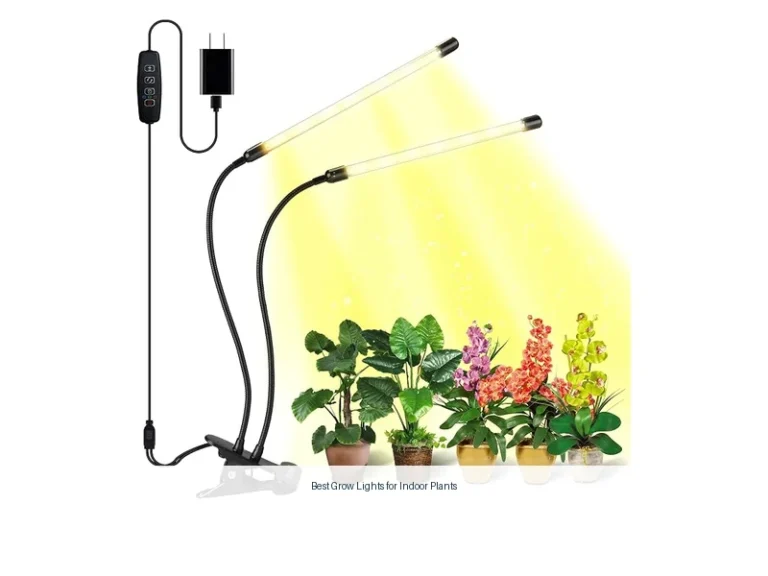
Its flexible gooseneck and strong clamp are the main reasons to consider it. You can attach it to a desk, shelf, or nearby table and angle the light toward a small group of pots. The 360-degree positioning makes it easier to keep the light centered as seedlings are rearranged. However, a clamp lamp is dependent on a solid attachment point, and its coverage is less naturally broad than a stand or panel intended for a larger area.
The lamp draws about 10 watts and can run from USB or an AC power plug. That gives you more placement flexibility in an office or apartment, while the stated estimate of roughly $2 per month at 12 hours per day suggests modest electricity use. Its 4-, 8-, and 12-hour timer operates on a 24-hour cycle from the time it is set, so pay attention to the start time when establishing a routine.
The main ownership detail is the 365-day warranty and customer-service support. For a single pot, a narrow tray, or a supplemental light near a bright window, the simple form is a benefit. For several tomato plants, you may need more than one lamp or a fixture with wider coverage.
Pros
- Compact clamp and flexible gooseneck suit tabletop growing
- 6000K white light has a natural daylight appearance
- Low approximately 10-watt draw with USB and AC compatibility
- Timer offers 4-, 8-, and 12-hour choices
- 365-day warranty is useful for a small electronic accessory
Cons
- Clamp placement limits where the lamp can be used
- More suitable for a focused area than a wide seedling shelf
My Opinion
GooingTop is the sensible space-saving choice. It is particularly well matched to one or two small seedling containers, but gardeners planning a larger tomato-starting operation should consider wider coverage.
LEOTER Upgraded 80-LED Full Spectrum Grow Light
LEOTER offers the most hands-on control among the compact multi-head options. Its 80 LEDs include red, blue, yellow, and white diodes, and the lamp provides both a full-spectrum mode and a red-plus-blue mode. The full-spectrum setting is the more natural everyday choice for seedlings, while the separate color mode gives plant hobbyists an option for experimenting with different growth stages.
Four adjustable heads on 360-degree goosenecks make it possible to spread light across several small containers instead of aiming one narrow beam at a single pot Each head can be positioned independently which is useful when tomato seedlings do not all grow at exactly the same height The trade-off is that more adjustable parts also mean more setup decisions and the lamp works best when positioned close enough for the heads to cover the tray.
Ten dimming levels provide fine control from lower light for newly emerging seedlings to stronger output as foliage develops. The timer has a circular memory function with three-hour, nine-hour, and 12-hour choices. It can repeat the schedule daily, but the instructions indicate that the timer must be reset if the light loses power, so it is not completely maintenance-free after an interruption.
Powering it through USB or the included AC adapter adds useful placement options. An aviation-grade heat sink and temperature-control design are intended to move heat away from the LEDs. That does not eliminate the need for airflow around the fixture, but it is reassuring when the lamp runs for long periods.
Pros
- Four flexible heads can cover multiple small plants
- Full-spectrum and red-blue modes offer different lighting choices
- Ten dimming levels allow gradual adjustments
- USB connector and included adapter improve placement flexibility
- Heat-dissipation design supports extended indoor use
Cons
- Timer needs to be reset after the light loses power
- Three-, nine-, and 12-hour timer choices are less conventional than some alternatives
My Opinion
LEOTER is a strong fit for an organized indoor gardener who wants to direct several light heads precisely. It is more versatile than a basic single-head lamp, though its extra controls may feel unnecessary for a very small, simple setup.
VIPARSPECTRA 70-Watt Dimmable Full-Spectrum LED Grow Light
The VIPARSPECTRA is the highest-output choice in this group and is aimed at buyers who need more than a small desktop lamp. Its stated output is 11,000 lumens, and the diode layout combines 660nm red, 3000K white, and 5000K white light. That balanced spectrum is intended for seedling and vegetative growth, making it a practical option for a dedicated indoor growing area.
Its listed 2-by-2-foot vegetative coverage gives shoppers a useful sense of scale This is not a narrow light for one small pot it is better suited to a tray or a cluster of plants when mounted at an appropriate height The 70-watt draw is also presented as comparable in performance to a 150-watt HPS MH light while using less electricity Actual results still depend on distance room conditions plant density and how much outside light.
A four-level dimmer lets you avoid using full intensity on very young seedlings. That adjustment is valuable because placing a high-output lamp too close or running it too strongly can make positioning more difficult, even when the light is otherwise suitable. The fanless design and large aluminum heat sinks help dissipate heat without adding fan noise, but the fixture still needs open space around it rather than being enclosed tightly in a cabinet.
Because this is a panel-style light rather than a stand-mounted unit, installation may require a suitable shelf, frame, or hanging arrangement. Buyers should confirm that their growing area can support the fixture at a useful height before choosing it.
Pros
- 11,000-lumen output is suited to a broader 2-by-2-foot vegetative area
- 70-watt draw is positioned as a lower-energy alternative to a 150-watt HPS/MH light
- Balanced red and white spectrum supports seedlings and vegetative plants
- Four-level dimmer helps manage intensity
- Fanless aluminum heat-sink design avoids fan noise
Cons
- Requires a separate mounting or placement solution
- May be excessive for one or two small pots
My Opinion
Choose VIPARSPECTRA when coverage and output are the priority. It is the better fit for a dedicated seed-starting area, but a smaller stand or clamp lamp will be simpler for casual tabletop use.
LBW Full Spectrum Grow Light
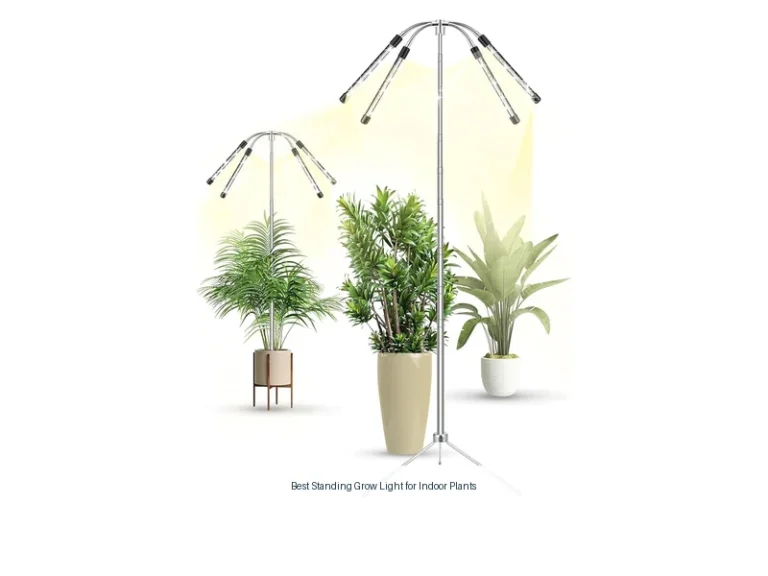
LBW combines a compact LED light with a notably tall tripod stand The stand adjusts from 15 to 48 inches so it can sit on a floor beside a plant shelf or be lowered for a smaller indoor growing arrangement A flexible gooseneck adds angle control which helps aim.
The full-spectrum range is listed as 390nm to 730nm and includes 3500K and 6500K white LEDs along with red and blue light. That broad combination is intended to remain useful through seedling, germination, vegetative, and flowering stages. For someone who wants one fixture to serve several indoor plants after tomato season, that flexibility is more valuable than a light limited to one narrow growth phase.
LBW lists a 30-watt power draw while comparing its output to a 150-watt HPS or HID light. The lower draw can help control operating costs, but buyers should interpret that comparison as a general positioning statement rather than a guarantee that every growing area will receive identical results. Coverage, height, and the number of plants still determine whether the lamp is enough.
Assembly is intended to take about a minute: attach the tripod, gooseneck, and light, then adjust the height and angle. The stated 50,000-hour LED lifespan, 12 months of servicing, and 30-day satisfaction or return policy add useful ownership support. The taller stand is convenient, although it also takes more floor space and may be easier to bump than a compact desk-mounted fixture.
Pros
- Tripod adjusts from 15 to 48 inches for floor or tabletop placement
- Full-spectrum 390nm–730nm range includes white, red, and blue light
- 30-watt draw is intended to reduce energy use
- Quick assembly and flexible gooseneck make positioning simple
- Includes 12 months of servicing and a 30-day return policy
Cons
- Tall tripod needs more floor space than a clamp lamp
- May be less stable if placed where people or pets can bump it
My Opinion
LBW is a useful middle-ground pick for gardeners who want height range without moving to a larger panel. It suits taller plants and multipurpose indoor growing, provided you have a clear, stable place for the tripod.
How I Selected These Lights for Tomato Seedlings
I ranked the products by looking at how directly each one addresses indoor seed starting, not simply by choosing the highest customer rating. I considered spectrum information, brightness or power claims, dimming, timer behavior, height and angle adjustment, coverage, mounting style, energy use, warranties, and the practical needs of a beginner. Customer-feedback volume and rating were also part of the comparison where supplied, but those numbers do not replace checking whether a lamp fits a particular growing space.
There is no single ideal design for every gardener. A clamp lamp can be excellent for one small tray but frustrating over a wide shelf, while a powerful panel can provide useful coverage but require more planning and mounting space. The ranking therefore gives the first position to the FOXGARDEN because it balances coverage, adjustability, stand stability, and controls, rather than because it is the most powerful light listed.
A good seed-starting light should be adjustable enough to stay useful as plants grow. Height control, dimming, and reliable positioning often matter just as much as the LED count.
The data also supports meaningful alternatives. GooingTop has very strong customer-feedback volume and a compact design; LEOTER provides the most detailed mode and dimming control among the small lamps; VIPARSPECTRA offers the broadest higher-output approach; and LBW provides unusual stand height for a multipurpose setup.
Match the fixture to the size of the growing area first. Buying a powerful light for a single pot can create unnecessary mounting and intensity problems, while a tiny lamp may leave an entire tray unevenly lit.
How to Choose the Best Grow Light for Tomato Seedlings
Start by measuring the area where the seedlings will sit, then decide whether the light must stand independently, clamp to furniture, or hang above a shelf. Once the physical fit is clear, compare adjustability, spectrum, timer convenience, and the amount of light the fixture is intended to cover.
- Choose the right coverage: Small lamps suit a few pots; panels and stands are better for trays or multiple plants.
- Prioritize adjustability: Height, angle, and dimming help maintain a useful distance as tomatoes develop.
- Consider the timer: Confirm both the available duration and whether the schedule resets after a power interruption.
- Check placement requirements: A clamp needs a firm edge, while a tripod or panel needs clear floor, shelf, or mounting space.
- Think beyond seedlings: A full-spectrum fixture with broader adjustment may remain useful for herbs, flowers, and houseplants.
Coverage and distance
A lamp should illuminate the whole seedling area rather than creating one bright center with dim edges. Keep the fixture close enough to provide useful intensity, but use dimming or additional distance if leaves show signs of excessive light or heat. As the plants grow, raise the stand or reposition the gooseneck instead of allowing foliage to touch the light.
Spectrum and appearance
Full-spectrum and mixed white-light fixtures are generally easier for beginners to use because they resemble ordinary daylight more closely. Red and blue modes can be useful when offered, but a purple or colored setting is not automatically better for every stage. Tomato seedlings benefit from consistent, appropriate light exposure more than from constantly changing modes.
Timers and daily routine
A timer can make seed starting much easier, especially when the light is in a room used throughout the day. Set the cycle at a convenient time and check the first few days to ensure the light switches as expected. If a model offers only a maximum of 12 hours or loses its timer setting after unplugging, plan for that limitation before placing it somewhere difficult to reach.
Power use and heat
Lower wattage usually means lower electricity use, but wattage alone does not tell you how evenly a light will cover a tray. Compare the stated power draw with the intended area and remember that any fixture needs reasonable ventilation. Aluminum heat sinks and fanless designs can reduce noise, but they do not make it safe to cover the lamp with fabric or place it against a heat-sensitive surface.
How to Set Up a Light for Tomato Seedlings
Place the seedling tray on a level surface and position the light so the center of the fixture aligns with the middle of the tray. Adjust the height or gooseneck before watering, then check the outer cells rather than judging brightness only from the center. The best grow light for tomato seedlings should be close enough to prevent weak, stretched growth while remaining easy to raise as foliage expands.
Start with moderate intensity
Newly emerged seedlings do not need every lamp at maximum brightness immediately. Begin with a moderate setting when the product allows it, observe the plants, and increase intensity gradually as the first true leaves develop. This is especially sensible with higher-output fixtures such as the VIPARSPECTRA.
Keep the tray evenly covered
Rotate the tray occasionally if the fixture produces uneven coverage or if the plants lean toward one side. Multi-head lights can be aimed at separate sections, while a stand-mounted light may need a small height or angle adjustment. Avoid letting one tall plant cast a shadow over shorter seedlings.
Using Natural Window Light with a Grow Lamp
A bright window can supplement an indoor light, but it may not provide consistent intensity throughout the day. Place the lamp where it fills the darker side of the tray rather than assuming the window and lamp will automatically overlap evenly. Watch for temperature changes near glass, drafts, and direct afternoon heat.
Supplemental lighting is also useful when only part of a tray fits near the window. In that situation, move the tray or adjust the lamp periodically so the same plants do not remain in the weakest area. Consistency is more useful than constantly changing the setup.
Common Mistakes to Avoid
Most seed-starting problems come from mismatched distance, uneven coverage, or an unreliable schedule rather than from a lack of complicated controls. Keep the arrangement simple enough to check every day during the first week.
- Do not place the lamp so high that the outer seedlings receive very little light.
- Do not run a powerful fixture at full intensity without checking plant response and heat.
- Do not assume a 10-watt clamp lamp will cover a large tray evenly.
- Do not block heat sinks or press a fixture against curtains, paper, or other heat-sensitive materials.
- Do not forget that some timers reset after a power loss or unplugging.
- Do not let a tall tripod sit where pets, cords, or foot traffic can knock it over.
Cleaning and Maintenance Tips
Dust can reduce the amount of light reaching the plants, so unplug the fixture and wipe accessible surfaces with a dry or slightly damp soft cloth when needed. Keep water from entering the lamp, adapter, timer controls, or USB connection. Do not spray cleaner directly onto the LEDs.
Inspect cords and plugs occasionally, especially on a setup that is moved or adjusted often. A clamp should remain tight without crushing furniture, and a tripod should have all sections fully secured. If a lamp develops unusual heat, flickering, or a damaged cord, stop using it until the problem is addressed.
Choosing a Safe Location
Use a stable, dry surface with enough clearance around the fixture for air movement. Keep the lamp and power connection away from watering splashes, and route cords where they cannot catch on the tray or become a tripping hazard. A floor stand is convenient for tall plants, but a desktop stand may be safer in a high-traffic room.
USB-powered models can be convenient, but use a suitable power source and avoid loosely connected adapters. Before leaving the setup unattended for a long period, confirm that the timer, cord, and stand are secure and that no foliage is touching the light.
When to Adjust or Replace the Setup
Raise the light when plants approach it, widen the angle when the tray expands, and increase intensity only when the plants appear to need more light and the fixture allows it. A lamp may remain electrically functional while no longer meeting your needs if the tomato plants outgrow its coverage.
Replacement timing is not determined by the listed LED lifespan alone. Look for practical signs such as flickering, damaged wiring, unreliable timer memory, failed LEDs, or a stand that no longer holds its position. If the plants have moved from a small tray to a larger growing area, changing to a wider fixture may be more useful than replacing an otherwise working lamp with the same type.
FAQS About Best Grow Light for Tomato Seedlings
What type of light is best for tomato seedlings?
A full-spectrum LED is a practical choice because it can support early growth and remain useful as seedlings develop. White-light fixtures are also easier to use in living spaces than strongly colored lights, while adjustable intensity helps accommodate different growth stages.
How close should a grow light be to tomato seedlings?
The correct distance depends on the fixture’s output, dimming setting, and coverage design. Start with the light close enough to cover the tray clearly without touching the plants, then adjust the height or intensity if seedlings stretch, lean, or show signs of excessive light or heat.
Is a clamp light enough for tomato seedlings?
A clamp light can be enough for a few seedlings or a small tabletop tray if its beam covers the area evenly. It is less suitable when the tray is wide, the clamp has nowhere secure to attach, or the plants will soon outgrow the lamp’s adjustable range.
Do tomato seedlings need a timer with a grow light?
A timer is not absolutely required, but it makes a consistent daily schedule much easier. Check the timer’s available durations and whether it remembers settings after an outage, since those details vary between models.
Is a higher-wattage grow light always better for tomato seedlings?
No. Higher output can help cover a larger area, but it may be unnecessary for a small tray and can require more careful distance and heat management. Match the fixture’s stated coverage and adjustment range to the number of seedlings you are growing.
Final Thoughts
The FOXGARDEN Advanced Grow Light Stand is my top choice for balanced control, stable positioning, and room to grow. Choose GooingTop for a compact tabletop setup or LEOTER for multiple flexible heads and detailed controls. For a larger area, VIPARSPECTRA is the stronger output option, while LBW is attractive when you need a tall adjustable stand. For most beginners, the best grow light for tomato seedlings is the one that covers the tray evenly and remains easy to position every day.

I’m Maya L. Greenwood, a lifelong plant lover who believes anyone can grow something beautiful with the right guidance. After years of testing soil mixes, pruning methods, irrigation tricks, and pest-safe solutions, I started EasyGardenTips.com to turn hard-won lessons into step-by-step advice. From seed starting and container gardens to composting and seasonal checklists, my goal is to make gardening simple, sustainable, and fun.