5 Best Closet Grow Light: Best Product Picks and Buying Guide
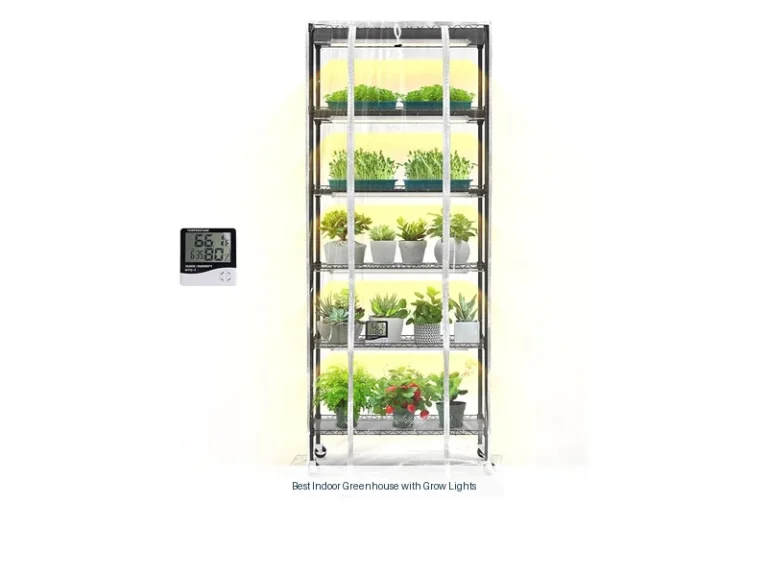
Choosing the best closet grow light is less about buying the brightest lamp and more about matching light coverage, controls, heat, and mounting style to the plants and space available. A small shelf of houseplants needs a very different solution from a full grow tent or a rack of seedlings.
My first choice is GooingTop 6000K Full Spectrum Indoor Plant Growing Lamp. Its 6000K light uses 10 red and 74 white LEDs, while the gooseneck clamp and USB or AC power options make it especially convenient for small pots and closet shelves.
My second choice is LEOTER 80-LED Full Spectrum Indoor Plant Grow Light. Its 80 LEDs provide full-spectrum and red-blue modes, with 10 dimming levels, a flexible four-head design, and a circular timer suited to plants at different growth stages.
My third choice is VIVOSUN Lumalight 100W Full Spectrum LED Grow Light. VIVOSUN Lumalight 100W LED Grow Light Full Spectrum Plant Light earns third place as the stronger choice for a larger, more demanding growing area. It combines white, blue, red, and far-red LEDs with four-level dimming, optional GrowHub control, long stated service life, and IP65 water and dust resistance.
This guide compares five very different lights, explains who each one suits, and then covers coverage, mounting, timers, heat, electrical use, maintenance, safety, and common setup errors. The goal is to help a beginner choose confidently without assuming that a compact shelf lamp and a high-output grow-tent fixture serve the same purpose.
Best Closet Grow Light
I selected these products for their direct usefulness in enclosed indoor growing spaces, the clarity of their supplied specifications, and available customer-feedback evidence. I also included brand and form-factor variety so the comparison covers compact clamp lamps, multi-head stands, and higher-output fixtures rather than five nearly identical options.
| # | Image | Product | Price on Amazon |
|---|---|---|---|
| 1 |  |
GooingTop 6000K Full Spectrum Indoor Plant Growing Lamp | Check Price |
| 2 |  |
LEOTER 80-LED Full Spectrum Indoor Plant Grow Light | Check Price |
| 3 |  |
VIVOSUN Lumalight 100W Full Spectrum LED Grow Light | Check Price |
| 4 |  |
Yehsence 10-in-1 500-LED Full Spectrum Grow Light | Check Price |
| 5 |  |
AGLEX K2000 200W Full Spectrum LED Grow Light | Check Price |
GooingTop 6000K Full Spectrum Indoor Plant Growing Lamp
GooingTop takes the most approachable route for a closet shelf or tabletop plant corner. Its 6000K white light is supported by 10 red and 74 white LEDs, producing a soft, sunlight-like appearance with a stated color rendering index of 95. That matters if the lamp sits near a desk or reading area, because the light should look more natural than a harsh colored grow lamp.
The flexible gooseneck and strong clamp are the main practical advantages. A buyer can aim the lamp down into a pot, shift it around foliage, or attach it to a nearby shelf without committing to a permanent installation. USB power adds flexibility, while the included AC plug makes ordinary indoor use straightforward.
Its timer offers 4-, 8-, and 12-hour settings on a 24-hour cycle. The approximately 10-watt draw should be easier to live with than a large grow fixture, and the supplied estimate puts 12-hours-per-day electricity use at roughly $2 monthly. The limitation is scale: this is a focused lamp for small plants, not a replacement for a powerful canopy light over a large closet.
Pros
- Soft 6000K full-spectrum-style white light with high stated color rendering.
- Flexible clamp and 360-degree gooseneck suit shelves and tabletop pots.
- Low approximately 10-watt draw with USB and AC power options.
- Built-in 4-, 8-, and 12-hour timer.
- 365-day warranty is supplied by the brand.
Cons
- Focused coverage is better for small plants than a wide collection.
- Only three timer durations are available.
- One clamp and one lamp head limit multi-plant placement.
My Opinion
This is the easiest recommendation for a beginner who needs supplemental light rather than a full grow-room system. Choose it when quiet, compact placement and low power use matter more than maximum intensity or broad coverage.
LEOTER 80-LED Full Spectrum Indoor Plant Grow Light
LEOTER is a useful step up in control without becoming a complicated fixture. Its 80 LEDs combine red, blue, yellow, and white light, and the three available spectrum modes let a grower choose a general full-spectrum setting or a red-blue emphasis. That flexibility is helpful when one lamp serves seedlings, leafy plants, and flowering plants at different times.
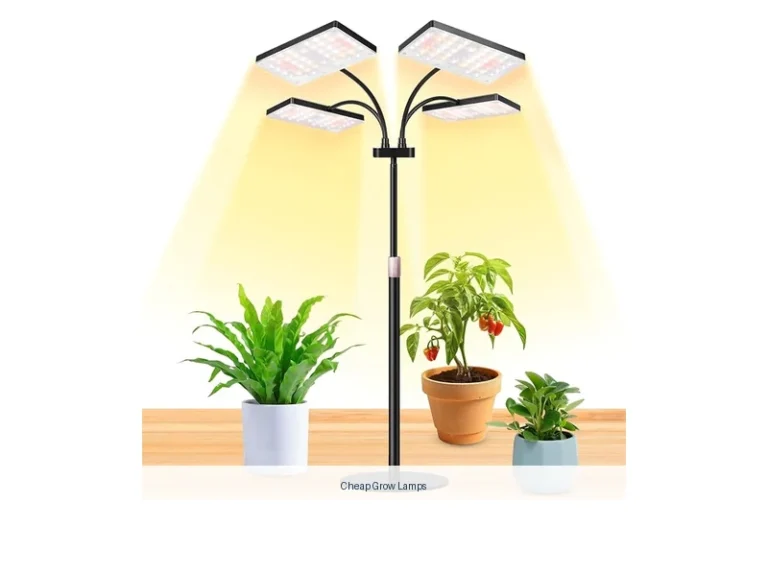
Ten brightness levels make it easier to adjust the lamp as plants grow closer to the light. The four-head layout can spread illumination across several pots instead of concentrating everything into one narrow beam. Each head uses a 360-degree flexible gooseneck, so the buyer can direct light toward uneven foliage or separate containers.
The circular memory timer automatically repeats a 3-, 9-, or 12-hour schedule, though the supplied information notes that the timer needs to be reset if the light is unplugged. That detail is important for a closet setup connected to a switched outlet or power strip. USB connectivity and an included adapter support flexible placement, while the metal clamp helps secure the lamp to furniture or shelving.
LEOTER also uses a stated aviation-grade heat sink and temperature-control unit for heat dissipation. It remains a compact lamp rather than a large-area fixture, so it is best for a shelf, propagation station, or small plant grouping rather than a deep closet canopy.
Pros
- Three spectrum modes support varied plant stages.
- Ten brightness levels give more adjustment than a basic lamp.
- Four independently aimable heads can cover several small pots.
- Repeating timer reduces daily manual operation.
- USB connection and included adapter simplify indoor installation.
Cons
- Timer settings are less conventional than simple 4-, 8-, and 12-hour choices.
- Timer operation must be reset after unplugging.
- Clamp-mounted coverage remains limited for large closets.
My Opinion
LEOTER is my preferred alternative for someone who wants one compact lamp to do more than provide basic white light. Its control range is valuable, but buyers should plan cable placement carefully and avoid interrupting power if they depend on the automatic schedule.
VIVOSUN Lumalight 100W Full Spectrum LED Grow Light
VIVOSUN’s LumaLight belongs to a different category from the two clamp lamps above. Its 100-watt design uses white, blue, red, and far-red LEDs at 3000K, 5000K, 660nm, and 730nm. According to the supplied information, that spectrum is intended to support photosynthesis from seedlings through harvest, making this a more serious choice for a dedicated closet, grow tent, or larger plant area.
Intensity and consistency are its strongest reasons to move up the list The diode layout is described as producing uniform PPFD across the coverage area which can help reduce the problem of center plants receiving much more light than plants at the edges A four-level dimming knob ranging from 25 to 100 gives the grower a useful way to start.
Optional GrowHub compatibility and mobile-app control add automation, remote monitoring, and scheduling, but the GrowHub is sold separately. That creates a higher possible ownership cost and a more involved setup than a plug-in clamp lamp. The fixture’s advanced thermal management is intended to reduce heat stress, while its stated Q90 flux maintenance rate reaches up to 36,000 hours.
IP65 water and dust resistance is another practical advantage in humid growing spaces. Even so, water resistance is not permission to submerge the unit or ignore electrical safety. This is a stronger light for a prepared growing area, not necessarily the most convenient choice for a casual houseplant shelf.
Pros
- 100-watt output suits larger indoor growing areas.
- White, blue, red, and far-red LEDs support multiple growth stages.
- Four dimming levels cover 25% to 100% intensity.
- Optional app and GrowHub integration enable remote control.
- IP65 water and dust resistance suits humid environments.
Cons
- GrowHub control requires a separately sold accessory.
- More power and intensity may be excessive for a few houseplants.
- It needs a suitable overhead mounting location rather than a simple clamp.
My Opinion
Choose the VIVOSUN when coverage, intensity, and future automation matter more than the smallest footprint. It is a better fit for a dedicated growing enclosure than for a decorative closet shelf, and its extra capability should be matched with sensible hanging height and ventilation.
Yehsence 10-in-1 500-LED Full Spectrum Grow Light
Yehsence solves the placement problem with a freestanding tripod and a wide multi-head arrangement It supplies 10 lamp heads each up to 8 3 inches long with 15-inch flexible pipes that can be adjusted individually Every head contains 50 LEDs for a stated total of up to 500 LEDs so the design can spread light across a broad group of plants rather.
This arrangement is particularly useful when plants sit at different heights or occupy a temporary area where drilling, clamping, or hanging a fixture is inconvenient. The heads can be directed around foliage, and the reinforced tripod is described as stable enough to support eight light heads. Buyers should still place the stand on a level surface and leave room for the legs.
The full-spectrum output combines blue wavelengths from 400–500nm and red wavelengths from 600–750nm, appearing as soft white light to the eye. A repeating 4-, 8-, or 12-hour timer reduces manual switching, which is useful when the light is positioned behind furniture or in a closet that is not visited often.
The trade-off is bulk. Ten adjustable heads and a tripod require more floor or shelf space than a clamp lamp, and the supplied details describe coverage broadly rather than giving a PPFD map or exact recommended footprint. It is therefore best for a visible plant stand, a broad shelf, or a flexible indoor growing corner rather than a tightly packed, low-clearance cabinet.
Pros
- Ten adjustable heads provide broad and customizable coverage.
- Freestanding tripod avoids clamp or ceiling installation.
- 500 total stated LEDs suit groups of plants and uneven foliage.
- Full-spectrum white appearance is comfortable in living spaces.
- Automatic 4-, 8-, and 12-hour timing supports consistent routines.
Cons
- Tripod legs need meaningful floor or shelf space.
- More moving parts require careful positioning and cable management.
- Supplied data does not specify a precise PPFD coverage map.
My Opinion
Yehsence is a strong practical pick when wide directional coverage matters and a freestanding stand is preferable. It makes the most sense for several plants arranged around a stand, provided the closet or room can accommodate its footprint.
AGLEX K2000 200W Full Spectrum LED Grow Light
AGLEX K2000 is the most grow-tent-oriented option in this group. Its 200-watt fixture combines 3000K warm light, 5000K white light, 460nm blue, 660nm red, 730nm infrared, and 405nm ultraviolet wavelengths. The broad spectrum is intended for vegetative and flowering stages, while the stated 4-by-4-foot or 4-by-5-foot growing area places it firmly above compact shelf lamps.
The light can be dimmed from 0% to 100%, allowing more precise control than fixed-output fixtures. That is useful when seedlings need a gentler start or when a mature canopy requires stronger illumination. Its stated PPFD is 1746 μmol/㎡/s, and the listing compares its 200-watt consumption with traditional 400-watt HPS or MH lighting; those figures indicate a high-output system, not a casual accent lamp.
Daisy chaining is a major advantage for a larger installation. Up to 100 compatible lights can be connected and controlled together according to the supplied information, while the AC 110–277V, 50–60Hz power specification supports a broad range of electrical setups. The fanless aluminum design keeps operation quiet and dissipates heat without adding fan noise.
That power and intensity create responsibilities. It needs secure overhead support, sufficient clearance, and careful dimming for smaller plants. It also lacks the simple built-in timer emphasized by the compact models, so buyers may need a compatible external scheduling solution.
Pros
- High-output 200-watt full-spectrum system for larger growing areas.
- 0%–100% dimming supports seedlings through flowering.
- Daisy chain can simplify multi-fixture installations.
- Fanless aluminum construction offers quiet operation.
- Broad input range supports many indoor electrical setups.
Cons
- Overpowered for a few shelf plants or a small closet corner.
- Requires careful mounting, clearance, and heat planning.
- Supplied features do not mention a built-in daily timer.
My Opinion
AGLEX is the specialist choice for a serious tent, rack, greenhouse, or larger closet conversion. It offers the most expansion potential here, but beginners should not buy it simply because the wattage is higher; the growing area must be large enough to use that output responsibly.
How I Selected These Best Closet Grow Light Options
The selection balances fit rather than ranking every product by wattage. Compact clamp lights were considered for small closets and shelves, while the VIVOSUN and AGLEX fixtures were included because some shoppers use “closet” to mean a dedicated enclosed growing area. Yehsence fills the middle ground with broad, freestanding coverage.
I gave weight to adjustable positioning, spectrum information, timer behavior, dimming, heat management, power flexibility, moisture resistance where supplied, and expansion options. Customer ratings and customer-feedback volume supplied in the research data also provided a useful signal of marketplace response, but they do not replace checking dimensions, installation requirements, and plant needs.
Light coverage and intensity should match the growing footprint. A small clamp lamp can be the smarter purchase than a powerful fixture if only one or two plants need supplemental light.
Brand diversity was also intentional. The final group includes GooingTop, LEOTER, VIVOSUN, Yehsence, and AGLEX so the comparison reflects different mounting styles and ownership expectations instead of repeating one design five times.
“Full spectrum” does not automatically mean every light is equally suitable for every closet. Spectrum, distance, coverage, heat, timer behavior, and mounting all affect the practical result.
How to Choose a Best Closet Grow Light
Start by measuring the area that actually needs illumination, then consider whether the light will supplement a window or replace natural light. A compact plant lamp prioritizes convenience, while a dedicated fixture prioritizes output and even coverage. These quick takeaways narrow the choice before technical details become confusing.
- Choose a clamp lamp for one to several small pots.
- Choose multiple heads or a tripod when plants are spread across a shelf.
- Choose a 100W or 200W fixture only when the area and mounting plan justify it.
- Prefer dimming when seedlings and mature plants will share one light.
- Confirm timer behavior if the lamp will be difficult to reach.
Measure coverage before comparing wattage
Width, depth, and plant height matter more than a headline LED count. A single head may illuminate one pot well but leave neighboring foliage in shade. A multi-head lamp can cover irregular arrangements, while an overhead panel or bar is usually better for a uniform canopy. Leave enough room to reposition plants as they grow.
Match intensity to plant size and growth stage
Seedlings and newly moved plants generally benefit from a gentler starting setting, while mature foliage may need more light. Dimming is valuable because it gives adjustment without forcing the fixture farther away. With a high-output model such as AGLEX, begin conservatively and watch for signs of stress rather than assuming full power is appropriate.
Decide between clamp, tripod, and overhead mounting
Clamps save space but need a sturdy edge and may shift if overloaded. Tripods are flexible but occupy floor area. Overhead fixtures provide broad, consistent coverage, yet they require secure support and a clear plan for raising the light. A closet with limited vertical clearance may favor a compact adjustable lamp even when a larger fixture appears more powerful.
Check timer and power requirements
Automatic schedules help plants receive consistent daily lighting, but timer memory differs. LEOTER’s supplied information says its timer needs resetting after unplugging, while other models use stated 4-, 8-, or 12-hour cycles. Check whether the lamp uses USB, a standard AC adapter, or a broader input range, and keep the power connection away from water.
Consider heat, humidity, and noise
LEDs are generally a practical choice for enclosed growing spaces, but every light still produces some heat. Leave ventilation space around the fixture and avoid pressing it against fabric or foliage. VIVOSUN adds stated IP65 water and dust resistance, while AGLEX uses a fanless aluminum design for quiet operation. Neither detail removes the need for safe electrical placement.
How to Set Up a Closet Grow Light
Clear the growing area first so the lamp can be positioned without touching leaves, fabric, stored items, or wet surfaces. Install the clamp, tripod, or overhead support on a stable structure. Aim the light across the foliage rather than at the closet wall, and keep the cord routed where it cannot snag when plants are moved.
Begin at a moderate brightness or a conservative distance when the plant has been growing in lower light. Observe the leaves over several days, then adjust gradually. A timer should be set at a time that is easy to remember, and the first full cycle should be checked to confirm that it turns on and off as expected.
Using Light Distance and Direction Effectively
There is no single correct distance for all five products because their output and coverage differ substantially. Compact gooseneck lamps can be aimed close to a small pot, while 100W and 200W fixtures need a more deliberate hanging position. Keep the brightest part of the beam over the plant canopy and rotate containers occasionally if coverage is uneven.
Watch the plant rather than chasing a fixed number. Pale, bleached, curled, or unusually dry leaves can indicate excessive light or heat, while stretched stems and wide gaps between leaves can indicate insufficient light. Adjust one variable at a time so the cause is easier to identify.
Timer Routines for Indoor Plants
A consistent schedule is usually more useful than repeatedly switching a lamp on whenever it is convenient. Use the built-in 4-, 8-, or 12-hour settings where available, or use an appropriate external timer for fixtures without a stated onboard schedule. A regular dark period also prevents the closet from being lit continuously.
After a power interruption, verify the schedule instead of assuming the lamp retained it. This is especially important for LEOTER, whose supplied information specifically notes that the timer must be reset after unplugging. Keep a simple note of the selected start time if several lights are used together.
Cleaning and Maintenance Tips
Unplug the light before cleaning. Wipe dust from accessible surfaces with a dry or barely damp soft cloth, keeping moisture away from connectors and power supplies. Dust can reduce effective output and interfere with heat transfer, particularly on aluminum housings or around heat sinks.
Inspect clamps, flexible necks, tripod joints, hanging hardware, and cables periodically. Replace a setup component if it no longer holds its position securely. For water-resistant fixtures, resistance to spray does not mean the power supply or electrical connection should be exposed to standing water, mist buildup, or nutrient solution.
Safety and Compatibility in an Enclosed Space
Use a support system rated for the light’s weight and keep every fixture away from flammable fabric, paper, and crowded storage. Do not cover a light to hide the glow, and do not place plants so close that leaves press against hot surfaces. Maintain an open path for heat to escape, even in a small closet.
Before buying, check the available outlet, adapter location, cord length, and mounting edge. USB-powered lamps are convenient near a computer or USB adapter, but a high-output fixture may require a more substantial electrical arrangement. AGLEX’s stated 110–277V, 50–60Hz input range is useful information, but the installation should still follow the applicable electrical requirements for the space.
Common Mistakes When Choosing and Using a Closet Grow Light
Most disappointing results come from mismatching the light to the area rather than from choosing the wrong LED color. Beginners often focus on the largest LED count, place the light too far away, or forget that an automatic timer can lose its schedule after a power interruption.
- Do not use a compact clamp lamp to cover a deep, crowded closet.
- Do not assume “full spectrum” tells you the usable coverage or intensity.
- Do not run a powerful 100W or 200W fixture at full output without checking plant response.
- Do not block heat sinks, vents, or the natural air path around the fixture.
- Do not rely on a timer until you have observed one complete on/off cycle.
- Do not let cords, adapters, or power strips sit where watering can reach them.
When a plant struggles, change distance, brightness, watering, or airflow one at a time. Randomly changing several conditions makes the real problem harder to find.
Which Light Fits Common Closet Setups?
For one or two small houseplants on a shelf, GooingTop is the simplest match because its clamp, low approximately 10-watt draw, and compact direction control avoid unnecessary complexity. LEOTER fits a small collection that needs separate head adjustment, spectrum choices, and more brightness control.
Yehsence makes more sense for a broad arrangement on a stand where plants sit at different angles. VIVOSUN is the better fit for a dedicated enclosure needing stronger, more even overhead illumination and possible app-based control. AGLEX is intended for the largest footprint and offers the most expansion potential, but it demands the most careful planning.
When to Upgrade or Add a Second Light
Consider an upgrade when plants remain stretched despite a sensible setup, when the outer pots are clearly darker than the center, or when foliage has outgrown the illuminated area. Adding a second compact lamp may be more practical than replacing a well-positioned first lamp if the collection has expanded gradually.
For a dedicated growing space, a larger fixture can reduce the number of dark zones and simplify scheduling. Before upgrading, measure the actual canopy and inspect whether the problem is poor aim, excessive distance, blocked light, or an unreliable timer. More power is not a substitute for correct placement.
FAQS About Best Closet Grow Light
What is the best closet grow light for a beginner?
GooingTop is the easiest starting point for a small shelf or one to several houseplants because it has a clamp, flexible neck, USB or AC power, a simple timer, and a relatively low approximately 10-watt draw.
Is a clamp light enough for a closet garden?
It can be enough for a small, shallow growing area with plants positioned close to the lamp. A larger or deeper closet generally needs multiple heads, a wider tripod setup, or a stronger overhead fixture such as VIVOSUN or AGLEX.
Which best closet grow light has the most control?
LEOTER offers three spectrum modes and 10 brightness levels in a compact multi-head format. AGLEX provides broader 0%–100% dimming for a larger installation, while VIVOSUN offers four dimming levels and optional GrowHub control.
Do closet grow lights need an automatic timer?
A timer is not mandatory, but it makes a consistent schedule much easier. GooingTop, Yehsence, and LEOTER provide automatic timing options, while buyers should verify how each timer behaves after the lamp is unplugged or power is interrupted.
What is the best closet grow light for several plants?
Yehsence is a practical choice when several plants are spread across a stand because its 10 flexible heads can be aimed individually. LEOTER is better for a smaller group, while VIVOSUN or AGLEX suit larger areas that need stronger overhead coverage.
Can a high-wattage grow light be used in a small closet?
It may be possible, but the fixture must have adequate clearance, safe mounting, and enough ventilation. A 100W or 200W light can be excessive for a few small plants, so dimming and careful observation are important.
Final Thoughts
The best closet grow light depends on the space more than the biggest specification. GooingTop is my top pick for simple small-plant support, LEOTER is the flexible compact alternative, and VIVOSUN is the stronger third choice for a dedicated larger growing area. Choose Yehsence for broad freestanding coverage or AGLEX for a serious, expandable grow-tent-style setup.

I’m Maya L. Greenwood, a lifelong plant lover who believes anyone can grow something beautiful with the right guidance. After years of testing soil mixes, pruning methods, irrigation tricks, and pest-safe solutions, I started EasyGardenTips.com to turn hard-won lessons into step-by-step advice. From seed starting and container gardens to composting and seasonal checklists, my goal is to make gardening simple, sustainable, and fun.