10 Best Led Grow Lights for Greenhouse: Practical Buying Guide
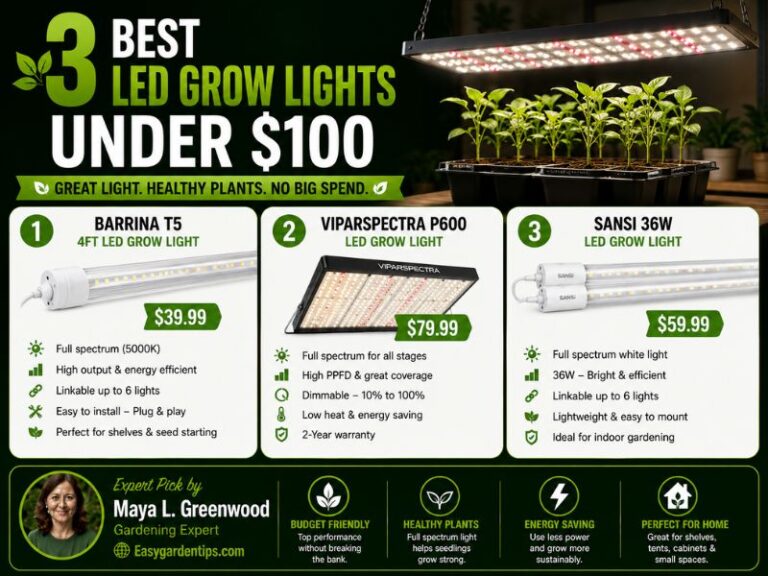
Choosing the best led grow lights for greenhouse use means balancing light coverage, power draw, heat, weather exposure, and installation. A compact shelf light may be excellent for seedlings but inadequate for a full greenhouse, while an outdoor-rated string light may be easier to spread across benches than a concentrated panel.
My first choice is TYAGMAM 2ft T8 Full-Spectrum LED Grow Light Strips. It stands at the top of this 10-product list because it offers the strongest overall fit for the buying priorities covered below.
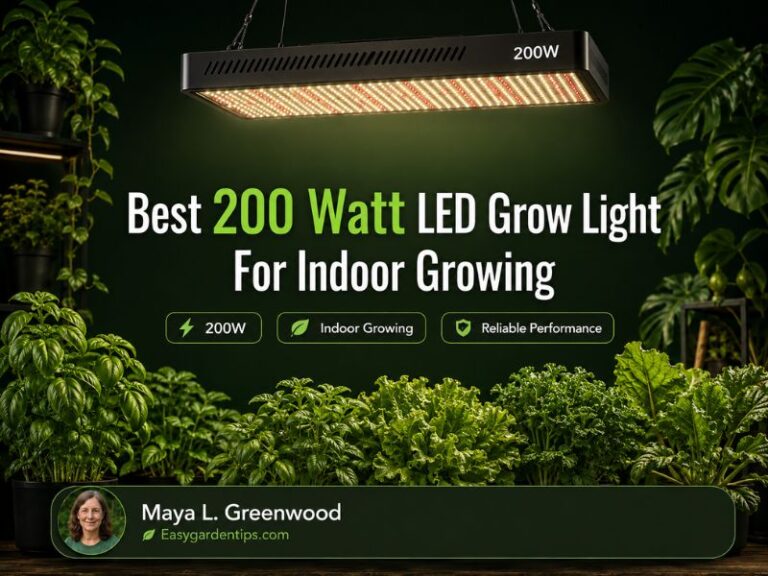
My second choice is Uallhome 200W Full-Spectrum LED Grow Light Panels. It is the option I would compare next when a buyer has slightly different priorities from my first pick.
My third choice is Owleye 12FT IP65 Linkable Outdoor LED Grow Light String. It rounds out my top three with a useful alternative for buyers whose priorities differ from the first two choices.
My first choice is TYAGMAM Grow Light 2ft T8 100W 4 X 25W 600W because its four linked 2-foot strips offer a practical combination of coverage, efficiency, and flexible mounting. The full-spectrum output, aluminum housing, included clips, and ability to connect up to eight lights make it a strong fit for greenhouse shelves, seed-starting areas, and supplemental lighting.
.amz-product-card:hover{transform:translateY(-3px)!important;box-shadow:0 10px 26px rgba(20,70,110,.12)!important;border-color:#bdd7ea!important;}
Best Led Grow Lights for Greenhouse
I selected these products for their direct relevance to greenhouse growing, useful technical details, installation flexibility, and available customer-feedback evidence. The list also includes several formats—T8 strips, panels, string lights, and compact bars—so the comparison reflects the different ways a greenhouse may need artificial light.
| # | Image | Product | Price on Amazon |
|---|---|---|---|
| 1 | 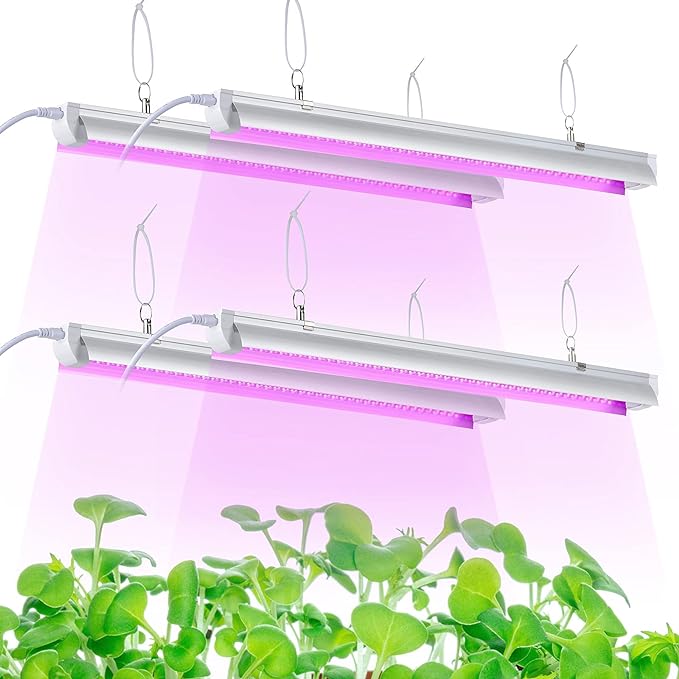 |
TYAGMAM 2ft T8 Full-Spectrum LED Grow Light Strips | Check Price |
| 2 |  |
Uallhome 200W Full-Spectrum LED Grow Light Panels | Check Price |
| 3 |  |
Owleye 12FT IP65 Linkable Outdoor LED Grow Light String | Check Price |
| 4 | 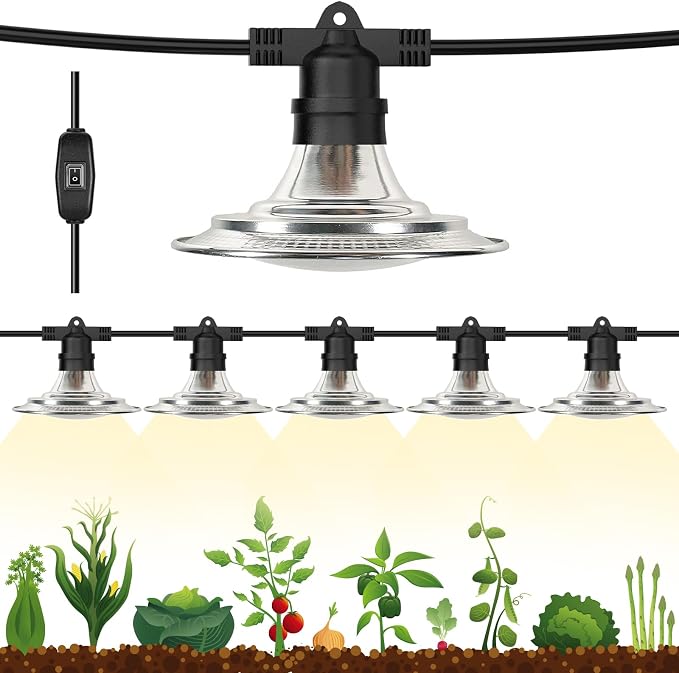 |
Espird Six-Light Waterproof Greenhouse LED String | Check Price |
| 5 |  |
VIVOSUN 6-Light Waterproof Full-Spectrum LED String | Check Price |
| 6 |  |
Elaruslux 4FT T8 5000K Full-Spectrum LED Grow Light Strips | Check Price |
| 7 |  |
CUPAN 169-LED Full-Spectrum Grow Light Panel | Check Price |
| 8 |  |
Barrina 4FT T8 Full-Spectrum LED Grow Light Six-Pack | Check Price |
| 9 |  |
RWNTAO 13-Inch 3500K Dimmable LED Grow Light Bars | Check Price |
| 10 |  |
Hlite 16-Inch Linkable Full-Spectrum LED Grow Light | Check Price |
TYAGMAM 2ft T8 Full-Spectrum LED Grow Light Strips
TYAGMAM’s four-pack uses four 2-foot T8-style strips with a combined 100-watt draw. The listing describes the output as full spectrum and compares it with a general 600-watt plant-light equivalent, but the more useful point for a buyer is the form factor: several narrow strips can distribute light across a shelf more evenly than one small fixture.
The aluminum shell helps move heat away from the LED chips, which is useful in a greenhouse where warm days can already raise temperatures. Reflectors can increase light efficiency according to the supplied specifications, and the included clips and cable ties give you several straightforward mounting options. Plug-and-play operation also makes this approachable for a first greenhouse lighting project.
Linking up to eight lights in a series can reduce cord clutter when expanding a seedling rack. Still, a connected strip system needs careful planning around outlet capacity, cable routing, and moisture exposure. This is primarily a supplemental or shelf-lighting solution rather than an automatic answer for illuminating a large greenhouse floor.
Pros
- Four linked 2-foot strips provide flexible shelf coverage.
- Full-spectrum light is suitable for multiple plant stages.
- Aluminum housing supports heat dissipation.
- Includes clips and cable ties for installation.
- Up to eight fixtures can be linked in series.
Cons
- The supplied data does not give an IP water-resistance rating.
- Its 2-foot format may require several units for wide benches.
- Series connections need thoughtful cable and outlet planning.
My Opinion
This is my leading pick for growers who need efficient, tidy supplemental light over greenhouse shelves or propagation zones. Keep it protected from direct water and choose a different format if you need broad coverage across a large open growing area.
Uallhome 200W Full-Spectrum LED Grow Light Panels
Uallhome supplies two LED panels intended to cover a 4-by-4-foot grow-tent area when used together. That makes the pair more suitable for a defined growing zone than for scattered individual pots. The light combines white, blue, red, UV, and IR LEDs, giving it a wider spectral approach than a simple blue-and-red fixture.
For a grower raising plants from vegetative growth into flowering, the claimed full-spectrum design reduces the need to change fixtures between stages. The panels are also compact compared with traditional HID systems and are described as producing less heat. That can be helpful in a greenhouse, although “low heat” does not mean the fixtures should be pressed directly against foliage or installed without ventilation.
The included hanging kit and six-foot power cords should make overhead placement relatively simple. A pair of panels can also work as supplemental side lighting in a tent or greenhouse corner. Because the supplied information does not provide an outdoor or IP rating, install them where irrigation spray and condensation are controlled rather than treating them as exposed weather fixtures.
Pros
- Two panels are intended for a stated 4-by-4-foot coverage area.
- White, blue, red, UV, and IR LEDs support a broad spectrum.
- Useful from vegetative growth through bloom.
- Includes a hanging kit and six-foot cords.
- Compact and lower-heat than traditional HID lighting.
Cons
- No water-resistance rating is supplied in the product data.
- Panel lighting may create less flexible coverage than multiple strips.
- Actual greenhouse coverage depends on mounting height and plant density.
My Opinion
This is a sensible second choice for a contained greenhouse zone, especially when you want one pair of fixtures for several growth stages. It is less compelling for a humid, splash-prone installation unless you can provide a protected mounting location.
Owleye 12FT IP65 Linkable Outdoor LED Grow Light String
Owleye takes a different approach from the panel and strip fixtures by distributing three light heads along a 12-foot string. The total draw is 31 watts, with a listed output of 33.89 micromoles per second. That modest power level makes it attractive for supplemental lighting along a greenhouse bench, raised bed, or narrow growing row rather than as the only light over demanding crops.
The IP65 dustproof and waterproof rating is the central selling point here. It provides more confidence around greenhouse humidity and outdoor use than indoor-only fixtures, though good installation still matters: connectors should be secured, unused connections protected, and power equipment kept away from standing water. The product is also ETL listed according to the supplied title, which gives buyers an additional listed safety detail to consider.
Up to 10 sets can be linked, allowing a long greenhouse to be covered in sections. The mainly red-and-blue spectrum with some green produces a pink tint, so it may be less pleasant in a living space than a white daylight fixture. That color is a practical trade-off for growers prioritizing plant-focused supplemental output over a natural-looking greenhouse environment.
Pros
- IP65 protection suits humid greenhouse and outdoor locations.
- 12-foot layout spreads light along a row or bench.
- Uses only 31 watts for the three-bulb set.
- Up to 10 sets can be linked.
- ETL Listed according to the supplied product title.
Cons
- Pink-tinted light may be less comfortable for extended viewing.
- Listed output is modest for plants needing intense overhead light.
- Water resistance does not eliminate the need for careful connector placement.
My Opinion
Owleye is my third-ranked option and a strong choice for moisture-exposed supplemental lighting. Choose it for long benches, raised beds, and greenhouse edges; choose a higher-output panel or strip array when the fixture must provide most of the plant’s daily light.
Espird Six-Light Waterproof Greenhouse LED String
Espird’s six-light string uses individual bulb-style fixtures that can be connected end to end. Its listed spectrum spans 380 to 780 nanometers, with blue and red wavelengths included for photosynthesis. The 5000K color temperature should appear more like daylight than the pinker output of some red-and-blue systems, which can make it easier to inspect foliage and spot plant problems.
Each bulb is listed at 27.849 micromoles per second, and reflective aluminum lamp holders are intended to direct more light toward the plants. The recommended installation height is 30 to 50 inches above the canopy. That range is a useful starting point, but the ideal position will still depend on plant type, growth stage, and whether the string is being used as primary or supplemental lighting.
The product is rated IP44 and can be configured in different quantities. The listing states that one switch can support up to 120 lights in certain combinations, although such a large installation deserves careful attention to total electrical load and the limits of the specific circuit. The two-year warranty is a useful ownership detail, particularly for a fixture that may be installed in a demanding greenhouse environment.
Pros
- Full-spectrum range is listed from 380 to 780 nanometers.
- 5000K light offers a daylight-like appearance.
- Adjustable quantity supports different greenhouse layouts.
- Reflective aluminum holders help direct light downward.
- Includes a stated two-year warranty.
Cons
- IP44 protection is more limited than IP65 protection.
- Large daisy-chain installations require electrical planning.
- String lights may not provide uniform intensity across wide canopies.
My Opinion
Espird is a useful middle ground for growers who want a daylight appearance and the flexibility of bulb strings. It fits supplemental greenhouse lighting well, but I would use the recommended height as a starting point and verify that the outer plants receive enough light.
VIVOSUN 6-Light Waterproof Full-Spectrum LED String
VIVOSUN’s six-light string is built around a 22-foot adjustable cord, giving it more reach than many short shelf fixtures. Each light uses 15 watts, for 90 watts total, and the product lists 210 micromoles per second of total PPF, or about 35 micromoles per light. That combination makes it better suited to spreading light across a longer bench or several plant groups than concentrating everything in one small spot.
The spectrum combines 3000K warm LEDs, 5000K white LEDs, and 660-nanometer red LEDs in each bulb. In practical terms, the mixed color profile is intended to support seedlings, vegetative plants, flowers, and crops without requiring a separate fixture for every stage. The aluminum shades reflect light toward the plants and help manage heat.
IP44 protection supports indoor and outdoor applications, but the manufacturer’s practical caution is important: each light should be firmly secured and unused sockets should be protected. The daisy-chain system can support up to 36 lights in one arrangement or up to 72 in another, subject to the stated voltage and wattage limits. That scalability is useful, but larger installations should be divided thoughtfully rather than expanded casually.
Pros
- 22-foot adjustable cord helps reach spread-out greenhouse areas.
- Six bulbs provide distributed coverage.
- Mixed 3000K, 5000K, and 660nm LEDs support multiple stages.
- 90-watt total draw and listed 210 micromoles per second of PPF.
- Daisy-chain design can expand as the growing area changes.
Cons
- IP44 is not the highest level of moisture protection.
- Unused sockets must be protected in outdoor or humid use.
- Large linked systems need attention to the stated electrical limits.
My Opinion
This is one of the more versatile string options for a greenhouse with several benches or a long growing row. It offers stronger listed output than some compact strings, but secure mounting and connector protection are essential for dependable ownership.
Elaruslux 4FT T8 5000K Full-Spectrum LED Grow Light Strips
Elaruslux provides six 4-foot T8 strips with a combined 270-watt draw. The longer fixtures can cover a broad shelf or bench with fewer gaps than 2-foot bars, and the 5000K daylight appearance should make plant inspection comfortable. The spectrum blends red, blue, and green wavelengths and is intended for seedlings, vegetative growth, flowering, and fruiting.
A built-in timer offers 6-, 9-, or 12-hour repeating cycles. That is useful for maintaining a regular schedule when greenhouse daylight changes or when the plants are in a protected propagation area. The timer options are relatively simple rather than highly customizable, so growers needing a precise sunrise simulation or multiple daily periods may want a separate controller.
The aluminum construction and included reflectors are practical advantages. Reflectors can help send light toward the canopy, while the housing helps dissipate heat. Installation hardware is generous: the package includes power cords with switches, connecting cords, small connectors, clips, cable ties, and screws. Up to six strips can be connected in series, making this a tidy choice for a defined rectangular growing area.
Pros
- Six 4-foot strips suit wider benches and shelves.
- 5000K full-spectrum output has a daylight-like appearance.
- Built-in 6-, 9-, and 12-hour repeating timer.
- Reflectors, clips, connectors, cables, and ties are included.
- Aluminum housing supports heat management.
Cons
- The 270-watt total draw is higher than compact supplemental systems.
- No outdoor water-resistance rating is supplied.
- Timer choices may be limited for advanced lighting schedules.
My Opinion
Elaruslux is a strong fit for a greenhouse propagation bench where even, linear coverage and a built-in schedule matter. Its six-strip layout is less convenient for irregular spaces, and it should be installed in a protected area away from direct irrigation spray.
CUPAN 169-LED Full-Spectrum Grow Light Panel
CUPAN’s panel uses 169 LEDs, including 117 red LEDs rated at 630 nanometers and 52 blue LEDs rated at 470 nanometers. That red-and-blue combination is intended to support plants through different growth stages, and the suggested hanging height of about 0.3 to 1 meter gives a useful starting range for positioning. Because the fixture has a concentrated panel shape, it is best matched to a defined group of plants rather than a long greenhouse aisle.
Heat management receives unusual attention in the supplied specifications. An aluminum cooling plate and a small heat sink for each chip are intended to move heat away from the LEDs. That can support more consistent operation, but growers should still leave room around the panel and avoid assuming that a cooling design replaces airflow in a warm greenhouse.
The lightweight body and upgraded hanging brackets make setup simple, while the fixture is described for soil plants, hydroponics, vertical farms, grow tents, and greenhouse use. Its lower customer-feedback volume and 3.9 rating provide less evidence than several higher-ranked options, so I would approach it as a focused budget-style panel rather than an automatically proven solution for a large installation.
Pros
- 169 LEDs provide a concentrated red-and-blue growing spectrum.
- Suggested hanging range covers roughly 0.3 to 1 meter.
- Aluminum cooling plate and individual chip heat sinks support heat dissipation.
- Lightweight brackets simplify hanging.
- Works with soil and hydroponic growing setups.
Cons
- Panel coverage may be less flexible than strips or strings.
- No IP water-resistance rating is supplied.
- Customer-feedback evidence is more limited than for several alternatives.
My Opinion
CUPAN makes sense for a small, protected greenhouse zone or a compact propagation area. I would not make it the sole light for a broad greenhouse without confirming its actual coverage at the planned hanging height.
Barrina 4FT T8 Full-Spectrum LED Grow Light Six-Pack
Barrina’s six 4-foot T8 fixtures are a good match for growers who want long, straight lines of light over benches or racks. The set uses 252 watts in total and contains 1,152 LEDs, with a listed brightness of 3,100 lumens. The full-spectrum output is intended as a sunlight replacement, while the aluminum shell helps with heat dissipation.
The product’s large customer-feedback base and 4.6 rating provide more buyer evidence than most products in this group, although customer feedback cannot substitute for measuring the light at your own canopy. The stated ability to replace a much higher-wattage general plant-light setup should also be treated as a comparison claim rather than a guarantee of identical plant performance in every greenhouse.
Installation is straightforward with tape, clips, and cable ties, and up to six strips can be linked in series. One important compatibility detail deserves attention: the product has a newer upgrade that is compatible with Barrina GM Series cords, and connecting new and old products requires the newer male-female connector cables. This matters when expanding an existing Barrina installation or replacing one fixture.
Pros
- Six 4-foot strips provide broad linear coverage.
- Full-spectrum output suits varied indoor growing stages.
- 252 watts and 1,152 LEDs create a substantial strip array.
- Includes tape, clips, and cable ties.
- Strong customer-feedback volume and a 4.6 rating.
Cons
- No outdoor or IP rating is supplied in the product data.
- New and older Barrina products may require specific connector cables.
- The six-strip array needs more mounting space than a compact panel.
My Opinion
Barrina is appealing for a structured greenhouse rack where six 4-foot lines can be mounted neatly. Its compatibility note is important: check the connector generation before combining it with an existing Barrina setup, and keep the fixtures protected from direct moisture.
RWNTAO 13-Inch 3500K Dimmable LED Grow Light Bars
RWNTAO supplies four compact light bars with a 3500K full-spectrum color temperature. The shorter format is convenient for plant shelves, narrow greenhouse racks, and individual collections where a four-foot fixture would be excessive. Aluminum housings and clamp bases help with positioning, while the included screws, cable ties, magnets, and double-sided tape offer several ways to attach the bars.
Ten brightness levels allow a beginner to start gently with seedlings or low-light plants and increase output as the canopy develops. That flexibility is more useful than a simple on-or-off fixture when plants at different stages share one shelf. The 96-inch power cord also gives you room to place the control end away from the growing area.
The built-in timer supports 3-, 9-, or 12-hour schedules and repeats automatically each day after the selected period. It is convenient for consistent lighting, but the schedule is still basic and may not suit crops requiring a longer custom photoperiod. This is also a compact supplemental system, so four small bars should not be expected to illuminate a large greenhouse or high-light fruiting crop on their own.
Pros
- Four compact bars fit narrow shelves and small greenhouse areas.
- Ten dimming levels help match different plant stages.
- Automatic 3-, 9-, and 12-hour timing reduces daily manual switching.
- Includes clamps, magnets, tape, screws, and cable ties.
- Aluminum shell supports durability and heat handling.
Cons
- Compact bars are not suited to broad primary greenhouse coverage.
- No moisture-resistance rating is supplied.
- Timer choices are less flexible than a programmable external controller.
My Opinion
RWNTAO is a practical choice for seedlings, herbs, succulents, and small collections in a protected greenhouse corner. Its dimming and timer functions are beginner-friendly, but growers with long benches should choose a longer strip or scalable string system.
Hlite 16-Inch Linkable Full-Spectrum LED Grow Light
Hlite’s 16-inch fixture consumes 20 watts and uses a full-spectrum output intended to support plants from seedlings through flowering. Its short length makes it easy to fit under a small shelf, over a tray of starts, or beside plants receiving natural greenhouse daylight. It is not a high-coverage fixture, but that can be an advantage when only a few plants need supplemental light.
Up to six units can be linked, so the system can grow with a small propagation setup. The plug-and-play design keeps the electrical arrangement simple, while the package includes screws, hooks, chains, zip ties, and brackets for different mounting surfaces. Those options are helpful when greenhouse shelves, wall framing, and hanging points do not line up perfectly.
The product is listed for greenhouses, potted plants, herbs, succulents, grow tents, kitchens, bathrooms, and other indoor settings. However, the supplied data does not provide an IP rating or outdoor moisture specification. Use it in a dry, protected position and keep the fixture away from misting nozzles. Six linked units may cover a larger shelf, but their combined performance should still be matched to the plants’ light demands rather than judged by fixture count alone.
Pros
- 20-watt draw suits small supplemental lighting tasks.
- 16-inch size fits compact shelves and propagation areas.
- Up to six units can be linked.
- Includes hooks, chains, brackets, screws, and zip ties.
- Full-spectrum output supports several growth stages.
Cons
- One short fixture offers limited coverage.
- No water-resistance rating is supplied.
- Several units may be needed for a broad shelf or dense canopy.
My Opinion
Hlite is best for small greenhouse shelves, herbs, seedlings, and targeted winter supplementation. It is easy to expand, but buyers with a full-size bench should calculate the number of fixtures before choosing it over longer strips or string lights.
How I Selected These Greenhouse LED Grow Lights
My selection focused on how each fixture solves a real greenhouse lighting problem: filling in weak daylight, covering a propagation shelf, handling humidity, or extending light across a long bench. I considered the stated spectrum, wattage, PPF or PPFD information when supplied, fixture shape, installation hardware, linking capacity, and moisture protection.
Customer-feedback volume and ratings also helped separate products with broader buyer evidence from newer or less-established options. That evidence is not a substitute for greenhouse measurements, because plant distance, glazing, season, and natural sunlight can change results substantially. Brand diversity was retained so the list would not be limited to one lighting format or one manufacturer.
Important selection takeaway: A higher wattage or a large “equivalent” number does not automatically mean better greenhouse performance. Coverage, mounting distance, light distribution, and whether the fixture can tolerate the installation environment matter just as much.
Moisture protection received special weight because greenhouse air can be humid even when no water is sprayed directly on the fixture. Owleye, Espird, and VIVOSUN provide stated IP44 or IP65 information, while several indoor strip and panel systems do not. Those non-rated products can still be useful, but they belong in protected locations.
Best use of this list: Treat the rankings as a starting point for matching a fixture to a specific zone. A compact 16-inch bar may be the right answer for one seedling tray, while a linked string or six-strip array may be more appropriate for a long bench.
How to Choose Greenhouse LED Grow Lights
The right light depends first on the job it must perform. Decide whether you are supplementing sunlight for a few winter hours, providing most of the light for seedlings, or illuminating a broad greenhouse area. Then compare coverage, mounting height, spectrum, heat, moisture protection, and expansion options rather than relying on wattage alone.
- Match the format to the area: Use bars and T8 strips for shelves, panels for defined zones, and strings for long benches or rows.
- Check the environment: Prefer a stated IP rating when humidity, misting, or outdoor exposure is unavoidable.
- Measure usable light at plant level: Distance and spread can matter more than the advertised equivalent wattage.
- Plan electrical expansion: Confirm link limits, connector compatibility, total wattage, and outlet capacity.
- Choose a controllable schedule: Timers and dimming are especially useful when natural daylight changes seasonally.
Coverage and fixture shape
Long strips are efficient for rectangular shelves because they place light along the full length of the tray. Panels concentrate output in a central footprint and may leave edge plants darker if mounted too high. String lights offer more placement flexibility, but spacing between bulbs can produce uneven intensity. Sketch the bench dimensions and plant positions before buying; this simple step often prevents buying a fixture that is powerful in the wrong shape.
Spectrum and color appearance
Full-spectrum products are generally the easiest choice for mixed collections because they are intended to support several growth stages. White or 5000K lighting is comfortable for inspecting leaves and spotting pests. Red-and-blue fixtures can be useful for plant-focused supplemental lighting but may create a pink or purple appearance. Spectrum labels alone do not tell you how much light reaches the canopy, so use them alongside coverage and output information.
Power, heat, and greenhouse temperature
LEDs typically use less power and generate less radiant heat than older high-intensity systems, but every watt still becomes heat somewhere in the greenhouse. A dense array can raise temperatures, especially in a small enclosed structure on a sunny day. Leave clearance around fixtures, keep vents available, and schedule lights during cooler periods if heat becomes a problem. Aluminum housings and reflectors can help, but they are not replacements for ventilation.
Moisture ratings and electrical safety
IP44 and IP65 indicate different levels of protection, and neither should be interpreted as permission to submerge a light or leave connections sitting in puddles. Protect plugs, power strips, and unused sockets from irrigation. Route cables so water cannot run along them into an outlet, and use a properly protected circuit appropriate for the installation. When linking many fixtures, follow the manufacturer’s stated limits instead of assuming that more connections are always safe.
Greenhouse Setup and Placement Tips
Begin with the plants’ current height and the light’s recommended mounting distance when one is supplied. Hang the fixture above the canopy rather than beside it when possible, because overhead placement usually produces more even coverage. After installation, inspect the outer edges of the growing area; dark corners often reveal a spacing problem before the plants show stress.
Create a consistent light schedule
Use a timer when the light will operate daily. The Elaruslux, RWNTAO, and similar fixtures with built-in timing make this simple, while other systems can use an appropriate external timer. Avoid changing the schedule randomly from day to day. Plants respond better to a predictable light and dark cycle than to occasional long sessions intended to compensate for missed days.
Use natural sunlight as part of the plan
A greenhouse normally receives some daylight, so artificial fixtures may work best as supplemental lighting rather than running at full output all day. Place strips or strings where the structure creates shadows, such as under shelving or along north-facing areas. During bright summer periods, monitor temperature and plant response before extending the artificial schedule.
Secure strings and connectors
String lights should be supported so bulbs do not swing into foliage or pull on connectors. Keep unoccupied sockets protected, especially with systems that allow many linked lights. For IP-rated products, the rating applies only when the fixture and connections are installed as intended. Indoor-rated strips and panels should be mounted in a dry zone away from spray and condensation.
How to Use Grow Lights for Different Plant Stages
Seedlings and cuttings
Seedlings generally benefit from gentle, even light placed close enough to prevent stretching but not so close that leaves become stressed. Dimmable systems such as RWNTAO allow gradual adjustment, while small Hlite or TYAGMAM fixtures can suit trays and shelves. Watch plant shape: tall, thin growth may indicate insufficient intensity or excessive distance, while bleaching or curling suggests the light is too intense or the area is too warm.
Leafy greens and herbs
Linear strips and compact strings work well over rows of lettuce, herbs, and other leafy plants when the light is distributed evenly. The 5000K Elaruslux and Barrina systems can be comfortable choices for bench lighting, while VIVOSUN’s longer cord helps reach separated areas. Rotate trays only if the coverage is visibly uneven; a better solution is usually to correct the fixture position.
Flowers and fruiting plants
Flowering and fruiting plants often need more light than small seedlings, particularly when winter daylight is weak. A pair of Uallhome panels or a substantial six-strip array may be more suitable for a defined high-light zone than a single compact bar. Strings can supplement the sides or ends of a canopy, but confirm that the central and outer plants receive reasonably consistent exposure.
Maintenance and Long-Term Ownership
Dust, pollen, and mineral deposits reduce the light reaching leaves and can interfere with heat dissipation. Turn the fixture off, let it cool, and wipe accessible surfaces with a soft, dry or lightly damp cloth according to the manufacturer’s guidance. Do not spray cleaner onto LEDs, sockets, connectors, or power supplies.
Check mounting clips, chains, brackets, and cable ties periodically. Greenhouse humidity can weaken some mounting materials over time, and plant growth can pull on a loosely supported string. Inspect cords for cracking, crushed sections, or moisture damage before each season. Replace damaged components rather than hiding them under tape and continuing to operate the system.
When expanding a linked system, record the model, connector type, number of lights, and total wattage. This is particularly important for Barrina users combining new and old generations, and for VIVOSUN or Espird owners approaching their stated connection limits. Keeping a simple diagram also makes seasonal storage and troubleshooting easier.
Common Mistakes to Avoid with Greenhouse LED Lights
Most disappointing results come from mismatched coverage or an unsuitable installation environment, not from the absence of a “full-spectrum” label. A light can be excellent for a seedling shelf and still be inadequate for a fruiting canopy.
- Do not treat advertised equivalent wattage as a guaranteed measure of plant-level light.
- Do not install an indoor-only panel where irrigation spray or heavy condensation reaches it.
- Do not hang a fixture so high that the edges of the bench receive very little light.
- Do not connect more units than the product’s stated series or wattage limit allows.
- Do not leave unused sockets and connectors exposed in a humid greenhouse.
- Do not ignore heat simply because the fixture uses LEDs.
When in doubt, start with a protected, moderate installation and observe plant spacing, temperature, and new growth for several days before expanding the system.
Greenhouse LED Grow Light FAQS
Are LED grow lights suitable for a greenhouse?
Yes. They can supplement weak winter sunlight, provide light under shelves, and support seedlings or plants in shaded sections. Choose fixtures with suitable moisture protection when the greenhouse is humid or exposed to spray, and use indoor-rated panels only in protected locations.
What type of LED light is best for a greenhouse bench?
Long T8 strips are often practical for rectangular benches because they distribute light evenly along the row. String lights are useful when the bench is long or irregular, while panels work better for a defined central growing zone.
Do greenhouse grow lights need to be waterproof?
They do not always need to be fully waterproof, but a stated IP rating is valuable when the fixture may encounter humidity, condensation, or irrigation. IP-rated products still require protected plugs, properly secured connectors, and installation away from standing water.
How high should an LED grow light hang above greenhouse plants?
The correct height depends on the fixture and plant stage. Use the supplied recommendation when available, such as Espird’s 30- to 50-inch range or CUPAN’s approximately 0.3- to 1-meter range, then watch for uneven growth, bleaching, or stretching. Coverage at the edges is as important as the distance above the center.
Are full-spectrum LED grow lights better for mixed greenhouse plants?
They are usually a convenient choice for mixed plants because they are intended to support several stages from seedlings to flowering. However, full spectrum does not automatically indicate strong coverage. Compare the fixture’s output, footprint, mounting distance, and intended use before deciding.
Can greenhouse LED lights be linked together?
Many of the products here can be linked, but the limits vary. TYAGMAM allows up to eight lights in series, Hlite allows up to six units, and other string systems list much larger limits. Check connector compatibility, total wattage, voltage, and the exact product generation before expanding.
Final Thoughts
For most greenhouse shoppers, TYAGMAM 2ft T8 Full-Spectrum LED Grow Light Strips offer the best balance of flexible coverage and easy expansion. Uallhome 200W LED Grow Light Panels are the better alternative for a contained panel-lit zone, while Owleye 12FT IP65 Linkable Outdoor LED Grow Lights are the strongest choice when moisture protection and distributed supplemental light are priorities. Together, they represent three practical ways to approach the best led grow lights for greenhouse use.

I’m Maya L. Greenwood, a lifelong plant lover who believes anyone can grow something beautiful with the right guidance. After years of testing soil mixes, pruning methods, irrigation tricks, and pest-safe solutions, I started EasyGardenTips.com to turn hard-won lessons into step-by-step advice. From seed starting and container gardens to composting and seasonal checklists, my goal is to make gardening simple, sustainable, and fun.