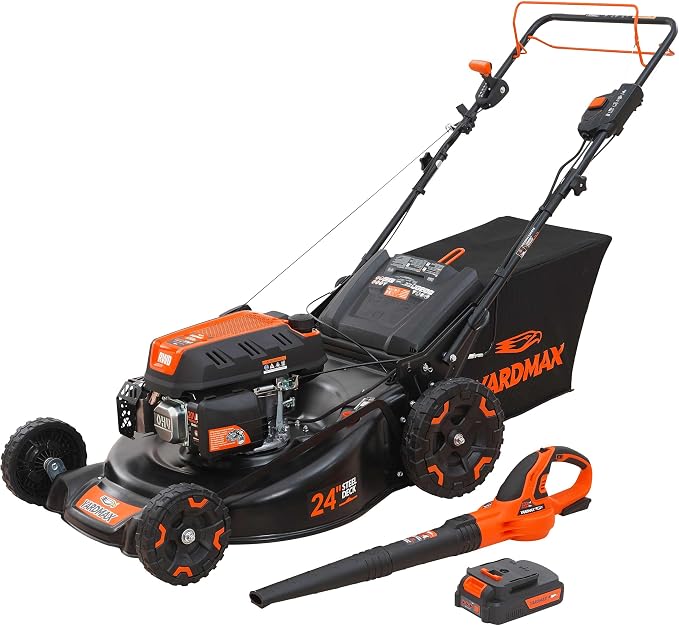
5 Best Walk Behind Self Propelled Gas Lawn Mower: Buying Guide
Finding the best walk behind self propelled gas lawn mower means balancing cutting width, engine output, traction, bagging capacity, height control, and the amount of maintenance you are willing to handle. A mower that looks powerful on paper may still be a poor fit if its drive system, deck size, or storage design does not match your yard.
My first choice is YARDMAX 22 In. 201cc Select PACE 6 Speed CVT High Wheel FWD. It stands at the top of this 5-product list because it offers the strongest overall fit for the buying priorities covered below.
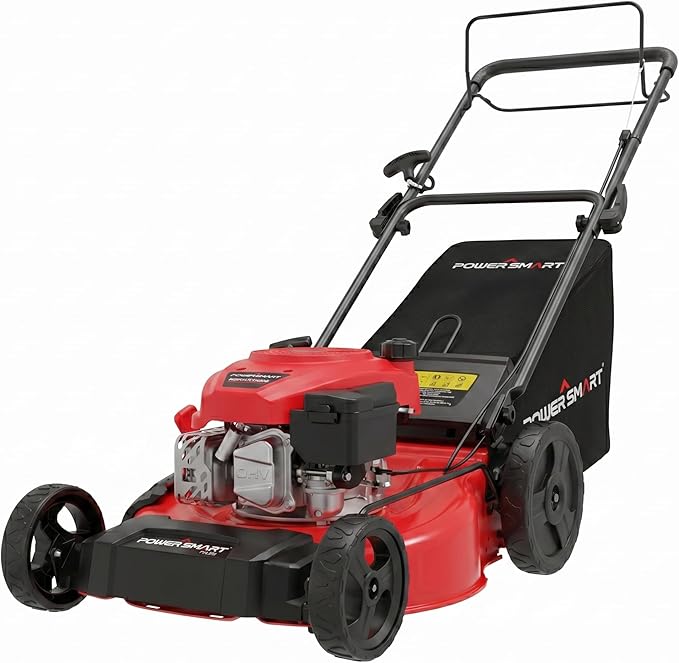
My alternative is the PowerSmart 21-Inch Self Propelled Gas Lawn Mower 170cc OHV Engine, which earns second place for its practical rear-wheel drive, steel deck, and useful three-in-one cutting modes. Its foldable handle and six-position height range also make it a sensible choice for homeowners who need straightforward storage and flexible seasonal mowing.
My third choice is the Altsuceser 173cc Self-Propelled Gas Lawn Mower 20 Gas Powered Lawnmower because its large 60-liter grass bag and rear-wheel drive target buyers with larger or uneven yards. The six-position height adjustment and reinforced steel blade add versatility, although its very limited customer-feedback history calls for a little more caution.
This guide compares all five mowers by traction, power, deck design, grass handling, adjustability, and ownership considerations. You will also find practical advice for choosing the right engine and drive layout, setting up a new mower, maintaining a gasoline engine, avoiding common mistakes, and deciding which model best fits your lawn.
.amz-product-card:hover{transform:translateY(-3px)!important;box-shadow:0 10px 26px rgba(20,70,110,.12)!important;border-color:#bdd7ea!important;}
Best Walk Behind Self Propelled Gas Lawn Mower
I selected these products for their direct relevance to the keyword, the usefulness of their supplied specifications, the range of drive and deck designs, and customer-feedback evidence where it was available. The selection also includes several brands and mower formats so the comparison is not limited to one style of machine.
| # | Image | Product | Price on Amazon |
|---|---|---|---|
| 1 |  |
YARDMAX 22 In. 201cc Select PACE 6 Speed CVT High Wheel FWD | Check Price |
| 2 |  |
PowerSmart 21-Inch Self Propelled Gas Lawn Mower | Check Price |
| 3 |  |
Altsuceser 173cc Self-Propelled Gas Lawn Mower 20 Gas Powered Lawnmower | Check Price |
| 4 |  |
TREMENPOW 5HP 140CC Self-Propelled Gas Lawn Mower Walk Behind Mower | Check Price |
| 5 |  |
SENIX 201cc 22″ 3-in-1 Variable Speed Self Propelled Gas Lawn Mower | Check Price |
YARDMAX 22 In. 201cc Select PACE 6 Speed CVT High Wheel FWD
The YARDMAX YG2860 stands out because its Select PACE transmission gives the operator six speed choices rather than a single self-propelled pace. That matters when a lawn includes open stretches, tight corners, slopes, or sections where a faster walking speed would make the mower harder to control. The continuously variable transmission is intended to let the mower pace feel closer to the operator’s natural stride.
Its front-wheel-drive layout should appeal to people who regularly turn around landscaping, trees, and garden borders. Front-wheel drive can make lifting the drive wheels slightly easier during tight turns, although buyers who spend most of their time on steep slopes may prefer the hill traction typically associated with rear-wheel drive. The aggressive spiked tread on the rubber tires adds useful traction and maneuverability, especially where ordinary lawn tires may slip.
A 22-inch deck can reduce the number of passes across a medium or large lawn, while the three-in-one system gives the choice of mulching, side discharge, or bagging. The automatic choke simplifies starting by removing a separate choke or priming step. Single-lever height adjustment is convenient when switching between seasonal cutting preferences, and the deck cleanout port can make underside cleaning less awkward.
Pros
- Six-speed CVT offers more pace control than a fixed-speed drive.
- Aggressive tire tread supports traction and maneuverability.
- Automatic choke simplifies starting.
- 22-inch deck and three-in-one cutting provide useful coverage and flexibility.
- Deck cleanout port and single-lever height adjustment aid routine ownership.
Cons
- Front-wheel drive may be less suitable than rear-wheel drive for frequent steep-slope mowing.
- More transmission adjustment can mean more operating complexity than a basic mower.
- Larger deck dimensions may be less convenient in narrow storage spaces.
My Opinion
The YARDMAX is the most well-rounded option here for buyers who value speed control and convenient adjustments. It is a strong match for mixed terrain and medium-to-large lawns, provided the front-drive layout suits the property.
PowerSmart 21-Inch Self Propelled Gas Lawn Mower
PowerSmart takes a practical approach with a 170cc overhead-valve four-stroke engine, rear-wheel drive, and a steel deck. The engine size sits in a useful middle ground for routine residential work, while the OHV design is intended to provide efficient cutting power through ordinary grass and thicker or damp growth. Its automatic choke and recoil start keep the starting process familiar without adding a separate manual choke procedure.
Rear-wheel drive is the central reason to consider this mower. The driven rear wheels can maintain useful traction when the mower is climbing or crossing uneven ground, reducing the amount of pushing effort required from the operator. That does not remove the need for careful slope handling, but it makes this model more appealing for yards where a lightweight push mower would feel tiring.
The steel deck favors buyers who want a substantial cutting housing, though steel can require more attention to moisture and grass buildup than a plastic deck. Three-in-one operation lets you mulch clippings, discharge them to the side, or collect them in the rear bag. Its six-position dual-lever adjustment covers 1.5 to 3.9 inches, giving enough range for different grass conditions. The folding handle is particularly useful for a garage or shed with limited floor space.
Pros
- Rear-wheel drive provides useful traction on slopes and uneven lawns.
- 170cc OHV engine is suited to routine and thicker grass cutting.
- Steel deck supports a durable, substantial mower design.
- Mulching, side discharge, and rear bagging cover common lawn-care needs.
- Foldable handle helps reduce storage demands.
Cons
- Dual-lever height adjustment is less convenient than a single-lever system.
- Steel construction should be kept clean and dry to limit corrosion risk.
- A 21-inch deck may require more passes than a 22-inch alternative.
My Opinion
This is the sensible second choice for homeowners who prioritize dependable rear-wheel traction and a conventional steel-deck layout. It gives up some adjustment convenience, but its combination of cutting modes, storage-friendly handle, and usable engine size is easy to understand.
Altsuceser 173cc Self-Propelled Gas Lawn Mower 20 Gas Powered Lawnmower
The Altsuceser mower focuses on reducing interruptions during mowing. Its 173cc DV173 gasoline engine supplies the cutting power for regular lawn work, while rear-wheel drive is intended to improve control on slopes and uneven ground. That combination makes sense for a homeowner who wants self-propulsion without moving to an especially wide deck.
The standout feature is the 60-liter approximately 15 85-gallon grass bag A larger bag can be valuable when the lawn is heavily covered with clippings or leaves because it may reduce the number of trips to empty the collector The trade-off is that a full bag becomes heavier to carry and the mower s overall handling can.
Six cutting-height positions span 1 to 3 inches, allowing a relatively low cut and adjustments for changing conditions. The reinforced steel blade is presented as suitable for fine grass as well as tougher overgrowth, but no mower should be used as a substitute for clearing large woody debris before cutting. All-terrain tires and an ergonomic handle add to the mower’s appeal for general yard and landscaping tasks.
There is an important evidence limitation: the supplied customer-feedback record contains only one rating. That does not establish long-term reliability, so this model is best considered by buyers who value its capacity and feature combination and are comfortable with less proven feedback than the higher-volume options.
Pros
- Large 60-liter grass bag can reduce emptying stops.
- Rear-wheel drive is useful for slopes and uneven surfaces.
- 173cc engine offers practical power for residential cutting.
- Six height positions cover 1 to 3 inches.
- Ergonomic handle and all-terrain tires support general maneuverability.
Cons
- Only one supplied rating provides very limited customer-feedback evidence.
- A full high-capacity bag may be heavier to remove and carry.
- 20-inch cutting width may take longer on broad lawns than a 22-inch deck.
My Opinion
The Altsuceser is appealing when bag capacity is more important than maximum deck width. Its specifications fit larger or uneven yards, but the limited feedback means I would choose it for its specific advantages rather than assume it has the same ownership track record as a more established listing.
TREMENPOW 5HP 140CC Self-Propelled Gas Lawn Mower Walk Behind Mower
The TREMENPOW mower emphasizes collection capacity and cutting-height flexibility. Its 140cc four-stroke engine is paired with self-propulsion to reduce manual effort across large lawns, dense grass, and uneven terrain. The stated five-horsepower description may attract buyers looking for strong output, but engine labels should not be compared by horsepower alone; displacement, drivetrain, deck design, and operating conditions all affect how a mower feels in use.
An approximately 15.9-gallon collection bag is one of this model’s most practical benefits. It can help keep the mowing routine moving when the lawn produces a large amount of clippings. As with any large catcher, the convenience comes with added weight when full, so smaller or less physically strong users may prefer to empty it before maximum capacity.
Eight cutting-height settings from 1 to 3 2 inches provide more adjustment steps than the other models in this group That can help a homeowner make smaller changes for fine turf seasonal growth or taller grass The 42 1-inch handle height is intended to reduce bending and the listed heat-treated steel nylon and manganese steel construction suggests a mower built for regular outdoor contact Even durable materials benefit from cleaning and dry.
The supplied information does not include a customer-feedback volume, so there is less customer-feedback context to weigh than with the YARDMAX, PowerSmart, or SENIX listings. Buyers should pay particular attention to assembly instructions, replacement-part availability, and the storage footprint before choosing it.
Pros
- Large 15.9-gallon bag limits frequent emptying.
- Eight height positions provide fine cutting adjustments.
- Self-propulsion reduces effort across dense or uneven lawns.
- 42.1-inch handle height may be comfortable for taller operators.
- Listed steel-based construction is suited to regular outdoor use.
Cons
- No supplied customer-feedback count is available for comparison.
- 140cc displacement is lower than the 173cc and 201cc engines in this group.
- A full large-capacity bag can be cumbersome to lift.
My Opinion
TREMENPOW makes the most sense for buyers who value a large catcher and many height settings. It is a promising feature-rich option, but the limited available ownership evidence makes careful setup and support research especially important.
SENIX 201cc 22″ 3-in-1 Variable Speed Self Propelled Gas Lawn Mower
SENIX offers a broad-cutting, rear-wheel-drive format built around a 201cc OHV four-cycle engine. The 22-inch steel deck can cover more ground per pass than a 20-inch mower, which is useful on medium and large lawns where reducing walking lanes matters. A wider deck is not automatically better for every property, however; narrow gates, crowded landscaping, and tight storage areas can favor a smaller machine.
The 11-inch rear wheels are intended to improve movement over uneven ground and thicker grass. Combined with rear-wheel drive, they give this mower a clear focus on traction and control rather than simple flat-lawn use. The variable-speed self-propelled system should help the operator match the mower’s pace to the terrain, although the supplied information does not specify the number or exact range of speed settings.
Its three-in-one cutting system supports bagging mulching and side discharge so the mower can adapt to different mowing preferences and seasonal conditions The single-lever height adjustment is especially convenient six positions span 1 25.
With 1,299 supplied ratings and a 3.9 rating, SENIX has the largest customer-feedback sample in this group. The score is not a guarantee of ownership results, but the larger sample provides more context than products with little or no stated feedback. Its main compromise is that the model may be more mower than needed for a compact, flat yard.
Pros
- 201cc OHV engine and 22-inch steel deck suit medium-to-large lawns.
- Rear-wheel drive and 11-inch rear wheels support uneven terrain.
- Variable-speed propulsion offers pace flexibility.
- Three-in-one cutting handles bagging, mulching, and side discharge.
- Single-lever adjustment spans 1.25 to 4 inches.
Cons
- 22-inch width may be awkward in narrow passages or small storage spaces.
- Supplied information does not specify the exact variable-speed range.
- Its 3.9 rating is useful context but not a promise of flawless ownership.
My Opinion
SENIX is a capable alternative for buyers who want a wide deck, strong engine class, rear traction, and a generous height range. It ranks below the first two because the YARDMAX offers more clearly defined pace control and the PowerSmart presents a simpler, highly practical package.
How I Selected These Walk-Behind Self-Propelled Gas Mowers
The comparison starts with fit: each mower is a gasoline-powered, walk-behind model with self-propulsion and features relevant to residential lawn care. I then weighed engine displacement, drive-wheel layout, deck width, height adjustment, cutting modes, grass-bag capacity, storage features, and the practical consequences of each design.
Customer-feedback volume was treated as context rather than a guarantee. SENIX has the largest supplied sample, YARDMAX and PowerSmart have meaningful counts, Altsuceser has only one supplied rating, and TREMENPOW has no supplied count. That difference matters because a high score based on very little feedback is less informative than a slightly lower score supported by many more owners.
Selection takeaway: The best match depends on the yard. Rear-wheel drive generally deserves extra attention for slopes, while front-wheel drive can be convenient around obstacles and during tight turns.
I also looked for brand and design diversity so the ranking would not simply favor five nearly identical mowers. The goal is to show meaningful alternatives: adjustable CVT control, a conventional steel-deck rear-drive format, high-capacity bagging, many height positions, and a broad 22-inch variable-speed option.
Evidence takeaway: Supplied specifications explain what each mower is intended to do, but they do not replace checking assembly details, support availability, current fit, and the latest ownership feedback before purchase.
How to Choose a Walk-Behind Self-Propelled Gas Mower
Start with the shape and condition of the lawn rather than engine size alone. A flat, compact yard may not need a wide deck or aggressive drive system, while a sloped property can make traction and speed control more important than shaving a few minutes from each mowing session.
- Choose rear-wheel drive when slope traction and uneven-ground control are priorities.
- Choose front-wheel drive when frequent turning around beds and obstacles matters most.
- Match deck width to both lawn size and the narrowest gate or storage opening.
- Look for a broad height range if grass type and seasonal cutting needs vary.
- Consider bag capacity alongside the weight you can comfortably remove when full.
Engine size and grass conditions
The listed engines range from 140cc to 201cc. More displacement can be helpful when cutting thicker growth, but it does not automatically mean a better mower for every owner. A suitable height setting, sharp blade, clear deck, and correct mowing frequency also influence how easily the mower handles grass. Avoid using engine size as a substitute for sensible cutting habits.
Drive layout and speed control
Rear-wheel drive is often the more natural choice for slopes because the driven wheels stay toward the back of the machine as the mower climbs. Front-wheel drive can be easier to pivot around landscaping, especially when the operator briefly lifts the front end to turn. Variable or multi-speed systems add control, but they also introduce more settings to learn. Pick the arrangement that matches how the yard is actually laid out.
Deck width, height, and cutting modes
A 22-inch deck covers a little more ground than a 20- or 21-inch deck, but width can become a liability around narrow passages. Height adjustment should be easy enough that you will actually use it. Mulching returns finely cut clippings to the lawn, bagging creates a tidier finish, and side discharge is useful when collecting clippings is unnecessary. A three-in-one system is valuable only if you will use those choices.
Bag capacity and storage
Large bags reduce interruptions but become heavier as they fill. Think about the distance to the disposal area and whether you can lift the loaded bag without straining. For storage, measure the mower’s likely footprint with the handle folded or positioned as intended. A folding handle helps, but it does not make a wide deck disappear in a crowded shed.
Setup Before the First Mow
Gas mowers usually arrive with some assembly required. Work on a level surface and follow the supplied instructions for attaching the handle, grass bag, discharge components, and any control cables. Do not assume that a part fits correctly just because it can be forced into position.
- Inspect the mower for shipping damage and confirm that guards and fasteners are secure.
- Install the handle and catcher exactly as instructed, keeping control cables free from sharp bends.
- Check the engine-fluid requirements in the manual before adding fuel or oil.
- Verify the cutting-height position and make sure the blade area is clear.
- Start the engine outdoors, away from buildings, and confirm that the drive and blade controls respond normally.
Run the first session at a manageable pace rather than immediately tackling tall, wet grass. Listen for unusual vibration, scraping, or drive behavior. Shut the engine off and disconnect the appropriate starting safeguard before inspecting the underside or clearing a blockage.
How to Use a Gas Self-Propelled Mower Effectively
Set the cutting height according to grass condition instead of removing as much length as possible in one pass. Taller settings can be useful when the lawn is stressed or overgrown. When grass is especially tall, make a higher initial pass and a later finishing pass rather than forcing the blade and engine through too much material at once.
Overlap passes slightly so narrow strips of uncut grass are not left between wheel tracks. Change direction occasionally to avoid repeatedly pressing the grass in one pattern. Use bagging when a clean surface is the priority, mulching when conditions allow the clippings to disappear into the lawn, and side discharge when collection would create unnecessary stops.
On slopes, move at a controlled pace and keep both hands on the handle. Avoid abrupt turns, wet conditions, and any situation where footing is uncertain. Self-propulsion reduces effort, but it does not eliminate the risks associated with a moving blade, gasoline, or unstable ground.
Maintenance and Storage That Extend Ownership
Routine care is especially important with a gasoline mower because grass, moisture, fuel, and vibration all affect long-term operation. After mowing, remove packed clippings from accessible areas and allow the machine to dry before storing it. The YARDMAX deck cleanout port can make this task easier, while steel-deck models deserve particular attention to moisture and corrosion.
Simple maintenance habits
- Keep the blade clean and properly maintained according to the supplied instructions.
- Inspect the wheels, handle fasteners, bag, guards, and drive controls regularly.
- Use the correct fuel and engine oil guidance for the specific mower.
- Do not store spilled gasoline or a fuel-soaked mower in an enclosed unsafe area.
- Keep the air-intake and cooling areas free from heavy grass buildup.
Before seasonal storage, clean the mower, address loose or damaged parts, and follow the manual’s fuel-storage instructions. Store it upright only if the manufacturer permits that position. Keep the mower in a dry, ventilated location away from ignition sources, children, and pets.
Common Mistakes to Avoid
Many ownership problems come from using a suitable mower in an unsuitable way. Buying the widest deck without measuring access, cutting wet grass repeatedly, and ignoring the blade area can create more frustration than the original mower choice.
- Do not compare horsepower labels without considering displacement, deck, and drivetrain together.
- Do not mow slopes when the ground is slippery or your footing is uncertain.
- Do not remove clogs with the engine running or the blade able to engage.
- Do not leave wet clippings packed against a steel deck after mowing.
- Do not assume a large grass bag is easier if you cannot comfortably lift it when full.
- Do not skip the manual’s fuel, oil, assembly, and storage instructions.
Frequently Asked Questions
Is rear-wheel drive better for a self-propelled gas mower?
Rear-wheel drive is often preferable for slopes and uneven terrain because it places the driven wheels toward the back of the mower. Front-wheel drive can be easier to turn around landscaping. The better choice depends on the yard’s terrain and the number of tight turns.
What engine size is suitable for a residential gas mower?
The 140cc to 201cc range represented here can suit residential mowing, but grass height, mowing frequency, deck width, and terrain also matter. A larger engine may help with dense growth, while correct height settings and a maintained blade remain important regardless of displacement.
Is a 22-inch mower better than a 20-inch mower?
A 22-inch deck can cover more ground per pass, which may save time on a broad lawn. A 20-inch deck is easier to maneuver through narrow gates and around crowded landscaping. Measure access points before treating a wider deck as an automatic advantage.
Should I choose bagging, mulching, or side discharge?
Bagging is useful when you want a tidy surface, mulching can return finely cut clippings to the lawn, and side discharge works well when collecting clippings is not necessary. A three-in-one mower gives the most flexibility, but each mode still depends on suitable grass height and mowing conditions.
How important is variable-speed self-propulsion?
Variable speed is valuable when the lawn includes different terrain, obstacles, or narrow sections that require different walking paces. A simpler fixed-speed system can be perfectly adequate on an open, consistently flat yard and may require less adjustment from the operator.
Final Thoughts
The YARDMAX 22 In. 201cc Select PACE 6 Speed CVT remains my top choice for its defined speed control, traction-focused tires, and convenient adjustment features. The PowerSmart 21-Inch Self Propelled Gas Lawn Mower 170cc OHV Engine is the practical alternative for rear-wheel traction and easy storage, while the Altsuceser 173cc Self-Propelled Gas Lawn Mower 20 Gas Powered Lawnmower is worth considering when a large grass bag matters most. For the best walk behind self propelled gas lawn mower, match those strengths to your terrain, access, cutting habits, and storage space.

I’m Maya L. Greenwood, a lifelong plant lover who believes anyone can grow something beautiful with the right guidance. After years of testing soil mixes, pruning methods, irrigation tricks, and pest-safe solutions, I started EasyGardenTips.com to turn hard-won lessons into step-by-step advice. From seed starting and container gardens to composting and seasonal checklists, my goal is to make gardening simple, sustainable, and fun.