5 Best Rake for Weeds: Top Tools for Fast Garden Weed Cleanup
The best rake for weeds for most yards is THE GROUNDSKEEPER II Rake because its spring-loaded steel tines can dig through grass, thatch, mulch, and loose soil while gathering uprooted weeds and roots. It also has one of the strongest Amazon buyer histories in this category, with more than 4,000 indexed ratings.
For tougher garden beds and compacted soil, the Bully Tools 92309 Bow Rake is my heavy-duty choice. Its rigid 16-tine steel head is better than a flexible leaf rake for disturbing shallow-rooted weeds, breaking crusted soil, and collecting loosened vegetation.
For cultivated beds where you want both soil preparation and weed cleanup, the Fiskars Pro Garden Rake is another strong option. Its hardened metal tines and grading edge make it especially useful when weeds are young and the soil can be loosened before their roots become established.
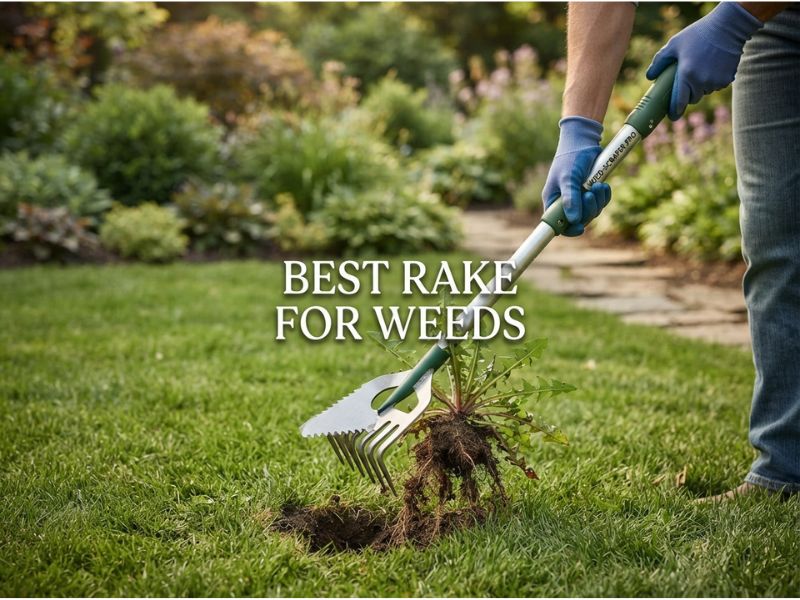
A rake is most effective against small annual weeds, shallow-rooted weeds, loose weed debris, creeping vegetation, and exposed roots. Deep taproot weeds such as mature dandelions usually require a dedicated weeder or digging tool because simply raking off the foliage can leave enough root underground for regrowth.
Best Rakes for Weeds
| Image | Product Name | Check Price |
|---|---|---|
Best Choice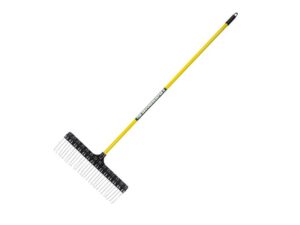 | THE GROUNDSKEEPER II 21-Inch Professional Landscape Rake – Best Overall | Check Price |
Second Best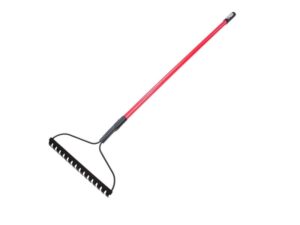 | Bully Tools 92309 16-Inch Bow Rake – Best Heavy-Duty Pick | Check Price |
Third Choice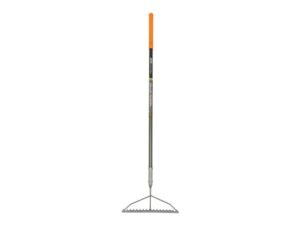 | Fiskars 60-Inch Pro Garden Rake – Best for Garden Beds | Check Price |
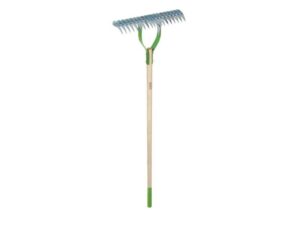 | AMES 15-Inch Adjustable Thatch Rake – Best for Lawn Weed Cleanup | Check Price |
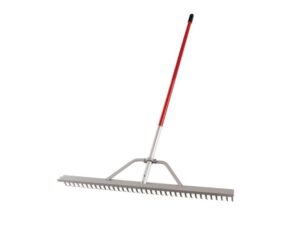 | Corona RK 61062 36-Inch Aluminum Landscape Rake – Best for Large Areas | Check Price |
1. THE GROUNDSKEEPER II 21-Inch Professional Landscape Rake – Best Overall
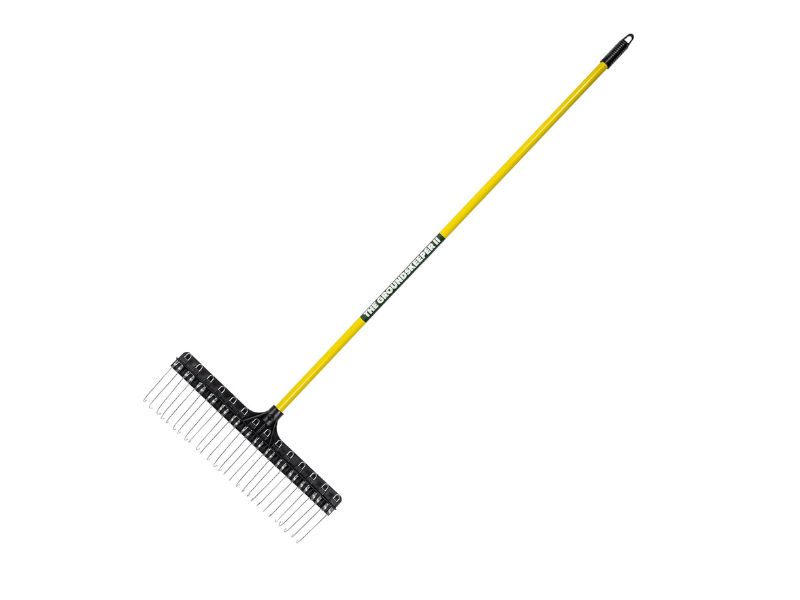
The THE GROUNDSKEEPER II is my first choice because its tine design is unusually well suited to more than ordinary leaf collection.
It has a 21-inch head, 55-inch fiberglass handle, hardened steel tines, and roughly 2-pound overall weight. Current Amazon-linked data shows about 4,100+ customer ratings with a 4.7-star average, giving it much more buyer history than many specialty weed rakes.
What makes it useful for weeds is the spring-loaded tine design. The round steel tines are relatively stiff compared with a conventional flexible leaf rake and can work down into the surface layer of a lawn, mulch bed, or loose garden soil.
That makes it good for gathering pulled weeds, shallow roots, vine fragments, dead grass, thatch, and loose plant material in one pass.
It is particularly useful after hand weeding. Instead of bending over repeatedly to pick up every uprooted weed, you can loosen the area and rake the vegetation into a pile.
The rake is also effective for light dethatching. Removing excess dead material around turf can expose low-growing weeds and make subsequent mechanical removal easier.
At only about 2 pounds, it is much less tiring than a heavy forged bow rake during extended cleanup.
Its limitation is digging strength. If the soil is hard clay and the weeds are firmly rooted, a rigid bow rake or hoe will penetrate more aggressively.
For normal lawn and garden cleanup, however, the combination of steel tine action, wide coverage, low weight, and proven popularity makes this the most versatile recommendation.
2. Bully Tools 92309 16-Inch Bow Rake – Best Heavy-Duty Pick
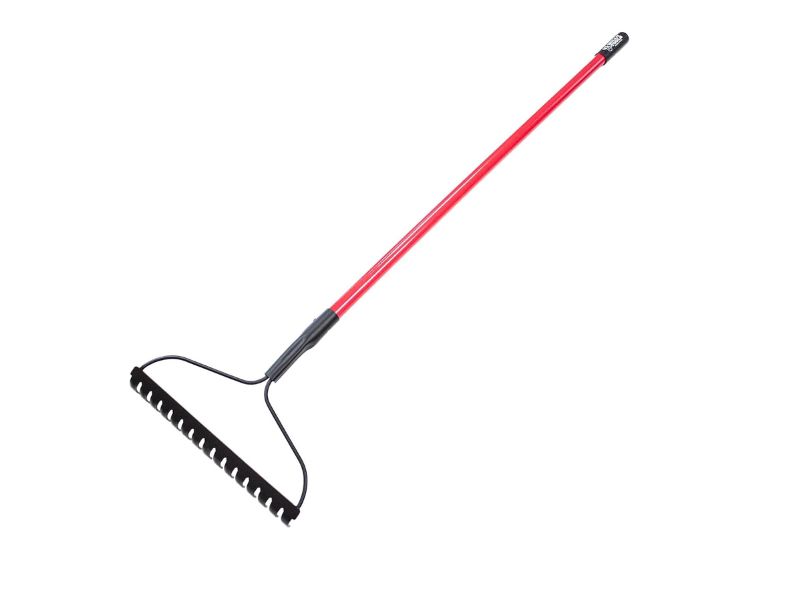
The Bully Tools 92309 is what I would choose when weeds are growing in firm garden soil rather than loosely through turf or mulch.
Its rigid head uses 16 steel tines across a 16-inch working width, supported by a reinforced fiberglass handle. Product specifications list a heavy-duty steel head, approximately 58-inch handle, and weight around 3.45 pounds.
Amazon-linked data shows roughly 960+ reviews with a 4.7-star rating, making this another well-established option rather than an unknown seasonal garden tool.
A bow rake behaves differently from a leaf rake.
Its short, rigid metal teeth can scratch through compacted surface soil, break small clods, disturb emerging weeds, expose shallow roots, and pull loosened vegetation toward you.
That makes it especially effective during garden-bed preparation.
If weeds are still small, several firm rake passes can uproot or severely disturb them before planting. You can then flip or reposition the tool to smooth the soil afterward.
The heavy steel construction also handles gravel, mulch, stones, and hard garden debris better than thin spring-tine rakes.
Bully Tools uses a reinforced fiberglass shaft rather than a simple lightweight wood handle. The manufacturer also positions this rake for demanding landscaping work and backs the design with a limited lifetime warranty.
The downside is effort.
Rigid steel tines require more force and can disturb desirable plants if you work too close to their roots.
Use it primarily in open vegetable beds, bare soil, pathways, and areas being renovated, rather than aggressively dragging it through established ornamental plants.
3. Fiskars 60-Inch Pro Garden Rake – Best for Garden Beds
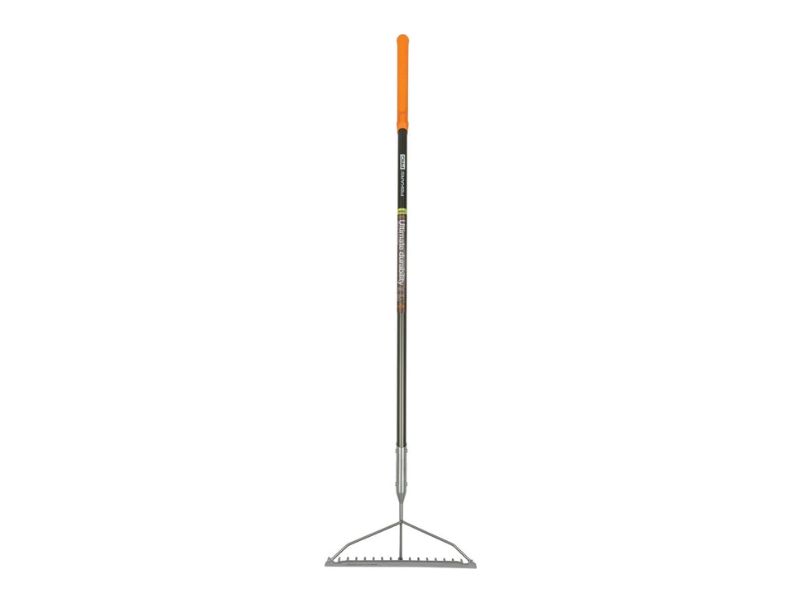
The Fiskars Pro Garden Rake is my favorite choice when weed removal is part of regular soil cultivation rather than a one-time heavy cleanup.
Its hardened metal tines are designed for moving soil, dirt, mulch, and gravel, while the reverse edge can be used for grading and producing a smoother planting surface.
The rake uses a roughly 60-inch lightweight aluminum handle, providing long reach without the weight of a traditional all-steel landscaping rake. The shaft shape is designed to provide more comfortable control during repeated pulling and pushing motions.
For weeds, this rake works best on young plants and shallow root systems.
Drag the tines through the upper layer of loose soil and they can disturb newly emerging weeds before they become established. Afterward, you can rake the uprooted seedlings together and smooth the bed.
This approach is particularly effective when repeated regularly.
Waiting until weeds become large changes the job completely. Large perennial weeds develop root systems that a normal garden rake cannot reliably remove.
The Fiskars is therefore a particularly good tool for gardeners who practice shallow cultivation as preventive weed control.
It also works well around mulch. You can pull mulch aside, remove weeds, then redistribute the material afterward.
Independent rake testing has rated Fiskars’ Pro rake highly for task efficiency and for resisting buildup between the tines, although its heavier working head can be more tiring than ultralight leaf-rake designs.
Choose this model if you want one premium general-purpose rake for weeding, soil preparation, grading, mulch spreading, and garden maintenance.
4. AMES 15-Inch Adjustable Thatch Rake – Best for Lawn Weed Cleanup
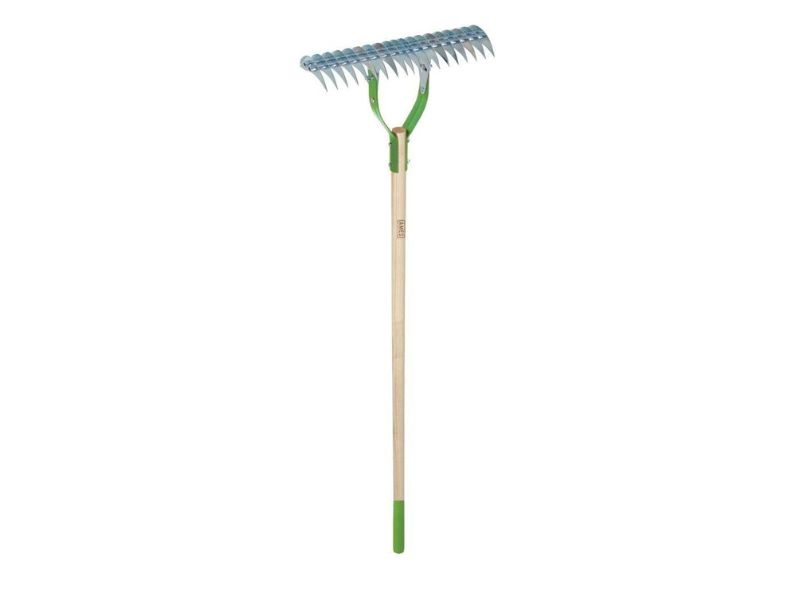
The AMES 15-Inch Adjustable Thatch Rake is not a traditional weed rake, but it makes a lot of sense when weeds are mixed into a lawn containing heavy thatch and dead vegetation.
The rake uses a specialized double-sided steel head. Manufacturer information describes straight steel teeth for dethatching and curved steel teeth for cultivating soil, paired with a 54-inch hardwood handle and cushioned grip.
That dual-purpose head gives the AMES more aggressive surface action than a standard leaf rake.
When a lawn contains low-growing weeds, dead stems, creeping vegetation, and accumulated thatch, the rake can pull much of that unwanted material up from the turf.
Bob Vila’s hands-on testing ranked the AMES as its top manual dethatching rake, praising the pointed curved tines and adjustable head for removing substantial thatch while allowing the user to change aggressiveness.
That adjustability is important.
A very aggressive angle can start pulling desirable turf as well as unwanted material. Set correctly, however, the rake can comb through the surface layer much more precisely.
I would not use it as the primary tool for individual mature broadleaf weeds.
Instead, think of it as a tool for lawn renovation, dethatching, shallow weed debris removal, and exposing problem areas before reseeding or spot treatment.
If your lawn looks matted rather than simply containing a few isolated weeds, the AMES can be more useful than a conventional bow rake.
5. Corona RK 61062 36-Inch Aluminum Landscape Rake – Best for Large Areas
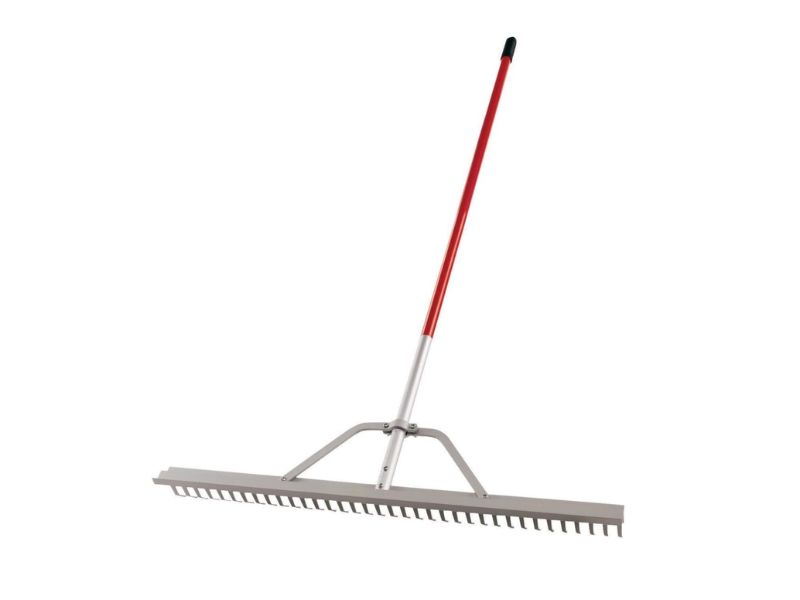
The Corona RK 61062 is my large-area recommendation.
Its 36-inch-wide aluminum head with 36 tines covers substantially more ground per pass than a conventional 14- to 21-inch garden rake. The rake also uses a 60-inch aluminum handle with a vinyl grip and reinforced head bracing.
That width makes it particularly useful when weeds have already been loosened across a large area.
For example, after cultivating a large vegetable plot or clearing weeds from a broad gravel section, the Corona can quickly gather weed tops, loose roots, stones, soil clumps, mulch, and other debris into manageable piles.
It can also lightly disturb surface growth in loose soil.
What it does not do particularly well is precise root removal.
A 36-inch landscape rake is designed for productivity. Its wide head makes it awkward around individual plants, tight borders, and narrow raised beds.
Use it where you have room to make long passes.
The all-aluminum construction is an advantage for extended work because it provides a wide tool without making it unnecessarily heavy. The reinforced head and angled tine tips are designed for repeated landscape grading and surface work.
For a large garden, gravel driveway, newly cleared plot, or landscape renovation, it is the fastest weed-cleanup rake among these five.
Best Rake for Weeds Comparison Table
| Product | Rake Type | Head Width | Best Use | Main Advantage |
| THE GROUNDSKEEPER II | Spring-steel landscape rake | 21 in. | General weed and root cleanup | Best overall versatility |
| Bully Tools 92309 | Heavy-duty bow rake | 16 in. | Hard soil and garden beds | Strong rigid steel tines |
| Fiskars Pro Garden Rake | Garden/bow-style rake | Approx. 14–16 in. class | Regular cultivation | Excellent soil control |
| AMES Adjustable Thatch Rake | Dethatching/cultivating rake | 15 in. | Lawns and shallow weed debris | Adjustable aggressive tines |
| Corona RK 61062 | Aluminum landscape rake | 36 in. | Large open areas | Maximum coverage |
What Type of Rake Is Best for Weeds?
There is no single rake design that is best for every kind of weed.
For general lawn and surface cleanup, a spring-steel garden rake such as THE GROUNDSKEEPER II works well because the tines can comb through loose vegetation while remaining light enough for repeated passes.
For weeds growing in bare garden soil, a bow rake is usually more effective.
Rigid bow-rake teeth can penetrate the soil surface and disturb small root systems.
For weeds mixed with heavy lawn thatch, use a dethatching rake.
For a large cultivated plot where weeds have already been uprooted, a wide landscape rake speeds up cleanup.
The correct tool depends primarily on whether you are trying to uproot weeds or collect weeds that are already loose.
Can You Actually Remove Weeds With a Rake?
Yes, but mostly when the weeds are small or shallow rooted.
Young annual weeds are particularly vulnerable because their root systems have not developed much anchoring strength.
Dragging rigid rake teeth through the top layer of soil can uproot or bury these seedlings.
This is essentially a form of mechanical cultivation.
It works much better when performed regularly instead of waiting until weeds reach maturity.
A rake is less effective against mature perennial weeds.
Plants such as dandelion, dock, thistle, and other deep-rooted species may lose their leaves while leaving substantial root tissue underground.
Those plants usually require a digging weeder, stand-up weed puller, hoe, or another root-removal method.
Bow Rake vs Leaf Rake for Weeding
Choose a bow rake when you want to disturb soil.
Bow-rake tines are short, rigid, and strong. They can break the surface crust, drag through small roots, and pull heavier material.
Choose a leaf rake when the weeds have already been pulled and you simply need to gather them.
Flexible leaf-rake tines are excellent for grass clippings and foliage but often slide over firmly rooted weeds rather than uprooting them.
The Groundskeeper II sits somewhere between these categories because its steel tines provide more digging action than a basic plastic leaf rake.
What About a Thatch Rake?
A thatch rake is useful primarily for turf.
Thatch is the organic layer of dead and partially decomposed stems, roots, and plant material between living grass and soil.
A specialized rake such as the AMES uses curved, sharpened steel tines to pull this material upward. Bob Vila’s testing found the AMES particularly effective once the rake-head angle was adjusted correctly.
While dethatching is not the same as weeding, removing excess surface material can expose low-growing weeds and make subsequent control easier.
It can also improve access to soil for water and nutrients.
Best Rake for Weeds in Garden Beds
For established garden beds with relatively loose soil, I prefer the Fiskars Pro Garden Rake.
Its rigid metal teeth allow shallow cultivation while the long handle provides leverage.
For compacted or rocky beds, I would move up to the heavier Bully Tools 92309.
The stronger bow head tolerates more force.
Around closely spaced vegetables or flowers, neither is ideal for precision work. A small hand cultivator or stirrup hoe gives you more control close to desirable roots.
Use the full-size rake primarily between rows and across open sections.
Best Rake for Weeds in Gravel
A rigid rake works better than a flexible plastic leaf rake in gravel.
The tines need enough strength to move stones while gathering pulled vegetation and exposed roots.
For moderate-size areas, the Bully Tools bow rake is a practical choice.
For a large gravel driveway or broad landscape bed, the Corona 36-inch landscape rake covers substantially more area.
Avoid aggressively digging too deeply because this can mix the gravel into underlying soil or disturb landscape fabric.
Best Rake for Lawn Weeds
For normal surface cleanup, THE GROUNDSKEEPER II is the most versatile option in this guide.
Its spring-steel tines can move through grass and pick up loose vegetation without the digging force of a heavy bow rake.
If the lawn also contains significant thatch, choose the AMES adjustable rake.
Neither should replace a dedicated weed puller for deep-rooted lawn weeds.
When a dandelion has a substantial taproot, removing the top growth with a rake is unlikely to provide lasting control.
Steel Tines vs Plastic Tines
For weed-related work, I strongly prefer steel or other metal tines.
Plastic tines are excellent for dry leaves because they are light and flexible.
They are less effective at penetrating soil or grabbing fibrous roots.
Steel tines can:
scratch soil, lift shallow roots, break small clods, remove thatch, and withstand heavier debris.
The downside is that metal can damage desirable plants or turf if used too aggressively.
Use pressure appropriate to the job.
Is a Wider Rake Better?
Only when the area is open.
A wide rake such as the 36-inch Corona covers a huge amount of ground quickly.
That makes it excellent for large landscape projects.
But width becomes a disadvantage inside narrow garden beds.
A 14- to 21-inch rake provides greater precision.
For the average homeowner, roughly 16–21 inches is the most versatile range.
Handle Length and Comfort
A long handle reduces how much you need to bend.
Most full-size garden rakes use handles around 54–60 inches, which is comfortable for many adults.
Fiberglass and aluminum handles can reduce maintenance compared with unfinished wood.
Wood handles, however, absorb some vibration naturally and are easy to replace on traditional tools.
Grip shape also matters if you expect to rake for an hour or more.
A rubberized or cushioned section can reduce hand fatigue and improve control when the handle becomes damp.
How to Rake Weeds Out of a Garden
For best results, work when the soil is slightly moist but not muddy.
Extremely dry soil can become hard enough that rake tines simply bounce across the surface.
Start with relatively shallow passes.
Pull the rake through the upper soil layer to disturb young weeds and expose roots.
Work in overlapping passes until most seedlings are loose.
Then make lighter passes to gather the uprooted weeds into piles.
Do not immediately bury large living weed fragments back into moist soil because some species can reroot.
Remove them from the bed or allow them to dry thoroughly.
Rake Before or After Pulling Weeds?
Both can work.
Raking before pulling can expose the weed crown and clear away dead material.
Raking afterward lets you gather removed plants and root fragments efficiently.
For deep weeds, my preferred sequence is:
first loosen the surrounding surface with the rake, remove the main weed with a dedicated weeding tool, then rake the area again to collect remaining vegetation.
For tiny annual weeds, the rake itself may complete the entire job.
Can Raking Spread Weeds?
Potentially.
Weeds that have already produced mature seeds can drop those seeds while you rake.
Some creeping weeds can also reproduce from stem or root fragments.
If weeds are flowering or forming seed heads, collect and remove them rather than leaving them scattered across the garden.
Clean stubborn root and seed material from the rake before moving to a different bed.
This is especially useful when dealing with aggressive spreading weeds.
Frequently Asked Questions
What is the best rake for weeds?
THE GROUNDSKEEPER II is my best overall rake for weeds and general cleanup.
Its 21-inch head uses spring-loaded hardened steel tines that can move through lawn material, mulch, thatch, and loose debris while remaining lightweight. It also has more than 4,000 indexed customer ratings, giving it a strong real-world buyer history.
What type of rake removes weeds?
A rigid garden or bow rake works best for uprooting young shallow-rooted weeds.
Flexible leaf rakes are mainly designed to gather loose debris. A bow rake’s stronger steel tines can scratch through soil and disturb developing roots.
Can I use a rake to pull weeds?
Yes, especially when weeds are small and the soil is loose.
Run the rake through the upper soil layer to uproot seedlings before their roots become established. Mature taproot weeds normally require a dedicated weeder.
Is a bow rake good for weeds?
Yes, a bow rake is one of the better rake types for garden-bed weeds.
Its rigid steel tines can break compacted surface soil, expose roots, and pull young weeds. The Bully Tools 92309 is particularly useful for demanding soil work.
What rake is best for weeds in gravel?
A rigid bow or landscape rake is usually best for gravel.
The Bully Tools rake provides good control in smaller areas, while the Corona 36-inch landscape rake is better for covering a large gravel surface quickly.
What rake is best for weeds in a lawn?
A spring-steel rake works best for surface weeds and loose lawn debris.
THE GROUNDSKEEPER II can comb through turf and thatch, while the AMES adjustable thatch rake is better when heavy dead material is mixed into the lawn.
Will raking kill weeds?
Raking can kill young weeds if it uproots or severely damages their roots.
Simply removing leaves from a mature perennial weed is usually insufficient because the root system can produce new growth.
Should I rake weeds when soil is wet or dry?
Slightly moist soil is usually easier to cultivate than extremely dry compacted soil.
Avoid working saturated soil because aggressive raking can damage soil structure and create clumps.
Can a rake remove dandelions?
A rake is not the best tool for established dandelions.
Dandelions develop deep taproots. Use a dedicated dandelion weeder or digging tool to remove as much of the root as possible, then rake the loose debris afterward.
Is a metal rake better than a plastic rake for weeds?
Yes, metal tines are generally better for actual weed removal.
They can penetrate soil, catch roots, and tolerate more force. Plastic rakes are better suited to lightweight leaf and grass cleanup.
Is a dethatching rake good for weeds?
It can remove shallow weed material while clearing thatch, but it is primarily a lawn-care tool.
The AMES adjustable rake works well for combing unwanted organic material from turf but should not be expected to remove deep weed roots.
How often should I rake garden weeds?
Light, frequent cultivation is more effective than waiting for weeds to mature.
Raking young seedlings every week or two during active weed growth can prevent many plants from developing established root systems.
Final Verdict
The best rake for weeds depends on whether you are trying to uproot small weeds, clear weed debris, loosen compacted soil, or maintain a large landscape area.
THE GROUNDSKEEPER II Professional Landscape Rake is my top overall choice. Its wide 21-inch head, spring-loaded steel tines, lightweight fiberglass handle, strong buyer history, and ability to handle everything from thatch to loose roots make it the most versatile option.
The Bully Tools 92309 Bow Rake is better for hard soil and demanding garden-bed cultivation. Its rigid steel tines can dig deeper and tolerate more force than spring-tine designs.
Choose the Fiskars Pro Garden Rake if you regularly cultivate vegetable or flower beds and want a refined tool that can handle weeding, grading, soil preparation, and mulch with one head.
The AMES Adjustable Thatch Rake makes the most sense for lawns where unwanted vegetation is mixed with heavy thatch and dead grass.
For a large open garden, gravel area, or landscape renovation, the Corona RK 61062 36-Inch Landscape Rake gives you the greatest coverage per pass.
Whatever rake you choose, remember that mechanical weed control works best before weeds mature. Regular shallow cultivation can stop many annual weeds early, while mature perennial and taproot weeds should be removed with a dedicated root-removal tool before the rake is used for final cleanup.

I’m Maya L. Greenwood, a lifelong plant lover who believes anyone can grow something beautiful with the right guidance. After years of testing soil mixes, pruning methods, irrigation tricks, and pest-safe solutions, I started EasyGardenTips.com to turn hard-won lessons into step-by-step advice. From seed starting and container gardens to composting and seasonal checklists, my goal is to make gardening simple, sustainable, and fun.