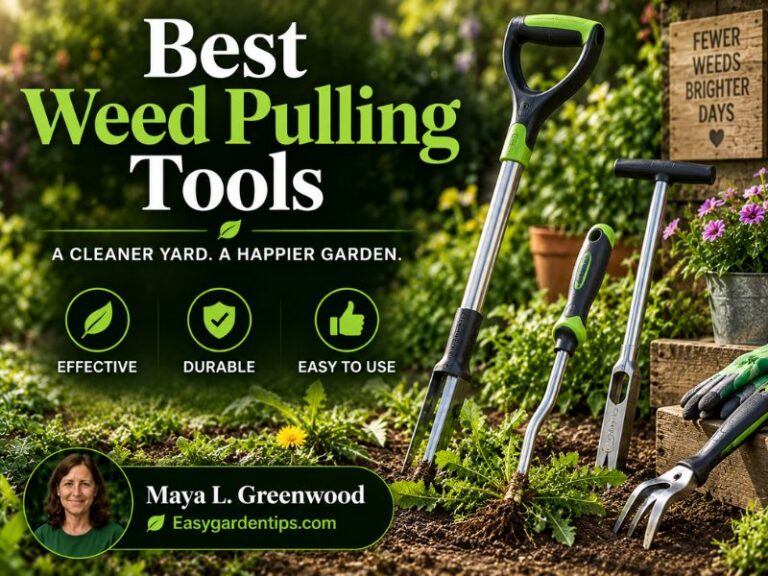
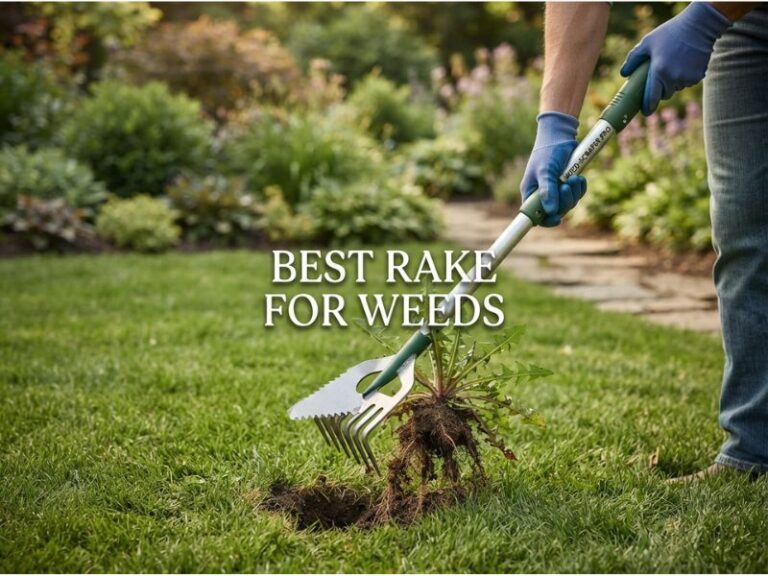
7 Best Weed Remover Tools for Lawns, Gardens, and Tough Roots
The best weed remover should match the type of weeds and the area you are maintaining. A dandelion taproot, shallow chickweed, weeds between vegetable rows, and thick roots in a flower bed all require slightly different blade shapes and removal techniques.
My top overall choice is the NISAKU NJP650 Hori Hori Weeding Knife because its 7.25-inch Japanese stainless-steel blade, straight and serrated edges, digging profile, and approximately 9,400 Amazon reviews give it an excellent combination of durability, versatility, and buyer history.
For fast removal of shallow weeds and grass around established plants, the Joshua Roth Japanese Weeding Sickle is an excellent alternative. Its forged high-carbon-steel sickle blade has accumulated roughly 6,400 Amazon reviews and excels at slicing weeds close to the soil surface.
If you specifically need a traditional hand tool for dandelions and thistles, the Fiskars Ergo Weeder Tool is one of the most affordable proven options. Its angled aluminum head provides leverage beneath roots, and current Amazon-market data shows roughly 3,400 reviews.
7 Best Weed Remover Tools
| Image | Product Name | Check Price |
|---|---|---|
Best Choice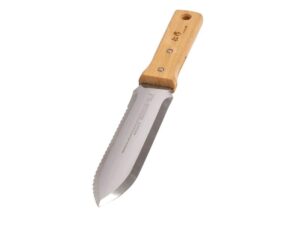 | NISAKU NJP650 Hori Hori Stainless Steel Weeding Knife | Check Price |
Second Best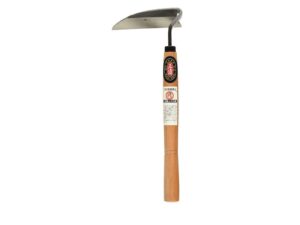 | Joshua Roth Japanese Weeding Sickle | Check Price |
Third Choice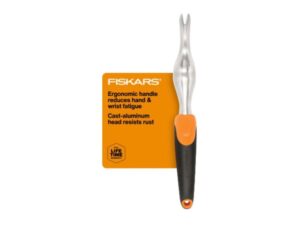 | Fiskars Ergo Weeder Tool | Check Price |
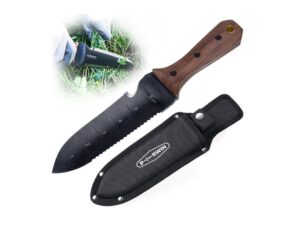 | PERWIN Hori Hori Garden Knife | Check Price |
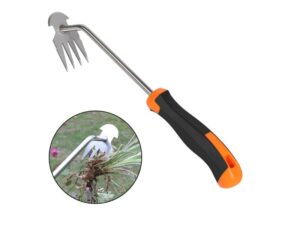 | SIXCAR Portable Weed Remover Tool | Check Price |
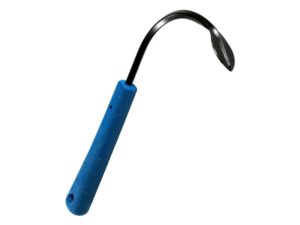 | CobraHead Original Weeder & Cultivator | Check Price |
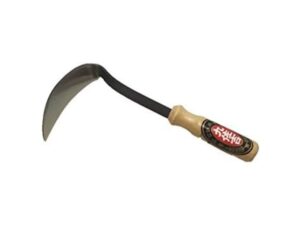 | BlueArrowExpress Kana Hoe 217 Japanese Garden Tool | Check Price |
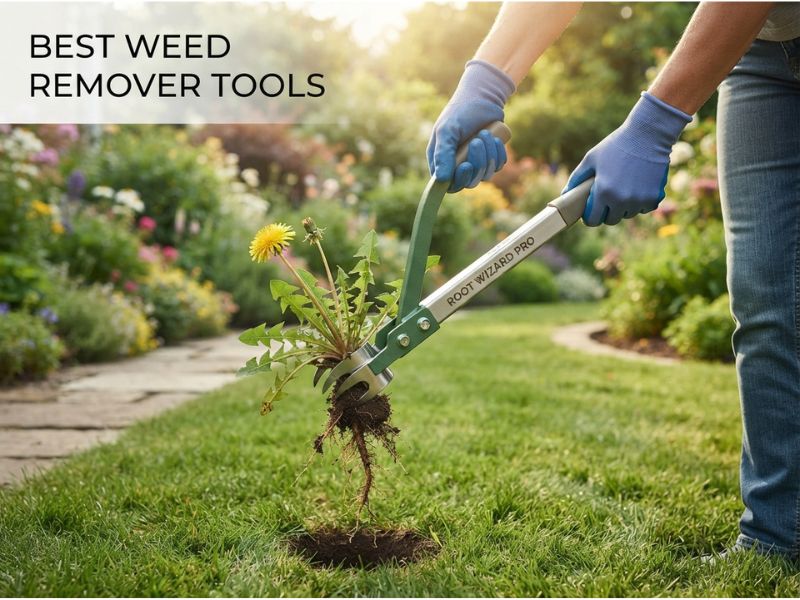
How I Ranked the Best Weed Remover Tools
I intentionally avoided repeating most of the products from the previous crack-weeder and long-handled weed-puller guides.
I also selected seven different brands so the list provides more useful alternatives rather than several nearly identical products from one manufacturer.
Amazon review volume received extra weight in the ranking.
The approximate current review order for these products is:
| Product | Approx. Amazon Reviews |
| NISAKU NJP650 | ~9.4K |
| Joshua Roth Japanese Weeding Sickle | ~6.4K |
| Fiskars Ergo Weeder | ~3.4K |
| PERWIN Hori Hori | ~2.9K |
| SIXCAR Weed Remover | ~2.7K |
| CobraHead Original Weeder | ~1.5K+ |
| BlueArrowExpress Kana Hoe 217 | ~1.2K |
NISAKU’s current listing shows roughly 9,400 reviews, while Amazon market tracking places the Japanese Weeding Sickle around 6,400 and Fiskars Ergo around 3,400. SIXCAR has approximately 2,700 reviews, while BlueArrowExpress currently has about 1,224.
Review counts change over time and can also vary when Amazon separates or combines listing variations.
Beyond popularity, I considered root-removal ability, blade material, leverage, ergonomics, soil penetration, precision around desirable plants, and versatility.
The 7 Best Weed Remover Tools
1. NISAKU NJP650 Hori Hori Stainless Steel Weeding Knife- Best Overall
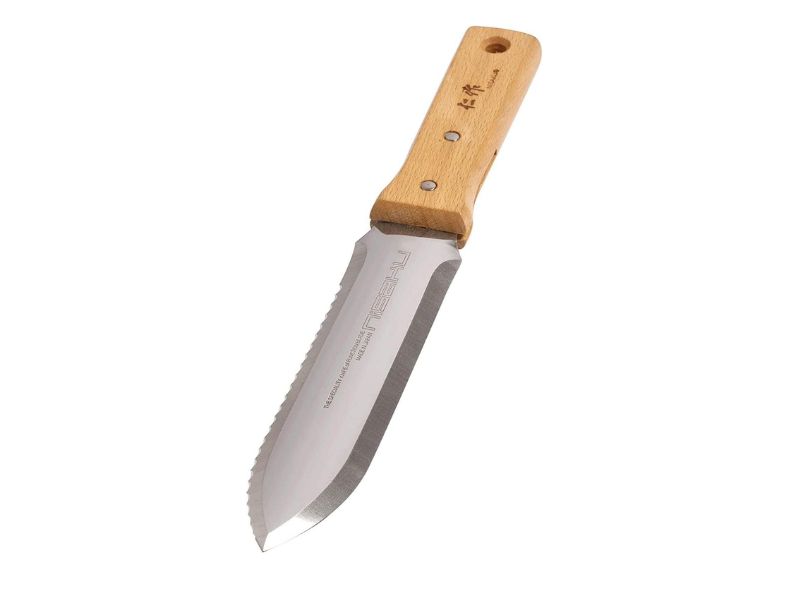
The NISAKU NJP650 is my best overall weed remover because it can do much more than remove one specific type of weed.
It uses a 7.25-inch Japanese stainless-steel blade with both straight and serrated edges. The blade is slightly concave, giving it the ability to dig into soil as well as cut roots.
NISAKU also includes measurement markings for planting depth and a wooden handle. Current specifications describe the blade as rust and scratch resistant.
For weeding, the most important feature is the long narrow blade.
You can insert it next to a dandelion, thistle, plantain, or other deep-rooted weed, loosen the surrounding soil, then lever upward beneath the crown.
The serrated side is useful when fibrous roots prevent a weed from releasing cleanly.
It is also particularly good in raised garden beds and flower borders because the blade is narrow enough to work between desirable plants without disturbing as much soil as a full-size shovel.
The NISAKU currently carries roughly 9,400 Amazon reviews at around 4.8 stars, giving it the strongest review history of the seven tools in this article.
The primary drawback is that this is a sharp gardening knife rather than a stand-up puller. You need to kneel or work relatively close to the soil.
A sheath should also be used whenever the tool is stored or carried.
For gardeners who want one tool that can weed, dig, cut roots, divide plants, and transplant, however, the NJP650 is exceptionally useful.
Best for: mixed garden maintenance, taproots, raised beds, root cutting, and gardeners wanting one multi-purpose tool.
2. Joshua Roth Japanese Weeding Sickle- Best for Fast Surface Weeding
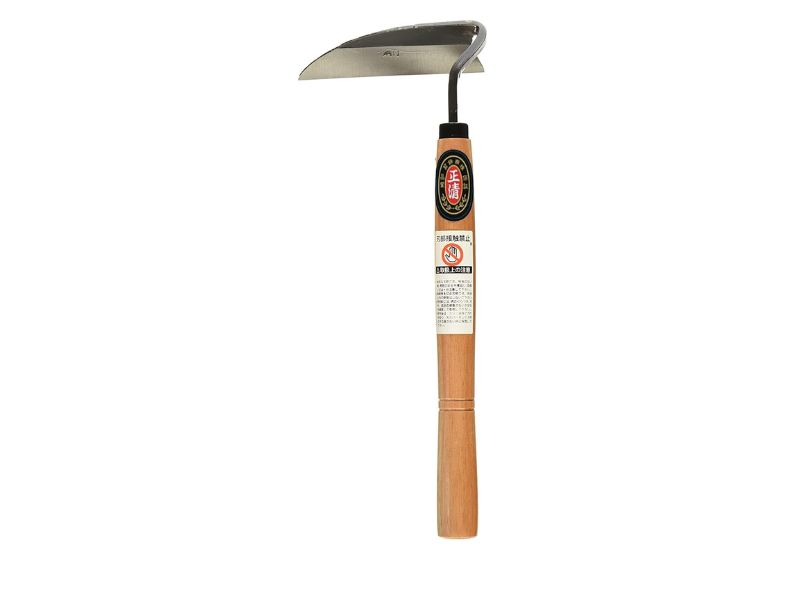
The Joshua Roth Japanese Weeding Sickle is very different from the NISAKU.
Instead of digging deeply around individual taproots, its curved blade is designed to make fast pulling cuts through shallow weeds, grasses, and unwanted vegetation.
The approximately 5-inch blade is made from high-carbon steel, and the complete tool is roughly 13 inches long. The forward-weighted curved blade allows you to slice weeds with a controlled pulling motion.
This design is especially effective in established flower beds, vegetable gardens, around shrubs, and between perennial plants.
Rather than digging out every tiny weed individually, you can skim the blade close to the soil and cut through multiple young weeds quickly.
That makes it much faster than a fork-style dandelion weeder when the problem is hundreds of shallow seedlings rather than twenty large taproots.
Current Amazon-market data shows roughly 6,400–6,500 reviews at about 4.7 stars.
The limitation is deep-root removal.
A sickle slices exceptionally well but is not designed to pull a long dandelion taproot intact. For that job, use a levering weeder or hori hori.
The blade is also genuinely sharp, so careful storage is important.
Best for: shallow weeds, flower beds, grass, vegetable gardens, and fast repetitive weeding.
3. Fiskars Ergo Weeder Tool- Best Budget Hand Weeder
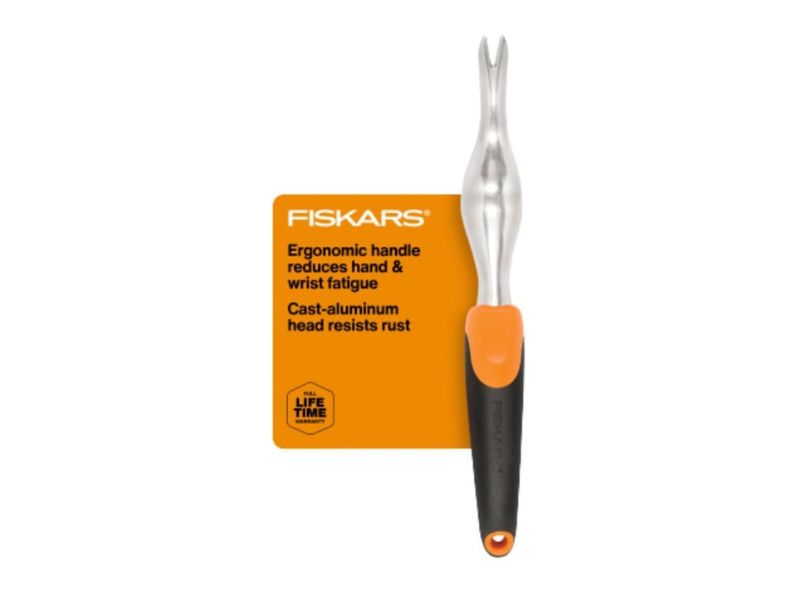
The Fiskars Ergo Weeder is the simplest dedicated root-removal tool in this guide.
Its narrow angled aluminum head is designed to penetrate beside a weed and create leverage underneath the root.
Fiskars pairs that head with an ergonomic SoftGrip handle, making the tool comfortable when you repeatedly remove individual weeds from a lawn or bed.
This is the tool I would choose when you mostly deal with:
Dandelions, thistles, plantain, and other isolated taproot weeds.
Push the tip into the soil beside the weed rather than directly through its crown. Once the head is underneath the root zone, push down on the handle to lever the weed upward.
The narrow head creates less soil disturbance than a wide garden trowel.
Current Amazon data puts this tool around 3,300–3,400 reviews, with an average rating around 4.5 stars.
Another advantage is price. It is considerably simpler than a stand-up weed puller and usually costs correspondingly less.
The main compromise is posture.
You need to work at ground level, so it is not ideal if avoiding bending or kneeling is your highest priority.
For straightforward lawn spot-weeding, though, the combination of low price, leverage, rust-resistant aluminum, and comfortable grip makes it excellent value.
Best for: inexpensive dandelion removal, lawn weeds, thistles, and small garden beds.
4. PERWIN Hori Hori Garden Knife- Best Multi-Purpose Garden Knife
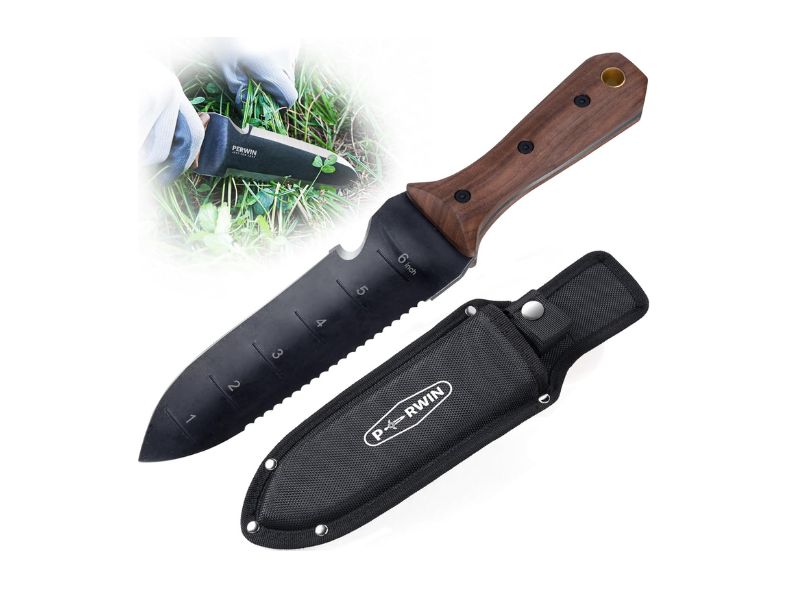
The PERWIN Hori Hori is another Japanese-style garden knife, but its design differs enough from NISAKU to appeal to buyers who want a more substantial modern handle and full-tang construction.
It uses a 7-inch stainless-steel blade with one sharp edge and one serrated edge.
The blade extends through a walnut-style wooden handle using a full-tang design with three rivets, and the tool comes with a protective sheath.
For weed removal, the pointed blade can enter compact soil beside a root.
The serrations help cut through fibrous roots, while the curved profile works as a narrow digging scoop.
It is particularly effective when a weed is growing among plants you want to keep because you can work very precisely.
The PERWIN can also be used for planting, transplanting, dividing perennials, cutting roots, digging, and measuring planting depth.
Current Amazon-category tracking shows approximately 2,900 reviews for the model.
I rank it below NISAKU primarily because NISAKU has the much longer Amazon ownership history.
However, the PERWIN’s full-tang handle and included sheath make it a strong alternative for gardeners who prefer that construction style.
Best for: heavy garden use, root cutting, digging, transplanting, and buyers wanting a full-tang hori hori.
5. SIXCAR Portable Weed Remover Tool- Best for Uprooting Small Weeds
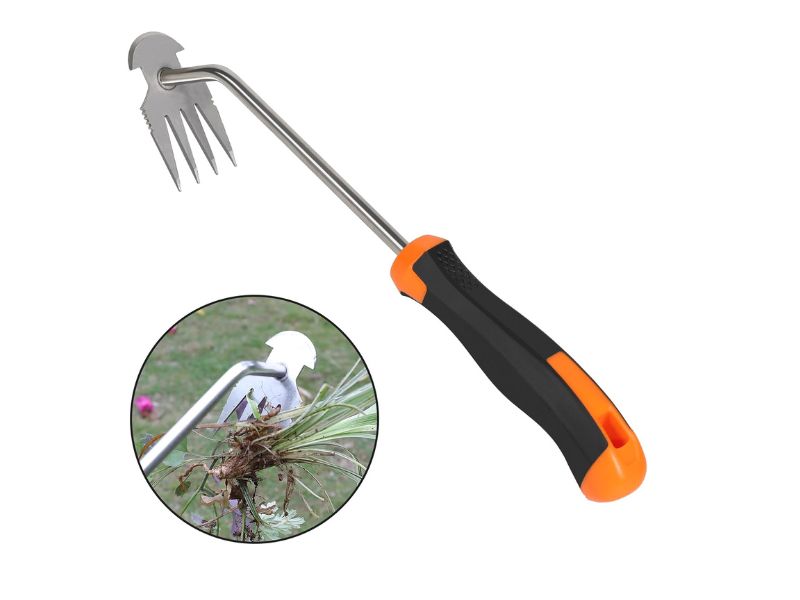
The SIXCAR Weed Remover Tool has become one of the fastest-selling newer weed-removal products on Amazon.
The tool is about 13.3 inches long and uses a four-tooth steel head designed to get beneath unwanted vegetation.
Its narrow profile makes it useful for small weeds, crabgrass clumps, chickweed, thistles, and garden-bed weeds where you want more grabbing action than a single narrow blade provides.
The steel construction is designed to resist rust and deformation, while the handle provides enough length to create useful leverage.
I particularly like this style for loose vegetable-garden soil.
Drive the head below the weed crown and lift rather than simply pulling the leaves.
The more root you remove, the less stored energy remains for regrowth.
Its main limitation is that the head is relatively wide compared with a hori hori or CobraHead.
When desirable plants are tightly spaced, a narrower blade offers greater precision.
It is also still a short hand tool, so it does not eliminate bending.
Best for: small garden weeds, crabgrass, chickweed, vegetable beds, and buyers wanting a four-tooth uprooting design.
6. CobraHead Original Weeder & Cultivator- Best for Raised Beds
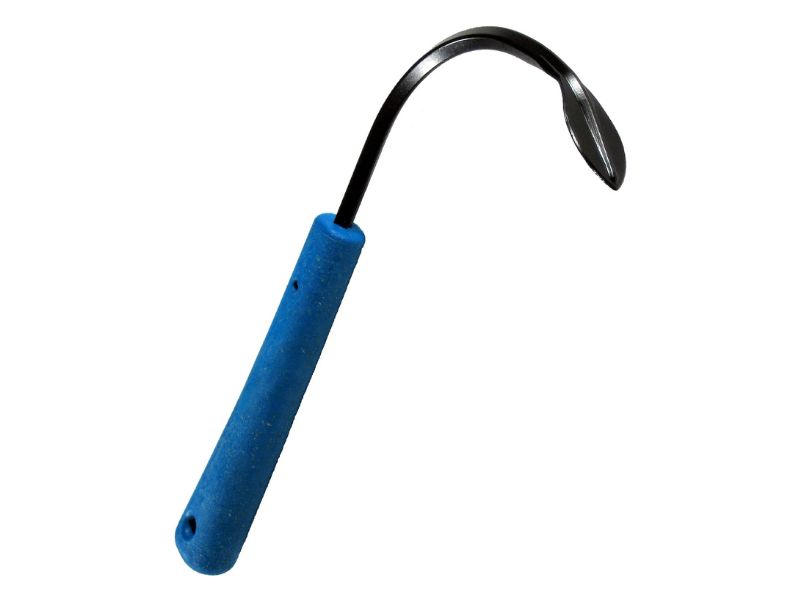
The CobraHead Original Weeder & Cultivator uses one of the most distinctive blade shapes in this comparison.
Instead of a straight blade or fork, it has a curved tempered-steel “fingernail” blade designed to hook under weed crowns and loosen soil.
The tool measures approximately 13 inches and weighs only about nine ounces. CobraHead manufactures it in Wisconsin and uses a recycled composite ergonomic handle.
This narrow curved blade is extremely useful in raised beds and closely planted vegetable rows.
You can reach between plants, hook underneath a weed, and pull toward yourself without excavating a large hole.
The same motion also breaks up compact surface soil.
That makes CobraHead both a weeder and cultivator.
The company describes it as suitable for weeding, digging, cultivating, edging, furrowing, planting, transplanting, and dethatching.
The CobraHead is not as efficient as a sickle for clearing hundreds of tiny surface weeds.
It is also slower than a stand-up puller if your lawn contains dozens of isolated dandelions.
Its strength is precision cultivation around plants.
Best for: raised beds, vegetable rows, hard soil, close planting, and precision root loosening.
7. BlueArrowExpress Kana Hoe 217 Japanese Garden Tool- Best Japanese Hand Hoe
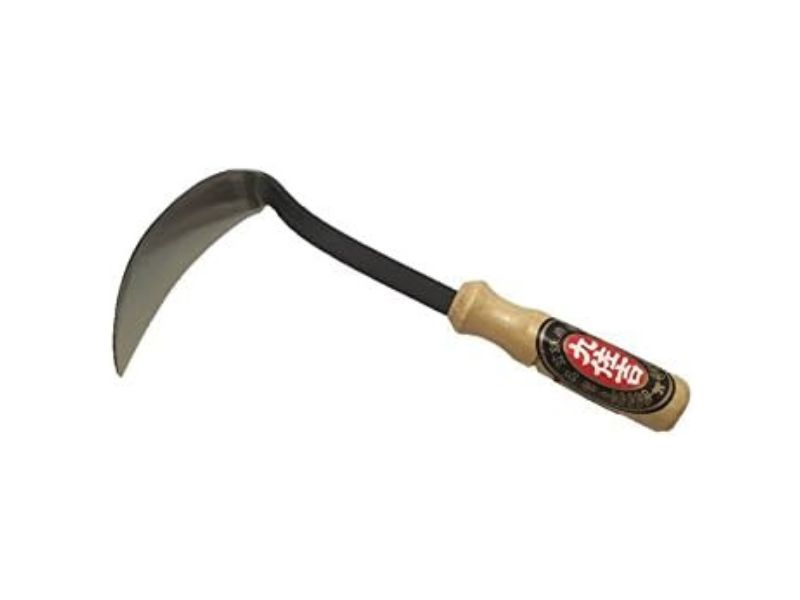
The BlueArrowExpress Kana Hoe 217 is a traditional-style Japanese hand hoe designed for both weeding and cultivation.
Amazon data currently shows approximately 1,224 reviews with a 4.7-star rating.
Its sharp Japanese-steel blade works differently from a dandelion fork.
Instead of inserting a narrow tip directly beside a taproot, you pull or chop the blade through the upper soil layer.
This makes it effective for:
Young weeds, grasses, shallow-rooted weeds, garden rows, loose beds, and soil cultivation.
The blade is especially useful when your garden has many small weeds rather than a few large ones.
A dedicated root puller may take several seconds per plant.
With a hand hoe, you can move along a row and disturb multiple young weeds with each stroke.
The tool is also relatively lightweight, which helps during longer garden sessions.
The main downside is the same as the Joshua Roth sickle: this is primarily a cutting and cultivating tool, not a deep taproot extractor.
For lawn dandelions, Fiskars or NISAKU is more appropriate.
For keeping vegetable beds clean before weeds become large, the Kana Hoe is excellent.
Best for: vegetable gardens, cultivated soil, young weeds, grasses, and gardeners who prefer a traditional Japanese hoe.
Best Weed Remover Comparison
| Product | Approx. Amazon Reviews | Tool Type | Best For | Main Strength |
| NISAKU NJP650 | ~9.4K | Hori hori knife | Mixed weeds and roots | Versatility |
| Joshua Roth Japanese Sickle | ~6.4K | Weeding sickle | Shallow weeds | Fast cutting |
| Fiskars Ergo Weeder | ~3.4K | Lever weeder | Dandelions | Root leverage |
| PERWIN Hori Hori | ~2.9K | Hori hori knife | Tough roots | Full-tang construction |
| SIXCAR Weed Remover | ~2.7K | Four-tooth weeder | Small weeds | Uprooting action |
| CobraHead Original | ~1.5K+ | Curved cultivator | Raised beds | Precision |
| BlueArrow Kana Hoe | ~1.2K | Japanese hand hoe | Young weeds | Fast cultivation |
What Type of Weed Remover Is Best?
There is no single tool design that is best for every weed.
For Dandelions and Taproots
Choose a tool that can reach below the crown.
A lever-style weeder or hori hori knife works best.
The Fiskars Ergo is specifically designed for this job, while NISAKU gives you more digging and root-cutting capability.
For Hundreds of Small Weeds
A sickle or hand hoe is faster.
The Joshua Roth Japanese Weeding Sickle and BlueArrow Kana Hoe let you work through larger sections of soil without treating every tiny plant individually.
For Raised Beds
Precision matters.
A CobraHead or narrow hori hori lets you remove unwanted plants without disturbing the roots of vegetables and flowers nearby.
For Tough Fibrous Roots
Use a serrated garden knife.
The serrated edges on NISAKU and PERWIN can cut roots that are difficult to remove with pulling force alone.
Weed Remover vs. Weed Puller: What’s the Difference?
The terms often overlap.
A weed puller generally describes a tool designed to extract a weed from the ground, preferably with the root attached.
A weed remover is broader.
It can include:
Weed pullers, hori hori knives, dandelion forks, hand hoes, sickles, crack weeders, cultivators, and root-cutting tools.
That is why this guide includes several designs instead of seven nearly identical claw pullers.
Different weeds respond better to different removal methods.
Why Removing the Root Matters
Many annual weeds will die if they are cut below their growing point before producing seed.
Perennial weeds can be more persistent.
A dandelion taproot, for example, stores energy that can support regrowth after the leaves are removed.
Thistles, bindweed, and other perennial plants can also regenerate from surviving root structures.
Mechanical weed control is therefore most effective when you either:
Remove as much root as possible,
or repeatedly remove new growth until the root system is depleted.
This is why pulling only the visible leaves is often disappointing.
What Is a Hori Hori Knife?
A hori hori is a Japanese-style gardening knife with a long, narrow, slightly concave blade.
Many versions have:
A straight cutting edge.
A serrated edge.
A pointed digging tip.
Planting-depth markings.
A wooden or composite handle.
Hori hori knives are popular because they combine several garden tools into one.
They can weed, cut roots, dig planting holes, divide perennials, transplant seedlings, and slice through sod.
NISAKU and PERWIN are the two hori hori designs in this article.
Is a Weeding Sickle Better Than a Weed Puller?
It depends on the weed.
A sickle is better when you have a large number of young or shallow weeds.
You can clear an area much faster.
A puller is better for an individual deep-rooted weed.
For example, removing 100 tiny weed seedlings from a vegetable bed with a dandelion fork would be painfully slow.
A sickle can handle them quickly.
But using a sickle on one mature dandelion may leave most of the taproot intact.
When Is the Best Time to Remove Weeds?
For root pulling, after rain or watering is usually ideal.
Moist soil releases roots more easily.
This is particularly important in clay.
When clay becomes extremely dry, it can hold a taproot almost like concrete.
The root may break before it comes free.
Avoid working when the ground is completely waterlogged, though.
Very wet soil can compact beneath your knees and tools, and removing large weeds may create unnecessary holes.
Aim for moist, workable soil.
How to Remove Dandelions Properly
Identify the center of the leaf rosette.
Insert your weeder several inches into the soil beside the crown.
Angle the tool toward the root.
Loosen the soil on one or more sides.
Then lever the plant upward while holding near its base.
If you are using a hori hori, the narrow blade can be inserted deeper alongside the taproot.
If the root snaps, continue monitoring the area for regrowth.
Young dandelions are much easier to remove completely than old established plants.
How to Remove Weeds From a Vegetable Garden
Use the least disruptive tool possible.
Vegetable roots may extend much farther than the visible foliage suggests.
Aggressively digging around every weed can damage your crop roots.
For tiny weeds, use a shallow slicing action with a sickle or hand hoe.
For larger weeds growing close to vegetables, use a narrow CobraHead or hori hori.
Pull weeds before they produce seed whenever possible.
One mature weed can create a much larger problem later.
Hand Weeder vs. Stand-Up Weeder
A hand weeder gives you better precision.
You can see the crown and work closely around roots.
It is also lighter and usually cheaper.
A stand-up weed puller reduces bending and kneeling.
That is especially useful when your lawn contains dozens or hundreds of individual dandelions.
Neither is universally better.
For a manicured lawn with scattered taproots, stand-up pullers are extremely convenient.
For flower beds and vegetables, hand tools usually offer better control.
Stainless Steel vs. Carbon Steel Weed Removers
Both materials have advantages.
Stainless Steel
Stainless steel resists corrosion and is easy to clean.
It is an excellent material for digging tools that regularly contact moist soil.
NISAKU and PERWIN both use stainless-steel blades.
Carbon Steel
High-carbon steel can take an extremely sharp edge.
The Joshua Roth sickle is a good example.
The tradeoff is that carbon steel generally needs more attention to drying and rust prevention.
Clean and dry the blade after gardening rather than leaving wet soil attached.
How to Prevent Weeds From Coming Back
Weed removal is only one part of control.
In garden beds, use an appropriate layer of organic mulch to reduce light reaching new weed seedlings.
In lawns, maintain dense, healthy turf.
Bare soil gives weed seeds space and sunlight to germinate.
Correct mowing height, irrigation, fertilization, overseeding, and soil management can reduce weed pressure over time.
In vegetable gardens, remove weeds while they are small.
In patios and hardscape joints, remove accumulated organic material that gives seeds somewhere to establish.
Common Weed-Removal Mistakes
One mistake is pulling when the soil is extremely dry.
Another is grabbing only the leaves.
A third is allowing weeds to flower and produce seed before removing them.
Using the wrong tool also creates unnecessary work.
A dandelion fork is slow for hundreds of tiny seedlings.
A sickle is poor for extracting a 10-inch taproot.
Match the tool to the root structure and growing location.
That is more important than simply buying the most expensive weed remover.
Frequently Asked Questions
What is the best weed remover?
The NISAKU NJP650 is the best overall weed remover for most gardeners.
Its 7.25-inch stainless-steel blade, serrated root-cutting edge, digging profile, and approximately 9,400 Amazon reviews make it unusually versatile for lawn and garden work.
Which weed remover has the most Amazon reviews?
NISAKU NJP650 has the most reviews among the seven products in this guide.
Current Amazon-market tracking shows roughly 9,400 reviews, followed by the Joshua Roth Japanese Weeding Sickle at roughly 6,400.
What is the best tool to remove dandelions?
A narrow levering weeder or hori hori knife works particularly well for dandelions.
The Fiskars Ergo is designed to create leverage under roots, while NISAKU can reach deeper along a long taproot.
What is the best weed remover for a vegetable garden?
CobraHead is particularly effective around closely spaced vegetables.
Its narrow curved blade can work around plant roots while disturbing less soil than a broad hoe or trowel.
Does pulling weeds by the root stop them from coming back?
Removing the complete root greatly reduces the chance of regrowth for many weeds.
Some perennial weeds can regenerate from remaining root fragments, so persistent plants may still require follow-up removal.
Is it easier to pull weeds after rain?
Yes, moist soil usually releases roots more easily.
This is particularly noticeable with deep taproots and clay-heavy soil.
What is the best weed remover for shallow weeds?
The Joshua Roth Japanese Weeding Sickle is excellent for shallow weeds.
Its sharp curved carbon-steel blade allows rapid cutting across garden beds and around established plants.
Are hori hori knives good for weeding?
Yes, hori hori knives are among the most versatile manual weeding tools.
Their long narrow blades can loosen roots, cut fibrous growth, dig soil, and work around established garden plants.
Can I use a weed remover in hard clay soil?
Yes, but slightly moist clay is much easier to work than baked-dry clay.
Water the area first if necessary and give the moisture time to penetrate before attempting deep root removal.
Does cutting weeds kill them?
Cutting can kill young annual weeds, but established perennial weeds may regrow from their roots.
Repeated cutting eventually weakens some species, but root removal is usually preferable when practical.
What is the best weed remover without chemicals?
Any quality manual weeder can provide chemical-free weed control.
NISAKU, Fiskars, SIXCAR, CobraHead, and the other tools here physically remove or cut unwanted vegetation without applying herbicide.
Final Verdict
The NISAKU NJP650 Hori Hori Weeding Knife is my top choice for the best weed remover because it handles the widest variety of jobs. Its Japanese stainless-steel blade, serrated root-cutting edge, digging capability, planting markings, and approximately 9,400 Amazon reviews give it an excellent balance of proven popularity and versatility.
The Joshua Roth Japanese Weeding Sickle is better when speed matters. Its sharp curved carbon-steel blade makes short work of shallow weeds, grass, and unwanted growth in garden beds.
The Fiskars Ergo Weeder is the affordable specialist for dandelions and other individual taproots, while the PERWIN Hori Hori offers a strong full-tang alternative for tougher digging and root cutting.
The SIXCAR Weed Remover provides a useful four-tooth uprooting design for small garden weeds. CobraHead excels in raised beds and tightly planted areas where precision matters, while the BlueArrowExpress Kana Hoe 217 is ideal for quickly cultivating young weeds from loose garden soil.
The most effective weed remover ultimately depends on the weed itself. Use deep leverage for taproots, sharp slicing blades for shallow weeds, narrow cultivators around valuable plants, and serrated blades for fibrous roots. Choosing the right removal method will usually make a bigger difference than simply using more force.

I’m Maya L. Greenwood, a lifelong plant lover who believes anyone can grow something beautiful with the right guidance. After years of testing soil mixes, pruning methods, irrigation tricks, and pest-safe solutions, I started EasyGardenTips.com to turn hard-won lessons into step-by-step advice. From seed starting and container gardens to composting and seasonal checklists, my goal is to make gardening simple, sustainable, and fun.