10 Best Weed Pulling Tools: Root Removal Picks for Lawns
Are you looking for the best weed pulling tools to remove dandelions, thistles, crabgrass, and other unwanted plants without repeatedly reaching for herbicide? The right tool should grip or loosen the root system, provide enough leverage for your soil type, and remove weeds with minimal damage to surrounding turf or garden plants.
My primary recommendation is the Papa’s Tools 44-Inch Stand Up Weed Puller. Its four-claw steel head, long bamboo handle, foot leverage, and dual weed-ejection system make it particularly practical for repeatedly pulling lawn weeds while remaining upright.
For larger areas and gardeners who want more versatility, I would consider the NICOFPHY 60-Inch Weed Puller Tool with Garden Hoe and Rake. Its long adjustable-style handle and six-tine head work well for uprooting weeds while also loosening surrounding soil.
The Spear & Jackson 4854WP Mechanical Weed Puller is another strong option when you specifically want a stand-up mechanical weed puller with a foot platform and claw-style root extraction for dandelions and other deep-rooted lawn weeds.
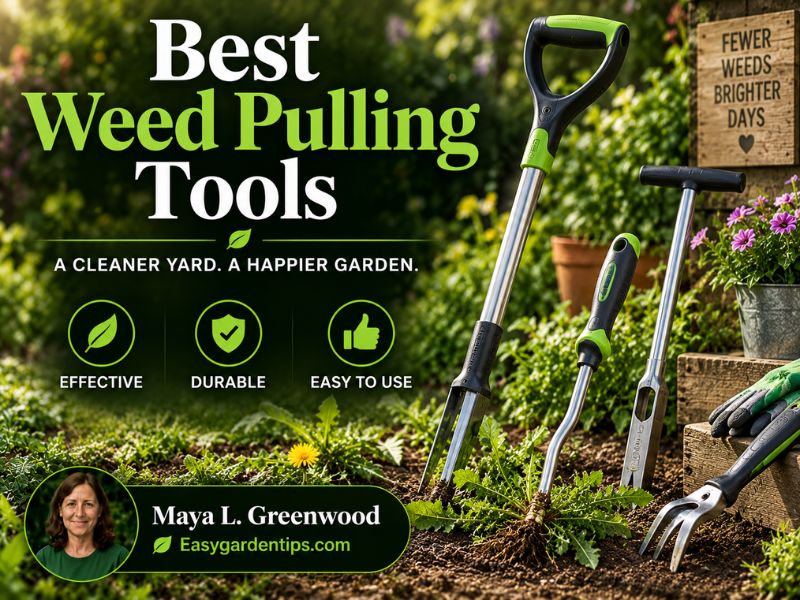
Best Weed Pulling Tools
| Image | Product Name | Check Price |
|---|---|---|
Best Choice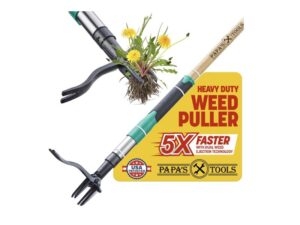 | Papa’s Tools 44-Inch Stand Up Weed Puller | Check Price |
Second Best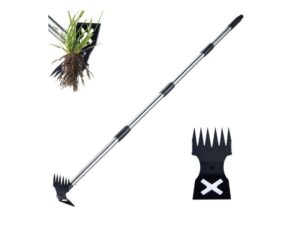 | NICOFPHY 60-Inch Weed Puller Tool | Check Price |
Third Choice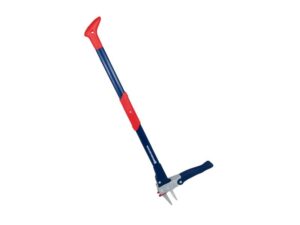 | Spear & Jackson 4854WP Mechanical Weed Puller | Check Price |
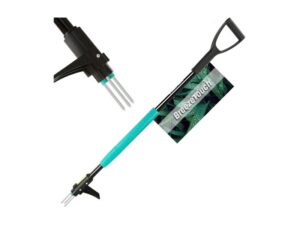 | Breeze Touch 39-Inch 3-Claw Weed Pulling Tool | Check Price |
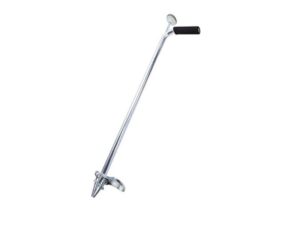 | WORTH Garden Stand Up Weeder and Root Removal Tool | Check Price |
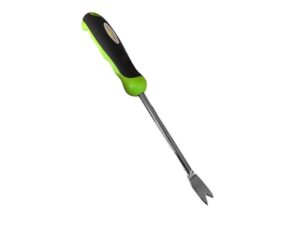 | Garden Guru Stainless Steel Dandelion Weeder Tool | Check Price |
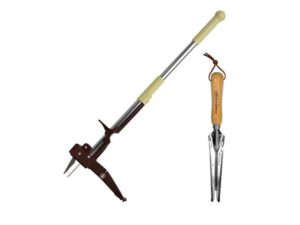 | WINSLOW & ROSS Stand Up 4-Claw Weed Puller | Check Price |
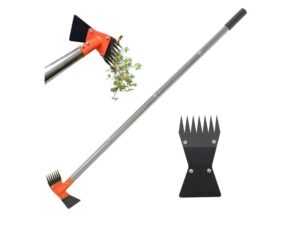 | WELLOPLO 60-Inch 2-in-1 Garden Hoe and Weed Puller | Check Price |
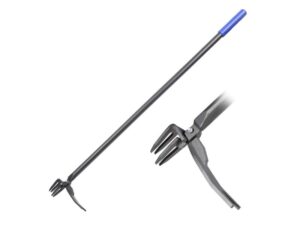 | CKLT Manganese Steel Weed Puller Tool | Check Price |
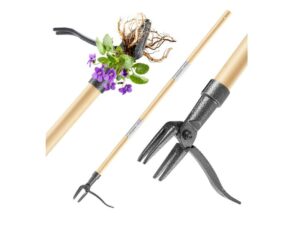 | BellaJoyz Long Handle Stand Up Weed Puller Too | Check Price |
1. Papa’s Tools 44-Inch Stand Up Weed Puller- Best Overall
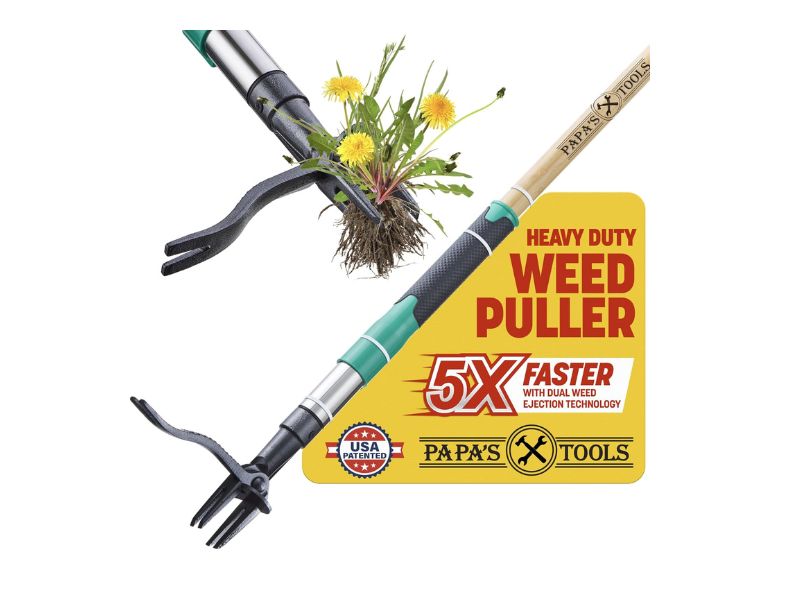
Key Features
- Approximately 44-inch stand-up design
- Four-claw steel head
- Bamboo handle
- Foot-operated leverage
- Dual weed-ejection mechanism
- Designed for dandelions, crabgrass, thistles, and taproots
- Chemical-free manual operation
Papa’s Tools earns my first position because it combines the most useful characteristics of a modern stand-up weed remover without becoming unnecessarily complicated.
The four-claw head enters the soil around the weed crown and grips the root zone as you apply leverage. This approach works particularly well on individual lawn weeds where removing more of the root is more important than simply cutting off the leaves.
Its long handle is the biggest practical advantage. You can work through a lawn with much less repetitive kneeling and bending than a short hand weeder requires.
The built-in weed ejector also helps when moving quickly from one plant to another. Instead of repeatedly pulling soil and roots from the claws by hand, you can release the extracted weed and continue working.
Like most claw pullers, it performs better in moderately moist soil than extremely dry compacted ground. Hard clay can cause roots to snap before the full taproot releases.
What I Like
- Excellent stand-up ergonomics
- Four claws grip substantial root systems
- Useful weed-ejection mechanism
- Bamboo handle provides good reach
- Well suited to common lawn weeds
What I Do Not Like
- Can remove a small plug of turf
- Less precise around tightly planted flowers
- Hard dry soil reduces extraction efficiency
For homeowners primarily fighting dandelions and broadleaf lawn weeds, Papa’s Tools offers the strongest overall combination of leverage, root extraction, and upright operation.
2. NICOFPHY 60-Inch Weed Puller Tool with Garden Hoe and Rake- Best for Large Areas
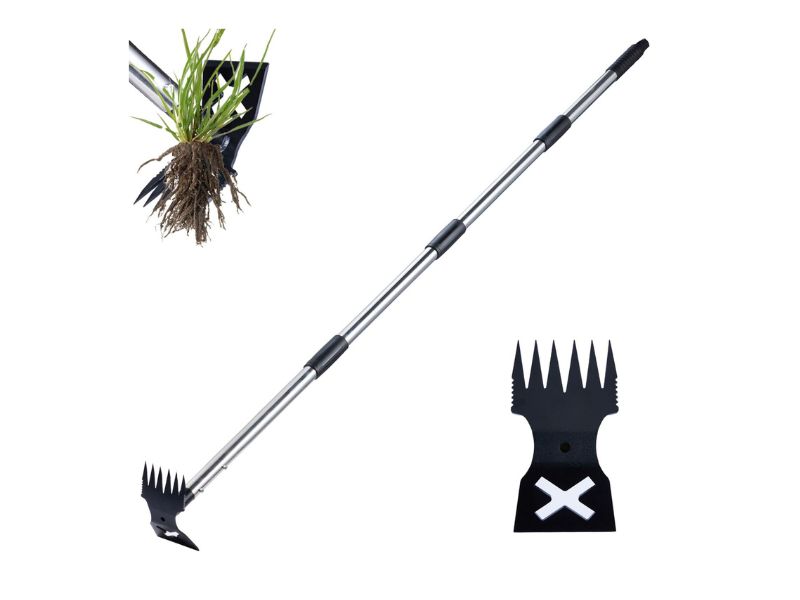
Key Features
- Approximately 60-inch handle
- Six-tine weed-pulling head
- Integrated hoe edge
- Heavy-duty cast-steel head
- Stand-up design
- Useful for uprooting and soil loosening
- Suitable for lawns and garden beds
NICOFPHY takes a more versatile approach than a dedicated claw extractor.
One side of the head uses six tines to get beneath weeds and root systems. The opposite working surface functions more like a garden hoe for loosening soil and clearing unwanted plants.
That makes it especially useful when weeds are spread throughout open beds rather than growing as isolated dandelions in a finished lawn.
The 60-inch handle provides considerable reach. You can work beneath shrubs, between larger plants, or across garden rows without continually crouching.
I would particularly consider this tool for crabgrass clumps, shallow-rooted weeds, mixed garden growth, and larger patches where individual four-claw extraction would be slow.
The tradeoff is precision. A rake-and-hoe style head disturbs more soil than a narrow dandelion fork.
What I Like
- Long handle minimizes bending
- Six tines provide strong weed engagement
- Hoe function increases versatility
- Useful over larger areas
- Heavy-duty steel head
What I Do Not Like
- Disturbs more soil than a precision puller
- Less suitable for closely planted beds
- Not as specialized for single deep taproots
Choose NICOFPHY when your definition of weed pulling includes uprooting larger patches and cultivating the soil at the same time.
3. Spear & Jackson 4854WP Mechanical Weed Puller- Best Mechanical Puller
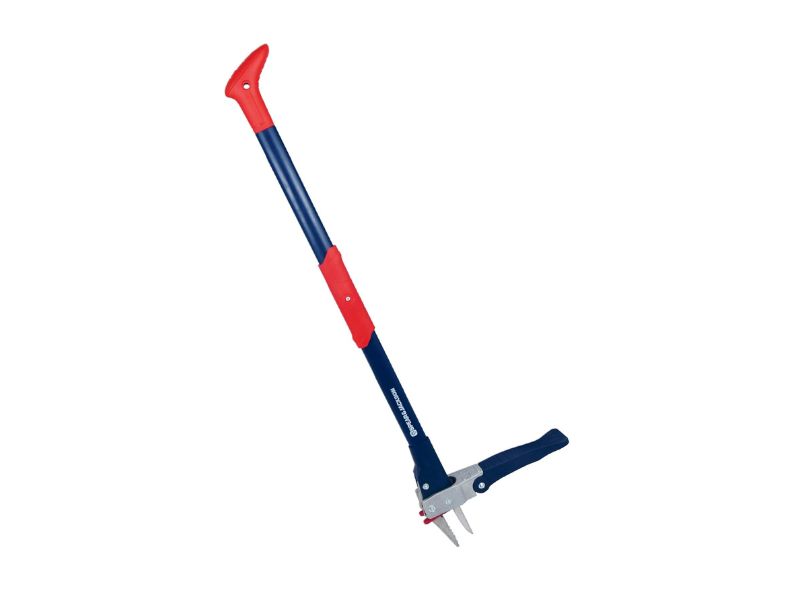
Key Features
- Stand-up mechanical design
- Claw-style weed-gripping system
- Foot platform
- Long shaft
- Weed-release mechanism
- Designed for deep-rooted weeds
- Minimal bending during normal operation
The Spear & Jackson 4854WP is built around a traditional step-and-pull mechanism.
Position the claws over the center of the weed, use the foot platform to penetrate the root zone, operate the mechanism, and pull upward.
That makes it particularly suitable for dandelions, thistles, and similar weeds with a defined crown and substantial taproot.
The mechanical design reduces the need to kneel beside every weed and gives you more leverage than simply pulling by hand.
Accurate positioning matters. If the claws enter too far beside the crown, you may remove soil without gripping enough root.
Working after light rain or irrigation usually makes extraction easier because the surrounding soil releases from the root more readily.
What I Like
- Purpose-built for root extraction
- Comfortable standing operation
- Foot platform provides leverage
- Good for lawns
- Useful release mechanism
What I Do Not Like
- Requires accurate positioning
- Less effective in rocky soil
- Larger than a hand weeder for storage
I prefer the Spear & Jackson for gardeners who want a dedicated mechanical dandelion puller rather than a multipurpose cultivating tool.
4. Breeze Touch 39-Inch 3-Claw Weed Pulling Tool- Best for Dandelions
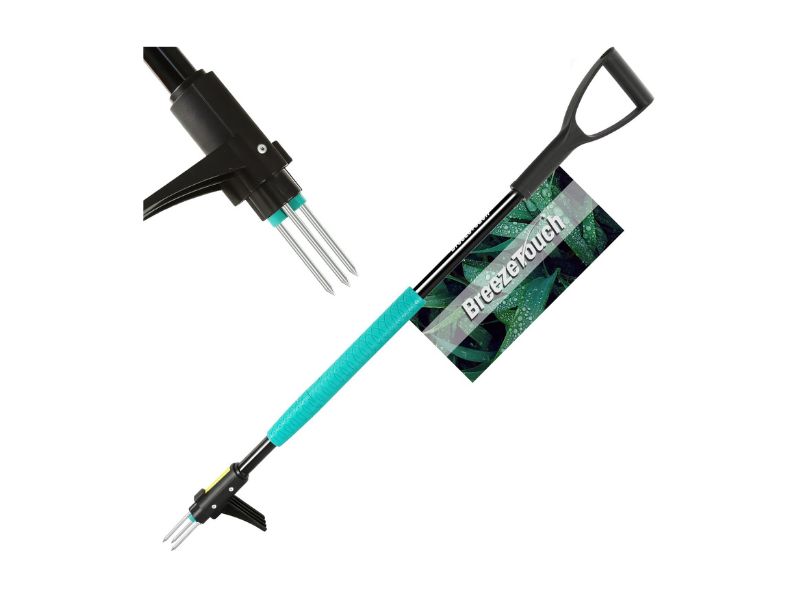
Key Features
- Approximately 39-inch long handle
- Three-claw steel head
- Reinforced foot pedal
- Spring-loaded weed release
- Detachable construction
- Stand-up operation
- Designed for dandelions, thistles, and crabgrass
The Breeze Touch uses a three-claw extraction system that is especially convenient for individual deep-rooted weeds.
Once the three claws are positioned around the crown, the foot pedal lets you push them into the soil without relying only on arm strength.
A twisting motion helps loosen the root before extraction.
The integrated release mechanism is valuable when clearing dozens of weeds because you can eject the root and soil without repeatedly touching the working head.
At roughly 39 inches, the shaft also keeps most users in a comfortable upright position during routine lawn maintenance.
Its three-claw layout requires slightly more accurate placement than a broad multi-tine rake, but that precision also means less unnecessary disturbance around each weed.
What I Like
- Good taproot-focused design
- Long handle
- Foot pedal
- Hands-free-style weed release
- Detachable for easier storage
What I Do Not Like
- Precise placement matters
- Dry clay can be difficult
- May leave small extraction holes
The Breeze Touch is particularly well suited to lawns containing scattered dandelions where removing the crown and taproot is the primary objective.
5. WORTH Garden Stand Up Weeder and Root Removal Tool- Best Five-Claw Puller
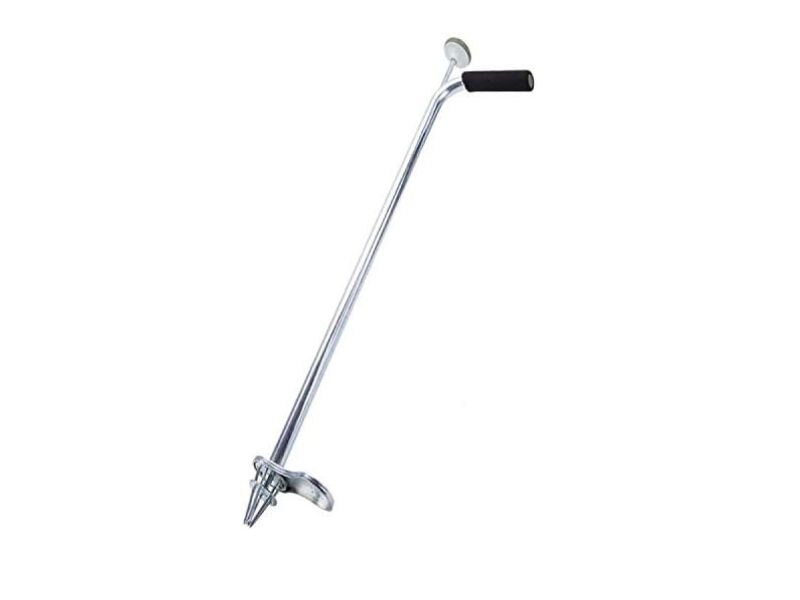
Key Features
- Five-claw extraction head
- Long stand-up handle
- Foot pedal
- Rust-resistant metal construction
- Weed-release mechanism
- Designed for root removal
- Suitable for lawns and open garden soil
The WORTH Garden weeder uses five claws, giving the head several contact points around the weed.
That can be helpful with thicker crowns and irregular root systems where a narrow two-pronged tool might slip past the plant.
The foot pedal supplies downward pressure, while the long shaft reduces how often you need to bend.
I would use this style on thistles, dandelions, broadleaf weeds, and larger individual plants in reasonably soft lawn or garden soil.
The extra claw coverage also means the tool may remove slightly more surrounding soil. That is usually acceptable in an open lawn but makes it less appropriate directly beside delicate flowers.
What I Like
- Five-point root grip
- Stand-up design
- Good mechanical leverage
- Rust-resistant construction
- Convenient weed release
What I Do Not Like
- Can disturb surrounding turf
- Bulky compared with hand tools
- Hard ground makes insertion more difficult
WORTH is a strong choice when you want a wide claw pattern that can capture larger weed crowns without hand digging.
6. Garden Guru Stainless Steel Dandelion Weeder Tool- Best Hand Weeder
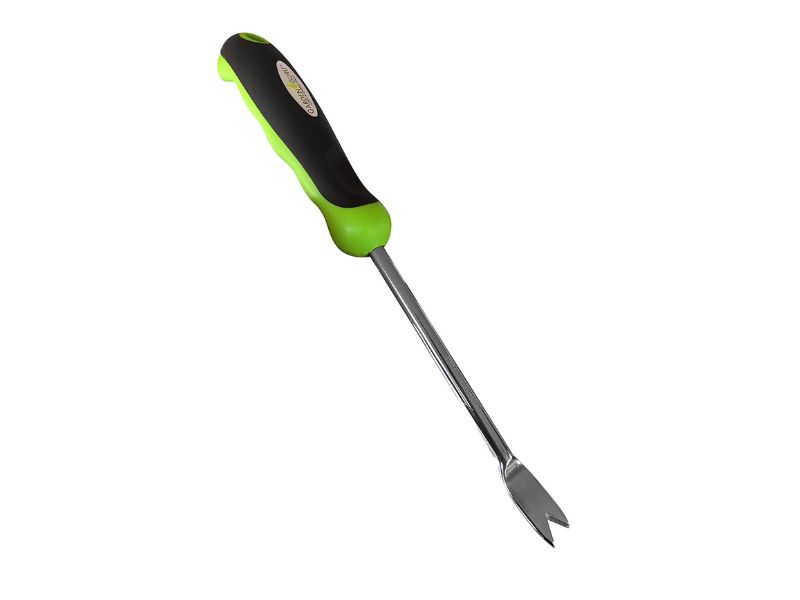
Key Features
- Stainless-steel two-prong fork
- Ergonomic soft-grip handle
- Compact hand-tool format
- Narrow root-removal head
- Rust-resistant construction
- Good for beds and lawns
- Designed for dandelions and thistles
Not every weed requires a large stand-up extractor.
Garden Guru’s compact dandelion weeder gives you considerably more precision around flowers, vegetables, shrubs, landscape edging, and smaller lawn weeds.
Push the forked tip into the soil beside the root, work underneath the crown, then use leverage to raise the plant.
Because the head is narrow, it creates much less disturbance than a large claw system.
The ergonomic handle is another advantage during detailed garden work. You can position the fork exactly where needed rather than depending on a long shaft to align the tool.
The tradeoff is obvious: you need to bend or kneel.
What I Like
- Excellent precision
- Stainless-steel construction
- Comfortable grip
- Minimal surrounding soil disturbance
- Easy to store
What I Do Not Like
- Requires ground-level work
- Less leverage than long-handle pullers
- Slower across a heavily infested lawn
Garden Guru is the tool I would keep nearby for spot weeding and detailed root removal where protecting nearby plants matters.
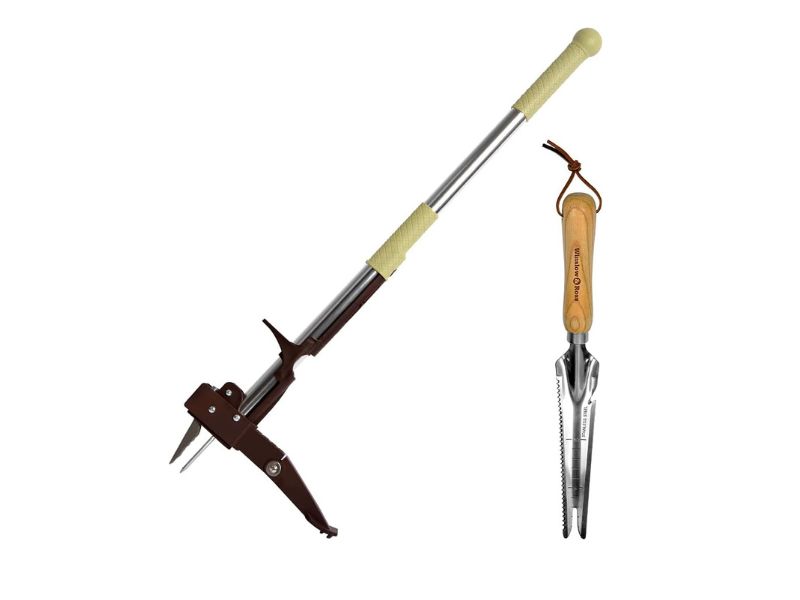
7. WINSLOW & ROSS Stand Up 4-Claw Weed Puller- Best for Tough Roots
Key Features
- Four stainless-steel claws
- Approximately 39-inch stand-up format
- Foot pedal
- Stainless-steel shaft
- Root-gripping mechanism
- Comfortable upper grip
- Suitable for deep-rooted weeds
WINSLOW & ROSS combines a traditional four-claw head with a substantial metal shaft.
The claws surround the weed crown, while the step provides leverage for penetrating deeper into the root zone.
This format is useful for larger dandelions, thistles, plantain, and mature broadleaf weeds where simply pulling the leaves would leave too much root behind.
The four-claw head gives a secure grip when centered correctly.
As with similar extractors, slightly moist soil produces better results. When soil is extremely compacted, loosening the area or watering before weeding can reduce both root breakage and tool stress.
What I Like
- Four-claw stainless-steel head
- Strong stand-up leverage
- Comfortable for repeated lawn use
- Reduces hand contact with roots
- Good for substantial weeds
What I Do Not Like
- Less effective on very small weeds
- Can remove surrounding soil
- Larger tool requires more storage space
The WINSLOW & ROSS model makes sense for a lawn where weeds have already developed larger crowns and stronger roots.
8. WELLOPLO 60-Inch 2-in-1 Garden Hoe and Weed Puller Rake- Best 2-in-1 Tool
Key Features
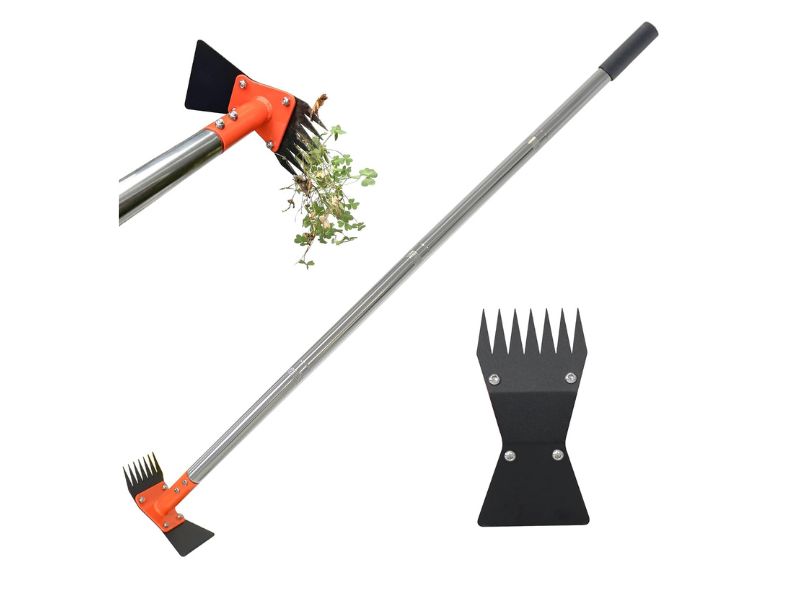
- Approximately 60-inch adjustable-style handle
- Six-tine weed-pulling head
- Integrated hoe blade
- Reinforced steel construction
- Stand-up operation
- Soil loosening capability
- Useful for broad garden maintenance
WELLOPLO is another good option when you want to combine weed uprooting and soil cultivation.
The six-tine side can get underneath root systems while the hoe edge handles surface weeds and loosened soil.
This design is particularly efficient in vegetable beds, open borders, around larger shrubs, and other areas where disturbing the top layer of soil is acceptable.
The long handle reduces bending and gives you enough leverage to work through firmer soil.
It is less appropriate for a manicured lawn where you want each extraction hole to remain as small as possible.
What I Like
- Two working heads in one tool
- Long handle
- Good for larger weed patches
- Strong leverage
- Useful for cultivation after weed removal
What I Do Not Like
- More soil disturbance than claw pullers
- Not ideal around tiny seedlings
- Larger head sacrifices precision
WELLOPLO is best viewed as a garden maintenance tool that also pulls weeds, rather than a dedicated lawn dandelion extractor.
9. CKLT 46-Inch One-Piece Manganese Steel Weed Puller Tool- Best One-Piece Design
Key Features
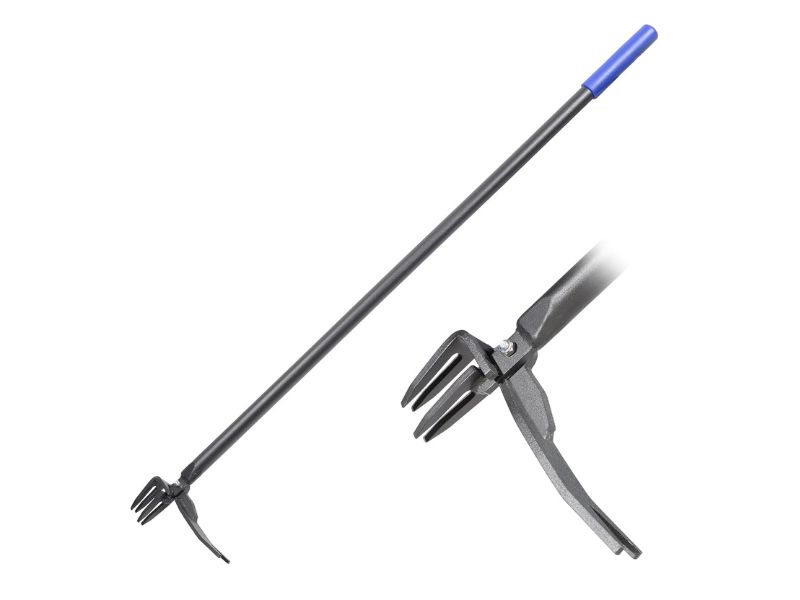
- Approximately 46-inch long handle
- One-piece-style steel construction
- Multi-claw extraction head
- Foot leverage
- Manganese-steel working components
- Stand-up design
- Designed for root removal
The CKLT emphasizes structural simplicity.
A one-piece or heavily integrated steel structure can reduce the number of joints that flex when you press the tool into compact soil.
The longer 46-inch format also provides useful leverage while keeping most of the work at standing height.
This makes the CKLT attractive for gardeners who dislike multi-section handles that can loosen over time.
Its extraction head is best suited to individual weeds with identifiable crowns rather than mats of tiny seedlings.
What I Like
- Long handle
- Strong integrated construction
- Good leverage
- Suitable for deeper root extraction
- Fewer handle joints to manage
What I Do Not Like
- Longer tool needs more storage room
- Less proven than older designs
- Still depends on reasonably workable soil
I would consider CKLT when handle rigidity and leverage are higher priorities than compact storage.
10. BellaJoyz Long Handle Stand Up Weed Puller Tool- Best New Design
Key Features
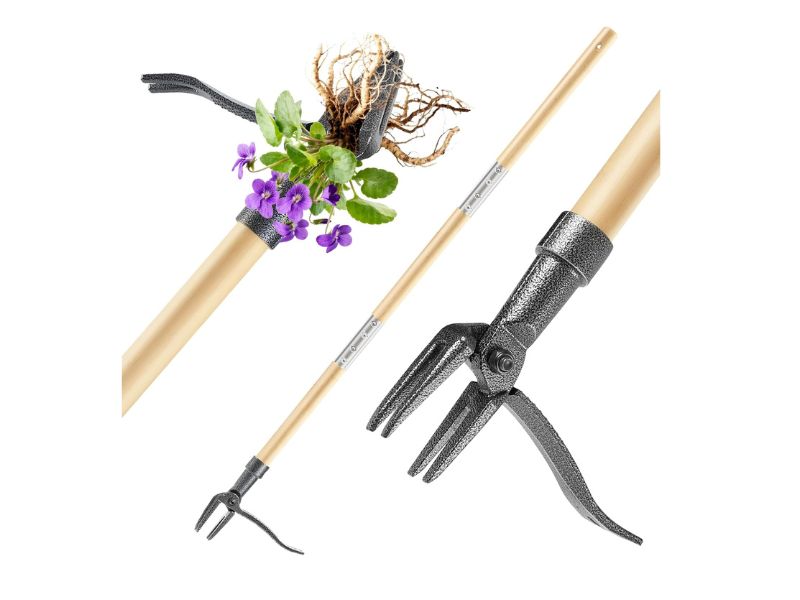
- Long stand-up shaft
- Root-removing claw head
- Foot-assisted penetration
- Manual chemical-free operation
- Designed for lawn weeds
- Upright working position
- Compact mechanical concept
BellaJoyz represents the newer generation of stand-up claw weeders built around the same basic principle: push metal claws around the root, apply leverage, and lift the plant rather than cutting off its foliage.
The long handle makes it considerably more comfortable than a hand fork when weeds are scattered across an entire lawn.
I would primarily use it for dandelions, thistles, and similar individual weeds rather than shallow seedlings covering a garden bed.
Because it is a newer option, I place it below the more established designs. Root-puller performance depends heavily on claw alignment, shaft stiffness, pedal strength, and how reliably the mechanism releases soil after extraction.
What I Like
- Stand-up operation
- Simple root-pulling mechanism
- Useful for lawn weeds
- Foot-assisted leverage
- Chemical-free removal
What I Do Not Like
- Less established track record
- Not ideal for tiny weeds
- Soil conditions strongly affect results
BellaJoyz is worth considering when you want a newer stand-up design and primarily need to remove individual taproot weeds.
Weed Pulling Tools Comparison
| Product | Type | Handle | Root System | Foot Leverage | Weed Eject | Best Use | Main Limitation |
| Papa’s Tools Weed Puller | 4-claw stand-up | ~44 in. | Taproots / broadleaf | Yes | Yes | Lawn dandelions | Can remove turf plug |
| NICOFPHY Weed Puller | 6-tine rake / hoe | ~60 in. | Mixed roots | No dedicated pedal | No | Larger garden areas | More soil disturbance |
| Spear & Jackson 4854WP | Mechanical claw | Long | Deep taproots | Yes | Yes | Lawn weeds | Requires accurate placement |
| Breeze Touch Weed Puller | 3-claw stand-up | ~39 in. | Taproots | Yes | Yes | Dandelions | Best in moist soil |
| WORTH Garden Weeder | 5-claw stand-up | Long | Broad crowns | Yes | Yes | Larger weeds | Wider soil disturbance |
| Garden Guru Dandelion Weeder | Hand fork | Short | Taproots | Hand leverage | No | Beds / precise work | Requires kneeling |
| WINSLOW & ROSS Puller | 4-claw stand-up | ~39 in. | Tough roots | Yes | Yes | Mature lawn weeds | Bulky |
| WELLOPLO Weed Puller Rake | 6-tine rake / hoe | Up to ~60 in. | Mixed / shallow | No | No | Garden beds | Less precise |
| CKLT Weed Puller | Stand-up claw | ~46 in. | Taproots | Yes | Mechanical | Firm lawn weeds | Large storage footprint |
| BellaJoyz Weed Puller | Stand-up claw | Long | Taproots | Yes | Mechanical | General lawn weeding | Newer track record |
The strongest tool for you depends less on the number of claws and more on weed species, root depth, soil moisture, turf condition, and working position.
For isolated dandelions in a lawn, I prefer stand-up claw extractors. For flowers and vegetables, a narrow hand fork provides greater control. For many weeds in open soil, a tine-and-hoe design is faster.
How to Choose the Best Weed Pulling Tools
A weed puller is different from a weed cutter, hoe, cultivator, or string trimmer.
The primary goal is to remove enough of the root and crown that the existing plant has less opportunity to regenerate.
That makes root structure the first buying criterion.
Understand Taproots
A taproot is a dominant central root that grows downward.
Dandelions are the classic example.
Mowing or tearing off the leaves does not necessarily eliminate the plant because energy reserves remain in the root.
A claw puller should penetrate around the crown and loosen enough of the surrounding soil to lift a significant section of that taproot.
For this purpose, Papa’s Tools, Spear & Jackson, Breeze Touch, WORTH, WINSLOW & ROSS, CKLT, and BellaJoyz all make sense.
Three-Claw vs. Four-Claw vs. Five-Claw Pullers
Three Claws
A three-claw system requires accurate alignment but can concentrate pressure around the root.
It often removes a relatively narrow soil plug.
Breeze Touch uses this general approach.
Four Claws
Four-claw designs surround the crown from additional directions and are common among stand-up weeders.
They offer a useful balance of root grip and manageable soil disturbance.
Five Claws
A five-claw design provides broader contact around larger weed crowns.
The tradeoff can be a larger extraction hole.
More claws do not automatically equal better performance. Claw length, geometry, steel strength, and leverage matter just as much.
Stand-Up Weed Puller vs. Hand Weeder
Stand-Up Tools
Choose a stand-up weed puller when:
- Weeds are spread throughout a lawn.
- You have many dandelions to remove.
- You want to minimize bending.
- The weeds are large enough for claw extraction.
- The surrounding area has enough open space.
Hand Weed Pullers
Choose a hand tool when:
- Weeds grow between flowers.
- You work in raised beds.
- Precision matters.
- You want minimal soil disturbance.
- The lawn contains only a few weeds.
A serious gardener can justify owning both types.
Why Moist Soil Makes Weed Pulling Easier
One of the biggest variables in weed-removal performance is soil moisture.
Extremely dry soil grips roots tightly.
When you pull, the weed may snap at the crown while much of the taproot remains underground.
Moderately moist soil separates more easily from the root.
This lets the claws or fork penetrate deeper and gives the root a better chance of coming out intact.
The best time to weed is often after light rain or irrigation, once the ground is damp but not muddy.
Saturated soil is not ideal either. It sticks to tools, compacts under your feet, and creates larger messy divots.
Best Weed Pulling Tool for Dandelions
Dandelions respond particularly well to a deep claw or fork design.
For lawn work, I would prioritize:
- Papa’s Tools Weed Puller
- Spear & Jackson 4854WP
- Breeze Touch 3-Claw Puller
- WORTH Garden Weeder
Center the extraction head directly above the dandelion crown.
Push deeply enough to engage the root zone, then use the tool’s intended rocking or twisting motion.
Do not yank vertically before the root is loosened.
Best Tool for Crabgrass
Crabgrass has a different growth habit from a dandelion and may develop a broader fibrous root system.
A narrow taproot fork may be less efficient.
For established clumps, a wider multi-tine tool such as NICOFPHY or WELLOPLO can loosen a larger root area.
Young crabgrass is much easier to control than a mature plant.
Preventing seed production and maintaining dense turf are also important because simply extracting one mature plant does not address seeds already present in the soil.
Best Weed Pulling Tool for Garden Beds
Garden beds require caution.
Vegetables and ornamental plants may have roots occupying the same soil as the weed.
Large claw extractors can disturb both.
For this environment, the Garden Guru hand weeder provides better control.
Insert the fork beside the target weed rather than directly through the crown.
Work it underneath the root and apply gradual leverage.
This approach disturbs a smaller soil volume.
How Deep Should a Weed Puller Go?
There is no single correct depth because weed roots vary enormously.
The objective is to get below the crown and loosen the primary root system.
A shallow annual may require only a few inches.
An established dandelion may have a much deeper taproot.
You may not extract every inch of a mature root, but removing the crown and a substantial portion of the root is far more effective than removing leaves alone.
Chemical-Free Weed Control
Manual pulling is one form of integrated weed management.
It can be particularly attractive:
- Around vegetable beds
- Near ornamentals
- On small lawns
- Where individual weeds are scattered
- Around areas where targeted physical removal is preferred
The key is persistence.
New seeds can still germinate after you remove existing plants.
Manual removal works best when combined with healthy turf, mulch, appropriate mowing, and early weed control.
How to Use a Stand-Up Weed Puller
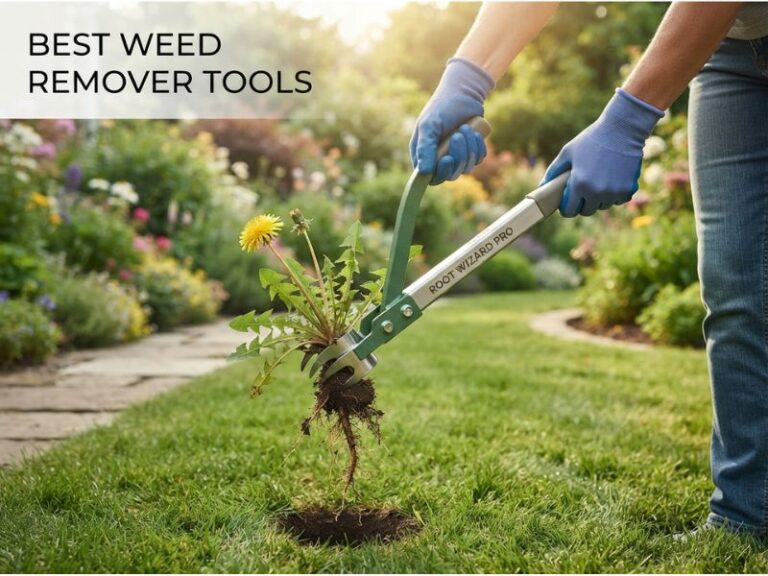
Position the claws around the weed crown.
Press the foot platform until the working head reaches the root zone.
Follow the tool’s designated motion. Depending on the design, this may involve:
- Rocking backward
- Twisting
- Rotating the handle
- Closing the claws
Lift smoothly.
Use the eject mechanism if available.
If the root snaps repeatedly, stop and check the soil condition rather than applying more force.
How to Avoid Damaging Your Lawn
Claw pullers naturally create some soil disturbance.
You can minimize it by:
Centering accurately: Do not repeatedly stab around the weed looking for the root.
Working in moderately moist soil: This helps the root release without requiring an oversized divot.
Avoiding excessive rocking: Use only enough leverage to loosen the plant.
Replacing loose soil: After removing a large root, push soil back into the hole.
For especially large holes, a little topsoil and grass seed may be appropriate depending on the season and turf species.
Weed Puller Materials
Stainless Steel
Stainless steel resists corrosion and is common in claws and hand forks.
It is particularly useful when tools frequently contact moist soil.
Carbon Steel
Carbon and other hardened steels can provide excellent strength and wear resistance.
They should be cleaned and kept reasonably dry to reduce corrosion.
Aluminum Shafts
Aluminum reduces weight, which can matter during hundreds of repetitive weed pulls.
The tradeoff is that extremely light shafts may feel less substantial when used aggressively in compacted soil.
Handle Length and Leverage
Long handles provide two important benefits:
- Less bending
- Greater leverage
However, extremely long tools can feel awkward around shrubs or small beds.
Around 39 to 46 inches is common for stand-up claw pullers.
Tools approaching 60 inches are especially useful for raking and working beneath plants but require more storage room.
Common Weed Pulling Mistakes
Pulling Only the Leaves
This may make the lawn look clean for a few days while leaving the actual plant underground.
Target the crown and root.
Pulling in Bone-Dry Soil
Dry compact soil encourages roots to break.
Moisten the area first.
Waiting Until Weeds Produce Seeds
Removing mature plants after seed dispersal solves only part of the problem.
Control weeds before flowering whenever practical.
Assuming One Tool Works Everywhere
A stand-up claw puller is excellent on open turf but awkward around vegetables.
A hand fork is precise but tiring across an entire lawn.
Match the tool to the location.
Forcing Claws Into Rocks
If the working head hits a stone, reposition it.
Excessive force can bend claws or damage the mechanism.
Maintaining Weed Pulling Tools
Clean wet soil from claws and forks after use.
Allow metal components to dry before storage.
Inspect foot pedals and moving mechanisms for loose connections.
Check long handles for:
- Splits
- Loose joints
- Bent shafts
- Damaged grips
If the tool has an ejection mechanism, remove packed soil before it dries hard around moving components.
Store manual weeders somewhere dry and protected rather than leaving them exposed outdoors indefinitely.
Frequently Asked Questions
What are the best weed pulling tools?
Stand-up claw weeders are the best general choice for pulling individual lawn weeds by the roots.
Papa’s Tools is my primary recommendation because its four-claw head, long handle, foot leverage, and weed-ejection system make repeated root removal relatively comfortable. Hand weeders remain better for tight flower and vegetable beds.
What tool pulls weeds out by the roots?
Claw weed pullers, dandelion forks, and deep-tine weeders are designed to remove roots rather than foliage alone.
Choose claw systems for open lawns and narrow forks for detailed garden work. Soil moisture and accurate placement strongly influence how much root comes out intact.
What is the best weed puller for dandelions?
A stand-up claw puller is one of the easiest tools for removing dandelion crowns and taproots.
Papa’s Tools, Spear & Jackson, and Breeze Touch are all well suited to this job. Work in moist soil and position the claws directly around the center of the plant.
Do weed pullers really work?
Yes, good weed pullers can remove substantial root systems when the tool matches the weed and soil conditions.
They are less effective when the ground is extremely hard, rocky, or dry. Large perennial roots may also break even when the tool is used correctly.
Is a three-claw or four-claw weed puller better?
Four claws provide broader root contact, while three claws can create a more concentrated and precise extraction pattern.
Neither system automatically wins. Claw length, head geometry, shaft stiffness, foot leverage, and accurate positioning affect performance.
Should I pull weeds before or after rain?
Pulling weeds after light rain is usually easier because moderately moist soil releases roots more readily.
Avoid saturated mud and extremely dry ground. Moist but structurally firm soil generally provides the easiest manual root extraction.
Can you pull dandelions permanently?
Removing the crown and most of the taproot greatly reduces regrowth, but new plants can still emerge from seed.
Dandelions spread efficiently, so ongoing lawn maintenance is required. Dense healthy turf also reduces available space for seedlings.
What is the easiest weed puller to use without bending?
A long-handle stand-up claw weeder with a foot pedal requires the least routine bending.
You can position, penetrate, loosen, and lift the weed while standing. Models with weed ejectors also reduce the need to reach down after each extraction.
Are weed pullers better than weed killer?
Manual weed pullers are excellent for targeted infestations where physical root removal is practical.
Large-scale weed problems may require a broader management strategy. Manual tools avoid spraying surrounding plants and give you immediate removal of visible weeds.
Will pulling weeds leave holes in my lawn?
Yes, claw-style pullers can leave small holes because some soil comes out with the roots.
Accurate placement and moist soil minimize disturbance. Large divots can be filled with loose soil and repaired as appropriate for your turf.
What is the best weed pulling tool for flower beds?
A narrow hand fork is generally better than a large claw puller around closely planted flowers.
Garden Guru’s compact design provides precise access to roots without extracting a large plug of neighboring soil.
Can a weed puller remove crabgrass?
Some multi-tine weed pullers can remove established crabgrass clumps, although the root structure differs from a taproot weed.
Wider rake-style heads can be useful because they loosen a broader area around the fibrous roots.
How do you pull weeds with deep roots?
Insert the tool below the crown, loosen surrounding soil, and apply gradual leverage rather than pulling only the foliage.
Deep roots release more easily in moist soil. A fork, claw puller, or strong stand-up extraction tool gives you more leverage than your hands alone.
Why do weeds keep coming back after I pull them?
The original root may have remained underground, or new weeds may be germinating from existing seeds.
Removing plants before seed production and maintaining healthy lawn or garden coverage helps reduce future infestations.
How often should I pull weeds?
Remove new weeds as soon as practical, ideally before they become large or produce seed.
Frequent short weeding sessions are usually easier than allowing a lawn or bed to become heavily infested. Young root systems are also easier to remove intact.
Conclusion
Choosing the best weed pulling tools means matching the extraction method to the weed’s root structure, soil condition, lawn type, and working area.
My primary recommendation is the Papa’s Tools 44-Inch Stand Up Weed Puller. Its four-claw steel head, long handle, foot leverage, and dual weed-release system make it especially practical for dandelions, thistles, and other individual lawn weeds.
The NICOFPHY 60-Inch Weed Puller Tool is better for gardeners who need to uproot weeds across larger open areas while also loosening or cultivating soil. Its six-tine rake-and-hoe layout provides more versatility than a dedicated claw extractor.
The Spear & Jackson 4854WP Mechanical Weed Puller is another excellent choice for lawn-focused root removal, particularly if you want a traditional step-operated mechanical system.
For detailed work around flowers and vegetables, a compact tool such as the Garden Guru Dandelion Weeder gives you much greater control. Wider claw systems such as WORTH Garden and WINSLOW & ROSS make more sense for substantial weed crowns, while newer designs from CKLT and BellaJoyz add additional stand-up options.
For most residential lawns, I would start with a long-handled claw weed puller, use it when the soil is moderately moist, and remove weeds before they flower or spread seed.

I’m Maya L. Greenwood, a lifelong plant lover who believes anyone can grow something beautiful with the right guidance. After years of testing soil mixes, pruning methods, irrigation tricks, and pest-safe solutions, I started EasyGardenTips.com to turn hard-won lessons into step-by-step advice. From seed starting and container gardens to composting and seasonal checklists, my goal is to make gardening simple, sustainable, and fun.