5 Best Landscaping Weed Barrier: Durable Fabric Picks Compared
The best landscaping weed barrier should suppress weeds without turning the soil underneath into an impermeable sheet. For most permanent landscape beds, I prefer a durable permeable landscape fabric that blocks sunlight while still allowing water, air, and nutrients to move toward the root zone.
My primary recommendation is the DeWitt Pro-5 5 oz 4-Foot x 250-Foot Weed Barrier Fabric. Its professional-grade 5 oz woven, needle-punched polypropylene, large coverage area, planting guide stripes, and strong tear resistance make it suitable for long-term beds, shrubs, pathways, and professional landscaping.
I would choose the ECOgardener Premium 5 oz Pro Garden Weed Barrier for residential flower beds and planted areas where easy cutting and water permeability are especially important.
For a large landscaping project, the EXTRAEASY 4-Foot x 300-Foot Heavy Duty Weed Barrier provides a long roll that can cover gravel paths, beds, and broad open areas with fewer seams.
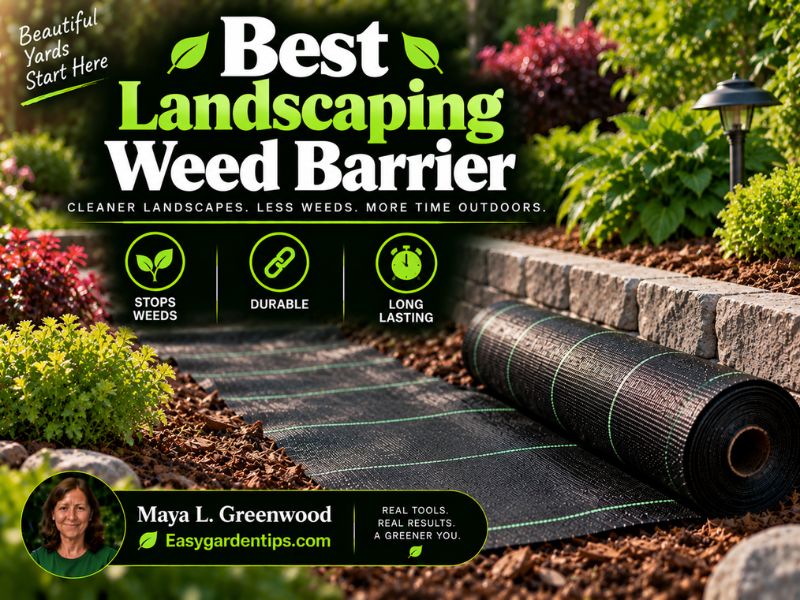
Best Landscaping Weed Barrier
| Image | Product Name | Check Price |
|---|---|---|
Best Choice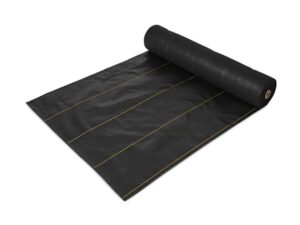 | DeWitt Pro-5 5 oz 4-Foot x 250-Foot Weed Barrier Fabric | Check Price |
Second Best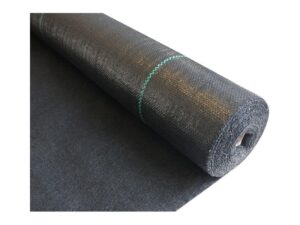 | ECOgardener Premium 5 oz Pro Garden Weed Barrier | Check Price |
Third Choice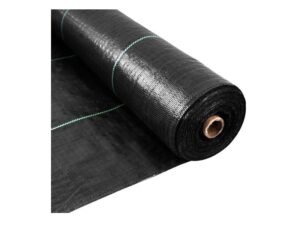 | EXTRAEASY 4-Foot x 300-Foot Heavy Duty Weed Barrier Fabric | Check Price |
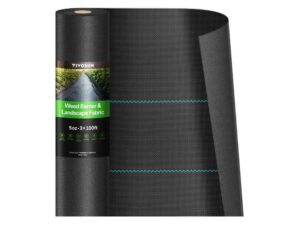 | VIVOSUN Premium 5 oz 3-Foot x 100-Foot Weed Barrier Fabric | Check Price |
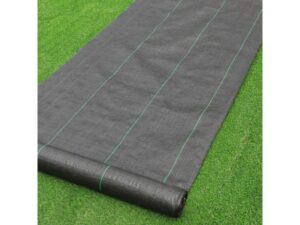 | Petgrow 3-Foot x 100-Foot Heavy Duty Weed Barrier Landscape Fabric | Check Price |
1. DeWitt Pro-5 5 oz 4-Foot x 250-Foot Weed Barrier Fabric- Best Overall
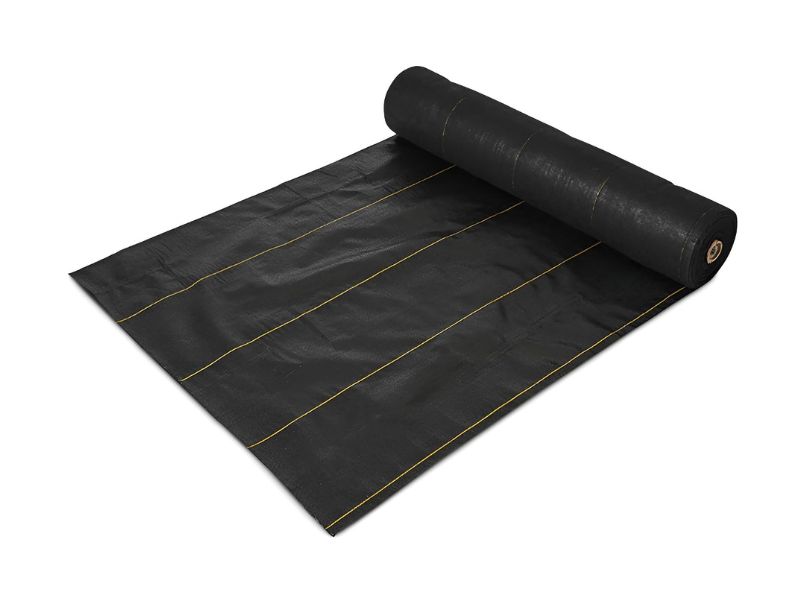
Key Features
- 5 oz professional-grade fabric
- Woven, needle-punched construction
- Polypropylene material
- 4-foot x 250-foot roll
- Approximately 1,000 square feet of coverage
- Allows water, air, and nutrients through
- UV-resistant construction
- 12-inch planting guide stripes
- Designed for demanding landscaping applications
- Strong tear and puncture resistance
DeWitt Pro-5 is the weed barrier I would choose when the landscaping project is substantial enough that replacing cheap fabric a few seasons later would be especially frustrating.
It uses a 5 oz woven polypropylene structure with needle-punched fibers. That combination is important because landscape fabric has two competing jobs: it must be dense enough to reduce the sunlight available to germinating weeds while remaining permeable enough for irrigation and rainfall to reach the soil.
DeWitt specifically designs Pro-5 for professional and commercial landscape installations and states that the material allows air, water, and nutrients to pass through. It is also manufactured to resist UV degradation and is available in several professional roll widths.
The 4-foot x 250-foot version provides around 1,000 square feet of material. That size works particularly well for long foundation beds, rows of shrubs, landscape islands, nursery areas, and pathways.
I prefer a 4-foot width over very narrow rolls when installing a broad bed because every seam is another potential weak point.
Even good fabric cannot suppress weeds efficiently if large gaps are left between strips.
For overlapping sections, I would leave several inches of overlap rather than trying to make the edges meet perfectly. Landscape staples should hold both layers securely so mulch or gravel cannot pull them apart.
The printed 12-inch stripes are another small but genuinely useful feature.
If you are placing shrubs, annuals, or other plants at repeatable spacing, the lines make layout considerably easier. They can also help keep cuts straight when dividing the fabric into narrower pieces.
Durability is the biggest reason to buy Pro-5.
Thin economy fabrics can tear while being pulled around rocks, roots, edging, and staples. A heavier material is easier to trust under several inches of decorative stone where replacement would require moving hundreds of pounds of rock.
This also makes DeWitt a strong option beneath landscape rock, gravel beds, and permanent mulch installations.
There is a tradeoff: heavier woven fabric takes more effort to cut than very light landscape cloth. Use sharp scissors or a utility knife, and make controlled cuts rather than tearing it.
For planted beds, make an X-shaped or circular opening only large enough for the plant. Oversized openings expose additional soil where weeds can emerge.
One other limitation applies to landscape fabric in general.
It does not make a landscaped area permanently weed-free.
Organic material gradually collects above mulch or gravel. Windblown seeds can germinate in that new material even when the original soil below remains covered.
Landscape fabric therefore reduces weed pressure rather than eliminating all future maintenance.
What I Like
- Heavy professional-grade 5 oz construction
- Excellent for permanent landscaping
- Strong woven polypropylene structure
- Needle-punched for permeability
- 12-inch guide lines simplify layout
- Large roll minimizes seams
- Suitable beneath mulch or decorative rock
- Resistant to tearing and punctures
What I Do Not Like
- Heavier material takes more effort to cut
- Large roll can be excessive for a tiny flower bed
- Requires proper overlapping and stapling
- Surface weeds can still establish in mulch placed above the fabric
For a long-term installation, DeWitt Pro-5 offers the best overall combination of weed suppression, permeability, strength, and professional-scale coverage. I would especially choose it before installing gravel or rock that would be difficult to remove later.
2. ECOgardener Premium 5 oz Pro Garden Weed Barrier- Best for Garden Beds
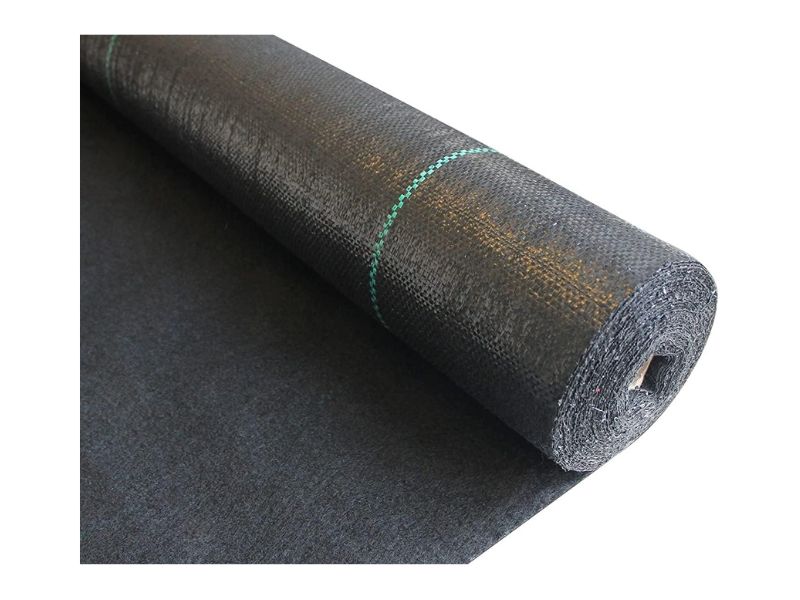
Key Features
- 5 oz landscape fabric
- Dual-layer style construction
- Needle-punched permeability
- 3-foot x 250-foot configuration
- Designed to reduce weed germination
- Allows water and air movement
- Plant-spacing guide lines
- Suitable under mulch
- Useful around shrubs and ornamental plantings
- Easy to cut for planting openings
ECOgardener is the option I prefer for typical residential landscaping where you need strong weed control but also expect to cut numerous openings around existing or newly installed plants.
The premium 5 oz version uses a dense fabric intended to block weed growth while remaining permeable. ECOgardener markets the 5 oz Pro version specifically as its heavier landscape-fabric option, and independent testing of the brand’s weed barrier has found its needle-punched construction effective at allowing water through while suppressing weeds.
That makes it particularly suitable for flower beds, shrub borders, foundation plantings, and garden paths.
For these areas, permeability matters.
Plastic sheeting can block weeds, but it can also dramatically restrict normal water and gas movement. Around ornamental plants with long-term root systems, I generally prefer permeable fabric rather than treating the soil like a waterproof surface.
The 3-foot width is convenient in beds.
Three feet is narrow enough for one person to position around established shrubs but still wide enough to reduce excessive seams.
When installing around existing plants, roll the fabric toward the plant, determine the stem location, make a controlled slit and opening, then overlap the cut portion again after positioning.
Do not leave a large bare-soil circle around every shrub unless the plant requires it.
One of the most important installation steps is covering the material after it is secured.
Landscape fabric is generally designed to sit under mulch, bark, stone, or another landscape covering, rather than remaining as the visible finished surface for years. This helps protect the fabric and produces a more attractive landscape.
Bob Vila’s recent testing of ECOgardener’s weed barrier noted good weed suppression and permeability but also reported that cut edges could fray and that the tested fabric should be protected from prolonged exposed sunlight.
That is worth considering if you make dozens of planting holes.
Sharp scissors or a hot cutting method appropriate for polypropylene can create cleaner openings than ripping through the material. If using any heated tool, follow safe handling practices and avoid dry vegetation.
I also like ECOgardener for mulched ornamental beds because the material is substantial without feeling as industrial as some commercial ground covers.
It is still heavy enough to stay manageable while staples are installed, especially if two people are working on a windy day.
As with all fabric, preparation determines a large part of the final result.
Do not simply place it over tall weeds and expect a perfect installation.
Remove large established weeds, sharp stalks, rocks, and other objects that could create raised points beneath the fabric.
Smooth the soil enough that the barrier can sit flat.
What I Like
- Heavy 5 oz construction
- Good fit for planted garden beds
- Permeable design supports normal irrigation
- Easier to shape around shrubs than very rigid fabric
- Works well beneath mulch
- Useful guide markings
- Strong weed suppression when installed correctly
What I Do Not Like
- Cut edges may fray
- Should not be left exposed unnecessarily
- Three-foot width creates more seams on broad projects
- Requires staples and proper surface preparation
I would select ECOgardener when the landscaping contains plenty of shrubs, ornamental plants, or flower-bed openings rather than one enormous uninterrupted area. Its balance of strength and permeability works particularly well under mulch.
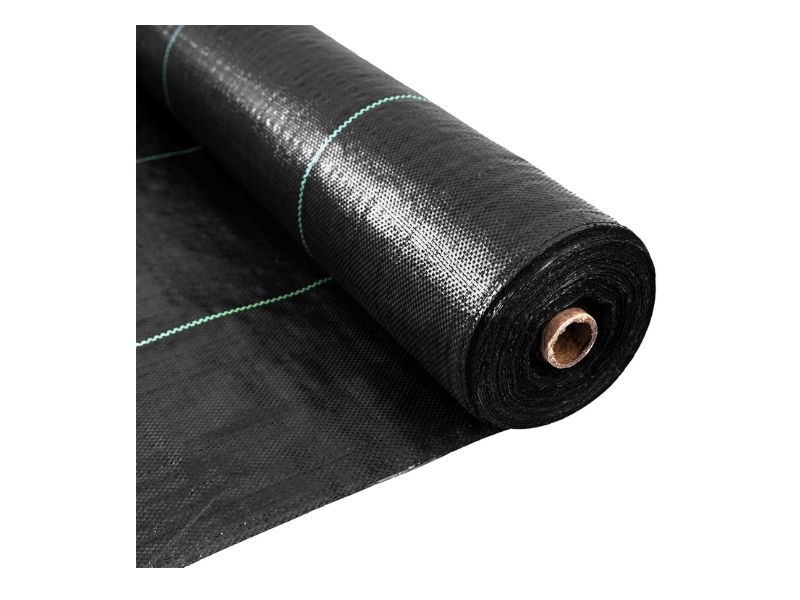
3. EXTRAEASY 4-Foot x 300-Foot Heavy Duty Weed Barrier Fabric- Best for Large Areas
Key Features
- 4-foot x 300-foot roll
- Approximately 1,200 square feet of coverage
- 3.2 oz woven landscape fabric
- Polypropylene-style geotextile construction
- Tear-resistant design
- Water-permeable woven structure
- Suitable beneath gravel
- Useful for long pathways and landscaping beds
- Large roll reduces the number of joins
EXTRAEASY is the option I would choose when sheer coverage matters more than buying the heaviest 5 oz fabric available.
The 4-foot x 300-foot configuration provides around 1,200 square feet of material, giving it the largest single-roll coverage among the specific configurations in this comparison.
Its established 4 x 300-foot model uses 3.2 oz woven landscape fabric and is marketed for flower beds, gardens, gravel, and driveways.
That lower fabric weight makes it different from DeWitt and ECOgardener.
A 3.2 oz material is lighter and usually easier to unfold, cut, and position than a 5 oz professional barrier.
For a homeowner covering a very large area alone, that can be a real advantage.
Examples include:
- Long fence lines
- Gravel walkways
- Large mulched beds
- Rows of shrubs
- Orchard-style plantings
- Wide areas awaiting decorative stone
The 4-foot width is also practical.
A six-foot roll reduces seams further but can become awkward for one person to handle around landscaping. Four feet remains manageable while still offering significantly better coverage efficiency than narrow 2- or 3-foot rolls.
I particularly like this style of woven geotextile underneath gravel.
Gravel alone does not stop weed growth indefinitely.
Seeds can reach the soil between stones, while underlying soil can gradually mix upward if no separator layer is present.
A landscape fabric layer creates physical separation between the soil and stone while reducing the amount of light reaching the original soil surface.
However, do not confuse ordinary landscaping fabric with heavy driveway stabilization geotextile designed for vehicle loads.
For a heavily trafficked driveway requiring structural separation, drainage design, and aggregate stabilization, choose fabric specifically engineered for that application.
For decorative gravel paths and light landscape use, the EXTRAEASY makes much more sense.
The lighter 3.2 oz weight also means I would be more careful around angular stone.
Do not drag sharp gravel across exposed fabric unnecessarily.
Install and anchor the material first, then place stone carefully enough to avoid punctures.
Seams deserve extra attention on large projects.
Overlap adjacent runs rather than simply butting them together. If decorative stone moves later, an overlapped seam is far less likely to expose bare soil.
What I Like
- Very large 4 x 300-foot roll
- Approximately 1,200 square feet of coverage
- Easier to handle than heavier 5 oz commercial fabric
- Good width for long landscaping runs
- Useful beneath decorative gravel
- Woven design maintains permeability
- Fewer roll changes on large projects
What I Do Not Like
- 3.2 oz fabric is lighter than premium 5 oz alternatives
- Less suited to extremely demanding professional installations
- Needs careful anchoring during windy installation
- Sharp stone can damage lightweight fabric if handled roughly
EXTRAEASY is a strong choice when you need to cover a large landscaped area economically and efficiently. I would use it for long beds and gravel landscaping where broad coverage matters more than maximum fabric weight.
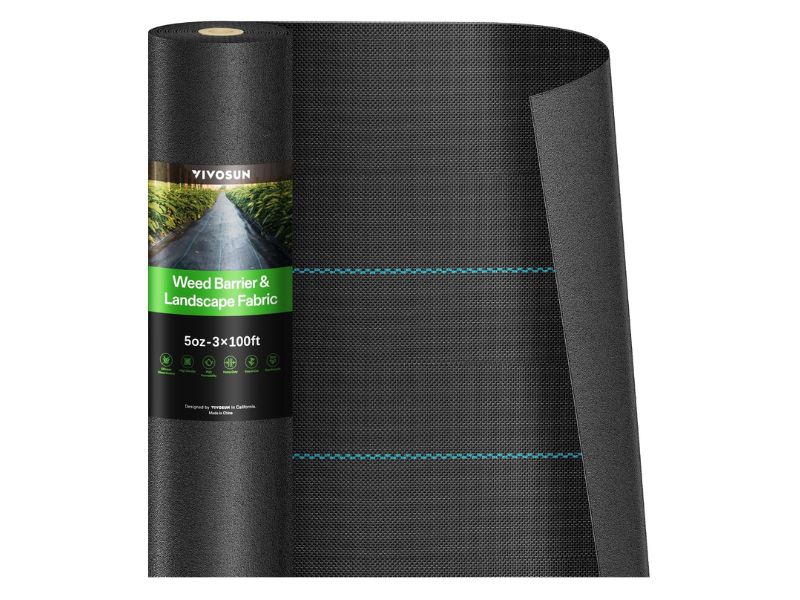
4. VIVOSUN Premium 5 oz 3-Foot x 100-Foot Weed Barrier Fabric- Best Heavy-Duty Small Roll
Key Features
- 5 oz fabric
- 3-foot x 100-foot roll
- Double-layered construction
- High-permeability design
- Heavy-duty weed suppression
- Easy-to-manage roll size
- Suitable around shrubs and raised beds
- Useful underneath mulch
- Compact enough for medium residential projects
The VIVOSUN Premium Weed Barrier is a good option if you want 5 oz thickness but do not need a 250- or 300-foot professional-size roll.
Its common 3-foot x 100-foot configuration gives you 300 square feet of coverage.
The established product is described as a 5 oz double-layered, high-permeability landscape fabric, providing a heavier alternative to lighter 3.2 oz woven barriers.
That makes it a sensible fit for one or two medium flower beds, a row of foundation shrubs, a garden perimeter, or landscape areas around a patio.
I particularly like this size for DIY work.
Large commercial rolls are cost-efficient per square foot but can be awkward to store after the project is complete.
If you only need 200 square feet, buying 1,000 square feet of fabric is not necessarily good value even if the larger roll costs less per square foot.
The heavier construction also gives you more confidence when installing wood mulch or decorative rock over the surface.
It still needs to be installed properly.
Start by clearing the area.
Pull existing perennial weeds rather than simply hiding them.
Remove sticks and sharp debris.
Rake major irregularities flat.
Then position the fabric without stretching it excessively.
Use landscape staples around the perimeter, seams, corners, and planting openings.
Wind can quickly lift an unsecured sheet, so I prefer to place several temporary staples before making precise cuts.
For an irregular bed, resist the temptation to cut everything perfectly before the material is secured.
Position it first, anchor it, and trim the edges afterward.
That usually produces a cleaner result.
The permeability of fabric is also affected by what sits on top.
Fine soil, decomposed mulch, silt, or compacted dust can gradually restrict water movement even when the fabric itself is permeable.
For this reason, maintaining the mulch layer and occasionally removing accumulated debris can improve the long-term performance of a landscape bed.
What I Like
- Heavy 5 oz construction
- More manageable roll than 250-foot commercial products
- Suitable for typical residential beds
- High-permeability design
- Good for mulch or decorative rock
- Thick enough to resist ordinary installation stress
- Useful for medium DIY projects
What I Do Not Like
- 300-square-foot roll may be too small for major landscaping
- More seams are required over broad areas
- Heavy fabric takes more effort to cut than lightweight cloth
- Still needs covering and proper anchoring
The VIVOSUN is the option I would choose when I want heavy-duty 5 oz fabric without purchasing an enormous contractor roll. It is particularly well matched to one substantial home landscaping project.
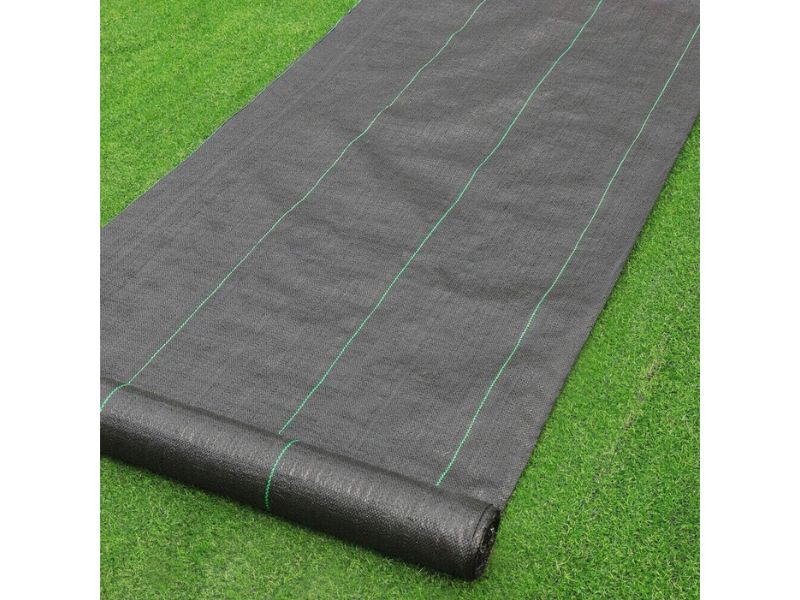
5. Petgrow 3-Foot x 100-Foot Heavy Duty Weed Barrier Landscape Fabric- Best Budget
Key Features
- 3-foot x 100-foot configuration
- Approximately 300 square feet
- Nonwoven polypropylene
- Needle-punched construction
- Water and air permeability
- UV-stabilized design
- Guide stripes
- Easy to cut
- Suitable for garden beds and landscaping
Petgrow is my budget-oriented choice because it provides a useful residential roll size and a nonwoven, needle-punched structure without pushing buyers toward a huge commercial roll.
Independent testing described this Petgrow Heavy-Duty barrier as a polypropylene, nonwoven product with needle-punched permeability and UV stabilization. The tested 3 x 100-foot configuration also performed well in weed-control testing while remaining relatively easy to install.
Nonwoven fabric behaves differently from a simple woven sheet.
Instead of visible strips woven across one another, the fibers are bonded into a more uniform mat.
Depending on construction, nonwoven materials can offer good weed suppression and consistent permeability.
That makes Petgrow particularly attractive for ornamental beds and mulched landscaping.
I would choose it when the goal is straightforward weed reduction around shrubs rather than a demanding commercial installation beneath several tons of stone.
Its 3-foot width is also easy for one person to work with.
You can unroll sections through a bed without fighting a large six-foot sheet around every plant.
Guide markings help when positioning plants or cutting straight lines.
The primary limitation is durability relative to premium 5 oz professional materials.
Bob Vila’s testing noted slight fraying at cut edges, although the barrier itself performed well for weed suppression during the test.
That tradeoff is reasonable for a lower-cost residential option.
If I were installing an expensive stone bed that I expected to leave untouched for many years, I would still pay more for DeWitt Pro-5.
If I were refreshing ordinary mulched beds around the house, Petgrow would make more financial sense.
Installation quality still matters enormously.
Use enough staples, overlap joints, and make planting openings tight.
Do not expect fabric to compensate for exposed seams or one-foot gaps around tree trunks.
What I Like
- Accessible option for residential landscaping
- Nonwoven polypropylene construction
- Needle-punched for permeability
- 3 x 100-foot roll is manageable
- Useful guide markings
- Easy to cut around plants
- Works well beneath normal mulch beds
What I Do Not Like
- Not as substantial as premium professional fabric
- Cut edges can fray
- Small roll requires more seams on large properties
- Not my first choice beneath extensive heavy stone
Petgrow offers the best fit here for a homeowner who wants to reduce weeds in normal mulch and garden beds without buying commercial-scale material.
Landscaping Weed Barrier Comparison
| Product | Fabric Type | Weight Class | Roll Size | Coverage | Permeability | Best Use | Main Limitation |
| DeWitt Pro-5 | Woven, needle-punched polypropylene | 5 oz | 4 x 250 ft | 1,000 sq ft | High | Permanent professional landscaping | Large/heavy roll |
| ECOgardener Premium Pro | Heavy needle-punched fabric | 5 oz | 3 x 250 ft | 750 sq ft | High | Planted garden beds | Cut edges can fray |
| EXTRAEASY | Woven polypropylene-style fabric | 3.2 oz | 4 x 300 ft | 1,200 sq ft | Permeable | Large areas and gravel | Lighter construction |
| VIVOSUN Premium | Double-layered landscape fabric | 5 oz | 3 x 100 ft | 300 sq ft | High | Heavy-duty residential beds | Limited total coverage |
| Petgrow Heavy Duty | Nonwoven polypropylene | Heavy-duty residential | 3 x 100 ft | 300 sq ft | Needle-punched | Budget mulch beds | Less rugged than professional fabric |
For permanent landscaping and decorative stone, DeWitt Pro-5 is the strongest choice. ECOgardener is easier to justify in heavily planted beds, while EXTRAEASY provides the most convenient coverage for a large project. VIVOSUN gives you a heavy fabric in a smaller roll, and Petgrow keeps a normal residential project relatively economical.
How to Choose the Best Landscaping Weed Barrier
Woven vs Nonwoven Landscape Fabric
The two terms you will encounter most frequently are woven and nonwoven.
Woven fabric is produced from strands arranged in an interlocking pattern.
It is often strong for its weight and works well under:
- Mulch
- Gravel
- Paths
- Shrub beds
- Landscaping stone
Nonwoven material has fibers bonded into a continuous mat.
It can provide excellent weed suppression and permeability, depending on thickness.
Neither construction is automatically better.
The right choice depends on how much mechanical strength you need and what will be installed above it.
Fabric Weight
Landscape fabric is often described in ounces per square yard.
A heavier product generally contains more material.
For example, a 5 oz weed barrier usually feels substantially more durable than a 3.2 oz woven cloth.
Heavy fabric is useful for:
- Permanent shrub beds
- Commercial landscaping
- Gravel
- Rock gardens
- Areas difficult to renovate later
Lighter fabric can make sense for:
- Seasonal projects
- Large areas
- DIY installations
- Mulched residential beds
Do not buy the heaviest material automatically.
A heavy roll can be more difficult to cut, shape, transport, and install.
Water Permeability
A good landscape weed barrier for planted areas should allow rain and irrigation to reach the root zone.
That does not mean water will instantly pour through every fabric.
Surface tension can cause water to briefly bead on some materials, particularly when they are new.
Once the material is installed properly and covered, water should be able to move through permeable fabric.
This is one reason I generally prefer landscape fabric over solid plastic sheeting around permanent plants.
UV Resistance
Ultraviolet radiation can degrade many synthetic materials.
Even UV-resistant landscape fabric generally lasts longer when covered rather than continuously exposed.
After installation, add the intended mulch or rock layer.
That provides:
- UV protection
- Better appearance
- Additional weed suppression
- Physical protection
- Improved fabric stability
Roll Width
Roll width determines how many seams you create.
A 3-foot roll is easy to maneuver around shrubs.
A 4-foot roll works well for general landscaping.
Six-foot and wider rolls can cover broad areas faster but become harder for one person to position.
For an irregular residential bed, I usually prefer three or four feet.
Roll Length
Measure the landscaping area before buying.
A basic square-foot calculation is:
Length × width = square feet
Then add material for:
- Overlaps
- Curves
- Plant openings
- Cutting waste
- Irregular borders
Buying exactly the calculated square footage usually leaves too little material.
Landscape Fabric Under Mulch
Landscape fabric works especially well beneath wood chips, bark mulch, and decorative mulch in permanent shrub beds.
Prepare the soil first.
Once the fabric is installed, spread enough mulch to hide and protect it.
Do not pile mulch deeply against trunks or woody stems.
Landscape fabric reduces weeds emerging from the underlying soil, but new weed seeds can eventually germinate in decomposing mulch above it.
Those weeds are usually easier to pull because their roots initially grow in the shallow upper layer rather than deeply into the original soil.
Landscape Fabric Under Gravel
Weed barrier can be valuable beneath decorative gravel and landscape rock because it also separates the stone from the soil.
Without separation, stones can gradually sink into softer soil.
Soil can also migrate upward into the aggregate layer.
Use a strong fabric for installations where removing the rock later would be difficult.
For heavy vehicle driveways, however, use an appropriately rated geotextile underlayment rather than assuming ordinary garden fabric has the necessary tensile and puncture strength.
How to Install Landscaping Weed Barrier
First remove established weeds, especially aggressive perennial weeds with large root systems.
Rake out sharp rocks, sticks, and stalks.
Level obvious depressions.
Roll the fabric across the prepared soil without stretching it tightly.
Overlap neighboring sections by several inches.
Secure the material using landscape staples along edges, seams, curves, and planting openings.
Closer staple spacing is useful:
- On slopes
- In windy sites
- Around curves
- Around seams
Cut small openings for plants rather than unnecessarily exposing broad circles of soil.
Finally, cover the barrier with mulch or decorative stone.
Landscape Fabric Around Trees
Use caution when placing fabric around trees.
Do not wrap material tightly around the trunk.
Leave room for trunk expansion and avoid piling mulch against the bark.
The root flare should not be buried under a deep mound of mulch.
For mature trees, remember that roots extend far beyond the visible trunk area.
Landscape fabric should be used as part of a sensible planting-bed design rather than as a way to seal the root zone completely.
Landscape Fabric on Slopes
Fabric can work on slopes, but anchoring becomes more important.
Water, gravity, mulch movement, and foot traffic can pull improperly installed material downhill.
For sloped installations:
- Use additional staples
- Overlap sections generously
- Orient overlaps so runoff does not easily lift an upper edge
- Choose stronger fabric
- Make sure surface material will remain stable
Very steep slopes may require erosion-control products rather than conventional weed barrier alone.
When I Would Not Use Landscape Fabric
Landscape fabric is most useful in relatively permanent landscaping.
I am less enthusiastic about it in vegetable beds that are frequently cultivated and amended.
If you regularly:
- Dig compost into the soil
- Rotate vegetables
- Reshape beds
- Divide perennials
- Add bulbs
- Till the area
fabric can become inconvenient.
Organic mulch, cardboard, or other weed-management strategies may work better in highly dynamic beds.
Common Landscaping Weed Barrier Mistakes
Installing Fabric Over Large Existing Weeds
Remove established weeds first.
Fabric is a preventative barrier, not a magic way to eliminate every mature perennial root.
Leaving Gaps Between Rolls
Even excellent material cannot suppress weeds through uncovered soil.
Overlap seams.
Cutting Huge Plant Holes
Large openings create unnecessary opportunities for weeds.
Keep cuts neat and appropriately sized.
Not Using Enough Staples
Loose fabric shifts as mulch is spread.
Anchor it before adding the surface layer.
Leaving Fabric Exposed
Cover the material unless the specific product is intended for exposed ground-cover use.
Expecting Zero Future Weeds
Windblown weed seeds can germinate above the barrier.
Landscape fabric reduces maintenance; it does not eliminate nature.
Frequently Asked Questions
What is the best landscaping weed barrier?
DeWitt Pro-5 is my primary choice for long-term professional and residential landscaping.
Its heavy 5 oz woven, needle-punched polypropylene offers the combination I want beneath mulch and decorative stone: strong weed suppression, good mechanical durability, and permeability for water and air. Smaller projects may be better served by ECOgardener, VIVOSUN, or Petgrow because their roll sizes are easier to manage.
Does landscaping weed barrier really work?
Yes, properly installed landscape fabric can significantly reduce weeds emerging from the underlying soil.
It blocks much of the sunlight required for germination and creates a physical obstacle between the soil and landscape surface. It will not prevent every future weed because airborne seeds can eventually germinate in mulch or debris accumulated above the fabric.
Is woven or nonwoven weed barrier better?
Woven fabric usually emphasizes strength, while nonwoven fabric can offer dense weed suppression and controlled permeability.
Both can work very well. Choose according to fabric weight, drainage requirements, surface material, and expected installation stress rather than relying on construction type alone.
What thickness of landscape fabric is best?
Around 5 oz is a useful heavy-duty class for permanent landscaping and areas covered with stone.
Lighter 3- to 3.5-oz fabrics can still work well in residential beds and large projects. Heavier fabric costs more and is harder to cut, so maximum thickness is unnecessary for every application.
Should landscape fabric let water through?
Yes, fabric around living plants should generally allow water and air to move into the soil.
Permeability is one of the major differences between good landscape fabric and solid plastic sheeting. Check the specific product construction and make sure surface debris is not preventing water from reaching the fabric.
Should I put weed barrier under mulch?
Yes, it can be useful beneath mulch in permanent shrub and ornamental beds.
Landscape fabric blocks weeds coming from below while mulch protects the fabric, improves appearance, and provides another layer of light exclusion. New weeds can eventually germinate in decomposed mulch above the barrier.
Is landscape fabric good under rocks?
Yes, heavy landscape fabric is particularly useful beneath decorative rock and gravel.
It suppresses underlying weeds and separates stone from soil. Choose durable material because replacing fabric underneath a large amount of stone is labor intensive.
How much should landscape fabric overlap?
Several inches of overlap is normally better than placing the edges directly against each other.
More overlap may be appropriate on slopes or areas where fabric can shift. Secure the overlapping sections with landscape staples so they do not separate while mulch or gravel is being spread.
How many landscape staples do I need?
Staple requirements depend on bed shape, slope, wind exposure, seams, and fabric weight.
Use more staples around borders, curves, cuts, and overlaps. A flat rectangular bed protected from wind requires fewer fastening points than a steep or irregular landscape area.
Can weeds grow through landscaping fabric?
Some aggressive weeds can exploit cuts, seams, damage, or openings in improperly installed fabric.
More commonly, weeds seen later are growing in organic material deposited above the fabric. Maintaining mulch and pulling new surface weeds early keeps the landscaped area manageable.
Can I put landscape fabric over existing weeds?
Remove established weeds before installation whenever practical.
Large perennial weeds can lift the barrier, exploit seams, or survive through underground structures. Clearing the area also lets the fabric lie flatter and reduces the chance of sharp stems puncturing it.
Should landscape fabric go around trees?
It can, but do not tightly wrap fabric or mulch against the tree trunk.
Leave reasonable clearance around the base and keep the root flare visible. Tree trunks expand over time, so periodically inspect permanent landscape installations.
How long does landscaping weed barrier last?
Service life depends heavily on fabric quality, UV exposure, installation, soil conditions, and surface covering.
Heavy professional fabric installed correctly beneath mulch or stone can remain useful far longer than thin exposed material. Physical punctures and repeated disturbance can shorten its effective life.
Is cardboard better than landscape fabric?
Cardboard is better for some temporary organic-mulch projects, while synthetic fabric is better for many permanent installations.
Cardboard decomposes, which can be desirable in vegetable or evolving garden beds. Landscape fabric remains intact longer and is generally more suitable beneath decorative rock or permanent shrub landscaping.
Can I use plastic instead of weed barrier fabric?
Solid plastic is usually a poor substitute around permanent plants because it restricts normal water and air movement.
Plastic can be useful for specific applications such as solarization, but permeable landscape fabric is generally more appropriate underneath mulch around living shrubs and ornamental plants.
Conclusion
The best landscaping weed barrier depends on whether you are covering a permanent rock bed, a planted flower border, a long pathway, or a smaller residential landscaping project.
My primary recommendation is DeWitt Pro-5 5 oz 4-Foot x 250-Foot Weed Barrier Fabric. Its professional-grade woven and needle-punched construction provides the best overall combination of durability, permeability, weed suppression, and large-project coverage.
ECOgardener Premium 5 oz Pro Garden Weed Barrier is particularly well suited to planted beds where you need to make several openings around shrubs and flowers. EXTRAEASY 4-Foot x 300-Foot Heavy Duty Weed Barrier provides more convenient coverage for large landscaping areas where a lighter 3.2 oz woven barrier is sufficient.
For homeowners who want premium fabric without purchasing a massive roll, VIVOSUN Premium 5 oz Weed Barrier provides a practical middle ground. Petgrow Heavy Duty Weed Barrier is the more economical choice for conventional residential mulch beds.
Regardless of product, installation matters as much as fabric quality. Remove established weeds, overlap seams, use adequate landscape staples, keep plant openings small, and protect the material with mulch or decorative stone.
For a landscaping project that will be difficult to redo later—especially beneath gravel or rock—I would spend more on DeWitt Pro-5 and install it carefully the first time.

I’m Maya L. Greenwood, a lifelong plant lover who believes anyone can grow something beautiful with the right guidance. After years of testing soil mixes, pruning methods, irrigation tricks, and pest-safe solutions, I started EasyGardenTips.com to turn hard-won lessons into step-by-step advice. From seed starting and container gardens to composting and seasonal checklists, my goal is to make gardening simple, sustainable, and fun.