3 Best 300 Watt LED Grow Light for Serious Indoor Growing
A 300W LED grow light offers enough output for much more than basic propagation. It can support serious vegetable seedlings, herbs, leafy greens, larger houseplants, and compact mature canopies while remaining easier to manage than a 500W- or 600W-class fixture.
The best 300 watt LED grow light should deliver efficient plant-usable photons across the entire canopy rather than simply consume 300 watts. I would focus on PPE, PPF, PPFD uniformity, dimming, spectrum, fixture shape, heat management, and realistic coverage before choosing one.
My primary recommendation is the MARS HYDRO FC-3000 300W LED Grow Light. I would choose it for most 3×3 indoor gardens because its current Amazon listing specifies 300W power, Bridgelux 3030 diodes, Osram 660nm red LEDs, 2.85 µmol/J PPE, approximately 855 µmol/s PPF, detachable construction, and 3×3-foot maximum coverage.
I would choose the Spider Farmer SE3000 300W LED Grow Light when smart control and a modern bar layout matter more. The current Amazon listing identifies it as a 300W dimmable full-spectrum bar-style fixture for a 3×3 tent with app control and daisy-chain dimming.
For buyers who want a foldable fixture and VIVOSUN ecosystem compatibility, I would choose the VIVOSUN VSFL3000 300W LED Grow Light. Its current listing describes a 300W four-bar foldable and dimmable full-spectrum grow light, while current product information lists approximately 2.8 µmol/J conversion efficiency and GrowHub-compatible smart control.
3 Best 300 Watt LED Grow Lights Reviewed
| Image | Product Name | Check Price |
|---|---|---|
Best Choice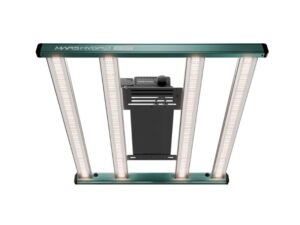 | MARS HYDRO FC-3000 300W LED Grow Light | Check Price |
Second Best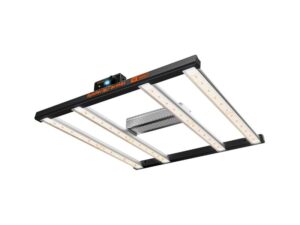 | Spider Farmer SE3000 300W LED Grow Light | Check Price |
Third Choice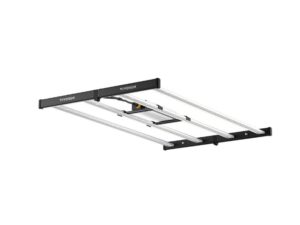 | VIVOSUN VSFL3000 300W LED Grow Light | Check Price |
1. MARS HYDRO FC-3000 300W LED Grow Light
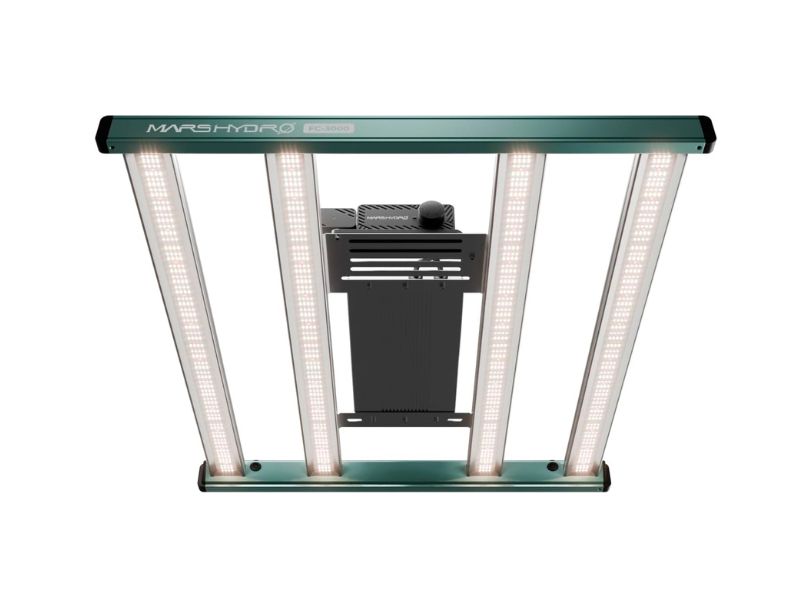
Key Features
- 300W actual power
- 2.85 µmol/J PPE
- Approximately 855 µmol/s PPF
- Bridgelux 3030 LEDs
- Osram 660nm deep-red LEDs
- Full-spectrum output
- Distributed bar design
- Detachable construction
- Maximum coverage around 3×3 feet
The MARS HYDRO FC-3000 is my primary recommendation because its specifications line up particularly well with what I want from a serious 300W fixture.
The current Amazon product page lists 300W power, 2.85 µmol/J PPE, approximately 855 µmol/s PPF, Bridgelux 3030 diodes, Osram 660nm LEDs, detachable construction, and 3×3-foot maximum coverage.
Those photon metrics are more informative than wattage by itself.
PPE — Photosynthetic Photon Efficacy describes how efficiently electrical energy is converted into photosynthetically active photons.
PPF — Photosynthetic Photon Flux describes the total quantity of photosynthetic photons the fixture produces each second.
Two fixtures can both consume 300 watts while producing different amounts of usable plant light.
That is why the FC-3000’s published efficiency is one of its strongest advantages.
The bar-style design is equally important.
Instead of concentrating hundreds of LEDs into one relatively small board, the FC-3000 spreads them across multiple bars. That can help reduce an extreme center hotspot while providing more useful light toward the edges of a square canopy.
This matters for:
- Tomato seedlings
- Pepper seedlings
- Eggplants
- Herbs
- Lettuce
- Leafy vegetables
- Houseplants
- Compact fruiting plants
- 3×3 indoor grow spaces
Imagine four plants positioned across a square tent.
If the central plant receives much higher PPFD than plants near the corners, growth can become uneven even though the fixture appears extremely bright.
A distributed bar arrangement is designed to reduce that imbalance.
The FC-3000’s 660nm deep-red component also complements its broad full-spectrum output.
That allows one fixture to remain useful through multiple growth stages rather than limiting it to early vegetative growth.
For seedlings, however, the full 300W output is unnecessary.
A powerful fixture should not automatically run at maximum intensity simply because it is available.
Young seedlings initially have very little leaf area.
I would start at reduced intensity and increase light gradually as:
- True leaves develop
- Canopy area expands
- Plant height increases
- Light demand rises
Hanging height matters too.
Dimming and fixture distance work together.
If seedlings stretch, usable intensity may be insufficient.
If leaves bleach or curl directly beneath the light, intensity may be excessive.
The current listing also describes the FC-3000 as a detachable design, which can provide more flexibility when managing fixture placement and heat.
Thermal management becomes increasingly important as wattage rises.
LED fixtures are efficient, but a 300W system still adds substantial energy to a small enclosed tent.
A 3×3 grow space should have appropriate ventilation and air circulation.
The principal downside is size.
A multi-bar 300W fixture occupies considerably more physical area than a compact 100W panel.
But inside a dedicated 3×3 tent, that broader footprint is usually an advantage because it distributes the diodes over more of the canopy.
What I Like
- Excellent 2.85 µmol/J PPE
- Approximately 855 µmol/s PPF
- Strong match for a 3×3 canopy
- Distributed bar layout
- Dedicated deep-red LEDs
- Detachable design
- Good growth headroom from seedlings onward
What I Do Not Like
- Far more light than a tiny seedling setup needs
- Large physical footprint
- A 300W setup still requires effective ventilation
The FC-3000 is the model I would choose for most buyers who want an efficient 300W full-spectrum bar light for a serious 3×3 indoor garden. Its combination of system efficiency, total photon output, and canopy-oriented architecture gives it the strongest overall balance of these three.
2. Spider Farmer SE3000 300W LED Grow Light
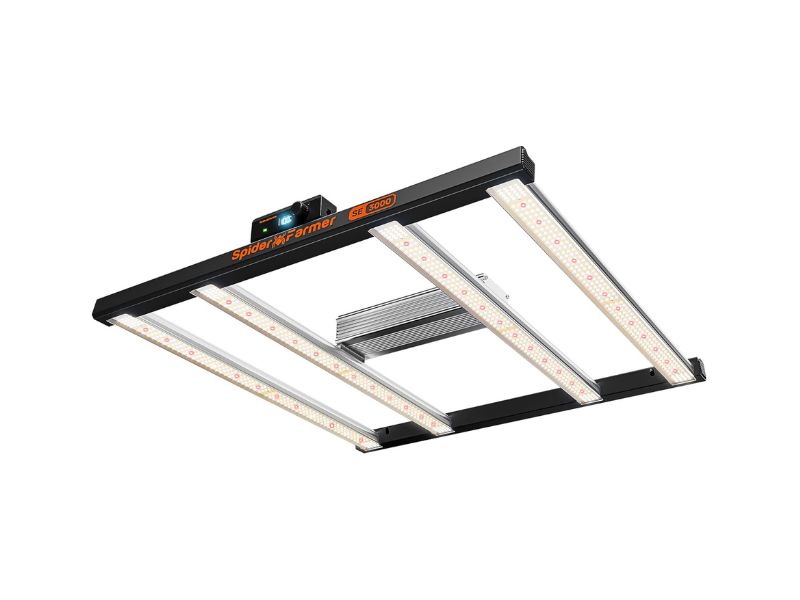
Key Features
- 300W power class
- Full-spectrum output
- Bar-style architecture
- Dimmable operation
- Bluetooth/Wi-Fi smart app control on the current generation
- Daisy-chain dimming
- Approximately 3×3-foot coverage
- Suitable from seedling through mature growth
The Spider Farmer SE3000 is the alternative I would choose when I want modern automation alongside bar-style lighting.
Amazon currently identifies the SE3000 as a 300W dimmable full-spectrum bar-style grow light with app control and 3×3-foot coverage. Spider Farmer’s current 2026 regional product pages also identify the SE3000 as supporting Bluetooth and Wi-Fi smart app control.
The distributed bars provide many of the same practical advantages as the FC-3000.
They help spread photons across a wider physical area.
That can improve:
- Edge coverage
- Canopy consistency
- Heat distribution
- Air movement through the fixture
A broad uniform footprint becomes particularly useful when several plants share a 3×3 tent.
For example, if you are growing four pepper plants, you want each plant to receive comparable light.
The goal is not simply achieving the highest possible PPFD directly beneath the center of the fixture.
The goal is providing useful PPFD across the whole productive canopy.
The SE3000’s smart controls can also be convenient.
Instead of relying only on an external timer or manually changing the dimmer, app-based control can make it easier to adjust lighting schedules and intensity without physically accessing the fixture.
That is particularly helpful when the grow tent is:
- In a basement
- In a utility room
- Behind shelving
- Difficult to access frequently
Smart control is not necessary for healthy plants.
A mechanical timer and manual dimmer can provide the same fundamental photoperiod.
The value of an app is convenience and repeatability.
If you find a successful lighting routine for peppers or tomatoes, a digital system makes it easier to reproduce that schedule later.
Dimming is particularly important for seedlings.
A 300W fixture provides far more potential output than young plants require at close range.
Use lower intensity at first.
Increase it as plants develop more leaf area.
I would consider the SE3000 for:
- Tomatoes
- Peppers
- Eggplants
- Vegetable seedlings
- Herbs
- Greens
- Compact mature plants
- Smart 3×3 tents
Its bar design also allows airflow to pass through the fixture more easily than a large solid panel.
That can help circulation fans move air throughout the upper canopy area.
The fixture still produces heat.
Passive cooling does not eliminate the need for ventilation.
The biggest tradeoff is complexity.
The SE3000 includes more control functionality than a basic standalone fixture.
If you simply want the light to turn on at 6 a.m. and off at 10 p.m., you may never take advantage of everything the smart platform offers.
What I Like
- True 300W-class format
- Distributed bar architecture
- Smart app control
- Dimming
- Daisy-chain functionality
- Good match for 3×3 tents
- Strong option for repeatable automated schedules
What I Do Not Like
- Smart features add setup complexity
- Maximum output is excessive for small seedlings
- App control may be unnecessary for a basic grow area
The Spider Farmer SE3000 is the model I would choose when I want 300W bar-style coverage with convenient remote scheduling and dimming. It is particularly appealing for growers building a smarter 3×3 environment rather than a simple standalone light-and-timer setup.
3. VIVOSUN VSFL3000 300W LED Grow Light
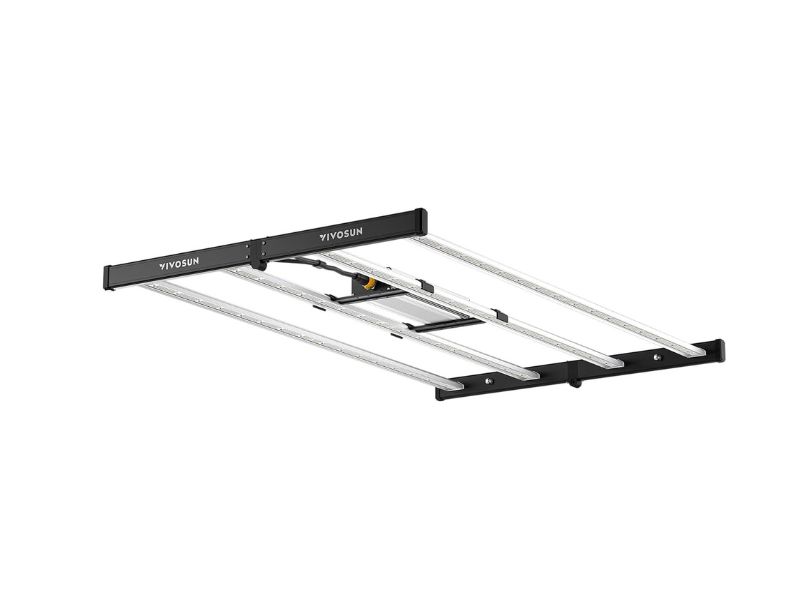
Key Features
- 300W actual power
- Four-bar design
- Foldable construction
- Dimmable
- Approximately 2.8 µmol/J conversion efficiency
- Full-spectrum output
- Supplemental red/far-red wavelengths
- GrowHub-compatible smart control
- Useful for compact tent installations
The VIVOSUN VSFL3000 is the option I would choose when fixture flexibility and ecosystem integration matter most.
The current Amazon listing describes it as a 300W four-bar foldable and dimmable full-spectrum grow light with supplemental wavelengths intended for multiple growth stages. Current product listings also describe approximately 2.8 µmol/J conversion efficiency and GrowHub compatibility.
That 2.8 µmol/J efficiency figure puts it in a strong position within the 300W category.
Again, PPE is useful because wattage tells only half the story.
A fixture that converts electricity into photons efficiently can produce more plant-useful output from the same electrical input.
The foldable four-bar frame is one of the VSFL3000’s biggest practical advantages.
Large bar fixtures can be awkward to:
- Transport
- Store
- Move between rooms
- Pack away after seed-starting season
A foldable unit is more convenient for gardeners who use their indoor setup only during certain parts of the year.
For example, you might operate the fixture from January through May to start:
- Tomatoes
- Peppers
- Eggplants
- Herbs
- Brassicas
- Flowers
Then store it once outdoor growing season begins.
Its broad full-spectrum design also makes it useful after the seedling stage.
The current product information identifies supplemental red and far-red wavelengths as part of its spectrum.
Those additional wavelengths can affect plant development, but I would not select this fixture merely because it advertises more spectral components.
For most growers, the following remain more important:
- Appropriate canopy PPFD
- Correct hanging height
- Proper photoperiod
- Even coverage
- Airflow
- Temperature
- Watering
Spectrum cannot compensate for insufficient total light.
The VSFL3000’s smart-control compatibility can also be useful if you already own VIVOSUN equipment.
Current listings describe remote app control and GrowHub compatibility for the platform.
That can allow lighting to work as part of a broader indoor-growing system rather than as an isolated device.
For a beginner, however, smart controls are optional.
A correctly rated external timer remains perfectly adequate.
The bar format itself is useful for canopy uniformity.
Four separated bars distribute LEDs across more horizontal area than one compact central panel.
That is particularly helpful in a square grow tent where plants occupy most of the floor space.
As with the other 300W models, seedlings should begin at reduced intensity.
Three hundred watts at close range is simply unnecessary for freshly emerged vegetables.
Use the dimmer and increase output gradually.
What I Like
- Strong 2.8 µmol/J published efficiency
- Foldable four-bar frame
- Dimmable design
- Full-spectrum output
- Smart GrowHub compatibility
- Easier seasonal storage than many rigid bar fixtures
What I Do Not Like
- More complex than a basic manual fixture
- Supplemental spectrum features are not essential for most seedlings
- Requires proper setup to take advantage of smart controls
The VSFL3000 is the 300W fixture I would choose when I want a foldable high-efficiency bar light that integrates naturally into the VIVOSUN smart-growing ecosystem.
300 Watt LED Grow Light Comparison
| Product | Actual Power | Fixture Style | Published Efficiency / Output | Dimming | Smart Control | Best Fit |
| MARS HYDRO FC-3000 | 300W | Multi-bar | 2.85 µmol/J; ~855 µmol/s | Yes | Controller dependent | 3×3 high-output growing |
| Spider Farmer SE3000 | 300W | Multi-bar | 300W-class system | Yes | Bluetooth/Wi-Fi app | Smart 3×3 setup |
| VIVOSUN VSFL3000 | 300W | Foldable 4-bar | ~2.8 µmol/J | Yes | GrowHub/App | Foldable smart setup |
The FC-3000 emphasizes published system efficiency and photon output, the SE3000 combines a bar layout with smart app control, and the VSFL3000 adds foldability and VIVOSUN ecosystem integration.
How to Choose the Best 300 Watt LED Grow Light
Verify Actual Wattage
Grow-light names can be misleading.
A model called “FC-3000” does not consume 3000 watts.
The FC-3000 reviewed here uses 300W actual power according to its current Amazon listing.
The SE3000 and VSFL3000 are also 300W-class fixtures.
Use actual input wattage when calculating:
- Electricity consumption
- Timer capacity
- Circuit load
- Heat output
Is 300W Enough for a 3×3 Grow Tent?
Yes, 300W is a strong power class for many 3×3 indoor gardens.
MARS HYDRO currently lists the FC-3000 for maximum 3×3-foot coverage, while Spider Farmer positions the SE3000 around a 3×3 tent as well.
Actual suitability depends on what you grow.
Herbs and leafy greens require different canopy intensity from mature high-light fruiting plants.
Is 300W Enough for a 2×4 Tent?
For many plants, yes.
A 2×4 space contains eight square feet, so an efficient 300W fixture can provide substantial light when its geometry matches the rectangular canopy.
Check the manufacturer’s PPFD map before assuming all 300W fixtures distribute output equally across a 2×4 footprint.
Is 300W Enough for a 4×4 Tent?
It can illuminate a 4×4 area, but high-intensity mature coverage across all 16 square feet is a much more demanding job.
One 300W fixture may work well for:
- Vegetative plants
- Lower-light crops
- A smaller active canopy inside the tent
For demanding full-canopy growth, inspect PPFD distribution before deciding.
300W vs 200W Grow Light
A true 300W fixture uses 50% more electrical input than a 200W fixture.
That additional capacity can provide:
- Higher total photon output
- More mature-plant headroom
- Better edge intensity
- Larger effective canopy
The tradeoffs are greater heat and electricity consumption.
300W vs 400W Grow Light
A 400W fixture has roughly one-third more electrical input than a 300W model.
That can make sense for a larger canopy or higher target PPFD.
For a normal 3×3 area, an efficient 300W fixture is often easier to manage.
PPE Matters More Than Marketing Wattage
PPE measures how efficiently electrical energy becomes photosynthetically active photon output.
The FC-3000 currently publishes 2.85 µmol/J PPE, while the VSFL3000 is listed around 2.8 µmol/J.
This gives you useful context beyond wattage alone.
Understanding PPF
PPF measures the total amount of photosynthetically active photons produced every second.
The FC-3000’s current Amazon listing specifies approximately 855 µmol/s PPF.
PPF tells you total output.
It does not tell you where the photons land.
That is the role of PPFD.
Understanding PPFD
PPFD measures photon density at a particular point on the plant canopy.
It changes with:
- Hanging height
- Dimmer setting
- Measurement position
- Reflective walls
- Fixture geometry
A fixture can have excellent total PPF but poor uniformity.
That is why PPFD maps are particularly useful when comparing 300W lights.
Why Bar-Style Fixtures Work Well at 300W
Bars spread LEDs over a larger physical area.
That can improve:
- Edge illumination
- Canopy uniformity
- Passive heat distribution
- Air circulation
- Hotspot control
All three selected products use distributed bar-oriented designs rather than one tiny central light source.
Dimming Is Important
Three hundred watts can be excessive for young seedlings.
Dimming lets you keep the same fixture throughout several plant stages.
For example:
Seedlings: lower output.
Vegetative plants: moderate output.
Mature high-light plants: increase intensity as needed.
This avoids buying separate lights for every stage.
Best 300W LED Grow Light for Seedlings
I would choose the MARS HYDRO FC-3000 and run it dimmed if I wanted one fixture that could continue serving the plants long after propagation.
The distributed bars also provide broad coverage over nursery trays.
The key is not using maximum output too early.
Best 300W LED Grow Light for Vegetable Seedlings
Tomatoes, peppers, and eggplants can become large before outdoor transplanting conditions are suitable.
A 300W dimmable fixture provides enough reserve to continue supporting them when small clip lights become inadequate.
For a dedicated 3×3 propagation area, all three products can work.
Best 300W Grow Light for Tomatoes
Tomatoes grow rapidly and eventually become relatively high-light plants.
The FC-3000’s published 855 µmol/s PPF and 3×3 positioning make it particularly attractive when several tomato plants share one compact indoor canopy.
Start young tomatoes at lower intensity and increase light gradually.
Best 300W Grow Light for Peppers
Peppers often remain indoors longer than tomatoes before transplanting.
That makes lighting headroom valuable.
A dimmable 300W fixture can serve them from early seedlings into much larger transplants.
Best 300W Grow Light for Lettuce
A lettuce canopy generally benefits more from broad, uniform moderate PPFD than an extreme central hotspot.
The bar-style architecture of these fixtures is well suited to flat, broad plant canopies.
You may not need maximum output.
Best 300W Grow Light for Herbs
A small herb garden does not require 300W.
However, a large multi-pot herb canopy can benefit from broad coverage.
Use dimming to match the output to:
- Basil
- Parsley
- Cilantro
- Mint
- Thyme
rather than automatically running full power.
Full Spectrum Is the Most Versatile Choice
Full-spectrum white lighting is practical because one fixture can support:
- Seedlings
- Vegetative plants
- Herbs
- Greens
- Mature growth
It also makes leaf color easier to evaluate than strongly purple grow lights.
Does Far Red Matter?
Far-red can influence plant developmental responses, but it is an advanced variable rather than the first thing most growers should optimize.
The VSFL3000 specifically advertises supplemental far-red wavelengths as part of its broad spectrum.
Get intensity, coverage, photoperiod, temperature, airflow, and watering right first.
Is App Control Worth It?
App control is useful if you want:
- Remote brightness adjustment
- Automated schedules
- Easier access to hanging fixtures
- Integration with other grow equipment
The current SE3000 generation supports Bluetooth/Wi-Fi smart app control, while the VSFL3000 platform is compatible with VIVOSUN’s smart ecosystem.
A basic timer remains perfectly adequate for a fixed schedule.
How Much Electricity Does a 300W Grow Light Use?
At full power:
300W = 0.3 kW
At 16 hours per day:
0.3 × 16 = 4.8 kWh per day
Over 30 days:
4.8 × 30 = 144 kWh
Multiply 144 by your local electricity rate per kWh to estimate monthly lighting cost.
Dimming can reduce actual energy use.
Heat From a 300W LED Grow Light
A 300W LED fixture still contributes substantial heat to an enclosed growing space.
LED efficiency does not make the energy disappear.
A compact tent may need:
- Exhaust ventilation
- Fresh-air intake
- Gentle circulation
- Temperature monitoring
Keep air moving around both the fixture and plant canopy.
How High Should a 300W Grow Light Be?
There is no universal hanging distance.
Use the manufacturer’s recommendations for the exact model first.
Then watch plant response.
Signs of inadequate light can include:
- Stretching
- Long internodes
- Weak stems
- Strong leaning
Signs of excessive intensity can include:
- Bleaching
- Upward leaf curling
- Pale top growth
- Localized stress beneath the fixture
Make gradual adjustments.
Use a Timer
A timer keeps photoperiod consistent.
Vegetable seedlings commonly receive long daily light periods followed by a regular dark period.
Do not leave a 300W fixture running continuously simply because growth seems slow.
Correct canopy intensity and total daily light are more important.
Grow-Light Electrical Safety
Calculate electrical load using actual input watts, not a product model number.
Also keep:
- Power strips
- Controllers
- Plugs
- Extension connections
- Timers
away from irrigation runoff and standing water.
A grow space combines electricity and frequent watering, so cable organization matters.
Common 300W LED Grow Light Buying Mistakes
Choosing by Model Number
A “3000” model does not necessarily use 3000 watts.
Choosing by Wattage Alone
Compare PPE, PPF, PPFD distribution, and coverage.
Ignoring Dimming
Full 300W output can overwhelm seedlings.
Looking Only at Center PPFD
Plants at the edges matter too.
Assuming Any 300W Fixture Covers Any Tent
Match the fixture geometry to the actual canopy.
Hanging It Too High
Insufficient canopy intensity can still cause stretching.
Hanging It Too Close
Efficient LEDs can cause light stress.
Ignoring Ventilation
Three hundred watts still adds substantial heat.
Frequently Asked Questions
What is the best 300 watt LED grow light?
The MARS HYDRO FC-3000 is my primary recommendation for most 3×3 gardens.
It combines 300W power, 2.85 µmol/J PPE, approximately 855 µmol/s PPF, distributed bars, and 3×3 maximum coverage.
Is a 300W LED grow light enough?
Yes, 300W provides substantial output for seedlings, vegetables, herbs, and mature compact plants.
The ideal usable area depends on fixture efficiency, crop, growth stage, and desired PPFD.
Is 300W enough for a 3×3 grow tent?
Yes, 300W is a strong power class for many 3×3 grow-tent applications.
Both MARS HYDRO FC-3000 and Spider Farmer SE3000 are currently positioned around 3×3 use.
Is 300W enough for a 2×4 tent?
Yes, an efficient 300W fixture can provide substantial output across eight square feet.
Check the fixture’s PPFD map because shape and diode distribution influence actual edge coverage.
Is 300W enough for a 4×4 tent?
It can illuminate a 4×4, but demanding full-canopy growth may require more output.
Judge suitability by PPFD across all 16 square feet rather than total wattage alone.
Is 300W too much for seedlings?
It can be at full output and close range, so dimming is important.
Begin with lower intensity and increase output gradually as leaf area develops.
Which 300W grow light has the strongest published efficiency here?
The MARS HYDRO FC-3000 publishes 2.85 µmol/J system PPE.
The VSFL3000 is also listed around 2.8 µmol/J.
What does 855 µmol/s PPF mean?
It measures the fixture’s total photosynthetically active photon output each second.
The FC-3000 currently publishes approximately 855 µmol/s PPF.
What does 2.85 µmol/J mean?
It measures photosynthetic photon output produced per joule of electrical energy.
Higher system PPE generally means more usable plant photons from the same wall power.
Which 300W grow light has app control?
The Spider Farmer SE3000 supports Bluetooth/Wi-Fi smart control on its current generation.
Spider Farmer’s current 2026 product pages specifically advertise smart app operation.
Which 300W grow light folds for storage?
The VIVOSUN VSFL3000 uses a foldable four-bar design.
That makes it particularly practical for seasonal indoor growers who need to store the fixture afterward.
Which 300W grow light is best for a 3×3 tent?
I would choose the MARS HYDRO FC-3000 for most 3×3 setups.
Its 300W input, published efficiency, total photon output, and distributed bar layout form a strong specification package.
Is 300W good for tomato seedlings?
Yes, provided the fixture is dimmed appropriately while the plants are small.
A major advantage is that the same light can continue supporting tomatoes after they outgrow small seed-starting lamps.
Is 300W good for pepper seedlings?
Yes, especially when peppers remain indoors for several weeks before transplanting.
Start at lower intensity and increase light as the canopy expands.
Can I grow herbs under 300 watts?
Yes, although most compact herb gardens will not require maximum 300W output.
Use dimming to match intensity to canopy size.
Can I grow lettuce under a 300W LED?
Yes, 300W provides ample potential light for a compact lettuce canopy.
Broad, even moderate PPFD is generally more useful than maximum center intensity.
Are bar-style grow lights better?
Bar fixtures can improve canopy uniformity, edge illumination, airflow, and heat distribution.
Their broader physical footprint is particularly useful at higher wattages such as 300W.
How far should a 300W LED be from seedlings?
The correct distance depends on fixture design, dimmer level, and plant stage.
Follow the exact manufacturer’s hanging guidance and adjust gradually based on plant response.
How many hours should a 300W grow light run?
The correct duration depends on crop, PPFD, growth stage, and natural light exposure.
Vegetable seedlings typically use relatively long light periods followed by a regular dark period.
How much electricity does a 300W grow light use?
At full power for 16 hours daily, it uses approximately 4.8 kWh per day.
That equals about 144 kWh over 30 days.
Do I need a timer with a 300W grow light?
A timer or built-in smart schedule makes consistent daily lighting much easier.
Use a properly rated external timer if the fixture does not provide its own scheduling system.
Conclusion
The best 300 watt LED grow light should deliver efficient plant-usable photons across the whole canopy while giving you enough control to adapt intensity throughout different growth stages. I would prioritize system PPE, total PPF, PPFD uniformity, dimming, full-spectrum output, heat management, and realistic coverage rather than choosing by wattage alone.
The MARS HYDRO FC-3000 remains my primary recommendation. Its 300W actual draw, 2.85 µmol/J PPE, approximately 855 µmol/s PPF, Bridgelux and Osram diode platform, distributed bar design, and 3×3 maximum coverage make it the strongest overall balance of these three.
The Spider Farmer SE3000 is the alternative I would choose when automation matters. Its 300W bar-style design, full-spectrum dimming, 3×3 positioning, and current Bluetooth/Wi-Fi app-control platform make it particularly attractive for a smart grow tent.
The VIVOSUN VSFL3000 stands out for flexibility. Its 300W foldable four-bar construction, approximately 2.8 µmol/J efficiency, dimming, supplemental red/far-red spectrum, and GrowHub compatibility make it particularly useful for seasonal or smart VIVOSUN-based setups.
For most buyers specifically searching for a dependable 300 watt LED grow light, I would choose the MARS HYDRO FC-3000. If I wanted stronger smart-control integration, I would move to the Spider Farmer SE3000, while the VIVOSUN VSFL3000 is my preferred alternative when foldability and ecosystem integration matter most.

I’m Maya L. Greenwood, a lifelong plant lover who believes anyone can grow something beautiful with the right guidance. After years of testing soil mixes, pruning methods, irrigation tricks, and pest-safe solutions, I started EasyGardenTips.com to turn hard-won lessons into step-by-step advice. From seed starting and container gardens to composting and seasonal checklists, my goal is to make gardening simple, sustainable, and fun.