Best Charcoal Filter for Grow Tent: 3 Picks That Control Odor
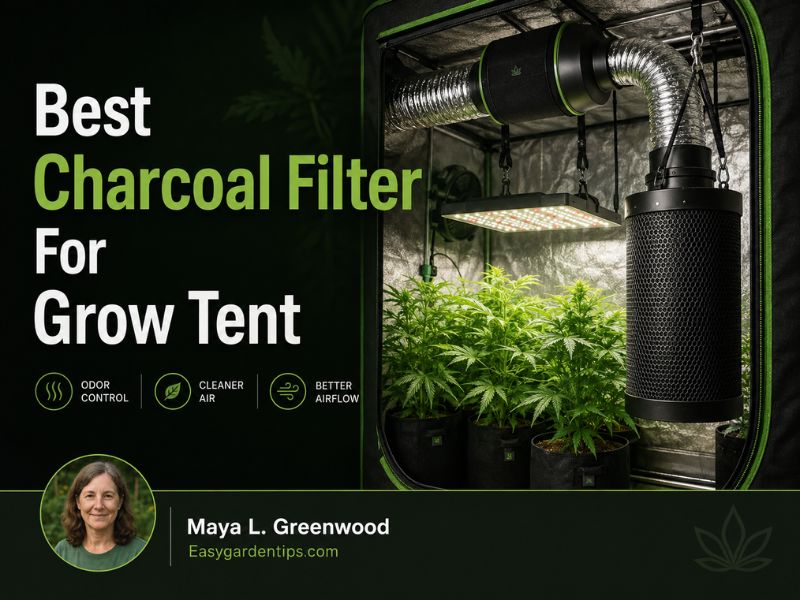
Finding the best charcoal filter for grow tent use is not simply about buying the biggest cylinder that fits above the plants. A good filter has to match the inline fan and duct diameter, provide enough activated carbon for the airflow moving through it, avoid creating excessive restriction, and continue controlling odor as the filter accumulates dust and moisture.
For most medium indoor tents, a 6-inch carbon filter is an especially useful size. It pairs naturally with the 6-inch EC inline fans commonly used in 3×3, 4×4, and many 5×5 ventilation systems, while still being compact enough to hang from the tent frame.
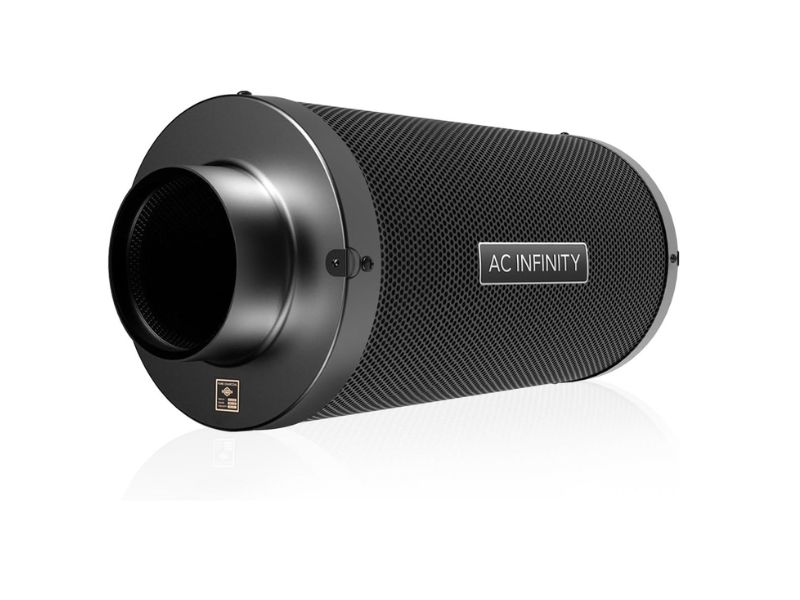
My first recommendation is the AC Infinity 6-Inch Air Carbon Filter. It currently carries especially strong Amazon customer feedback and combines a 6-inch flange with a 16-inch housing, 1200+ IAV Australian RC412 activated charcoal, a 38 mm carbon bed, 410-CFM airflow rating, reversible flanges, two pre-filters, and rust-resistant construction.
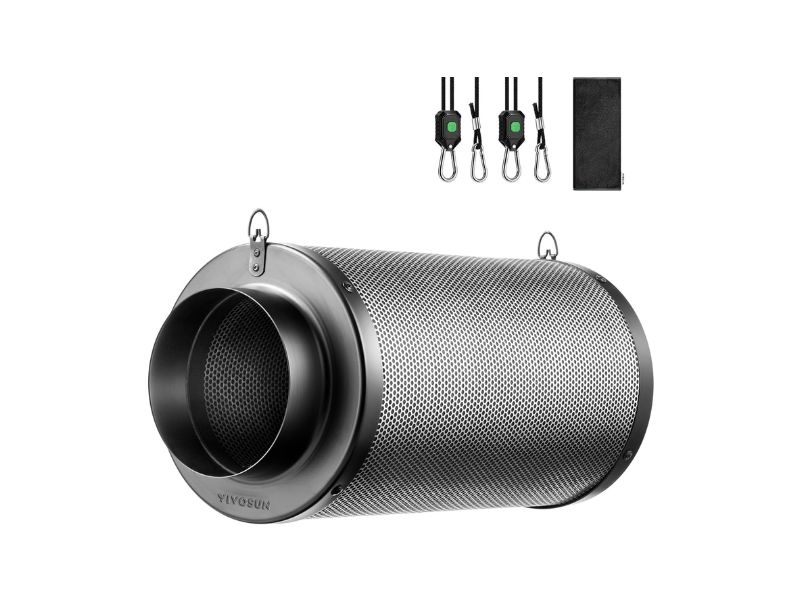
The VIVOSUN 6-Inch Pro Carbon Filter is my second recommendation. It also uses RC412 Australian virgin charcoal rated at 1200+ IAV and a 38 mm carbon bed, but VIVOSUN rates the filter for up to 455 CFM. Its current Amazon listing also shows a large established customer-feedback base.
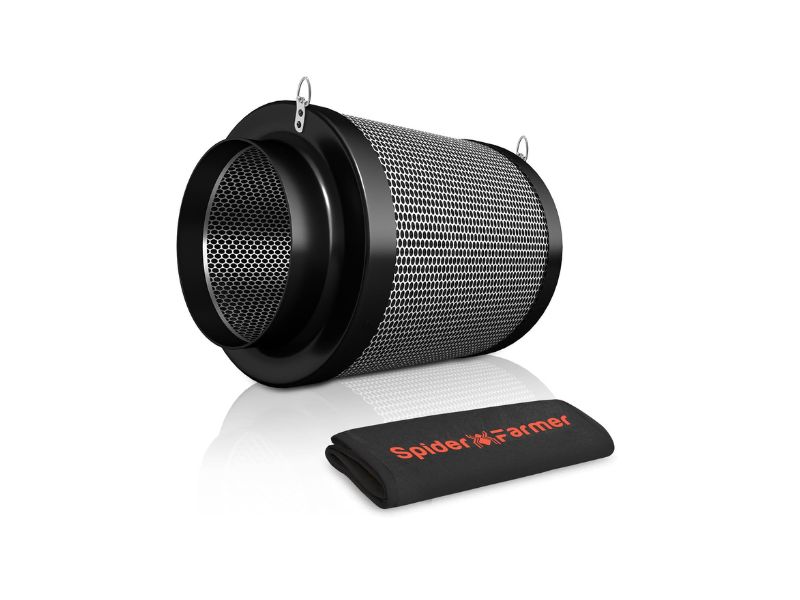
The Spider Farmer 6-Inch Air Carbon Filter takes third place. Spider Farmer specifies premium Australian activated charcoal, a 6-inch opening, approximately 402-CFM maximum airflow, a washable pre-filter, and a reversible mounting configuration.
3 Best Charcoal Filters for Grow Tents
| Image | Product Name | Check Price |
|---|---|---|
Best Choice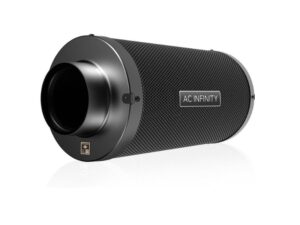 | AC Infinity 6-Inch Air Carbon Filter | Check Price |
Second Best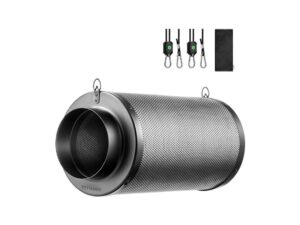 | VIVOSUN 6-Inch Pro Carbon Filter | Check Price |
Third Choice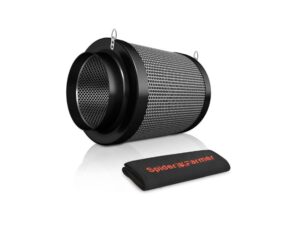 | Spider Farmer 6-Inch Air Carbon Filter | Check Price |
I selected these filters around the factors that matter most once a filter becomes part of an actual ventilation system:
- Activated-carbon quality
- Carbon-bed depth
- Fan and duct compatibility
- Rated airflow
- Pre-filter design
- Reversible construction
- Resistance to grow-tent humidity
- Ease of hanging
- Amazon customer confidence
A filter should not be judged by carbon quantity alone. Effective odor control depends on the relationship between the carbon, airflow rate, filter condition, duct configuration, and how well the ventilation system prevents unfiltered air from escaping the tent.
1. AC Infinity 6-Inch Air Carbon Filter
Key Features
- 6-inch duct opening
- 16-inch filter length
- 410-CFM airflow rating
- Australian RC412 activated charcoal
- 1200+ IAV carbon rating
- 38 mm carbon bed
- Two washable pre-filters
- Reversible flanges
The AC Infinity 6-inch filter is my first choice because it combines strong filtration specifications with unusually high buyer confidence on Amazon.
AC Infinity uses Australian virgin RC412 charcoal rated at 1200+ IAV in a 38 mm bed. The company rates the standard 6-inch filter for approximately 410 CFM and builds the housing from galvanized steel mesh with aluminum flanges and a humidity-resistant exterior finish.
That specification makes it a natural partner for many modern 6-inch variable-speed inline fans. A filter does not need to match the fan’s maximum free-air CFM exactly, but the filter should not be dramatically undersized relative to the fan. Matching the components reasonably well helps prevent excessive restriction and gives the carbon enough contact with the outgoing air.
The reversible-flange design is another practical advantage. AC Infinity allows the filter orientation to be changed so the carbon bed can be used more evenly over its service life. Two pre-filter sleeves are also included to intercept larger dust and debris before they accumulate inside the carbon structure.
Its 4.8-star average across more than ten thousand current Amazon ratings gives it substantially deeper customer-feedback confidence than many competing filters.
What I Like
- Excellent Amazon customer confidence
- Premium 1200+ IAV Australian carbon
- Strong balance between airflow and filter size
- Two washable pre-filters
- Reversible construction
What I Do Not Like
- A 6-inch filter can be unnecessarily large for a tiny 2×2 setup
- Larger XL models may make more sense for unusually high odor loads or longer desired service intervals
For a typical medium grow tent already using a 6-inch exhaust fan, this is the charcoal filter I would choose first.
2. VIVOSUN 6-Inch Pro Carbon Filter
Key Features
- 6-inch flange
- 16-inch-class housing
- Up to 455 CFM
- RC412 Australian virgin charcoal
- 1200+ IAV carbon
- 38 mm carbon bed
- Removable pre-filter
- Reversible flange and base
The VIVOSUN Pro comes remarkably close to the AC Infinity on the specifications that matter most.
Its current Amazon listing specifies RC412 Australian virgin charcoal at 1200+ IAV, a 38 mm carbon bed, a 6-inch opening, and up to 455 CFM of airflow capacity. The filter also includes a detachable pre-filter and reversible flange/base arrangement.
That 455-CFM rating gives it useful airflow headroom when paired with stronger 6-inch fans, although maximum airflow should not be confused with the airflow that provides the best odor adsorption. Pushing air through any carbon filter faster reduces the time that air spends moving through the media, so the practical objective is enough airflow to manage the tent without unnecessarily running the exhaust at full speed.
The reversible design is useful because activated carbon does not necessarily load perfectly evenly from one end of the filter to the other. Changing orientation during the filter’s service life can help use more of the bed instead of repeatedly exposing the same section to the highest contaminant concentration. VIVOSUN specifically markets this feature as a way to extend useful filtration.
Amazon currently shows a 4.6-star average from more than 1,600 reviews for this Pro model, giving it a substantial real-world feedback history even though the AC Infinity remains stronger on that metric.
What I Like
- High 455-CFM rating
- 1200+ IAV RC412 carbon
- Thick 38 mm bed
- Reversible design
- Strong Amazon customer history
What I Do Not Like
- Slightly lower customer rating than the AC Infinity
- High maximum airflow does not mean the filter should always be run near 455 CFM
The VIVOSUN Pro is an excellent alternative when you want a high-flow 6-inch carbon filter and already use VIVOSUN or another compatible 6-inch ventilation system.
3. Spider Farmer 6-Inch Air Carbon Filter
Key Features
- 6-inch duct connection
- Australian activated charcoal
- Approximately 402-CFM airflow capacity
- Washable pre-filter
- Galvanized/stainless metal construction
- Reversible configuration
- Compatible with common 6-inch inline fans
Spider Farmer takes third place but remains a technically strong option.
The manufacturer specifies high-grade Australian activated charcoal and approximately 402 CFM of maximum airflow for the 6-inch version. The filter includes a washable pre-filter and uses heavy-duty metal flanges and mesh intended for long-term ventilation use.
That airflow range makes it well suited to Spider Farmer’s own 6-inch EC fans as well as other 6-inch duct systems where the actual fan speed can be adjusted to match tent temperature, humidity, and odor-control requirements.
The included pre-filter matters more than it may appear. Activated carbon works best when airflow can move through its internal pore structure. Allowing lint, dust, pet hair, and other large particles to accumulate on the filter surface can increase resistance and reduce system efficiency. A removable outer pre-filter is far easier to clean than the carbon bed itself.
Spider Farmer also allows the filter to operate as part of either intake or exhaust configurations, although odor control is normally achieved by placing the carbon filter in the tent’s exhaust path.
What I Like
- Strong 402-CFM capacity
- Australian activated charcoal
- Washable pre-filter
- Good match for common 6-inch ventilation systems
What I Do Not Like
- Smaller Amazon feedback base than the first two products
- Less published detail about carbon-bed performance than AC Infinity provides
The Spider Farmer is a sensible third option, particularly if the rest of your ventilation equipment already uses Spider Farmer’s 6-inch platform.
Charcoal Filter Comparison for Grow Tents
| Product | Size | Rated Airflow | Carbon | Carbon Bed | Main Strength |
| AC Infinity | 6 in. | 410 CFM | Australian RC412, 1200+ IAV | 38 mm | Strongest overall balance |
| VIVOSUN Pro | 6 in. | 455 CFM | Australian RC412, 1200+ IAV | 38 mm | Higher airflow capacity |
| Spider Farmer | 6 in. | 402 CFM | Australian activated charcoal | — | Strong straightforward alternative |
AC Infinity and VIVOSUN publish particularly detailed carbon specifications, with both using premium Australian activated media and substantial carbon beds. Spider Farmer follows the same general high-grade Australian-charcoal approach but publishes fewer filtration metrics for the standalone filter.
Charcoal Filter vs Carbon Filter: Are They Different?
In grow-tent ventilation, the terms charcoal filter and carbon filter are commonly used for the same basic type of odor-control device.
The important material is activated carbon.
Activated carbon has an enormous internal surface area created by microscopic pores. As contaminated air travels through the carbon bed, many odor-producing molecules adhere to those surfaces through a process called adsorption.
Adsorption is different from absorption.
With absorption, a substance enters another material.
With adsorption, molecules collect on a material’s surface.
That enormous available surface area is why a relatively compact cylinder of activated charcoal can treat substantial volumes of grow-tent air.
What Does a Grow Tent Carbon Filter Remove?
The primary reason most indoor gardeners install a charcoal filter is odor control.
Activated carbon is particularly useful for trapping many gaseous organic compounds responsible for strong smells.
Manufacturers including AC Infinity, VIVOSUN, and Spider Farmer specifically design these filters to reduce odors and gaseous contaminants in enclosed grow spaces and ventilation systems.
A carbon filter should not be treated as a universal air purifier.
It is not designed to replace:
- HEPA particulate filtration
- Mold remediation
- Proper ventilation
- Humidity management
- Temperature control
Its primary role in a grow tent is to adsorb odor molecules as exhaust air passes through the carbon bed.
Why Australian Activated Carbon Is So Common
All three filters reviewed here use or emphasize Australian activated charcoal.
AC Infinity specifies RC412 Australian virgin charcoal at 1200+ IAV, while VIVOSUN also uses RC412 1200+ IAV material in its Pro filter.
The important concepts are pore structure and available surface area.
A high-quality activated carbon provides a large internal area on which odor molecules can adsorb.
However, carbon origin alone should not decide your purchase.
Performance also depends on:
- Carbon-bed depth
- Airflow speed
- Packing consistency
- Humidity
- Filter age
- Pre-filter condition
A premium carbon bed used with an incorrectly sized fan can still perform poorly.
What Does IAV Mean?
IAV refers to iodine adsorption value, a common way manufacturers describe the adsorption capability or surface characteristics of activated carbon.
AC Infinity and VIVOSUN both advertise their selected filters at 1200+ IAV.
For consumers, the main takeaway is simple:
A higher-quality activated carbon with substantial microporosity provides more useful surface area for adsorption.
But I would not compare filters using IAV alone.
Carbon-bed thickness and actual ventilation design remain equally important.
Why Carbon-Bed Thickness Matters
The air needs to travel through enough carbon to allow odor molecules to contact the media.
Both AC Infinity and VIVOSUN use approximately 38 mm carbon beds in the selected 6-inch filters.
A deeper bed can increase the amount of carbon available and extend the path air travels through the media.
The tradeoff is airflow resistance.
More carbon does not automatically produce a better system if the inline fan cannot overcome the restriction.
That is why good filter design balances:
- Carbon quantity
- Bed depth
- Mesh opening
- Fan capacity
- Airflow speed
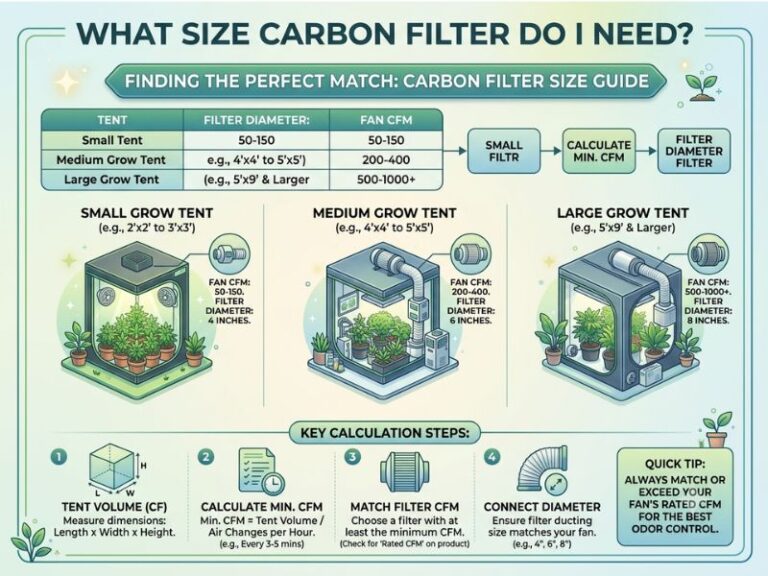
4-Inch vs 6-Inch Carbon Filter
Matching filter diameter to the ventilation system is important.
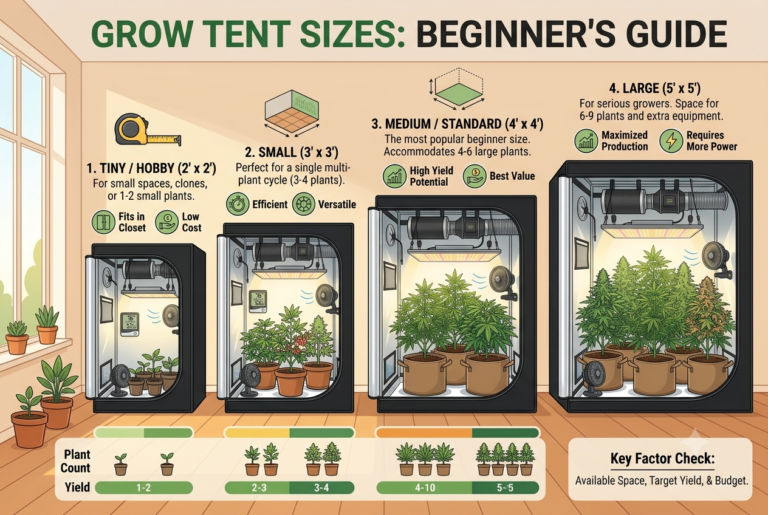
4-Inch Carbon Filter
A 4-inch filter makes sense for many:
- 2×2 grow tents
- 2×3 tents
- 2×4 tents
- Smaller 3×3 setups
Its advantages include:
- Lower weight
- Smaller physical size
- Easier overhead mounting
- Compatibility with compact inline fans
6-Inch Carbon Filter
A 6-inch filter is better suited to many:
- 3×3 tents
- 4×4 tents
- 5×5 tents
- Higher-airflow systems
- Longer duct runs
AC Infinity, VIVOSUN, and Spider Farmer all offer 6-inch filtration products specifically designed around matching inline duct fans.
Should the Filter Size Match the Inline Fan?
Yes, whenever practical.
If you own a 6-inch inline fan, using a 6-inch carbon filter avoids unnecessary reducers and adapters.
A matched system is simpler:
6-inch filter → 6-inch fan → 6-inch duct
Introducing a 4-inch restriction into an otherwise 6-inch system can increase static pressure and reduce airflow.
You can use adapters when necessary, but buying matching components from the beginning is cleaner and usually more efficient.
How Much CFM Should a Carbon Filter Handle?
The carbon filter’s airflow rating should be appropriate for the fan.
For example:
- AC Infinity: about 410 CFM
- VIVOSUN Pro: about 455 CFM
- Spider Farmer: about 402 CFM
These are manufacturer ratings for the selected 6-inch filters.
If your fan is capable of 400 CFM, pairing it with a filter rated dramatically below that airflow could create unnecessary restriction.
However, you do not need to run the fan at maximum speed.
In many grow tents, a 400-CFM-capable EC fan may operate comfortably at a fraction of maximum output.
Why Slower Airflow Can Improve Odor Control
Activated carbon needs contact with the air.
If you force enormous amounts of air through a small filter, contact time decreases.
At the same time, moving too little air can allow the grow tent to become hot or humid.
The ideal setting is therefore a balance:
enough ventilation for temperature and humidity control, but not more airflow than the filter and tent require.
Variable-speed inline fans are particularly useful because they let you tune the system instead of choosing between completely off and maximum power.
Where Should the Carbon Filter Go?
The most common location is high inside the grow tent.
One typical setup is:
Carbon filter → inline fan → ducting → outside tent
The fan pulls warm tent air through the carbon and exhausts the filtered air.
Mounting the filter high offers two practical benefits:
- Warm air tends to accumulate toward the top of the tent.
- Hanging the filter preserves valuable floor space.
Make sure the tent’s support bars can safely hold the filter and fan.
Can the Carbon Filter Go Outside the Tent?
Yes, depending on the filter and airflow arrangement.
External mounting can help when:
- Tent height is limited
- A large light occupies the roof area
- The filter is heavy
- You need more overhead clearance
However, many standard odor-control installations work most naturally with the filter inside the tent on the suction side of the exhaust fan.
Follow the manufacturer’s recommended airflow configuration for the specific filter you buy.
Can You Push Air Through a Carbon Filter?
Some carbon filters can function in either a pull-through or push-through configuration.
AC Infinity specifically states that its filter can be used in intake and exhaust configurations, and Spider Farmer similarly describes broader ventilation compatibility.
Still, pulling air through the pre-filter and carbon bed is the common grow-tent arrangement.
With a pull configuration, the outer pre-filter catches larger contaminants before the air enters the activated carbon.
What Is the White Sleeve Around the Filter?
That is the pre-filter.
It captures larger airborne debris before the particles enter the carbon bed.
Examples include:
- Dust
- Hair
- Fibers
- Large particulates
AC Infinity includes two washable pre-filter cloths, VIVOSUN includes a removable pre-filter, and Spider Farmer includes a washable outer filter.
This inexpensive sleeve helps protect the much more difficult-to-service activated carbon inside.
How Often Should You Clean the Pre-Filter?
Inspect it periodically.
There is no universal schedule because contamination depends on the room.
A tent in a clean spare bedroom may load much more slowly than one in a dusty basement or a home with shedding pets.
Signs the sleeve needs attention include:
- Visible dust
- Reduced airflow
- Discoloration
- Fan working harder at the same speed
Follow the manufacturer’s washing or replacement instructions.
Make sure a washable sleeve is fully dry before reinstalling it.
How Long Does a Grow Tent Carbon Filter Last?
There is no accurate universal lifespan.
Carbon-filter life depends on:
- Odor concentration
- Fan speed
- Daily runtime
- Humidity
- Dust exposure
- Carbon quality
- Filter size
A lightly loaded filter operating at moderate airflow can last considerably longer than the same filter running continuously in a very humid, high-odor environment.
Do not replace a filter solely because a certain number of months has passed.
The practical indicator is declining odor control after you have ruled out other ventilation problems.
Signs Your Carbon Filter Is Wearing Out
Odor Starts Escaping
If the system used to control odor well and now does not, the carbon may be approaching saturation.
Airflow Falls
A dirty pre-filter or dust buildup can increase restriction.
Check the sleeve before assuming the carbon itself is exhausted.
Filter Has Been Exposed to Extreme Humidity
Very high humidity can reduce practical carbon adsorption performance.
Reversing the Filter No Longer Helps
If a reversible filter has been rotated and odor control still declines, replacement may be appropriate.
High Humidity and Activated Carbon
Humidity is one of the more important variables in grow-tent filtration.
Water molecules can occupy sites that would otherwise be available for adsorption.
That does not mean a carbon filter suddenly stops working whenever humidity rises, but persistently excessive moisture can reduce practical odor-control performance.
The solution is not merely a larger carbon filter.
Control the grow environment with:
- Proper exhaust
- Internal circulation
- Dehumidification when necessary
- Reasonable plant spacing
The carbon filter should be part of the ventilation system, not the entire climate-control strategy.
Why Negative Pressure Helps Odor Control
A properly exhausted tent normally operates under slight negative pressure.
That means the exhaust fan removes air slightly faster than it enters passively.
The tent walls may pull inward a little.
This helps because room air enters through designated intake openings while odor-laden tent air is encouraged to leave through the filtered exhaust path.
If the tent operates under positive pressure, unfiltered air may escape through:
- Zippers
- Seams
- Cable openings
- Duct ports
A great charcoal filter cannot treat air that bypasses it.
Too Much Negative Pressure Is Also Bad
You do not need the tent walls to collapse inward aggressively.
Severe negative pressure can:
- Reduce usable interior space
- Increase stress on zippers
- Restrict effective airflow
- Make the exhaust fan work harder
If the walls pull in dramatically, open more passive intake area or reduce fan speed.
The goal is slight, controlled negative pressure.
Why Ducting Affects Filter Performance
The carbon filter is only one source of airflow resistance.
Flexible ducting adds more.
Resistance increases with:
- Longer duct runs
- Sharp bends
- Crushed sections
- Small adapters
- Screens and restrictions
A filter rated at 410 or 455 CFM does not guarantee that the complete system will actually move that much air.
Keep ducting as:
- Short as practical
- Straight as practical
- Smoothly curved
- Properly secured
This improves real ventilation without buying a larger fan.
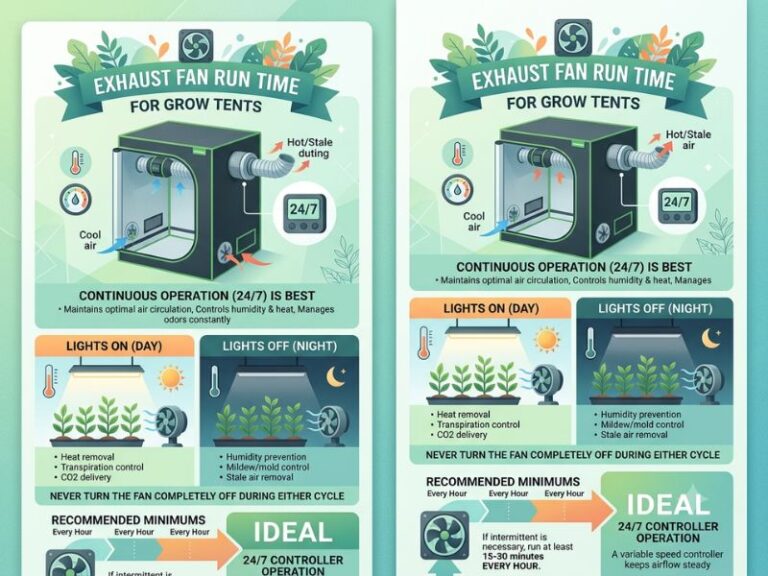
Why Fan Speed Matters
A carbon filter works best as part of a balanced system.
Running an oversized fan at maximum speed can:
- Increase noise
- Increase negative pressure
- Increase duct turbulence
- Reduce contact time through the carbon
- Shorten practical filter life
A controllable EC fan allows you to run only as much ventilation as the environment requires.
When temperature and humidity are stable, reducing exhaust speed may improve both noise and filtration efficiency.
Standard vs XL Carbon Filters
AC Infinity also sells an extra-long 6-inch version measuring approximately 20 inches and rated around 520 CFM. The larger body contains a greater amount of carbon and is intended to increase capacity and useful life compared with the standard filter.
An XL filter becomes attractive when:
- Odor load is high
- Ventilation runs continuously
- You have enough hanging space
- Filter replacement is inconvenient
The disadvantage is obvious:
larger filters are heavier and occupy more tent space.
For an ordinary 4×4, a standard 6-inch filter is often the more practical compromise.
Refillable vs Disposable Carbon Filters
Most conventional grow-tent carbon filters are replaced after the media is exhausted.
Refillable designs allow the carbon to be removed and replaced while keeping the outer housing.
AC Infinity currently offers refillable filter systems as an alternative to traditional sealed filters.
Potential advantages include:
- Reusing the metal housing
- Less hardware waste
- Replacing only the carbon
Potential drawbacks include:
- More maintenance
- Need to refill evenly
- Mess from carbon pellets or dust
For buyers who want the simplest setup, a conventional filter remains easier.
How to Install a Charcoal Filter in a Grow Tent
1. Confirm the Diameter
Match the filter to the fan and ducting.
For the products reviewed here, use a 6-inch ventilation path.
2. Check the Airflow Direction
Identify the direction the inline fan moves air.
3. Install the Pre-Filter
The fabric sleeve should be fitted correctly before operation.
4. Hang the Carbon Filter
Place it near the upper area of the tent using proper straps or hangers.
5. Connect the Inline Fan
Use the shortest practical connection.
6. Secure the Joint
Tighten clamps so air cannot bypass the intended path.
7. Add Exhaust Ducting
Route the cleaned air outside the tent.
8. Open Passive Intake Vents
The exhaust needs replacement air.
9. Start the Fan at Moderate Speed
Do not automatically select maximum airflow.
10. Check Tent Pressure
A slight inward wall pull is enough.
Carbon Filter Before or After the Fan?
For a conventional grow-tent exhaust layout, I prefer:
Filter → fan → duct
The fan pulls air through the carbon.
This keeps the filter’s pre-filter exposed to the tent air and allows the carbon to treat odor before the air enters the exhaust route.
Other configurations may work when supported by the manufacturer, but the simple pull-through arrangement is easy to understand and maintain.
Can One Carbon Filter Handle a 4×4 Tent?
A properly matched 6-inch filter is commonly appropriate for a 4×4 ventilation system.
The real question is not just tent dimensions.
You also need to consider:
- Plant odor load
- Fan airflow
- Duct resistance
- Room conditions
- Filter capacity
All three reviewed products fall around the 400-CFM-plus class, giving them ample rated capacity for many medium-tent exhaust systems when paired with suitable fan control.
What About a 5×5 Tent?
A 6-inch system can also work for many 5×5 installations.
The VIVOSUN Pro’s 455-CFM rating and the AC Infinity standard filter’s 410-CFM rating place them comfortably in the range used with many medium grow-room ventilation systems.
However, a hot 5×5 with long ducting may require higher exhaust airflow than a cool 5×5 with a short direct vent.
Select the fan and filter as a system rather than sizing either component in isolation.
Common Mistakes When Buying a Grow Tent Charcoal Filter
Choosing by Diameter Alone
Two 6-inch filters can have different carbon quantities and airflow ratings.
Ignoring Fan Compatibility
A heavily restricted filter paired with an oversized fan can perform poorly.
Buying the Highest-CFM Filter Automatically
Filtration is not a race to move the greatest possible amount of air.
Removing the Pre-Filter
The sleeve protects the carbon from larger contamination.
Never Cleaning the Pre-Filter
Dust buildup increases resistance.
Ignoring Humidity
Persistently high humidity can reduce practical adsorption efficiency.
Allowing Unfiltered Air to Escape
Maintain slight negative pressure.
Using Excessively Long Ducting
Every extra foot and bend adds resistance.
Letting the Filter Rest on Plants
Hang it securely and preserve canopy clearance.
Ignoring Tent Frame Capacity
A carbon filter plus fan can add meaningful overhead weight.
Replacing a Filter Before Checking for Leaks
Odor escaping from a loose duct connection does not necessarily mean the carbon has failed.
Frequently Asked Questions
1. What is the best charcoal filter for grow tent odor control?
The AC Infinity 6-Inch Air Carbon Filter is my first choice because it combines premium 1200+ IAV Australian RC412 charcoal, a 38 mm bed, 410-CFM rating, and exceptionally strong customer feedback.
Its reversible flanges and two washable pre-filters also make long-term maintenance easier.
2. Is a charcoal filter the same as a carbon filter?
In grow-tent ventilation, the terms usually refer to the same type of activated-carbon odor filter.
The important element is activated carbon with a highly porous internal structure capable of adsorbing odor molecules from moving air.
3. Is AC Infinity a good grow tent carbon filter?
Yes. Its standard 6-inch filter uses Australian RC412 charcoal rated at 1200+ IAV and a 38 mm bed.
AC Infinity rates it around 410 CFM and includes reversible hardware plus two washable pre-filters.
4. Is the VIVOSUN 6-inch carbon filter good?
Yes. The Pro version provides strong filtration specifications and approximately 455 CFM of rated airflow.
It uses 1200+ IAV RC412 Australian activated charcoal in a 38 mm bed and includes a removable pre-filter.
5. Is Spider Farmer’s carbon filter good?
Yes. Spider Farmer’s 6-inch filter uses Australian activated charcoal and is rated around 402 CFM.
It also includes a washable pre-filter and is designed to pair with common 6-inch inline ventilation systems.
6. What size carbon filter do I need for a 2×2 grow tent?
A 4-inch filter is usually the more practical size for a compact 2×2.
A 6-inch system can work, but the larger filter may consume unnecessary overhead space unless you plan to upgrade the tent later.
7. What size carbon filter is good for a 4×4 tent?
A 6-inch carbon filter is an excellent starting point for many 4×4 ventilation systems.
Match it to a controllable 6-inch inline fan and avoid running more airflow than the environment actually requires.
8. Can I use a 6-inch carbon filter in a 3×3?
Yes. A 6-inch filter works well when paired with an adjustable fan.
The fan can operate below maximum speed, giving you useful airflow headroom without creating extreme negative pressure.
9. Is a 6-inch carbon filter enough for a 5×5?
It can be for many 5×5 setups, depending on fan output, heat, humidity, odor load, and duct resistance.
The selected AC Infinity, VIVOSUN, and Spider Farmer filters are all rated around the 400-CFM range or higher.
10. Does the carbon filter have to match the fan size?
Matching the filter, fan, and duct diameter is strongly recommended.
A 6-inch filter with a 6-inch fan and 6-inch ducting eliminates unnecessary reducers and simplifies installation.
11. Does a carbon filter reduce airflow?
Yes. The activated-carbon bed creates resistance, so completed-system airflow is lower than the fan’s unrestricted CFM rating.
Long ducting and sharp bends create additional resistance.
12. Should the filter be inside the grow tent?
Mounting the filter high inside the tent is the most common odor-control configuration.
This arrangement allows the exhaust fan to pull warm, odor-laden air through the filter before sending it outside the enclosure.
13. Can a carbon filter be mounted outside the tent?
Yes, if the filter and airflow configuration support external mounting.
This can preserve vertical space, although the resulting duct route should remain as short and unrestricted as practical.
14. How often should I replace a grow tent carbon filter?
Replace it when odor control clearly declines after checking the pre-filter, duct connections, fan operation, and negative pressure.
Service life varies too much with humidity, airflow, odor concentration, and runtime for one replacement interval to fit every grow tent.
15. Does high humidity damage a carbon filter?
Persistently high humidity can reduce the practical adsorption efficiency of activated carbon.
Control humidity through appropriate exhaust, circulation, and room conditioning rather than expecting the carbon filter to solve moisture problems.
16. Should I wash a carbon filter?
Do not wash the activated-carbon bed unless the manufacturer explicitly designs it for that procedure.
The outer pre-filter may be washable. AC Infinity and Spider Farmer specifically supply washable pre-filter components.
17. Why can I still smell odor with a new carbon filter?
Check for air bypass before assuming the filter is defective.
Loose duct connections, positive tent pressure, excessive fan speed, incorrect airflow direction, or an improperly installed pre-filter system can all reduce odor-control performance.
18. Is a bigger carbon filter always better?
No. A larger filter can hold more carbon and potentially last longer, but it also weighs more and occupies more space.
AC Infinity’s extra-long 6-inch filter, for example, increases filter length and airflow capacity compared with its standard model, but a standard 6-inch filter may be easier to fit in a normal tent.
Conclusion
The best charcoal filter for grow tent odor control is the filter that matches your ventilation system rather than simply the largest or highest-CFM model available.
My first recommendation is the AC Infinity 6-Inch Air Carbon Filter. Its 1200+ IAV Australian RC412 charcoal, 38 mm carbon bed, 410-CFM rating, reversible flanges, two washable pre-filters, and strong humidity-resistant construction create an excellent balance for medium indoor grow tents.
VIVOSUN’s 6-Inch Pro filter is the strongest alternative when you want a little more rated airflow. Its 455-CFM specification, 1200+ IAV RC412 carbon, 38 mm bed, and reversible construction make it a very capable match for higher-output 6-inch ventilation systems.
Spider Farmer’s 6-inch filter provides another straightforward option with Australian activated charcoal, approximately 402 CFM of capacity, and a washable pre-filter.
For most medium grow tents, I would build around a matched 6-inch filter, 6-inch variable-speed inline fan, and 6-inch duct system. Keep the exhaust route short, clean the pre-filter, maintain slight negative pressure, and avoid running more fan speed than the environment actually needs.
A quality carbon filter can only treat the air that passes through it. Good odor control therefore comes from the entire system working together: activated carbon, controlled airflow, sealed ducting, clean intake paths, and proper tent pressure.

I’m Maya L. Greenwood, a lifelong plant lover who believes anyone can grow something beautiful with the right guidance. After years of testing soil mixes, pruning methods, irrigation tricks, and pest-safe solutions, I started EasyGardenTips.com to turn hard-won lessons into step-by-step advice. From seed starting and container gardens to composting and seasonal checklists, my goal is to make gardening simple, sustainable, and fun.