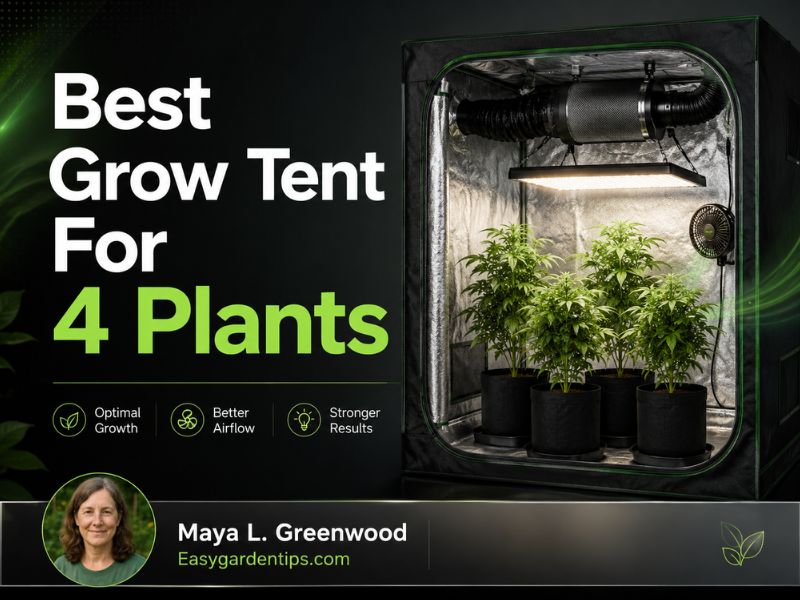
Best Grow Tent for 4 Plants: Give Every Plant Room to Grow
Finding the best grow tent for 4 plants is less about squeezing four containers inside an enclosure and more about giving the plants enough usable canopy space once they mature. Four small pots may fit inside a 3×3 tent, but mature foliage, circulation fans, lighting, ducting, and environmental equipment can make the same space feel crowded surprisingly quickly.
For most four-plant indoor gardens, a 4×4 grow tent is the most balanced starting point. A 48 × 48-inch floor gives you 16 square feet, which can be divided into four approximate 2×2 growing zones. That arrangement works naturally with a square LED footprint and leaves considerably more room around the canopy than a 3×3.
My first recommendation is the AC Infinity CLOUDLAB 844 4×4 Grow Tent. It measures 48 × 48 × 80 inches and uses the heavy-duty construction, controller mounting, reflective interior, and equipment-friendly layout that make the CLOUDLAB line especially useful for a permanent indoor setup. AC Infinity also builds a dedicated four-plant system around the CLOUDLAB 844, which reinforces how naturally the footprint fits this plant count.
The VIVOSUN P448 Advance PRO 4×4 Grow Tent is my second choice. It also measures 48 × 48 × 80 inches, but puts extra emphasis on structural reinforcement with 22 mm steel poles, 2000D fabric, extra hanging bars, and a high-CFM support kit. VIVOSUN officially lists the P448 for approximately four to eight plants in 3-gallon containers, so using it for only four gives each plant much more comfortable space.
The Spider Farmer Master Series 4×4 takes the third position. It keeps the same 48 × 48 × 80-inch dimensions while adding 2000D canvas, 22 mm poles, organized cable routing, controller-ready mounting, and a layout Spider Farmer positions for four to six plants.
3 Best Grow Tents for 4 Plants
| Image | Product Name | Check Price |
|---|---|---|
Best Choice | AC Infinity CLOUDLAB 844 4×4 Grow Tent | Check Price |
Second Best | VIVOSUN P448 Advance PRO 4×4 Grow Tent | Check Price |
Third Choice | Spider Farmer Master Series 4×4 Grow Tent | Check Price |
These tents all use the familiar 4×4 footprint, but they emphasize different priorities.
The AC Infinity is the strongest all-around system-oriented choice. VIVOSUN offers excellent structural support for growers hanging more equipment, while Spider Farmer provides a modern tent layout with generous cable-management and controller integration.
1. AC Infinity CLOUDLAB 844 4×4 Grow Tent
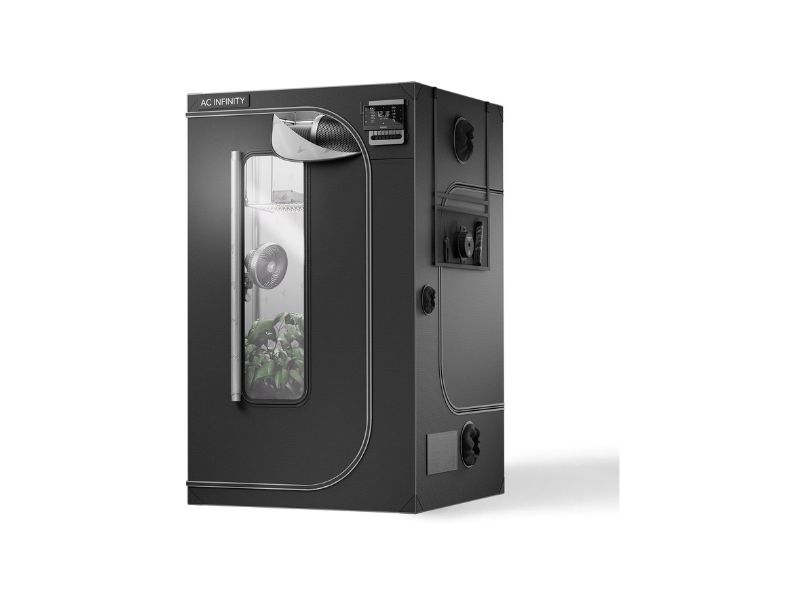
Key Features
- 48 × 48 × 80-inch dimensions
- Heavy reflective canvas
- Thick steel frame
- Controller mounting plate
- Light-resistant cable routing
- Multiple ventilation openings
- Large viewing window
The CLOUDLAB 844 earns first place because it treats the tent as part of an environmental system rather than simply a fabric enclosure.
Its 48 × 48-inch footprint gives four plants a straightforward quadrant layout, while the 80-inch height leaves room for containers, mature plant structure, LED hanging hardware, and overhead ventilation equipment. AC Infinity also integrates an exterior controller plate and cable pass-through arrangement, making it easier to keep environmental controls accessible without leaving unnecessary openings in the tent.
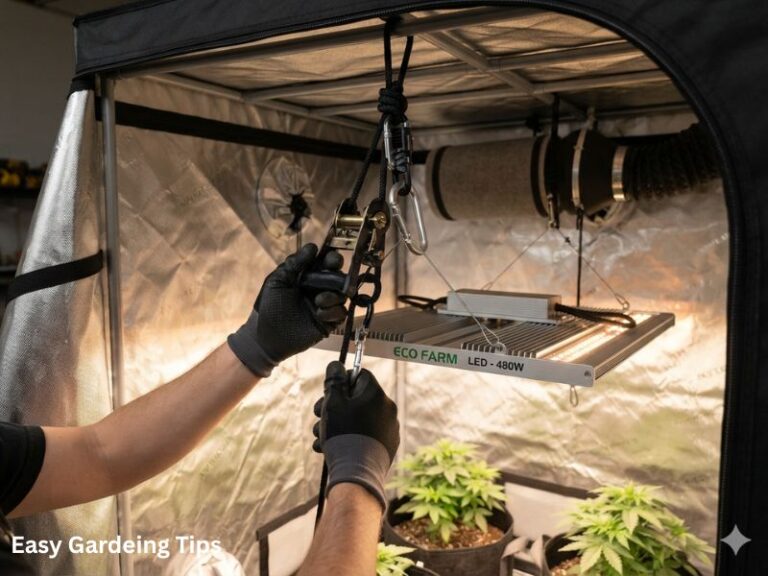
The frame is substantial enough for the normal equipment load of a 4×4 setup, where a light, inline fan, carbon filter, ducting, and accessories may all be suspended overhead. The reflective interior also helps redirect light that would otherwise strike the walls rather than the plant canopy.
Its biggest limitation is simply physical size. A true 4×4 enclosure needs more than 16 square feet of room once you include door clearance, ducting, and access around the tent.
What I Like
- Excellent four-plant footprint
- Strong equipment integration
- Useful controller mounting
- Good vertical space
What I Do Not Like
- Requires a meaningful amount of room
- More tent than very compact plants need
For growers who know they want a permanent four-plant 4×4 setup, the CLOUDLAB 844 offers the best balance of structure, access, organization, and environmental-control compatibility.
2. VIVOSUN P448 Advance PRO 4×4 Grow Tent
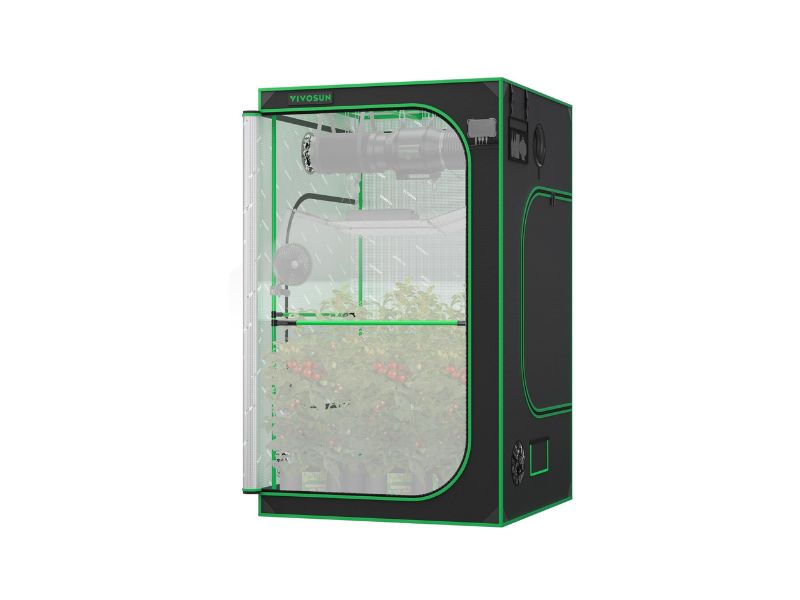
Key Features
- 48 × 48 × 80-inch size
- 2000D Oxford canvas
- Reflective interior
- 22 mm steel poles
- Included high-CFM support kit
- Extra hanging bars
- Large observation window
The VIVOSUN P448 PRO is particularly appealing if you plan to hang substantial equipment from the tent frame.
VIVOSUN specifies 22 mm steel poles, 2000D fabric, additional hanging bars, and a high-CFM support system designed to add stability and help limit tent-wall deformation from powerful ventilation. The P448’s technical specifications list a 220-pound load-bearing figure for this model.
For four plants, the internal dimensions are generous without being excessive. VIVOSUN lists the P448 for four to eight plants in 3-gallon pots; using it for four creates more working room around the canopy instead of treating the manufacturer’s upper plant count as a target.
The multiple doors and large viewing window are also useful once four mature plants make the interior harder to reach.
What I Like
- Strong reinforced frame
- Thick 2000D construction
- Extra hanging support
- Multiple access points
What I Do Not Like
- Reinforcement can be unnecessary for a minimalist setup
- Four large plants can still make rear access difficult
The P448 is an excellent choice when the tent will carry a full lighting, filtration, ventilation, and environmental-control setup.
3. Spider Farmer Master Series 4×4 Grow Tent
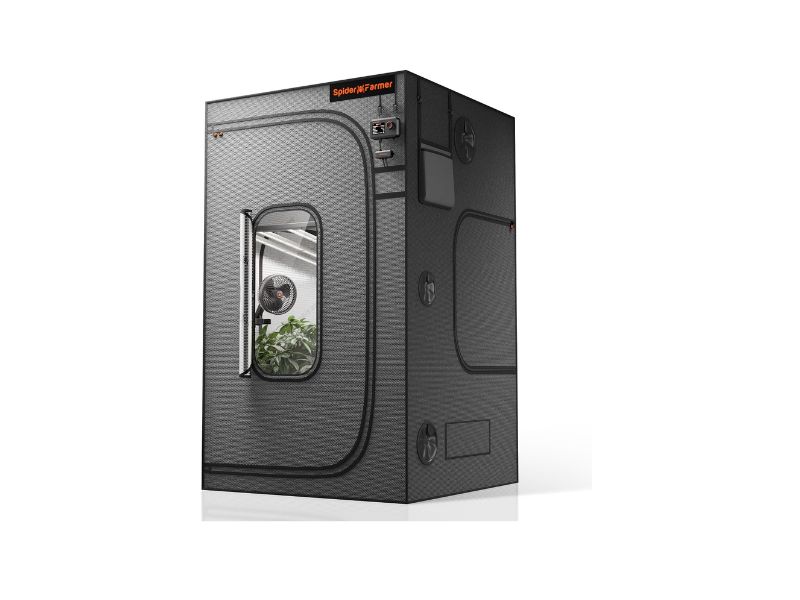
Key Features
- 48 × 48 × 80-inch dimensions
- 2000D canvas
- Reinforced 22 mm steel poles
- Controller-ready organization
- Cable-routing features
- Observation window
- Removable waterproof floor tray
Spider Farmer’s Master Series 4×4 is the newest-feeling option of these three.
The current model uses a 4×4×6.6-foot enclosure with 2000D canvas and reinforced 22 mm poles. Spider Farmer positions it for roughly four to six plants and emphasizes integrated cable routing, controller mounting, observation access, and compatibility with lighting, ventilation, filtration, humidification, and other environmental equipment.
That four-to-six-plant positioning is useful because running only four plants leaves some breathing room rather than filling the enclosure to its advertised capacity.
The waterproof floor tray is also convenient during watering or cleanup.
What I Like
- Comfortable four-plant size
- Organized cable and controller layout
- 2000D material and strong poles
- Good vertical clearance
What I Do Not Like
- Takes the same room as other full 4×4 tents
- Some of the system-focused features may be unnecessary for a basic setup
For growers who want a modern 4×4 platform with plenty of organization for future equipment, the Spider Farmer is an easy alternative to the first two tents.
Grow Tent Comparison for 4 Plants
| Product | Tent Size | Height | Four-Plant Space | Main Strength | Main Limitation |
| AC Infinity CLOUDLAB 844 | 4×4 | 80 in. | Comfortable | Excellent overall equipment integration | Requires dedicated floor space |
| VIVOSUN P448 PRO | 4×4 | 80 in. | Comfortable | Reinforced frame and hanging support | Can be more structure than a simple setup needs |
| Spider Farmer Master Series | 4×4 | 80 in. | Comfortable | Modern organization and environmental integration | Similar large footprint |
All three provide the same basic 16-square-foot floor area and 80-inch height. The main differences are in frame design, access, equipment organization, and how each manufacturer approaches ventilation and controller integration.
What Size Grow Tent Is Best for 4 Plants?
For most medium-sized plants, 4×4 is the safest general recommendation.
A 3×3 can physically hold four plants, while a 5×5 provides considerably more room. The 4×4 lands between them and gives each plant an intuitive share of the canopy without demanding an unnecessarily large room.
3×3 Grow Tent
A 3×3 tent has:
3 × 3 = 9 square feet
Divide that between four plants and each plant gets an average of only:
2.25 square feet
That can work when the plants remain compact.
The problem is that floor-space calculations do not include the room needed for:
- Pot spacing
- Circulation fans
- Humidifier
- Drain trays
- Training equipment
- Access for watering
- Air movement around the canopy
Four mature canopies can therefore make a 3×3 feel much smaller than the raw nine-square-foot figure suggests.
A 3×3 is a reasonable choice when:
- Floor space is limited
- Plants remain naturally compact
- Containers are relatively small
- You deliberately control canopy size
It is less attractive when four plants are expected to become broad and mature.
4×4 Grow Tent
A 4×4 provides:
4 × 4 = 16 square feet
Divided evenly between four plants:
16 ÷ 4 = 4 square feet per plant
That effectively creates four approximate 2×2 zones:
| Plant 1 | Plant 2 |
| Plant 3 | Plant 4 |
This layout is simple to understand and easy to illuminate.
AC Infinity uses the 48 × 48-inch CLOUDLAB 844 as the tent in its four-plant integrated system, while VIVOSUN lists its P448 for four to eight plants and Spider Farmer positions its current Master Series 4×4 for four to six.
For most growers, using these tents at the lower end of their advertised capacity produces the more comfortable environment.
5×5 Grow Tent
A 5×5 provides:
25 square feet
That is more than 50% additional floor area compared with a 4×4.
For four large plants, this extra space can be extremely useful.
You gain room for:
- Wider canopies
- Larger containers
- More circulation equipment
- Environmental devices
- Easier plant access
The tradeoff is that a 5×5 also requires a larger physical room and generally calls for lighting and ventilation sized around the larger canopy.
For four ordinary medium-sized plants, 4×4 remains more efficient.
Why a 4×4 Tent Works So Well for Four Plants
The main benefit is symmetry.
A square 4×4 canopy divides naturally into four sections without forcing one plant into a narrow end of the tent.
That simplifies:
- Plant spacing
- Light placement
- Trellis layout
- Fan positioning
- Sensor placement
A square light fixture or appropriately sized bar fixture can illuminate the canopy evenly from the center.
With a rectangular 2×4 tent, four plants would need to share a long narrow space. That can work for small plants, but the 4×4 provides twice the floor area.
Do Four Plants Really Need 16 Square Feet?
Not always.
Plant count by itself tells you very little about mature size.
Four seedlings can fit on a shelf.
Four compact herbs can fit in a surprisingly small enclosure.
Four mature fruiting or ornamental plants may fill an entire 4×4 canopy.
Think in terms of mature canopy, not pot count.
Before choosing the tent, estimate:
- Container diameter
- Expected canopy width
- Expected plant height
- Support or trellis requirements
- Equipment that must stay on the floor
This produces a much better estimate than simply searching “tent for four plants.”
How Tall Should a Grow Tent for 4 Plants Be?
For a flexible full-cycle indoor setup, 80 inches is an excellent target.
All three selected tents are approximately 80 inches tall.
That does not mean the plants themselves can grow 80 inches tall.
Part of that vertical space will be occupied by:
- Pots or containers
- LED fixture
- Light-hanging hardware
- Required canopy clearance
- Carbon filter
- Ducting
- Inline fan in some layouts
If a container is 12 inches tall and overhead equipment uses another 12–18 inches, the actual plant-and-light adjustment zone becomes much smaller.
Is 72 Inches Enough?
It can be.
A 72-inch tent works well when:
- Plants stay compact
- Containers are low
- Lighting is thin
- Ventilation equipment is mounted efficiently
The lost eight inches becomes noticeable when plants stretch or you need to raise the light late in the growth cycle.
Why 80 Inches Is Easier
An 80-inch tent gives more vertical flexibility without usually increasing the floor footprint.
That extra height can make it easier to:
- Maintain proper light clearance
- Hang a filter overhead
- Manage taller containers
- Keep equipment out of the canopy
For a long-term four-plant setup, that flexibility is worth having.
How to Choose a Grow Tent for Four Plants
Tent dimensions should come first, but several construction details determine how easy the enclosure is to live with.
Usable Floor Area
A 4×4 has 16 square feet on paper.
But not every inch is available to the plants.
Floor equipment may include:
- Humidifier
- Dehumidifier
- Drainage tray
- Irrigation equipment
- Fan stand
- Sensors
If a significant amount of equipment has to stay inside the tent, choosing more floor area becomes valuable.
Canvas Construction
Grow tents commonly use heavy Oxford-style fabric combined with an interior reflective layer.
The selected VIVOSUN and Spider Farmer models both specify 2000D fabric, and AC Infinity markets the CLOUDLAB series around heavy canvas and reinforced construction.
A high denier can contribute to a substantial fabric structure, but it does not determine quality alone.
Also consider:
- Stitching
- Zipper design
- Corner construction
- Light-blocking flaps
- Port closures
A thick fabric tent with poor zippers can still leak light.
Reflective Interior
Reflective interior material helps redirect light that reaches the tent walls.
It does not create extra electrical output from the grow light.
Instead, it reduces how much useful light is simply absorbed by dark surrounding surfaces.
The selected tents all use reflective interiors as part of their enclosure designs.
Pole Strength
A 4×4 tent may carry substantial equipment overhead.
A typical frame can support some combination of:
- LED grow light
- Inline fan
- Carbon filter
- Ducting
- Sensors
- Circulation equipment
VIVOSUN specifies 22 mm poles and a 220-pound load-bearing figure for the P448, while Spider Farmer’s current Master Series 4×4 also uses reinforced 22 mm steel poles.
Even with a strong frame, equipment should be distributed sensibly rather than hanging every heavy component from one crossbar.
Door Access
Four plants can turn into one continuous wall of foliage.
Once that happens, reaching the rear corners from a single front door becomes difficult.
Side access is useful because it lets you reach:
- Rear pots
- Irrigation lines
- Fallen leaves
- Fans
- Sensors
- Trellis points
VIVOSUN’s P448, for example, provides a front door and side doors, making multi-angle access easier.
Observation Window
A viewing window lets you perform a quick visual check without opening the entire enclosure.
It is useful for confirming:
- Light operation
- Fan operation
- Basic plant posture
- Obvious environmental issues
It does not replace a proper hands-on inspection.
Ventilation Ports
The tent needs openings that match the ventilation layout.
Look for enough ports to support:
- Exhaust ducting
- Passive or powered intake
- Electrical cables
- Environmental sensors
VIVOSUN’s P448, for example, lists multiple 4-inch and 8-inch duct openings, while AC Infinity and Spider Farmer also design their 4×4 systems around ventilation and controller integration.
What Grow Light Works in a 4×4 Tent?
The light should be selected according to canopy coverage and plant requirements, not simply the number of plants.
Four plants may form one continuous 4×4 canopy once mature.
That means the fixture should provide reasonably uniform light across the entire square rather than creating a very bright center and weak edges.
Why Coverage Matters More Than Plant Count
Imagine two setups.
Setup A has four tiny plants clustered in the center.
Setup B has four mature plants filling almost the entire 4×4.
Both contain “four plants.”
Their lighting requirements are very different.
When buying the fixture, consider:
- Recommended coverage
- PPFD distribution
- Hanging height
- Dimming range
- Heat output
- Fixture dimensions
VIVOSUN currently recommends 400–500W-class fixtures from its own lineup for the P448, while Spider Farmer pairs its 4×4 enclosure with fixtures such as the SF4000, G5000, or SE5000. These manufacturer pairings illustrate the importance of choosing a fixture designed around a full 4×4 canopy rather than using plant count alone.
Bar-Style LED
Bar fixtures spread diodes across a wider physical area.
This can improve edge-to-edge uniformity in a square tent.
They are especially useful when four plants are trained into one even canopy.
Board-Style LED
Board-style fixtures concentrate more of the light source into fewer panels.
A properly sized one can still work very well.
The main question is whether the intensity remains suitable near the outside edges of the 4×4 footprint.
What Size Inline Fan Does a 4×4 Tent Need?
There is no single fan rating that is perfect for every 4×4.
Required airflow depends on:
- Light heat
- Room temperature
- Carbon filter
- Duct length
- Number of bends
- Desired negative pressure
- Humidity load
A useful starting point is tent volume.
For a 4 × 4 × 6.67-foot tent:
4 × 4 × 6.67 ≈ 107 cubic feet
That is the physical air volume before considering restrictions.
A fan attached to a carbon filter and several feet of ducting will not move the same amount of air it produces in an unrestricted laboratory condition.
VIVOSUN currently recommends a 6-inch inline fan for its P448 4×4 tent.
That makes a 6-inch ventilation platform a logical category to investigate for many full 4×4 setups, although actual speed can often be reduced with a controller.
Why Variable-Speed Ventilation Is Useful
A grow tent does not always need maximum fan power.
Temperature and humidity change throughout the day.
A variable-speed fan or environmental controller can reduce unnecessary airflow when the tent is already within target conditions.
It can also reduce excessive negative pressure.
A small amount of inward wall movement is normal when exhaust airflow exceeds intake airflow.
Extreme wall collapse can reduce usable canopy space.
VIVOSUN includes a high-CFM support structure with the P448 partly to strengthen the enclosure when high-powered ventilation creates pressure on the tent walls.
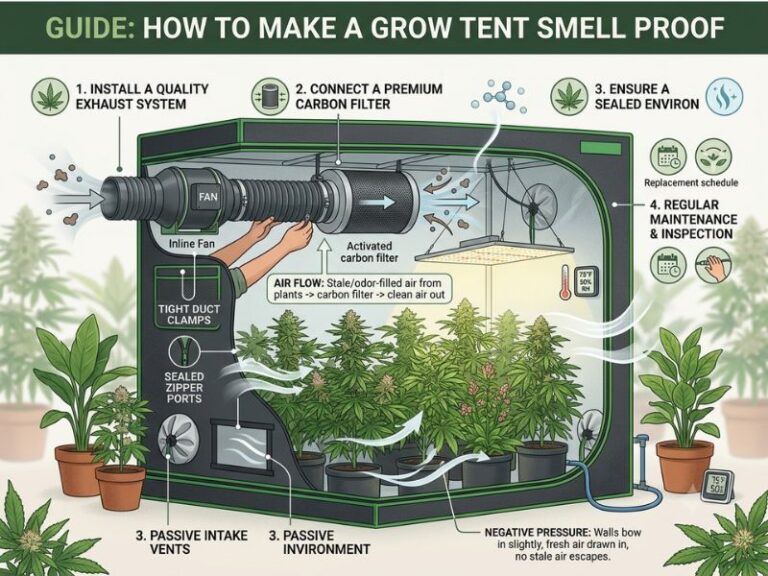
Does a Four-Plant Tent Need a Carbon Filter?
Not every crop requires odor filtration.
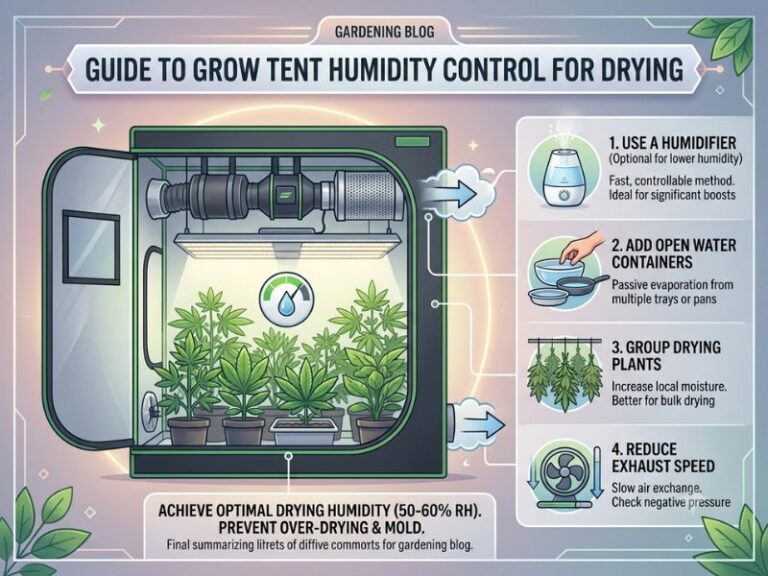
A carbon filter becomes useful when the plants produce odors you want to prevent from entering the surrounding room.
The filter normally sits on the exhaust side of the airflow system.
One common layout is:
Tent air → carbon filter → inline fan → ducting → exhaust
A filter adds resistance.
That means the ventilation fan should be selected with the filter and ducting in mind rather than based only on the empty tent volume.
A large filter also consumes overhead space, which is another reason 80-inch tent height is useful.
How Many Circulation Fans Does a 4×4 Need?
There is no magic number.
The goal is to prevent stagnant air rather than count fans.
Four mature plants can produce a dense canopy that blocks airflow.
You want gentle movement:
- Across the top of the canopy
- Around the sides
- Through or below dense foliage
A single well-positioned oscillating fan may be adequate during early growth.
A fuller canopy can benefit from airflow at more than one height.
Avoid pointing a powerful fan continuously at one small section of foliage.
The objective is circulation, not wind damage.
How to Arrange 4 Plants in a 4×4 Grow Tent
The simplest arrangement is a four-quadrant pattern:
| Front Left | Front Right |
| Rear Left | Rear Right |
Give each container enough room that the plant can expand toward the center without immediately crowding its neighbors.
Do Not Push Every Pot Against a Wall
Leaving some perimeter room helps with:
- Air movement
- Watering
- Drainage
- Inspecting leaves
- Reaching equipment
As the canopy develops, the foliage can expand outward.
Keep Similar Plants Together
When possible, choose plants with similar:
- Mature height
- Light requirements
- Watering needs
- Growth rate
One very tall plant beside three short ones makes even lighting harder.
Center the Light Over the Combined Canopy
Do not position the light over one individual plant.
Treat the four canopies as one growing surface.
The goal is even coverage across the entire occupied footprint.
Where Should Temperature and Humidity Sensors Go?
Place the main environmental probe near canopy level.
That provides a better representation of the conditions the leaves are experiencing.
Avoid positioning the sensor:
- Directly in front of an oscillating fan
- Beside the humidifier outlet
- Against the tent wall
- Immediately under a heat source
- Directly beside the exhaust opening
Any of those positions can distort the reading.
As plants grow, move the probe upward so it stays relevant to the active canopy.
Where Should a Humidifier Go?
A humidifier can sit inside or outside the tent depending on the setup.
Inside placement gives direct control but consumes valuable floor area.
If it is inside:
- Keep mist away from electrical equipment
- Do not aim output directly at leaves
- Keep the environmental probe away from the mist stream
For a four-plant 4×4, floor space becomes more valuable once containers enlarge.
External humidification with ducted delivery can keep the canopy area less crowded, although it adds complexity.
What About a Dehumidifier?
Four mature plants can release substantial moisture through transpiration.
As canopy density increases, humidity can become harder to manage.
A small dehumidifier placed inside the tent also produces heat, so many larger setups control humidity in the surrounding room instead.
The grow tent then pulls conditioned air from that room.
This is one reason the climate of the room outside the tent matters almost as much as the tent itself.
Temperature, Humidity, and VPD
Temperature and relative humidity interact.
A plant responds to both, which is why many growers use vapor pressure deficit, or VPD, as another way to understand the drying demand of the air.
You do not need to turn a four-plant tent into a laboratory.
The practical priorities remain straightforward:
- Avoid extreme heat
- Avoid persistently saturated air
- Maintain steady circulation
- Provide adequate air exchange
- Adjust humidity as plants mature
A dense four-plant canopy generally needs more attention to airflow and humidity than four seedlings occupying the same tent.
3×3 vs 4×4 for Four Plants
| Factor | 3×3 | 4×4 |
| Floor Area | 9 sq. ft. | 16 sq. ft. |
| Average Area per Plant | 2.25 sq. ft. | 4 sq. ft. |
| Four Small Plants | Easy | Easy |
| Four Medium Plants | Can become tight | Comfortable |
| Equipment Space | Limited | Better |
| Canopy Access | More difficult when full | Easier |
| Lighting Area | Smaller | Larger |
| Room Requirement | Lower | Higher |
The 3×3 wins on compactness.
The 4×4 wins on flexibility.
If the plan is to keep four plants through a complete indoor cycle and allow them to develop medium-sized canopies, I would choose the 4×4 unless the room physically cannot accommodate it.
4×4 vs 5×5 for Four Plants
A 5×5 provides 25 square feet compared with 16 square feet in a 4×4.
That is a meaningful difference.
Choose a 4×4 When
- You want efficient use of floor space
- Plants will be medium-sized
- Equipment can mostly hang overhead
- You want a common lighting footprint
- The surrounding room is limited
Choose a 5×5 When
- Plants will become unusually large
- Containers are oversized
- You want more walking or maintenance room
- Environmental equipment stays inside
- Future expansion is likely
For most four-plant home gardens, a 5×5 is comfortable but not necessary.
Is 2000D Canvas Necessary?
No.
Both VIVOSUN P448 and Spider Farmer Master Series currently use 2000D fabric, but fabric density is only one part of overall construction quality.
A grow tent also depends on:
- Stitching
- Zipper quality
- Frame strength
- Seams
- Reflective lining
- Port design
A lower-denier tent with excellent construction can outperform a poorly made tent that advertises a larger fabric number.
Treat 2000D as a useful construction feature rather than the entire buying decision.
Do Light Leaks Matter?
A good tent should control light entering and leaving through the canvas, zippers, seams, and ports.
Small pinholes sometimes appear in tent fabrics when bright light shines through stitching points or folded materials.
The practical concern is whether the enclosure provides the light control your plants and room require.
Look closely at:
- Main zipper
- Corners
- Observation window
- Cable ports
- Duct openings
Double-layer flaps and well-designed closures can help manage these areas.
Spider Farmer’s current Master Series emphasizes double-layer zipper and light-blocking construction, while VIVOSUN describes additional zipper lining designed to improve light control.
Where Should You Put a 4×4 Grow Tent?
A 4×4 tent needs more room than its advertised footprint.
Good locations can include:
- Spare bedroom
- Basement
- Dedicated indoor gardening room
- Climate-controlled garage
- Utility space with sufficient access
Measure Door Clearance
A 48 × 48-inch tent still needs enough room for its doors to open.
If the tent is wedged tightly between walls, side access may become unusable.
Allow Ducting Space
Exhaust ducting usually extends beyond the tent itself.
Do not measure exactly four feet and assume that is enough.
Check Ceiling Height
An 80-inch tent stands 6 feet 8 inches tall.
You still need enough room above it for assembly and any external equipment.
Think About the Surrounding Room
Heat and moisture removed from the tent go somewhere.
If the exhaust dumps into a tiny closed bedroom, the room itself may become warmer and more humid.
The tent cannot overcome poor surrounding-room climate indefinitely.
Is a 4×4 Grow Tent Good for a Bedroom?
It can be, but think about the full system rather than just the tent.
A bedroom setup may involve:
- Fan noise
- Light leakage when the door is open
- Humidity
- Heat
- Ducting
- Electrical cables
- Water containers
A 4×4 also occupies 16 square feet before access space is included.
For a small bedroom, a 3×3 or 2×4 may be physically easier to live with.
Is a Basement Better?
A basement can offer useful floor space and cooler ambient temperatures.
However, some basements already have elevated humidity.
That can make dehumidification more important once four mature plants begin transpiring heavily.
Evaluate the actual room rather than assuming a basement is automatically ideal.
Common Mistakes When Buying a Grow Tent for Four Plants
Choosing the Smallest Tent That Fits Four Pots
Containers fitting on the floor tells you almost nothing about mature canopy space.
Treating Manufacturer Plant Capacity as a Target
If a manufacturer says a tent can hold eight plants, that does not mean eight is the most comfortable layout.
Plant size matters.
Ignoring Height
A 60- or 72-inch tent can become restrictive once pots, lights, and ventilation equipment are installed.
Buying a 5×5 Without Measuring the Room
A 5×5 is comfortable, but the extra nine square feet compared with a 4×4 are significant in a bedroom or small basement.
Choosing Only by Canvas Denier
Frame, zippers, ports, and access are equally important.
Forgetting the Weight of Hanging Equipment
The frame may need to carry several devices at once.
Buying the Light Before Deciding the Tent Size
Lighting should match the final canopy footprint.
Blocking Intake Vents With Pots
Leave enough room around lower vents for air movement.
Packing Four Plants Too Closely
Give each plant room to develop instead of clustering all four in the middle.
Forgetting About Watering Access
A rear plant becomes annoying to maintain once the front canopy is dense.
Ignoring the Surrounding Room
The tent’s environment is strongly influenced by the temperature and humidity of the air entering it.
Frequently Asked Questions
1. What is the best grow tent for 4 plants?
The AC Infinity CLOUDLAB 844 is my first choice for four medium plants because its 4×4×80-inch layout provides plenty of canopy room and strong equipment integration.
VIVOSUN P448 and Spider Farmer Master Series are also excellent 4×4 alternatives. All three provide the 16-square-foot footprint that makes a four-plant layout comfortable.
2. What size grow tent do I need for 4 plants?
A 4×4 tent is the best general-purpose size for four medium plants.
A 3×3 can work for compact plants, while a 5×5 offers more room for unusually large canopies. The 4×4 provides 16 square feet, or an average of four square feet per plant when divided evenly.
3. Is a 3×3 grow tent big enough for 4 plants?
Yes, four small plants can fit in a 3×3, but the tent can become crowded once the canopies mature.
A 3×3 provides only nine square feet. That means four plants share roughly 2.25 square feet each before fans, containers, and other equipment are considered.
4. Is a 4×4 grow tent good for 4 plants?
Yes. A 4×4 is one of the most practical tent sizes for four medium plants.
The square footprint divides naturally into four approximate 2×2 zones and works well with lighting designed for a full 4×4 canopy.
5. Is a 5×5 grow tent too big for 4 plants?
No. A 5×5 gives four plants plenty of room, but it may be larger than necessary for an average home setup.
Choose it when plants will become large, containers are oversized, or you want substantial room for equipment. Otherwise, a 4×4 generally uses floor space more efficiently.
6. How much space does each plant get in a 4×4 tent?
Dividing a 4×4 evenly gives each plant approximately four square feet.
That is equivalent to an approximate 2×2 zone per plant. Actual canopy space changes as foliage overlaps, but the layout is a useful planning baseline.
7. Can four large plants fit in a 4×4?
They can, but four genuinely large canopies may fill the entire tent and reduce access.
If each plant is expected to spread substantially beyond a 2×2 zone, a 5×5 can provide easier watering, airflow, and maintenance.
8. How tall should a grow tent for four plants be?
Around 80 inches is a very useful general-purpose height.
All three selected tents use an approximately 80-inch height, leaving more room for containers, plant growth, LED clearance, and overhead ventilation equipment.
9. Is a 72-inch-tall tent enough?
Yes, especially for compact plants, but an 80-inch tent offers more flexibility.
The extra eight inches becomes useful when pots are tall or when a light, carbon filter, fan, and ducting consume overhead space.
10. What size LED light works in a 4×4 grow tent?
Choose an LED designed to provide suitable intensity and reasonably uniform coverage across a full 4×4 canopy.
Do not select only by plant count. VIVOSUN currently recommends several 400–500W-class fixtures for its P448, while Spider Farmer pairs its 4×4 with fixtures such as the SF4000, G5000, and SE5000.
11. What size inline fan should I use in a 4×4 tent?
A 6-inch inline-fan platform is a common starting point for a full 4×4 setup, but actual airflow requirements depend on heat, filter resistance, and ducting.
VIVOSUN currently recommends a 6-inch inline fan for the P448. A variable-speed model makes it easier to adjust airflow rather than running maximum speed continuously.
12. Do I need a carbon filter for four plants?
Only if odor control is necessary for the plants you are growing.
The filter is part of the ventilation system rather than something required simply because the tent contains four plants. Remember that a filter adds airflow resistance and consumes hanging space.
13. How many circulation fans should I use?
Use enough airflow to prevent stagnant areas across and beneath the canopy rather than aiming for a specific fan count.
A young four-plant garden may need only one well-positioned fan. A dense mature canopy may benefit from additional airflow at another height.
14. Is 2000D canvas necessary for a grow tent?
No. It is a useful heavy-duty construction feature, but overall tent quality depends on more than fabric density.
VIVOSUN P448 and Spider Farmer Master Series both use 2000D fabric. Zippers, stitching, frame design, ports, and light-blocking construction also matter.
15. Are stronger grow tent poles worth it?
Yes, particularly when a light, filter, fan, and other equipment will hang from the frame.
VIVOSUN and Spider Farmer both use approximately 22 mm poles in these current 4×4 models, reflecting the heavier equipment loads common in larger tent setups.
16. How should I arrange four plants in a 4×4?
Use a four-quadrant layout, with one plant toward each quarter of the floor.
Leave some room between containers and tent walls. As the plants grow, their canopies can expand toward the center while airflow continues around the outside.
17. Which is better for four plants, 3×3 or 4×4?
A 4×4 is better for four medium plants; a 3×3 is better when minimizing room footprint is the priority.
The 4×4 provides 16 square feet compared with nine in a 3×3, so it offers much more room for mature foliage and equipment.
18. Which is better for four plants, 4×4 or 5×5?
A 4×4 is more space-efficient, while a 5×5 is more comfortable for four very large plants.
Choose the 5×5 when you expect unusually broad canopies or want substantial maintenance space. For ordinary medium plants, the 4×4 is usually easier to illuminate and fit into a home.
19. Where should temperature and humidity sensors go?
Place the main sensor close to canopy height where it can measure the environment around the leaves.
Keep it away from direct fan airflow, humidifier mist, tent walls, and exhaust openings that could distort the reading.
20. Can I keep a 4×4 grow tent in a bedroom or basement?
Yes, if the room has enough physical space, electrical capacity, ventilation, and climate control for the complete setup.
Remember that the tent is only part of the system. Door clearance, ducting, heat, humidity, fan noise, and access all affect whether the location works well.
Conclusion
The best grow tent for 4 plants is usually a true 4×4 rather than the smallest enclosure that can physically hold four containers.
A 48 × 48-inch floor provides 16 square feet, allowing four plants to occupy approximate 2×2 zones while leaving far more flexibility for airflow, lighting, watering, and canopy development than a crowded 3×3.
AC Infinity CLOUDLAB 844 is my primary recommendation because its 4×4×80-inch dimensions are combined with strong construction, thoughtful controller mounting, ventilation integration, and a layout that AC Infinity itself uses for a dedicated four-plant system.
VIVOSUN P448 is especially appealing when frame strength and hanging capacity are priorities, while Spider Farmer’s Master Series provides another well-organized 4×4 platform with 2000D construction and a four-to-six-plant design target.
A 3×3 can still work when the plants remain compact, and a 5×5 can be worthwhile for four unusually large plants. For most indoor gardeners, however, the 4×4 offers the best middle ground.
Measure the surrounding room before ordering, account for the light, inline fan, carbon filter, containers, and door clearance, and choose enough height to keep the equipment from competing with the canopy.
For four medium plants, 4×4×80 inches is the size I would build around first.

I’m Maya L. Greenwood, a lifelong plant lover who believes anyone can grow something beautiful with the right guidance. After years of testing soil mixes, pruning methods, irrigation tricks, and pest-safe solutions, I started EasyGardenTips.com to turn hard-won lessons into step-by-step advice. From seed starting and container gardens to composting and seasonal checklists, my goal is to make gardening simple, sustainable, and fun.