Best Grow Lights for 4×8 Tent: 3 High-Efficiency LED Systems
Choosing the best grow lights for 4×8 tent coverage starts with recognizing how large the growing area actually is. A 4×8 tent provides 32 square feet of canopy space—twice the area of a standard 4×4 tent. Although some large fixtures claim broad coverage, one light positioned in the center often produces excessive intensity in the middle and weaker illumination near the ends.
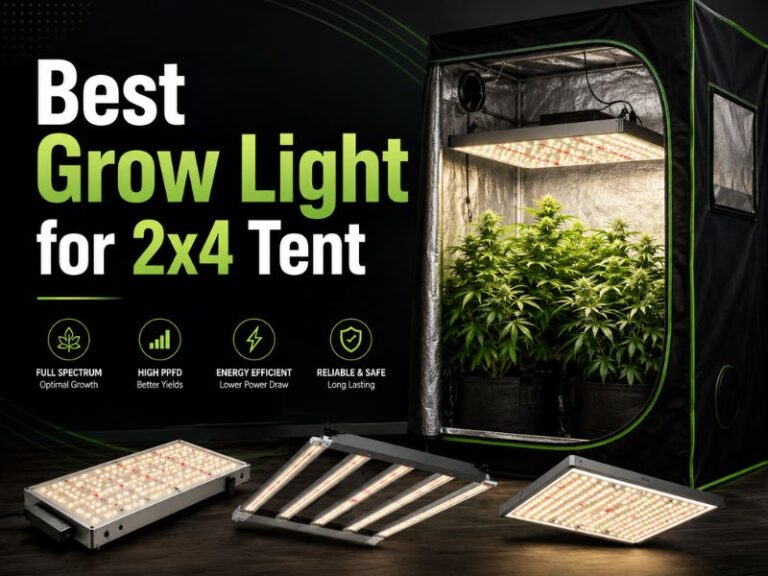
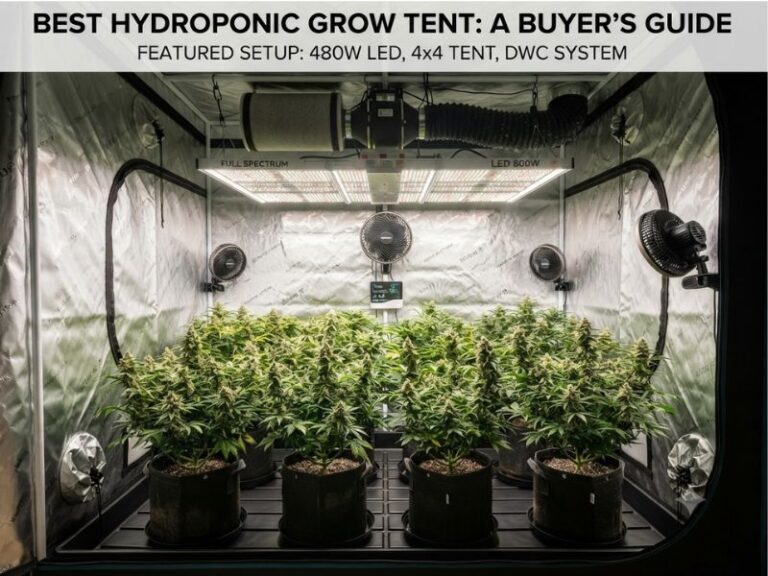
For the three products in this guide, the most practical arrangement is to use two matching fixtures. Each light covers one 4×4 half of the tent, giving you better canopy uniformity, independent dimming, easier height adjustment, and more control when plants on one side grow faster than those on the other.
My primary recommendation is a pair of Spider Farmer SF4000 450W LED Grow Lights. Two fixtures provide 900 watts of combined LED power and divide the tent into two straightforward 4×4 lighting zones. The SF4000 is particularly suitable for growers who prefer a simple, dimmable full-spectrum system without paying for advanced environmental integration.
I also recommend considering two Mars Hydro FC-E4800 fixtures for wider bar-style light distribution or two AC Infinity IONFRAME EVO6 fixtures for scheduling, smart controls, and removable drivers.
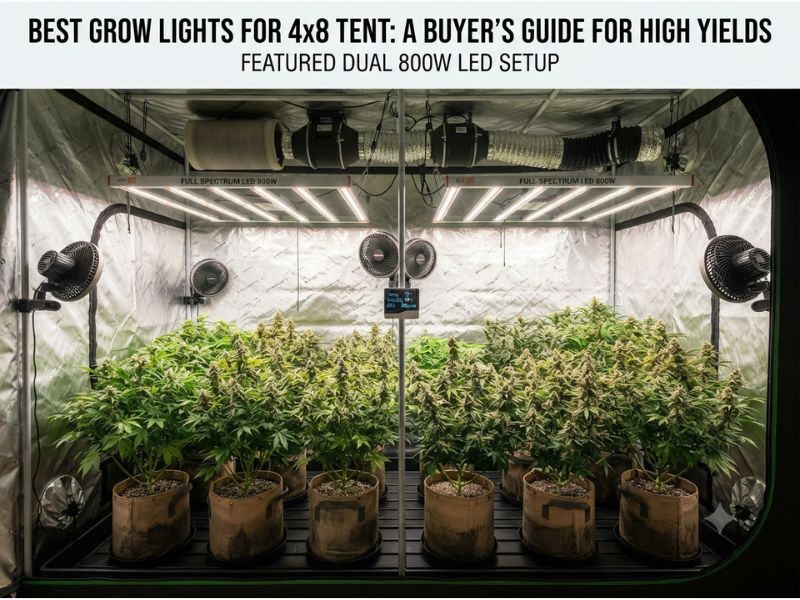
The best LED grow lights for 4×8 tent use should not be selected by wattage alone. Spectrum, photon output, fixture shape, dimming range, hanging height, heat management, and electrical capacity all affect the final result.
3 Best Grow Lights for 4×8 Tent Coverage
| Image | Product Name | Check Price |
|---|---|---|
Best Choice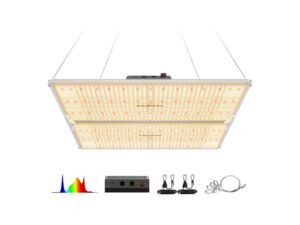 | Spider Farmer SF4000 450W LED Grow Light | Check Price |
Second Best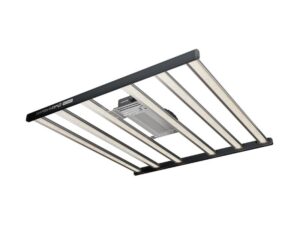 | Mars Hydro FC-E4800 480W LED Grow Light | Check Price |
Third Choice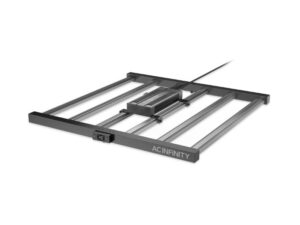 | AC Infinity IONFRAME EVO6 500W LED Grow Light | Check Price |
1. Spider Farmer SF4000 450W LED Grow Light
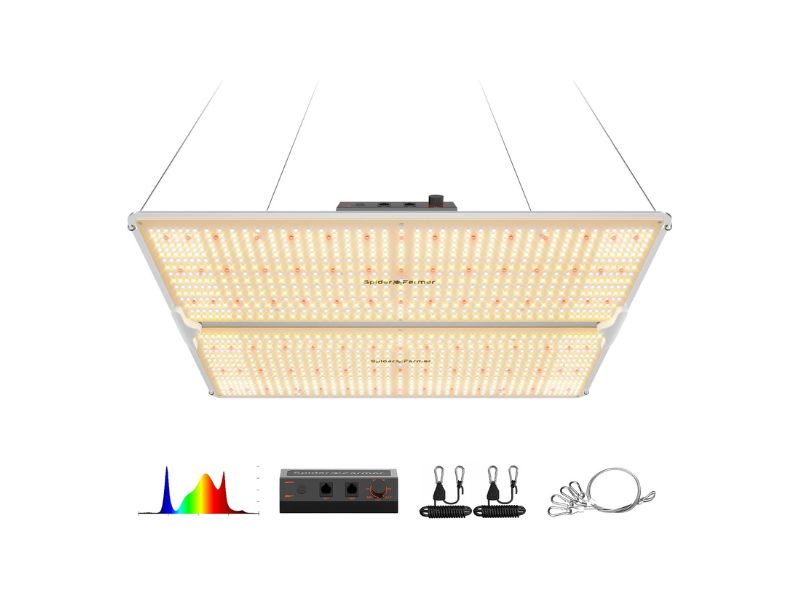
Key Features
- 450W actual power draw per fixture
- Two fixtures provide 900W combined power
- Approximately 2.7 µmol/J photon efficacy
- Designed for approximately 4×4 flowering coverage
- Dimmable full-spectrum LED output
- High-efficiency Bridgelux LED configuration
- Passive cooling without internal cooling fans
- Compact board-style construction
The Spider Farmer SF4000 offers a straightforward way to illuminate a 4×8 tent without relying on one oversized central fixture. By placing one SF4000 over each 4×4 half, you create two independent lighting zones that can be adjusted separately.
This arrangement is useful when plants on one side differ in height, age, or growth rate. One fixture can be raised or dimmed without changing the conditions on the other side. It also reduces the risk of creating one extremely bright central region while leaving the far ends of the tent underlit.
The current SF4000 is a 450-watt fixture with an advertised photon efficacy of approximately 2.7 µmol/J and 4×4 core coverage. Its full-spectrum output is designed for use throughout the growth cycle, including seedlings, vegetative development, and flowering.
Its board-style layout concentrates the LEDs within a relatively compact fixture. This design simplifies installation and takes up less horizontal space than a wide multi-bar light. It leaves more room near the tent ceiling for ducting, filters, circulation fans, and hanging hardware.
The trade-off is light distribution. Board-style fixtures can produce stronger intensity near the center than at the outer edges, particularly when hung too close to the canopy. In a 4×8 configuration, each SF4000 should be carefully centered over its 4×4 zone, with enough space between the fixtures to avoid excessive overlap along the middle seam.
Dimming is one of the most important features. Two SF4000 fixtures produce a combined 900 watts at full output, which is more light than seedlings or young plants usually require. Starting at a reduced setting allows plants to acclimate while lowering heat and electricity use.
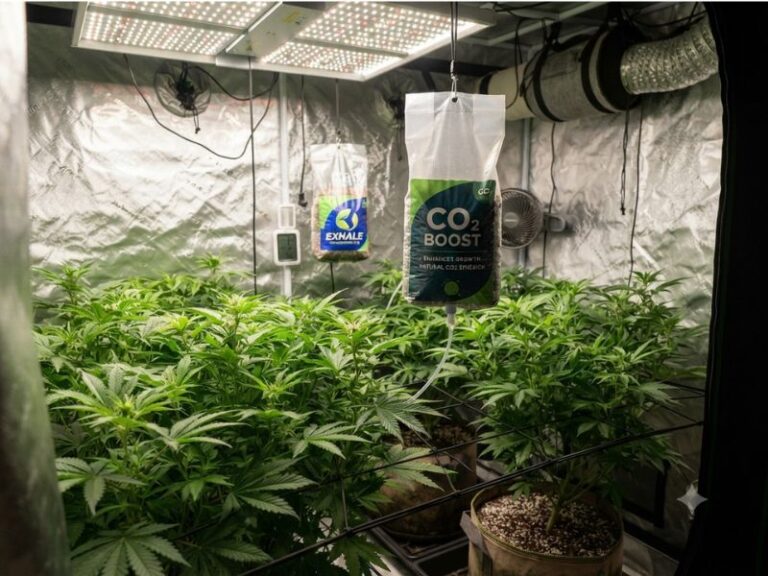
As plants mature, intensity can be increased gradually. The correct setting depends on hanging height, plant species, growth stage, canopy density, temperature, and whether supplemental carbon dioxide is used.
The passive-cooling design eliminates the noise and maintenance associated with fixture-mounted cooling fans. However, passive cooling does not mean the lights produce no heat. Nearly all electricity consumed by the system eventually becomes heat in the tent or surrounding room. A 900-watt lighting setup requires adequate exhaust ventilation and air circulation.
The SF4000’s compact construction makes it easier to hang than a very wide bar fixture, but two lights still require secure ratchet hangers and properly supported tent crossbars. The fixtures should remain level so the canopy receives consistent intensity.
What I Like
- Simple two-zone configuration for a 4×8 tent
- Independent height and dimming control
- Efficient full-spectrum output
- Compact fixture design
- No internal cooling fans
- Suitable for multiple plant-growth stages
- Lower combined wattage than the two competing setups
What I Do Not Like
- Board-style construction may produce stronger center intensity
- Edge uniformity depends heavily on hanging height
- Built-in smart scheduling is limited
- Drivers contribute heat near the top of the tent
- Two fixtures require separate hanging and cable management
A pair of SF4000 lights is a practical choice for growers who want reliable 4×8 coverage with uncomplicated controls. The setup is especially appealing when simplicity, independent dimming, and moderate total power draw matter more than advanced automation.
2. Mars Hydro FC-E4800 480W LED Grow Light
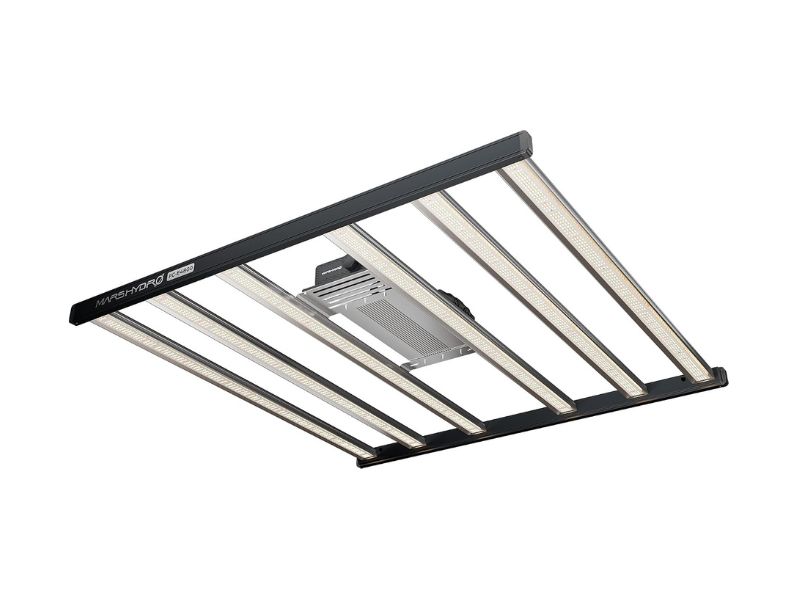
Key Features
- 480W actual power draw per fixture
- Two fixtures provide 960W combined power
- Approximately 2.8 µmol/J photon efficacy
- Approximately 1,344 µmol/s PPF
- Designed for approximately 4×4 coverage
- Wide bar-style LED layout
- Bridgelux LEDs with enhanced deep-red output
- Dimmable intensity control
- IP65-rated fixture construction
- Optional smart-control compatibility
The Mars Hydro FC-E4800 is a bar-style alternative designed to spread light across a wider physical area. Two fixtures positioned side by side create a nearly continuous lighting grid across a 4×8 canopy.
Each fixture draws approximately 480 watts, producing a combined full-power draw of 960 watts. Mars Hydro specifies approximately 2.8 µmol/J photon efficacy, 1,344 µmol/s PPF, and 4×4 maximum coverage for the FC-E4800. The fixture uses Bridgelux LEDs and includes deep-red wavelengths intended to support full-cycle indoor growth.
The bar arrangement is the main reason to choose this product. Instead of placing most of the diodes on one compact board, the LEDs are distributed across several bars with open space between them. This typically improves light spread, passive cooling, and edge-to-edge uniformity.
In a 4×8 tent, place one fixture over each 4×4 half. The outside bars should remain far enough from the tent walls to prevent wasted sidewall intensity, while the inside bars should not overlap so aggressively that they create an excessively bright strip down the center.
A small amount of overlap is useful because it reduces the possibility of a dim seam. The ideal distance between fixtures depends on hanging height and measured canopy intensity. A PAR meter provides the most reliable way to identify uneven areas, though plant response and manufacturer hanging guidance can also help.
The 960-watt combined system provides enough capacity for high-intensity flowering applications, but full power should not be treated as the default setting. Seedlings and young plants require much lower light levels, and even mature plants can experience stress when intensity is increased too quickly.
The dimmer allows both fixtures to be reduced during early growth. If the lights are connected for synchronized control, verify that both units respond consistently. Independent control may be preferable when the two canopy zones differ.
The bar-style frame has a larger footprint than the SF4000 board. It occupies more space near the tent ceiling and may require more planning around the carbon filter, exhaust fan, ducting, and circulation equipment. The fixtures must also be assembled and supported correctly so the bars remain level.
The open construction assists passive heat dissipation. Nevertheless, two 480-watt fixtures still introduce nearly one kilowatt of electrical load. Heat removal becomes especially important during long photoperiods or when the intake room is already warm.
Optional smart-control support can add scheduling and remote adjustment, but additional accessories may be required. Buyers who only need manual dimming may prefer to avoid adding another controller ecosystem.
What I Like
- Broad bar-style canopy coverage
- Strong photon efficacy
- Useful full-spectrum and deep-red output
- Better edge uniformity than many compact board lights
- Independent control over two 4×4 zones
- Open frame supports passive cooling
- IP65-rated fixture construction
What I Do Not Like
- Some assembly and alignment may be required
- Smart control may require an additional accessory
- Larger physical footprint near the tent ceiling
- Two fixtures draw approximately 960 watts at full power
- Cabling and driver placement require careful organization
Two FC-E4800 fixtures make sense for growers who prioritize uniform bar-style coverage and strong output across the entire canopy. The system offers a useful middle ground between a simple board-light setup and a more expensive fully integrated smart-lighting platform.
3. AC Infinity IONFRAME EVO6 500W LED Grow Light
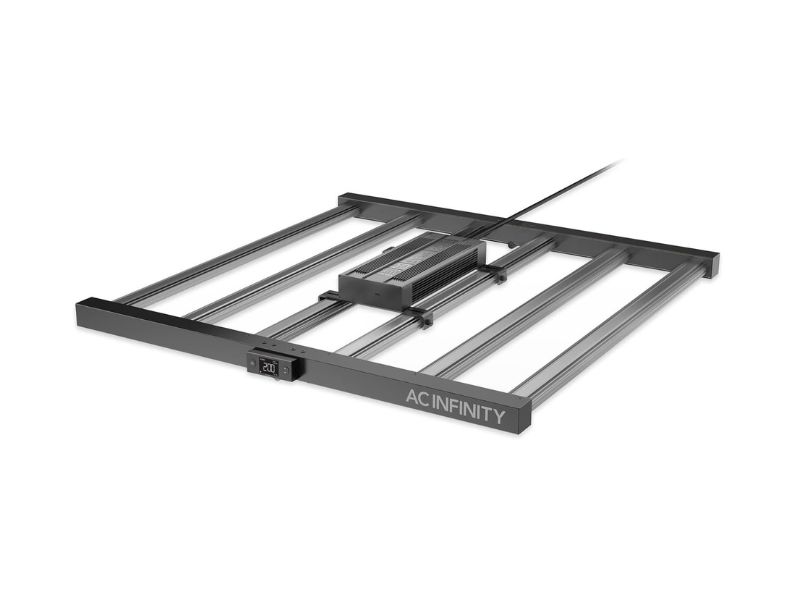
Key Features
- 500W actual power draw per fixture
- Two fixtures provide 1,000W combined power
- 1,680 Samsung LM301H EVO diodes per fixture
- Approximately 4×4 flowering coverage
- Approximately 5×5 vegetative coverage
- Ten brightness levels
- Built-in schedule programming
- Sunrise and sunset dimming
- Removable LED driver
- Bar-style diode arrangement
- IP65 protection
- ETL-certified construction
- UIS smart-controller compatibility
The AC Infinity IONFRAME EVO6 is the most control-focused light in this comparison. It combines a wide bar-style frame with Samsung LM301H EVO diodes, built-in scheduling, ten brightness levels, gradual sunrise and sunset transitions, and compatibility with AC Infinity’s UIS environmental-control system.
Each fixture draws 500 watts and is designed for approximately 4×4 flowering coverage. A pair provides 1,000 watts across a 4×8 tent. AC Infinity specifies 1,680 diodes per EVO6, a removable driver, IP65 protection, and ETL-certified construction.
The diode layout is spread across multiple bars to reduce central hot spots and improve light distribution. In a 4×8 tent, the two fixtures should be centered over separate 4×4 zones, similar to the Mars Hydro arrangement.
The built-in schedule controller is a major advantage. Rather than relying exclusively on a basic mechanical or digital outlet timer, the fixture can manage recurring light periods and gradual transitions.
Sunrise and sunset dimming are not essential for successful indoor growing, but they provide smoother changes in intensity. Gradual transitions may also reduce sudden changes in electrical load when multiple devices begin operating at the same time.
Ten brightness levels give the user more repeatable control than an unmarked analog dimmer. A numbered level can be recorded in a grow log and reproduced later, though actual canopy intensity still depends on fixture height and plant distance.
The removable driver is one of the most practical heat-management features. Drivers produce heat, and relocating them outside the tent can reduce the thermal load within the enclosed growing space. This does not eliminate the heat from the LED bars, but it can make temperature control easier.
Remote driver placement requires safe cable routing and adequate ventilation around the driver. It should remain dry, secure, and protected from accidental contact.
IP65 protection provides a defined level of resistance to dust and water exposure. This is useful in a humid cultivation environment, though the fixture should still not be sprayed directly or exposed to uncontrolled water.
The UIS platform can coordinate lighting with compatible fans, humidifiers, heaters, and environmental controllers. This allows a more integrated growing system, but buyers who do not plan to use the ecosystem may be paying for features they will rarely use.
The combined 1,000-watt draw is the highest of the three recommended systems. At full power, the lights require strong ventilation, sufficient circuit capacity, and careful management of canopy intensity.
What I Like
- Wide and uniform bar-style distribution
- Premium Samsung LM301H EVO diode platform
- Ten repeatable brightness settings
- Built-in scheduling
- Sunrise and sunset transitions
- Removable drivers for heat management
- IP65 and ETL-rated construction
- Expandable environmental-control integration
What I Do Not Like
- Highest combined power draw
- More expensive and complex than a basic dimmable setup
- Advanced controls may be unnecessary for some growers
- Two large fixtures occupy substantial overhead space
- Additional UIS equipment may increase total system cost
A pair of IONFRAME EVO6 fixtures is most appropriate for growers who want lighting automation, removable drivers, and integration with a broader environmental-control system. It provides the most advanced management features, but the extra capability is only valuable when it will actually be used.
Grow Light Comparison Table
| Product | Quantity for 4×8 | Power per Fixture | Combined Power | Fixture Style | Coverage per Fixture | Main Controls | Primary Strength | Main Limitation |
| Spider Farmer SF4000 | 2 | 450W | 900W | Board style | Approx. 4×4 | Manual dimming | Simple, efficient two-zone setup | Less uniform than wide bar fixtures |
| Mars Hydro FC-E4800 | 2 | 480W | 960W | Bar style | Approx. 4×4 | Dimming; optional smart control | Broad coverage and strong efficiency | Larger footprint and possible assembly |
| AC Infinity IONFRAME EVO6 | 2 | 500W | 1,000W | Bar style | 4×4 flower | Ten levels, schedules, smart integration | Advanced automation and removable drivers | Higher cost and power draw |
The SF4000 provides the simplest system and the lowest combined wattage. The FC-E4800 improves physical light distribution through a wide bar design. The EVO6 adds the most advanced scheduling, environmental integration, and driver-placement flexibility.
Why Two 4×4 Lights Work Well in a 4×8 Tent
A 4×8 tent can be treated as two adjacent 4×4 grow spaces. Using one fixture over each section offers several advantages.
First, it improves canopy uniformity. A single central fixture must spread light four feet to either side along the tent’s length. Unless it is specifically designed for a 4×8 footprint, the ends are likely to receive less intensity than the center.
Second, two lights allow independent adjustment. If one side contains younger plants, shorter cultivars, or a less dense canopy, its fixture can be raised or dimmed.
Third, separate fixtures reduce the risk of a single point of failure darkening the entire tent. One section can remain illuminated temporarily if the other fixture or controller requires maintenance.
Finally, two lights are easier to reposition around ventilation equipment. The fixtures can be separated slightly to leave room for a central support bar, duct, or sensor.
A dedicated 4×8 fixture can also work, but it must provide verified full-footprint distribution and fit safely inside the tent. For the products reviewed here, using two matching units is the correct configuration.
How Much Light Does a 4×8 Grow Tent Need?
A 4×8 tent provides:
4 feet × 8 feet = 32 square feet
Efficient full-spectrum LED systems for intensive use often fall somewhere around 25 to 35 actual watts per square foot, though wattage is only a rough sizing method.
Applied to 32 square feet:
- 25W per square foot = 800W
- 30W per square foot = 960W
- 35W per square foot = 1,120W
The three recommended systems fall within this broad range:
- Two SF4000 fixtures: 900W
- Two FC-E4800 fixtures: 960W
- Two EVO6 fixtures: 1,000W
These figures do not mean every plant needs full power. Efficient diodes can produce different photon outputs from the same wattage, and environmental conditions influence usable intensity.
Seedlings usually require much less light than mature flowering plants. During early growth, two fixtures can be operated at reduced power or one side of the tent can remain unused.
Wattage should never replace canopy measurements. PPFD, coverage maps, hanging height, fixture spacing, and plant response provide more useful information.
Understanding PAR, PPF, PPFD, PPE, and DLI
PAR
Photosynthetically active radiation, or PAR, describes the wavelength range from approximately 400 to 700 nanometers that plants commonly use for photosynthesis.
PAR is a wavelength category, not a measurement of intensity. Saying a fixture produces PAR does not show how much useful light reaches the plants.
PPF
Photosynthetic photon flux, or PPF, measures the total number of PAR photons emitted by a light each second.
It is expressed in micromoles per second:
µmol/s
A higher PPF means the fixture produces more photosynthetically active photons in total. It does not explain how evenly those photons are distributed across the canopy.
PPFD
Photosynthetic photon flux density, or PPFD, measures how many PAR photons reach one square meter each second.
It is expressed as:
µmol/m²/s
PPFD is a canopy-level measurement. A light may have high total PPF but still create poor edge coverage if most of its output is concentrated in the center.
A PPFD map is more useful than a single center reading because it shows how intensity changes across the growing area.
PPE
Photosynthetic photon efficacy, or PPE, measures how efficiently a fixture converts electrical energy into PAR photons.
It is expressed as:
µmol/J
Higher PPE generally means more photon output for each watt consumed. However, system design, reliability, spectrum, controls, and canopy distribution still matter.
DLI
Daily light integral, or DLI, measures the total quantity of PAR delivered over a complete day.
DLI combines:
- PPFD
- Photoperiod
- Time
A moderate PPFD delivered for a long period can create a similar DLI to a higher PPFD delivered for fewer hours.
This is why hanging height, dimming, and light schedule should be considered together.
Full-Spectrum Lighting Through Each Growth Stage
A full-spectrum grow light combines multiple visible wavelengths instead of relying only on red and blue LEDs.
Seedlings and young plants
Seedlings generally require low to moderate intensity. Begin with the fixtures higher above the canopy or at a reduced dimmer setting.
Excessive intensity can cause:
- Pale or bleached leaves
- Upward leaf curling
- Stunted growth
- Rapid drying
- Heat stress
Vegetative growth
During vegetative development, intensity can be increased gradually. Blue wavelengths support compact growth and leaf development, while green light penetrates into the canopy and contributes to photosynthesis.
Flowering
Flowering plants generally tolerate and benefit from higher intensity when temperature, irrigation, nutrition, and carbon dioxide remain adequate.
Deep-red wavelengths near 660 nm are commonly included in full-spectrum horticultural fixtures because they are efficiently used in photosynthesis.
Spectrum does not compensate for poor distribution. A light with an impressive spectrum will still underperform if half the canopy is dim or the center is excessively intense.
How to Position Two Grow Lights in a 4×8 Tent
Divide the tent into two equal sections:
[ 4×4 Light Zone 1 ][ 4×4 Light Zone 2 ]
Center one fixture over each zone.
The fixtures should normally run parallel to one another, with their long sides aligned across the four-foot width. This gives each unit approximately four feet of length and four feet of width to cover.
Avoid excessive center overlap
If the fixtures are too close together, their output overlaps strongly at the center seam. This can create a bright strip while the outside edges remain weaker.
Move the fixtures slightly apart if the center is substantially brighter than the surrounding canopy.
Avoid a dark center seam
If the fixtures are too far apart, a dim strip may form between them. Lowering the lights or reducing the gap can improve blending.
Keep both fixtures level
A tilted light creates uneven distances from the canopy. Use four suspension points or the recommended hanging hardware to keep each frame level.
Adjust for different canopy heights
When one side grows taller, raise that fixture instead of changing both lights. Independent control is one of the main advantages of a two-light system.
Preserve ventilation space
Leave room above and around the fixtures for:
- Carbon filter
- Inline exhaust fan
- Ducting
- Drivers
- Temperature sensors
- Circulation fans
- Electrical cables
Do not allow power cords to rest on hot drivers or sharp frame edges.
Hanging Height and Dimming
There is no universal hanging height for every plant and fixture. Begin with the manufacturer’s guidance, then adjust according to plant response and measured intensity.
Seedlings
Start with reduced intensity and greater distance. Young leaves should remain flat, evenly colored, and gently oriented toward the light.
Vegetative stage
Lower the fixtures gradually or increase dimming in small steps. Avoid making large changes in one day.
Early flowering
Increase intensity as the canopy becomes established. Check the tallest plants first because they receive the highest PPFD.
Full flowering
Full output may be appropriate in a well-managed environment, but it is not mandatory. High light intensity increases demand for water, nutrients, cooling, and carbon dioxide.
Possible signs of excessive light include:
- Bleached upper leaves
- Pale growth directly beneath the fixture
- Upward-curling leaf edges
- Persistent canopy heat
- Leaves pointing sharply upward
- Stalled growth despite adequate irrigation
Possible signs of insufficient light include:
- Stretching
- Weak stems
- Large spacing between nodes
- Poor lower-canopy development
- Slow growth
A PAR meter provides the clearest information. Phone-based light applications may be useful for rough comparisons, but they should not be treated as laboratory-grade instruments.
Heat, Ventilation, and Electrical Planning
Two high-output fixtures create a substantial heat load.
The combined lighting power is:
- SF4000 pair: 900W
- FC-E4800 pair: 960W
- EVO6 pair: 1,000W
Nearly all of this electrical energy eventually becomes heat inside the tent or surrounding room.
Ventilation
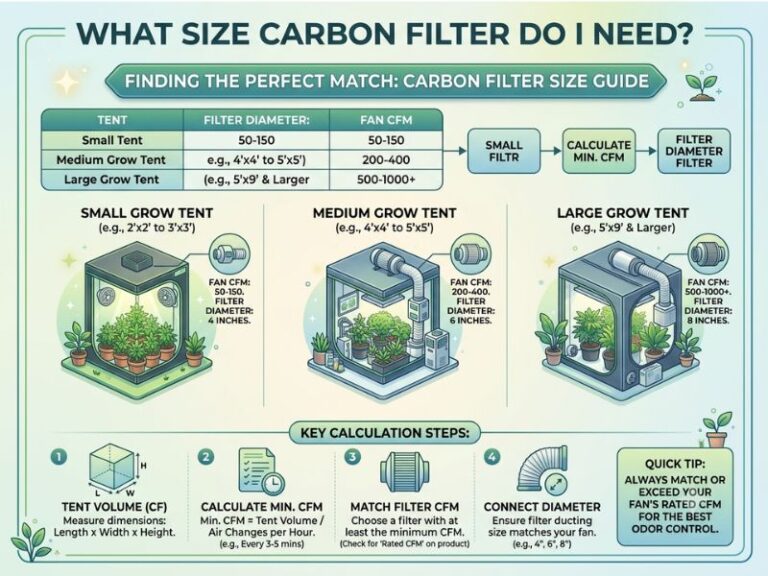
A 4×8 tent commonly needs a high-capacity inline exhaust system, especially when the lights operate near full output.
The ventilation system should account for:
- Tent volume
- Carbon-filter resistance
- Duct length
- Number of bends
- Intake-air temperature
- Ambient humidity
- Driver placement
- Lighting schedule
Internal circulation fans are also needed to move heat away from the canopy and prevent stagnant areas.
Driver placement
The EVO6 allows the driver to be removed and mounted outside the tent. This can reduce the internal heat load.
The other systems may keep more of the driver heat within the growing enclosure unless the manufacturer provides a safe remote-mounting method.
Never modify fixture wiring or relocate a driver in a way that is not supported by the manufacturer.
Electrical capacity
At 120 volts, the approximate lighting-only current is:
- 900W ÷ 120V = 7.5 amps
- 960W ÷ 120V = 8 amps
- 1,000W ÷ 120V = 8.3 amps
The complete grow system also includes fans, pumps, humidifiers, dehumidifiers, heaters, and controllers.
Do not plan a circuit based only on the lights. Confirm the circuit rating and follow applicable electrical-safety requirements.
Use:
- Grounded outlets
- Properly rated timers
- Suitable extension cords when unavoidable
- Drip loops
- Dry, elevated power strips
- Secure cable routing
Avoid tightly coiling extension cords carrying high continuous loads.
Electricity-Cost Calculation
Use this formula:
Monthly cost = Kilowatts × hours per day × 30 × electricity rate
Assume a 12-hour flowering schedule and an electricity rate of $0.16 per kilowatt-hour.
Two SF4000 fixtures
- 0.9 kW × 12 × 30 = 324 kWh
- 324 × $0.16 = $51.84 per month
Two FC-E4800 fixtures
- 0.96 kW × 12 × 30 = 345.6 kWh
- 345.6 × $0.16 = $55.30 per month
Two EVO6 fixtures
- 1.0 kW × 12 × 30 = 360 kWh
- 360 × $0.16 = $57.60 per month
These are lighting-only examples at full power. Dimming reduces actual electricity use.
Ventilation, dehumidification, air conditioning, heating, and circulation add to the complete operating cost. Local electricity rates may also differ substantially.
Board-Style vs. Bar-Style Grow Lights
Board-style fixtures
The Spider Farmer SF4000 is a board-style light.
Advantages include:
- Compact construction
- Simple hanging
- Fewer assembly steps
- Strong central intensity
- Less overhead space
Potential disadvantages include:
- More concentrated center output
- Greater dependence on hanging height
- Less physical diode spread
Bar-style fixtures
The Mars Hydro FC-E4800 and AC Infinity EVO6 use bar-style layouts.
Advantages include:
- Wider diode distribution
- Better edge-to-edge uniformity
- Reduced center hot spots
- Open passive-cooling paths
- Broad physical coverage
Potential disadvantages include:
- Larger footprint
- More complex assembly
- More ceiling-space requirements
- Additional bars and joints to inspect
For a 4×8 canopy, bar-style lights offer excellent uniformity. Board fixtures remain appealing when compactness and simplicity are more important.
Common 4×8 Grow-Light Mistakes
Using one 4×4 fixture
A light designed for a 4×4 area will not evenly cover a 4×8 tent simply because it is hung higher.
Raising it increases spread but reduces intensity and may still leave the far ends underlit.
Buying by equivalent wattage
Ignore claims that compare LEDs with much higher-wattage traditional lamps without providing actual power draw and photon output.
Use actual watts, PPF, PPE, coverage maps, and PPFD.
Confusing vegetative and flowering coverage
A fixture may cover a larger area during vegetative growth because plants typically need less intensity.
Use the smaller flowering-coverage figure when planning a high-intensity full-cycle setup.
Running full power immediately
Young plants rarely need the maximum output of a 900- to 1,000-watt system.
Begin with reduced intensity and increase gradually.
Overlapping fixtures excessively
Strong overlap wastes electricity and may stress plants along the center seam.
Ignoring the outside edges
Center readings can look excellent while plants near the walls remain underlit. Measure or observe multiple canopy locations.
Ignoring heat
Efficient LEDs still convert electricity into heat. Plan ventilation before installing the lights.
Hanging lights unevenly
A tilted fixture creates inconsistent PPFD and makes troubleshooting difficult.
Mixing very different fixtures
Using two unrelated lights can create uneven spectrum, output, dimming behavior, and coverage.
Matching fixtures simplify environmental management.
Overloading the circuit
Calculate the full system load, not just the lighting wattage.
Maintenance and Long-Term Use
Disconnect power before cleaning or adjusting a fixture.
Regularly inspect:
- Ratchet hangers
- Tent support bars
- Power cords
- Connectors
- Drivers
- Dimmers
- Controllers
- LED surfaces
- Heat sinks
- Bar connections
Dust reduces cooling efficiency and can affect light transmission. Clean surfaces with a soft, dry material or follow the manufacturer’s instructions.
Do not spray cleaning solution directly onto LEDs, drivers, connectors, or controllers.
Check fixture height as plants grow. A safe distance at the beginning of the week may become too close after rapid vertical growth.
Inspect the canopy for unusual bleaching or uneven development. These patterns can reveal a tilted fixture, failed diode section, incorrect dimmer setting, or excessive overlap.
Keep ventilation openings around drivers and heat sinks unobstructed.
Frequently Asked Questions
What are the best grow lights for a 4×8 tent?
A pair of 4×4 fixtures is usually the most practical arrangement. My primary recommendation is two Spider Farmer SF4000 lights for a simple 900-watt system.
Two Mars Hydro FC-E4800 fixtures provide wider bar-style coverage, while two AC Infinity IONFRAME EVO6 lights add advanced scheduling and smart environmental integration.
How many grow lights do I need for a 4×8 tent?
You generally need two fixtures when each light is rated for approximately 4×4 flowering coverage.
One fixture is centered over each half of the tent. This improves uniformity and allows independent height and dimming adjustments.
A single light can work only when it is specifically designed and verified for a 4×8 footprint.
Can one LED grow light cover a 4×8 tent?
A dedicated commercial 4×8 fixture may cover the area, but a standard 4×4 or 5×5 light will not provide consistent end-to-end intensity.
Hanging a smaller light higher increases spread but reduces PPFD. For the three models reviewed here, two matching fixtures are required.
How many watts do I need for a 4×8 grow tent?
A practical range for efficient full-spectrum LEDs is approximately 800 to 1,000 actual watts for intensive use across the entire 32-square-foot canopy.
The exact requirement depends on photon efficacy, plant type, growth stage, carbon dioxide, and desired intensity.
Are two 4×4 lights better than one large fixture?
Two fixtures often provide better zoning and flexibility.
Each side can be dimmed or raised independently. Two lights also reduce extreme center concentration and make it easier to accommodate uneven canopy heights.
A high-quality dedicated 4×8 fixture can still work when it offers verified uniform coverage.
How should two lights be positioned in a 4×8 tent?
Divide the tent into two 4×4 zones and center one light over each half.
Leave enough space between the fixtures to blend the output without creating an excessively bright center seam. Keep both fixtures level and aligned.
What PPFD should seedlings receive?
Seedlings generally require substantially less intensity than mature flowering plants.
The exact target varies by species, but the safest approach is to begin with the lights high or dimmed and increase intensity gradually. Watch for bleaching, curling, or stalled development.
What PPFD should flowering plants receive?
Many indoor flowering crops are grown under moderate to high PPFD, but the correct level depends on plant species, environmental control, nutrition, temperature, and carbon dioxide.
More intensity is not always better. Light should be increased only when the rest of the growing environment can support faster photosynthesis.
Are bar-style grow lights better for a 4×8 tent?
Bar-style fixtures generally provide better edge-to-edge uniformity because the diodes are physically distributed over a wider area.
Board-style fixtures are more compact and simpler to install. The better option depends on whether you prioritize uniformity, ceiling space, simplicity, or advanced control.
How high should LED grow lights hang above plants?
Use the manufacturer’s recommendation as the starting point and adjust according to intensity, growth stage, and plant response.
Higher placement increases spread but reduces PPFD. Lower placement increases intensity and the risk of hot spots or light stress.
Should both fixtures use the same dimmer setting?
They can use the same setting when both sides contain similar plants at the same height.
Independent settings are useful when one canopy is shorter, younger, or less dense. This is one of the main advantages of using two fixtures.
How much electricity do two grow lights use?
At full output, the recommended systems draw between 900 and 1,000 watts.
On a 12-hour daily schedule, that equals approximately 324 to 360 kilowatt-hours per month before accounting for dimming. Multiply the consumption by your local electricity rate to estimate cost.
Do I need additional ventilation for a 4×8 lighting system?
Yes. A 900- to 1,000-watt LED system produces substantial heat.
Use a properly sized exhaust fan, suitable intake openings, and internal circulation fans. The surrounding room may also need cooling or dehumidification.
Can I use different grow-light models in the same tent?
You can, but matching fixtures are easier to manage.
Different models may produce uneven spectrum, PPFD, coverage, hanging requirements, and dimming behavior. Matching lights simplify zoning and canopy management.
Is smart grow-light control worth the additional cost?
Smart control is useful when you want automated schedules, repeatable brightness levels, remote monitoring, or integration with ventilation and humidity equipment.
A manual dimmer and reliable timer are sufficient for growers who prefer a simpler system and regularly inspect the tent.
Conclusion
Selecting the best grow lights for 4×8 tent coverage starts with treating the enclosure as two separate 4×4 lighting zones. This approach provides better uniformity, easier height adjustment, and independent intensity control.
My primary recommendation is a pair of Spider Farmer SF4000 450W LED Grow Lights. Together, they provide 900 watts of full-spectrum LED power in a straightforward board-style configuration. This setup is suitable for growers who want dependable output and simple dimming without a complex control platform.
A pair of Mars Hydro FC-E4800 480W LED Grow Lights is the stronger option when broad bar-style distribution and edge-to-edge uniformity are the priorities.
Two AC Infinity IONFRAME EVO6 500W LED Grow Lights provide the most advanced scheduling, removable-driver design, and environmental-control integration, though they also create the highest total power draw.
Whichever system you choose, do not base the decision on wattage alone. Check flowering coverage, PPFD distribution, dimming, fixture dimensions, driver placement, ventilation capacity, and circuit load. Correct placement and gradual intensity adjustment are more important than running the most powerful lights at maximum output.

I’m Maya L. Greenwood, a lifelong plant lover who believes anyone can grow something beautiful with the right guidance. After years of testing soil mixes, pruning methods, irrigation tricks, and pest-safe solutions, I started EasyGardenTips.com to turn hard-won lessons into step-by-step advice. From seed starting and container gardens to composting and seasonal checklists, my goal is to make gardening simple, sustainable, and fun.