Push Mower vs Self Propelled Mower: Full Comparison
Mowing the lawn sounds simple until the first slope or long stretch turns it into a workout. Many homeowners start with a push mower, only to wonder if a self propelled mower could save time and effort. Both machines cut grass, but the difference in how they move can completely change the mowing experience.
A push mower depends entirely on the operator’s strength to move forward, making it ideal for small, flat yards. In contrast, a self propelled mower uses a built-in drive system to power its wheels, gliding forward with minimal physical effort.
This small mechanical difference often becomes the deciding factor between an exhausting chore and an easy weekend routine.
According to Consumer Reports, nearly 70% of modern walk-behind mowers sold in the U.S. are self propelled, reflecting growing demand for convenience and efficiency (source).
However, push mowers still remain popular among homeowners with smaller lawns because they are more affordable, lightweight, and energy-efficient (source).
Choosing between these two options depends on your yard size, terrain, and comfort level. The right choice can save hours of labor each season and make mowing more enjoyable.
What Are Push and Self Propelled Mowers?

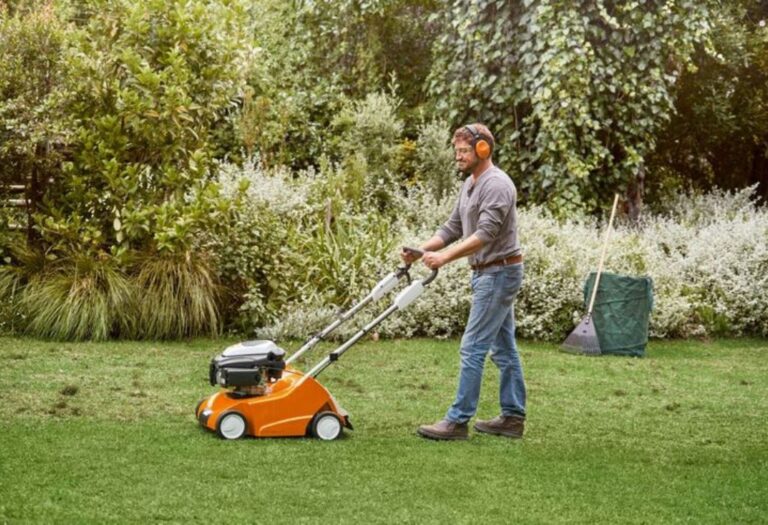
A push mower is the simplest type of walk-behind lawn mower, designed to move only when the user physically pushes it forward.
The engine or motor powers the cutting blade, but not the wheels, meaning all forward motion relies on the operator’s effort.
Because of their lightweight design and lack of complex components, push mowers are more affordable, easier to maintain, and ideal for small or level lawns where maneuverability matters more than power.
A self propelled mower, on the other hand, features a built-in drive system that powers the wheels automatically. The operator only needs to guide the mower’s direction, allowing the machine to move forward on its own. This propulsion system typically includes a belt or gearbox connected to the engine, distributing power between the blade and the drive wheels.
Self propelled models come in front-wheel, rear-wheel, and all-wheel drive options, each suited for different terrains. Rear-wheel models offer better traction on slopes, while front-wheel versions provide easier turning.
The additional mechanics make these mowers heavier and more expensive but significantly reduce the physical effort needed for mowing.
In short, push mowers rely on manual strength for motion, while self propelled mowers use engine power for effortless movement, giving homeowners two distinct approaches to lawn care.
Advantages of Push Mowers
A push mower remains one of the most reliable and cost-effective tools for small to medium-sized lawns. Its simple design, lightweight frame, and minimal maintenance requirements make it a favorite among homeowners who prioritize control and affordability.
Since the operator supplies all the pushing force, every ounce of engine power goes directly to spinning the blade. This results in greater fuel efficiency and often cleaner cuts on flat or even ground.
One of the most appealing traits of a push mower is its maneuverability. The absence of drive components makes it lighter and easier to handle, especially in tight spaces or around trees, garden beds, and fences.
With fewer moving parts, there’s also less to break or maintain. Regular sharpening of the blade and seasonal oil changes are typically all that’s required to keep it running smoothly.
From an economic perspective, push mowers are more affordable both upfront and long term. They consume less fuel, cost less to repair, and are ideal for homeowners who mow less frequently or maintain smaller yards.
The simplicity of operation and low running costs make push mowers an excellent choice for those who prefer manual control without compromising performance.
Advantages of Self Propelled Mowers
A self propelled mower transforms mowing from a demanding physical task into a comfortable, time-saving experience. Its built-in drive system powers the wheels automatically, allowing the operator to simply guide the machine rather than push it.
This makes it especially beneficial for large yards, uneven terrain, or sloped lawns, where consistent propulsion reduces fatigue and maintains a steady pace.
The primary advantage lies in ease of use. Whether mowing uphill or through thick grass, the mower’s drive mechanism ensures smooth forward motion with minimal effort.
Many modern models include variable speed controls, allowing users to adjust pace according to terrain and comfort. This flexibility ensures efficient mowing and consistent results across the entire yard.
Self propelled mowers are also known for their professional-quality cut. The consistent movement provided by the drive system helps maintain uniform blade speed and cutting depth, resulting in a cleaner, more even finish.
Additionally, some versions feature rear-wheel or all-wheel drive, which offers superior traction and stability on challenging surfaces.
For homeowners seeking convenience, comfort, and high performance, a self propelled mower offers a clear advantage. It combines power and precision to make lawn care faster, easier, and more efficient—especially in yards that demand more than a manual push mower can handle.
Push Mower vs Self Propelled Mower: Key Differences
While both machines achieve the same end goal—cutting grass—their mechanics, performance, and user experience differ significantly.
A push mower relies entirely on the operator for movement, making it ideal for smaller, level lawns where agility matters more than speed.
In contrast, a self propelled mower uses engine power to turn the wheels, drastically reducing the physical effort required, particularly on large or sloped lawns.
The effort level is the most noticeable difference. Push mowers require steady pushing, which can become tiring on uneven or uphill terrain.
Self propelled mowers, by comparison, glide forward with ease, making them more suitable for users who want to reduce strain or spend less time mowing.
In terms of maintenance and cost, push mowers are simpler and cheaper to own. They have fewer mechanical parts and no drive system, which means fewer repairs and lower fuel consumption.
Self propelled models, however, offer a faster mowing experience, often featuring adjustable speeds and better traction on tricky surfaces.
Ultimately, the choice between a push mower and a self propelled mower depends on yard size, terrain type, and personal comfort preferences. For flat, small lawns, simplicity wins—but for larger, challenging landscapes, convenience takes the lead.
Which One Suits Your Yard Best?

The right choice in the push mower vs self propelled mower debate largely depends on your lawn’s size, terrain, and maintenance habits.
For small, flat yards under a quarter acre, a push mower is often the most efficient and budget-friendly option. Its lightweight build makes it easy to maneuver around obstacles, while its lower fuel and maintenance costs make long-term ownership affordable.
However, for medium to large lawns, especially those with slopes or uneven surfaces, a self propelled mower offers undeniable convenience.
The built-in drive system takes over the heavy pushing, reducing fatigue and ensuring consistent mowing speed across different terrains.
This makes it ideal for homeowners with limited physical strength or those who simply want to finish the job faster.
Climate and grass type also influence the decision. Dense or fast-growing grass varieties benefit from the steady power of a self propelled mower, while thinner, well-kept lawns remain manageable with a push model.
In essence, choose a push mower if you prefer simplicity and savings, and a self propelled mower if you value ease, speed, and comfort. Matching the mower’s capabilities to your yard’s specific needs guarantees both efficiency and long-term satisfaction.
Cost, Maintenance, and Long-Term Value
When comparing push mower vs self propelled mower, cost and upkeep play a major role in determining overall value.
A push mower is typically the more affordable choice, both in purchase price and ongoing maintenance. With fewer mechanical parts and no drive system, it requires minimal servicing—usually just regular oil changes, blade sharpening, and air filter cleaning.
This simplicity not only lowers costs but also reduces the likelihood of mechanical breakdowns over time.
In contrast, a self propelled mower comes with a higher upfront investment due to its drive components and additional features. While these mowers offer greater comfort and performance, they also involve more maintenance.
Drive belts, clutches, and transmissions may need periodic adjustments or replacements, adding to long-term expenses. Additionally, self propelled models often use more fuel or battery power, which increases operating costs slightly.
However, the extra investment can pay off for larger lawns or users who mow frequently. The time saved and physical effort reduced often justify the higher price.
For homeowners who value convenience, speed, and consistent performance, a self propelled mower offers excellent return on investment—while a push mower remains unbeatable for those prioritizing simplicity and low cost.
Maintenance, Safety, and Best Practices
Proper maintenance is crucial for keeping both push mowers and self propelled mowers running efficiently and safely. For a push mower, upkeep is straightforward—clean the deck after each use, sharpen the blade regularly, and check the oil and air filter every few months.
Because there are fewer moving parts, repairs are rare and maintenance can usually be done at home with basic tools.
A self propelled mower, however, requires a bit more attention. The drive belt, transmission, and wheel gears should be inspected periodically to prevent wear or slippage.
Keeping these components clean and lubricated ensures smooth operation and prolongs their lifespan. It’s also important to follow the manufacturer’s service intervals, as neglecting drive maintenance can lead to costly repairs.
Safety is equally important for both mower types. Always mow on dry grass to prevent slipping, wear closed-toe shoes and protective eyewear, and ensure the mower is turned off before cleaning or blade adjustments. For sloped terrain, mow side to side instead of up and down to maintain balance and control.
Following these best practices not only improves performance but also extends the life of your mower, ensuring reliable, safe, and efficient lawn care season after season.
Conclusion
The debate between a push mower vs self propelled mower ultimately comes down to balancing simplicity against convenience.
Both machines are designed to achieve the same result—a clean, healthy lawn—but they cater to different needs and lifestyles.
Push mowers excel in affordability, fuel efficiency, and control, making them perfect for smaller, level yards and homeowners who prefer a hands-on approach to lawn care.
Self propelled mowers, on the other hand, are built for comfort and productivity. Their powered drive systems make them ideal for larger or sloped lawns, reducing physical effort while delivering consistent, professional-looking results.
Though they come with higher costs and slightly more maintenance, the ease of operation and time savings often justify the investment.
When choosing between the two, consider your yard size, terrain, and how much effort you want to put into mowing.
If you value simplicity and low upkeep, a push mower is a smart, economical choice. If you want effortless performance and faster results, a self propelled mower is well worth it.

I’m Maya L. Greenwood, a lifelong plant lover who believes anyone can grow something beautiful with the right guidance. After years of testing soil mixes, pruning methods, irrigation tricks, and pest-safe solutions, I started EasyGardenTips.com to turn hard-won lessons into step-by-step advice. From seed starting and container gardens to composting and seasonal checklists, my goal is to make gardening simple, sustainable, and fun.