Top Rated Italian Grafting Tool: Top Products and Buying Guide
As an Amazon Associate, I earn from qualifying purchases. Learn more
This comparison ranks five products according to their intended use, supplied specifications, customer-feedback evidence when available, and practical versatility. The buying guidance also explains how to match the tool to plant grafting or beekeeping, how to maintain cutting edges, and which limitations deserve attention before ordering. When comparing italian grafting tool, I look at how each option fits a real buying need, where it performs well, and which trade-offs matter.
My first choice is MoldFun COMKIT Professional Foldable Double-Blade Grafting Knife. Choosing an italian grafting tool can be surprisingly difficult because “grafting tool” may describe anything from a folding knife to a precision bee-larva transfer needle. The right choice depends on whether you are joining plant tissue, pruning small branches, wrapping a graft, or transferring a queen cell.
My second choice is QWORK Manual Gardening Grafting Cutter. My alternative is the QWORK Manual Gardening Grafting Cutter with Repair Tapes. It is especially appealing to beginners who want a purpose-built cutter plus two rolls of grafting tape, while its curved and straight cutting edges provide more flexibility for different plant tasks.
In the rest of this guide, I compare the selected italian grafting tool options, explain the buying factors that matter, and cover practical setup, use, compatibility, maintenance, longevity, safety, troubleshooting, storage, and common mistakes when those topics are relevant.
5 Best Italian Grafting Tool
I selected these products by comparing relevance to grafting work, construction details, included accessories, available customer-feedback evidence, and the range of tasks each tool can handle. Because the list includes both plant-grafting tools and specialized beekeeping instruments, the intended application matters just as much as the ranking.
| # | Image | Product | Price on Amazon |
|---|---|---|---|
| 1 |  |
MoldFun COMKIT Professional Foldable Double-Blade Grafting Knife | Check Price |
| 2 |  |
QWORK Manual Gardening Grafting Cutter | Check Price |
| 3 |  |
lasenersm Double-Head Stainless Steel Beekeeping Grafting Needles | Check Price |
| 4 |  |
Lucky Farm Lucky Farm Queen Bee Grafting Tool 10pcs Beekeeping | Check Price |
| 5 |  |
ZALALOVA 2-in-1 Garden Grafting Tool Kit | Check Price |
MoldFun COMKIT Professional Foldable Double-Blade Grafting Knife

The MoldFun COMKIT earns the top position because it is a focused, portable knife for gardeners who need more than a basic cutting edge. Its stainless steel blade measures about 2.4 inches, a useful size for light pruning, trimming scions, and making controlled cuts without carrying a large garden knife.
The pointed tip adds a second function: it can lift bark during budding and graft preparation. That makes the knife more useful when a task requires careful separation rather than simply cutting through a twig. The PVC handle and folding body also make it relatively compact, measuring about 4.7 inches closed and 7.1 inches open.
This is a good fit for home fruit-tree growers, gardeners learning budding techniques, and anyone who values one compact tool for several light-duty jobs. It is not presented as a heavy pruning tool, so thicker branches may require a dedicated pruner or saw. The folding mechanism also means owners should close the knife whenever it is not in use and keep the sharp tip away from children.
Pros
- Folding design is convenient for storage and transport.
- Pointed bark lifter supports budding and bark separation.
- Stainless steel blade suits grafting and light pruning.
- Compact size is approachable for home gardeners.
Cons
- Blade length limits it to lighter cutting work.
- Sharp pointed tip requires careful handling.
- Not the best choice for thick branches or high-volume pruning.
My Opinion
This is the strongest all-around garden option in the group. The combination of a folding blade and bark lifter gives it more practical range than a single-purpose cutter, provided the buyer understands that it is intended for precise light work rather than forceful branch removal.
QWORK Manual Gardening Grafting Cutter

The QWORK manual cutter ranks second because it combines a dedicated grafting cutter with two rolls of polyethylene grafting film. That bundled approach can be useful for beginners who want to make a graft and secure it immediately without purchasing wrapping material separately.
Its curved cutter is designed for making a more defined cut, while the straight cutting edges are intended for splitting or cutting wood. In practical terms, that gives the user more control over different stages of plant propagation. The stainless steel cutting portion should also be easier to clean than a porous cutting surface, while the wooden handle offers a traditional hand-tool feel.
QWORK describes the device as manual rather than automatic, so the user supplies the cutting force. This can be an advantage for people who prefer direct control, but it also means technique and hand strength matter. The product is intended for plant grafting and pruning, with additional uses such as budding, sprouting, weeding, and sawing listed in the supplied information.
The two included tape rolls add real ownership value, although buyers should remember that the film is a consumable and will eventually need replacement. The tool is better suited to plant work than to anyone seeking a folding pocket knife or a specialized beekeeping instrument.
Pros
- Includes two rolls of grafting tape.
- Curved and straight cutting functions broaden its use.
- Manual design provides direct control over the cut.
- Stainless steel cutter is appropriate for garden use.
Cons
- Requires user force because it is not automatic.
- Wooden handle may need more care than synthetic materials.
- Not intended for transferring bee larvae or queen cells.
My Opinion
QWORK is the most sensible alternative for a new plant propagator who wants both a cutter and wrapping supplies in one package. I would favor it over the MoldFun for someone prioritizing included tape and multiple cutting profiles, but the MoldFun remains more compact and easier to carry.
lasenersm Double-Head Stainless Steel Beekeeping Grafting Needles
The lasenersm tool is a specialized beekeeping instrument rather than a garden knife. Its double-ended design is intended to help transfer an individual bee into a queen cup, making it relevant to queen rearing, royal jelly work, and the careful movement of bee material.
Made from stainless steel and measuring about 6.3 inches long, it offers a narrow format suited to delicate hive work. The supplied description emphasizes accurate transfer and a design intended not to harm the bee. That focus makes it fundamentally different from the plant cutters ranked above: it is about precision placement, not cutting bark or joining branches.
The tool’s main advantage is simplicity. Stainless steel should be straightforward to clean, and the double-head arrangement may allow the beekeeper to use the end most comfortable for a particular transfer. However, the product has a relatively small amount of customer-feedback evidence compared with the higher-volume garden options, so buyers should treat the high rating as encouraging rather than conclusive.
This instrument is best for a beekeeper who already understands queen-cell and larval-transfer procedures. It will not replace a pruning knife, grafting shears, wrapping film, or other plant-propagation supplies. New users may also need practice to develop the gentle handling technique required for successful transfers.
Pros
- Designed specifically for bee and queen-cell grafting work.
- Double-headed format provides two working ends.
- Stainless steel construction is durable and easy to clean.
- Long, narrow profile supports delicate hive tasks.
Cons
- Not suitable for plant grafting or pruning.
- Successful use requires beekeeping technique and practice.
- Available customer-feedback sample is relatively limited.
My Opinion
This is a good niche choice when the buyer’s real goal is queen rearing. It ranks below the garden tools only because its usefulness is narrow, not because its supplied design details are unsuitable for beekeeping.
Lucky Farm Lucky Farm Queen Bee Grafting Tool 10pcs Beekeeping
The Lucky Farm set is aimed at beekeepers who want multiple queen-bee grafting tools rather than a single transfer instrument. The supplied information identifies a 10-piece set with spring-assisted pressing, a non-slip grip, a soft needle tip, and a flexible bamboo tongue for working beneath larvae.
That combination addresses several difficulties beginners encounter with queen grafting. A spring can make pressing more controlled, while a soft tip and flexible tongue are intended to reduce the chance of damaging delicate material. The tool is also described as easy to disassemble, sand, and adjust, which may appeal to beekeepers who expect to personalize their equipment.
There is an important learning curve, however. The supplied guidance openly notes that perfecting the technique takes practice and that some users may need to modify the tools. That is useful context: the set offers quantity and adjustability, but it should not be mistaken for an instant solution to successful larva transfer.
The customer-feedback information supplied for this listing states a 4.5-star score from 305 feedback, although a separate rating field is not provided. Because the product is specialized, it belongs with experienced or committed beekeepers rather than gardeners looking for a plant grafting knife. Buyers should also inspect the needles and moving parts before use and keep the delicate working ends clean.
Pros
- 10-piece set provides multiple tools for queen rearing.
- Built-in spring supports controlled pressing.
- Soft tip and flexible bamboo tongue suit delicate work.
- Components can be adjusted or modified for personal technique.
Cons
- Requires practice before transfers become consistent.
- Some users may need to modify the tools.
- Specialized design has no value for ordinary plant grafting.
My Opinion
Lucky Farm is the more complete beekeeping package for someone actively developing queen-rearing skills. Its quantity and adjustable design are useful, but a first-time beekeeper should expect a learning period and should not select it simply because it contains more pieces.
ZALALOVA 2-in-1 Garden Grafting Tool Kit
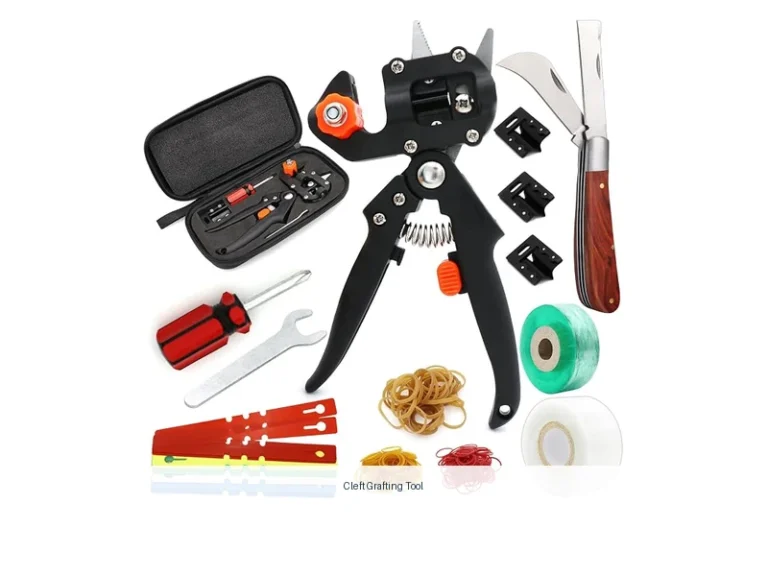
The ZALALOVA kit is the broadest plant-grafting package in the ranking. It combines a 2-in-1 pruning and grafting tool with three replacement cutting blades, grafting films, rubber bands, labels, a screwdriver, and a wrench. For a gardener building a propagation station from scratch, that collection can reduce the need to source several small accessories separately.
Its three cutting profiles—Omega, U, and V—are intended for branches from about 5 mm to 12 mm in diameter. That range gives the buyer a clearer sizing reference than the knife-only products, but branch fit still matters: material outside the stated range may produce poor alignment or place too much stress on the cutter.
The package also supports the aftercare stage. Grafting film helps keep air out of the joined area, rubber bands hold the pieces in position, and colored tags can record plant names or characteristics. The high-carbon steel double-edged shear blades and ABS plastic handles are positioned as a durable alternative to more traditional designs.
Maintenance is particularly important here. The supplied instructions recommend lubricating the blade after each use, and the protective oil found on the blade is intended to limit contact with air and moisture. Buyers should wipe away excess residue as appropriate, store the replacement blades safely, and confirm that the included accessories match the size and style of their planned grafts.
Pros
- Includes three replaceable graft-cutting profiles.
- Supplies film, bands, labels, and adjustment tools.
- Designed for branches from approximately 5 mm to 12 mm.
- Useful for gardeners managing several grafting projects.
Cons
- Larger kit may be unnecessary for occasional users.
- Correct branch sizing is essential for the cutting profiles.
- Blades require regular lubrication and careful storage.
My Opinion
ZALALOVA is the best choice for a gardener who values a full propagation kit over a simple pocket knife. Its accessories add convenience, but the buyer needs to understand blade sizing and maintenance before expecting consistent results.
How I Selected These Grafting Tools
The ranking separates products by real purpose instead of treating every grafting item as interchangeable. MoldFun and QWORK are plant-focused cutting tools, ZALALOVA is a broader plant-propagation kit, and the lasenersm and Lucky Farm products are made for beekeeping queen-rearing work.
I gave the highest position to the product that offered the strongest combination of relevance, versatility, portability, and clear specifications for a typical home gardener. The second position went to a capable alternative with useful included supplies. The remaining products were judged on how effectively they serve their narrower applications.
Customer-feedback evidence also influenced the comparison when it was supplied, but a star score cannot replace fit and intended use. A highly rated bee-transfer tool is still the wrong purchase for someone pruning an apple tree, while a plant knife cannot perform a queen-larva transfer.
Start with the biological task—joining plant tissue or moving bee larvae—before comparing blade shape, accessories, or ratings.
A complete kit is valuable only when its included parts match the work you actually plan to do.
How to Choose the Right Grafting Tool
Choosing an italian grafting tool starts with identifying the material being handled. Plant grafting requires a sharp, controllable cutting edge and a way to secure the union, while beekeeping grafting requires a delicate transfer tip and a completely different level of precision.
- Choose by application: Select a knife or cutter for fruit trees, vines, and plant buds; select a needle tool for queen cells, larvae, and royal jelly work.
- Check branch size: A kit rated for 5 mm to 12 mm branches is more informative than a general-purpose knife when matching cutting capacity.
- Decide whether accessories matter: Tape, bands, labels, replacement blades, and adjustment tools can be worthwhile for frequent propagation.
- Consider portability: A folding knife suits occasional field work, while a larger kit is better kept in a dedicated gardening area.
- Be honest about skill level: Bee grafting tools require practice, and adjustable components may need personal modification.
Plant knife, cutter, or multi-blade kit?
A folding knife is usually the simplest option for light pruning, budding, and bark lifting. A manual cutter can provide more defined profiles, while a multi-blade kit offers the most repeatable shape when the branch diameter falls within its stated range.
For a beginner with only a few fruit trees, extra blades and dozens of accessories may create unnecessary complexity. For someone making repeated grafts, replacement blades and wrapping supplies can save interruptions during a propagation session.
When a beekeeping tool is the correct choice
Bee grafting tools are not alternate versions of garden grafting knives. Their purpose is to move an individual bee, egg, or larva into a queen cup without applying damaging pressure, so their working ends are narrow, soft, or flexible rather than designed to cut wood.
Buyers should avoid choosing a beekeeping tool based only on the word “grafting.” The surrounding product language—queen, larva, hive, royal jelly, or queen cup—shows that the instrument belongs to apiculture rather than fruit-tree propagation.
Setting Up for Plant Grafting
Before making a cut, prepare the scion, rootstock, wrapping material, and a clean work surface. Having everything within reach helps prevent the freshly cut surfaces from drying or becoming contaminated while you search for tape or bands.
- Confirm that the scion and rootstock are compatible in size and plant type.
- Prepare the wrapping film, rubber bands, or other securing material before cutting.
- Clean the blade and inspect its edge for dirt, residue, or damage.
- Make the cut with controlled pressure rather than twisting the tool.
- Align the cambium areas as carefully as possible and secure the union promptly.
- Use labels when several varieties or rootstocks are being handled together.
The ZALALOVA kit is the most prepared for this workflow because it includes films, bands, labels, and tools for adjustment. MoldFun and QWORK can also support the process, but the gardener may need to supply additional wrapping or labeling materials.
Using a Folding Grafting Knife Safely
A folding knife rewards deliberate handling. Keep fingers behind the cutting path, use a stable piece of wood or branch support, and avoid forcing the blade through material that feels too thick for a light-duty knife.
The bark lifter on the MoldFun is useful for careful separation, but the pointed tip deserves special attention. Fold the knife closed immediately after use, transport it in its closed position, and store it where children cannot reach it.
Do not use a grafting knife as a substitute for a saw when the branch is too large. Excessive force can reduce control, damage the cut surface, or increase the chance of an injury.
Cleaning and Maintaining Cutting Tools
Plant sap, moisture, and soil can interfere with clean cuts and encourage corrosion. After a grafting session, remove visible residue, clean the working surfaces appropriately, and dry the tool before storage.
- Wipe stainless steel blades after use rather than leaving sap to harden.
- Lubricate the ZALALOVA blade after each use as recommended in the supplied information.
- Keep folding joints free from accumulated dirt so the knife closes properly.
- Store replacement blades in a protected location instead of loose in a tool box.
- Inspect tape cutters, shears, and handles for looseness before the next session.
The oil present on the ZALALOVA blade is intended to protect it from air and moisture. It should not be treated as proof that later maintenance is unnecessary; regular wiping, drying, and lubrication remain important for long-term ownership.
Cleaning Beekeeping Grafting Needles
Beekeeping tools need a different cleaning mindset because residue from royal jelly, honey, or hive material can remain on narrow working ends. Clean the tool carefully after use and make sure it is dry before storage.
Pay particular attention to the soft tip, bamboo tongue, spring, and moving sleeve on the Lucky Farm design. Bent or rough components may make delicate transfers less predictable, so inspect them before placing the tool near larvae or queen cups.
The stainless steel lasenersm tool is described as easy to use and clean, but that does not eliminate the need for gentle handling. Avoid bending the ends or using the instrument for any task outside its intended beekeeping purpose.
Matching Blades to Branch Diameter
Blade shape is useful only when the plant material fits the tool. The ZALALOVA kit lists a working range of approximately 5 mm to 12 mm, giving users a practical starting point for deciding whether the Ω, U, or V profile is appropriate.
Measure or visually compare the scion and rootstock before cutting. If the pieces are too large, too small, or noticeably mismatched, the resulting union may be difficult to align even when the blade itself is sharp.
Knife-style tools such as MoldFun are better for flexible, light-duty work where the gardener wants control over the cut. They are not automatically more capable simply because they can handle several tasks.
Wrapping and Supporting a New Graft
A clean cut is only part of the process. The joined pieces also need to remain aligned while the graft heals, which is why grafting film and rubber bands are useful additions rather than decorative extras.
Wrap firmly enough to hold the union together and limit air exposure, but avoid applying so much pressure that the plant tissue is crushed. Follow the needs of the specific plant and graft style, since the correct amount of support varies.
QWORK includes two sizes of grafting tape, while ZALALOVA supplies two films, rubber bands in two sizes, and plant labels. These accessories make both products more practical for gardeners who are planning several grafts instead of a single experiment.
Common Mistakes to Avoid
Most disappointing results come from choosing the wrong tool, rushing the cut, or ignoring aftercare. Avoiding a few predictable mistakes can improve control and reduce wasted scion material.
- Do not buy a bee-larva transfer needle for fruit-tree grafting.
- Do not use a plant knife to handle queen cells or delicate larvae.
- Do not force a cutter beyond its stated branch-diameter range.
- Do not leave freshly cut plant surfaces exposed while gathering supplies.
- Do not store a folding knife open or within children’s reach.
- Do not skip lubrication on tools that specifically require it.
- Do not assume a high rating guarantees suitability for your application.
- Do not expect a beekeeping grafting set to eliminate the need for practice.
The most expensive mistake is often buying a specialized tool for the wrong kind of grafting.
Storage and Replacement Considerations
Store plant cutters dry, protected from moisture, and separated from loose soil or fertilizer. A folding knife should be closed, while replacement blades and small accessories should remain organized so they are not damaged or misplaced.
For the ZALALOVA kit, keep the screwdriver, wrench, labels, bands, and replacement blades together. Replace or stop using a blade when it becomes damaged, difficult to control, or unable to produce a clean cut despite proper cleaning and lubrication.
Grafting films and rubber bands are consumable supplies, so a complete kit does not mean the accessories will last indefinitely. Plan to replenish them if you make seasonal grafts or maintain multiple varieties.
Skill Building for First-Time Users
Beginners can reduce frustration by practicing the motion on suitable scrap material before attempting a valuable scion or rootstock. The goal is to learn how the blade enters the material, how much pressure the handle requires, and how to stop without twisting.
Beekeepers should take an even slower approach with queen grafting. The Lucky Farm information specifically acknowledges that practice is necessary, and the lasenersm tool also requires a gentle transfer technique that cannot be learned from the tool alone.
Keep notes about plant varieties, branch sizes, blade profiles, wrapping materials, and results. Labels included in the ZALALOVA kit can help connect each graft to its source and make later adjustments more informed.
FAQS About Italian Grafting Tool
What is the best tool for fruit-tree grafting?
The MoldFun COMKIT folding knife is the strongest general option in this comparison because it combines a stainless steel blade, compact storage, and a bark lifter. QWORK is a good alternative when included grafting tape and multiple cutting edges are more important.
Can a beekeeping grafting tool be used on plants?
No. The lasenersm and Lucky Farm tools are designed for moving bees, larvae, eggs, or queen-cell material. They are not substitutes for a plant knife or branch cutter.
Is a folding knife suitable for beginners?
Yes, provided the beginner uses it for light pruning, budding, and controlled graft preparation. The MoldFun knife has a sharp point and should be folded and stored safely whenever it is not in use.
What branch sizes fit the ZALALOVA kit?
The supplied information recommends branches from approximately 5 mm to 12 mm in diameter. Buyers should stay within that range and choose the Ω, U, or V blade according to the desired cut and material fit.
Do grafting tools need lubrication?
Some do. ZALALOVA specifically recommends lubricating its blade after each use, and proper lubrication can help protect the cutting edge from moisture and corrosion. Cleaning and drying should still be part of routine care.
Which product includes grafting tape?
QWORK includes two rolls of grafting tape in two sizes. ZALALOVA also includes grafting films, along with rubber bands and labels for securing and identifying plant grafts.
Are queen-bee grafting tools easy to use immediately?
They may require practice. The Lucky Farm information notes that users need time to perfect the technique, and some owners may modify the tools to suit their handling preferences.
Final Thoughts
For most home gardeners, the MoldFun COMKIT Professional Foldable Double-Blade Grafting Knife is the best starting point because it is compact, versatile, and includes a useful bark lifter. Choose the QWORK Manual Gardening Grafting Cutter with Repair Tapes when included wrapping supplies and varied cutting profiles matter more. Together, they cover the most practical plant-grafting needs without confusing garden work with specialized beekeeping equipment.

I’m Maya L. Greenwood, a lifelong plant lover who believes anyone can grow something beautiful with the right guidance. After years of testing soil mixes, pruning methods, irrigation tricks, and pest-safe solutions, I started EasyGardenTips.com to turn hard-won lessons into step-by-step advice. From seed starting and container gardens to composting and seasonal checklists, my goal is to make gardening simple, sustainable, and fun.