How Does a Lawn Mower Work Mechanically? Find Out
The gentle hum of a lawn mower on a Saturday morning is a familiar sound in neighborhoods across the world. Yet, few people ever stop to wonder what’s actually happening beneath the deck as blades spin and grass clippings fly.
Understanding how does a lawn mower work isn’t just a matter of curiosity—it’s the foundation of smarter maintenance, safer operation, and better performance.
Most homeowners use their mowers year after year without realizing how complex these machines truly are. A modern lawn mower is a blend of engineering, physics, and precision mechanics, all working together to produce an even, clean cut.
According to Grand View Research, the global lawn mower market reached $33 billion in 2023, fueled by innovations in electric, robotic, and hybrid mower technology (source). This growth shows how integral these machines have become to home care and landscaping worldwide.
Every part of a mower—from its engine, cutting deck, and blade system to its drive belts and airflow dynamics—plays a crucial role in turning raw power into clean, controlled movement.
The way these components interact determines not only the quality of the cut but also the mower’s efficiency, noise level, and durability.
Learning how a lawn mower works mechanically helps users operate their machines more effectively and extend their lifespan through proper care.
Whether powered by gas, electricity, or batteries, each type follows the same fundamental principle: converting energy into rotational force to slice grass with precision.
Definition and Core Principle — What Is a Lawn Mower Mechanically?

To understand how does a lawn mower work, it’s important to start with the fundamentals of what a mower actually is from a mechanical perspective.
At its core, a lawn mower is a grass-cutting machine that uses a rotating or oscillating blade to trim turf to a uniform height.
This process, while seemingly simple, relies on the precise coordination of multiple mechanical components working together to deliver a clean, even cut across varying terrains and grass types.
Mechanically, a lawn mower is an energy conversion system. It takes power—whether from a gasoline engine, electric motor, or battery pack—and transforms it into rotational motion through a drive shaft.
This motion spins the blade at high speeds, typically between 2,800 to 3,600 RPM, depending on the model and power source.
The result is a controlled slicing motion that cuts grass cleanly rather than tearing it, which helps maintain the health and uniform appearance of the lawn.
The mower’s cutting deck serves as both a protective housing and an aerodynamic chamber. It directs airflow to lift the grass blades upright before cutting, ensuring an even height.
This airflow also helps move clippings into the discharge chute, bag, or mulching chamber. The mower’s wheels and frame provide mobility and stability, while the height adjustment system determines the desired grass length.
From manual reel mowers that rely solely on human power to advanced zero-turn and robotic mowers powered by sensors and software, every mower operates on the same principle: energy transformed into motion to achieve precision cutting.
Main Components and Mechanism — Inside the Working System
Every lawn mower, regardless of type or brand, is built around a set of core components that work together to perform one task—cutting grass efficiently.
To truly understand how does a lawn mower work, you must look at these parts not as individual elements but as interconnected systems designed for power transfer, stability, and precision.
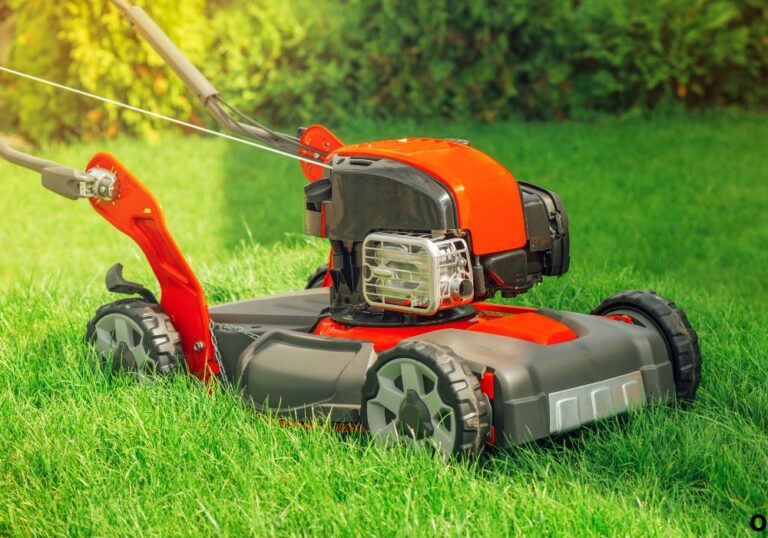
At the heart of the mower lies the engine or motor, which acts as the power source. In gas-powered models, an internal combustion engine burns fuel to produce mechanical energy, driving the crankshaft that spins the blade.
Electric mowers use a motor powered either by a corded connection or a rechargeable battery. Regardless of the source, this power must be transmitted smoothly to the cutting system without loss of torque or speed.
The cutting blade is where the true mechanical action occurs. Rotary mowers use a single horizontal blade that spins rapidly to slice through grass, while reel mowers employ multiple curved blades that spin vertically against a stationary bar for a scissor-like cut. This difference in design determines both the cutting style and precision.
Supporting the blade is the cutting deck, a curved metal or polymer housing that shapes airflow. This airflow is critical—it lifts grass upright before cutting and pushes clippings outward or into a bag. The deck also serves as a safety guard, shielding users from debris.
The drive system controls motion. In self-propelled mowers, a transmission transfers engine power to the wheels, reducing manual effort. Meanwhile, push mowers rely entirely on the user’s strength for forward movement.
Finally, height adjustment mechanisms—typically levers connected to wheel axles—allow for fine-tuning grass length. Combined, these parts form a synchronized system where energy flows from the engine to the blade, from motion to result.
Main Components and Mechanism — Inside the Working System
Every lawn mower, regardless of type or brand, is built around a set of core components that work together to perform one task—cutting grass efficiently.
To truly understand how does a lawn mower work, you must look at these parts not as individual elements but as interconnected systems designed for power transfer, stability, and precision.
At the heart of the mower lies the engine or motor, which acts as the power source. In gas-powered models, an internal combustion engine burns fuel to produce mechanical energy, driving the crankshaft that spins the blade.
Electric mowers use a motor powered either by a corded connection or a rechargeable battery. Regardless of the source, this power must be transmitted smoothly to the cutting system without loss of torque or speed.
The cutting blade is where the true mechanical action occurs. Rotary mowers use a single horizontal blade that spins rapidly to slice through grass, while reel mowers employ multiple curved blades that spin vertically against a stationary bar for a scissor-like cut. This difference in design determines both the cutting style and precision.
Supporting the blade is the cutting deck, a curved metal or polymer housing that shapes airflow. This airflow is critical—it lifts grass upright before cutting and pushes clippings outward or into a bag. The deck also serves as a safety guard, shielding users from debris.
The drive system controls motion. In self-propelled mowers, a transmission transfers engine power to the wheels, reducing manual effort. Meanwhile, push mowers rely entirely on the user’s strength for forward movement.
Finally, height adjustment mechanisms—typically levers connected to wheel axles—allow for fine-tuning grass length. Combined, these parts form a synchronized system where energy flows from the engine to the blade, from motion to result.
Power Sources and Energy Flow — From Fuel to Blade Rotation
The engine or motor is the beating heart of any mower, and understanding how does a lawn mower work begins with knowing how power travels from the source to the blade.
Whether a mower runs on gasoline, electricity, or battery power, the goal is the same — to convert stored energy into mechanical rotation that spins the cutting blade with enough torque to slice through dense grass.
In gas-powered mowers, an internal combustion engine burns a mix of fuel and air inside a cylinder. The controlled explosion drives a piston connected to a crankshaft, which spins rapidly.
This spinning motion is transmitted via a belt or direct shaft connection to the blade mounted beneath the deck. Gas engines generate high torque, making them powerful enough for thick or wet grass, but they require regular oil changes, fuel refills, and maintenance.
Electric corded mowers replace combustion with direct electrical power. When plugged in, current flows through the motor coils, creating a magnetic field that turns the rotor and spins the blade. This system produces steady power without emissions or fuel costs, though mobility is limited by the cord length.
Battery-powered mowers operate on the same principle but draw energy from lithium-ion batteries. These models are cordless, quiet, and ideal for small to medium lawns.
However, their runtime typically ranges between 30 to 60 minutes, depending on battery capacity and grass density.
All power systems rely on efficient energy flow — minimal loss between the power source and blade. That’s why good mowers use sealed bearings, lightweight materials, and aerodynamic deck designs to maintain blade speed and reduce resistance.
Performance Metrics and Mechanical Efficiency
When evaluating how does a lawn mower work, performance is determined by how efficiently it converts power into clean, consistent cutting.
Several key mechanical metrics—torque, RPM, cutting width, airflow, and deck design—define how effectively a mower performs under different conditions.
Torque measures rotational force, dictating the mower’s ability to maintain blade speed through thick or wet grass. A higher torque engine or motor can handle resistance without slowing down, producing cleaner cuts.
RPM (revolutions per minute) indicates blade speed; most rotary mowers operate between 2,800–3,600 RPM, striking a balance between cutting power and safety. When torque and RPM are optimized together, they create the ideal mechanical harmony for efficient mowing.
The cutting width or deck size—ranging from 14 to 60 inches—affects coverage per pass. A wider deck reduces mowing time but requires more power to sustain blade speed, while smaller decks offer precision in tight areas.
The deck shape and material also matter: curved decks improve airflow, lifting grass before cutting, and durable materials like steel or aluminum resist corrosion and deformation.
Airflow plays a critical role in mechanical efficiency. Beneath the deck, spinning blades generate suction that pulls grass upright.
This airflow is then directed to discharge clippings or feed them into a mulching chamber. Poor airflow can cause clumping, uneven cuts, or engine strain.
Additional mechanical elements such as belt tension, wheel traction, and bearing alignment influence power transfer and stability. Proper lubrication and balance ensure smoother motion and prevent unnecessary energy loss through friction.
Operation and Safety Mechanisms — Using a Lawn Mower Effectively

Once you understand the inner workings of how does a lawn mower work, learning how to operate it safely and efficiently becomes the next essential step.
Lawn mowers may seem simple to use, but they are complex machines with moving parts, high-speed blades, and powerful motors that demand respect and proper handling.
Before every use, inspection is crucial. Check the blade sharpness, oil level, fuel or battery charge, and deck cleanliness. Loose bolts or debris buildup can interfere with performance and even cause accidents.
Keeping the mower clean also improves airflow under the deck, which enhances cutting quality and reduces strain on the motor or engine.
Starting procedures vary depending on the mower type. Gas-powered models require priming and choke adjustment, while electric and battery mowers usually start with a simple button or lever press.
Once running, maintaining a steady pace and overlapping each mowing pass slightly ensures an even cut. Adjust the cutting height according to grass length—shorter isn’t always better, as trimming too low can damage roots and invite weeds.
Safety systems play a central role in mower design. Features like blade control levers, automatic shutoff switches, and handle-mounted “dead-man” controls immediately stop the blade when released.
Modern mowers also include deck shields and discharge guards to prevent debris from flying toward the operator.
According to the U.S. Consumer Product Safety Commission, more than 80,000 mower-related injuries occur yearly, many of which are preventable through proper use (source).
Always mow in daylight or well-lit conditions, avoid steep slopes, and keep children and pets at a safe distance. Mowers are built for precision and performance, but their safety depends entirely on responsible operation.
Conclusion
After exploring the details of how does a lawn mower work, it’s clear that this everyday machine is a brilliant blend of engineering, motion, and design efficiency.
From the conversion of power in the engine or motor to the precision of blade rotation and airflow under the deck, every part of a mower works in harmony to achieve a clean, even cut.
Understanding the mechanics behind a lawn mower helps homeowners appreciate more than just its function—it builds awareness of how to operate it safely, maintain it properly, and select the right model for their needs.
Each mower type, from manual reel to advanced robotic systems, follows the same principle of converting energy into controlled mechanical motion.
With proper care—regular cleaning, sharpening, lubrication, and responsible use—a lawn mower can perform efficiently for many years. Its reliability depends not only on its design but also on how well it’s maintained and handled.
In essence, a lawn mower is more than a simple grass-cutting tool; it’s a finely tuned mechanical system designed to make lawn care easier, faster, and cleaner.
By understanding how it truly works, anyone can take better control of their yard while ensuring their equipment operates at peak performance season after season.

I’m Maya L. Greenwood, a lifelong plant lover who believes anyone can grow something beautiful with the right guidance. After years of testing soil mixes, pruning methods, irrigation tricks, and pest-safe solutions, I started EasyGardenTips.com to turn hard-won lessons into step-by-step advice. From seed starting and container gardens to composting and seasonal checklists, my goal is to make gardening simple, sustainable, and fun.