
If you’re setting up a grow tent, you may be wondering whether an intake fan is really necessary. The answer depends on your grow tent size, ventilation setup, and growing environment. In many cases, you don’t need an intake fan because passive intake provides enough fresh air. However, larger grow tents or more demanding setups may benefit from an active intake fan.
An intake fan works alongside your exhaust fan by bringing fresh air into the grow tent. This fresh air helps replace the warm, humid air removed by the exhaust system, making it easier to maintain stable temperatures, proper humidity, and a consistent supply of carbon dioxide (CO₂).
In this guide, I’ll explain what an intake fan does, the difference between passive and active intake, when an intake fan is actually needed, and how to decide which option is best for your grow tent.
Read More: do you need an exhaust fan in a grow tent
The Short Answer
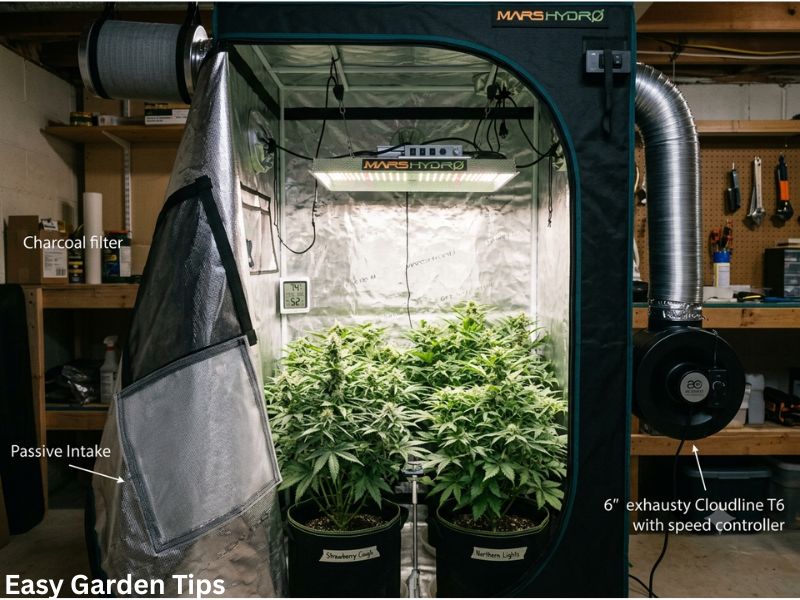
No, most grow tents do not need an intake fan. For small and medium-sized grow tents, a properly sized exhaust fan combined with passive intake vents is usually enough to provide fresh air and maintain healthy growing conditions.
When the exhaust fan removes warm, stale air from the tent, it creates negative pressure. This naturally pulls fresh air through the tent’s intake vents without the need for a separate intake fan.
However, an active intake fan can be beneficial in certain situations, such as:
- Large grow tents.
- High-powered lighting systems that generate significant heat.
- Long or restrictive duct runs.
- Grow rooms with poor airflow.
- Setups where passive intake isn’t supplying enough fresh air.
For most home growers using a 2×2, 2×4, 3×3, or 4×4 grow tent, passive intake works well and keeps the ventilation system simple and cost-effective.
What Does an Intake Fan Do?
An intake fan actively pushes fresh air into the grow tent. While it’s not required for every setup, it can improve airflow and help maintain a more stable growing environment when passive intake isn’t sufficient.
Brings Fresh Air Into the Tent
The primary job of an intake fan is to supply fresh air from outside the grow tent.
This fresh air provides:
- Carbon dioxide (CO₂) for photosynthesis.
- Cooler air to help regulate temperature.
- Drier air that can help lower humidity when needed.
Without a steady supply of fresh air, the growing environment becomes less efficient over time.
Helps Maintain Air Pressure
An intake fan works together with the exhaust fan to balance airflow inside the tent.
If the exhaust fan is much more powerful than the available passive intake, the tent walls may pull inward excessively due to strong negative pressure. Adding an intake fan can help improve airflow while reducing unnecessary strain on the exhaust system.
Supports Temperature and Humidity Control
Bringing in cooler, fresh air makes it easier for the exhaust system to remove heat and excess moisture.
This can be especially helpful when:
- The room outside the tent is cooler.
- Grow lights generate significant heat.
- Plants release large amounts of moisture during flowering.
Improves Air Distribution
An intake fan helps ensure fresh air reaches the entire grow tent instead of entering through only one passive vent.
When combined with an oscillating fan, it promotes more even air movement throughout the canopy, reducing stagnant air pockets that can contribute to disease or uneven plant growth.
Passive Intake vs. Active Intake
Both passive and active intake bring fresh air into a grow tent, but they do so in different ways. Understanding the difference makes it easier to decide which system is best for your setup.
What Is Passive Intake?
Passive intake relies entirely on the exhaust fan.
As the exhaust fan removes air from the tent, negative pressure draws fresh air through mesh vents or intake flaps without using another fan.
Advantages of passive intake:
- Lower equipment cost.
- Less electricity usage.
- Quieter operation.
- Simple installation.
- Works well for most small and medium grow tents.
For many home growers, passive intake provides all the fresh air needed.
What Is Active Intake?
Active intake uses a dedicated fan to push fresh air into the grow tent.
This system increases airflow and can help maintain more consistent environmental conditions in larger or more demanding grow setups.
Advantages of active intake:
- Greater airflow.
- Better cooling performance.
- Faster air exchange.
- Improved ventilation in large tents.
- Useful when passive airflow is restricted.
The trade-off is additional equipment, higher energy consumption, and a slightly more complex installation.
Which One Is Better?
For most growers, passive intake is the better choice because it’s simple, reliable, and effective when paired with a properly sized exhaust fan.
An active intake fan becomes worthwhile when passive intake can no longer keep up with your ventilation needs. If your tent experiences persistent heat buildup, poor airflow, or excessive negative pressure despite having an adequate exhaust fan, upgrading to an active intake system may improve overall performance.
When Do You Need an Intake Fan?
Although passive intake works well for most grow tents, there are situations where adding an intake fan can improve airflow and environmental control.
Large Grow Tents
Larger grow tents contain more air, making it harder for passive intake alone to keep up with the exhaust fan.
If you’re using a large tent, an intake fan can supply fresh air more efficiently and help maintain stable conditions throughout the growing space.
Long or Restrictive Duct Runs
Long ducting, multiple bends, or carbon filters can reduce the amount of air your exhaust system moves.
When airflow is restricted, passive intake may not bring in enough fresh air. An intake fan can help compensate for these losses and improve overall ventilation.
High-Powered Grow Lights
Powerful LED fixtures, HPS lights, and other high-output lighting systems generate more heat than smaller lights.
If your grow tent struggles to stay within the recommended temperature range, an intake fan can bring in cooler air more quickly and reduce heat buildup.
Restricted Airflow Around the Tent
Passive intake works best when the grow tent has easy access to fresh air.
If the tent is located in:
- A small closet
- A cramped storage room
- A poorly ventilated basement
- A confined corner
there may not be enough natural airflow for passive intake to work efficiently. In these situations, an intake fan can improve air exchange.
Hot Growing Environments
If the room surrounding your grow tent is already warm, your exhaust fan has to work harder to maintain comfortable temperatures.
Adding an intake fan can increase airflow, making it easier to replace warm air with cooler air from the surrounding space—provided the intake air is actually cooler.
Signs Your Grow Tent Needs an Intake Fan
Not sure whether passive intake is enough? Your grow tent will usually show a few clear signs if additional fresh air is needed.
Tent Walls Pull Inward Too Much
A slight inward pull is normal because it indicates the exhaust fan is creating negative pressure.
However, if the tent walls are collapsing inward significantly, your exhaust fan may be removing air faster than passive vents can replace it.
High Temperatures Despite a Good Exhaust Fan
If temperatures remain too high even though your exhaust fan is operating correctly, limited fresh-air intake could be part of the problem.
An intake fan may improve cooling by increasing the amount of cooler air entering the tent.
Poor Airflow
If the air inside the grow tent feels stagnant or stuffy, passive intake may not be providing enough air exchange.
Plants benefit from a constant supply of fresh air, especially during periods of active growth.
Slow Air Exchange
One way to identify insufficient intake is to observe how quickly the environment changes after opening the tent.
If humidity and temperature remain high for long periods, or the air inside still feels stale after ventilation adjustments, airflow may need to be increased.
Plants Showing Heat Stress
When fresh air is limited, plants may begin showing signs such as:
- Leaves curling upward.
- Wilting during the light cycle.
- Slow growth.
- Reduced vigor.
While these symptoms can have several causes, inadequate fresh-air intake is one possibility worth investigating.
How to Choose the Right Intake Fan
If you’ve decided that an active intake fan is necessary, choosing the correct size and configuration will help your ventilation system operate efficiently.
Match the Intake to the Exhaust Fan
In most grow tents, the intake fan should work with the exhaust fan rather than overpower it.
Many growers choose an intake fan with a slightly lower airflow (CFM) than the exhaust fan. This helps maintain slight negative pressure, which improves odor control and encourages fresh air to flow through the tent.
Choose the Right Fan Size
Select a fan that matches both your grow tent size and your exhaust system.
A fan that’s too small may not provide enough fresh air, while one that’s too powerful can create unnecessary positive pressure and reduce the efficiency of the exhaust system.
Install the Fan Near the Bottom of the Tent
Fresh air should enter from the lower part of the grow tent because cooler air naturally stays closer to the floor.
As the exhaust fan removes warm air from the top of the tent, cool intake air flows upward through the canopy, creating efficient air circulation.
Consider a Variable Speed Controller
An intake fan with adjustable speed gives you greater control over airflow.
It allows you to:
- Fine-tune air exchange.
- Reduce noise.
- Save energy.
- Adjust airflow as environmental conditions change.
Being able to match the intake fan speed to the exhaust fan helps create a balanced and efficient ventilation system.
Frequently Asked Questions
Can passive intake replace an intake fan?
Yes. In most small and medium grow tents, passive intake can completely replace an active intake fan. As long as your exhaust fan is properly sized and the intake vents are unobstructed, fresh air will naturally be drawn into the tent through negative pressure.
Should the intake fan be smaller than the exhaust fan?
Generally, yes. The exhaust fan should usually move slightly more air than the intake fan to maintain negative pressure inside the grow tent. This helps improve airflow and, if you’re using a carbon filter, reduces the chance of odors escaping through small gaps or openings.
Can I use two intake fans?
Yes, but it’s rarely necessary for home grow tents. Two intake fans may be useful in very large grow tents or commercial growing environments where a high volume of fresh air is required. For most hobby growers, one intake fan—or even passive intake—is sufficient.
Should the intake fan run continuously?
It depends on your setup. Many growers run the intake fan whenever the exhaust fan is operating to maintain consistent airflow. Others use environmental controllers that automatically adjust fan speed based on temperature or humidity. Running both fans together usually provides the most stable growing conditions.
Final Thoughts
An intake fan can improve airflow in certain grow tent setups, but most growers don’t actually need one. A properly sized exhaust fan combined with passive intake vents is enough to provide fresh air for the majority of small and medium grow tents.
An active intake fan becomes more useful when passive intake can’t keep up with your ventilation needs. Large grow tents, powerful lighting systems, restricted airflow, or consistently high temperatures are all situations where an intake fan may provide noticeable benefits.
If you’re setting up your first grow tent, start with a quality exhaust fan and passive intake. Monitor your temperature, humidity, and airflow as your plants grow. If you find that passive intake isn’t providing enough fresh air, you can always upgrade to an active intake system later. This approach keeps your setup simple, cost-effective, and easy to manage while still giving your plants the environment they need to thrive.

I’m Maya L. Greenwood, a lifelong plant lover who believes anyone can grow something beautiful with the right guidance. After years of testing soil mixes, pruning methods, irrigation tricks, and pest-safe solutions, I started EasyGardenTips.com to turn hard-won lessons into step-by-step advice. From seed starting and container gardens to composting and seasonal checklists, my goal is to make gardening simple, sustainable, and fun.