5 Best Rooting Hormone for Water Propagation: Products Compared
Choosing the best rooting hormone for water propagation can be surprisingly confusing. Liquid drops, natural seaweed formulas, and IBA-based blends all promise stronger roots, but the right option depends on your plants, preferred growing medium, dosing routine, and willingness to refresh solution regularly.
My first choice is Southside Plants Root Drops Liquid Rooting Hormone. Its concentrated 4-ounce bottle uses two drops per cup of water, and the formula is also positioned to help reduce stress when rooted cuttings move into a pot.
My second choice is WJunHua Root Drops Liquid IBA Rooting Hormone. It is a practical fit for indoor growers who want one concentrated liquid for water, soil, and LECA propagation.
My third choice is Montorchid Root Drops Liquid Rooting Hormone. Montorchid Root Drops Liquid Rooting Hormone Cuttings Fast Growth Propagation takes third place because it combines IBA and vitamins with a useful schedule for water changes and post-potting support. Its dosage differs from the top two options, so it may appeal to buyers who prefer a seven-to-ten-day refresh cycle and want a formula that can also support established houseplants.
This guide compares all five options by formula claims, dosing instructions, growing-medium compatibility, bottle size, customer-feedback evidence, and practical ownership details. You will also find setup advice, common mistakes to avoid, selection criteria, maintenance guidance, and concise answers to the questions beginners usually ask before adding rooting drops to a propagation jar.
Best Rooting Hormone for Water Propagation
I selected these products for direct relevance to water propagation, usefulness across common houseplant media, clarity of application instructions, and the practical benefits each formula offers beyond simply encouraging roots. Customer-feedback volume and rating were considered when supplied, while brand diversity helped prevent the comparison from becoming a list of nearly identical products from one source.
| # | Image | Product | Price on Amazon |
|---|---|---|---|
| 1 |  |
Southside Plants Root Drops Liquid Rooting Hormone | Check Price |
| 2 |  |
WJunHua Root Drops Liquid IBA Rooting Hormone | Check Price |
| 3 | 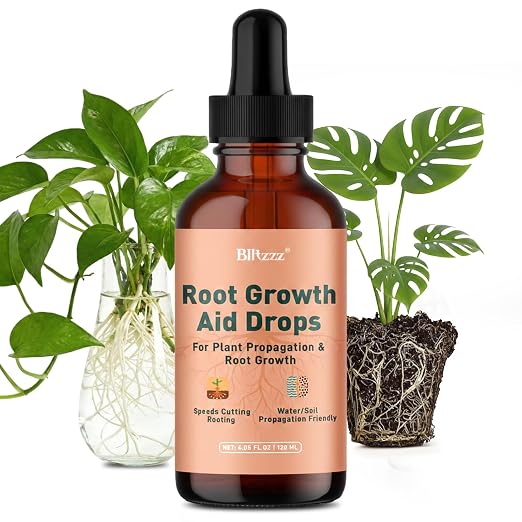 |
Montorchid Root Drops Liquid Rooting Hormone | Check Price |
| 4 |  |
HOUSEPLANT RESOURCE CENTER Houseplant Prop Drops | Check Price |
| 5 |  |
Escentile Plant Propagation Rooting Drops | Check Price |
Southside Plants Root Drops Liquid Rooting Hormone
Southside Plants Root Drops is the strongest all-around choice for someone who wants a straightforward liquid rather than a powder or gel. The recommended water-propagation dose is two drops per cup of water, which makes it easy to scale for a single cutting jar or several small vessels without mixing a large batch.
Its flexibility is a major advantage. The formula is intended for water, soil, LECA, pon, and sphagnum moss, so one bottle can stay useful as a cutting moves from an aquatic setup into a more permanent growing medium. The brand also positions it as a source of vitamins and natural rooting support, with an emphasis on thicker root development and less transplant shock. Those claims make it especially relevant for pothos, monstera, philodendron, and similar indoor foliage plants.
Maintenance is simple but not optional: the water should be refreshed every four to five days, with the drops added again during the change. The 4-ounce bottle is concentrated, so occasional propagators should get considerable use from it. Buyers who prefer a purely minimal-water setup may dislike having to measure a supplement, and the supplied information does not provide a detailed ingredient concentration or independent performance data.
Pros
- Clear two-drops-per-cup water dosage.
- Works across water, soil, LECA, pon, and moss.
- Concentrated 4-ounce bottle is suited to repeated propagation.
- Also intended to help plants adjust after potting.
- Strongest supplied customer-feedback profile at a 4.6 rating from 969 ratings.
Cons
- Water must be refreshed every four to five days.
- The available information does not specify exact hormone concentration.
- May be more product than needed for someone propagating only once.
My Opinion
This is my top pick for beginners and active houseplant propagators because the dose is easy to understand, the medium compatibility is broad, and the supplied customer-feedback volume is the strongest in this group. It is the best match for buyers who want one concentrated bottle to follow a cutting from jar to pot.
WJunHua Root Drops Liquid IBA Rooting Hormone
WJunHua Root Drops is a sensible second choice for indoor growers who value a clearly described transition from water to soil. The formula is presented as a liquid IBA rooting hormone with added rooting vitamins, and its stated purpose is not only to support early root development but also to help reduce stress during repotting.
For hydroponic or water propagation, the instruction is two drops per cup, or approximately 250 milliliters, with a top-up every four to five days when the water is changed. That familiar routine makes it relatively easy to compare with the leading option. The more distinctive instruction comes after potting: add one full dropper to each quart of water for the first two months. A buyer should treat that as a specific transition regimen rather than casually adding a full dropper to a small jar.
The product is aimed at foliage plants such as pothos, monstera, philodendron, and fiddle-leaf fig, but the supplied information does not give a full plant-by-plant compatibility chart. Its 4-ounce concentrated format should suit people who propagate regularly, while the lower supplied customer-feedback count means there is less accumulated feedback than for the top-ranked product. Beginners should use a measuring cup or marked container so the quart-based post-potting dose is not accidentally over-applied.
Pros
- Uses a simple two-drops-per-cup water dose.
- Explicitly identifies IBA and rooting vitamins.
- Suitable for water, soil, LECA, and hydroponic use.
- Includes guidance for the first two months after potting.
- Concentrated 4-ounce bottle can support repeated projects.
Cons
- Post-potting instructions require careful quart-based measuring.
- Customer-feedback volume is smaller than the leading option.
- Details about exact IBA strength are not supplied.
My Opinion
WJunHua earns second place because it is particularly useful for growers who already know their cuttings will move from water into soil. It is a practical alternative to Southside Plants, although its transition dosage deserves more attention than the simple jar dose.
Montorchid Root Drops Liquid Rooting Hormone
Montorchid Root Drops stands out for its stated blend of Indole-3-Butyric Acid, commonly called IBA, and vitamins. The formula is intended to support root cell development in cuttings, making it a reasonable candidate for growers who want a hormone-based liquid rather than a general plant supplement.
The water instructions are different from the first two products: add three drops per 500 milliliters of fresh water, then add two extra drops when changing the water. The suggested change interval is seven to ten days. That may be convenient for a buyer who cannot refresh propagation jars every few days, but the longer interval should not be used as an excuse to leave cloudy, dirty, or depleted water in place. Plant condition should always take priority over the calendar.
Montorchid also covers soil, LECA, moss, and other common media. For plants moving into a pot, the supplied guidance calls for one full dropper per quart of water during the first two months. The product is additionally positioned for established pothos, monstera, philodendron, and other indoor plants, although a buyer seeking a narrowly propagation-only formula may not need that broader use. The bottle is 4 ounces, and the available customer-feedback sample is smaller than the first-place option.
Pros
- States an IBA-and-vitamin formula.
- Supports water, soil, LECA, moss, and other media.
- Provides a seven-to-ten-day water-change guideline.
- Includes post-potting support instructions.
- Can also be used with established indoor plants.
Cons
- Its dosing system is not identical to the other concentrated drops.
- Longer water-change timing could encourage poor hygiene if followed too rigidly.
- Exact hormone concentration and independent test data are not supplied.
My Opinion
Montorchid is a good third choice for a buyer who wants stated IBA support and a product that can remain useful after a cutting is planted. I would choose it over a general-purpose formula when the longer refresh schedule and broader established-plant use are meaningful priorities.
HOUSEPLANT RESOURCE CENTER Houseplant Prop Drops
Houseplant Resource Center Houseplant Prop Drops takes a different approach from the IBA-focused liquids above. Its formula is described as using concentrated seaweed extract and humic acid, with a natural root-stimulator position rather than a synthetic hormone emphasis. That distinction may appeal to growers who prefer plant- and soil-derived inputs for their indoor collection.
The product is supplied in an 8-ounce bottle, making it the largest stated size in this comparison. That is useful for anyone who propagates frequently or wants a product that can remain available for multiple projects, though bottle size alone does not establish how many applications it provides. The instructions are broadly adaptable: it can be added to water or soil for hydroponic and soil growing.
Houseplant Resource Center also emphasizes support for stronger stems, more leaves, reduced transplant shock, and prevention of root rot. Those are useful goals, but they should not be read as a substitute for clean water, appropriate light, or a well-draining medium. The formula is described as shelf stable for two years, which is a practical ownership benefit if propagation is occasional. The available rating is 4.4 from 1,502 ratings, giving it the largest supplied feedback count in the group, although the rating is slightly below the top three.
Pros
- Large 8-ounce bottle is useful for frequent propagation.
- Uses seaweed extract and humic acid as its stated foundation.
- Suitable for water, soil, hydroponic, and indoor plant use.
- Supplied shelf life is two years.
- Largest supplied customer-feedback volume at 1,502 ratings.
Cons
- The supplied information does not provide a precise water-propagation dose.
- It is less convenient for buyers who want a clearly stated drop count.
- Root-rot prevention still depends heavily on sanitation and water management.
My Opinion
This is the best fit for a high-volume propagator who prefers a natural seaweed-and-humic-acid approach and wants an 8-ounce bottle. I rank it below the first three because the supplied usage directions are less precise for a beginner measuring a small propagation jar.
Escentile Plant Propagation Rooting Drops
Escentile Plant Propagation Rooting Drops is built around a proprietary blend of IBA, vitamins, and supportive nutrients. The formula is aimed at early-stage root growth, root vigor, and reduced transplant shock, so it addresses both the cutting stage and the move into a more established container.
One of its most useful buyer-facing details is the stated capacity of more than 75 uses per bottle. That gives occasional propagators a better sense of longevity than bottle size alone, although the actual number will depend on the dosing chart, cutting count, and how much solution is used for soil or moss. The squeeze-bottle format is intended to make drops easier to measure, and a dosing chart is supplied for fresh water.
Compatibility is broad: water, soil, moss, LECA, pon, sphagnum moss, and similar media are all named. For water propagation, the recommendation is to refresh the solution every three to five days. Soil and moss should remain moist with the solution rather than saturated. The formula is also positioned for pothos, monstera, philodendron, fiddle-leaf fig, snake plant, and other houseplants. Its 4.4 rating from 308 ratings offers useful customer-feedback evidence, but less volume than the fourth-ranked product.
Pros
- Stated capacity of more than 75 cutting applications.
- IBA, vitamins, and supportive nutrients are identified.
- Squeeze bottle and dosing chart support accurate use.
- Works in water, soil, moss, LECA, and pon.
- Useful for both propagation and post-potting support.
Cons
- Water must be refreshed every three to five days.
- The exact dosing chart is not included in the supplied information.
- Customer-feedback volume is moderate rather than extensive.
My Opinion
Escentile is a worthwhile choice for a buyer who wants an IBA-based product with an explicit use estimate and a squeeze dispenser. It ranks fifth mainly because the supplied evidence is less substantial than the higher options, not because its medium compatibility is narrow.
How I Selected These Options for the Best Rooting Hormone for Water Propagation
The comparison starts with water compatibility because a product that only suits soil does not answer the buyer’s main need. I then looked at whether each option supplied a usable dose, a water-refresh recommendation, and information about what happens when roots are transferred to soil, LECA, moss, or another medium.
Formula identity also matters. Three products specifically mention IBA, while Houseplant Resource Center emphasizes seaweed extract and humic acid, and Southside Plants describes a natural hormone-and-vitamin approach. These descriptions help shoppers identify the type of product they are considering, but they do not prove that one formula will outperform another on every plant.
Customer feedback was another consideration. Southside Plants has a supplied 4.6 rating from 969 ratings, WJunHua has 4.5 from 220, Montorchid has 4.6 from 150, Houseplant Resource Center has 4.4 from 1,502, and Escentile has 4.4 from 308. Those figures provide context about buyer response and feedback volume, not a controlled side-by-side growth test.
Selection takeaway: A clear dose and a realistic water-change routine are more useful to a beginner than a dramatic promise of instant roots.
Important limitation: None of the supplied data establishes a guaranteed rooting time, universal plant compatibility, or a precise performance advantage over clean water and proper propagation conditions.
How to Choose the Best Rooting Hormone for Water Propagation
The right choice should fit your propagation habits rather than simply having the most impressive formula description. Start with the plants you grow, the number of cuttings you typically prepare, and whether you want one product to support the later move into soil or semi-hydro media.
- Choose a clearly measured liquid if you are new to propagation.
- Match the product’s stated dose to the container size you normally use.
- Look for compatibility with your next medium, not only the current water jar.
- Consider bottle size and stated application count if you propagate often.
- Treat ratings and customer-feedback volume as context, not proof of guaranteed results.
Formula Type and Ingredient Transparency
IBA is a commonly identified rooting hormone in the WJunHua, Montorchid, and Escentile products. Southside Plants describes natural rooting hormone and vitamins, while Houseplant Resource Center highlights seaweed extract and humic acid. A buyer who specifically wants IBA should select a product that names it, whereas someone prioritizing a natural nutrient-based approach may prefer the seaweed-and-humic-acid option.
In every case, “more hormone” is not automatically better. Follow the product’s instructions rather than increasing the concentration in the hope of forcing faster growth. Excessive additives can make water cloudy or create an unnecessarily complicated routine.
Dosing for Small Jars
Small propagation containers make accuracy important. Two drops per cup and three drops per 500 milliliters are manageable measurements, but a full dropper intended for a quart of post-potting water should not be poured into a small glass. Use a clean measuring cup when the instructions are written for quarts or larger volumes.
If your containers are different sizes, calculate the dose before mixing. For example, a half-cup jar should receive half the stated two-drops-per-cup amount when the product instructions support that proportional approach. When a label or dosing chart is unclear, using less rather than guessing high is the safer practical starting point.
Bottle Size and Propagation Volume
A 4-ounce bottle is likely convenient for normal household use, but the actual lifespan depends on drop size and how often you prepare solution. Escentile provides a stated estimate of more than 75 cutting uses, which is helpful for planning. Houseplant Resource Center offers an 8-ounce bottle and a two-year shelf-stability claim, making it attractive to collectors who propagate throughout the year.
For a single pothos cutting, a large bottle may not be necessary. For a plant parent regularly dividing monstera or philodendron cuttings, a concentrated bottle can be more convenient than buying small quantities repeatedly.
How to Set Up a Water Propagation Container
Start with a clean jar, fresh water, and a cutting that has at least one viable node when the plant requires a node for rooting. Keep leaves above the waterline whenever possible. A submerged leaf can decay and contaminate the solution faster than the stem alone.
Add the selected rooting drops only after measuring the water volume. Swirl gently to distribute the solution, then position the cutting so the node is under water without allowing the entire stem or foliage to sit submerged. Bright, indirect light is generally more appropriate than harsh direct sun for a small cutting container.
Labeling the jar with the plant name and date is a simple way to track progress. It also prevents confusion when several similar pothos, philodendron, or monstera cuttings are propagating at once.
How Often to Change Propagation Water
Water maintenance is part of the treatment, not an optional extra. Southside Plants and WJunHua specify a four-to-five-day refresh schedule, while Escentile suggests three to five days. Montorchid gives a seven-to-ten-day guideline and recommends adding two extra drops during a change. Those differences mean the label instructions should remain the starting point for each product.
Change the water sooner if it becomes cloudy, develops an odor, contains debris, or shows signs of decay. Rinse the container with clean water before refilling. Avoid topping off indefinitely because old solution and organic debris remain in the jar even when the water level looks adequate.
Moving Rooted Cuttings Into Soil or LECA
Wait until the cutting has a developing root system rather than relying on one tiny root tip. The exact timing varies by plant and conditions, so root quality matters more than a fixed number of days. When transferring from water, handle new roots gently because they can be fragile.
Use a clean, appropriately sized container and a medium that provides both moisture and airflow. A cutting with a small root system does not need an oversized pot. If the selected product provides a post-potting dose, measure it according to the stated volume. The WJunHua, Montorchid, and Southside Plants data all describe use during transition, but the instructions are not interchangeable.
For LECA or other semi-hydro systems, keep the transition gradual and avoid assuming that a water-rooted cutting can tolerate a constantly high water level immediately. Observe the roots and foliage for stress instead of automatically adding more solution.
How to Make Rooting Drops Last Longer
Measure water before adding drops and keep the bottle’s dispenser clean. Do not pour unused solution back into the original container because that can introduce plant debris or microorganisms. Preparing only the amount needed for the current change also reduces waste.
Store the bottle according to its label and close the cap securely after each use. Keep it away from children and pets, and avoid leaving it in a hot window or an area where the bottle can be knocked into a propagation tray. Houseplant Resource Center states a two-year shelf-stability period; other products in this comparison do not provide a supplied shelf-life figure, so follow their packaging guidance.
Compatibility with Common Houseplants
All five products are positioned for indoor plants, with pothos, monstera, and philodendron appearing repeatedly in the supplied information. Fiddle-leaf fig is specifically mentioned for WJunHua and Escentile, while snake plant is specifically mentioned for Escentile. Southside Plants, Montorchid, and the broader formulas are presented as suitable for all indoor houseplants.
That broad wording should not be interpreted as a guarantee for every species or cutting type. Some plants root readily in water, while others are more prone to rot or do better in a propagation medium with air around the stem. Test a small number of cuttings first when working with an unfamiliar plant, and do not keep an unhealthy cutting in water simply because a rooting product is present.
Common Mistakes to Avoid with Propagation Drops
Most disappointing results come from poor water hygiene, incorrect measurement, or unsuitable cutting material rather than from choosing the “wrong” bottle. Rooting drops can support a good setup, but they cannot repair a rotting node or replace adequate light and oxygen.
- Do not exceed the stated dose to try to accelerate rooting.
- Do not submerge leaves or allow decaying tissue to remain in the jar.
- Do not top off old, cloudy water repeatedly instead of changing it.
- Do not confuse a quart-based post-potting dose with a small-jar dose.
- Do not transfer a cutting into an oversized pot that stays wet for too long.
- Do not assume a longer change interval is safe when the water looks dirty.
- Do not pour used propagation solution back into the original bottle.
What to Do When a Cutting Is Not Rooting
First inspect the node, stem, and water. A soft stem, unpleasant odor, or dark spreading tissue suggests decay rather than a simple lack of hormone. Remove damaged material with a clean tool if a healthy section remains, then place the viable cutting in fresh water and a clean container.
Next consider light and temperature. A cutting kept in deep darkness may develop slowly, while harsh sun can overheat the water and stress the foliage. Also confirm that the correct plant part is under water. For many foliage plants, roots emerge from a node rather than from a random section of stem.
If several cuttings fail in the same setup, change the routine before changing products. Clean the container, use fresh water, reduce unnecessary additives, and verify the dose. A new bottle is unlikely to solve a sanitation problem.
When to Stop Using Rooting Hormone
Rooting drops are most relevant during cutting establishment and the transition into a new medium. Some products in this comparison also claim usefulness for established plants, but continued use should follow the label rather than becoming an automatic addition to every watering session.
Once a plant has a stable root system and is growing normally, ordinary care may be all it needs. If foliage shows stress, the soil remains wet, or the water develops residue, pause the additive and reassess the broader care routine. Healthy roots depend on oxygen, appropriate moisture, and a suitable medium as much as on a propagation supplement.
FAQS About Best Rooting Hormone for Water Propagation
Which liquid rooting product is the easiest for beginners?
Southside Plants Root Drops is the easiest starting point because its water dose is stated as two drops per cup and its compatibility extends to soil, LECA, pon, and moss. WJunHua offers a similarly simple water dose.
Can rooting drops be used with pothos and monstera cuttings?
Yes. Pothos and monstera are specifically named among the suitable indoor plants for several products in this comparison. The cutting still needs a healthy node, clean water, and appropriate light.
Should I change the water after adding rooting drops?
Yes. The products generally call for fresh water on a regular schedule. Depending on the formula, that interval ranges from every three to five days, every four to five days, or approximately every seven to ten days. Change it sooner if it becomes cloudy or dirty.
Is an IBA formula necessary for water propagation?
No. IBA is one type of rooting hormone used by several products here, but Houseplant Resource Center emphasizes seaweed extract and humic acid, while Southside Plants describes natural rooting hormone and vitamins. Clean conditions and a viable cutting remain essential.
Can the same rooting drops be used after moving a cutting to soil?
Several products provide post-potting guidance, including Southside Plants, WJunHua, and Montorchid. Use the stated volume carefully because a drop dose for a jar is not the same as a full-dropper instruction for a quart of water.
Can I use propagation drops in LECA or moss?
Yes. Southside Plants, WJunHua, Montorchid, and Escentile specifically identify LECA, moss, or related media. Keep the medium moist without leaving the developing root system in stagnant, oxygen-poor conditions.
Final Thoughts
For most beginners, the best rooting hormone for water propagation is Southside Plants Root Drops Liquid Rooting Hormone because it combines clear dosing, broad medium compatibility, and substantial supplied customer feedback. WJunHua Root Drops Liquid IBA Rooting Hormone is the best alternative for water-to-soil transitions, while Montorchid Root Drops Liquid Rooting Hormone suits buyers who want stated IBA support and broader ongoing plant use. Whichever product you choose, accurate measurement, fresh water, and a healthy cutting will matter just as much as the drops themselves.

I’m Maya L. Greenwood, a lifelong plant lover who believes anyone can grow something beautiful with the right guidance. After years of testing soil mixes, pruning methods, irrigation tricks, and pest-safe solutions, I started EasyGardenTips.com to turn hard-won lessons into step-by-step advice. From seed starting and container gardens to composting and seasonal checklists, my goal is to make gardening simple, sustainable, and fun.