5 Best Rooting Hormone for Trees: Compared With Buying Guide
This guide compares all five formulas by application style, concentration, plant compatibility, capacity, and practical limitations. You will also learn how to choose a formula for tree cuttings, prepare the material, avoid common propagation mistakes, store the product, and interpret results realistically. When comparing best rooting hormone for trees, I look at how each option fits a real buying need, where it performs well, and which trade-offs matter.
My first choice is Garden Safe Take Root Rooting Hormone Powder. The two-pack format is practical for gardeners working with several plants, while the simple dip-and-plant method is approachable for beginners.
My second choice is MIDASHYDRO PRODUCTS.35% IBA Rooting Hormone Cloning Gel. Choosing a propagation aid for woody cuttings can be surprisingly difficult. The best rooting hormone for trees must match the cutting’s maturity, the growing medium, and the amount of control you want during application rather than simply having the strongest-sounding formula.
My third choice is Hormex Rooting Hormone Powder #1. Its 0.10% IBA formula is a sensible starting point for tender material, including some young tree and ornamental cuttings, without pushing beginners toward an unnecessarily strong treatment.
Below, I compare the selected best rooting hormone for trees options, explain the strengths and trade-offs of each one, and cover the buying factors plus practical setup, use, compatibility, maintenance, longevity, safety, troubleshooting, storage, and common mistakes that matter before choosing.
Best Rooting Hormone for Trees
I selected these products for their relevance to tree and woody-plant propagation, the usefulness of their supplied specifications, the range of application formats, and available customer-feedback evidence. The group also includes powder, gel, liquid, and soluble formulas so readers can compare convenience and control rather than relying on one type of product.
| # | Image | Product | Price on Amazon |
|---|---|---|---|
| 1 |  |
Garden Safe Take Root Rooting Hormone Powder | Check Price |
| 2 |  |
MIDASHYDRO PRODUCTS.35% IBA Rooting Hormone Cloning Gel | Check Price |
| 3 |  |
Hormex Rooting Hormone Powder #1 | Check Price |
| 4 | 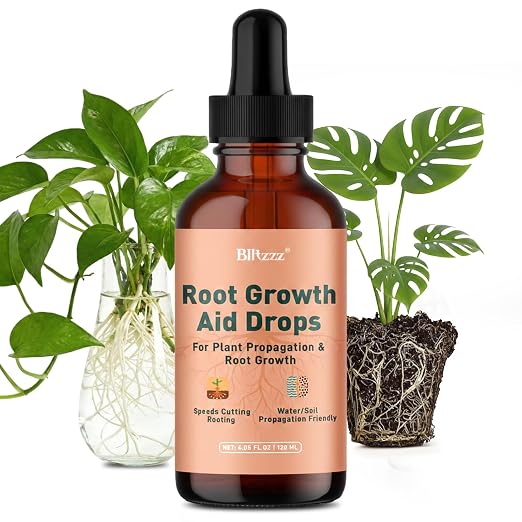 |
Montorchid Root Drops Liquid Rooting Hormone | Check Price |
| 5 |  |
Herrdemia 3-in-1 IBA and NAA Rooting Powder | Check Price |
Garden Safe Take Root Rooting Hormone Powder
Garden Safe Take Root uses indole-3-butyric acid, or IBA, a common synthetic version of a hormone naturally associated with root development in plants. That matters because the product gives a cutting a targeted rooting signal at the wound rather than asking the gardener to measure a liquid concentration. For a beginner, the process is straightforward: moisten the cut end, stir it into the powder, tap off excess, and plant.
The powder is intended for most popular home, garden, and greenhouse varieties. Its listed plant range includes roses, woody ornamentals, geraniums, coleus, philodendrons, African violets, and other familiar plants. For tree propagation, the broad woody-ornamental compatibility is more relevant than the houseplant examples, although success will still depend heavily on species, season, cutting maturity, humidity, and cleanliness.
A two-pack gives this option useful household practicality. One container can be kept available while the other remains sealed, or both can be used when propagating multiple batches. Powder is also less likely than a liquid to spill during storage, but it can be overapplied if a cutting is left heavily coated. Tapping away the excess is therefore an important part of the stated method.
Pros
- Simple powder-dip application for beginners.
- Uses clearly identified IBA.
- Suitable for many plants, including woody ornamentals.
- Two-pack format supports repeated propagation.
Cons
- Does not provide the same coating control as a gel.
- The supplied data does not specify a concentration or tree-by-tree guide.
- Excess powder must be removed before planting.
My Opinion
This is the strongest all-around starting point for a home gardener who wants a familiar, low-complexity powder and expects to propagate more than one type of plant. It is less ideal for someone who needs precisely measured strength for a specific difficult tree.
MIDASHYDRO PRODUCTS.35% IBA Rooting Hormone Cloning Gel
MIDASHYDRO PRODUCTS takes a different approach with a gel containing 0.35% IBA. Gel can cling to the cut surface more evenly than loose powder, which may appeal to growers preparing several cuttings in one session. The jar format also avoids the repeated dipping into a shallow powder layer that can become contaminated with plant material.
The stated concentration is positioned as a balance for different plants: strong enough to support cloning, but not so concentrated that the formula is automatically aimed at only one type of cutting. The brand says the gel works across plants and shrubbery, making it a plausible option for woody ornamentals and some tree cuttings when the species responds well to a moderate IBA treatment.
Capacity is a major reason to consider it. The larger jar is intended to support hundreds of clones, so it makes more sense for a serious propagation project, a collector, or a gardener who routinely takes cuttings. That same size may be unnecessary for someone making only a handful of seasonal attempts. The product also includes customer-service support and a satisfaction guarantee statement from the brand, though those do not replace checking the application directions before use.
Its main trade-off is that a gel still requires disciplined hygiene. A shared jar can become a source of contamination if dirty cuttings or tools are repeatedly introduced. Use a clean applicator or transfer a small amount to a separate container for each session instead of working directly from the main jar.
Pros
- 0.35% IBA concentration is clearly stated.
- Gel adheres well to cut surfaces.
- Large jar suits repeated cloning and larger batches.
- Broad plant and shrubbery compatibility is claimed.
Cons
- Large capacity may be excessive for occasional users.
- Requires careful hygiene to avoid contaminating the jar.
- May be more treatment than tender cuttings need.
My Opinion
This is the best fit among the five for a high-volume propagator who prefers gel control and wants a stated moderate concentration. For a first experiment with a delicate tree, I would favor a more species-appropriate strength rather than assuming more gel guarantees better rooting.
Hormex Rooting Hormone Powder #1
Hormex Powder #1 is specifically positioned for softwood cuttings and contains 0.10% IBA. That focus gives it a useful place in a tree-propagation collection because many trees are propagated from young, flexible growth rather than mature hardwood. Tender material can be more responsive to a mild formula, although the exact ideal strength varies by species and timing.
Hormex also offers the powder in four strengths for softwood, semi-hardwood, and hardwood cuttings, listed as 0.1%, 0.3%, 0.8%, and 1.6% IBA. This particular #1 version is therefore best understood as the gentle end of a broader range, not as a universal answer for every tree. A buyer working with mature woody stems may want to investigate the appropriate higher-strength version instead of automatically using #1.
The preparation instructions are unusually practical. They call for a 3-to-8-inch stem cut at a 45-degree angle below a node, followed by dipping in liquid or clean water, coating with powder, and planting in a rooting cube or similar medium. The powder is listed as usable in rockwool, coco, peat moss, soil, and other media, which helps gardeners adapt it to an existing propagation setup.
Heat and humidity are part of the recommended process. That is helpful context because a rooting hormone cannot compensate for a dry cutting, stagnant medium, or excessive heat. The product is also described as made in the United States and suitable for varied plant species, but the low strength remains the key buying consideration.
Pros
- Gentle 0.10% IBA formula for softwood cuttings.
- Clear guidance on cutting length and angle.
- Works with several common propagation media.
- Other strengths are available for different cutting types.
Cons
- May be too mild for mature hardwood cuttings.
- Requires the buyer to match strength to cutting maturity.
- A separate rooting cube or medium may be needed.
My Opinion
Hormex #1 is a thoughtful choice for young, tender growth and beginners who want a mild powder with usable setup guidance. Its biggest limitation is also its defining feature: gardeners working with hard, mature tree wood may need a different Hormex strength.
Montorchid Root Drops Liquid Rooting Hormone
Montorchid Root Drops is the most flexible format in this group. The liquid is intended for water propagation, soil, LECA, moss, and other common media, and the dropper allows measured application instead of coating a cutting in powder or gel. That makes it especially attractive for indoor plant keepers who move cuttings between water and a solid medium.
The formula combines IBA with vitamins and is marketed for faster, denser root growth in plants such as pothos, monstera, and philodendron. Those examples are primarily houseplants rather than trees, so a tree grower should treat the broad compatibility language as a reason to investigate further, not as proof that every woody species will respond identically.
For water propagation, the supplied directions call for three drops per 500 milliliters of fresh water, with two additional drops when changing the water every seven to ten days. After potting, the directions recommend one full dropper per quart of water for the first two months. These measurements give the product a practical advantage for repeatable use, but they also make careful measuring important; adding extra drops is not a shortcut to stronger roots.
The 4-ounce bottle should be convenient for many small propagation sessions, and the dropper helps limit spills. Its strongest ownership benefit is versatility, while its main limitation is audience fit. Tree-cutting specialists may prefer a product with a clearly stated IBA concentration and woody-cutting instructions rather than a formula primarily presented around indoor houseplants.
Pros
- Works in water, soil, LECA, moss, and similar media.
- Dropper supports measured, low-mess application.
- Includes directions for water changes and post-potting support.
- Useful for growers moving cuttings from water to soil.
Cons
- Supplied data does not state the IBA concentration.
- Marketing emphasis is on houseplants rather than trees.
- Liquid dosing requires accurate measurement.
My Opinion
This is the most convenient choice for indoor propagation routines and mixed-media setups. I would place it behind the powders and gel for a dedicated tree project because the available information gives less concentration detail and fewer woody-cutting-specific instructions.
Herrdemia 3-in-1 IBA and NAA Rooting Powder
Herrdemia stands out by combining 0.1% IBA, 0.1% NAA, and mycorrhizae in a soluble powder. The intended logic is broad coverage: IBA is associated with dense feeder-root development, NAA with deeper root growth, and the mycorrhizal component with extending the effective root system. The formula also includes seaweed extract, chitosan, and potassium fulvate, according to the supplied product information.
That ingredient breadth may appeal to gardeners who want one product for cuttings, hydroponic use, and later transplant support. Unlike many ordinary powders, this one is described as dissolving in water, so it can be used as a dip or added to a propagation solution. The claimed compatibility spans houseplants, shrubs, fruit bushes, citrus, bonsai, vegetables, and many garden plants, making it one of the broadest options on paper.
Capacity is another selling point. A 30-gram bottle is claimed to treat up to 3,000 cuttings, with a separate high-volume solution estimate. Those numbers are useful for comparing value, but actual consumption will depend on whether the powder is used as a dip, dissolved for hydroponics, or applied repeatedly. High capacity is most meaningful for nurseries, clubs, or gardeners running many batches.
The trade-off is complexity. A combination formula can be harder to troubleshoot because a poor result may come from the species, the hormone balance, the medium, or the environmental conditions. The supplied data also gives ambitious compatibility and performance claims without a species-specific tree chart, so cautious small-batch use is sensible.
Pros
- Combines IBA, NAA, and mycorrhizae.
- Soluble in water for dips and hydroponic applications.
- Broad stated compatibility across home and garden plants.
- High claimed capacity for large propagation batches.
Cons
- More complex than a single-ingredient powder.
- No specific tree-by-tree dosing chart is supplied here.
- Large treatment capacity may be unnecessary for casual gardeners.
My Opinion
Herrdemia is an interesting option for experienced propagators who want a multifunctional, water-soluble formula and can monitor results carefully. Beginners may find Garden Safe or Hormex easier to understand because their application and hormone profiles are simpler.
How I Selected These Options for the Best Rooting Hormone for Trees
The selection centered on practical factors that affect tree-cutting propagation: hormone type, stated concentration, format, cutting maturity, medium compatibility, capacity, and the clarity of the application process. I also considered whether the product information gave enough context for a buyer to recognize its limitations instead of treating every cutting as interchangeable.
The most important comparison is not “strongest versus weakest.” A mild powder may be a better match for tender growth, while a moderate gel or stronger formula may suit mature wood. Species and cutting condition should guide the decision.
Customer-feedback volume was considered as supporting evidence where available, but it was not treated as proof that a product will work on every tree. Ratings can reflect ease of use, houseplant success, packaging, or general satisfaction rather than results with a particular woody species.
Format diversity was also intentional. Powder is usually simple and economical, gel can provide better surface coverage, liquid supports measured dosing and water propagation, and soluble blends may offer more flexibility. That range lets a buyer choose according to workflow rather than popularity alone.
How to Choose the Best Rooting Hormone for Trees
Start by identifying the cutting you actually plan to root. A soft, green shoot, a partially matured stem, and a dormant hardwood cutting may need different hormone strengths and environmental conditions. The best rooting hormone for trees is the one that matches that cutting stage while remaining easy for you to apply consistently.
- Match hormone strength to softwood, semi-hardwood, or hardwood material.
- Choose powder for simplicity, gel for coating control, or liquid for measured dosing.
- Check whether the formula names IBA, NAA, or both and whether concentration is stated.
- Consider how many cuttings you will make before buying a large container.
- Prioritize clear directions and clean handling over exaggerated speed claims.
Cutting maturity matters
Softwood cuttings are young and flexible, often taken during active growth. They can dehydrate quickly but may root readily under humid conditions. Semi-hardwood material has begun to firm up, while hardwood is mature and typically more resistant. Hormex #1 is specifically aimed at tender cuttings, whereas a moderate IBA gel may be more appealing for broader cloning work.
Understand IBA and NAA
IBA is the most consistently identified hormone in the products here. A stated percentage makes comparisons easier, although concentration alone does not predict success. Herrdemia adds NAA, creating a more complex formula that may suit gardeners seeking a broader root-development approach but gives them more variables to manage.
Pick the format that matches your workflow
Powder is quick for a small batch and stores neatly. Gel generally stays on the cut surface and can feel more controlled during repeated applications. Liquid and soluble products are useful when propagating in water or LECA, but dosing errors are easier if the gardener does not measure carefully. A large jar is only an advantage when it will be used before storage life or contamination becomes a concern.
Prepare Tree Cuttings Before Applying Hormone
Rooting hormone cannot repair a dead, crushed, diseased, or badly dehydrated cutting. Select healthy current-season or appropriately mature growth, depending on the tree, and use a clean, sharp tool to make a smooth cut. Remove unnecessary lower leaves while keeping enough foliage to support the cutting without creating excessive water loss.
A 45-degree cut below a node is the preparation guidance supplied for Hormex, and it creates a recognizable lower end for planting. Keep the cutting length reasonable; the listed 3-to-8-inch range is a useful general reference, though species-specific guidance should take priority. Avoid leaving cuttings exposed to sun or dry air while preparing the rest of the batch.
Use a fresh, airy medium that holds moisture without staying saturated. Depending on the tree, this may be a rooting cube, peat-based mix, coco, perlite-containing medium, or another propagation substrate. Label each batch with the tree name, date, cutting type, and hormone used so that you can compare results honestly.
How to Apply Powder, Gel, and Liquid Formulas
Powder application
Moisten the lower end if the label calls for it, then coat only the portion that will enter the medium. With Garden Safe, the supplied method is to stir the cut end in powder and tap away excess. Do not bury a thick clump of powder around the stem; excess product can complicate moisture management and makes it harder to tell whether the cutting is responding to the correct amount.
Gel application
Transfer a small amount of gel to a clean dish or applicator rather than repeatedly inserting cuttings into the main jar. Cover the wounded end evenly, then plant promptly. This approach preserves the bulk container and reduces the chance of carrying debris from one cutting into the next.
Liquid and soluble application
Measure drops or dissolved powder according to the product directions. Montorchid specifies three drops per 500 milliliters for aquatic propagation and one full dropper per quart after potting. Herrdemia is described as suitable for dissolving in water, but the available information does not provide a single universal tree dose, so avoid improvising a concentrated mixture.
Control Humidity, Moisture, and Light
Most failed cuttings are not rescued by adding more hormone. They fail because the stem loses water faster than it can absorb it, the medium stays oxygen-poor, or the cutting overheats. Bright indirect light, gentle warmth, and high but not stagnant humidity generally create a more favorable environment than direct midday sun.
Keep the medium evenly moist, not waterlogged. A clear cover or propagation chamber can reduce moisture loss, but it should be opened periodically for air exchange. Watch for condensation that remains excessive, softening stems, foul smells, or darkening at the base. These signs call for better ventilation and possibly a fresh medium, not an extra application of hormone.
Using Rooting Hormone in Water, Soil, or LECA
Water propagation is easy to observe, but roots formed in water may need a gradual transition to soil or another solid medium. Change the water as directed and keep leaves above the waterline. Montorchid specifically supports water, soil, LECA, and moss, which makes it the most naturally suited option here for gardeners who move cuttings between media.
Soil and rooting cubes provide physical support from the beginning but hide root development. Resist pulling on the cutting to check progress. LECA and moss can offer a middle ground, though each requires attention to moisture levels and transplant timing. When moving a rooted cutting, handle new roots gently and keep the transition medium consistently moist while the plant adapts.
How to Store Rooting Hormone and Keep It Clean
Close powders, gels, and liquids immediately after use and store them according to the package directions. Keep containers away from heat, direct sunlight, children, and pets. A cool, dry storage location is generally preferable for powders, while liquid and gel products deserve extra attention to cap cleanliness and signs of separation or contamination.
Never return unused product from a working dish to the original container. Use clean tools, avoid touching the applicator tip to plant tissue, and discard material that becomes visibly contaminated. Buying a two-pack or large jar is economical only if the product remains usable through careful handling.
Common Mistakes to Avoid When Rooting Tree Cuttings
Propagation problems often come from treating hormone as the main ingredient in success. It is only one part of a system that also includes viable plant material, cleanliness, humidity, temperature, light, and the right medium.
- Using a softwood formula on mature hardwood without checking strength guidance.
- Applying a heavy coating and assuming extra hormone means faster roots.
- Planting into compacted or saturated medium with little air space.
- Allowing leaves to wilt repeatedly before improving humidity.
- Sharing a gel jar or solution between dirty tools and cuttings.
- Checking progress by pulling on the stem and damaging new roots.
- Comparing different tree species as though they should root at the same speed.
When several cuttings fail, change one variable at a time. Record the species, cutting stage, hormone strength, medium, and humidity before starting another batch.
What Results Should You Expect?
Rooting speed varies widely among tree species and even among branches from the same parent plant. Some cuttings may show new growth before a strong root system exists, while others can spend weeks forming roots with little visible change above the medium. Do not use a product’s general “fast growth” language as a guaranteed timetable.
Measure success by healthy, stable roots and continued growth after transplanting. A cutting that forms a few weak roots but collapses after potting has not truly succeeded. Gradual acclimation, careful watering, and patience are often more important at that stage than the original hormone choice.
Which Formula Fits Different Buyers?
For a beginner wanting a conventional powder, Garden Safe is the easiest overall starting point. For repeated batches and a gel workflow, MIDASHYDRO is more suitable. Hormex #1 makes the most sense when the cutting is tender and the gardener wants a low-strength option with several alternate strengths available.
Choose Montorchid when water, LECA, or indoor houseplant propagation is central to the routine. Herrdemia is better suited to someone interested in a soluble multi-ingredient formula and large treatment capacity. A tree specialist should still verify species-specific propagation guidance before committing an entire batch to any one product.
FAQS About Best Rooting Hormone for Trees
What is the best rooting hormone for tree cuttings?
Garden Safe Take Root is the best general starting point in this comparison because it uses IBA, has a simple powder application, supports woody ornamentals, and comes as a two-pack. The right choice can change with the tree species and cutting maturity.
Is powder or gel better for tree cuttings?
Neither format is automatically better. Powder is simple and convenient for small batches, while gel can provide more even coverage and suit repeated cloning. The important factors are appropriate hormone strength, clean handling, and suitable humidity and medium.
Can a softwood rooting hormone be used on hardwood tree cuttings?
It may be too mild for some hardwood cuttings. Hormex #1 is specifically labeled for tender plant cuttings, and the brand lists stronger versions for semi-hardwood and hardwood material. Match the formula to the cutting stage rather than assuming one strength fits all.
Does more rooting hormone make tree cuttings root faster?
No. Excess hormone can harm or suppress rooting, and heavy powder or gel coverage can create application problems. Use the stated directions and focus equally on moisture, air exchange, temperature, and viable cuttings.
Can rooting hormone be used for tree cuttings in water?
Some liquid or soluble products are intended for water propagation. Montorchid Root Drops is specifically described for water, soil, LECA, and moss, while Herrdemia is described as water-soluble. Follow the exact dilution instructions and change water as directed.
How long does it take tree cuttings to root with hormone?
There is no universal schedule. Species, cutting type, season, temperature, humidity, and medium all affect timing. Wait for signs of stable rooting rather than pulling on the cutting or relying only on new leaf growth.
Final Thoughts
The best rooting hormone for trees depends on matching the formula to the cutting, but Garden Safe Take Root Rooting Hormone Powder is the strongest all-around choice here. MIDASHYDRO PRODUCTS.35% IBA Rooting Hormone Cloning Gel is the better alternative for larger batches and gel users, while Hormex Rooting Hormone Powder #1 is the sensible pick for tender cuttings and a mild starting strength.

I’m Maya L. Greenwood, a lifelong plant lover who believes anyone can grow something beautiful with the right guidance. After years of testing soil mixes, pruning methods, irrigation tricks, and pest-safe solutions, I started EasyGardenTips.com to turn hard-won lessons into step-by-step advice. From seed starting and container gardens to composting and seasonal checklists, my goal is to make gardening simple, sustainable, and fun.