Craftsman Leaf Vacuum Review: Features, Pros, Cons, and Buyer Advice
The CRAFTSMAN 3-in-1 Leaf Blower, Vacuum and Mulcher, Backpack Blower Up (CMEBL7000) is a corded electric yard tool that can blow leaves, vacuum them up, and mulch them into a collection bag. It’s aimed at homeowners who want one machine for several cleanup jobs and have access to an outdoor outlet.
Its listed 12-amp motor, airflow of up to 450 CFM, and air speed of up to 260 MPH point to a tool built for clearing and collecting typical yard debris. The backpack bag can hold up to 55 liters of mulched material, which may mean fewer trips to empty it during a cleanup.
The trade-off is the power cord. It keeps the tool connected to an outlet rather than a battery, but it also limits how far you can work and asks you to manage a cord around the yard.
This review covers the verified specifications, what they may mean in everyday use, and the fit and setup questions worth checking before you buy. It also lays out the drawbacks plainly so you can decide whether a corded blower-vac suits your yard.
CRAFTSMAN 3-in-1 Leaf Blower, Vacuum and Mulcher, Backpack Blower Up

Features and Specifications
The CMEBL7000 combines three functions in a single corded electric tool. The listed figures describe its advertised capacity, not a guarantee that every kind of leaf or yard layout will produce the same result.
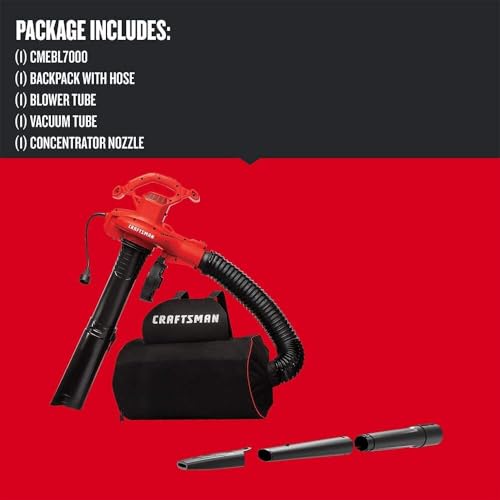
- 12-amp motor: This is the listed motor rating for the blower and vacuum. It tells you the tool draws power from a corded electrical supply; it doesn’t, on its own, establish how quickly the machine will clear a particular yard.
- Up to 450 CFM: CFM means cubic feet per minute, a measure of airflow volume. Higher airflow can help move a broad layer of leaves, though wet, packed-down, or heavy debris may take more effort than loose, dry leaves.
- Up to 260 MPH: MPH describes the listed maximum air speed. It can help focus airflow on stubborn patches, but the rating is not a promise that every nozzle position or task will deliver that maximum.
- Three operating functions: The tool changes between blower and vacuum-and-mulcher use. That lets you clear leaves into piles, then collect and process them with the same machine instead of switching to a separate yard vacuum.
- Tool-free conversion: The listing says you can change modes without tools. That can make switching between blowing and vacuuming less of a chore, but it’s still worth checking the included parts and the manual’s conversion steps before starting.
- Backpack collection bag, up to 55 liters: The bag is carried on your back and holds the mulched material. Its capacity may reduce emptying breaks, although a full bag still adds weight and needs to be emptied when it reaches capacity.
- Wide-mouth bag opening: The broad opening is intended to make emptying easier. It gives you a more accessible way to get collected material out, but you’ll still want a suitable disposal spot or yard-waste container ready.
One important distinction: the listing provides airflow and air-speed figures, but no stated leaf-reduction ratio, cord length, weight, or noise level. Don’t assume a particular mulch ratio or working reach from the figures above; check the current product details and manual for any information you need before buying.
Everyday Use and Performance
For a yard with a nearby outdoor outlet, the blower mode is the straightforward place to start. You can direct loose leaves off a lawn, patio, or walkway and gather them into a pile. The 450-CFM and 260-MPH ratings suggest useful airflow for ordinary cleanup, but they shouldn’t be read as a guarantee against every pile or surface condition.

Wet leaves are a different job from dry ones. They tend to cling to grass and paving, so you may need to work more slowly or move them in smaller batches. The listing doesn’t specify performance on wet debris, and the maximum air-speed figure alone can’t tell you how the tool will handle a soggy corner after rain.
Vacuum mode is for collecting leaves rather than pushing them into a pile. That can be appealing if you’d rather gather material directly into a bag, especially along borders or around a small outdoor area. Mulching as part of the collection process means the bag holds processed material; however, the supplied information doesn’t say how much smaller the material becomes, so avoid planning around a specific reduction in volume.
Think through the cleanup route
The backpack bag is useful in principle when you’re moving around instead of staying beside one stationary collection point. Its stated capacity of up to 55 liters can cut down on trips to empty it, but how often you’ll need to stop depends on the amount and type of debris. A yard full of leaves can fill a bag faster than a quick pass along a short walkway.
The cord is the main practical constraint. Before choosing this model, picture where the outlet is, how you’ll route the cord around the work area, and whether you can keep it clear of the blower’s path. The product information doesn’t provide the cord length, so check that detail rather than assuming you can cover a large yard from one outlet.
In other words, this is a better match for a planned cleanup route than for wandering freely across a wide property. If reaching several distant areas means repeated unplugging, the cord can turn an otherwise simple job into a series of small interruptions.
Design, Fit, and Setup
Because the collection bag sits on your back, fit matters in a way it doesn’t with a bag that rests on the ground. Check the product listing and manual for the harness details and the tool’s overall weight; those specifications aren’t included in the supplied information. If you have limited shoulder or back strength, consider how carrying a bag that can hold up to 55 liters of mulched material may feel as it fills.
Tool-free mode changes reduce the need to find a wrench or other tool when switching tasks. They don’t remove the need to assemble or secure the correct blower or vacuum components. Read the included instructions, confirm all parts are seated as directed, and disconnect the power before changing configurations or clearing a blockage.
For corded equipment, plan the power setup before you begin. Use an outlet and any extension cord only as directed in the manufacturer’s manual, including its guidance for outdoor use. The listing extract doesn’t provide cord length or extension-cord requirements, so don’t guess at those details.
Storage and cleanup checks
A backpack bag and conversion parts need somewhere to go between seasons. Before buying, think about whether you have dry storage space for the machine and bag, and check the manual for cleaning and storage instructions. The product information confirms a wide-mouth emptying opening, but it doesn’t establish that the bag or any other component is machine-washable or weatherproof.
Vacuuming can bring leaves and other loose yard material into the collection system, so routine inspection is part of owning this type of tool. Follow the manual’s instructions for checking the intake and clearing debris. Avoid reaching into the machine while it’s connected to power.
What Works Well (pros)
- Three jobs in one tool: Blowing, vacuuming, and mulching let you switch between moving leaves and collecting them without buying a separate machine for each function.
- Useful listed airflow figures: Up to 450 CFM and 260 MPH give buyers concrete performance ratings to compare with their needs, while leaving room to account for real yard conditions.
- Tool-free mode conversion: Changing functions without tools may make it easier to move from clearing an area to collecting leaves, especially during a cleanup that needs both approaches.
- Backpack collection setup: Carrying the bag on your back keeps it with you as you move around. Its capacity of up to 55 liters may also mean fewer emptying stops than a smaller bag would require.
- Wide-mouth emptying opening: A larger opening gives you a more accessible way to empty the collected material once the bag is full.
Where It Falls Short (cons)
- The cord limits reach and freedom of movement. You’ll need a suitable outlet within reach and a plan for routing the cord safely. This may be frustrating on a large or divided yard, and the listing doesn’t state cord length.
- The full backpack bag can become a carrying burden. Up to 55 liters describes capacity, not a promise that carrying a full load will feel comfortable. Buyers who prefer to avoid carrying yard debris should consider a ground-supported collection setup instead.
- Some purchase details aren’t established in the supplied specifications. Weight, noise level, cord length, and mulch ratio aren’t provided here. If any of those affects your decision, confirm them from the current listing or manual before ordering.
- Maximum ratings don’t cover every leaf condition. The stated figures don’t guarantee easy removal of wet, compacted, or heavy debris. If those conditions make up most of your cleanup, a blower-vac may take more time than its headline ratings suggest.
Who Should Buy It?
This Craftsman is worth considering if you have a modest-to-medium cleanup area near an outdoor outlet and want one machine for blowing leaves into piles and vacuuming them up. It may also suit someone who likes the idea of carrying the collection bag rather than stopping to drag or reposition a container.
It’s a more natural fit when you can plan your work around the cord: for example, clearing a lawn and nearby walkways that are accessible from one outlet. The blower function also gives you another way to handle leaves if vacuuming every area would be too slow or awkward.
Before buying, check these points against your own setup:
- Can an outlet reach the areas you expect to clean, using only cord arrangements allowed by the manual?
- Are you comfortable carrying a backpack bag as it fills, or would you rather use a collection system that stays on the ground?
- Do you need the listed 450-CFM and 260-MPH ratings, or are you comparing tools for a yard with unusually heavy or wet leaves?
- Are the tool’s weight, sound level, cord details, and included attachments clear in the current listing or manual?
Those checks are more useful than choosing on motor amperage alone. A suitable power source and comfortable collection setup can matter just as much as the headline airflow figures during an actual cleanup.
Who Should Skip It?
Skip this model if you need to cover a large yard far from an outlet, or if managing a power cord around trees, beds, and walkways would make the job harder. A cordless battery-powered blower-vac is a more practical type to compare for those situations; look closely at its stated runtime and whether it offers vacuuming and collection, too.
It may also be a poor fit if you don’t want to carry a collection bag. A wheeled or ground-supported yard vacuum is a better category to investigate if keeping the debris container off your back is a priority.
Buyers who mainly need to move leaves and don’t expect to vacuum them should also consider whether a simpler blower would meet the need with less equipment to store and configure. The three-in-one design only adds value if you’ll use more than one of its functions.
FAQs About CRAFTSMAN 3-in-1 Leaf Blower, Vacuum and Mulcher, Backpack Blower Up
What is the model number?
The model number is CMEBL7000. Check that identifier when comparing listings so you don’t confuse it with a different Craftsman blower-vac.
Does the CMEBL7000 run on a battery?
No. It’s listed as a corded electric model with a 12-amp motor, so it needs a compatible power source and its reach is limited by the cord setup.
How powerful is the blower?
The listed maximums are up to 450 CFM and 260 MPH. CFM describes airflow volume, while MPH describes air speed; neither figure guarantees the same results on wet or compacted leaves.
How much can the backpack bag hold?
The collection bag is listed to hold up to 55 liters of mulched debris. That’s its stated capacity, not a recommendation to carry it full if the load feels uncomfortable.
Can you switch from blowing to vacuuming without tools?
The product listing says the tool changes between blower and vacuum-and-mulcher modes without tools. Follow the manual’s instructions for the conversion and disconnect power before changing parts.
Final Verdict: Is It Worth Buying?
The CMEBL7000 makes sense for a buyer who wants blowing, vacuuming, and mulching in one corded machine, can work within reach of an outlet, and is comfortable carrying a backpack collection bag. Its listed 12-amp motor, up-to-450-CFM airflow, up-to-260-MPH air speed, and 55-liter bag capacity offer useful points for comparing it with other tools.
The cord, unknown fit details, and potential weight of a filled bag deserve equal attention. If those limitations suit your yard and you’ll use both blower and vacuum modes, this Craftsman leaf vacuum review points to a practical option to consider. If cord reach or carrying comfort is a deal-breaker, compare cordless blower-vacs or ground-supported yard vacuums instead.

I’m Maya L. Greenwood, a lifelong plant lover who believes anyone can grow something beautiful with the right guidance. After years of testing soil mixes, pruning methods, irrigation tricks, and pest-safe solutions, I started EasyGardenTips.com to turn hard-won lessons into step-by-step advice. From seed starting and container gardens to composting and seasonal checklists, my goal is to make gardening simple, sustainable, and fun.