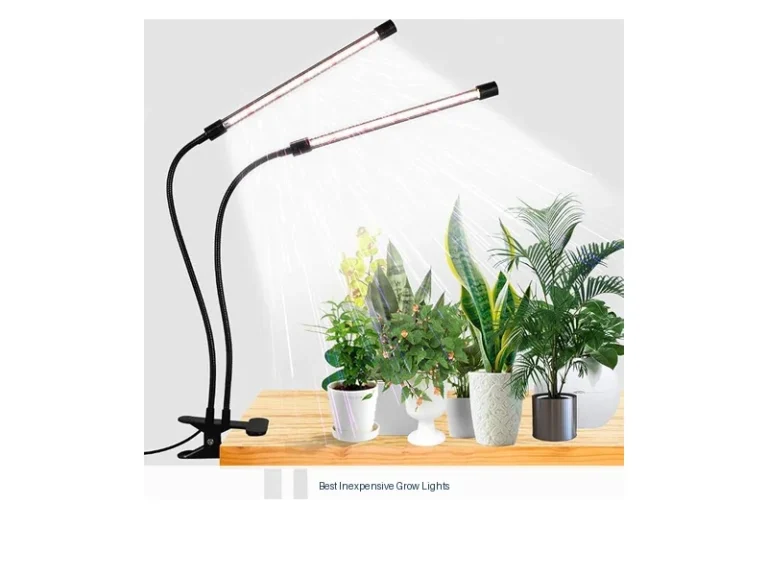
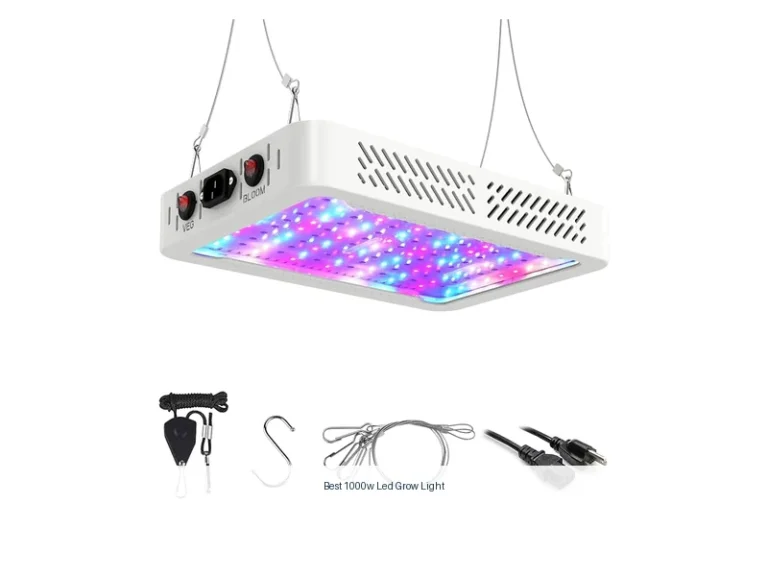
10 Best Grow Light for Seedlings: Compared With Buying Guide
Choosing the best grow light for seedlings is more complicated than picking the brightest lamp. Young plants need dependable coverage, adjustable intensity, and a useful daily schedule without excessive heat, awkward mounting, or a setup that quickly becomes expensive.
My first choice is the FOXGARDEN Grow Light Stand Advanced LED Plant Growth Lighting because it combines a stable desktop stand, adjustable height, six brightness levels, and 4-, 8-, or 12-hour timing in a seedling-friendly format. Its 108-LED full-spectrum arrangement and reflector make it especially practical for trays, cuttings, herbs, and small indoor collections.
The Terronix 120-Cell Self-Watering Seed Starter Tray Grow is my second choice and the best alternative for someone starting many seeds at once. It ranks second because it combines four light strips with humidity domes, capillary watering, adjustable vents, trays, labels, tools, and a pH meter in one beginner-oriented kit.
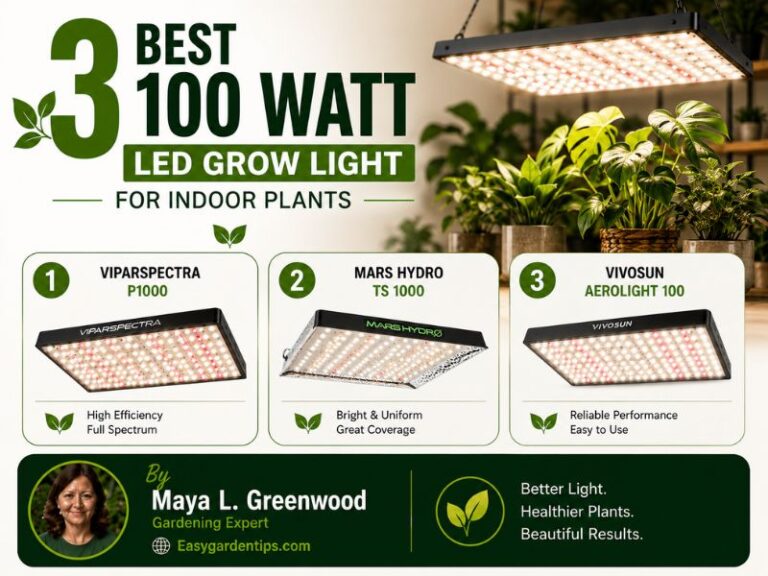
My third choice is the MARS HYDRO 100W TS600 2x2ft Dimmable LED Grow Lights, which earns its position with stronger tent-style coverage, efficient full-spectrum output, and a newly added dimmer. It makes more sense for growers who want to raise seedlings now but also plan to use the light through vegetative growth and flowering.
This guide compares ten different approaches, from compact gooseneck lamps and complete propagation kits to powerful panels and a full plant shelf. You will learn which setup fits your growing area, how to judge coverage and intensity, what controls matter for seedlings, and which ownership details can prevent common problems.
.amz-product-card:hover{transform:translateY(-3px)!important;box-shadow:0 10px 26px rgba(20,70,110,.12)!important;border-color:#bdd7ea!important;}
Best Grow Light for Seedlings
I selected these products for their direct usefulness to indoor seed starting, the amount of practical product information supplied, customer-feedback evidence when available, and variety across budgets and growing spaces. The ranking also considers whether a beginner can realistically control light duration, intensity, height, airflow, and moisture without building an unnecessarily complicated system.
| # | Image | Product | Price on Amazon |
|---|---|---|---|
| 1 |  |
FOXGARDEN Grow Light Stand Advanced LED Plant Growth Lighting | Check Price |
| 2 |  |
Terronix 120-Cell Self-Watering Seed Starter Tray Grow | Check Price |
| 3 |  |
MARS HYDRO 100W TS600 2x2ft Dimmable LED Grow Lights | Check Price |
| 4 |  |
MARS HYDRO TS1000 150W Full-Spectrum LED Grow Light | Check Price |
| 5 |  |
VIPARSPECTRA 70W Dimmable Full-Spectrum LED Plant Light | Check Price |
| 6 | 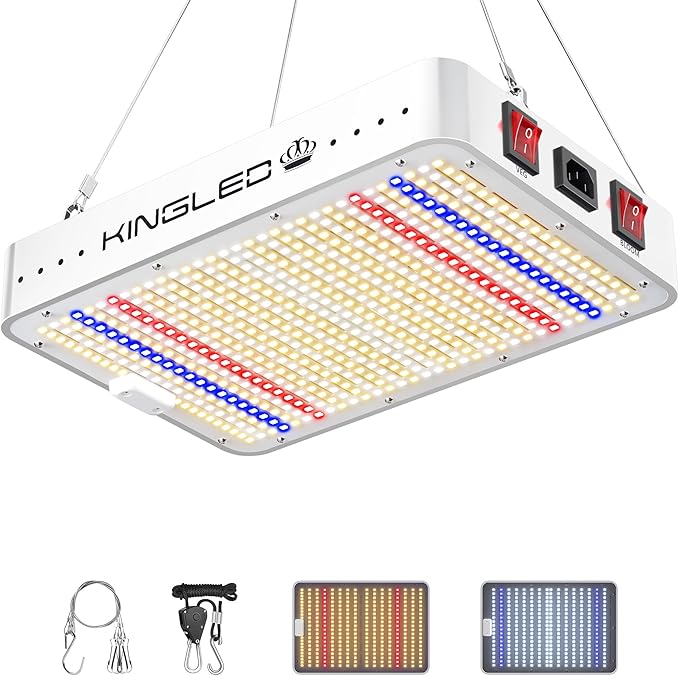 |
KINGPLUS KINGLED KING1000 Full-Spectrum Grow Light | Check Price |
| 7 |  |
Spider Farmer SF1000D Dimmable Full-Spectrum LED Grow Light | Check Price |
| 8 |  |
wolezek 2-in-1 Gooseneck Grow Light | Check Price |
| 9 |  |
VIVOSUN Aerolight 180W Full-Spectrum LED Grow Light | Check Price |
| 10 |  |
Bstrip DIY Adjustable Plant Shelf | Check Price |
FOXGARDEN Grow Light Stand Advanced LED Plant Growth Lighting
The FOXGARDEN stand is a particularly approachable choice when seedlings will live on a desk, counter, shelf, or plant table rather than inside a grow tent. Its 108 LEDs combine cold white, warm white, and red light, creating a full-spectrum mix intended for seedlings, vegetables, flowers, and later growth stages. That flexibility means a buyer does not necessarily need to replace it immediately after germination.
Height adjusts from 11.02 to 21.65 inches, which gives you useful control as seedlings emerge and grow taller. Six brightness settings range from 10% to 100%, so delicate sprouts can begin with gentler light while more established plants receive stronger illumination. The 4-, 8-, and 12-hour timer settings also reduce the need to remember a daily on-and-off routine, although the available schedules are less flexible than a continuously programmable timer.
A reflector helps direct more light toward the plants, while the iron light board, metal base, and desktop-protecting sponge pad add stability. The format is not intended to illuminate a large room or a deep canopy, and its adjustable height is best suited to compact plants rather than tall mature specimens. Still, it is a tidy, simple option for a tray or a modest group of containers.
Pros
- Adjustable height and six brightness levels suit changing seedling needs.
- Full-spectrum LED arrangement supports seeds, cuttings, vegetables, and flowers.
- Built-in 4-, 8-, and 12-hour timer simplifies daily scheduling.
- Stable metal base and reflector are useful for desktop growing.
- Includes a 12-month warranty and 90-day return guarantee.
Cons
- Coverage is better for compact plants than large trays or tent canopies.
- Timer choices are limited to three preset durations.
- Stand height may become restrictive for tall plants.
My Opinion
This is the most balanced pick for a beginner who wants a dedicated seedling stand rather than a loose light panel. Choose it when easy placement, adjustable height, and simple controls matter more than maximum tent coverage.
Terronix 120-Cell Self-Watering Seed Starter Tray Grow
Terronix takes a complete propagation approach instead of selling only a lamp. The kit includes two 60-cell trays, two base trays, capillary mats, two humidity domes, LED strips with a controller and detachable adapter, labels, gardening tools, gloves, and a soil pH meter. For a new gardener, that reduces the number of separate accessories needed before the first sowing session.
Its biggest practical advantage is the self-watering arrangement. A reservoir and capillary mat can provide steadier moisture than repeatedly pouring water over tiny cells, which is helpful when seedlings are vulnerable to drying out. The system still requires monitoring; a reservoir does not eliminate the risk of overly wet media, especially if the growing mix drains poorly.
Each dome has two adjustable vents, allowing you to retain humidity during germination and increase airflow as seedlings develop. Enlarged drainage holes help excess water escape, and the 1.5-millimeter PET construction is intended to provide a durable, stable enclosure. The four light strips and 1–24-hour timer offer more scheduling freedom than many basic seed-starting kits, but this is a tray-centered system rather than a general-purpose lamp for mature plants.
The dimensions are 16.54 by 10.87 by 7.61 inches and the listed weight is 3.7 pounds. Check your shelf clearance and outlet arrangement before buying, particularly if you plan to use both domes in a confined area.
Pros
- Includes propagation trays, domes, lights, tools, labels, and a pH meter.
- Self-watering mats help maintain more consistent moisture.
- Adjustable dome vents support humidity and airflow control.
- Timer can be set from 1 to 24 hours.
- Useful capacity for starting many herbs, vegetables, or flowers.
Cons
- More specialized for seed starting than for long-term plant growth.
- Self-watering still requires attention to reservoir level and wetness.
- Its footprint may be too large for a narrow windowsill.
My Opinion
This is the strongest choice for a first indoor propagation station. It earns second place because the complete kit solves several beginner problems at once, though buyers who already own trays and humidity equipment may prefer a more powerful standalone light.
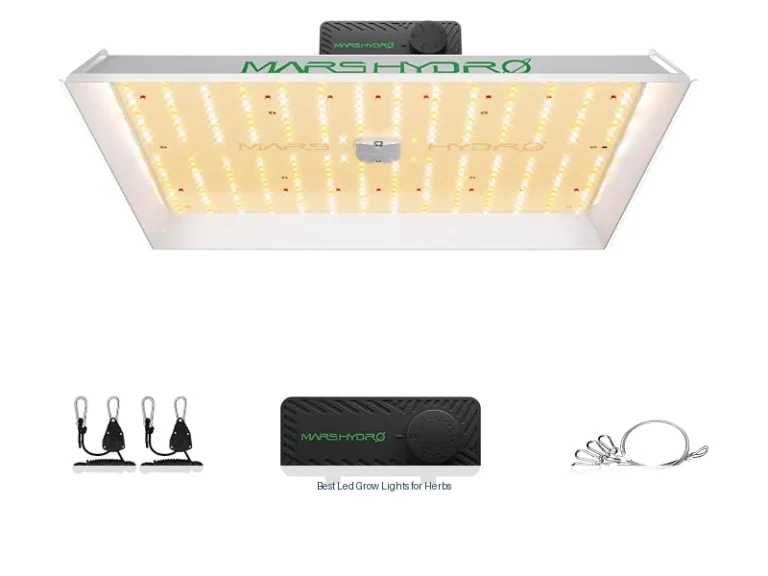
MARS HYDRO 100W TS600 2x2ft Dimmable LED Grow Lights
The MARS HYDRO TS600 is a compact panel for growers who want seedling lighting that can continue into later stages. Its 100-watt draw and 312 LEDs are aimed at a 2-by-2-foot growing area, with the product information also identifying use in some 3-by-3-foot applications. Coverage depends heavily on hanging height and plant density, so a small footprint should not be confused with unlimited intensity across a large space.
A 120-degree reflective hood is intended to concentrate scattered light and improve uniformity from the center toward the edges. That can be useful when several seedlings share a tray, because uneven lighting often encourages stretching toward the brightest zone. The newly added dimming function lets you reduce output for young plants and increase it as the canopy develops, while also offering a way to avoid wasting power during early growth.
The listed spectrum includes red infrared wavelengths warm and cool white ranges and light usable from seed through flowering MARS HYDRO gives a total PPF of 190 micromoles per second and PPE of 2 0 micromoles per joule specifications that help position the fixture as an efficient panel rather than a decorative plant lamp.
This model is a better fit for a small tent, cabinet, closet, or plant shelf than for a tabletop arrangement where a built-in stand is important. You will also need a suitable hanging method and a way to keep seedlings at the correct distance from the panel.
Pros
- Dimmable output can be adjusted from seedling through flowering stages.
- Reflective hood is intended to improve coverage uniformity.
- 100-watt panel suits small grow spaces and one to two plants.
- Full-spectrum output supports more than the germination phase.
- Fanless design avoids fan noise.
Cons
- Requires separate hanging or mounting arrangements.
- Not as convenient as a stand light for a kitchen counter.
- Actual coverage changes with height, tent reflectivity, and plant density.
My Opinion
The TS600 is an excellent bridge between a seed-starting light and a small grow-tent fixture. Pick it if future vegetative or flowering use matters, and choose the FOXGARDEN or Terronix instead if you want a ready-to-place propagation setup.
MARS HYDRO TS1000 150W Full-Spectrum LED Grow Light
The TS1000 provides a step up in area and output for growers who expect their seedlings to remain under the same fixture as they mature Its 150-watt consumption and 354 LEDs are listed for a 2 5-by-2 5-foot area with maximum coverage up to 3 by 3 feet That makes it more suitable than a small desktop lamp.
The updated diode arrangement places more density in the middle and less toward the sides, while the 120-degree reflective hood is intended to improve light use and evenness. For seedlings, this can help reduce a dramatic difference between center and edge plants, but intensity should still be adjusted rather than assuming every young plant can tolerate full output immediately.
An independent external dimming control provides 0–100% adjustment. The unit can also be daisy-chained with up to 50 lights when the separately purchased RJ12 connector is used, a feature more relevant to expanded installations than to a single seed tray. Its power supply supports 120VAC, 240VAC, and 277VAC, but buyers should confirm that their particular setup and electrical connections are appropriate before expanding.
The fanless aluminum construction is quiet and intended to disperse heat. Because this is a hanging panel, it needs adequate space above the plants and a secure support system. It is powerful enough to be wasteful for a tiny tray if used carelessly, so the dimmer is an important part of getting value from it during germination.
Pros
- Provides a larger growing footprint than compact seedling lamps.
- 0–100% dimming supports gradual increases in intensity.
- Full-spectrum output is suited to all plant growth stages.
- Fanless aluminum design operates quietly.
- Daisy-chain capability can support future expansion.
Cons
- More light and power than a small seed tray may need.
- Requires separate hanging hardware and careful height adjustment.
- RJ12 connector for daisy-chaining is sold separately.
My Opinion
For a small tent where seedlings are only the beginning, the TS1000 is a sensible long-term investment. It is not my first choice for a single windowsill tray, but its dimming and coverage make it a strong upgrade path for a more ambitious indoor garden.
VIPARSPECTRA 70W Dimmable Full-Spectrum LED Plant Light
VIPARSPECTRA s 70-watt panel is aimed specifically at seedlings and vegetative growth making it a less oversized option for early indoor cultivation The manufacturer lists 11 000 lumens and a 2-by-2-foot vegetative area while describing the fixture as comparable in output to a 150-watt HPS or MH light at lower electrical consumption Those comparisons are useful for understanding intended positioning but the actual result still depends on.
The spectrum combines 660nm red with 3000K and 5000K white light. A four-level dimmer allows a buyer to reduce intensity for new sprouts and increase it as foliage develops. This is simpler than a continuously variable control, but the preset steps may be perfectly adequate for someone who wants straightforward operation instead of constant adjustment.
Large aluminum heat sinks and a fanless design handle heat without adding moving parts or fan noise. Passive cooling is convenient in a quiet room, although the light should not be enclosed tightly or placed directly against materials that restrict heat release. It is a panel rather than a stand, so mounting and height control need to be planned before use.
VIPARSPECTRA also emphasizes US local after-sales support and asks buyers to purchase authentic units. That makes seller selection and product authenticity worth checking at checkout. This light is most appropriate for seedling shelves, compact grow areas, and buyers who want an economical panel with enough output for early and middle growth.
Pros
- 70-watt consumption is appropriate for a compact growing area.
- Four brightness levels offer basic control for different plant stages.
- Balanced red and white spectrum suits seedlings and vegetative plants.
- Fanless construction provides quiet operation.
- Large aluminum heat sinks support passive cooling.
Cons
- Does not include an integrated stand or propagation tray.
- Four dimming levels provide less fine control than a continuous dimmer.
- Best suited to a 2-by-2-foot vegetative area rather than a broad room.
My Opinion
This is a good value-oriented panel for someone who wants more output than a decorative lamp without jumping to a 150- or 180-watt system. It works best when the buyer already has a shelf, tent, or hanging solution ready.
KINGPLUS KINGLED KING1000 Full-Spectrum Grow Light
The KINGLED KING1000 is built for a flexible tent setup rather than a small propagation dome It is listed for 2-by-2 2-by-3 and 2-by-4-foot tents with coverage changing according to hanging height plant size and spacing The product information also mentions roughly 4-by-4-foot supplemental coverage when mounted six feet above the floor but that should be understood as.
Its full-spectrum combination includes blue light, 660nm red, and white light in 3000K and 5000K ranges. Separate VEG and BLOOM modes let you use a lower-growth setting for seedlings and early vegetative plants, then add the BLOOM mode as plants mature. That staged control is useful for beginners, although buyers should still adjust the hanging height and observe plant response rather than relying on mode labels alone.
Built-in fans move air through openings in the LED panel. Unlike a completely passive fixture, this design introduces moving airflow that can help keep air circulating around foliage, but it may be less appealing to someone who wants a completely silent room. The product is described as suitable for one to five bushy plants, depending on mature size and spacing, while dense canopies may need side or in-canopy lighting.
The KING1000 makes sense for a grower who wants one panel that can handle several layout options. It is less convenient for a starter tray on a dining table because it needs a secure hanging arrangement and more deliberate space planning.
Pros
- Fits several compact tent dimensions and plant arrangements.
- Blue, red, and white spectrum supports the full growth cycle.
- VEG and BLOOM modes offer simple stage-based control.
- Built-in fans promote airflow through the panel and around foliage.
- Can support one to five bushy plants depending on spacing.
Cons
- Dense canopies may still require supplemental side lighting.
- Fan operation may not suit a completely silent growing area.
- Coverage claims depend strongly on height and mature plant size.
My Opinion
Choose the KING1000 when your seedlings are headed toward a small tent with multiple plants. Its mode controls and broad compatibility are useful, but a quieter, smaller stand light is more practical for a single indoor tray.
Spider Farmer SF1000D Dimmable Full-Spectrum LED Grow Light
The Spider Farmer SF1000D is a 100-watt panel positioned for a 2-by-2-foot flowering footprint and a larger 3-by-3-foot vegetative footprint. That distinction matters for seedling buyers: it can cover a relatively broad early-growth area, but mature plants with denser foliage generally demand more concentrated light. Planning for the smaller footprint at later stages prevents disappointment.
Its spectrum includes blue, 660–665nm red, 3000K, 5000K, and infrared light, supporting germination, cuttings, vegetative growth, and flowering. A dimmable design lets you avoid running full power on newly emerged seedlings. This makes the panel more adaptable than a fixed-output fixture, though the product information does not specify a built-in timer, so an external timer may be needed for automated daily scheduling.
Spider Farmer emphasizes premium diodes, uniform canopy penetration, and a large solid aluminum heat sink. The zero-fan construction eliminates fan noise and reduces one moving component, while the waterproof LED board and cable protection add useful safeguards for an area where watering occurs. “Waterproof” should not be treated as permission to spray or submerge the light; careful watering and protected electrical connections remain important.
A five-year after-service warranty through local maintenance centers in several regions is a notable ownership benefit. Verify that the seller is supplying an authentic Spider Farmer unit and that service availability applies to your location. The SF1000D suits a shelf, compact tent, or small grow room where quiet operation and long-term use are priorities.
Pros
- 100-watt dimmable output supports seedlings through flowering.
- Full-spectrum mix includes blue, red, white, and infrared ranges.
- Zero-fan design operates quietly.
- Solid aluminum heat sink supports passive cooling.
- Five-year after-service warranty is a strong ownership advantage.
Cons
- External timing control may be needed for automated schedules.
- Flowering coverage is smaller than vegetative coverage.
- Requires separate mounting or hanging equipment.
My Opinion
The SF1000D is a dependable-looking choice for buyers who want a quiet panel with a long support period. It is especially attractive when the light must serve more than one growth stage, but it is less plug-and-play than a stand with a built-in timer.
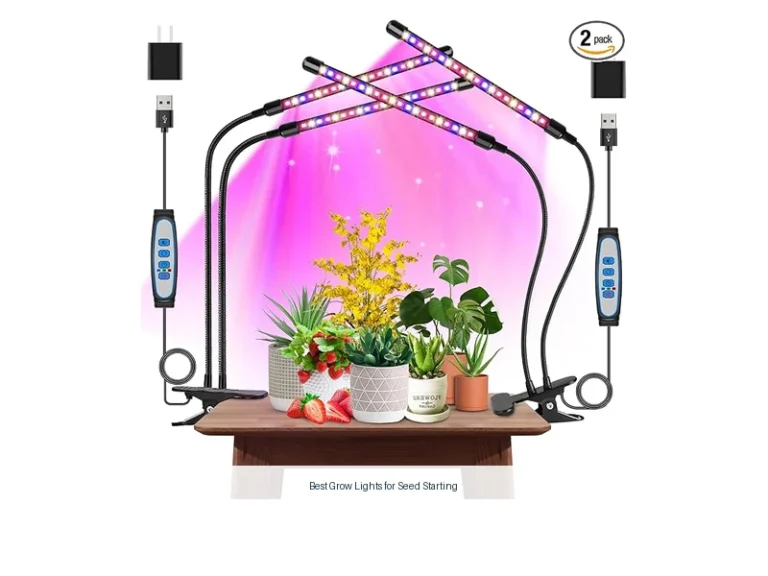
wolezek 2-in-1 Gooseneck Grow Light
The wolezek 2-in-1 is the most flexible small-space lamp in this group. It can clamp onto a pot or be inserted into soil, so it works on containers that cannot accommodate a shelf-mounted panel. A 360-degree gooseneck lets you position the lamp around leaves and seedlings, making it useful for a single pot, a small cluster, or a plant that receives uneven window light.
Three lighting modes cover a range from 660nm red to 6500K giving users a simple way to change the visual and spectral character of the light as plants develop Five brightness levels provide more adjustment than a basic on-or-off lamp These controls are convenient but the small fixture is not a substitute for a broad high-output panel when starting an entire tray or illuminating a.
The timer offers 6-, 12-, and 16-hour settings. That is helpful for maintaining a regular day length, although the choices differ from common 8- or 10-hour schedules. An 80.7-inch cord provides placement flexibility around a shelf or side table, while the aluminum alloy housing is intended to dissipate heat and support safe operation.
Because the lamp can be moved between containers, it is a practical choice for renters, apartment gardeners, and people who want supplemental light without a permanent installation. The clamp or soil stake must remain stable, and the gooseneck should be positioned so it does not shade neighboring plants. A 12-month warranty and lifetime support add reassurance for a relatively simple fixture.
Pros
- Clamp and soil-insertion options work in different spaces.
- 360-degree gooseneck allows precise positioning.
- Three modes and five brightness levels offer flexible control.
- Long 80.7-inch cord helps with outlet placement.
- Includes a 12-month warranty and lifetime support.
Cons
- Best for individual plants or small clusters, not large trays.
- Timer settings skip some commonly used intermediate schedules.
- Clamp or stake stability depends on the container and surface.
My Opinion
This is the right tool when portability and precise placement matter more than coverage. I would choose it for a few seedlings or supplemental window lighting, not as the only lamp for a serious indoor propagation shelf.
VIVOSUN Aerolight 180W Full-Spectrum LED Grow Light
The VIVOSUN AeroLight is a higher-output fixture that combines lighting with active airflow. Its central fan pushes air through the canopy, and the turbo system can reach up to 2,600 RPM. This arrangement may help reduce stagnant pockets and balance humidity in a grow tent, but the moving fan also means it is a more involved system than a silent desktop seedling lamp.
A tunable full-cycle spectrum is intended to support root establishment, leaf growth, flowering, and yield production. Constant-power output keeps intensity stable while the selected light recipe changes. For seedlings, the key benefit is the ability to begin with an appropriate light setting and continue using the same fixture later, rather than buying a separate light for each stage.
The diode layout is described as highly uniform with coverage consistency up to 0 91 and the product states that output can be up to 20 higher than standard grow lights These are manufacturer-supplied performance claims rather than independent measurements so buyers should focus on matching the 180-watt class to their actual.
Sealed light bars carry an IP65 rating for protection from dust, moisture, and cleaning exposure. An aluminum finned heat sink supports a stated lifespan of up to 50,000 hours at Q90. Smart controls are available through the VIVOSUN GrowHub and mobile app, but the GrowHub is sold separately. That extra purchase matters if remote scheduling and automated airflow are central to your plan.
Pros
- Combines grow lighting with canopy airflow.
- Tunable spectrum supports seedlings through flowering.
- Sealed IP65 light bars simplify protection and cleaning.
- GrowHub compatibility enables remote automation with additional equipment.
- Large output suits a more substantial tent or multi-plant setup.
Cons
- 180 watts may be excessive for a small seed-starting tray.
- Fan operation adds noise and another component to maintain.
- GrowHub automation requires a separately sold controller.
My Opinion
The AeroLight is best for an indoor gardener building a complete controlled environment rather than simply raising seedlings on a shelf. Its airflow and smart-system compatibility are valuable in a tent, but the added power and equipment are unnecessary for a small beginner setup.
Bstrip DIY Adjustable Plant Shelf
The Bstrip system is closer to a complete indoor growing station than a single lamp Its adjustable wire shelf can be arranged with up to six layers and the setup includes eight grow lights six PP mats connecting cords extension adapters power cords wheels and accessory kits That scale makes it useful for gardeners who want to organize many small plants seedlings succulents.
Each light consumes 24 watts, and the supplied information lists an output of 206.5 micromoles per square meter per second at an 8-inch distance. The exact coverage still depends on how shelves and lights are arranged, but a fixed shelf system can make consistent spacing easier than balancing separate lamps on different surfaces. Full-spectrum output is intended to imitate sunlight across plant stages.
Eight industrial wheels make the shelf easier to reposition, while four locking wheels help keep it stable once placed. Six PP mats are designed to keep water from reaching the lights below, an important detail for a multi-level watering routine. The frame is described as resistant to rust and oxidation and able to carry substantial weight, although buyers should still distribute pots evenly and avoid exceeding the stated capacity.
The trade-off is size and assembly. At 29.5 by 13.8 by 70.9 inches, it needs a tall, dedicated area, and multiple cords require thoughtful routing. It is a better long-term nursery station than a casual countertop light.
Pros
- Supports up to six adjustable shelf layers.
- Includes eight full-spectrum grow lights and mounting accessories.
- Wheels improve mobility, with four locking wheels for stability.
- PP mats help protect lower lights from watering spills.
- Large capacity suits many seedlings and indoor plants.
Cons
- Requires significant floor space and assembly.
- Multiple lights and cords need careful organization.
- May be far more structure than a beginner needs for one tray.
My Opinion
The Bstrip shelf is the strongest choice for a dedicated indoor nursery area. It does not rank higher because its size, assembly, and multi-light layout are unnecessary for many first-time seed starters, but it can become excellent value when plant quantity is the priority.
How I Selected These Seedling Lights
The ranking begins with the actual job: providing usable light to young plants indoors. I looked for control over intensity, distance, or timing; a spectrum described for seedlings or full-cycle growth; and a practical way to position the fixture above the plants. A light that sounds powerful but cannot be mounted safely or adjusted for tiny sprouts is less useful than its wattage suggests.
I also considered the type of growing space. The FOXGARDEN and wolezek options address small household setups, Terronix focuses on propagation, panel lights such as the MARS HYDRO, VIPARSPECTRA, KINGLED, and Spider Farmer models suit shelves or tents, while VIVOSUN and Bstrip serve more developed systems. That variety prevents a single style of lamp from being treated as the answer for every gardener.
Customer-feedback evidence was considered where supplied, including the number of customer ratings and the stated average rating. Those figures can indicate broad buyer interest and satisfaction, but they do not replace careful comparison of coverage, controls, setup, and limitations. One product has no supplied rating count, so its placement relies more heavily on the specifications and intended use provided.
Important selection takeaway: wattage alone does not determine the best fit. Coverage, hanging distance, dimming, heat management, and how many plants you need to illuminate are just as important.
Brand diversity also matters. Several established grow-light brands appear alongside propagation and household plant products so that the list includes different ownership experiences rather than ten nearly identical panels. The final order favors versatility for seedlings first, then rewards products that remain useful as the garden expands.
Practical rule: choose the smallest fixture that can evenly cover your intended tray or canopy with room for adjustment. Oversizing can waste energy, create excess heat, and make delicate seedlings harder to manage.
How to Choose a Seedling Grow Light
The best purchase depends on your plant count, available space, and whether the light will be used only until transplanting or through the entire growth cycle. Before comparing brand names, define the growing footprint and decide whether you need a stand, a hanging panel, a complete tray, or a shelf system.
- Match coverage to the tray or canopy: A narrow lamp is suitable for one or two containers, while a panel or shelf is better for many seedlings.
- Prioritize adjustability: Dimming, height adjustment, or both make it easier to accommodate young sprouts and taller plants.
- Check timing controls: Built-in timers reduce daily effort, but confirm that the available schedules fit your routine.
- Plan heat and airflow: Fanless lights are quiet, while fan-equipped systems can move air but may add noise.
- Think beyond germination: A full-cycle panel may cost more initially but can remain useful after seedlings are transplanted.
Coverage and mounting
Coverage describes the area a light can serve effectively, not merely the area it can visibly illuminate. A bright spot in the center with dim edges can produce uneven seedlings, especially when multiple cells share a tray. Look for a stand that can move upward, a panel with an appropriate footprint, or a shelf that keeps each light consistently positioned.
Desktop lights are simple because the base is already part of the product. Hanging panels generally need hooks, chains, a tent frame, or another secure support. Do not suspend a fixture from a weak shelf or allow its cord to pull the light sideways. When comparing a 2-by-2-foot or 3-by-3-foot claim, remember that the useful area changes with height and with the brightness required by mature plants.
Brightness, dimming, and distance
Seedlings need enough light to grow compactly, but newly emerged plants should not automatically receive maximum output from a powerful panel. A dimmer makes the transition easier. If the fixture has no dimmer, height becomes the primary adjustment, although moving a panel too far away can reduce uniformity at the edges.
Observe the plants rather than relying on a single fixed number. Excessive stretching can indicate insufficient light or excessive distance, while curled, bleached, or stressed foliage can indicate that the combination of intensity, heat, and distance is too aggressive. Changes should be gradual so you can identify what helped.
Spectrum and growth stages
For seedlings, a full-spectrum light with blue and white ranges is a practical general-purpose choice. Red wavelengths can remain useful as plants mature, which is why many panels combine blue, red, warm white, and cool white LEDs. A full-cycle fixture is worthwhile when you plan to keep plants indoors after transplanting.
Do not buy solely because a listing uses the phrase “full spectrum.” Check whether the fixture also gives you useful control over intensity, coverage, and timing. A broad spectrum cannot compensate for a lamp that is too weak, too far away, or poorly positioned.
Timers and daily consistency
Seedlings benefit from a predictable light schedule. Built-in timers on the FOXGARDEN, Terronix, and wolezek products make that easy, while panel lights without a supplied timer may need an external plug timer. Compare the available presets carefully: a 4-, 8-, or 12-hour timer is not the same as a 6-, 12-, or 16-hour timer, and a 1–24-hour controller provides much more flexibility.
A timer also protects your routine. Turning a lamp on manually each morning and off each night is easy to forget, especially when trays are in a basement, closet, or spare room. Keep the schedule consistent after making changes, and allow a normal dark period rather than leaving a light on continuously.
Choosing Between a Stand, Panel, Tray, and Shelf
Product form often matters more than small differences in LED specifications. The right shape determines how easily you can maintain distance, water plants, move the setup, and expand later.
Desktop stands
A stand such as the FOXGARDEN is convenient for a small collection because it arrives with its own base and height adjustment. It can sit near a work area and is usually easier to reposition than a hanging panel. The trade-off is limited vertical and horizontal capacity. Once plants outgrow the stand or spread beyond the illuminated area, you may need another fixture.
Propagation kits
A kit such as Terronix is efficient when the main goal is germinating many seeds. Domes hold humidity, vents allow gradual ventilation, and capillary mats reduce watering frequency. These conveniences are valuable for beginners, but trays, domes, and reservoirs need cleaning between batches to reduce lingering moisture problems. The light may also be less useful once plants move into larger containers.
Hanging panels
Panel lights are better when you want to grow under one fixture through several stages. They generally provide a broader canopy than a gooseneck lamp, but the buyer must provide secure mounting and manage the distance as plants grow. A dimmer is especially helpful when a 100- or 150-watt panel is used over tiny seedlings.
Multi-level shelves
A shelf such as the Bstrip can multiply growing capacity in a small vertical footprint. It is worthwhile when you regularly start many trays or maintain a plant collection. The price of that capacity is assembly, cord management, floor space, and more surfaces to clean. Measure ceiling height, doorways, and the route to the final location before ordering.
How to Set Up Grow Lights for Young Plants
Begin with a clean, stable area near a safe electrical outlet. Put trays on a waterproof surface, keep cords away from standing water, and position the fixture so its light reaches the whole tray rather than only the middle cells. If using a panel, install the hanging hardware before filling the tray with plants.
- Place the tray or containers where they will remain during the first growth stage.
- Set the light above the plants with enough clearance for airflow and watering.
- Begin at a moderate intensity or a conservative height when seedlings first emerge.
- Set a consistent timer schedule and record the time it turns on.
- Check the edges and center of the tray for differences in plant posture.
- Adjust brightness or height gradually as the seedlings develop.
Humidity domes should not remain sealed indefinitely. Use their vents to release excess moisture and increase airflow as leaves appear. Once seedlings are established, gradually acclimate them to normal room conditions before removing the dome completely. This helps prevent a sudden environmental change.
For a self-watering tray, fill the reservoir conservatively and inspect the growing medium. The goal is evenly moist media, not permanently saturated cells. If water remains in the base for long periods or algae appears, reduce the reservoir level, improve airflow, and verify that drainage holes are open.
Light Schedule and Seedling Care
A timer is only useful when paired with a sensible routine. Use the product’s available setting as a starting point, then watch how seedlings respond. The exact schedule can vary with plant type, room conditions, light intensity, and distance, so avoid assuming that a longer schedule automatically produces stronger plants.
Keep leaves from touching a hot surface or becoming trapped against a light bar. Even fanless LEDs produce heat through their housing, and crowded foliage can restrict airflow. Fan-equipped fixtures should have open intake and exhaust areas so the fan can circulate air rather than recirculating heat in a tight enclosure.
Water at the root zone and avoid splashing the electrical components. A sealed or protected board is not an invitation to spray the fixture. If you use a shelf with multiple levels, water from the front where possible, check the mats and trays for leaks, and clean spills immediately.
Seedlings are ready for gradual transplant preparation when they have developed sturdy growth appropriate to the plant type and can tolerate less protected humidity. Before moving them outdoors, harden them off separately; a grow light can provide indoor energy, but it does not acclimate plants to wind, direct sun, or outdoor temperature changes.
Maintenance, Cleaning, and Storage
Dust can reduce light output and restrict passive cooling, so inspect the housing and heat sink periodically. Turn off and unplug the fixture before cleaning. Use a dry or barely damp cloth as appropriate for the product, and never allow liquid to collect around connectors, drivers, switches, or power strips.
For domes and trays, wash away soil residue and mineral buildup after each propagation cycle. Let components dry fully before storage. Capillary mats deserve particular attention because they stay damp longer than trays and can retain organic material.
Keep cords loosely coiled rather than sharply bent, especially near detachable adapters. Check for damaged insulation, loose connectors, unusual heat, or flickering before the next use. Replace questionable electrical parts instead of continuing to operate them near water.
When storing a light between growing cycles, protect it from crushing and moisture. A large panel should not be placed under heavy boxes, and a tall shelf should be disassembled only according to the product’s construction. Keep timers, adapters, labels, and mounting pieces together so setup is easier next season.
Common Mistakes to Avoid with Seedling Lights
Most early problems come from mismatching light intensity and coverage, not from a lack of advanced equipment. A careful setup is more valuable than constantly changing products or settings.
- Using a small lamp for too many seedlings: Plants at the edges may stretch while the center looks healthy.
- Running a powerful panel at full output immediately: Start conservatively and adjust as plants establish.
- Ignoring mounting height: The same light can behave very differently when moved closer or farther away.
- Leaving a dome sealed too long: Excess humidity and stagnant air can create problems after germination.
- Overfilling a self-watering reservoir: Consistent moisture does not mean permanently wet soil.
- Blocking passive cooling: Do not cover heat sinks or press fixtures against walls and shelves.
- Relying on a timer without checking it: Confirm that the light actually turns on and off at the intended times.
- Buying a shelf without measuring: Confirm height, width, outlet access, and the path into the room.
Safety caution: Keep water, trays, and electrical connections organized so a spill cannot run toward a power strip or driver. Unplug the light before moving, cleaning, or adjusting its wiring.
FAQ
What type of light is best for starting seeds indoors?
A full-spectrum LED with adjustable intensity or height is a practical choice for most home seed starting. It should evenly cover the tray, provide a consistent schedule, and avoid excessive heat. A propagation kit is convenient for many cells, while a stand or small panel works better when you already own trays.
How close should a grow light be to seedlings?
There is no single distance for every fixture because LED output, dimming, coverage, and plant type vary. Start at the product’s adjustable range with moderate intensity, then watch plant posture and leaf color. Move the light closer or increase brightness gradually if seedlings stretch, and reduce intensity or increase distance if foliage shows stress.
Do seedlings need a dimmable grow light?
Dimming is not absolutely required, but it makes a strong light easier to manage. A dimmer allows you to begin gently and increase output as plants develop. Without dimming, height adjustment or an external control may provide some flexibility.
How many hours should a seedling light run?
The suitable schedule depends on the plant, fixture intensity, and growing environment. Use a timer and provide a consistent dark period rather than leaving the lamp on continuously. Product controls range from short preset schedules to 1–24-hour programming, so check the available settings before buying.
Is a 100-watt LED too strong for seedlings?
Not necessarily. A 100-watt panel can work well when it is dimmed, raised, or used over an appropriately sized area. The risk comes from placing a powerful fixture too close at full output, not from the wattage number by itself.
Should I buy a grow light with a stand or a hanging panel?
Choose a stand for a compact tabletop setup where convenience and easy placement matter. Choose a hanging panel for a tent, shelf, or larger area that will continue into vegetative growth. A panel usually offers more long-term coverage, while a stand reduces setup work.
Do seedlings need a humidity dome and grow light at the same time?
A dome helps retain humidity during germination, while the light supplies energy after emergence. They can be used together, but vents should be opened and humidity reduced as seedlings develop. The dome does not replace airflow or careful watering.
Final Thoughts
The FOXGARDEN Grow Light Stand Advanced LED Plant Growth Lighting is my top choice for its balance of adjustable height, dimming, timer control, and simple desktop setup. The Terronix 120-Cell Self-Watering Seed Starter Tray Grow is the best alternative for high-capacity propagation with included accessories, while the MARS HYDRO 100W TS600 2x2ft Dimmable LED Grow Lights is the strongest third choice for a small tent and future growth stages. Choose the best grow light for seedlings by matching the fixture to your actual tray size, mounting space, and plans after germination.

I’m Maya L. Greenwood, a lifelong plant lover who believes anyone can grow something beautiful with the right guidance. After years of testing soil mixes, pruning methods, irrigation tricks, and pest-safe solutions, I started EasyGardenTips.com to turn hard-won lessons into step-by-step advice. From seed starting and container gardens to composting and seasonal checklists, my goal is to make gardening simple, sustainable, and fun.