5 Best Small Gas Push Lawn Mower: Compared With Buying Guide
Finding the best small gas push lawn mower is less about choosing the widest deck and more about matching engine power, maneuverability, cutting control, and maintenance needs to your yard. A compact mower should handle ordinary grass without feeling awkward around beds, trees, fences, or narrow gates.
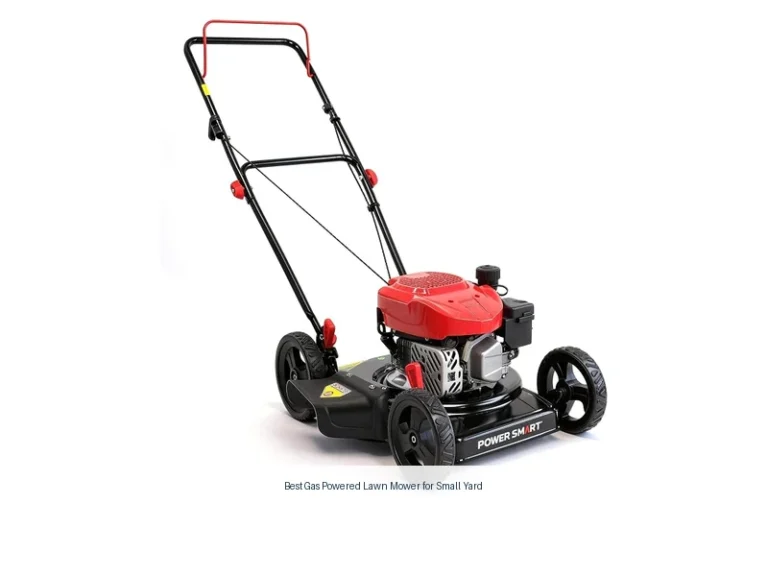
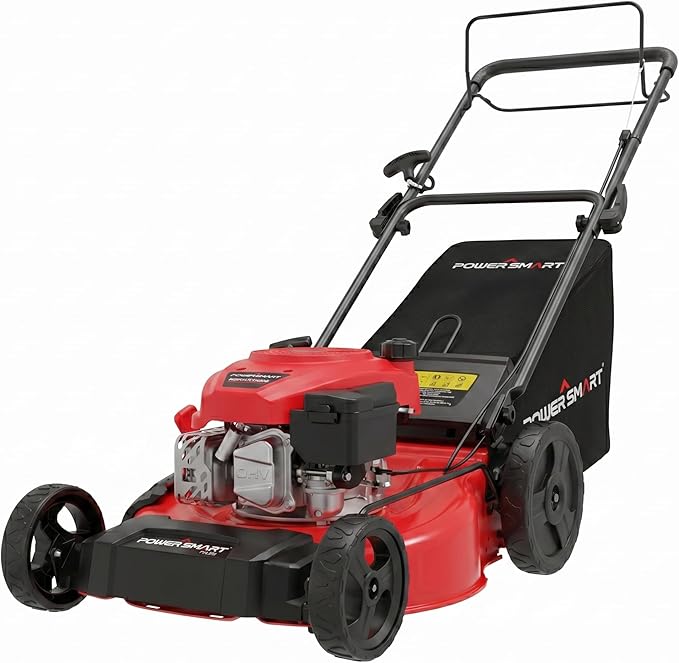
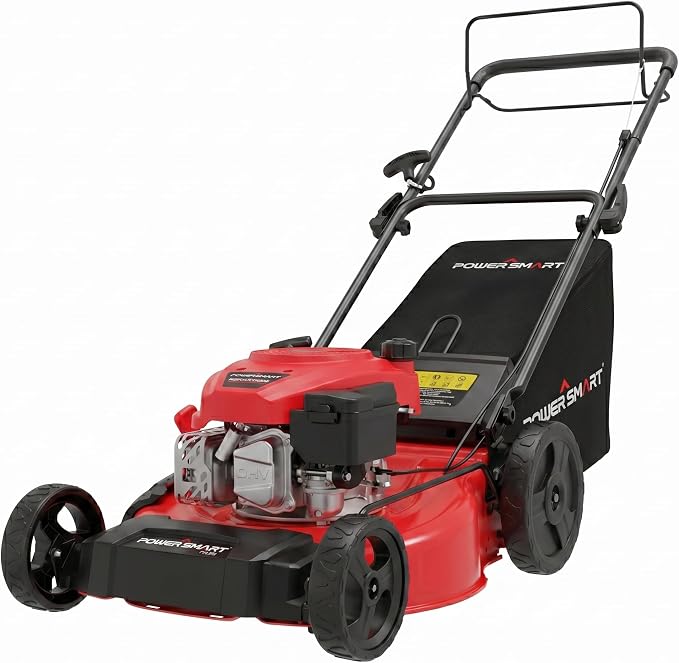
My first choice is the PowerSmart Easycut 18-Inch Gas Lawn Mower 144cc 4-Cycle Engine Walk-Behind because its 18-inch steel deck, easy-start 144cc engine, and five-position height adjustment create a particularly balanced package for small yards. Side discharge helps it keep moving through taller grass, while the smaller deck and mixed-size wheels make tight turns easier.
My second choice is BILT HARD Gas Lawn Mower 20-Inch. It is the option I would compare next when a buyer has slightly different priorities from my first pick.
The SENIX 21-Inch Gas Push Lawn Mower 144cc 2-in-1 Mulching earns my third choice for buyers who want a broad deck, high rear wheels, and the ability to mulch or side-discharge. Its 2-in-1 setup is useful for changing lawn conditions, although the wider body may be less convenient in very tight spaces.
This guide compares all five options, including a quiet reel mower and a cordless alternative for shoppers who may not actually need gasoline power. You will also find practical advice about deck size, height adjustment, starting, mowing technique, storage, maintenance, safety, and the ownership trade-offs that specifications alone do not show.
.amz-product-card:hover{transform:translateY(-3px)!important;box-shadow:0 10px 26px rgba(20,70,110,.12)!important;border-color:#bdd7ea!important;}
Best Small Gas Push Lawn Mower
I selected these products for their relevance to compact-lawn mowing, useful differences in deck size and power systems, and the amount of practical product information supplied. Customer-feedback evidence was also considered where available, along with brand diversity so the comparison would include gasoline, reel, and battery-powered alternatives rather than five nearly identical machines.
| # | Image | Product | Price on Amazon |
|---|---|---|---|
| 1 |  |
PowerSmart Easycut 18-Inch Gas Lawn Mower | Check Price |
| 2 |  |
BILT HARD Gas Lawn Mower 20-Inch | Check Price |
| 3 | 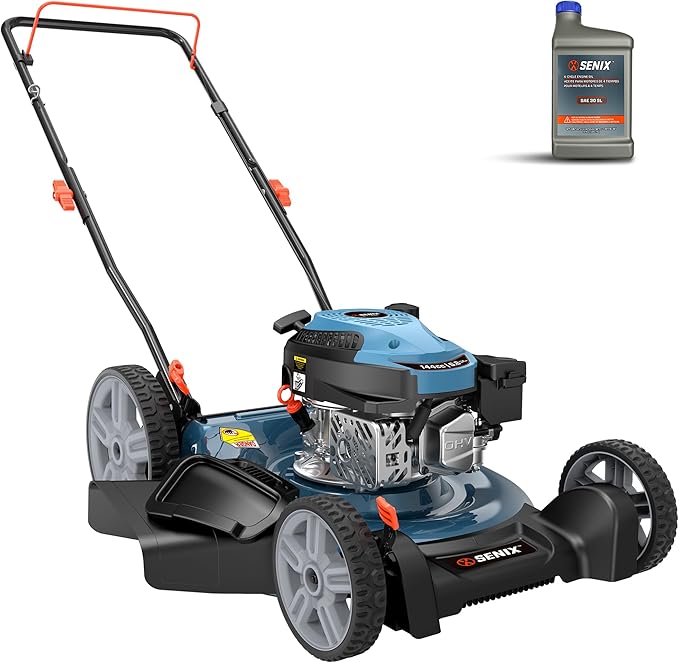 |
SENIX 21-Inch Gas Push Lawn Mower | Check Price |
| 4 |  |
Great States 304-14 14-Inch 5-Blade Push Reel Lawn Mower | Check Price |
| 5 |  |
Greenworks 60V 17-Inch Push Lawn Mower | Check Price |
PowerSmart Easycut 18-Inch Gas Lawn Mower
The PowerSmart EasyCut is the most naturally matched option here for a homeowner with a small or moderately sized lawn. Its 18-inch steel deck is narrow enough to maneuver around landscaping, while still covering noticeably more ground than a reel mower. The 144cc four-stroke OHV engine offers a practical middle ground for regular residential grass without making the mower unnecessarily large.
Starting assistance comes from an auto-choke system and primer structure. That combination is useful for beginners who do not want to manage a manual choke, although gasoline equipment still requires proper fuel, oil, and seasonal care. The mower uses side discharge rather than listing mulching or bagging capability, so clippings are sent back onto the lawn or away from the cutting path instead of collected.
Five height positions cover 1.5 to 3.9 inches. That range gives you room to keep grass taller during hot or dry conditions, then lower the deck when the lawn allows a shorter cut. Seven-inch front and eight-inch rear wheels support easy steering around flower beds and corners, though they are not as oversized as the high-rear wheels on the SENIX.
Pros
- Compact 18-inch steel deck suits small yards and tight routes.
- 144cc four-stroke engine uses auto choke and a primer structure for starting assistance.
- Five cutting heights range from 1.5 to 3.9 inches.
- Side discharge helps manage taller or thicker grass.
Cons
- Side discharge is the listed clipping option; mulching and bagging are not specified.
- Its wheel sizes are modest for very rough or steep ground.
My Opinion
This is the strongest all-around match when maneuverability matters more than maximum width. Before buying, confirm that side discharge fits your lawn-care routine and plan for standard gasoline-mower tasks such as checking oil, cleaning the deck, and storing fuel responsibly.
BILT HARD Gas Lawn Mower 20-Inch
BILT HARD takes a slightly wider approach while keeping the engine size in the same general class as the PowerSmart. Its 20-inch deck can reduce the number of passes across an open lawn, making it a sensible choice when the yard is small but not especially cramped. The specialized blade is intended to produce an even cut, while the four-wheel synchronized adjustment changes all wheels together from one lever.
Eight cutting positions, spanning 0.7 to 3.2 inches, are a notable strength. That gives the owner more incremental control than the five-position PowerSmart, including a very low setting for lawns that tolerate close mowing. Beginners should still avoid cutting too much height at once; the lowest setting is not automatically the best choice for every grass type or season.
The 144cc OHV engine uses an auto-choke design with no primer or separate choke-starting procedure listed. That can make the start sequence less fussy. Seven-inch rear and six-inch front ball-bearing wheels support smooth movement, and the foam-wrapped angled grip is intended to reduce hand fatigue during longer sessions. On the other hand, the supplied instructions specifically caution against dumping or turning the mower over because oil may enter the combustion chamber.
Pros
- 20-inch deck offers useful coverage without being an especially large walk-behind mower.
- Eight-position single-lever height adjustment provides fine control.
- Auto-choke system does not require a primer or manual choke procedure.
- Foam-wrapped angled grip and ball-bearing wheels support comfortable pushing.
Cons
- Its lowest 0.7-inch setting may be unsuitable for many lawns and seasons.
- Turning or dumping the mower can create an oil-related starting problem.
My Opinion
Choose this model when a 20-inch path and broad height range matter more than the absolute smallest footprint. Read the handling instructions before setup, especially the warning about tipping, and treat its height range as flexibility rather than a reason to mow extremely short.
SENIX 21-Inch Gas Push Lawn Mower
The SENIX is the widest gasoline mower in this group, with a 21-inch cutting deck and a 144cc four-cycle engine aimed at thick grass, weeds, and gentle slopes. That extra width can make open areas faster to cover, but it also means the mower may feel less nimble than an 18-inch machine between closely spaced trees or narrow garden borders.
Its 2-in-1 system allows the user to switch between mulching and side discharge. Mulching returns finely cut clippings to the soil when conditions are suitable, while side discharge is more practical for tall or wet grass that could overwhelm a mulching path. This flexibility is meaningful for owners whose lawn changes throughout the season instead of staying uniformly short and dry.
High rear wheels are a major part of the design The supplied information identifies eight-inch front and 11-inch rear wheels which can make uneven ground roots and gentle slopes easier to cross than a standard wheel arrangement Cutting height uses a dual-lever system with six positions from 1 25 to 3 75 inches That range supports seasonal adjustments though two levers.
Assembly is intended to take under 30 minutes and includes a tool kit. A two-year warranty covering the engine, deck, and wheels, plus lifetime customer support, adds useful ownership backing. The broad deck and wheel design are best suited to buyers who value ground coverage and terrain clearance over the smallest possible turning radius.
Pros
- 21-inch deck covers open lawn efficiently.
- Mulching and side-discharge modes adapt to different grass conditions.
- 11-inch rear wheels help with uneven ground and gentle slopes.
- Six height settings span 1.25 to 3.75 inches.
- Includes a two-year warranty and lifetime customer support.
Cons
- Wider deck may be less convenient in narrow spaces.
- Dual-lever height adjustment is less centralized than a single-lever system.
My Opinion
This is the most appealing gasoline choice for a buyer who has a small-to-medium lawn with rough patches or mild slopes. Allow enough storage room for its wider deck, and use side discharge when grass is tall or damp rather than forcing the mower to mulch every cutting.
Great States 304-14 14-Inch 5-Blade Push Reel Lawn Mower
The Great States 304-14 is not a gas mower, but it deserves consideration because many genuinely small lawns do not require an engine. Its 14-inch cutting width and lightweight construction are particularly convenient around tight corners, narrow side yards, and small patches of grass. The five-blade ball-bearing reel operates without gas, oil, a battery, or a charger, so ownership is mechanically simple and quiet.
A reel mower cuts through the grass with a scissoring action as the wheels turn the blade cylinder. That makes mowing dependent on steady forward movement and reasonably manageable grass. It is a poor substitute for an engine-powered mower when the lawn is tall, wet, heavily overgrown, or filled with weeds, but it can be a clean solution for routine maintenance on a compact, maintained lawn.
The cutting height adjusts from 0.5 to 1.75 inches. This is a much lower range than the gas models, so buyers should consider whether their grass and preferred mowing schedule suit a close cut. Heat-stressed or neglected lawns may need a different approach. The 8.5-inch solid rubber wheels and cushioned T-style handle support straightforward pushing, while heat-treated alloy-steel blades are intended to remain sharp longer.
Tool-less assembly is helpful for first-time owners. There is no engine maintenance, but the reel still needs to stay clean and properly adjusted, and its blades eventually require sharpening or service. The quiet operation is a strong benefit for early or neighborhood-sensitive mowing.
Pros
- Requires no gas or oil and operates quietly.
- 14-inch width and lightweight build suit very small lawns.
- Five-blade reel uses ball bearings for smooth operation.
- Cutting height adjusts from 0.5 to 1.75 inches.
- Tool-less assembly keeps setup simple.
Cons
- Not a practical choice for tall, wet, or heavily overgrown grass.
- Low maximum height may not suit every grass type or climate.
My Opinion
Buy this only if quiet, low-maintenance mowing is more important than engine power. It is an excellent size-conscious alternative for a regularly maintained small lawn, but gasoline shoppers should not expect it to replace powered equipment in difficult growth.
Greenworks 60V 17-Inch Push Lawn Mower
Greenworks provides the clearest electric alternative in this comparison. Its 17-inch rust-resistant deck is narrower than the gas models, which should help with tight routes, and the brushless motor avoids fuel mixing, engine starting, and many of the routine concerns associated with gasoline equipment. A 4.0Ah battery and charger are included, so the buyer is not starting with a bare tool.
The stated runtime is up to 40 minutes on a fully charged battery with a full charge taking about 90 minutes Actual mowing time depends on grass height terrain pace and how much power the mower needs so this is best matched to a smaller lawn that can reasonably be completed in one charge A second battery is not listed and should.
Six cutting heights span 1.5 to 3.15 inches. The 2-in-1 system supports mulching and rear bagging, giving it a clipping-management option that the PowerSmart does not list. Rear bagging is useful when the lawn needs a tidy finish, while mulching can reduce the need to empty a bag when conditions are favorable.
Greenworks also states that the mower works with more than 75 other 60V tools, including trimmers, blowers, and chainsaws. That compatibility matters most to shoppers already building a cordless yard-care system. The four-year limited tool and battery warranty is another ownership advantage, though the battery still requires charging and eventual replacement as it ages.
Pros
- 17-inch deck is easy to maneuver in compact spaces.
- Up to 40 minutes of stated runtime with the included 4.0Ah battery.
- Mulching and rear-bagging options provide clipping flexibility.
- Brushless motor avoids gasoline and oil handling.
- Works with more than 75 Greenworks 60V tools.
Cons
- Runtime may not cover every lawn in demanding conditions.
- Requires a 90-minute full charge rather than immediate refueling.
My Opinion
This is the sensible choice for someone who likes the compact size of a small mower but does not want gas-powered ownership. It is especially compelling within an existing Greenworks 60V collection; shoppers with a large or frequently overgrown lawn should plan around battery runtime rather than assuming electric power is unlimited.
How I Selected These Small Gas Push Mowers
For this best small gas push lawn mower comparison, I weighed compact-deck practicality, engine size, cutting-height flexibility, wheel design, clipping options, setup information, and stated ownership support. The ranking favors products that solve common small-yard problems without ignoring important limitations, while the final two positions intentionally show when a reel or battery mower may be a better fit.
Selection takeaway: A smaller deck is not automatically better. The right width depends on whether your priority is fitting through narrow spaces, finishing open lawn quickly, or keeping the mower easy to store.
Product ratings and customer-feedback counts supplied for the listings were considered as supporting evidence rather than as a substitute for specifications. No hands-on testing is claimed here, and unsupported assumptions about cutting speed, fuel economy, noise, or durability were left out.
Important distinction: The gas models are not interchangeable. The PowerSmart emphasizes compact maneuverability, BILT HARD offers more height positions, and SENIX adds high rear wheels plus mulching. Those differences matter more than a small change in deck width.
How to Choose the Best Small Gas Push Lawn Mower
Choosing the best small gas push lawn mower starts with the shape and condition of your lawn, not with engine size alone. Measure narrow gates and storage areas, identify slopes or rough sections, and decide whether you want side discharge, mulching, or bagging before comparing individual models.
- Choose an 18-inch deck for a strong balance of coverage and maneuverability.
- Look for larger rear wheels when the lawn includes roots, uneven ground, or gentle slopes.
- Use a broad height range to protect grass during heat, drought, or seasonal growth changes.
- Confirm the clipping method: side discharge, mulching, rear bagging, or a combination.
- Consider a reel or battery mower if avoiding fuel and engine maintenance is a priority.
Deck width and storage space
A 14-inch reel mower fits the tightest spaces, while the 17-inch Greenworks and 18-inch PowerSmart remain compact without sacrificing as much coverage. Moving to 20 or 21 inches can shorten mowing time on open areas, but measure the mower’s real storage route, including doorways and gate openings. A deck that barely fits may become frustrating every time it is put away.
Engine starting and fuel care
Four-cycle engines use gasoline and require oil care, but they do not require the fuel-oil mixing associated with two-cycle equipment. Auto-choke systems can simplify starting. The PowerSmart also lists a primer structure, while BILT HARD specifically lists no primer and no separate choke-starting process. Whichever model you choose, follow the supplied starting sequence and use fresh, suitable fuel rather than treating a gas mower like a maintenance-free appliance.
Cutting height and grass health
A very low cut can leave grass vulnerable during hot or dry weather. The SENIX reaches 3.75 inches, the PowerSmart reaches 3.9 inches, and the BILT HARD reaches 3.2 inches, giving each a different amount of flexibility. The Great States reel mower tops out at 1.75 inches, so it is better for a mowing routine that keeps grass consistently short. Adjust upward when growth is stressed, and avoid removing excessive blade height in one pass.
Discharge, mulch, or bag
Side discharge is useful when grass is tall because it moves clippings away from the blade path. Mulching can return finely cut material to the lawn, but it works best when mowing regularly and when the grass is not overly wet. Rear bagging provides a tidier appearance but requires stopping to empty the catcher. Match the system to your normal routine rather than choosing a mower based on a feature you rarely plan to use.
Gas Mower Setup for the First Cut
Good setup prevents many first-day frustrations. Begin by reading the supplied instructions and checking that the handle, wheels, deck, and controls are secure. Do not rush to pull the starter before confirming the required oil and fuel steps.
- Assemble the handle and any discharge components according to the instructions.
- Check the oil level on a level surface and add only the specified type and amount.
- Add appropriate gasoline carefully, keeping fuel away from hot surfaces and ignition sources.
- Set the cutting height before starting, especially if the lawn is long or stressed.
- Start the mower in a clear area and allow the engine to settle before entering the grass.
- Make a short first pass to confirm the height and discharge direction are suitable.
Never reach under the deck while the mower is running. If grass clogs the discharge area, stop the engine, wait for all moving parts to stop, and follow the manual’s clearing procedure. The BILT HARD information also warns not to dump or turn the mower over because oil can enter the combustion chamber.
How to Mow a Small Lawn More Effectively
Begin with a dry lawn when possible. Wet clippings are heavier and more likely to clump or clog, while dry grass gives the blade a cleaner path. Walk at a steady pace and overlap each pass slightly so narrow strips are not left between rows.
Use the correct height
For an unfamiliar lawn, begin at a moderate or higher setting rather than immediately selecting the lowest notch. Removing too much at once can expose the soil and stress the grass. If the lawn is unusually tall, raise the deck and make a second pass later instead of forcing the mower through a dense mass in one cut.
Handle corners and obstacles slowly
Slow down around trees, beds, edging, and fence posts. Smaller decks are easier to turn, but the blade can still strike hidden stones, roots, or metal edging. Walk the area before mowing and remove toys, branches, and other objects that could become projectiles.
Choose the mode for the conditions
Use side discharge for tall or damp grass when available. Mulch only when the clippings can be distributed evenly, and use bagging when appearance or cleanup is the priority. With the reel mower, maintain a more regular schedule because it is not intended to power through neglected growth.
Maintenance and Storage Basics
Gas mowers need more attention than reel or battery models, but a short routine helps preserve starting performance and cutting quality. Disconnect the spark-plug connection when the instructions call for it before working near the blade or underside of the deck.
- Clean packed grass from the deck after mowing, using the method approved in the manual.
- Check the blade periodically and sharpen or replace it when cutting becomes ragged.
- Inspect wheel hardware, handle fasteners, and discharge components for looseness.
- Keep the air and fuel systems maintained according to the engine instructions.
- Store gasoline equipment in a dry, ventilated location away from ignition sources.
- Remove and charge a battery mower according to the battery maker’s storage guidance.
Do not store a gas mower where fuel vapors can collect near a furnace, water heater, or other ignition source. For the Greenworks, keep the battery and charger protected from moisture and remember that a charge-ready battery is part of the mower’s practical availability.
Common Mistakes to Avoid
Most ownership problems come from choosing a mower that does not match the lawn or from skipping basic preparation. A compact machine can still be overloaded, and a powerful machine can still be inconvenient if it cannot fit through the gate.
- Do not select a deck width without checking gates, pathways, and storage space.
- Do not mow wet, tall grass repeatedly at the lowest height setting.
- Do not tip or dump a mower in a way the instructions prohibit.
- Do not clear a clog while the blade or engine could still move.
- Do not assume a battery’s maximum stated runtime equals every real mowing session.
- Do not expect a reel mower to replace an engine mower on neglected or rough grass.
When in doubt, raise the cutting height, slow your pace, and make another pass later. Protecting the lawn and mower is usually better than forcing one difficult cut.
FAQ About Compact Gas Push Mowers
Is an 18-inch mower small enough for a typical small yard?
For many compact residential lawns, an 18-inch deck offers a useful balance between maneuverability and coverage. It is easier to guide around landscaping than a wider deck while still completing open sections more efficiently than a 14-inch reel mower. Measure narrow gates and storage areas before buying.
Which gasoline option is easiest to maneuver?
The PowerSmart has the smallest listed gas deck at 18 inches and uses seven-inch front and eight-inch rear wheels. That combination makes it a strong choice for tight corners and obstacles. The BILT HARD is wider, while the SENIX adds terrain-friendly high rear wheels but may feel larger in confined spaces.
Can a small gas mower handle tall grass?
Yes, within reasonable limits, especially when the mower has a suitable height setting and side discharge. The PowerSmart and SENIX list side-discharge capability, which can help move taller clippings away from the blade path. Mow slowly, raise the deck, and avoid cutting wet overgrowth in one aggressive pass.
Should I choose mulching or side discharge?
Side discharge is generally more forgiving for tall or wet grass. Mulching is convenient when the lawn is mowed regularly and the clippings are short enough to break down evenly. The SENIX offers both modes, while the PowerSmart information specifically identifies side discharge.
Is a reel mower better for a very small lawn?
It can be, if the lawn is maintained regularly and the grass is not tall, wet, or heavily weedy. The Great States 304-14 is quiet, requires no gas or oil, and is easy to store. It needs more consistent mowing effort and is not intended for difficult growth.
How long can the cordless alternative run?
The Greenworks listing states up to 40 minutes with its fully charged 4.0Ah battery, followed by a full charge time of about 90 minutes. Actual runtime varies with grass density, terrain, and mowing conditions. It is best suited to a lawn that fits comfortably within that charging cycle.
Final Thoughts
The best small gas push lawn mower for most compact yards is the PowerSmart EasyCut 18-Inch Gas Lawn Mower because it balances a manageable deck, starting assistance, useful height range, and side discharge. Choose the BILT HARD Gas Lawn Mower 20-Inch when eight height settings and a broader cutting path matter more, or the SENIX 21-Inch Gas Push Lawn Mower when high rear wheels and mulching flexibility suit your terrain. For fuel-free ownership, the Great States reel mower and Greenworks cordless mower are worthwhile alternatives with very different operating requirements.

I’m Maya L. Greenwood, a lifelong plant lover who believes anyone can grow something beautiful with the right guidance. After years of testing soil mixes, pruning methods, irrigation tricks, and pest-safe solutions, I started EasyGardenTips.com to turn hard-won lessons into step-by-step advice. From seed starting and container gardens to composting and seasonal checklists, my goal is to make gardening simple, sustainable, and fun.