5 Best Garden Hose for Seniors: Lightweight, Easy-to-Handle Picks
Are you looking for the best garden hose for seniors that will not feel heavy or frustrating every time you water the yard? My primary recommendation is the zero-G 4001-50 Lightweight Garden Hose. Its 50-foot, 5/8-inch design weighs roughly 4.3 pounds, and the hose is designed to be substantially lighter than conventional vinyl alternatives while remaining kink- and abrasion-resistant.
For gardeners who want to minimize lifting even further, I would consider the Water Right 400 Series Polyurethane Garden Hose. The 50-foot version weighs only about 3.3 pounds, making it especially attractive for patios, raised beds, container gardens, and smaller yards where maximum water volume is less important than easy handling.
My third recommendation is the Flexzilla Garden Hose with SwivelGrip. It is somewhat heavier, but the rotating SwivelGrip connections can make attaching, uncoiling, and repositioning the hose easier for people who dislike repeatedly twisting conventional couplings. After comparing five different designs, these three offer the strongest overall balance of weight, flexibility, connection convenience, and everyday watering performance.
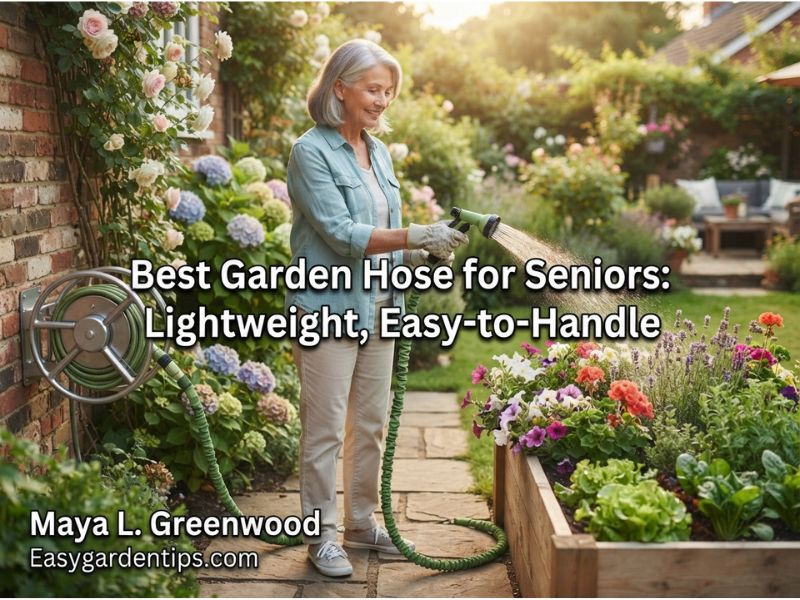
5 Best Garden Hose for Seniors: Lightweight, Easy-to-Handle
| Image | Product Name | Check Price |
|---|---|---|
Best Choice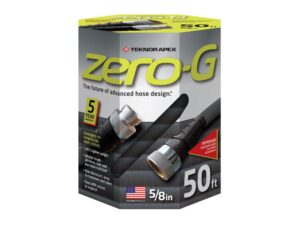 | zero-G 4001-50 Lightweight Garden Hose- Best Overall | Check Price |
Second Best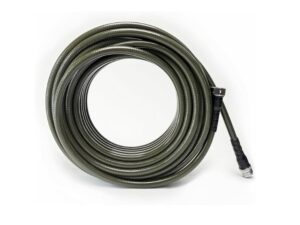 | Water Right 400 Series Polyurethane Garden Hose | Check Price |
Third Choice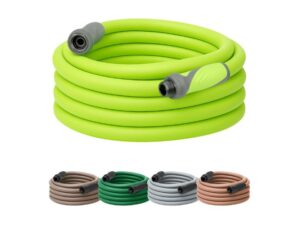 | Flexzilla Garden Hose with SwivelGrip | Check Price |
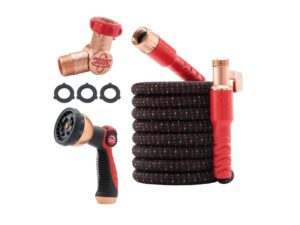 | Pocket Hose Ballistic 50 FT Expandable Garden Hose | Check Price |
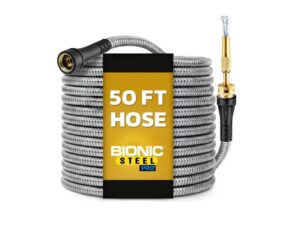 | Bionic Steel PRO 50 Ft Metal Garden Hose | Check Price |
1. zero-G 4001-50 Lightweight Garden Hose- Best Overall
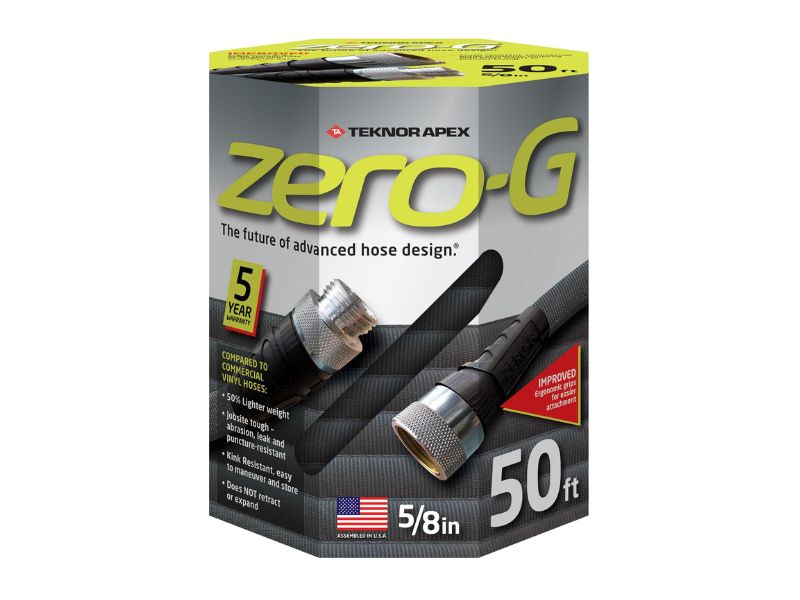
The zero-G 4001-50 earns my top position because it strikes one of the best balances between low weight, normal hose dimensions, durability, and water flow.
At approximately 4.3 pounds for the 50-foot version, this hose is considerably easier to carry across a yard than many conventional rubber hoses. It uses a standard 5/8-inch diameter, so seniors do not have to accept the reduced diameter found on some ultralight hoses simply to save weight.
Its construction is designed to resist kinking, abrasions, leaks, and punctures. The hose does not need to expand before reaching its full length, either. That makes operation more predictable: connect it, uncoil the required amount, turn on the faucet, and start watering.
That predictability matters for older gardeners. Expandable hoses can be extremely light, but their length and shape change with water pressure. A non-expanding lightweight hose such as the zero-G behaves more like a traditional hose without imposing the same carrying burden.
Another senior-friendly detail is its coupling design. The Zero-G line uses crush-resistant ergonomic couplings, which can make gripping and attaching the hose more comfortable than small, smooth connectors. The 50-foot 5/8-inch version is also listed at about 4.53 pounds in current specifications.
I would choose the zero-G for someone who wants one hose capable of watering garden beds, washing outdoor furniture, connecting to a sprinkler, and handling ordinary lawn-care jobs without becoming unnecessarily heavy.
What I Like
- Approximately 4.3-pound weight at 50 feet
- Full 5/8-inch residential hose diameter
- Kink-resistant design
- Abrasion- and puncture-resistant construction
- Easy to maneuver around garden beds
- Does not expand or contract during normal operation
- Ergonomic coupling design
- Good balance between weight and water delivery
What I Do Not Like
- Not as compact when stored as an expandable hose
- Can still kink if stored carelessly without proper coiling
- Longer versions naturally become more cumbersome
Best for: Seniors who want the closest thing to a conventional full-size garden hose without conventional hose weight.
2. Water Right 400 Series Polyurethane Garden Hose- Best Lightweight
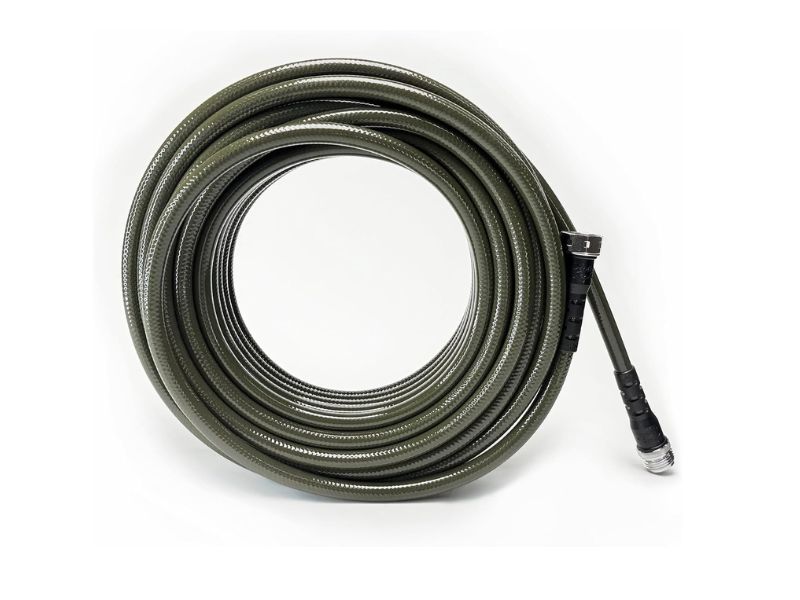
If minimizing weight is the highest priority, the Water Right 400 Series is difficult to overlook.
Its 50-foot version weighs approximately 3.3 pounds, making it substantially easier to pick up, carry, and coil than a heavy-duty rubber hose. The polyurethane construction remains slim and flexible, while durable fittings are designed to withstand normal outdoor use.
The most important difference is diameter. Instead of a typical 5/8-inch interior, the 400 Series uses a 7/16-inch inner diameter.
That smaller passage reduces weight considerably and is perfectly practical for many everyday watering jobs. Manufacturer specifications indicate approximately 4 gallons per minute at 40 PSI, which should be sufficient for watering flowers, raised beds, vegetables, containers, and smaller landscaped areas.
However, the narrower diameter is also its main compromise. I would not make this my first pick for someone regularly operating large sprinklers, filling big containers quickly, or performing jobs requiring maximum flow.
For seniors who mostly walk around with a spray nozzle and water individual plants, that limitation may matter very little.
The lightweight construction is particularly attractive for users with limited grip or arm strength because less hose mass needs to be pulled around corners. A 50-foot hose is also usually long enough for a modest backyard without creating the handling problems associated with unnecessary 75- or 100-foot lengths.
What I Like
- Only about 3.3 pounds at 50 feet
- Flexible polyurethane construction
- Easy to lift and carry
- Compact when coiled
- Resists common kinking and cracking problems
- Quality fittings
- Excellent choice for patios and small gardens
- Drinking-water-safe construction
What I Do Not Like
- 7/16-inch diameter delivers less water than a standard 5/8-inch hose
- Not my first choice for high-flow sprinklers
- Slim construction may feel different to users accustomed to traditional hoses
Best for: Seniors with limited arm strength who primarily water containers, raised beds, flowers, or smaller gardens.
3. Flexzilla Garden Hose with SwivelGrip- Best for Easy Connections
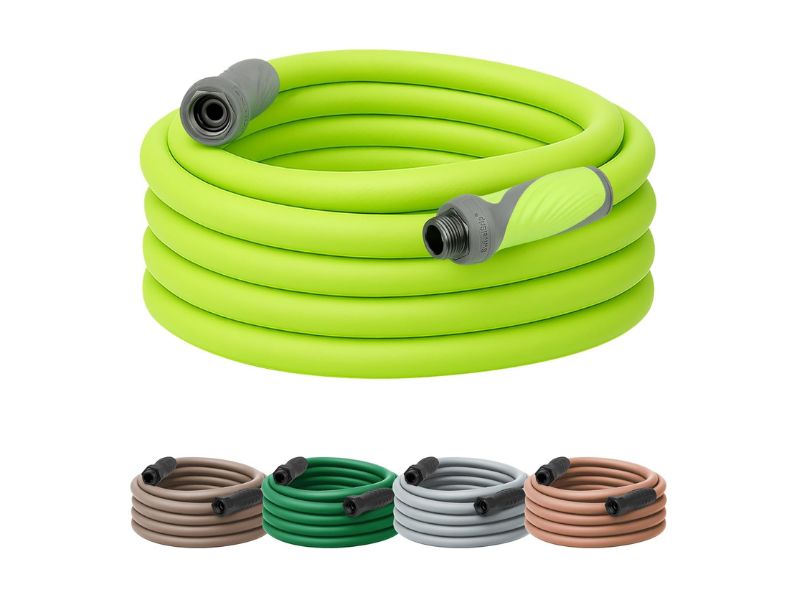
Garden-hose weight gets most of the attention, but connecting the hose can be equally frustrating for anyone dealing with reduced hand strength.
That is where the Flexzilla SwivelGrip stands out.
Its male and female SwivelGrip connections allow the hose and gripping surface to rotate independently. Instead of repeatedly twisting the entire hose while threading a connection, the user can rotate the grip more naturally. The feature also helps release unwanted coils during setup.
The hose uses a flexible hybrid polymer designed to remain pliable, coil easily, lie flat with minimal memory, and resist kinking while under pressure. Flexzilla also uses abrasion-resistant outer construction and aluminum fittings.
At roughly 8 pounds for a 50-foot SwivelGrip version, it is noticeably heavier than the Water Right and zero-G options.
For that reason, I rank it third rather than first.
However, weight is only part of usability. Someone who can comfortably manage eight pounds but has difficulty twisting small fittings may actually find the Flexzilla easier to live with than an ultralight hose with basic couplings.
Its 5/8-inch diameter also provides a more conventional balance of flow and maneuverability, making it suitable for general-purpose yard watering.
What I Like
- Swiveling grips simplify hose connections
- Easier to untwist while uncoiling
- Flexible hybrid-polymer construction
- 5/8-inch diameter
- Good water-flow capability
- Abrasion-resistant outer cover
- Coils without excessive memory
- Strong fittings
What I Do Not Like
- Heavier than my first two recommendations
- Bright hose versions may not suit every landscaping style
- More hose than necessary for someone who waters only a small patio
Best for: Seniors who prioritize large, easy-to-manipulate connections and straightforward coiling.
4. Pocket Hose Ballistic 50 FT Expandable Garden Hose- Best Compact Expandable
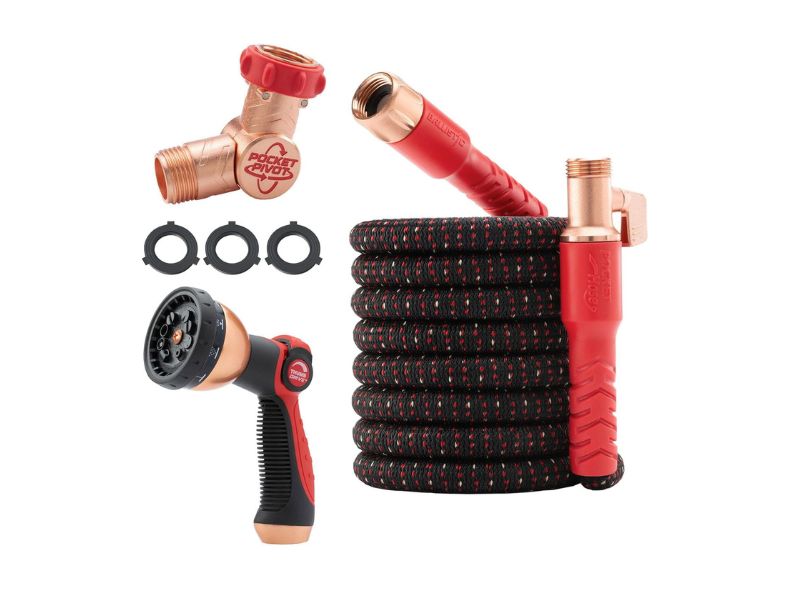
The Pocket Hose Ballistic approaches senior-friendly watering differently.
Rather than simply reducing the weight of a traditional hose, it uses an expandable design that becomes significantly smaller when the water is turned off.
The 50-foot model expands as water pressure enters the hose and contracts again after the faucet is closed and the remaining water is released. For seniors with very limited storage space, this means there is much less material to wrestle onto a conventional hose hanger.
The current Ballistic design also incorporates a 360-degree Pocket Pivot connector at the faucet. The connection can swivel while the hose moves, helping reduce crimping and twisting at one of the most troublesome points of a watering system.
Its reinforced outer sleeve is designed to improve burst resistance and durability while maintaining the flexible, compact characteristics buyers expect from an expandable hose. The design expands up to approximately three times its stored size and reaches a 3/4-inch operating diameter when pressurized.
For seniors, the biggest attraction is storage. There is no need to lift a large coil of stiff rubber hose after watering.
There is one operational habit to remember: expandable hoses should be depressurized before being disconnected or stored. Shut off the faucet, release the remaining water through the nozzle, and let the hose contract.
Once that routine becomes familiar, storage is remarkably simple.
What I Like
- Extremely compact after draining
- Easy to carry between uses
- Expands automatically under water pressure
- 360-degree swiveling faucet connection
- Resistant to ordinary kinking and tangling
- Convenient for patios and small storage areas
- No large conventional hose coil to manage
What I Do Not Like
- Must be drained before storage
- Expanding and contracting behavior is different from a conventional hose
- Not my first choice for leaving permanently pressurized
Best for: Seniors who value compact storage and minimal carrying bulk.
5. Bionic Steel PRO 50 Ft Metal Garden Hose- Best Durable Metal Hose
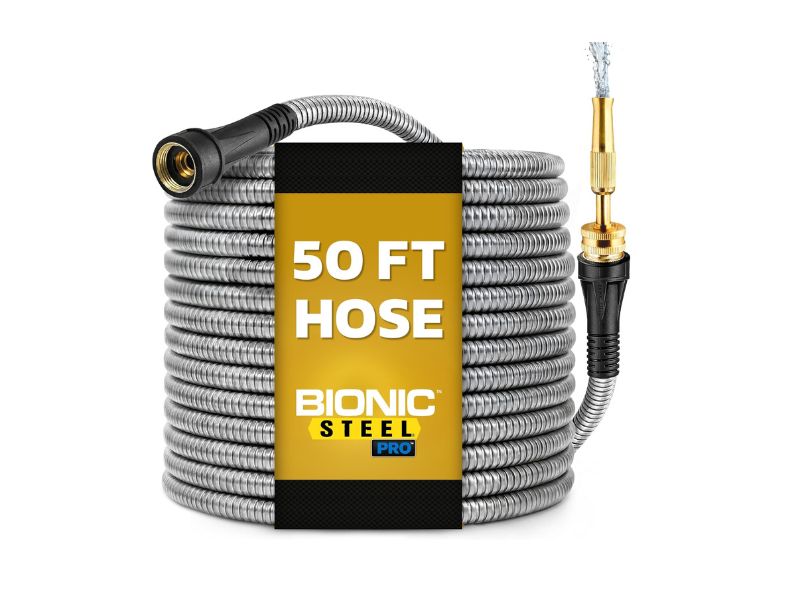
The Bionic Steel PRO is my alternative for gardeners who want a hose that feels light and flexible while adding the abrasion resistance of a metal exterior.
Its outer body is constructed from 304 stainless steel, while the flexible interlocking structure allows the hose to bend and move instead of behaving like a rigid metal tube. The current PRO version also uses brass fittings, a rotating collar, and a kink-resistant design.
Metal hoses can be particularly useful where traditional soft hose covers repeatedly scrape against rough concrete, patio edges, stone, or other abrasive surfaces.
They can also be appealing in homes where a flexible hose is frequently dragged through areas where punctures are a concern.
The Bionic Steel PRO includes a rotating connection intended to help keep the hose from twisting as it moves. That is valuable because excessive twisting can force users to stop, bend down, and manually straighten a hose.
Despite its heavy-duty appearance, the design is intended to remain lightweight and flexible rather than reproducing the bulk of a traditional commercial rubber hose.
I still prefer zero-G for most seniors because it delivers a more familiar overall handling experience. But Bionic Steel makes sense where durability against rough surfaces matters more than achieving the absolute lowest possible weight.
What I Like
- 304 stainless-steel exterior
- Good resistance to abrasions and punctures
- Flexible construction
- Kink-resistant design
- Rotating collar helps reduce twisting
- Brass fittings
- Suitable for hard landscaping and patios
- Easier handling than its metal appearance suggests
What I Do Not Like
- Metal construction feels different from a soft polymer hose
- Not as compact as an expandable hose
- Can make more noise when dragged across hard surfaces
Best for: Seniors who need a durable hose for patios, concrete, hardscaping, or areas where softer hoses are easily damaged.
Best Garden Hose for Seniors Comparison
| Product | Length / Diameter | Handling Profile | Senior-Friendly Advantage | Best For | Main Trade-Off |
| zero-G 4001-50 | 50 ft / 5/8 in | About 4.3 lb | Low weight with conventional full-size handling | Most seniors | Less compact than expandable designs |
| Water Right 400 Series | 50 ft / 7/16 in | About 3.3 lb | Extremely easy to lift and carry | Small gardens and limited strength | Lower water flow |
| Flexzilla SwivelGrip | 50 ft / 5/8 in | About 8 lb | Rotating grips simplify connections | Easier coupling and uncoiling | Heavier than top two |
| Pocket Hose Ballistic | 50 ft expanded | Very compact when drained | Contracts for simple storage | Patios and limited storage | Requires draining |
| Bionic Steel PRO | 50 ft | Lightweight metal design | Tough exterior with kink-resistant handling | Rough surfaces | Metal feel is not for everyone |
Which One Should You Choose?
For most people, zero-G 4001-50 offers the strongest compromise. It is very light without requiring a narrow diameter or expandable construction.
Choose the Water Right 400 Series when minimum weight is the priority. Choose Flexzilla SwivelGrip if twisting fittings and untangling connections cause more difficulty than carrying the hose itself.
The Pocket Hose Ballistic is particularly attractive when storage space is limited, while Bionic Steel PRO makes the most sense when durability against pavement, stone, pets, or rough surfaces is a major concern.
How I Chose These Garden Hoses for Seniors
A garden hose suitable for an older gardener should be evaluated differently from a hose intended primarily for heavy commercial work.
I prioritized five characteristics.
Low Empty Weight
This was my most important consideration.
A traditional heavy hose becomes even more difficult to manage when water remains inside it. A lighter starting weight reduces the effort required for dragging, lifting, coiling, and carrying.
For reference, conventional 50-foot rubber hoses can commonly weigh roughly 10–15 pounds while empty, whereas lightweight hybrid designs can cut that burden considerably.
Flexible Construction
A stiff hose makes users fight the coil every time it is moved.
Flexible polymer, woven, expandable, and articulated-metal constructions can follow the user around flowerbeds and obstacles with less resistance.
Resistance to Kinking
Every kink means stopping, walking backward, bending over, finding the blockage, and straightening the hose.
Reducing that repetition is particularly important for anyone who wants watering to remain a comfortable activity.
Easy Connections
Small conventional fittings can be difficult to tighten with limited hand strength.
Larger grip surfaces, rotating couplings, swivels, and high-quality threads improve usability.
Appropriate Length
Longer is not automatically better.
For many seniors, buying 100 feet of hose for a yard that requires only 40 feet simply creates additional weight and storage work. A 50-foot hose is a practical starting point for many residential gardens.
Complete Buying Guide: Choosing the Best Garden Hose for Seniors
Prioritize Weight Before Heavy-Duty Construction
One of the most common buying mistakes is choosing the thickest, toughest hose available.
That approach makes sense for contractors, farms, or locations where a hose stays permanently positioned.
For a senior who needs to drag it through a residential yard several times per week, excess weight can become a disadvantage.
Try to get enough durability for the intended job rather than maximum possible durability.
Consider a 25-Foot Hose for Very Small Spaces
If the outdoor faucet is close to the garden, a 25-foot hose can be considerably easier to manage than a 50-footer.
It reduces:
- Total carrying weight
- Coiling effort
- Storage space
- Material that can become tangled
- Distance that must be dragged
Always measure from the faucet to the farthest watering point before buying.
Use 50 Feet for Typical Residential Watering
A 50-foot hose is the sweet spot for many homes.
It provides enough reach for moderate yards while remaining manageable, especially when combined with lightweight construction.
Avoid 100 Feet Unless You Actually Need It
A 100-foot hose can become cumbersome even when the material itself is lightweight.
Long hoses also create larger coils, more opportunities for tangles, and additional friction as they are dragged.
If the farthest watering point is 55 feet away, using a carefully positioned 75-foot hose may make more sense than automatically jumping to 100 feet.
Understand Hose Diameter
Common garden-hose diameters include:
- 7/16 inch: Very lightweight but lower flow
- 1/2 inch: Lightweight, suitable for light watering
- 5/8 inch: Excellent general-purpose residential size
- 3/4 inch: Higher flow but usually heavier
For seniors, 5/8 inch usually provides the best general balance.
A slimmer 7/16-inch hose such as the Water Right 400 Series can be preferable when easy carrying is more important than maximum flow.
Look for Large Grip Surfaces
Coupling design becomes increasingly important if finger strength or dexterity is limited.
Look for:
- Large textured grips
- Swivel connectors
- Rotating collars
- Easy-threading fittings
- Nozzle grips with thumb controls
These details can reduce how tightly the user needs to grasp or twist the connection.
Kink Resistance Matters More Than It Seems
A cheap hose that repeatedly kinks can turn a simple watering job into repeated walking, pulling, bending, and straightening.
Even no hose is completely immune to improper twisting, but flexible, low-memory designs generally require less correction.
Consider an Expandable Hose for Storage
Expandable hoses are particularly useful for seniors who do not want to wind a bulky coil after each use.
They contract dramatically after draining and can often be stored in a relatively small container or hanger.
The disadvantage is that they rely more heavily on proper depressurization and care.
Consider Metal for Rough Surfaces
A lightweight articulated stainless-steel hose can work well around:
- Concrete patios
- Stone pathways
- Decking
- Sharp landscaping edges
- Areas where pets may contact the hose
The metal exterior provides a different type of protection from soft polymer and fabric constructions.
Best Hose Length and Setup for Older Gardeners
A senior-friendly watering setup should reduce unnecessary walking, carrying, bending, and twisting.
Small Patio or Balcony
A 15- to 25-foot lightweight hose may be enough.
There is little benefit in storing 50 feet if the farthest planter is only 15 feet from the faucet.
Small Residential Garden
A 25- to 50-foot hose is usually appropriate.
An ultralight polyurethane or expandable model can work particularly well here.
Medium Backyard
A 50-foot 5/8-inch lightweight hose offers an excellent compromise between reach and water delivery.
This is where I particularly like the zero-G design.
Large Yard
Before buying a heavy 100-foot hose, consider dividing the property into watering zones.
A permanently installed splitter or second connection point may reduce the amount of hose that needs to be moved.
How to Make a Garden Hose Even Easier for Seniors to Use
The hose itself is only one part of an ergonomic watering system.
Add a Thumb-Control Nozzle
Traditional trigger nozzles require the hand to remain squeezed during watering.
A thumb-control nozzle allows the user to set the desired flow and keep it there without continuously gripping a trigger.
Install a Faucet Splitter
A splitter allows two watering devices to remain connected.
This can eliminate repeated attaching and removing of fittings.
Use Quick-Connect Fittings
Quality quick connectors can dramatically reduce twisting.
Instead of threading a nozzle or accessory every time, components snap together.
Keep the Hose Near the Faucet
Do not carry the entire hose into a shed after every watering session unless necessary.
A properly positioned lightweight hanger keeps it accessible while limiting bending and lifting.
Use a Hose Pot for Expandable Models
Expandable hoses can often be dropped loosely into a hose pot after draining.
There is no need to form perfectly symmetrical coils.
Position the Hanger at Waist Height
Storage positioned too close to the ground forces repeated bending.
Mounting a hose hanger at a comfortable height can make retrieval and storage considerably easier.
Garden Hose Maintenance for Seniors
Good maintenance prevents a lightweight hose from becoming difficult to use prematurely.
Drain the Hose After Watering
Close the faucet and release pressure through the nozzle.
This reduces stored water weight and makes the hose easier to lift.
Avoid Leaving It Under Pressure
Unless the hose is specifically designed for permanent pressurization, shut off the faucet after use.
This reduces unnecessary stress on the hose and fittings.
Make Large Coils
Small, tight loops encourage twisting.
Large loops are easier to create and reduce memory in many hose materials.
Protect It From Extreme Conditions
Whenever practical, keep the hose out of prolonged extreme heat, freezing temperatures, and unnecessary UV exposure.
Replace Damaged Washers
A leaking connection does not necessarily mean the hose has failed.
The small washer inside the female coupling is inexpensive and should be one of the first things checked when a connection begins dripping.
Check Connections Periodically
Make sure fittings remain clean and thread smoothly.
Forcing a misaligned fitting can damage threads and make future connections much harder.
Common Mistakes Seniors Should Avoid When Buying a Garden Hose
Buying Too Much Length
Extra hose increases weight without improving convenience when the additional reach is unnecessary.
Measure first.
Choosing Heavy Rubber Automatically
Rubber is durable, but durability is not the only consideration.
For someone carrying and moving a hose regularly, a lighter polymer or woven construction may offer a better everyday experience.
Ignoring Coupling Size
A very lightweight hose can still be frustrating if its connectors are difficult to grip.
Look at the fittings as carefully as the hose itself.
Assuming Expandable Means Maintenance-Free
Expandable hoses are wonderfully compact, but they should be drained properly after use.
Choosing the Smallest Diameter Without Considering Flow
A narrow hose saves weight but also reduces water volume.
If you regularly use large sprinklers, check their flow requirements before choosing a slim hose.
Leaving Water Inside Before Coiling
Water adds substantial weight.
Draining first makes almost every hose easier to carry and store.
Storing the Hose on the Ground
Loose hoses can become tripping hazards.
A hanger, reel, pot, or storage basket keeps walkways clear.
Frequently Asked Questions
What is the best garden hose for seniors?
A lightweight 50-foot kink-resistant hose is usually the best choice for most seniors.
My primary recommendation is the zero-G 4001-50 because it combines approximately 4.3-pound weight with a conventional 5/8-inch diameter and 50-foot reach. Unlike ultralight narrow hoses, it maintains the familiar proportions and water delivery expected from a general-purpose residential garden hose. Someone with especially limited lifting strength may prefer the even lighter Water Right 400 Series.
What type of garden hose is easiest for seniors to use?
Lightweight polymer, woven, and expandable hoses are generally easier than heavy rubber hoses.
The ideal construction depends on how the hose will be used. Lightweight non-expanding hoses provide predictable handling, while expandable designs make storage exceptionally simple. Polyurethane hoses can achieve extremely low weight, and articulated stainless-steel hoses are useful around rough surfaces. For most people, a lightweight 5/8-inch non-expanding hose offers the easiest transition from a conventional hose.
How heavy should a senior-friendly garden hose be?
A 50-foot hose under roughly eight pounds is a practical target for easier handling.
Going even lighter can be beneficial. The Water Right 400 Series weighs approximately 3.3 pounds, while the 50-foot zero-G weighs roughly 4.3 pounds. By comparison, conventional 50-foot rubber hoses can weigh around 10–15 pounds before water is added.
Is a 25-foot or 50-foot hose better for seniors?
Choose the shortest hose that comfortably reaches the farthest area you regularly water.
A 25-foot hose is easier to carry, coil, and store, so it is preferable when the garden is close to the faucet. A 50-foot hose provides more flexibility for a typical residential yard. Buying 75 or 100 feet unnecessarily increases the amount of material that must be dragged and organized.
Are expandable garden hoses good for elderly gardeners?
Yes, expandable hoses can be excellent when low storage weight and compactness are priorities.
They shrink dramatically when drained, so users do not have to wind a bulky conventional coil after every watering session. This makes them especially convenient for patios and smaller properties. Their primary disadvantage is the need to turn off the faucet and release remaining pressure before storage. Users who prefer predictable hose length may find a lightweight non-expanding model simpler.
Is a 5/8-inch hose suitable for seniors?
Yes, 5/8 inch offers an excellent balance of water flow, weight, and everyday versatility.
It is the diameter I would choose for most residential gardens because it works well with ordinary nozzles and sprinklers without the additional bulk of many 3/4-inch hoses. Seniors who primarily hand-water containers or flowerbeds can consider a smaller 7/16- or 1/2-inch model to reduce carrying weight further.
What nozzle is easiest for seniors to use?
A thumb-control nozzle usually requires less continuous gripping than a traditional squeeze-trigger design.
Once the desired flow is selected, the user does not need to keep squeezing a spring-loaded handle. That can make long watering sessions more comfortable. Look for a nozzle with a large textured grip, an easy-to-turn pattern selector, and a thumb lever that can be operated without substantial force.
How can I make hose connections easier with arthritis or weak hands?
Large rotating grips and quick-connect fittings can greatly reduce the twisting required at each connection.
The Flexzilla SwivelGrip is particularly interesting because its gripping surfaces rotate independently from the hose, reducing the need to twist the entire hose during connection. Adding high-quality quick connectors between the faucet, hose, and nozzle can simplify the system even further.
Should seniors use a hose reel?
A good reel can help, but a lightweight hose may be simpler than a heavy reel system.
Reels keep hose organized and off walkways, which reduces tripping hazards. However, some manual reels require considerable cranking force when pulling in long, water-filled hoses. Drain the hose before rewinding and choose a reel with a large, comfortable crank. For very lightweight or expandable hoses, a simple wall hanger or hose pot may be easier.
Are metal garden hoses too heavy for seniors?
Not necessarily, because modern articulated metal hoses can be surprisingly flexible and manageable.
Models such as the Bionic Steel PRO use thin interlocking stainless-steel construction rather than thick solid metal tubing. They are particularly useful where abrasion resistance is important. Nevertheless, someone whose only priority is achieving the lowest possible weight will generally be better served by polyurethane, woven, or expandable alternatives.
How do I keep a lightweight garden hose from kinking?
Uncoil it in large loops and remove twists before turning on the water.
When storing the hose, avoid tight, small coils that encourage memory and twisting. A large wall hanger generally works better than forcing flexible hose into a narrow loop. Swivel connections can also help. Even hoses advertised as kink-resistant can temporarily restrict water if they are sharply folded or badly twisted.
Should I drain a garden hose after every use?
Yes, draining reduces carrying weight and helps protect the hose between watering sessions.
Turn off the faucet, open the nozzle, and allow remaining pressure and water to escape. This step is especially important with expandable hoses because drainage allows them to contract for storage. It also means the user will not have to lift unnecessary water weight the next time the hose is moved or coiled.
What garden hose length is easiest for an elderly person?
For most homes, 25 to 50 feet provides the best combination of reach and manageable weight.
Choose 25 feet when the watering area is close to the faucet and 50 feet for a typical yard. Longer hoses should be purchased only when the additional reach is genuinely necessary. Reducing unnecessary length is one of the simplest ways to make any watering setup easier to manage.
Is a lightweight garden hose durable enough for regular use?
Yes, a well-constructed lightweight hose can provide excellent durability for ordinary residential watering.
Low weight does not automatically mean fragile construction. Modern woven jackets, polyurethane, hybrid polymers, and stainless-steel exteriors can provide substantial abrasion and kink resistance without traditional rubber-hose weight. The appropriate choice depends on the environment: soft lightweight hoses work well around gardens, while metal-covered designs may make more sense around rough concrete or stone.
Conclusion
Choosing the best garden hose for seniors is mainly about reducing unnecessary effort. A hose should be light enough to move comfortably, flexible enough to follow around plants without constant correction, and easy enough to connect that watering does not become a frustrating chore.
My primary recommendation is the zero-G 4001-50 Lightweight Garden Hose. Its roughly 4.3-pound 50-foot construction and standard 5/8-inch diameter give it an unusually useful combination of low weight and conventional garden-hose performance. It is the option I would choose for most residential yards.
The Water Right 400 Series is my preferred alternative when minimum carrying weight is the main concern. At approximately 3.3 pounds for 50 feet, it is especially well suited to smaller gardens, raised beds, containers, and patios, although its narrow diameter provides less flow.
For users who struggle more with twisting fittings than carrying weight, the Flexzilla SwivelGrip deserves particular consideration. Its rotating connections can simplify attaching, uncoiling, and repositioning the hose.
Expandable and stainless-steel options also have worthwhile advantages for compact storage and durability. Ultimately, measure your required reach first and choose the shortest lightweight hose that comfortably covers your watering area.

I’m Maya L. Greenwood, a lifelong plant lover who believes anyone can grow something beautiful with the right guidance. After years of testing soil mixes, pruning methods, irrigation tricks, and pest-safe solutions, I started EasyGardenTips.com to turn hard-won lessons into step-by-step advice. From seed starting and container gardens to composting and seasonal checklists, my goal is to make gardening simple, sustainable, and fun.