10 Best Sprayer for Weeds: Top Products and Key Buying Advice
Choosing the best sprayer for weeds depends on the size of the area, the type of herbicide you use, and how much pumping or carrying you want to do. For most homeowners, the CHAPIN 20004 Surespray 1-Gallon Pump Sprayer For is the strongest all-around starting point because it combines simple operation, useful reach, manageable weight, and readily serviceable components.
The Roundup 190260 2-Gallon Lawn and Garden Sprayer is the clear alternative when you want more capacity and several included nozzle options. Its larger tank can reduce refill trips, while the lockable shut-off makes longer spraying sessions easier. Battery-powered models also deserve attention if repeated hand pumping is uncomfortable.
This roundup compares tank size, spray control, reach, chemical resistance, portability, maintenance features, and practical limitations. The rankings reflect how well each sprayer fits common weed-control jobs, from spot-treating a few garden beds to covering a large yard.
My top recommendation is CHAPIN 20004 Surespray 1-Gallon Pump Sprayer For because it provides the strongest overall fit among the 10 options compared below.
Best Sprayer for Weeds at a Glance
| Product | Name | Price |
|---|---|---|
 |
CHAPIN 20004 Surespray 1-Gallon Pump Sprayer For | Check Price |
 |
Roundup 190260 2-Gallon Lawn and Garden Sprayer | Check Price |
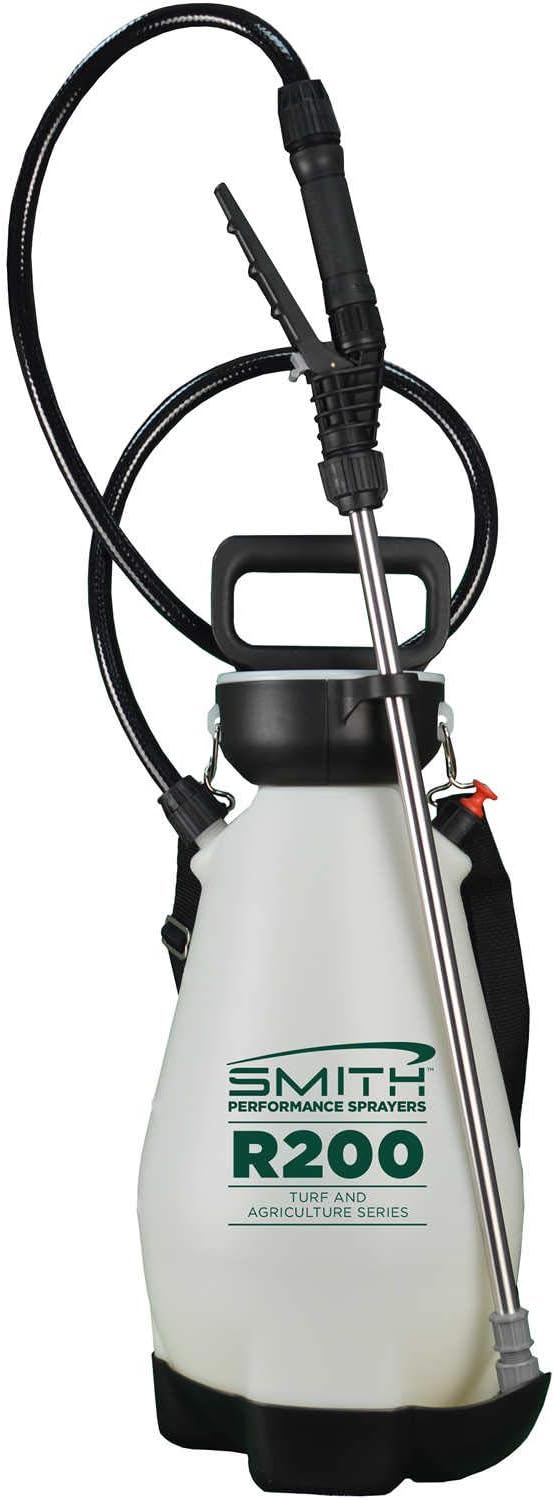 |
Smith Performance Sprayers R200 2-Gallon Compression Spray | Check Price |
 |
VAXMAY Battery Powered Sprayer 2 Gallon | Check Price |
 |
Weed Sprayer 2 Gallon | Check Price |
 |
CHAPIN 22000 1-Gallon Pump Sprayer for Lawn | Check Price |
 |
CHAPIN 1002 48-Oz Hand Pump Sprayer For | Check Price |
 |
VAXMAY Battery Powered Backpack Sprayer 4.2 Gallon | Check Price |
 |
CHAPIN 20024 Surespray 2-Gallon Pump Sprayer For | Check Price |
 |
Petratools HD101 Garden Pump Sprayer | Check Price |
1. CHAPIN 20004 Surespray 1-Gallon Pump Sprayer For
The CHAPIN 20004 earns the top position because it offers a particularly balanced combination of capacity, control, portability, and maintainability. Its translucent one-gallon poly tank has a funnel-shaped top that makes filling cleaner and lets you monitor the remaining solution without opening the container. That is useful when mixing or applying herbicide, since avoiding spills and keeping track of the liquid level both improve control over the job.
Manual pressurization keeps the design straightforward. The ergonomic pump handle helps reduce fatigue, while the 34-inch hose gives you enough reach to work around lawn edges, planting beds, and low vegetation without carrying the tank directly over every target. Its adjustable cone nozzle can move between a focused stream and a broader spray, allowing more precise spot treatment or general coverage.
The modular construction is another reason it ranks first. The design is intended to help prevent leaks and allows seals to be cleaned or replaced, rather than treating the sprayer as disposable. It can handle weeds, pesticides, fertilizers, mulch glue, and basic cleaning tasks, although the specific chemical label should always confirm sprayer compatibility.
This is an excellent fit for homeowners who want one dependable hand-pump sprayer for routine yard work. The one-gallon capacity is portable, but it also means more refilling than a two-gallon model on larger properties. It is made in the USA with global materials and includes a one-year limited warranty plus U.S.-based technical support. Rinsing the tank, hose, nozzle, and filter after each herbicide application will help preserve reliable spray output.
2. Roundup 190260 2-Gallon Lawn and Garden Sprayer
The Roundup 190260 is the clearest alternative to the top-ranked Chapin because its two-gallon tank gives you additional working capacity without moving to a backpack system or powered pump. That extra volume can be valuable when treating a larger lawn, fence line, driveway edge, or collection of garden beds. The basic operating sequence is uncomplicated: assemble it, fill it, pressurize it, and spray.
Its comfort grip and lockable shut-off are practical touches. The lock allows continuous spraying without requiring constant finger pressure, which can make extended applications less tiring. The included nozzles also make this model more adaptable than a basic single-nozzle pump sprayer. The adjustable poly nozzle supports general applications, the high-volume flat-fan nozzle can help with broader coverage, and the foaming nozzle is useful when you want visible product cling for certain cleaning tasks.
Safety is addressed with a pressure-release cap designed to direct vapors and liquids down and away when the top is opened. Even so, the operator should still follow the herbicide label, wear the required protective equipment, and release pressure carefully in an appropriate location.
This sprayer suits homeowners who prioritize fewer refills and want multiple spray patterns in one package. Its main trade-off is that a full two-gallon tank weighs more and may be less comfortable to carry than a one-gallon unit, especially on uneven ground. It is also a conventional manual sprayer, so users covering very large areas may prefer a battery-powered backpack model. Flush all three nozzles after changing chemicals to reduce residue and prevent cross-contamination.
3. Smith Performance Sprayers R200 2-Gallon Compression Spray
The Smith Performance Sprayers R200 ranks highly because it is built around professional-oriented durability and serviceability. It is intended for applying weed killers, insecticides, and fertilizers, with components designed to tolerate harsh agricultural chemicals and rugged transport. That emphasis makes it a strong choice for users who expect frequent spraying and care more about long-term repairability than the lowest-complexity design.
A 21-inch stainless steel wand provides a solid working tool, while its poly lining and Viton seals are selected for chemical resistance. The longer wand can help maintain distance from treated vegetation and reach into beds or along borders. An in-line filter with a larger surface area is designed to reduce clogging and limit how often the sprayer needs cleaning during use.
Another practical advantage is pump efficiency. The manufacturer states that the pump requires 25% fewer pumps per gallon than leading competitors, which could reduce the effort involved in maintaining pressure. If a seal eventually needs replacement, the pump seals can be changed within minutes without tools. That is a meaningful ownership benefit for people who would rather repair a working sprayer than replace it.
The R200 is a good match for experienced gardeners, property managers, and serious DIY users who routinely apply chemical products. Its professional components may be more capability than an occasional spot-treatment user needs, and manual pumping remains a limitation on very extensive jobs. The product is identified as an OEM part, so confirm that replacement components and seals match your specific unit. Clean the wand, filter, and tank after each application, particularly when switching between herbicides and fertilizers.
4. VAXMAY Battery Powered Sprayer 2 Gallon
The VAXMAY Battery Powered Sprayer 2 Gallon places fourth because it removes manual pumping while retaining a portable, relatively compact format. Its 7.4-volt motor and two 2,000mAh rechargeable batteries are designed to provide up to three hours of continuous operation. That setup can be useful for users with hand fatigue, arthritis, or enough lawn and garden work that repeatedly pressurizing a manual tank becomes inconvenient.
The upgraded handle provides three adjustable spray speeds, and an LED battery indicator shows remaining power. This gives the operator more control than a simple on-or-off electric pump. A fine setting can be useful for gentler applications, while a stronger setting is better suited to weed treatment or cleaning. Four mist nozzles support different spray patterns, and the telescoping wand extends from 8.66 to 23.6 inches for added reach.
Refilling is made easier by dual wide-mouth openings, while the transparent tank scale helps monitor the solution. A sealing ring at the connections is intended to reduce leaks, and the filter head helps limit clogging. The HDPE and ABS construction is described as chemical resistant for fertilizers, herbicides, and normal outdoor exposure.
This model fits homeowners who want powered spraying without the bulk of a backpack sprayer. The trade-offs are the need to charge and care for batteries, along with the lower review volume compared with established manual models. Runtime will also vary with speed, nozzle choice, and use rather than always reaching the stated maximum. Rinse the system after every chemical application and avoid storing it with solution inside. It includes a one-year warranty and 24/7 customer support.
5. Weed Sprayer 2 Gallon
This generic Weed Sprayer 2 Gallon earns its place through a useful combination of automatic operation, large capacity, and multiple spray patterns. Its 7.4-volt motor eliminates manual pumping, and the 3,000mAh rechargeable battery is advertised for up to three hours of continuous spraying. For a homeowner treating a medium-size lawn or several garden areas, that can make the work feel more consistent and less physically demanding than using a hand-pump tank.
Five interchangeable nozzles provide options ranging from a fine mist to a stronger jet stream. That versatility allows the sprayer to support weed control, fertilizing, watering, cleaning, and other outdoor jobs, provided the selected liquid is appropriate for the equipment. The two-gallon, eight-liter tank reduces refill frequency while remaining more portable than a backpack unit. An adjustable shoulder strap and ergonomic handle help distribute the load during longer sessions.
The transparent tank makes it easier to see how much solution remains. Reinforced seals, an anti-clog filter, and a durable hose structure are intended to support leak-resistant, steady operation. These features are especially helpful when applying products that should be distributed evenly rather than in bursts caused by inconsistent hand pumping.
This sprayer is best suited to users who want an affordable-feeling electric format with a generous tank and do not need the carrying capacity of a four-gallon backpack model. The available information does not identify a specific warranty or detailed replacement-parts program, so buyers who prioritize long-term service should investigate those details before purchase. Battery charging is another ownership consideration, and the maximum runtime should be treated as task-dependent. Flush every nozzle and the hose thoroughly after herbicide use, then allow the system to dry before storage.
6. CHAPIN 22000 1-Gallon Pump Sprayer for Lawn
The CHAPIN 22000 is essentially a two-pack version of the practical one-gallon Chapin SureSpray format, making it appealing when you want a spare unit or prefer to keep different chemicals separated. Its one-gallon translucent funnel-top tanks are easy to fill and inspect, while the lightweight poly construction remains manageable for routine lawn and garden work.
Each sprayer uses an ergonomic pump handle and a 34-inch hose. That combination offers a useful balance between portability and reach for spot-treating weeds, applying fertilizer, spraying pesticides, or handling basic cleaning tasks. The adjustable cone nozzle can produce either a targeted stream or a broader spray, so the operator can tailor coverage without changing to a completely different tool.
The modular design is intended to reduce leaks and make seals easier to clean or replace. That is important for chemical sprayers because residue can interfere with connections, filters, and nozzles. The tanks are also suitable for mulch glue according to the supplied product information, although every chemical label should be checked before use and the sprayer should be cleaned before switching applications.
This two-pack holds the sixth position because it provides excellent practical flexibility but does not add new spraying technology over the single-unit version. It is a sensible choice for households with multiple users, separate treatment products, or a desire to keep one clean backup available. A one-gallon tank still requires more refills than a two-gallon unit, and manual pumping may be less comfortable for large properties. Chapin states that the sprayers are made in the USA with global materials and backed by a one-year limited warranty with U.S.-based technical support. Label each tank clearly to avoid accidental chemical mixing.
7. CHAPIN 1002 48-Oz Hand Pump Sprayer For
The CHAPIN 1002 is a compact 48-ounce hand sprayer designed for small weed-control jobs, plant care, and cleaning. Its smaller tank makes it much easier to carry around individual beds, patios, houseplants, and isolated weed patches than a one- or two-gallon model. It is also a practical size when mixing only a small amount of solution is preferable to storing leftover herbicide.
The wide-mouth translucent tank simplifies filling and lets you check the fluid level. Its seals and gaskets are described as compatible with common lawn and garden, weed, and pest-control chemicals, though the product label remains the final authority for chemical compatibility. The adjustable cone nozzle moves from a fine mist to a focused stream, allowing gentle plant feeding or more directed spot treatment.
An in-tank anti-clog filter helps maintain consistent spray output, while the thumb-controlled shut-off supports convenient one-handed operation. That control is particularly useful when treating individual weeds around desirable plants, where keeping the spray narrow can help limit accidental contact. The ergonomic handheld design is intended to reduce hand fatigue during repeated use despite the unit’s small size.
This model is ideal for apartment balconies, small yards, garden beds, and quick touch-up applications. Its primary limitation is capacity: 48 ounces will not be efficient for broad lawn treatment, and frequent refilling can outweigh its portability on larger properties. The lack of a long hose also means the tank and spray head remain close to the operator. Chapin lists a one-year limited warranty and provides technical support. Follow the manual for assembly, rinse the filter and nozzle after use, and dedicate the sprayer to herbicides if possible.
8. VAXMAY Battery Powered Backpack Sprayer 4.2 Gallon
The VAXMAY Battery Powered Backpack Sprayer 4.2 Gallon is designed for larger properties and longer spraying sessions. Its backpack format places the tank on the operator rather than requiring one hand to carry a pressurized container. With a stated capacity of 4.2 gallons, it can cover substantially more ground between refills than the handheld models in this roundup, although the filled weight should be considered before choosing it.
The sprayer can work with DeWalt 20V and Milwaukee 18V batteries, and it also includes a 2.6Ah 20V rechargeable battery and charger. That compatibility may be valuable for users who already own tools from either battery platform. A digital voltage display provides a quick power check, while the manufacturer states that the unit can support up to 16 tank refills on a charge under its stated conditions.
With a high-speed 3,800 RPM motor and up to 120 PSI, the unit is designed to deliver strong, consistent pressure. Five nozzles allow different spray patterns, and two wands add flexibility: a telescoping stainless-steel wand reaches up to 39.3 inches, while a 30-inch fiberglass wand is intended for chemical spraying. A trigger lock can help maintain spray without constant finger pressure.
This is a strong fit for large lawns, agricultural areas, and users who want backpack mobility with electric operation. It is less suitable for tiny gardens, where the tank may be excessive and the filled pack cumbersome. Confirm your existing battery platform and understand that claimed runtime depends on pressure, nozzle, terrain, and spraying frequency. Rinse the tank and wands after use, inspect straps and connections regularly, and never carry a chemical mixture longer than the label permits. The unit includes a one-year warranty.
9. CHAPIN 20024 Surespray 2-Gallon Pump Sprayer For
The CHAPIN 20024 gives the familiar SureSpray design a larger two-gallon tank and packages it as a two-pack. It ranks ninth not because it lacks useful features, but because its relevance score is lower and the larger manual tanks are less convenient for some users than the one-gallon format or an electric sprayer. Still, for households that want dependable conventional equipment in duplicate, it is a practical package.
The translucent poly tanks have funnel-shaped openings for easier filling and fluid checks. Two gallons can reduce refill trips when treating larger lawn sections, applying fertilizer, spraying pesticides, or completing general cleaning tasks. The adjustable cone nozzle supports both focused and broad spray patterns, while the 34-inch hose provides room to work around beds and borders without holding the tank directly over the target.
Chapin’s modular construction is intended to help prevent leaks and make connections, seals, and maintenance components easier to manage. The lightweight poly material helps keep the units portable for their size, and the ergonomic pump handle is designed to reduce fatigue. The supplied information also lists mulch glue among the intended applications, alongside weeds, fertilizers, and general spraying.
The two-pack makes sense for larger households, separate chemical duties, or anyone who wants a backup ready during a time-sensitive treatment. However, a full two-gallon tank is heavier than a one-gallon model, and manual pressurization can become tiring over extensive areas. Keep the units clearly labeled and do not use the same sprayer for incompatible chemicals without thorough cleaning. Chapin states that the sprayers are made in the USA with global materials, backed by a one-year limited warranty and U.S.-based technical support. Store them empty, clean, and protected from freezing conditions.
10. Petratools HD101 Garden Pump Sprayer
The Petratools HD101 is a one-gallon pump sprayer that emphasizes reach, spray control, and safe pressure handling. Its 52-inch hose and 16-inch wand give it more working distance than many compact handheld sprayers, which can be useful when treating weeds along a border, reaching into dense growth, or keeping the tank comfortably at your side while spraying.
The translucent tank includes markings for monitoring the solution, and its funnel-shaped opening is designed to make pouring easier. A large ergonomic handle helps reduce strain during filling and pumping. The HD101 includes two nozzles: an adjustable nozzle for switching between a gentle mist and a stronger jet, plus a fan tip for wider coverage. That pairing supports targeted weed treatment as well as broader lawn and garden applications.
A built-in pressure-release valve is intended to prevent accidental spray bursts by releasing excess air pressure. The sprayer also has built-in filters that help keep debris from clogging the nozzle. If output becomes restricted, cleaning the filters is the recommended way to restore performance. The product is described for fertilizers, mulch glue, pesticides, weed killing, watering, and general garden care.
This model is a good fit for DIY gardeners who value a longer hose and wand without moving to a two-gallon or battery-powered system. Its one-gallon capacity remains manageable, but larger properties will require refills and manual pumping. Correct assembly is important for leak-free operation, particularly around the pressure valve, hose, and nozzle connections. Use only liquids appropriate for the sprayer, depressurize it before opening, and rinse both nozzles and filters after each herbicide application. Those steps help preserve the consistent spray pattern the unit is designed to provide.
How to Choose the Best Sprayer for Weeds
Match tank capacity to the job
Tank size affects both productivity and comfort. A 48-ounce sprayer such as the CHAPIN 1002 is convenient for isolated weeds, raised beds, patios, and small gardens. It minimizes the amount of mixed solution you need to prepare and is easy to carry with one hand.
One-gallon models offer a useful middle ground. They are portable enough for most homeowners while holding enough solution for routine spot treatment and moderate garden work. The CHAPIN 20004 and Petratools HD101 both use this general format, while the CHAPIN 22000 two-pack adds a second unit for backup or chemical separation.
Two-gallon tanks reduce refill trips but become noticeably heavier when filled. Consider the distance you must walk, slopes in your yard, and whether you will need to lift the sprayer repeatedly. A 4.2-gallon backpack model can be efficient for extensive coverage, but its filled weight makes fit, straps, and balance especially important.
Choose manual or battery-powered operation
Manual pump sprayers are mechanically simple and do not require charging. They are often a sensible choice for occasional weed control, particularly when the treatment area is small. They also make it easy to stop and store the tool without managing a battery system. The drawback is that pressure gradually falls as you spray, so you must pump again to maintain a consistent pattern.
Battery-powered sprayers provide automatic pressure and reduce hand fatigue. They can be helpful for users with limited grip strength or for jobs involving repeated passes across a yard. However, electric models introduce batteries, charging, switches, motors, and additional seals that need care. Claimed runtime is not universal; higher output, restrictive nozzles, thicker liquids, and frequent starts can all affect how long a charge lasts.
Backpack battery sprayers are most useful when coverage area justifies the additional size. They can keep both hands available for the wand and reduce the need to carry a tank by its handle, but they should not be selected solely because they offer the largest capacity.
Prioritize spray pattern control
Weed treatment usually benefits from controlled application rather than maximum volume. A focused stream or narrow fan can help treat individual weeds while limiting contact with desirable plants. A broad fan pattern is more efficient for larger areas, but it requires careful walking speed and overlap to avoid missed strips or excessive application.
Adjustable cone nozzles are versatile for general use. Interchangeable nozzle sets provide more distinct patterns, including mist, fan, jet, and foam. The best choice depends on the product label and the surface being treated. A fine mist can drift more easily in wind, so it may be inappropriate for herbicides near flowers, vegetables, pets, or neighboring property.
Do not assume that the strongest spray is the most effective. Select the pattern that provides label-compliant coverage at a safe distance, and avoid spraying during windy or otherwise unsuitable conditions.
Check chemical compatibility
Herbicides, pesticides, fertilizers, and cleaning products can place different demands on seals, hoses, filters, and tanks. The sprayer’s stated compatibility is useful, but the chemical label and manufacturer instructions should control the final decision. The Smith Performance Sprayers R200, for example, specifically highlights Viton seals and chemical-resistant professional components.
Never casually combine products in the same tank. If a sprayer is used for weed killer, dedicating it to herbicides is often the simplest way to prevent accidental damage to plants from residue. Clearly label the tank and wand, especially when you own multiple units such as a two-pack.
Avoid storing leftover mixture in the sprayer unless the product label expressly permits it. Residue can damage components, clog filters, and create a safety hazard for anyone who later assumes the tank is empty.
Look at reach and carrying ergonomics
Hose and wand length affect both comfort and precision. A 34-inch hose is sufficient for many lawn and garden tasks, while the Petratools HD101 adds a 52-inch hose and 16-inch wand for more reach. The VAXMAY backpack model uses longer wands to help cover distant or difficult areas without bending repeatedly.
Tank shape and handle design matter just as much as nominal weight. A transparent tank with a wide funnel opening can make filling and monitoring easier. Shoulder straps help distribute weight, but they should be adjusted before filling the tank and checked for secure attachment. For a handheld unit, consider whether you can comfortably pump, aim, and carry the sprayer for the whole job.
Understand filters, seals, and repairability
Filters help keep debris from reaching the nozzle. A clogged filter can cause weak, uneven output even when the pump itself is functioning correctly. In-line or in-tank filters should be inspected and rinsed regularly, particularly when using solutions that contain particles or when filling from an unfiltered water source.
Seals and gaskets eventually wear, especially when exposed to concentrated chemicals, heat, or improper storage. Models with modular components or accessible replacement seals can be easier to keep in service. The Smith R200 specifically allows pump-seal changes without tools, while the Chapin SureSpray designs emphasize cleanable and replaceable seals.
Never force a blocked nozzle with a pin or sharp object that could alter the opening. Remove the nozzle and filter according to the manual, rinse them with appropriate water, and reassemble only after checking that the connections are seated correctly.
Use and store a weed sprayer safely
Read the herbicide label before mixing or applying anything. The label determines dilution, protective equipment, application rate, reentry guidance, disposal instructions, and whether the product can be used around lawns, ornamental plants, food crops, pets, or water. A sprayer does not replace those directions.
Before spraying, inspect the hose, wand, nozzle, tank opening, pump seal, and pressure-release components. Test the spray pattern with clean water when using a new nozzle or after maintenance. Keep children and pets away from the treatment area as required by the label, and avoid windy conditions that can carry droplets beyond the target.
When finished, depressurize the tank according to the instructions, empty unused solution only where the label permits, and rinse the system appropriately. Run clean water through the hose and nozzle, clean the filter, and let components dry before storage. Keep the sprayer in a protected area, and do not allow the tank or battery system to freeze.
Troubleshoot inconsistent spraying
Weak or intermittent spray usually has a small number of causes. First check the liquid level and confirm that the pump is properly pressurized or that the battery is charged. Next inspect the nozzle, filter, hose, and intake for debris. A loose connection or damaged seal can also allow air into the system and reduce pressure.
If a manual sprayer loses pressure quickly, check the cap seal and pump assembly. If a battery sprayer runs but produces little output, clean the filter and nozzle before assuming the motor has failed. For persistent leaks, stop using the unit until the affected seal, hose, or fitting is replaced.
Keep a simple maintenance routine: rinse after every chemical use, inspect before each application, and replace worn parts rather than continuing to spray with a compromised connection.
Best Sprayer for Weeds FAQ
What is the best sprayer for weeds for most homeowners?
The CHAPIN 20004 Surespray 1-Gallon Pump Sprayer For is the strongest general-purpose choice in this roundup. Its one-gallon tank is manageable, the 34-inch hose adds useful reach, and the adjustable cone nozzle supports focused or broader spraying. It also has a modular design intended to simplify seal and connection maintenance.
Is a two-gallon sprayer better than a one-gallon sprayer for weed control?
Not automatically. A two-gallon unit reduces refills, which helps on larger lawns, but it weighs more when full. A one-gallon sprayer is easier to carry and can be more comfortable for spot treatment. Choose based on coverage area, walking distance, and how much weight you can comfortably handle.
Are battery-powered weed sprayers worth it?
They can be worthwhile if manual pumping causes hand fatigue or if you spray frequently. Battery models provide more consistent automatic pressure and can make longer sessions easier. They also require charging and battery care, and actual runtime varies with spray speed, nozzle selection, and operating conditions.
What nozzle should I use for spraying weeds?
Use the nozzle and spray pattern specified or permitted by the herbicide label. A focused stream or controlled fan is generally more appropriate for spot treatment than a fine mist, which can drift. Avoid spraying in wind and keep the pattern away from desirable plants, people, pets, and water.
Can the same sprayer be used for weed killer and fertilizer?
It may be technically compatible, but dedicating a sprayer to herbicide is safer when possible. Residue can remain in the tank, hose, filter, or nozzle and damage plants later. If you must change products, follow the chemical label and clean the entire system thoroughly before switching.
How do I stop a weed sprayer from clogging?
Use clean water when mixing, strain solutions when the product instructions permit, and clean the filter and nozzle after each use. Do not leave herbicide mixture sitting in the tank. If the spray becomes weak, depressurize the unit, remove the nozzle and filter according to the manual, and rinse away debris.
Conclusion: The Right Sprayer Depends on Your Yard
For most routine homeowner applications, the CHAPIN 20004 Surespray 1-Gallon Pump Sprayer For is the best overall choice because it balances portability, reach, spray adjustment, and maintainability. Choose the Roundup 190260 when two-gallon capacity and multiple nozzles matter more. For larger areas or reduced hand effort, consider a battery-powered model, while small gardens may be better served by the compact CHAPIN 1002. Whichever sprayer you select, label-compliant application, careful cleaning, and safe storage matter as much as the equipment itself.

I’m Maya L. Greenwood, a lifelong plant lover who believes anyone can grow something beautiful with the right guidance. After years of testing soil mixes, pruning methods, irrigation tricks, and pest-safe solutions, I started EasyGardenTips.com to turn hard-won lessons into step-by-step advice. From seed starting and container gardens to composting and seasonal checklists, my goal is to make gardening simple, sustainable, and fun.